
Quick Summary

- Field employee scheduling software optimizes task assignments and improves productivity for field teams, reducing delays and enhancing customer service.
- The software includes features like real-time tracking, attendance management, and mobile access, streamlining operations for remote workers.
- The blog reviews 7 top employee scheduling software options for 2026, highlighting TrackoField as the best for its comprehensive features tailored for field operations.
- Choosing the right software involves assessing operational models, scalability, mobile experience, reporting capabilities, integrations, and support services.
Turn chaotic field schedules into a seamless workflow with employee scheduling software for field teams.
Field teams rarely work from the office. They travel to customer locations, across diverse territories often in rural regions. But every field agent has a deadline to meet which requires careful work planning.
Any delay due to traffic or overlapping task schedules could affect customer service and profits. Plus, all field agents need to have a balanced workload. Not more, not less. This can be a major challenge for businesses managing field sales, service technicians, delivery agents, inspection teams, etc.
The solution? An intelligent field employee scheduling software. A Hubstaff research found businesses utilizing them saw a 27% boost in worker productivity. And why not? They help assign tasks, define shifts, optimise routes and monitor operations in real time.
In this guide, we review 7 of the best field employee scheduling software in 2026 to help you choose the right one.
What is Field Employee Scheduling Software?
Field employee scheduling software is a digital tool that helps businesses plan, assign and manage employee shifts and tasks. For field teams, it goes beyond shift creation. It includes:
- Assigning jobs based on location and skill
- Considering travel time between appointments
- Real-time rescheduling and cancellations
- Attendance and leave tracking
- Mobile app-based access for field staff
- Performance monitoring
- Offline functionality and expense management
Instead of using spreadsheets or manual coordination, managers can automate scheduling and reduce conflicts, overlaps and staff idle time.
7 Best Employee Scheduling Software for Field Teams
Here are the 7 best field employee scheduling software for field force teams in 2026. At the top is TrackoField, followed by Deputy, Workstatus, When I Work, Truein, Quinyx, and Connecteam.
| Software | Best For | Key Strength |
Pricing Model |
| TrackoField | Field sales and service teams |
Accurate real-time tracking & AI-powered solutions |
₹275–₹350/user/month |
| Deputy | Multi location businesses | Shift management + payroll integration |
Lite: $5 per user per month Core: $6.5 per user per month Pro: $9 per user per month |
| Workstatus | Mid-sized businesses | Intelligent & centralised workforce management |
₹299/user/month (Billed Annually) |
| When I Work | Small teams | Simple scheduling | Per user monthly |
| Truein | Distributed, multi- site workforces |
AI-powered face recognition |
Time Capture: ₹290 /user/year + ₹69000 /year (base price) Advanced Plan: ₹390 /user/year + ₹69000 /year (base price) |
| Quinyx | Retail and demand driven industries |
Labour optimisation | Custom enterprise |
| Connecteam | Small deskless teams | Mobile first simplicity | Free + paid tiers |
1. TrackoField
TrackoField
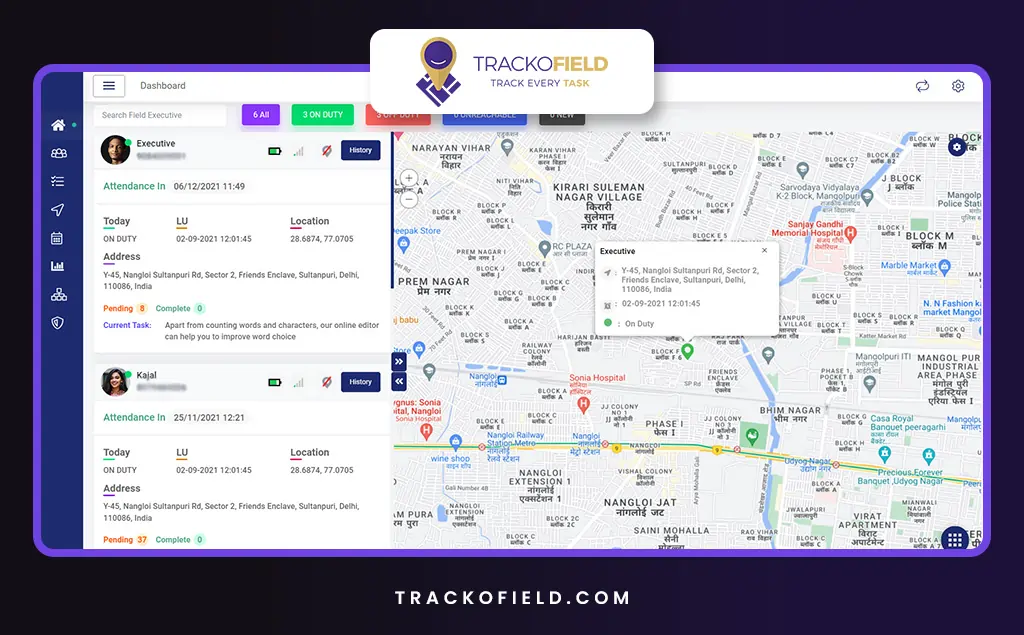
TrackoField is a field force management system built specifically for managing field workforces. Unlike generic scheduling tools, it combines task allocation, attendance, GPS location tracking and performance analytics in one system.
It is particularly strong in industries where employees are constantly moving between client locations.
Features
- Route aware task scheduling
- Real-time field employee tracking
- Attendance, leave and expense management
- Task forms and digital reporting
- Productivity dashboards and analytics
Pros and Cons
Pros:
- Designed for field operations, not office teams
- Strong integration between scheduling and tracking
- Detailed performance visibility
Cons:
- Advanced modules may require onboarding support
- Best suited for structured field operations
Best For
- NBFC and microfinance companies
- Field sales teams
- Solar installation and inspection teams
- Agri input field staff
- After sales service teams
Pricing
Annual: ₹300/per user/month
Half Yearly: ₹275/per user/month
Quarterly: ₹350/ per user/month
2. Deputy
Deputy
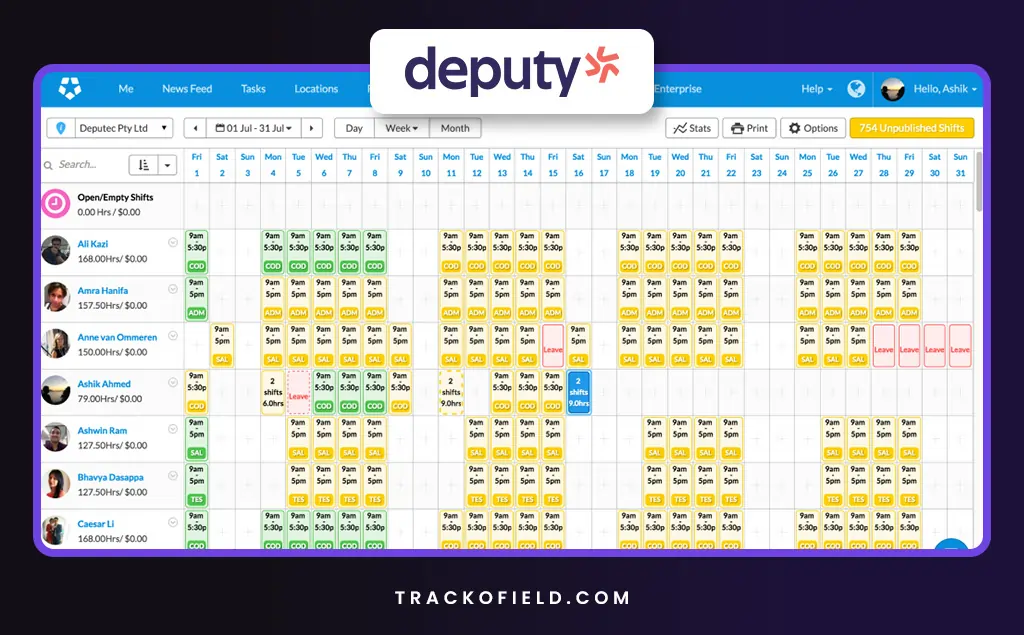
Deputy is a workforce management platform with strong scheduling and compliance tools. It works well for businesses managing multiple teams across locations.
It focuses heavily on shift planning and labour cost control.
Features
- Drag and drop shift builder
- Auto scheduling
- Time and attendance tracking
- Payroll integrations
- Compliance management
Pros and Cons
Pros:
- Mature platform
- Strong payroll integrations
- Suitable for multi-location businesses
Cons:
- Not deeply specialised for route-based field teams
- Advanced features increase cost
Best For
- Retail chains
- Multi branch service businesses
- Logistics companies with warehouse plus field staff
Pricing
Per user monthly pricing model with tiered plans.
Lite: $5 per user per month
Core: $6.5 per user per month
Pro: $9 per user per month
Plans are billed upfront or in monthly installments.
3. Workstatus
Workstatus
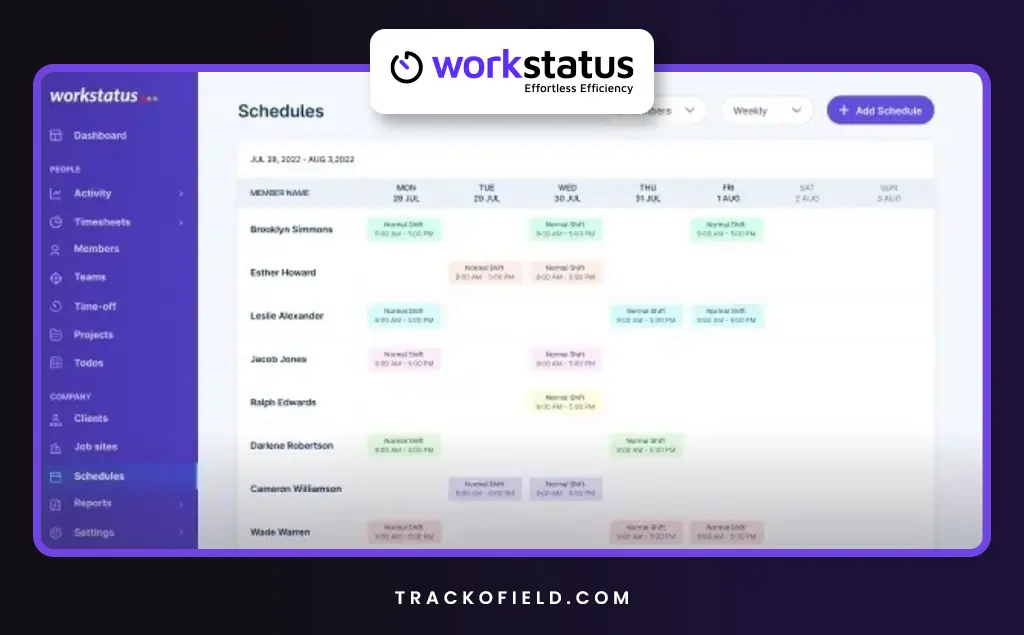
Workstatus is a workforce management and employee monitoring platform designed for both remote and field teams. It combines scheduling, time tracking and productivity monitoring into a single system.
It is commonly used by businesses that want visibility into attendance, task progress and workforce performance across locations.
Features
- Shift scheduling and time tracking
- GPS location tracking
- Attendance and leave management
- Productivity monitoring and reports
- Mobile app with real time updates
Pros and Cons
Pros:
- Strong time tracking and productivity insights
- Suitable for distributed and hybrid teams
Cons:
- More monitoring focused than route optimisation focused
- Advanced features may require higher plans
Best For
- Field sales teams
- Remote and hybrid teams
- IT services and agencies
- Mid-sized businesses
Pricing
Subscription-based pricing per user per month, with tiered plans.
All in one plan: ₹299/user/month (Billed Annually)
4. When I Work
When I Work
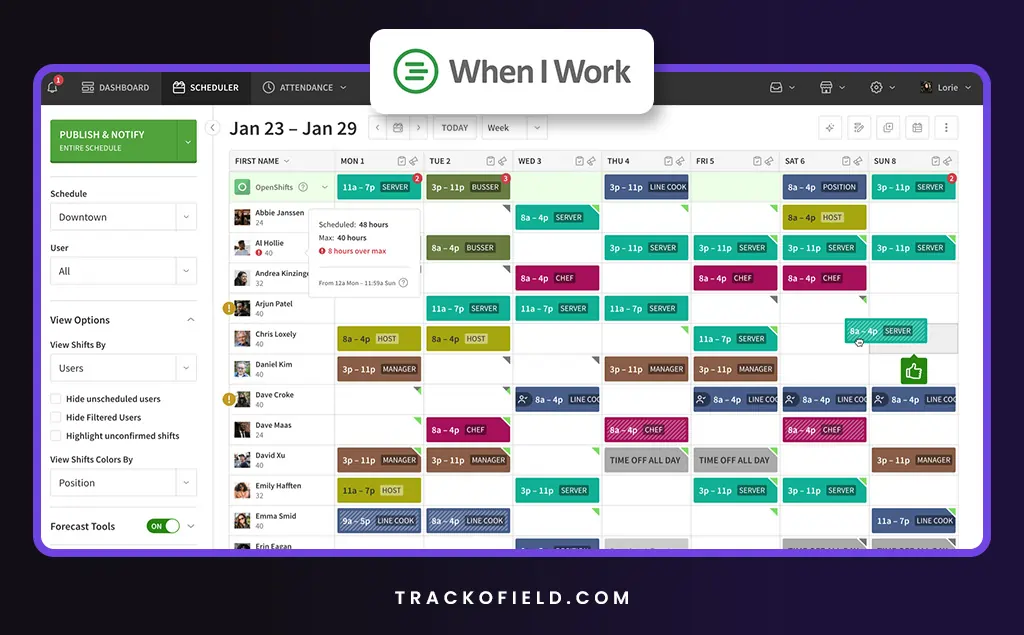
When I Work focuses on simple scheduling and time tracking. It is easy to use and quick to implement.
While not deeply field-specific, it works for teams that need basic shift planning.
Features
- Simple shift scheduling
- Mobile clock in and clock out
- Team messaging
- Shift swapping
Pros and Cons
Pros:
- Affordable
- Easy setup
- Clean interface
Cons:
- Limited route optimization
- Not built specifically for field travel management
Best For
- Small service teams
- Local delivery businesses
- Growing startups
Pricing
Entry-level per-user monthly pricing.
5. Truein
TrueIn
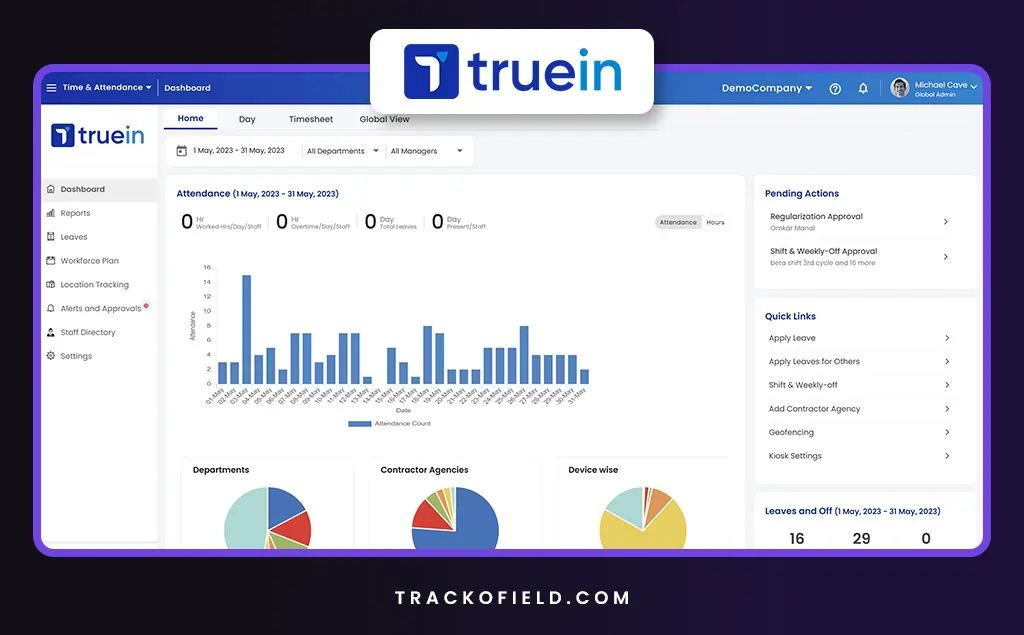
Truein is a face recognition-based attendance and workforce management platform built for deskless and frontline teams. It focuses primarily on accurate attendance capture and shift management without requiring biometric hardware.
It is widely adopted by manufacturing units, construction sites and field-intensive industries.
Features
- Face recognition-based attendance
- Shift and roster management
- Mobile and kiosk-based check in
- Geo fenced attendance
- Payroll ready attendance reports
Pros and Cons
Pros:
- Contactless and hardware free attendance
- Simple implementation
Cons:
- Limited advanced route scheduling capabilities
- More attendance focused than task driven
Best For
- Manufacturing
- Construction sites
- Warehousing
- Facility management teams
Pricing
Time Capture: ₹290 /user/year + ₹69000 /year (base price) (billed annually)
Advanced Plan: ₹390 /user/year + ₹69000 /year (base price) (billed annually)
6. Quinyx
Quinyx
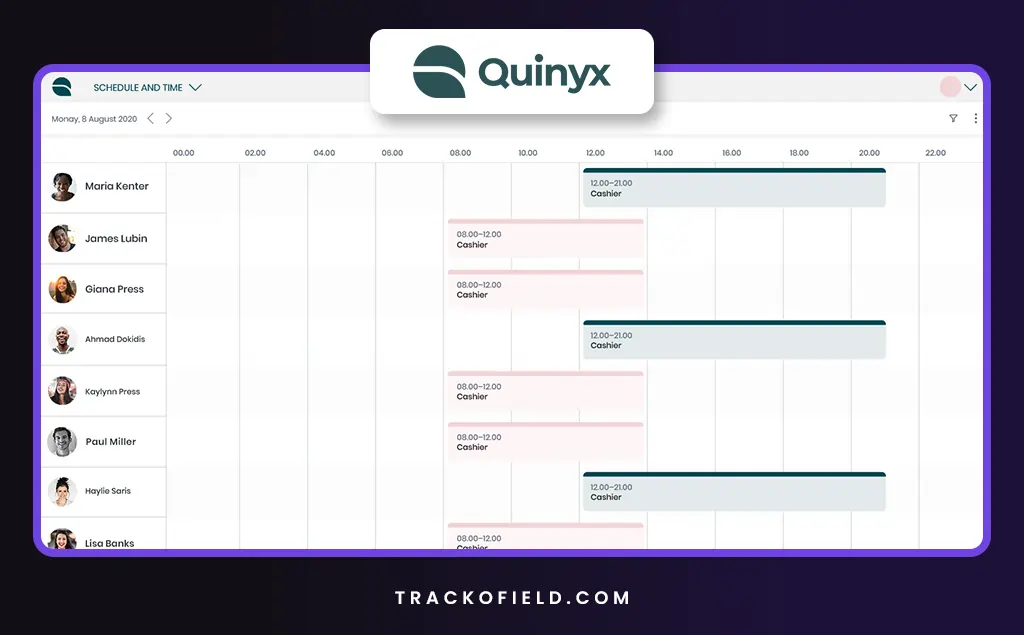
Quinyx is an AI-driven workforce management platform. It combines scheduling with demand forecasting and labour cost optimisation.
Features
- Automated scheduling
- Labour budgeting
- Mobile app for staff
- Compliance tools
Pros and Cons
Pros:
- Advanced optimisation
- Good for demand driven industries
Cons:
- Better suited for medium to large enterprises
- Implementation may require support
Best For
- Retail chains
- Logistics providers
- Businesses with fluctuating demand
Pricing
Custom enterprise pricing.
7. Connecteam
Connecteam
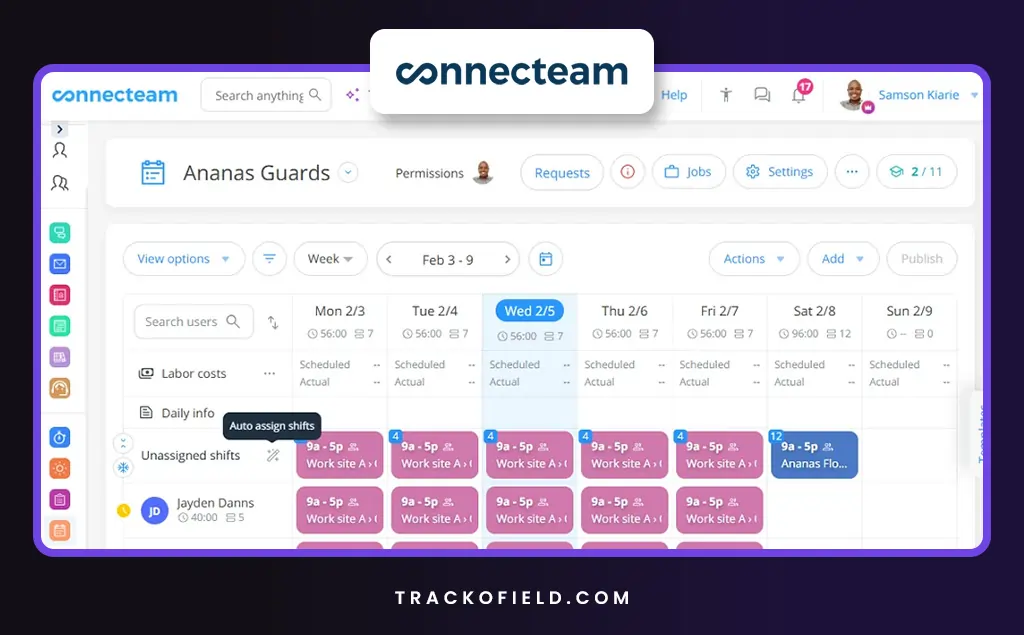
Connecteam offers scheduling, task management and communication tools for deskless employees. It is mobile first and easy to use.
Features
- Shift scheduling
- Task management
- Time tracking
- In app communication
Pros and Cons
Pros:
- Affordable
- Good for small field teams
Cons:
- Limited advanced route intelligence
- Basic analytics compared to enterprise tools
Pricing
Free tier available for small teams. Paid plans per user per month.
How to Choose the Best Field Employee Scheduling Software?
To choose the best field employee scheduling software, you have to consider your field model, scalability goals, integrations, mobile functionality, and more. Choosing the right tool depends entirely on how your field operations run.
1. Understand Your Operational Model
Start by analysing how your field teams work. Are they route-based, territory-based or appointment-based?
If travel time, distance between jobs and geographic coverage matter, then basic shift scheduling software is not enough. You need a tool that integrates scheduling with GPS tracking, beat planning and territory mapping. Without this, schedules may look good during planning paper but fail during on-ground execution.
2. Check Scalability and Flexibility
Your software should grow with your business.
Ask yourself:
- Can it handle 5 users today and 500 tomorrow?
- Can it manage multiple cities, branches or territories?
- Can it handle seasonal spikes in workload?
There’s no point in paying significant money for features that fail in critical stages or when users expand.
3. Evaluate Mobile Experience
Field employees work away from the office and rely on mobile apps to log their work details. That’s why, the app should be simple, fast and reliable even in low network areas. It should offer:
- Offline functionality
- Easy job updates
- Clear task instructions
- Simple attendance marking
- Easy communication with managers
If the mobile experience is poor, staff will face delays and require longer training, leading to slow adoption by businesses.
4. Assess Reporting and Performance Insights
Scheduling is not just about assigning shifts. It is about improving efficiency. Your software should be able to track:
- Jobs completed per day
- Travel time versus working time
- Idle hours
- First time completion rate
- Overtime trends
Good analytics help you optimise schedules and reduce operational costs.
5. Consider Integrations
Check whether the software integrates with third party software like:
- Customer Relationship Management (CRM) System
- Payroll System
- Enterprise Resource Planning (ERP) System
- Task Management Tools
- Loan Management System (LMS)
Seamless data flow between digital systems reduces manual work and prevents errors.
6. Review Support and Onboarding
Even the most powerful platform can fail without proper implementation. That’s why you need to look for:
- Structured onboarding support
- Training resources
- Dedicated account assistance
- Good customer support
Adoption is just as important as features. A well supported rollout ensures your managers and field teams understand and use the system effectively.
Why TrackoField is the Best Field Employee Scheduling Software
In 2026, smart scheduling is not just about filling shifts. It is about optimising movement, improving accountability and driving performance. That is where field employee scheduling software TrackoField delivers real value. And unlike most scheduling tools that are built for office or retail shifts, TrackoField is built specifically for field operations.
It combines AI face attendance, GPS location tracking, shift planning, beat planning, task management and AI manager bot data analytics into a single platform. Managers can assign jobs based on geography, monitor productivity and adjust schedules in real time.
For businesses that rely on field sales teams, technicians, inspectors or service staff, TrackoField offers a more complete and practical solution.

Frequently Asked Questions
-
Why do you require field employee scheduling software in your business?
Managing field teams through spreadsheets, calls or messaging apps often leads to confusion, double bookings and missed appointments.
Field employee scheduling software helps managers assign the right jobs, handle last minute changes and ensure teams reach the right location on time. Over time, it lowers operational costs and improves customer satisfaction.
-
What should you look for in a field employee scheduling system?
Choosing the right field employee scheduling software is not about picking the most popular tool. It is about selecting the one that is in sync with your operational model, growth plans and long-term efficiency goals. That’s why you should look for features that your business needs along with ease of use, good mobile experience and flexibility.
-
What is the cost of implementing field employee scheduling software?
The cost of field employee scheduling system depends on your company’s team size and features needed. Most field employee scheduling platforms charge on a per user, per month basis. Many providers offer trials so businesses can evaluate the value before purchasing.
-
What are the benefits of using field employee scheduling software?
The main benefit of using field employee scheduling software is gaining better control over your field operations. Managers get clarity into who is working, where they are and how they are performing. The software reduces idle time, improves task allocation, minimises overlaps and increases first-time task completion.
-
What are the key features in the best field employee scheduling software?
The main features in any good field scheduling software are shift planning, smart task allocation, GPS tracking, attendance management and a mobile app for field staff. Advanced tools may include automated scheduling, route or territory planning, and integrations with payroll or CRM systems.

Mudit is a seasoned content specialist working for TrackoField. He is an expert in crafting technical, high-impact content for Field force management software With years of experience rooted in the me... Read More


Related Blog

Sales Territory Management: 6 Best Practices for High-Performing Teams
Poor sales territory management can quietly stifle sales growth. Understand how companies can create high-performing territories.
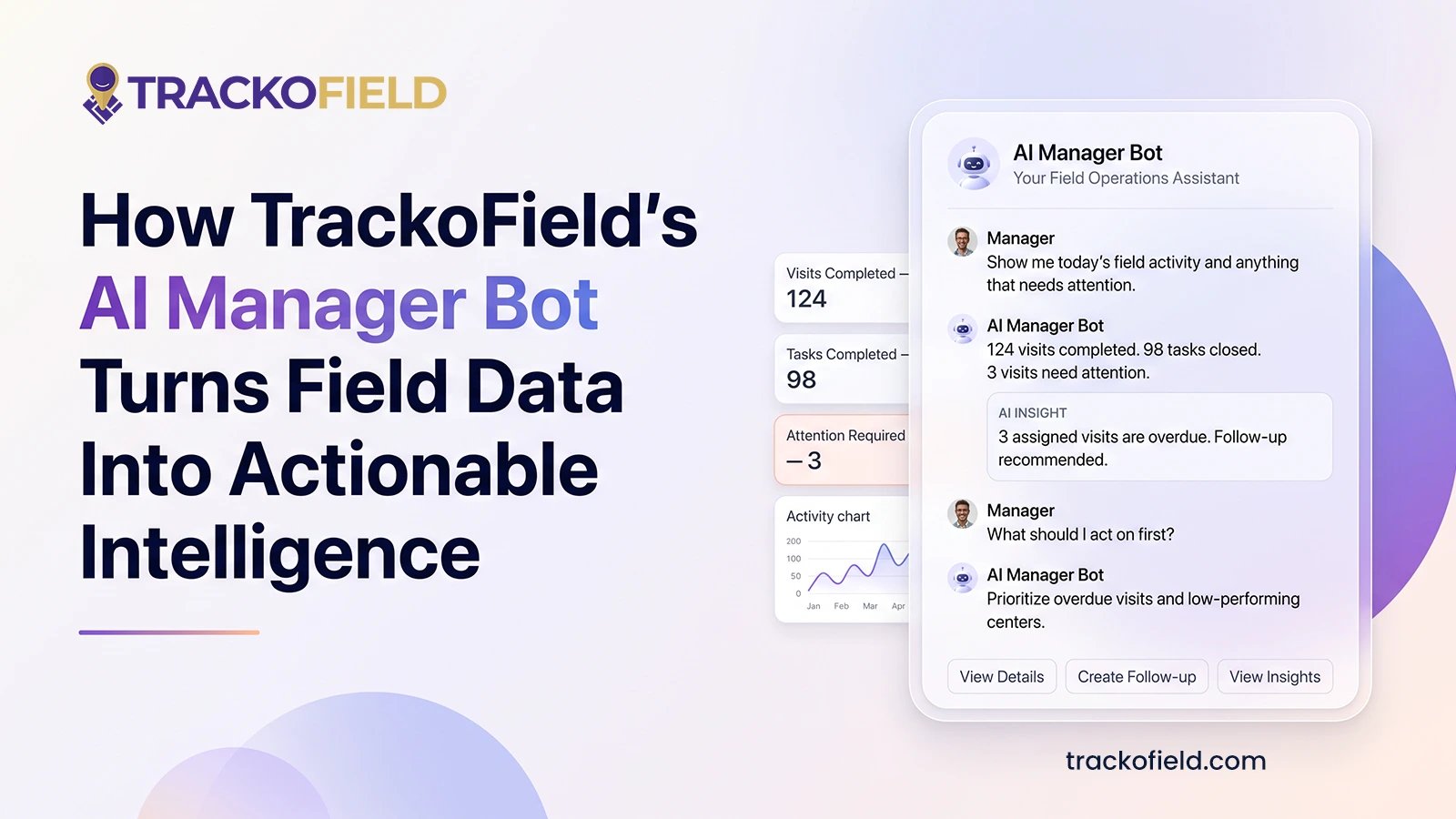
TrackoField’s Manager Bot: Bringing the Future of Field Force Intelligence to You Today
TrackoField’s AI Manager Bot transforms field force management into field force intelligence by turning operational data into instant AI-powered insights.

Face Recognition: What It Is, How It Works & Benefits for Field Teams
Facial recognition is a way of identifying or confirming an individual’s identity using their facial features. Read this guide to…
Field Operations Manager: Roles, Challenges & How to Optimize Performance
Field operations managers handle on-ground activities with challenges like visibility, control, and coordination. This blog covers their roles, key challenges,…


Your inbox awaits a welcome email. Stay tuned for the latest blog updates & expert insights.
"While you're here, dive into some more reads or grab quick bites from our social platforms!"Stay Updated on tech, telematics and mobility. Don't miss out on the latest in the industry.