

What are Field Operations?
Field operations are the activities that employees perform outside the office. Employees do not work in a fixed location but travel to the customer’s location or their assigned territory to perform their work duties. Field operations involve sales, inspection, collection, installation, repair, and home services. They are common in NBFC, MFI, construction, agri-input, pharma, and healthcare, and BFSI industries.
What are the Types of Field Operations?
There are 5 main types of field operations based on the type of work employees perform. Some common field operations examples include:
1. Sales and Collection Operations
These involve field employees visiting customers to generate leads, sales, and collect payments.
2. Service Operations
Field technicians install, repair, maintain, and service equipment or provide on-site technical support.
3. Delivery Operations
Delivery personnel pick up, transport, track, and deliver goods between warehouses and customer locations.
4. Healthcare Operations
These involve providing medical care, collecting samples, and offering home healthcare services outside hospitals or clinics.
5. Emergency Response Operations
This covers field work carried out during emergencies such as utility outages, equipment failures, accidents, fires, or natural disasters.
What are the Challenges in Field Operations?
No real-time visibility, attendance fraud, and manual reporting are common challenges in field operations.
1. No Real-Time Visibility
Managers cannot see where field employees are. They cannot track if they have completed the assigned tasks on time. This affects productivity and delays decision-making.
2. Attendance Fraud
Managers cannot verify whether employees marked attendance from the assigned work location. This increases the chances of buddy punching and false check-ins.
3. Missed Tasks
Some field tasks get delayed or are left incomplete. There is no way to verify the status in real-time. Later this leads to repeat visits, high costs, and unhappy customers.
4. Manual Reporting
Reports are often shared through calls and spreadsheets at the end of the day. Managers cannot verify attendance, missed visits, or field performance on time.
Together, these challenges affect revenue growth, profitability, and overall field operation efficiency. However, businesses can solve these issues by onboarding a trusted field operation management software.
How Field Force Tracking Software Helps Manage Field Operations?
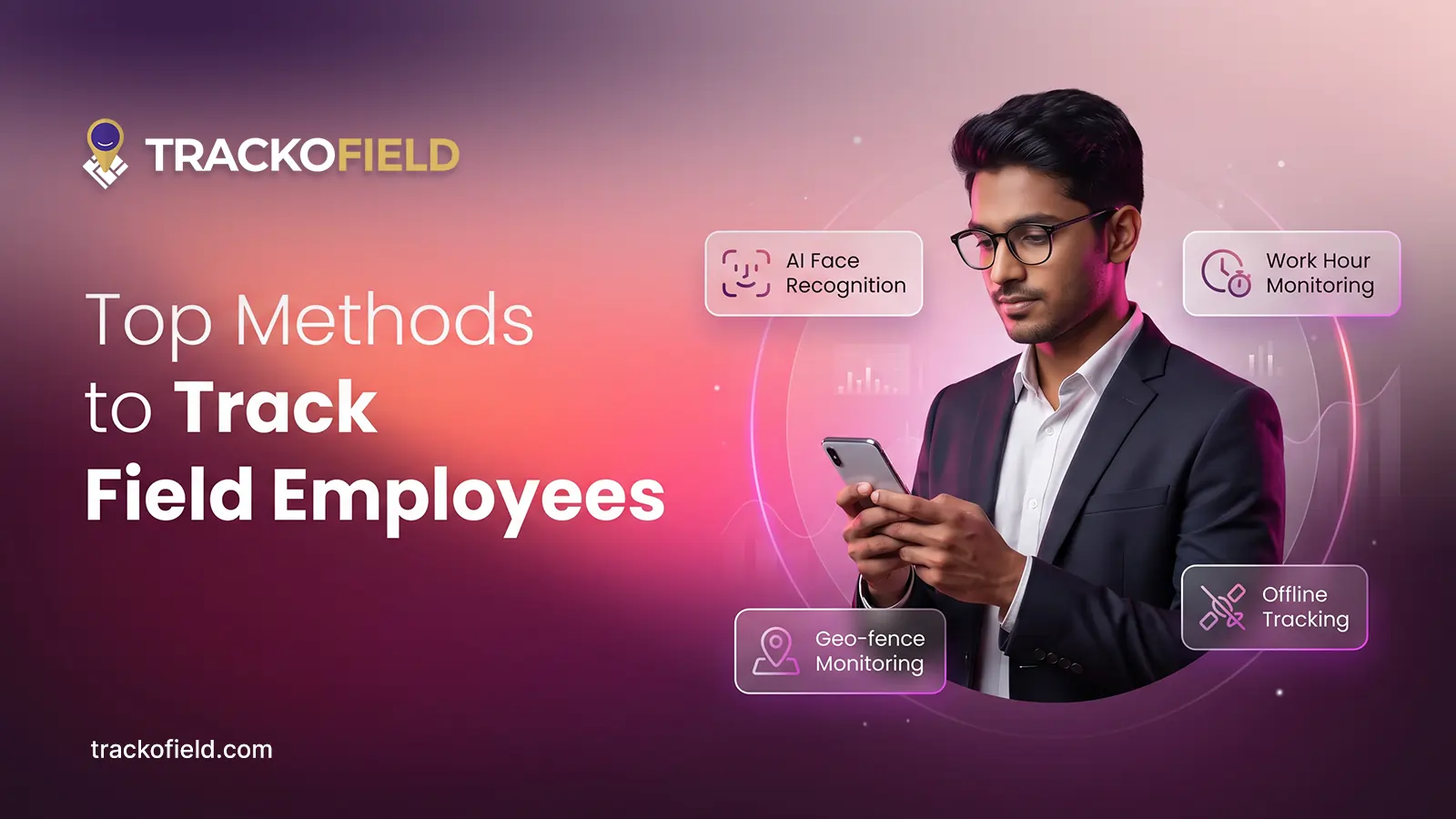
Field force tracking software like TrackoField helps businesses bring scattered field activities into a single dashboard. It provides real-time visibility into employees’ location, attendance, tasks, and field activities. It offers key capabilities like:
- Real-time location tracking
- Geo-verified facial attendance
- Task assignment and tracking
- Automated field reports
- Field expense management
With these capabilities, businesses can reduce operational gaps, improve team performance, and control field operation costs. This helps achieve targets and improve profitability.