


-
TrackoBit
Manage commercial vehicles with the new-age Fleet Management Software
TrackoBit -
TrackoField
Streamline your scattered workforce with Field Force Management Software
TrackoField -
Features Resources


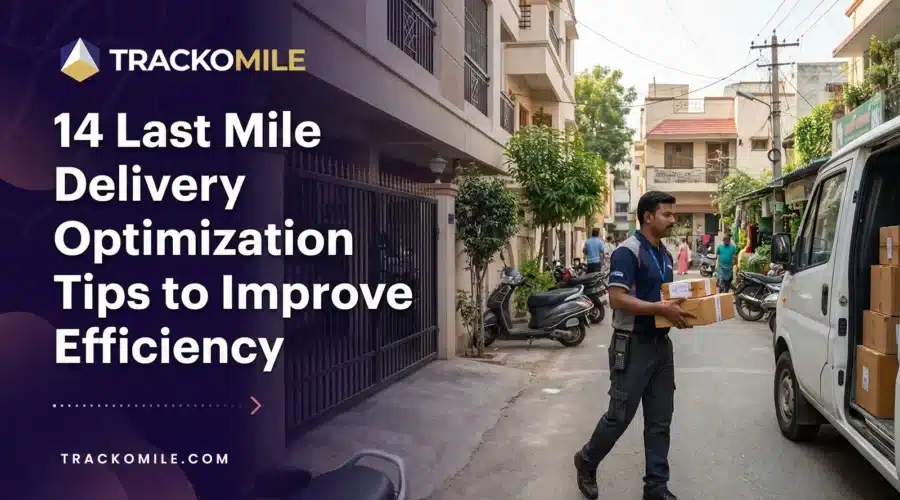
Last-mile delivery optimization is an absolute necessity in 2026. Learn how methods like route optimization, ePOD and 12 other proven strategies can help in the process.
Last-mile delivery optimization is growing at an unprecedented rate. It is backed by advanced technologies like IoT, AI, and ML. Real-time tracking intelligence and route optimization are gaining traction too.
All of this, because businesses prioritize speed and efficiency more than ever in 2026. For example, Indian last mile brands like Delhivery and Blue Dart can offer air-based premium courier services in 1-2 days.
Such momentum is reshaping the industry. The last mile delivery optimization market size globally is expected to exceed $340 billion by 2032. Businesses are rapidly adopting software solutions to boost performance. They will help reduce fuel costs, shorten delivery timelines, and improve overall operations.
In this guide, we explain what last mile delivery optimization is and why it matters. We have also discussed 14 proven strategies to improve your delivery network in 2026.
What Is Last Mile Delivery Optimization?
Last mile delivery optimization is the process of delivering parcel from the distribution to the consumer as efficient as possible. This involves reducing –
- Time taken
- Distance travelled
- Fuel consumed
- Number of failed attempts.
In layman language, by choosing the best route, assigning right order to right rider you will be able to ensure smooth and on-time delivery. Current last mile optimization uses GPS tracking and route optimization. All of this altogether makes the operation faster and smarter.
In the logistics industry, last-mile optimization has a direct impact of the profit margins. Optimization is a necessity if the final leg of last-mile logistics takes up to 40% of the total supply chain budget. Even small improvements can have a big impact of the budget.
Why is Last Mile Delivery Optimization Needed?
Customers today are expecting fast, cheap (if possible free), transparent, and reliable deliveries. Delays and failed deliveries affect customer satisfaction and brand trust. To avoid that and to attain maximum customer satisfaction, businesses must optimize deliveries. They have to ensure that the deliveries are accurate and on time.
From an operative perspective, the last mile is the most expensive part of the logistics process. Fuel cost, inefficient routes, and delays all contribute to a significant increase in expenses. That makes optimization even more necessary. With efficient route planning, businesses can reduce costs and improve delivery performance. Furthermore, will be able to manage logistics more efficiently.
14 Best Strategies for Last Mile Delivery Optimization
Using route optimization software, real time tracking and POD are ways to optimize last mile deliveries. Here are the 14 best strategies that will help in the optimization process. But the catch is that there is no single solution. It is a combination of the right technology, method, and planning.
1. Use Route Optimization Software
Using last-mile delivery route optimization software is a must for making the process efficient. It suggests the shortest or the fastest route for the delivery after considering 120+ factors like –
- Traffic
- Weather
- Delivery windows
- Vehicle capacity and more.
Last mile delivery software providers like TrackoMile offers an advanced route optimization feature. It automates the route planning process which saves fuel and time for the company. Also, it reduces manual errors and increases accuracy.
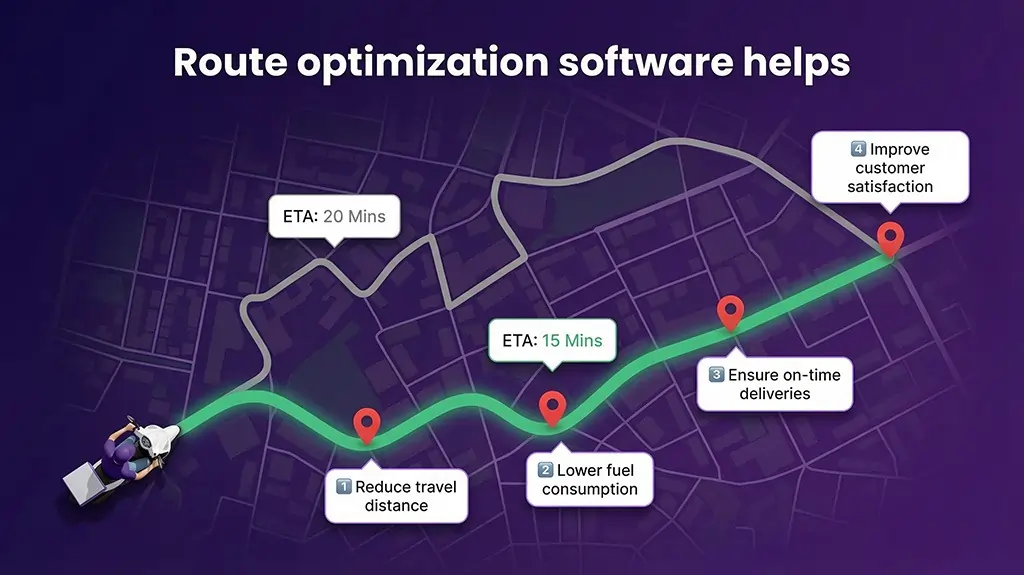
Benefits of Route Optimization Solution
2. Enable Real Time GPS Tracking
Real-time tracking is another way to improve the process. With visibility across the journey, managers are able to monitor-
- Driver’s location,
- Order status,
- Reasons for delays.
This helps them make faster decisions and be prepared for the worst. GPS-based last mile route optimization also helps customers track their orders. This improves transparency and reduces “where is my order” queries.
3. Use Data Driven Decision Making
Data-driven last-mile delivery optimization helps businesses analyze historical delivery data. Using this data they can improve their planning and schedules.
Companies must study patterns like –
- Peak hours,
- Failed delivery zones,
- Average stop times.
This way they can redesign routes and allocate resources more efficiently.
4. Optimize Delivery Windows
Offering flexible delivery windows helps distribute workload evenly across the day. This reduces congestion and prevents driver overload.
Smart scheduling improves route of delivery by minimizing waiting time and unnecessary backtracking.
5. Cluster Deliveries by Location
Delivery clustering groups nearby orders into one route. This simple technique will significantly reduce travel distance and fuel costs.
For example –
Instead of sending vehicles to scattered locations, deliveries are grouped by area. Cluster based routing ensures deliveries in the same area are completed together.
6. Automate Proof of Delivery
Digital PODs are a big help in reducing disputes and in improving accountability. Go for solutions that offer multi-format POD like –
- Geo tagged photos
- Digital signatures
- Time stamps
- OTP (Happiness code in case of TrackoMile)
Automation speeds up the process and improves documentation accuracy.
7. Improve Driver Performance Monitoring
Driver behavior has a direct impact on delivery efficiency. To optimize last-mile performance, monitor events like –
- Idle time
- Harsh braking
- Route deviation.
Software like TrackoMile help businesses track delivery performance and improve route discipline.
8. Reduce Failed Deliveries
Failed or second attempt deliveries increase the cost of operation. To avoid this use –
- OTP verification,
- Pre-delivery notifications,
- Accurate address validation.
All this would reduce re-attempts. Also, clear communication improves first attempt success rates, which is a key goal of last mile optimization.
9. Adopt Micro Fulfillment Centers
By setting up small urban hubs companies can reduce travel distance. Naturally shorter routes will translate into faster deliveries and lower fuel costs.
This strategy also promotes sustainable last mile delivery optimization. This is vital for reducing carbon emissions and achieving environmental goals.
10. Integrate Delivery Management Systems
Disconnected systems cause delays. Integrating order management, inventory, and route planning ensures seamless operations.
Integrated delivery management software improves accuracy and reduces manual work.
11. Use Dynamic Route Re Optimization
Traffic conditions are changing throughout the day. Having a dynamic route optimization solution updates the routes in real time. This is useful in case of an unplanned disaster or another calamity.
This prevents delays and improves ETA accuracy.
12. Offer Real-Time Customer Communication
Customer expectations and experience are of prime importance in last-mile delivery. It is very important to keep customers informed of their order status throughout. Keep them informed through automated SMS, emails, or in-app notifications.
Also, real-time updates reduce missed deliveries and improve customer satisfaction. Clear communication plays a big part in optimizing last-mile delivery experience.
13. Regularly Audit and Improve Routes
Continuous monitoring is essential. Analyze delivery KPIs such as cost per delivery, on time rate, and route efficiency.
Regular audits help refine strategies. It ensures long-term success in last mile delivery optimization in logistics.
14. Encourage Sustainable Practices
Electric vehicles and optimized routing reduce environmental impact. Sustainable last mile delivery optimization helps companies meet ESG goals.
Reducing fuel usage also lowers operational costs.
Conclusion
Last-mile delivery optimization is all about having the right technology, implying correct strategies and improving planning process to reduce cost and time of operation. It also increases the speed of delivery, which in turn helps win customer satisfaction.
With the market getting saturated in 2026, it is very important for businesses to beat competition. The best way to do so is through advanced last-mile delivery software like TrackoMile. They will be able to plan and implement much more successful last mile delivery strategies
Frequently Asked Questions
-
How to optimization route of last mile delivery?
To optimize route of last mile delivery, use AI based route planning software. Analyze historical delivery data, cluster nearby orders, and enable real time GPS tracking. Dynamic re optimization ensures routes adjust according to traffic and delivery constraints.
-
How to choose the last mile optimization software?
Look for features like AI-route planning, real time tracking, integration capability, POD automation, analytics dashboards, and scalability. The software should fit your delivery volume and business goals.
-
Why TrackoMile is the best last mile optimization software?
Real time tracking, intelligent route optimization and ePOD are some of the ways to TrackoMile optimizes delivery process. It has dynamic dispatch management software and capacity management which help businesses optimize resource utilization and ensure on time deliveries.
-
What is the importance of optimizing last mile delivery?
Optimizing last mile delivery is important because it -
- Reduces operational costs,
- Improves delivery speed,
- enhances customer experience,
- Increases profitability.
It is one of the most critical areas in modern logistics operations.

Tithi Agarwal is an established content marketing specialist with years of experience in Telematics and the SaaS domain. With a strong background in literature and industrial expertise in technical wr... Read More


Related Blogs
-
12 Must-Have Features in Last Mile Delivery Solutions
12 essential features every last mile delivery solution must have to ensure faster deliveries, lower costs and better customer experience.
-
B2B Last-Mile Delivery: A Comprehensive Guide to Strategy, Challenges & Optimization
B2B last-mile delivery requires careful planning and clear visibility. This guide covers strategy, challenges, and optimization methods to boost delivery…
-
What is Proof of Delivery (POD)? A Complete Guide for Modern Logistics in 2026
In modern logistics, proof of delivery (POD) confirms that a shipment has been delivered using OTP, photos, or e-signatures. This…
-
Top 9 Delivery Management Software in 2026
By choosing the best delivery management software, companies can benefit from features like route optimization, dispatch management, and more. This…


Your inbox awaits a welcome email. Stay tuned for the latest blog updates & expert insights.
"While you're here, dive into some more reads or grab quick bites from our social platforms!"Stay Updated on tech, telematics and mobility. Don't miss out on the latest in the industry.