
Quick Summary

- NBFCs face rising NPAs due to quick, unsecured loans and poor borrower selection practices.
- Integrating LMS, LOS, and FFA can streamline operations and enhance borrower visibility, crucial for reducing NPAs.
- Early intervention through technology allows NBFCs to address repayment issues promptly, improving collection efficiency.
- Effective integration of these systems ensures real-time tracking and accountability, ultimately protecting portfolios and reducing NPAs,LOS.
Here’s how NBFCs can smartly integrate LOS, LMS, and FFA software to reduce NPAs and ensure seamless field operations.
What’s the single biggest challenge faced by Non-Banking Financial Institutions (NBFCs)?
It is Non-Performing Assets (NPAs) and they’ve been continuously rising this decade. NPAs are also more prevalent in NBFCs than conventional banks due to the nature of the loans. NBFCs mostly provide quick and unsecured loans following the JLG lending model: minimal documentation, high interest rates & cash-based collections.
So, the question arises… how can NBFCs reduce NPAs? Well, technology is the answer!
Integrating Loan Management System (LMS), Loan Origination System (LOS) and Field Force Automation (FFA) software in your NBFC can be a game changer. You can say goodbye to delayed collections, select the right borrowers and ensure smooth on-ground operations.
Dive in to learn about the role of LMS, LOS and FFA in reducing NPAs in NBFCs.
NPAs in NBFCs: Definition, Cause & Impact
When the interest payment for a loan remains overdue for more than 90 days, the loan is called a non-performing asset (NPA). It’s one of the critical factors that defines the success of an NBFC.
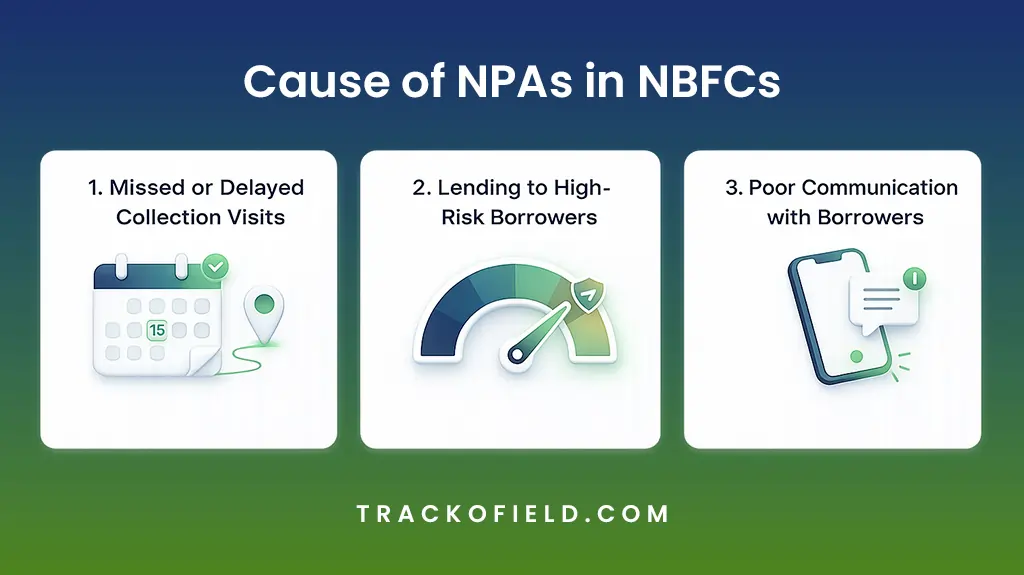
However, NPAs are not caused by a single operational failure. They are usually the result of multiple gaps across the loan lifecycle. And it starts at the borrower selection stage.
Root Cause of NPAs in NBFCs
1. Poor Sourcing & Investigation
Many NBFC field agents indulge in rushed sourcing and haphazard investigation of borrowers to sell loans faster. Selecting borrowers with pending loan payments or a history of defaults is a huge red flag which later increases the risk of NPAs.
2. Lack of Borrower Visibility
Another major reason for NPAs is poor borrower risk visibility after loan disbursal. While LOS may do a good job of screening borrowers at the onboarding stage, many NBFCs lose visibility once the loan is active.
Repayment behaviour changes, income becomes irregular, or borrowers simply stop responding. Borrowers may also use the loan for non-sanctioned activities.
3. Inefficient Collection Operations
When collection visits are missed, delayed, or poorly executed, early warning signs get ignored. Here, lack of real-time staff tracking also comes into play.
Managers often don’t know whether collection agents actually visited borrowers, reached the correct location, or followed up on time. Manual visit reporting creates blind spots and allows fake or incomplete visits to go unnoticed.
4. Manual Field Workflow
Many small to mid-sized NBFCs still rely on manual repayments and manual reporting. Payment updates reach the system late, field data is fragmented, and decision-making becomes reactive instead of proactive.
All these issues together allow NPAs to grow silently.
Cause of NPAs in NBFCs
The Harmful Effects of NPAs in NBFCs
When borrowers do not pay on time, follow-ups are conducted to collect overdue payment. Thus, collection visits increase and so does field agents’ work and expenses. Furthermore, when overdue loan turns into an NPA, it results in the initiation of recovery.
Since NBFCs disburse unsecured loans, recovery becomes a sensitive issue. Visits end up being effort and time intensive and have to be compliant with the law. Thus, NPAs lead to more operational costs, increase loss, reduce portfolio and affect market credibility of the NBFC.
What are LMS, LOS, and FFA?
To understand how NPAs can be reduced, it’s important to first clarify what LMS, LOS, and FFA actually do.
1. LOS (Loan Origination System)
It manages everything before loan disbursal. It handles borrower onboarding, document collection, credit checks, risk assessment, and loan approval. In simple terms, LOS helps NBFCs decide who should get the loan.
2. LMS (Loan Management System)
It takes over after disbursal. It manages EMIs, repayment schedules, interest calculations, penalties, overdue tracking, and loan closure. LMS answers the question how the loan is performing over time.
3. FFA (Field Force Automation)
It manages what happens on the ground. It assigns collection tasks, tracks field agents, verifies visits, captures proof of work, and provides real-time visibility into collection activity. FFA ensures what is planned actually happens in the field. FFA can also be used for sourcing or investigation visits.
Why LMS or LOS Alone Cannot Reduce NPAs
Many NBFCs invest heavily in LOS and LMS and still struggle with rising NPAs. This happens because these systems lack on-ground execution visibility.
LOS may flag a borrower as high risk, but it cannot ensure timely follow-ups after loan disbursal. LMS may show an overdue EMI, but it cannot verify whether a collection visit actually took place and what was its outcome.
Without field force automation, there is:
- No proof that field visits happened
- No accountability for missed or fake visits
- No real-time response to repeated missed payments
- No geo-verified on-ground data
- No clear view of agent productivity
How LMS + LOS + FFA Work Together to Reduce NPAs
When LMS, LOS, and FFA are integrated, NPAs can be controlled much earlier and more effectively.
Here’s how:
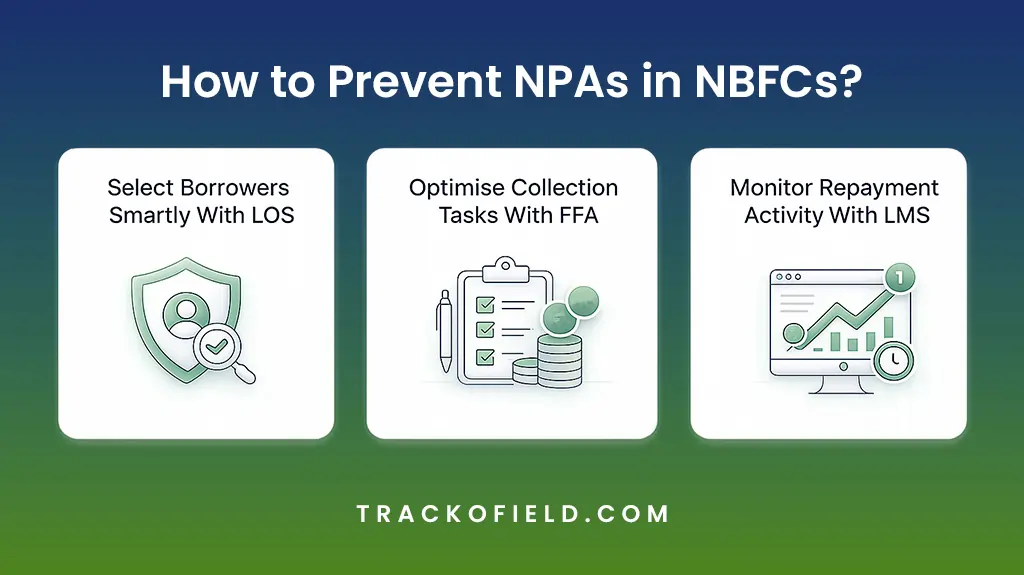
LOS first identifies borrower risk during onboarding. Credit scores, income patterns, and past repayment behaviour are analysed before approval. High-risk borrowers are flagged early.
Once the loan is disbursed, LMS continuously monitors repayment behaviour. Missed EMIs, partial payments, and delays are tracked in real time. Accounts are automatically bucketed into early delinquency stages.
As soon as an account shows signs of risk, FFA comes into action. Collection tasks are automatically created and assigned to field agents. Agents receive clear instructions on whom to visit, where to go, and what action is required.
During collection visits, FFA tracks agent movement using GPS and timestamps. Visits are geo-verified and linked to specific borrowers. Agents must submit proof of work such as photos, forms, or payment confirmations.
Managers get real-time dashboards showing:
- Which visits were completed
- Which visits were missed or delayed
- Which borrowers are not showing up
- Which agents are underperforming
How to Prevent NPAs in NBFCs
Why Early Intervention Is the Key to NPA Reduction
The biggest advantage of LMS + LOS + FFA integration is early intervention.
Instead of waiting for loans to cross 90 days overdue, NBFCs can act at the first sign of delay. Field follow-ups happen sooner. Borrower intent is gauged early, and steps are taken to reduce risk of default.
Early visits are also more productive than visiting clients at the last moment and preserves customer relationships. Field force management for NBFCs using software like TrackoField also provides AI-powered insights. Managers can use them to quickly reassign visits, adjust collection strategies, escalate difficult cases and take data-backed decisions.
Conclusion
NPAs are not just a credit problem. They are an operational problem.
LOS helps choose the right borrowers. LMS helps monitor loan performance. But without field force automation, both systems fall short where it matters most: on the ground.
By integrating LMS, LOS, and FFA, NBFCs gain end-to-end visibility across the loan lifecycle. Early risks are identified, NBFC collection visits are executed on time, and outcomes are verified in real time.
In a lending environment where margins are tight and risks are high, this integrated approach is no longer optional. It is essential for reducing NPAs, protecting portfolios, and building a resilient NBFC operation.

Reduce NPAs with technology integration.
Frequently Asked Questions
-
Can TrackoField integrate with existing NBFC LMS or LOS?
Yes. TrackoField can integrate with existing Loan Management Systems and Loan Origination Systems through APIs. This allows NBFCs to sync customer data, loan details, and collection updates without changing their core systems.
-
Is TrackoField suitable for small and mid-size NBFCs?
Yes. TrackoField is built to scale. Small and mid-size NBFCs can start with basic features and expand as their field teams and portfolios grow, without heavy setup or IT costs.
-
How does TrackoField prevent fake collection visits?
TrackoField uses face verification, live GPS location, geofencing, and timestamps to verify every visit. NBFC Collection visits can only be closed when the agent is physically present at the borrower location with valid proof of work.
-
Does TrackoField work in low-network rural areas?
Yes. TrackoField works offline in low or no-network areas. Field data is captured on the device and automatically synced once the agent gets internet access.
-
How can NBFCs control NPAs at an early stage?
NBFCs can control NPAs early by tracking missed visits, delayed follow-ups, and irregular repayments in real time. Early alerts and clear field visibility help teams act before accounts turn overdue.
-
Why do traditional NBFC collection methods fail to reduce NPAs?
Traditional methods rely on manual reporting, delayed updates, and limited visibility. Problems are identified late, follow-ups are missed, and fake reporting goes unnoticed, allowing NPAs to grow.
-
What is the difference between digital collections and field force automation?
Digital collections focus mainly on online payments and reminders. Field force automation manages the entire on-ground process. This includes agent attendance, visit verification, route planning, and proof of work capture. Both work best when used together.

Mudit is a seasoned content specialist working for TrackoField. He is an expert in crafting technical, high-impact content for Field force management software With years of experience rooted in the me... Read More


Related Blog

Sales Territory Management: 6 Best Practices for High-Performing Teams
Poor sales territory management can quietly stifle sales growth. Understand how companies can create high-performing territories.
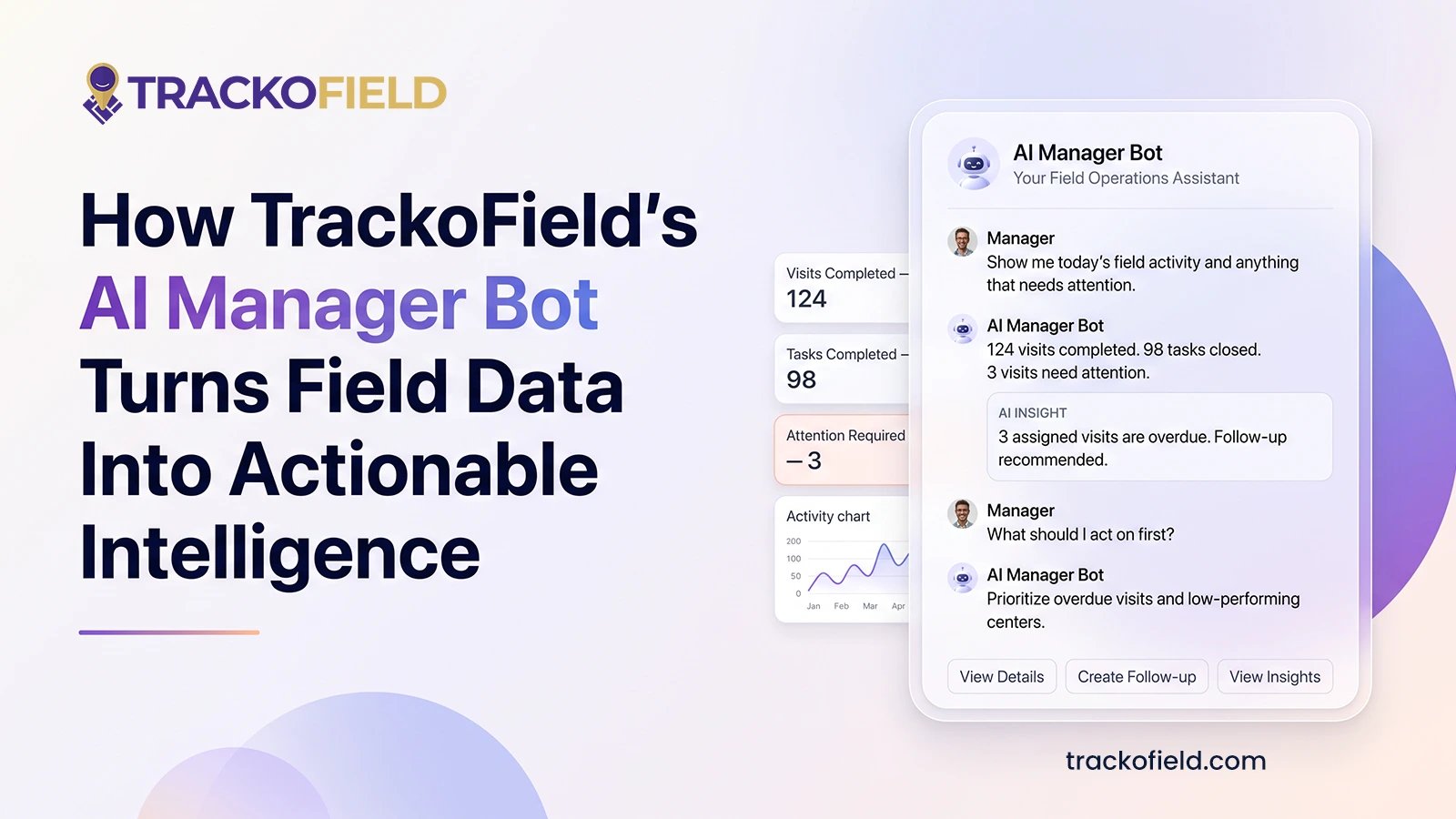
TrackoField’s Manager Bot: Bringing the Future of Field Force Intelligence to You Today
TrackoField’s AI Manager Bot transforms field force management into field force intelligence by turning operational data into instant AI-powered insights.

Face Recognition: What It Is, How It Works & Benefits for Field Teams
Facial recognition is a way of identifying or confirming an individual’s identity using their facial features. Read this guide to…
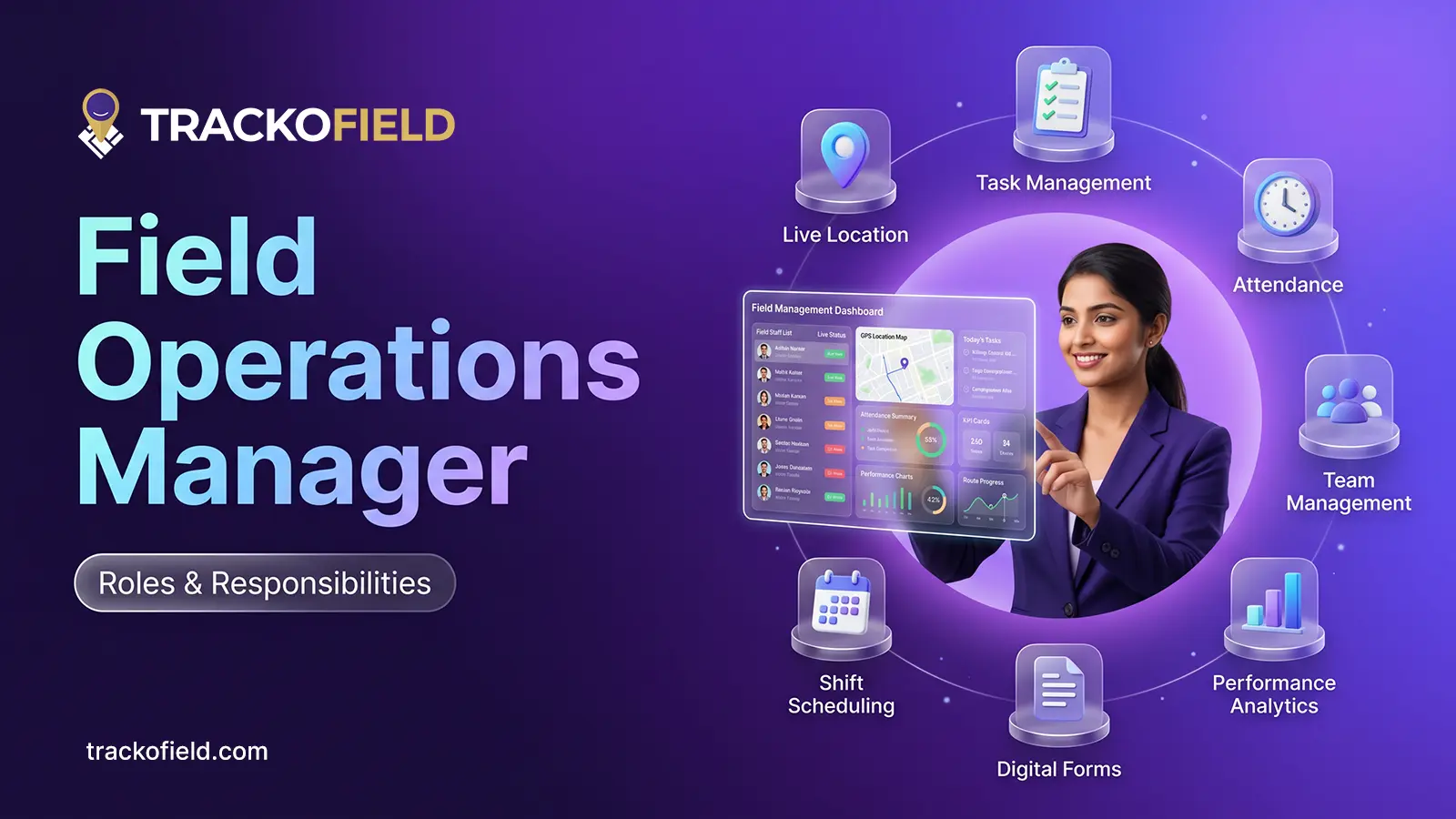
Field Operations Manager: Roles, Challenges & How to Optimize Performance
Field operations managers handle on-ground activities with challenges like visibility, control, and coordination. This blog covers their roles, key challenges,…


Your inbox awaits a welcome email. Stay tuned for the latest blog updates & expert insights.
"While you're here, dive into some more reads or grab quick bites from our social platforms!"Stay Updated on tech, telematics and mobility. Don't miss out on the latest in the industry.