
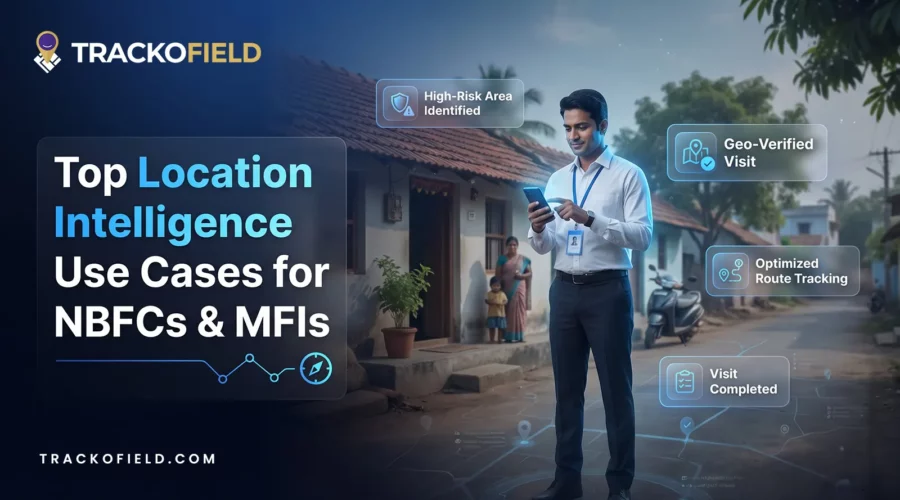
Quick Summary

- Location intelligence enhances NBFCs and MFIs by optimizing field operations through geospatial data analysis, improving decision-making and efficiency.
- Key use cases include borrower verification, visit authentication, territory planning, and route optimization, ensuring accountability and productivity.
- Geospatial intelligence addresses challenges like incomplete borrower data and enhances visibility into field activities, reducing operational inefficiencies.
- TrackoField integrates location intelligence with task management, providing real-time tracking, geo-tagged visits, and insights to streamline lending operations for NBFCs and MFIs.
Learn about the top location intelligence use cases for NBFCs and MFIs and how field force automation software supports them.
Lending operations are evolving rapidly and getting more complex. This is especially true for Non-Banking Financial Companies (NBFCs) and Microfinance Institutions (MFIs). Rising borrower expectations and the need for deeper penetration into rural and semi-urban markets are major challenges for modern NBFCs and MFIs.
But one thing remains unchanged. Lending operations still take place on the ground. Field agents visit sites, conduct meetings, physically interact with borrowers, and collect payments.
This process can be heavily optimised with location intelligence. It allows lenders to analyse geospatial data to make operational decisions. Field managers can then better monitor tasks, verify locations, and plan travel routes. Continue reading this blog to learn more about location intelligence use cases for NBFCs and MFIs.
What is Location Intelligence in NBFC-MFI?
Location intelligence means collecting, analysing, and visualising geographical data to improve decision-making.
In the NBFC and MFI sector, it involves using location-based insights to:
- Check customer distribution
- Monitor field activities
- View travel routes
- Get territory-based insights
Technologies like GPS tracking and geofencing are used to capture location data. Financial institutions analyse this data to gain a clearer picture of what is happening in the field. For example, a loan officer’s visit to a borrower can be recorded with GPS coordinates and timestamps. This ensures the visit actually occurred and provides verifiable proof of field activity. Geospatial intelligence helps lenders:
- Identify high-demand regions
- Plan field routes
- Monitor field activity across territories
Why Location Intelligence is Critical for NBFCs and MFIs?
NBFCs and MFIs operate in areas where borrower data is often incomplete or informal. Rural customers typically do not have a detailed credit history or banking records.
As a result, lenders rely heavily on in-person verifications and assessments. Without location intelligence, managing these field activities can be tough. Managers may struggle with limited visibility into field visits. Verification quality may vary. Agents may spend unnecessary time travelling.
Geospatial intelligence addresses these challenges by bringing visibility and structure to field activities. It helps NBFCs and MFIs to:
- Accurately verify borrower addresses
- Monitor field agent movements and productivity
- Ensure compliance during borrower verification
- Improve route planning and visit coverage
- Reduce operational inefficiencies
10 Key Location Intelligence Use Cases for NBFCs and MFIs
Borrower verification, visit authentication, task planning, and territory planning are among the top location intelligence use cases for NBFCs and MFIs. Learn about all the use cases in detail below.
1. Borrower Address Verification
Does a borrower really live or work at their given address? Geospatial intelligence allows lenders to verify this data. Field agents can capture geo-tagged photos and location coordinates during visits. This ensures accurate borrower verification and reduces the risk of fraudulent applications.
2. Field Visit Authentication
Managers can verify whether loan officers actually visited the borrower’s location. GPS tracking and geoverified visit logs provide proof that agents visited the right location. This increases accountability and helps maintain a trail of field agents’ activities.
3. Territory Planning & Coverage
Location intelligence helps lenders divide operational areas into well-defined territories. Managers can visualise borrower clusters and allocate field agents accordingly. This ensures balanced workloads and improves coverage across regions. No region is underserved and no agent is overworked.
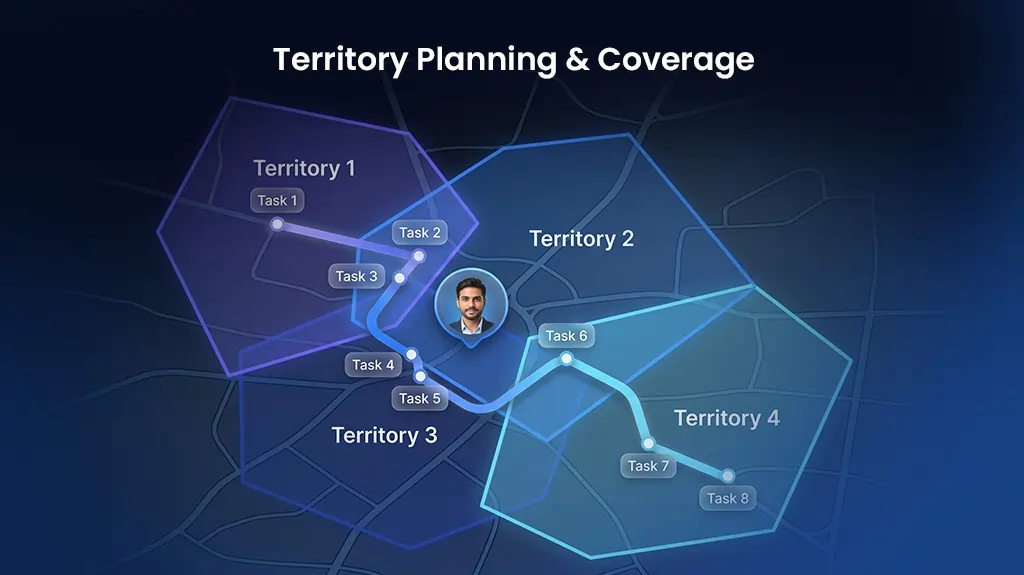
Territory Planning & Coverage
4. Route Optimisation
Field agents often travel long distances between borrower locations. Geospatial intelligence ensures smarter route optimisation. Field force automation software helps identify the most efficient routes between visits. This reduces travel time, fuel costs, and improves daily productivity.
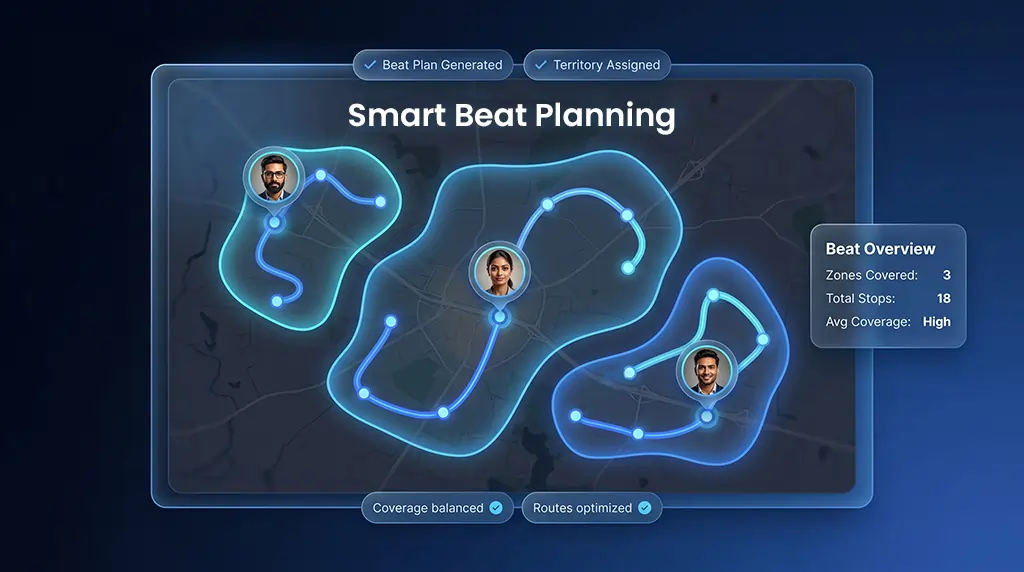
Smart Route Planning & Optimisation
5. Monitoring Centre Meetings
Centre meetings are a key part of microfinance operations. Geospatial intelligence allows managers to confirm if meetings took place at the right location and time. Geoverified attendance and location tracking provide precise data of employees’ whereabouts.
6. High-Risk Area Identification
Managers can analyse borrower distribution and repayment patterns across different territories. This helps identify high-risk areas, so managers can create lending strategies accordingly. Credit teams use stricter verification tactics or conduct multiple risk assessments.
7. Collection Visit Tracking
Location intelligence allows managers to track collection visits in real time. They can see which borrowers were visited, which payment visits are pending, and where agents are currently located. This improves follow-up efficiency.
8. Fraud Detection & Prevention
Geoverification helps detect suspicious activities such as fake visits from incorrect locations. This strengthens compliance and reduces the chances of fraudulent lending practices.
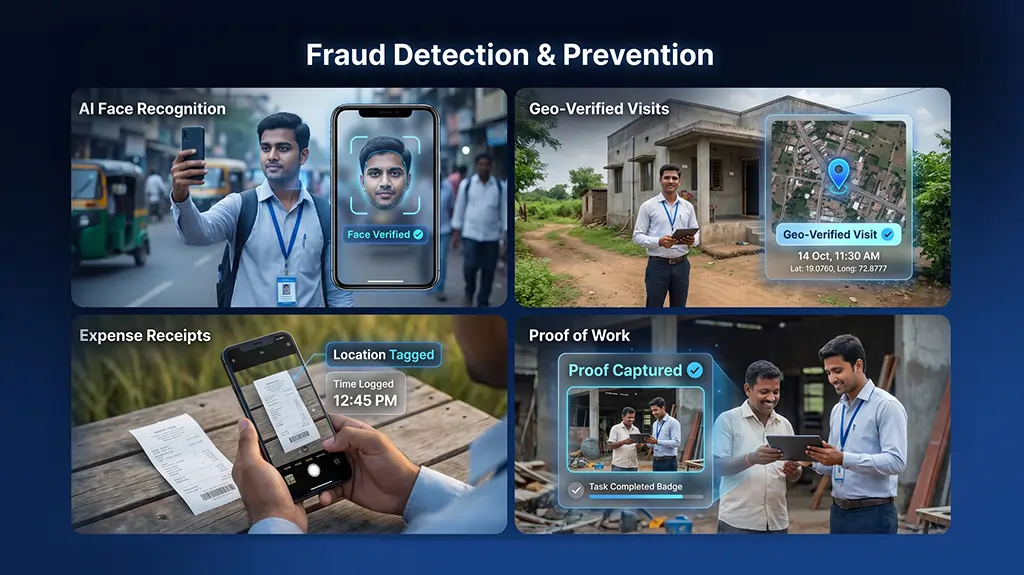
Fraud Detection & Prevention With Location Intelligence
9. Branch Expansion Planning
Location intelligence can reveal areas with high borrower density or strong repayment patterns. Financial institutions can use this data in various ways. They can identify ideal locations to open new branches, expand operations or reduce coverage.
10. Asset Monitoring for Secured Loans
In asset-backed lending, location intelligence can help track assets. Lenders can verify the presence and location of financed assets such as vehicles or equipment. Periodic inspections ensure assets remain traceable and are being used correctly.
Benefits of Location Intelligence For NBFCs & MFIs
Location intelligence provides benefits like better visibility, faster decisions, higher productivity and reduced lending risks to NBFCs and MFIs.
1. Better Visibility
Managers gain real-time insights into field activities, visit coverage and agent movement. This eliminates blind spots in field operations. Managers know where employees are and what they are doing at all times.
2. Faster Decision-Making
Location-based insights allow managers to identify workflow issues quickly. They don’t have to wait until EOD to check reports and make decisions. Using AI-powered insights, managers can be proactive and take corrective actions fast.
3. Improved Staff Productivity
With location intelligence, routes can be optimised to save employees’ time. This way, they can complete more visits in a day. Plus, with territory planning, field staff work in designated regions and don’t have to worry about task overlaps or extra workload.
4. Stronger Compliance
Geo-tagged and timestamped data create a reliable audit trail for regulatory compliance. All digital records are stored on the cloud securely.
5. Reduced Lending Risk
Accurate borrower verification and location-based insights help lenders make better credit decisions. No more risky loans that increase the chances of NPAs.
How TrackoField Enables Location Intelligence for NBFCs and MFIs?
TrackoField is a field force management platform that specialises in location intelligence. It transforms NBFC-MFI field operations into structured and data-driven workflows. It allows lenders to:
- Track field agents in real time via GPS tracking
- Capture geo-tagged borrower verification visits
- Capture face verified attendance of field agents and JLG members
- Record timestamped field activities and visit outcomes
- Monitor territory coverage and route history
- Generate accurate productivity reports
- Provide AI-powered quick insights with manager bot
TrackoField integrates geospatial intelligence with task management and analytics. The result is that NBFCs and MFIs get a detailed view of their field operations. Managers get better visibility into field verifications, collections and staff productivity.
Conclusion
Field activities remain a major part of the lending workflow of NBFCs and MFIs. Borrower verification, collections, and customer interactions often require physical visits. Without location intelligence, managing these activities can be challenging. Low productivity, data errors, compliance gaps, risky loans and NPAs increase.
Geospatial intelligence helps lenders streamline field operations. It transforms simple location data into meaningful insights. Managers can check what their teams are doing and how they are performing. The result? Issues get resolved early, decisions get better, and field agents’ performance improves.
Field force automation software like TrackoField can tackle all location intelligence use cases for NBFCs and MFIs. It acts like your “location mind,” and offers features like territory management and GPS tracking. NBFCs and MFIs can capture, analyse, and act on location-based insights. This ensures smarter, more efficient and more transparent lending operations.

Frequently Asked Questions
-
What is location intelligence in NBFC?
Location intelligence in NBFCs means using location data to manage field work. It shows where borrowers and field agents are. Managers can track visits and verify activities using geotagged data.
-
Why is location intelligence important for NBFC field operations?
Location intelligence helps NBFCs track agents and verify borrower locations. Managers can see where and when visits happened. This reduces fake reporting and allows managers to verify field activities.
-
How do MFIs use location intelligence?
MFIs use location intelligence to track field visits and centre meetings. Agents capture location data and photos during visits. Managers can confirm that JLG meetings and borrower visits took place at the right locations.
-
How does location intelligence help in field loan collections?
It helps track collection visits and overdue loans. Agents record visits with location and time details. Managers can check visit status and plan faster follow-ups. More follow-ups can be scheduled for overdue loans.

Mudit is a seasoned content specialist working for TrackoField. He is an expert in crafting technical, high-impact content for Field force management software With years of experience rooted in the me... Read More


Related Blog
Sales Territory Management: 6 Best Practices for High-Performing Teams
Poor sales territory management can quietly stifle sales growth. Understand how companies can create high-performing territories.

TrackoField’s Manager Bot: Bringing the Future of Field Force Intelligence to You Today
TrackoField’s AI Manager Bot transforms field force management into field force intelligence by turning operational data into instant AI-powered insights.

Face Recognition: What It Is, How It Works & Benefits for Field Teams
Facial recognition is a way of identifying or confirming an individual’s identity using their facial features. Read this guide to…
Field Operations Manager: Roles, Challenges & How to Optimize Performance
Field operations managers handle on-ground activities with challenges like visibility, control, and coordination. This blog covers their roles, key challenges,…


Your inbox awaits a welcome email. Stay tuned for the latest blog updates & expert insights.
"While you're here, dive into some more reads or grab quick bites from our social platforms!"Stay Updated on tech, telematics and mobility. Don't miss out on the latest in the industry.