
Quick Summary

- Field staff management (FSM) optimizes operations for employees working outside the office, enhancing productivity through real-time tracking and automation.
- FSM addresses challenges like lack of visibility and communication gaps, ensuring efficient task execution and reduced operational costs.
- The benefits of FSM include improved accountability, faster execution, and enhanced customer satisfaction, leading to sustainable business growth.
- Top FSM software in 2026, such as TrackoField and Lystloc, provide essential features for managing field staff effectively and boosting overall efficiency.
Discover how field staff management streamlines field operations and boosts productivity with real-time tracking, automation, and smarter decision-making.
In industries like BFSI, NBFC, MFI, healthcare and agri-input, the majority of employees work outside the office. They operate on the ground, carrying out sales, service, inspection, or installation processes.
Managing such scattered teams has its challenges. Managers struggle with real-time visibility and coordination with their employees. Controlling expenses like fuel and beat plan adherence become tough. The solution? A robust and reliable field staff management software! It simplifies and automates field operations, making it easier to manage field employees.
The software offers real-time visibility, boosts manager-staff coordination, and improves decision-making with precise data. Dive in to learn in detail about field staff management, its benefits and best software to use.
What is Field Staff Management?
Field staff management (FSM) is the process of organising, tracking, and managing employees who work outside the office. These employees could be in sectors like sales, service, installations, support, etc.
FSM comprises the following operations:
- Planning tasks for field agents
- Scheduling shifts
- Monitoring activity and employee location
- Verifying field activities and work done
The main job of field managers is to ensure work is completed correctly and on time. Modern FSM systems use automation and AI-powered solutions to collect real-time data. This removes delays and reduces manual efforts. Managers can track performance, assign tasks, and monitor execution from their computer.
Why Field Staff Management is Important in 2026?
Field staff management is required to have control over your field operations and maintain a smooth workflow. It helps improve productivity of field agents and ensure accountability.
In 2026, field operations have become more distributed and complex. Businesses are expanding across regions, and field teams are growing rapidly. Plus, customers expect faster and cheaper services.
These are the reasons why businesses are increasingly incorporating field staff management software. Managers get control and real-time visibility of field teams working in spread out locations. Employees’ daily ops are simplified with automation and an FSM app.
The result is reduced costs and higher efficiency. In a survey by EY, more than 86% of employees said AI and automation had a positive impact on their productivity. Plus, FSM eliminates manual work and supports sustainable business growth.
What Are The Top Challenges in Managing Field Staff?
The main challenges in managing field staff are lack of real time visibility, communication gaps and inefficient planning. These challenges affect productivity and efficiency if not tackled early.
1. Lack of Real-Time Visibility
Managers often do not know where employees are or what they are doing. This makes it difficult to control field operations. This can affect task execution, lead to ghost visit or proxy attendance.
2. Communication Gaps
Lack of communication between field teams and managers can lead to delays and confusion. Tasks may end up being completed late or incorrectly.
3. Manual Work
Manual work reporting via calls, texts or Excel sheets is prone to errors and delays. Plus, it affects data-entry and decision-making.
4. Inefficient Scheduling
Poor planning results in wasted time and lower productivity. Employees spend more time travelling and less time completing tasks. Agents could also end up without work and spend unnecessary idle time.
5. High Operational Costs
Inefficient planning increases fuel costs and reduces resource utilisation. The overall business profitability is affected by this.
6. Low Employee Morale
Lack of organisation and support reduces motivation. Employees may not perform well without clear direction and proper tools. Repeated overlaps or cancelled tasks can affect employee morale.
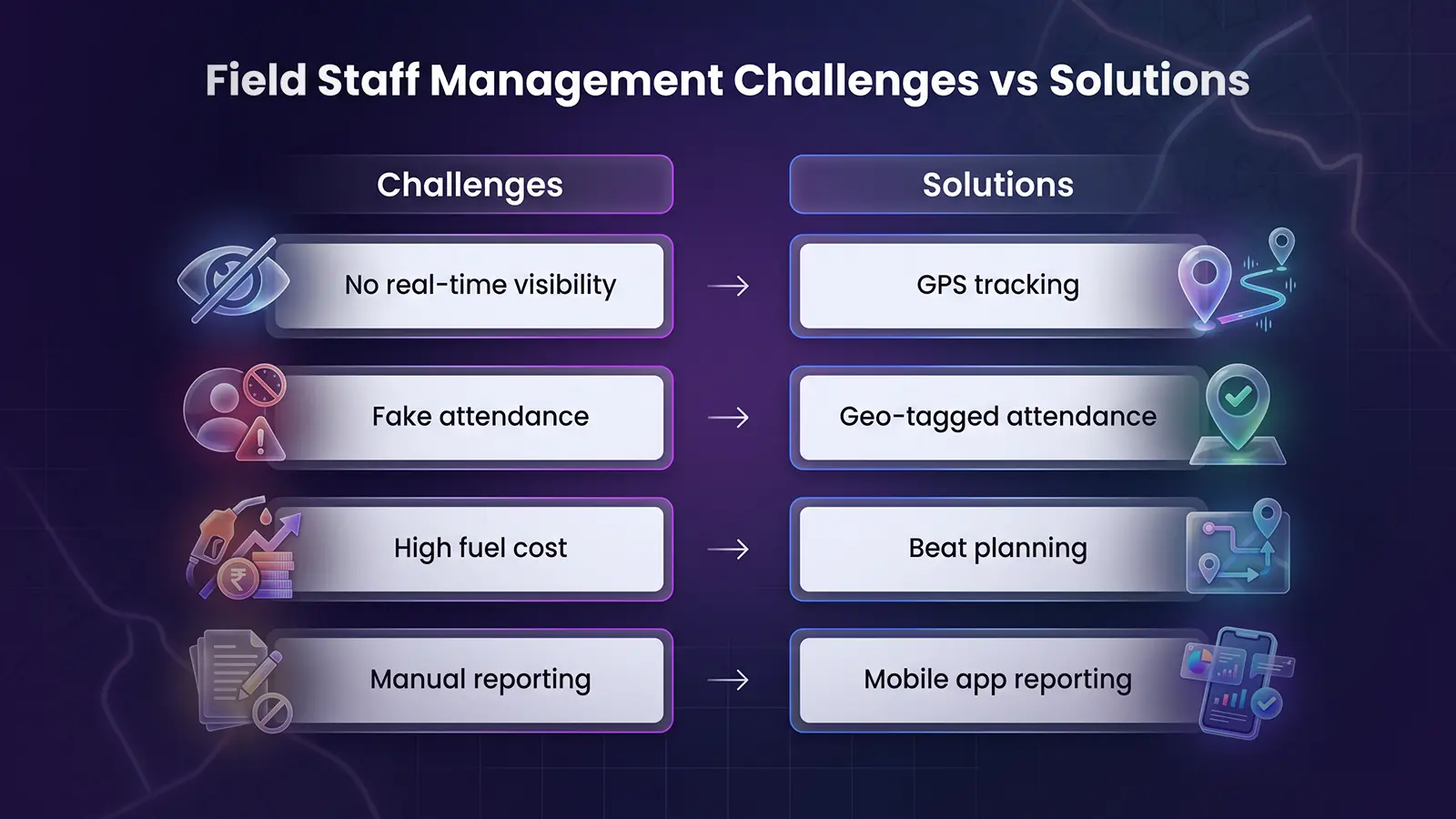
Field Staff Management Challenges vs Solutions
What are the Benefits of Field Staff Management?
Field staff management helps reduce costs, increase productivity, and boost business growth. Here are all the benefits of FSM software.
1. Higher Staff Productivity
When tasks are clearly assigned and tracked, employees spend less time on coordination and more time on execution. They don’t have to deal with overlaps, last-minute changes or back and forth communication with managers. This reduces idle time and chaos in the workflow. This way, staff can complete more tasks or meet more customers in a day.
2. Reduced Operational Costs
Beat planning and better task allocation reduce travel time and fuel costs. Employees work more efficiently, and unnecessary travel is reduced. Over time, this leads to significant cost savings across the business. Plus, staff can get more work done in less time.
3. Enhanced Visibility Into Operations
FSM software like TrackoField provides managers real-time updates of their teams’ location, task status, and performance. This gives managers better control over field operations and the ability to identify and resolve issues quickly.
4. Better Decision-Making
FSM helps executives collect geoverified and timestamped data. It provides accurate insights into staff performance and how they’re performing. With data analysis, managers can identify trends and make faster, better decisions.
5. Increased Accountability
Digital tracking records every activity with GPS location tags and timestamps. This reduces false reporting and ensures that employees follow processes correctly. FSM tools like TrackoField even record offline time, airplane mode usage or GPS disabling. No more ghost visits or false reporting.
6. Faster Execution
Field employee tracking software reduces manual work and speeds up task execution through automation. Employees can focus on their core tasks instead of completing admin work. They efficiency improves then they don’t have to file detailed reports by hand or complete paperwork manually.
7. Improved Customer Satisfaction
Faster service and better communication improve customer experience. Timely updates and accurate execution build trust and increase customer satisfaction.
How to Manage Field Staff? 9 Steps to Follow
Managing field staff requires a clear and structured approach. It’s a 9-step process that helps businesses manage field teams effectively and leads to faster growth.
Step 1: Well-Defined Roles & Responsibilities
Employees should be fully aware of their roles and responsibilities. When employees understand their tasks properly, they work with more focus. This helps reduce any confusion during work.
Step 2: Achievable Goals & Targets
Setting clear goals and targets helps evaluate staff performance easily. All visits, onboardings, or orders should be measured. However, they shouldn’t be so high that they affect employees’ morale or so low that idle time increases.
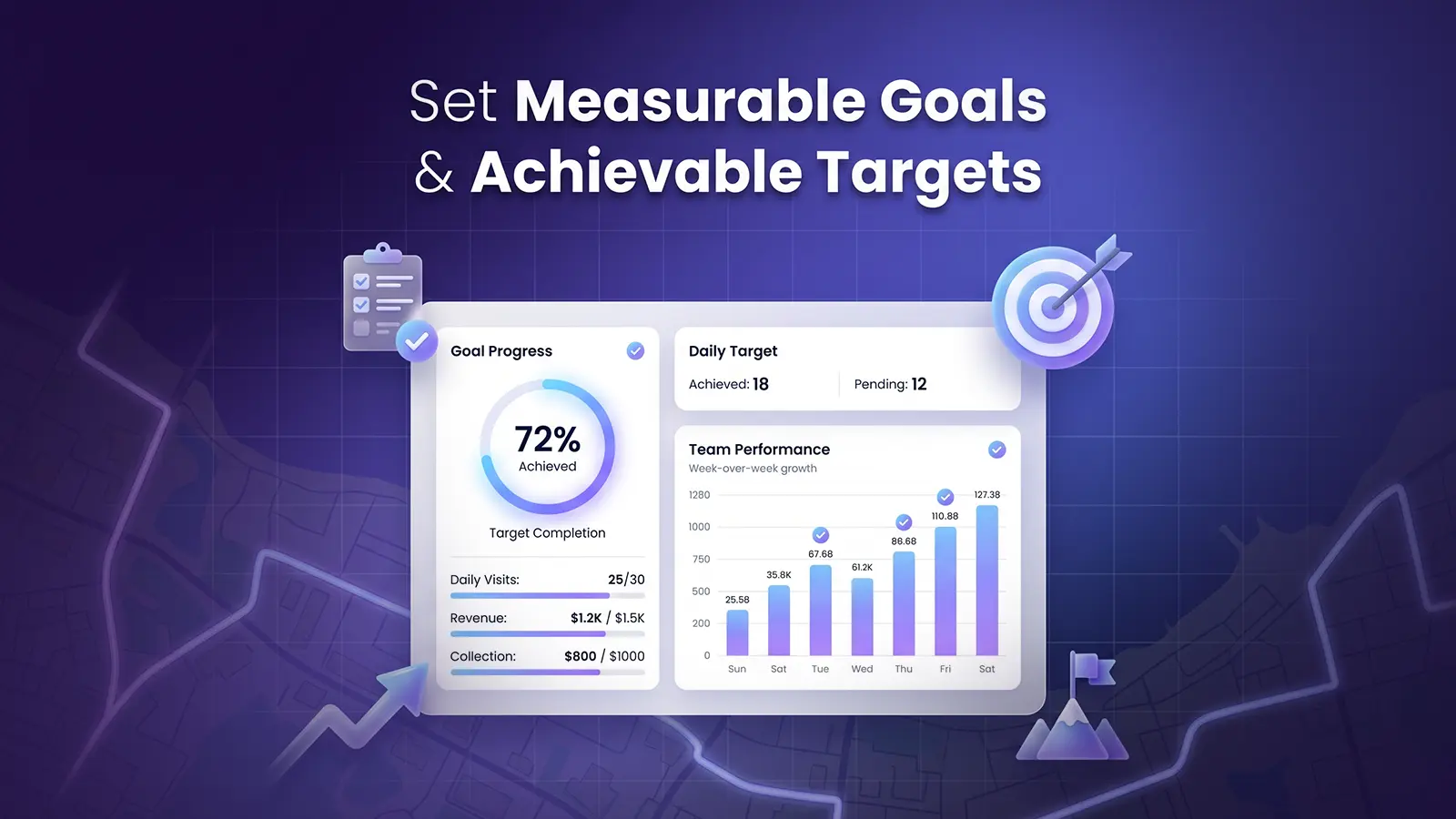
Set Measurable Goals & Achievable Targets
Step 3: Field Staff Management (FSM) Software
AI-enabled FSM software allows managers to:
- Smartly assign tasks
- Track work progress
- View real-time updates
- Manage shifts & attendance
This improves reporting, reduces manual work and enhances coordination between managers and field teams.
Step 4: Real-Time Tracking
Managers need to know where their employees are, what they’re doing, and how they are performing. This is only possible with real-time tracking. It allows managers to coordinate with their staff easily, resolve issues quickly and ensure a smooth workflow.
Step 5: Route & Shift Planning
Proper planning helps employees complete more tasks in less time. It reduces travel time and improves productivity across field operations. There is no overlap between employees’ shifts. Field employee tracking software like TrackoField even let managers view the route history of their on-ground teams.
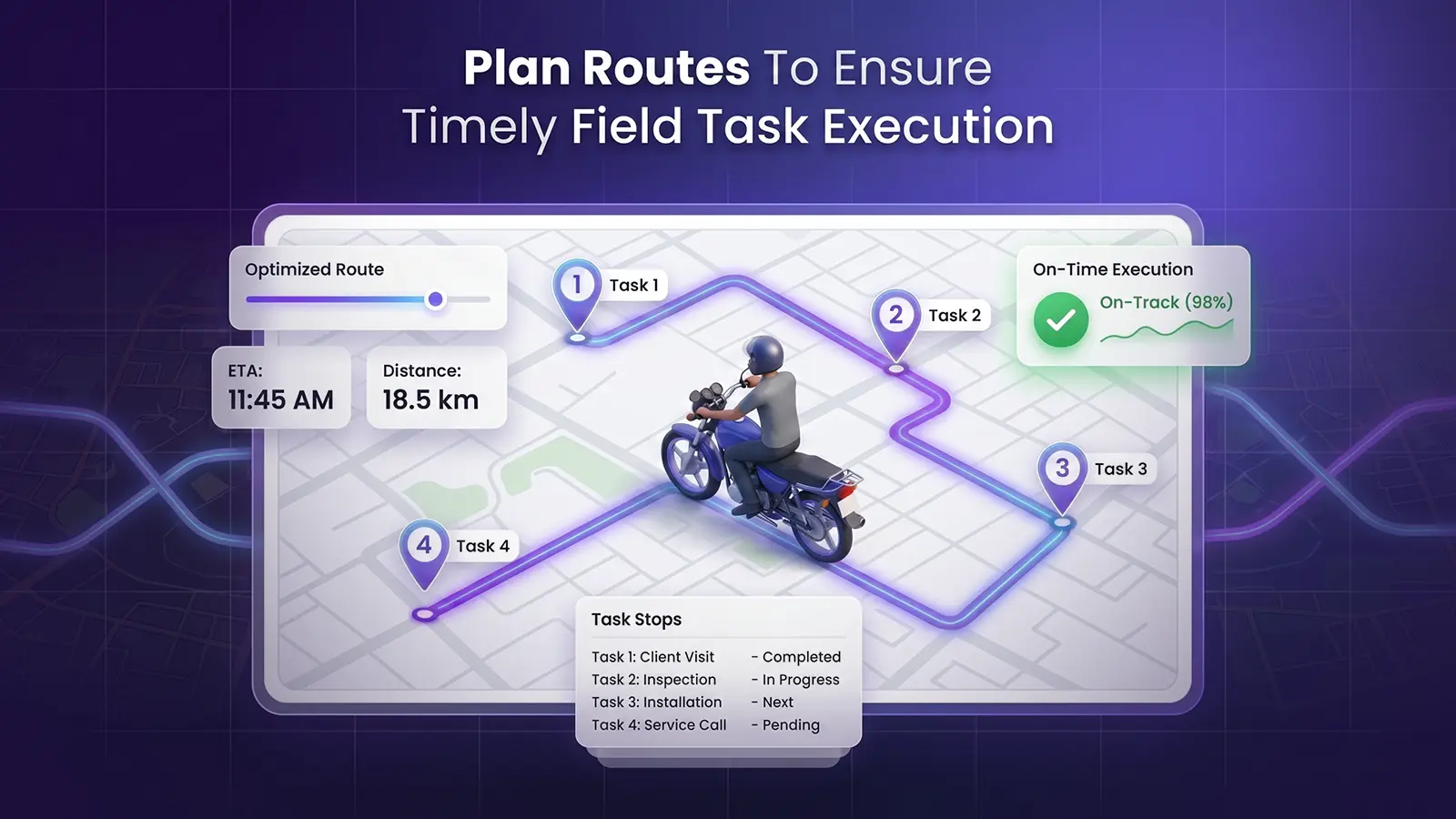
Plan Routes To Ensure Timely Field Task Execution
Step 6: Smart Task Allocation
Tasks should be assigned based on priority, staff availability or staff proximity to the customer location. This saves time and ensures equal distribution of work. No employee should be over or under-worked or made to work beyond his area of expertise.
Step 7: Performance Evaluation
Consistent performance tracking can help identify gaps before they get big. Proactive managers can resolve issues before they arise by identifying discrepancies in reports and improve staff efficiency.
Step 8: Training & Support
Employees need proper training to use digital tools and handle on-ground challenges. This improves their confidence in real-world situations. Plus, there should be someone available at all times to help field agents quickly. Be it to guide them about things like new features or traffic issues.
Step 9: Digital Data Capture
Capturing data digitally significantly reduces mobile staff’s workload. With a mobile FSM app, they can quickly upload:
- Documents
- Pictures
- Voice notes
- Digital Signatures
- Customer Attendance
- Forms
It reduces paperwork, improves accuracy of data collection and ensures all customers interactions are verifiable. Also, all tasks are done with a digital geo-verified trail for compliance.
Top 5 Field Staff Management Software in 2026
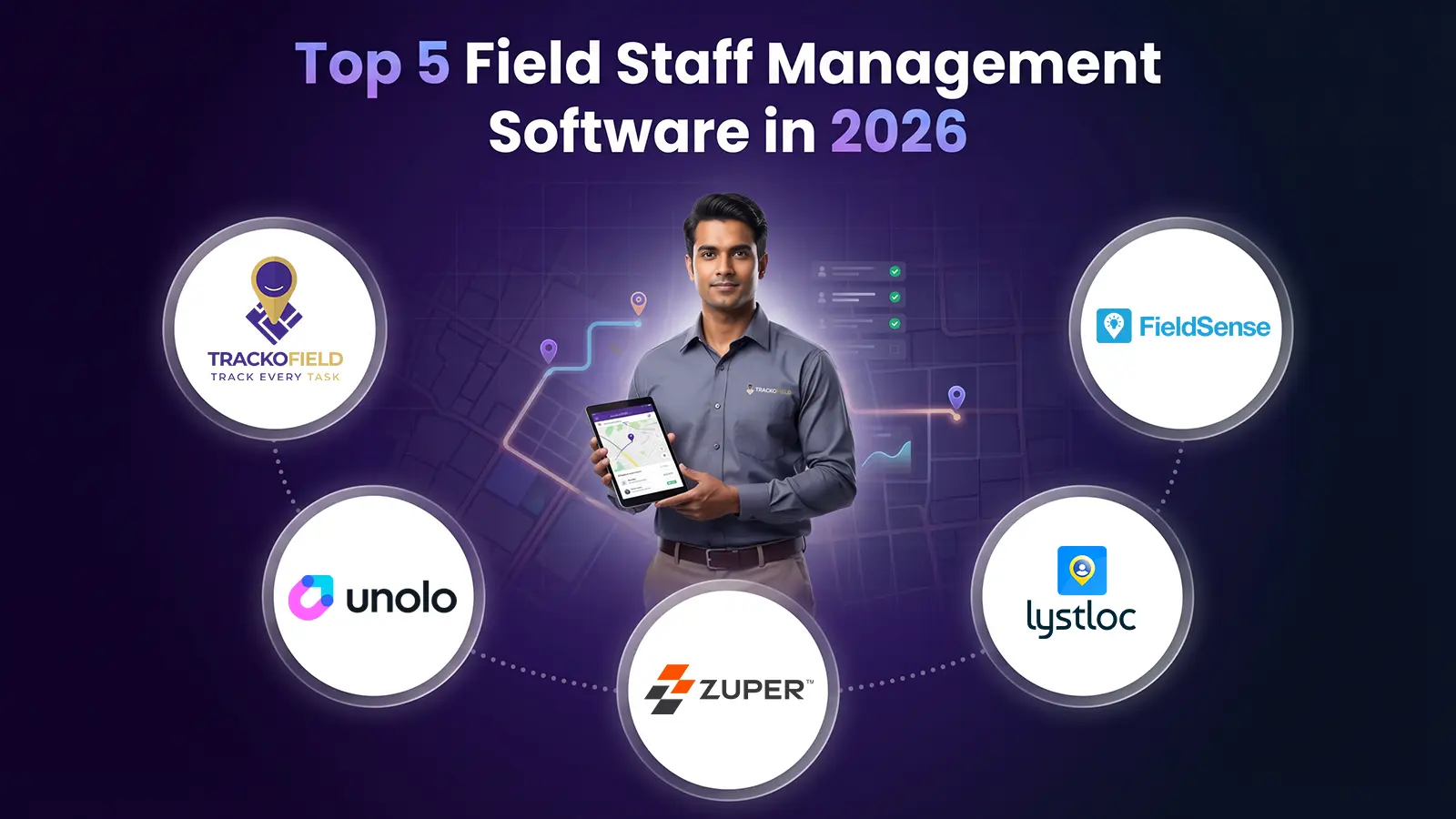
In 2026, the top field staff management software in the industry are TrackoField, Lystloc, FieldSense, Unolo and Zuper.
Top 5 Field Staff Management Software in 2026
1. TrackoField
TrackoField is an AI-powered field force management software for businesses with large remote teams. It offers advanced features like AI face recognition, automated beat plans, expense management, offline mode, territory management, real-time tracking, smart task allocation, and AI manager bot. The result is higher staff productivity and reduced inefficiencies. TrackoField allows managers to:
- Monitor on-ground activity
- Verify visits
- Plan territories
- Manage expenses
- Analyse performance
2. Lystloc
Lystloc is an easy-to-use location tracking software. It helps businesses monitor field employees in real time. Lystloc offers features like GPS tracking, attendance management, route history tracking, etc. It helps managers ensure that employees are working from the right locations and completing their tasks on time.
3. FieldSense
FieldSense focuses on task management and workflow tracking for field teams. It helps businesses assign tasks, monitor progress, and collect updates from the field. FieldSense reduces manual coordination and ensures that teams follow defined rules. It improves efficiency and reduces delays in operations.
4. Unolo
Unolo is designed to help businesses track field employees and boost productivity. It offers features like:
- Live location tracking
- Attendance monitoring
- Automated reports
Managers can use these insights to improve team performance and reduce idle time. Unolo ensures that on-ground operations run smoothly.
5. Zuper
Zuper is a top field service management platform. It helps businesses manage scheduling and task execution. Using Zuper, managers can assign jobs, track technicians, and monitor task progress. This improves coordination between teams and ensures that tasks are completed on time.
Conclusion
In 2026, field staff management is non-negotiable for any business with a remote workforce. Traditional methods like calls, EOD reports, manual coordination aren’t feasible in the long term. Today, you need to employ AI-enabled tools to manage field staff. It keeps you way ahead of competitors. Businesses can also ensure tight control over their field teams while ensuring revenue-led growth.
AI-powered software like TrackoField can greatly improve staff productivity, help control budget and offer better control over field teams. If you manage an on-ground workforce and wish to stay ahead in a competitive market, a field staff management system is the next best investment.
Frequently Asked Questions
-
Which industries need field staff management?
Field staff management is needed in industries where employees work remotely. This can include agri-input, telecom, FMCG, healthcare, NBFC-MFI, and real estate companies. These businesses depend on field teams for sales, service, and collection jobs.
-
What is the difference between field staff management and field force automation?
Field staff management (FSM) software helps organise and track field employees and their tasks. Field force automation software (FSA) automates employees’ repetitive operations. This includes task assignment, route planning, attendance and more. FFA reduces manual efforts and paperwork. FSM helps in shift planning and smooth supervision of mobile teams.
-
Which is the best field staff management software?
It’s tough to single out the best field staff management software for every business. Tools like TrackoField, Lystloc, Unolo, FieldSense, and Zuper are popular options. But the best choice depends on your needs. You should consider tools that provide tracking, automation, mobile-based reporting, and ease of use to your on-ground teams. TrackoField is an AI-powered solution that meets all requirements.
-
What is the difference between manual and automated field staff management?
Manual field staff management involves phone calls, Excel sheets, and paper reports. This can lead to delays, errors, and poor visibility. Automated FSM involves the use of mobile apps and software to track tasks in real time. It helps managers make operations more efficient and scalable.
-
How much does field staff management software cost?
The cost of field staff management software is variable. It depends on factors like special features and team size. For instance, TrackoField’s plans start at ₹275/user/ month if purchased on a half-yearly basis. TrackoField also offers custom plans at custom prices for enterprise teams with 100+ users.
-
How to choose the best field staff management software?
To pick the best field staff management software, start by understanding your business needs and challenges. Look for features like real-time tracking, AI face recognition, beat planning, and task management. Choose software that is easy to use for your field staff. It should also be scalable. Lastly, consider pricing, customer support, and integration with your current systems.

Mudit is a seasoned content specialist working for TrackoField. He is an expert in crafting technical, high-impact content for Field force management software With years of experience rooted in the me... Read More


Related Blog

Sales Territory Management: 6 Best Practices for High-Performing Teams
Poor sales territory management can quietly stifle sales growth. Understand how companies can create high-performing territories.
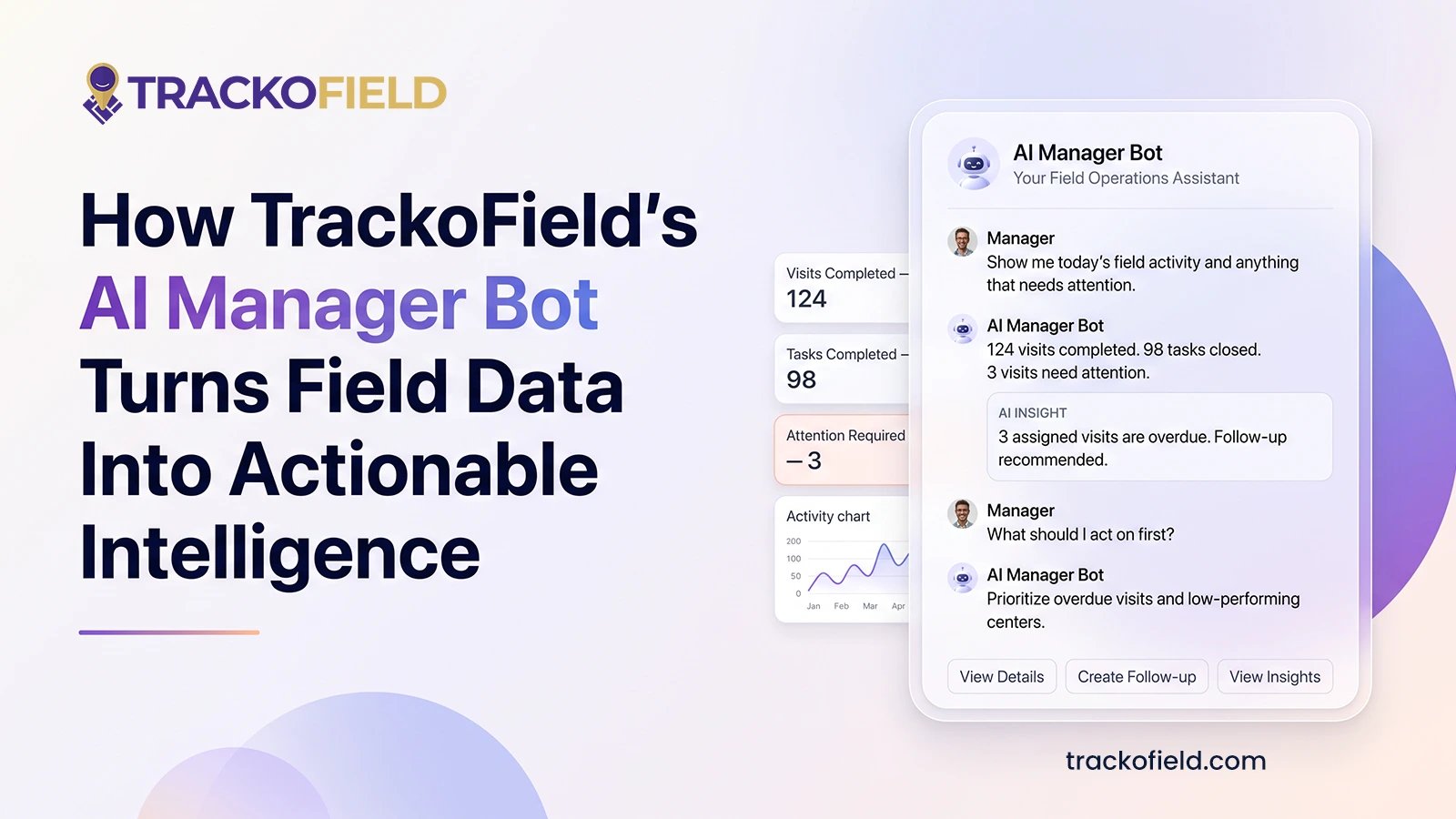
TrackoField’s Manager Bot: Bringing the Future of Field Force Intelligence to You Today
TrackoField’s AI Manager Bot transforms field force management into field force intelligence by turning operational data into instant AI-powered insights.

Face Recognition: What It Is, How It Works & Benefits for Field Teams
Facial recognition is a way of identifying or confirming an individual’s identity using their facial features. Read this guide to…
Field Operations Manager: Roles, Challenges & How to Optimize Performance
Field operations managers handle on-ground activities with challenges like visibility, control, and coordination. This blog covers their roles, key challenges,…


Your inbox awaits a welcome email. Stay tuned for the latest blog updates & expert insights.
"While you're here, dive into some more reads or grab quick bites from our social platforms!"Stay Updated on tech, telematics and mobility. Don't miss out on the latest in the industry.