
Quick Summary

- TrackoField's new Territory Management module enhances accountability by defining territory ownership for field operations.
- The module addresses complexities like overlapping territories and unclear ownership, improving efficiency and control.
- Key elements include configurable levels, hierarchy, ownership assignments, and built-in controls for operational flexibility.
- Territory Management drives business impact by optimizing field movement, eliminating duplicate efforts, and enabling scalable operations.
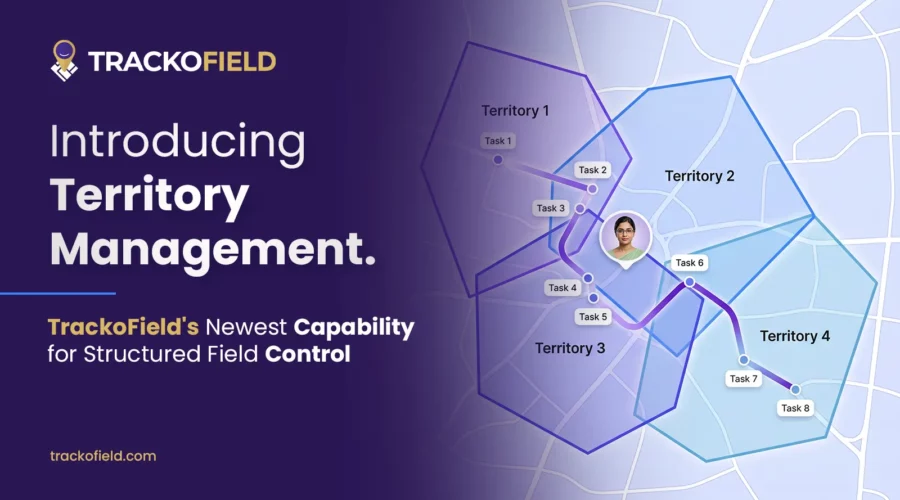
Define territory ownership with TrackoField’s new Territory Management module. Drive accountability and bring structure to field operations.
As field operations grow, managing teams becomes complex. Overlapping territories and limited visibility begin to surface. Unclear ownership is another major bottleneck. What initially begins as manageable soon turns into inefficiencies. Over time, they start impacting structure, clarity, and control.
To address this, TrackoField has introduced its Territory Management module.
This is a powerful addition to our suite of capabilities! It brings streamlined coordination with zone-wise reporting to avoid uncovered regions. At its core, territory management creates a foundation for better planning. It ensures businesses can allocate field teams with more precision.
Curious to learn more? Dive in!
Territory Management Explained
Territory management is organizing and assigning specific operational areas to field agents. It helps businesses define who is responsible for which territory. This ensures clear ownership and better coverage. With territory management, businesses can:
- Improve coverage and eliminate gaps.
- Ensure clear ownership across regions.
- Minimize the risks of overlaps in teams.
- Streamline task allocation for managers.
By structuring teams around defined territories, businesses increase efficiency. Altogether, it helps make data-driven decisions which impact profits and growth.
Inside Territory Management: 4 Key Elements
Territory management includes elements like levels, hierarchy, and ownerships to name a few. Read in detail to learn more about each one.
1. Levels
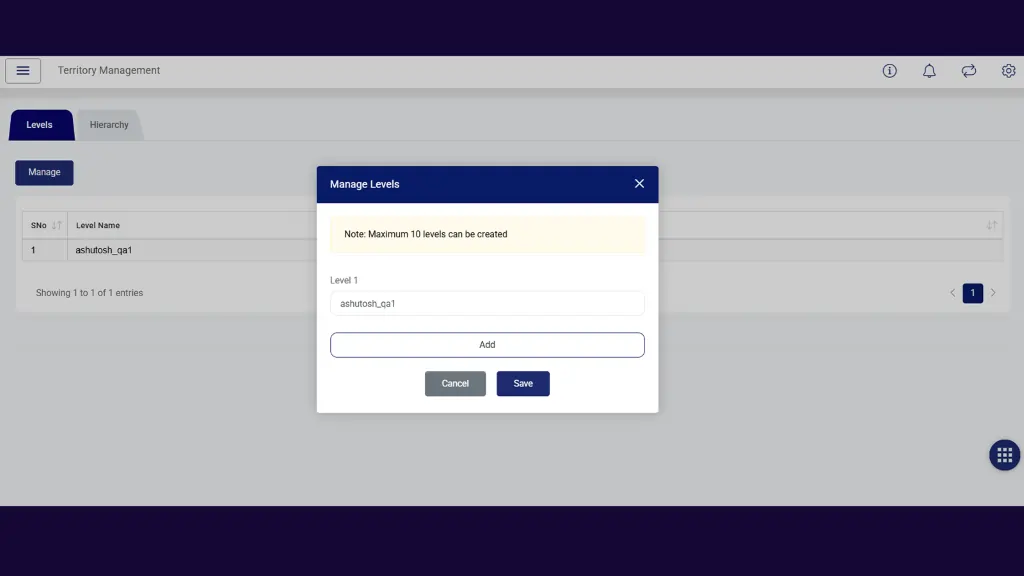
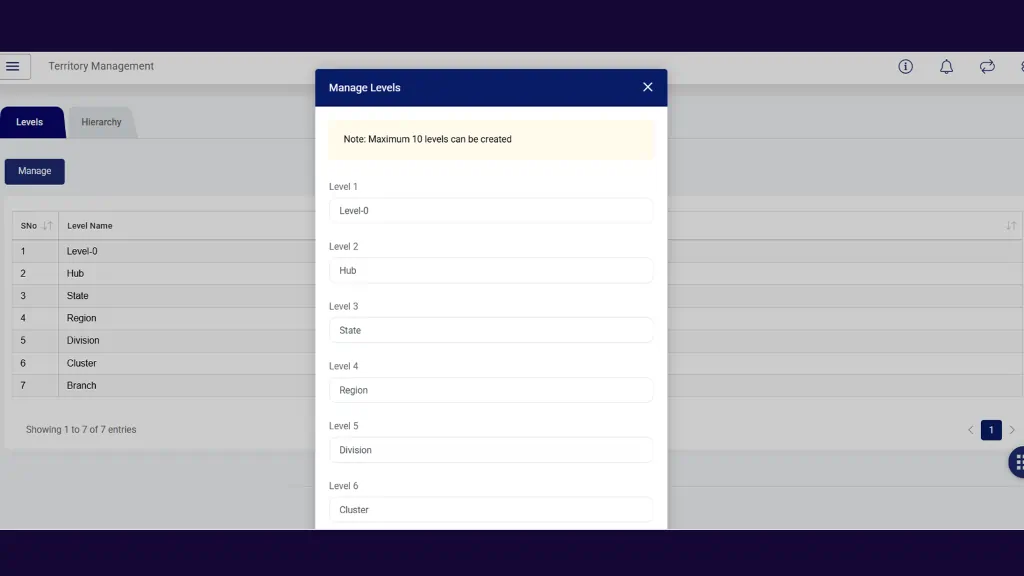
Every organization structures its territories differently. This is where TrackoField’s territory levels bring flexibility. Levels define segmentations in the following format:
- Cluster → Region → Area → Branch
- Country → State → City → Zone
Businesses can design their own territories based on unique operational needs. This is possible since we offer fully configurable levels (up to 10). The names of these levels can be updated anytime as per changing workflows.
Fully configurable Levels
2. Hierarchy
Once levels are defined, the next step is building territory hierarchies. TrackoField enables this through operational and visual views. It helps ensure control across all levels.
-
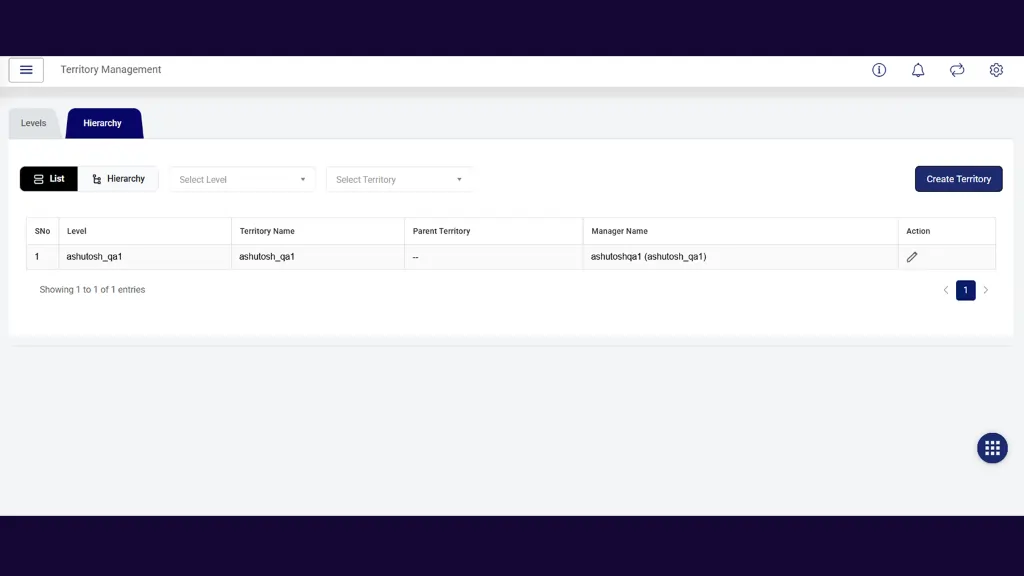
List View (Operational Control)
Tabular view displays key details like level name and territory name. Others are parent territory and assigned manager. It follows a clear parent-child logic. This is where the root territory has no parent. Thus, all other territories are lined up accordingly.
List View
-
Hierarchy View (Tree Structure)
This is a visual representation of territories in a tree format. This makes it easy to understand relationships, reporting lines, and structure. All at a glance.
By default, root level and root territory are pre-created. These are also assigned to the root manager providing a starting point. Such a structured approach helps businesses build, manage, and scale with precision.
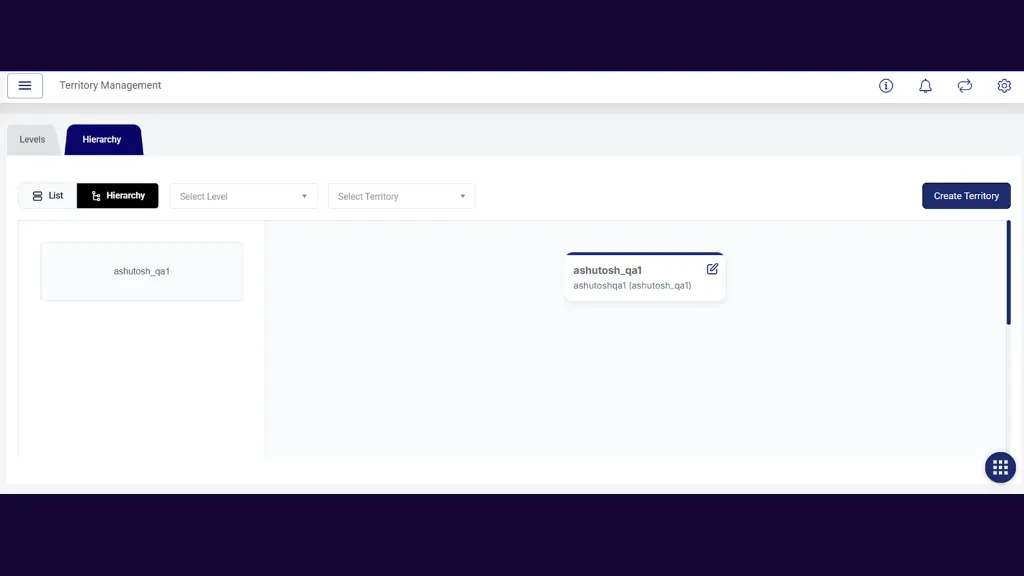
Tree Structure
3. Ownership
Once the hierarchy is in place, territories are created. This is done with clear ownership to ensure accountability and streamlined execution.
-
Territory Name
Defined based on business requirements and operational structure.
-
Parent Territory
Mandatory field that determines where the territory fits within the hierarchy.
-
Territory Manager
Each territory is assigned to a manager responsible for performance and oversight.
-
Employee Assignment
Employees are mapped under territories. This is done with a selection limited to those reporting to the assigned manager.
This structured assignment ensures clear ownership and better coordination. Businesses can see improved operational control across territories.
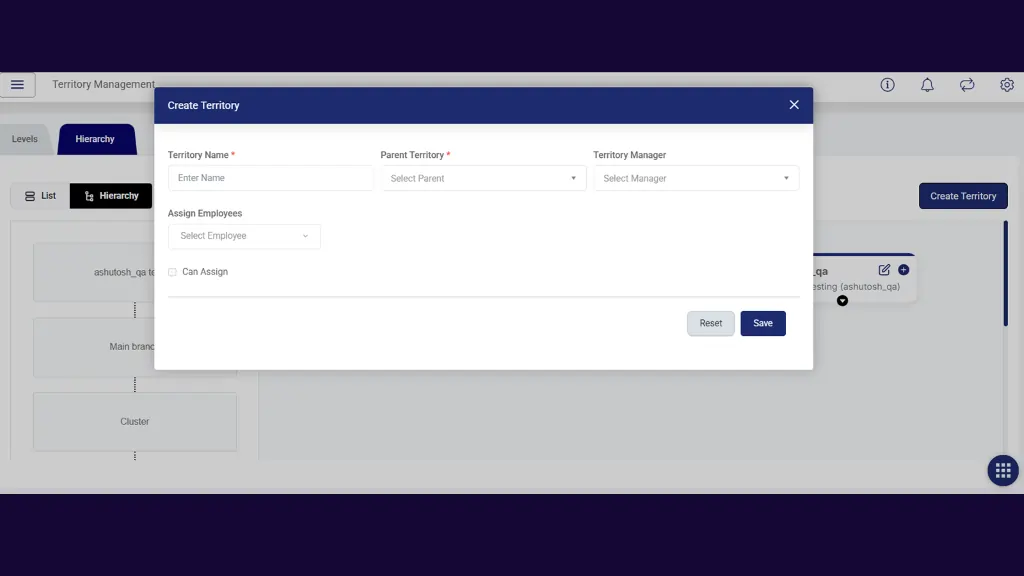
Assigning Ownership
4. Controls
Territories are created within the hierarchy with defined ownership. Each one comes with built-in controls. These manage access, delegation, and operational flexibility.
-
Can Assign (Delegation Control)
Enables managers to assign employees within their hierarchy. This helps support smooth task delegation and execution. However, this does not allow for the creation of new territories.
-
Active/Inactive Control
Allows territories to be activated or deactivated based on business needs.
- Active: Available across reporting and operations.
- Inactive: Excluded from the operations.
These controls provide the flexibility to adapt territory behavior. It also helps maintain structured governance and operational consistency.
Territory Management in Action: Industry Use Cases
Territory Management is powered by location intelligence. It plays a critical role in industries that operate across distributed regions. They require strict ownership and visibility. Below are a few industries where territory management can drive better efficiency.
NBFCs
Helps mark and define the territories for NBFC loan officers. This ensures clarity in borrower allocation. Field visit overlaps are reduced. Field collection tracking for NBFCs across territories are improved.
MFI
Enables precise JLG and borrower group distribution among MFI loan agents. This helps improve repayment tracking, accountability, and rural outreach coverage. Altogether, field collection tracking in MFIs improves.
Agri Input
Supports agri-input distributor and farmer network mapping. It also ensures better coverage of villages and optimizes sales visits. Demand fulfillment, hence, improves across regions.
BFSI
Helps assign BFSI field agents for onboarding, policy servicing, and collections. This improves response time and customer experience.
How Territory Management Drives Business Impact?
With TrackoField’s Territory Management in place, organizations gain complete clarity. They are able to manage field operations better. Teams are transformed with ownership and visibility. Altogether, there is structured and scalable revenue growth.
1. Ownership
Each territory is assigned with a defined responsibility. This ensures no ambiguity in ownership. Managers and teams know exactly what they are accountable for. It leads to faster execution and better control.
2. Eliminates Duplicate Efforts
By structuring territories and assignments, work overlapping between teams is removed. This reduces operational confusion. It ensures resources are utilized more efficiently.
3. Optimized Field Movement
Field executives are assigned within structured territories. It helps reduce unnecessary travel and improve route efficiency. This leads to time savings and lower operational costs.
4. Better Employee Accountability
With defined territories, performance becomes measurable. Employees are more accountable for their assigned regions and outcomes. Managers are able to maintain transparency within the team.
5. Structured Reporting
Data is organized based on territories. It makes reporting more meaningful and actionable. Managers can analyze performance at a regional level for better insights.
6. Scalable Operations
A structured framework allows businesses to scale without losing control. As teams grow, the system ensures consistency and operational discipline.
With clear territories in place, field activities have become simpler. Every scattered activity is structured, which makes execution truly organized.
Conclusion
Territory management brings structure to field operations that become complex as teams scale. By defining clear ownership and organized execution across regions, it helps eliminate inefficiencies. Teams operate with greater precision. With TrackoField’s flexible framework, organizations build scalable field structures. These support smarter decisions. Ultimately, this ensures stronger business outcomes.

Frequently Asked Questions
-
What is territory management in sales?
Territory management is the practice of dividing a market into clear zones and assigning each zone to a rep or team. It gives every account an owner, balances workloads, and helps teams cover the right customers without overlap or gaps.
-
How does a territory management module work?
The module maps customers, outlets, and leads to defined areas. Managers assign each area to a rep, set visit targets, and watch coverage on a dashboard. When workloads shift, they can redraw boundaries and reassign accounts in minutes.
-
What are the key features of territory management software?
Look for map-based territory creation, rep assignment, visit scheduling, live location tracking, and coverage reports. TrackoField pairs these with attendance, tasks, and route data. Together they show who visited what, where, and when.
-
How can territory management improve field sales performance?
Clear territories cut travel time and stop reps from chasing the same lead. Each rep knows exactly where to go and whom to see. That means more visits per day, better follow-ups, and fewer missed accounts.
-
How do you optimize sales territories?
Start with data. Review visit counts, revenue, and travel distance per zone. Then balance accounts so each rep has a fair, reachable workload. Recheck often, because markets change. Route and GPS reports from TrackoField make this review simple.

Shemanti is a Content Marketing professional with 7+ years of experience in shaping credible narratives across B2B products. As the Content Team Lead for TrackoBit, TrackoField, and TrackoMile, she br... Read More


Related Blog
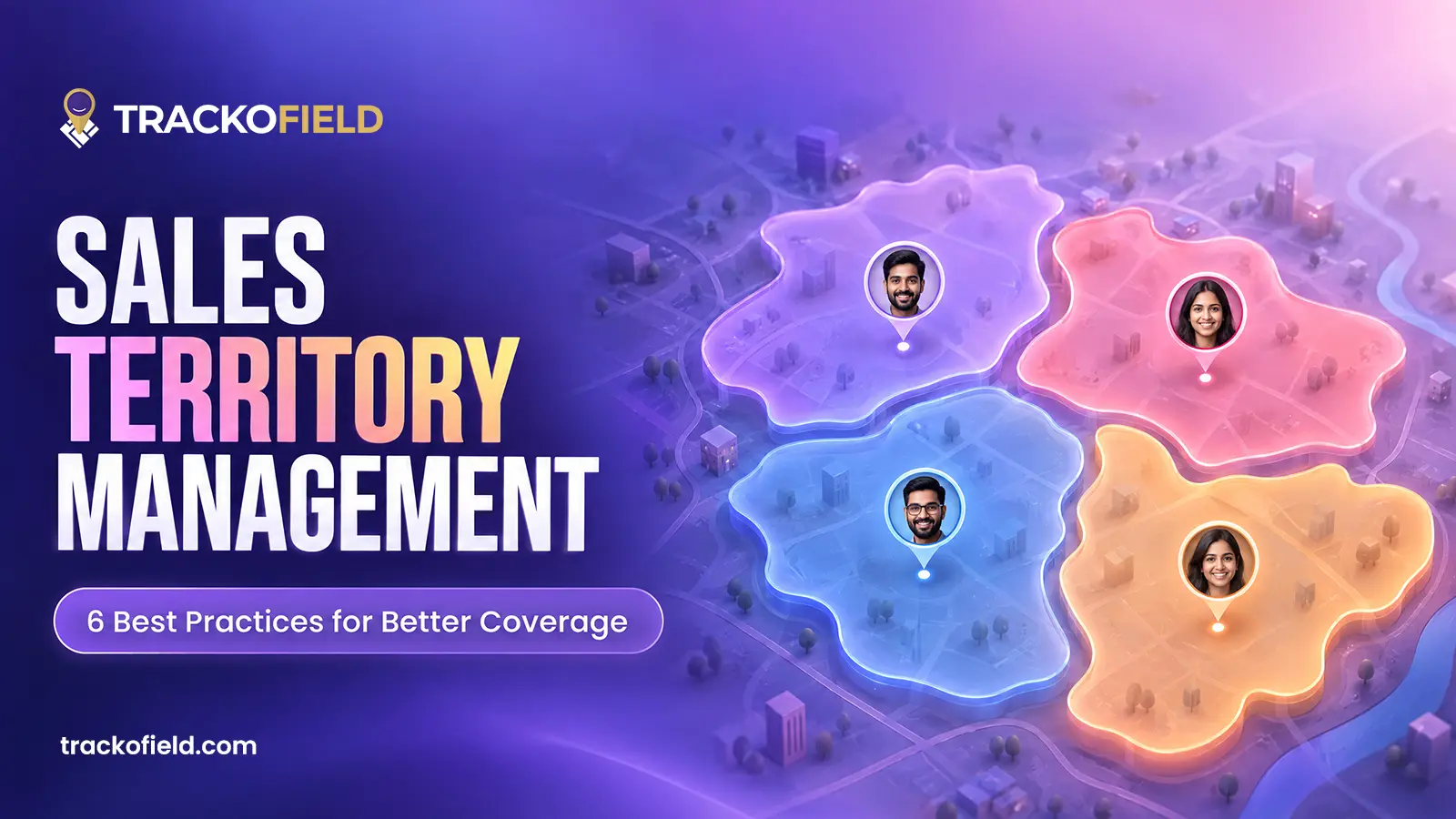
Sales Territory Management: 6 Best Practices for High-Performing Teams
Poor sales territory management can quietly stifle sales growth. Understand how companies can create high-performing territories.

TrackoField’s Manager Bot: Bringing the Future of Field Force Intelligence to You Today
TrackoField’s AI Manager Bot transforms field force management into field force intelligence by turning operational data into instant AI-powered insights.

Face Recognition: What It Is, How It Works & Benefits for Field Teams
Facial recognition is a way of identifying or confirming an individual’s identity using their facial features. Read this guide to…
Field Operations Manager: Roles, Challenges & How to Optimize Performance
Field operations managers handle on-ground activities with challenges like visibility, control, and coordination. This blog covers their roles, key challenges,…


Your inbox awaits a welcome email. Stay tuned for the latest blog updates & expert insights.
"While you're here, dive into some more reads or grab quick bites from our social platforms!"Stay Updated on tech, telematics and mobility. Don't miss out on the latest in the industry.