
Field operations managers handle on-ground activities with challenges like visibility, control, and coordination. This blog covers their roles, key challenges, and how technology solves them.
Field operations play a major role in sectors like NBFCs, banking, and Agri-input. Whether it’s a loan officer conducting a doorstep KYC or a collection agent managing their overdue payments. The “Field” is where the core business actually runs. Managing these field activities is the responsibility of a field operations manager.
However, handling a distributed workforce is challenging. Without visibility, a field force manager often struggles with ghost visits, delayed reporting. They face communication gaps and manual errors. This affects both compliance and operational efficiency. As field teams continue to grow, the role of field operation manager becomes even more important. If you also have a scattered field force to manage, then this blog is for you.
Here we will explain why managing field operations matters. Also, we will explore the responsibilities of a field manager. Plus, the major challenges involved in managing field teams at scale.
Why Are Field Operations Important?
Field operations are crucial because they have a direct impact on your revenue and profitability. Suppose you have a field employee in your MFI. They are responsible for borrower onboarding, document collection, payment collection, or customer verification. When a field agent misses, borrowers visit or submit wrong repayment information. It can slow down the entire process. Plus, it hurts the brand reputation.
Over time, these operational gaps can impact cash flow. Plus, it reduces productivity and increases customer dissatisfaction. At the same time, field operations help maintain direct communication with their customers.
In industries where trust matters, physical visits help businesses stay connected with customers. They remain at the forefront of their minds. These in-person interactions also help businesses resolve issues faster. Plus, it increases customer retention and delivers a more personalized service experience. A field operation manager helps businesses stay ahead in the market.
Industry Insights
Companies using field service management software to manage field operations report up to a 400% ROI over three years.
Core Roles & Responsibilities of a Field Operations Manager
A field operation manager is responsible for overseeing field teams. They can track daily operations, task completion, and overall field performance. Their key responsibilities include:
- Managing field teams by assigning tasks and coordinating daily schedules.
- Monitor field activities by tracking visits, attendance, movements, and task progress.
- Plan field operations by managing routes, territories, and workloads.
- Track team performance by monitoring productivity, targets, and key field KPIs.
- Ensure task completion by checking whether assigned visits and tasks are completed on time.
- Resolve field issues by handling delays, missed visits, and operational challenges.
- Control field costs by reducing unnecessary travel, fuel costs, and operational expenses.
- Analyze field data to find performance gaps and improve operations.
- Report to management with updates on field performance, progress, and issues.
Together, these responsibilities help operation managers keeps team accountable. So, they can improve productivity and maintain smooth day-to-day field operations.
What Are the Top Skills Needed for a Field Operations Manager?
Team management, task allocation, problem solving, and customer retention strategy. These are the top skills needed for a field staff manager.
1. Team Management Skills
Field managers are responsible for managing employees working across different locations. To manage field teams efficiently, managers must coordinate daily tasks. Plus, they monitor their performance and handle shift scheduling. So, they can ensure employees complete their assigned tasks on time.
They are also responsible for resolving on-ground issues. This involves maintaining accountability and ensuring smooth communication between field and office teams.
2. Time Management & Task Prioritization
Managing multiple field activities and reporting deadlines is a core responsibility of field managers. For example, if there are urgent collection visits or high-priority verification tasks. Managers must quickly reorganize schedules and allocate resources accordingly.
3. Problem-Solving Ability
Field operations rarely go as planned. Field workers may miss visits. Customers may schedule appointments, or routes can get delayed due to traffic. At the same time, there may be disputes between workers and customers. So, managers should have conflict resolution skills. Also, they should offer practical solutions to keep field activities running smoothly.
4. Knowledge of Field Force Management Software
In today’s digital world, field operations managers should be tech-savvy. They should know how to use modern field employee monitoring software. So, they can assign tasks, track visit status and manage attendance from a single platform. This ensures better visibility and faster decision making.
5. Data Reporting & Analytical Skills
Field operations managers are expected to make informed decisions. These are done based on task completion reports, collection data, and customer feedback. The real skill is not just collecting this information. It’s interpreting it to understand what is happening on the ground.
6. Route & Resource Planning
Field operations managers have to plan how field employees move across locations every day. This is not just about assigning visits. They make sure routes are practical, time-efficient, and aligned with task priority. A wrong route planning can easily lead to missed visits, delayed collections, or poor customer experience.
8 Top Challenges in Managing Field Operations Supervisor
Lack of real-time visibility, communication gaps, and customer satisfaction are some major challenges in managing field sales team. Continue reading to learn more.
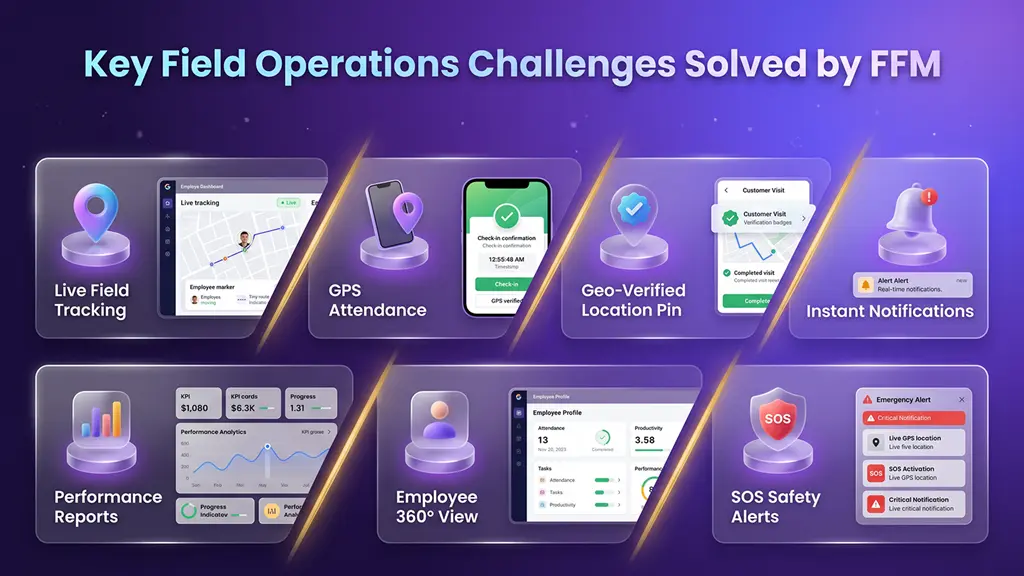
How FFM Software Solves Field Challenges
1. Lack of Real-Time Field Visibility
Lack of visibility is the most prominent challenge for all field operations supervisors. Managers often do not have clarity on:
- Task status or progress
- Live location of field agent
- Verification of on-site presence
This leads to delayed decision making and missed or duplicate visits. It ultimately impacts productivity and service quality.
2. Communication Gaps
Field managers often rely on phone calls, or end-of-day updates to understand what’s happening on the ground. This becomes a challenge when teams work in low or no network areas, where real-time communication is not possible. Managers face:
- Delayed updates from the field teams
- Dependency on calls for coordination and status checks
- Lack of real-time visibility in low or no-network zones
This leads to slow decision making and affects the overall efficiency of the team.
3. Difficulty in Task Scheduling & Allocation
Field staff attendance monitoring is a common challenge field operation managers face. Since teams are distributed, it becomes hard to verify attendance and daily activity accurately.
- Tasks are assigned without proper location clustering
- Mismatch between task requirements and employee skill sets
- Difficulty in balancing workload based on availability and capacity
This results in inefficient task allocation, excessive travel time, and affect overall productivity.
4. Difficulty in Tracking Field Attendance
Field staff attendance monitoring is a common challenge field operation managers face. Since teams are distributed, it becomes hard to verify attendance and daily activity accurately.
- Attendance marked without actual field presence
- No clear record of start time, end time, or working hours
- Difficulty in verifying whether assigned visits were actually completed
This leads to low accountability, inaccurate reporting, and reduced control over field operations.
5. Managing Field Data and Reporting Delays
Field supervisors often struggle to get a real-time view of productivity. They cannot verify assigned targets. Most data come in late or need manual consolidation.
- No real-time view of target vs achievement during the day
- Difficult to identify underperforming employees early
- Heavy dependency on end-of-day reports to assess performance
This makes it harder to take corrective action on time and leads to missed targets. This affects both revenue goals and team’s productivity.
6. Handling Field Exceptions & Escalations
Unplanned issues are common in field operations. Some of them include:
- Customers not available at the location during visits
- Payments disputes or verification mismatches on the spot
- Field employees facing access, location, or coordination issues
Field operation managers are expected to respond quickly. However, handling these exceptions in real time is difficult. Because of limited visibility and delayed communication from the field. This results in missed visits, poor customer experience, and repeated field efforts.
7. Measuring KPIs for Field Efficacy
Without real-time data, it is challenging to review the performance of field staff. Most performance tracking depends on delayed or incomplete data.
- No clear visibility into KPIs like visits completed and collections done
- Difficulty in tracking individual performance across multiple locations
- Limited ability to identify trends or performance gaps early
This makes it harder to evaluate team efficiency. Plus, they take corrective action and consistently improve field performance.
8. Ensuring Field Worker Safety
Field operation staff often work in unpredictable environments. This includes remote areas, unfamiliar locations, and high-risk zones. They face:
- Difficulty in tracking employee location during emergencies
- No quick way to respond to safety incidents or distress situations
- Limited visibility when employees work alone in remote areas
This creates safety risks for employees. Also, it exposes businesses to operational disruptions and liability issues. So, ensuring their safety throughout the day remains a key responsibility for supervisors.
How TrackoField Empowers Field Operation Manager?
TrackoField is an AI-powered field staff management software. It offers real-time visibility and control in one platform. It allows field operation managers to:
- Track field agents live with GPS, geo-tagged visits, and timestamped activity logs.
- Managers receiver alert when a field agent device goes offline or loses network connectivity. They also receive updates on battery and network status for better field visibility.
- Offers AI manager bot to access attendance, task, and performance data through simple text or voice queries.
- Assign tasks based on location, availability, and workload. Plus, monitor route history and territory coverage.
- Manage expenses with instant evidence upload and policy-based validation. Also, quick approval workflows for faster reimbursement.
- Ensure verified presence with AI face attendance software and geo-tagged mark-ins.
- Track targets vs achievement for teams and individuals for accurate reviews.
- Access a unified Employee 360° report. This includes attendance, tasks, visit logs, and productivity insights in one view.
TrackoField helps managers reduce dependency on manual follow-ups. So, you can improve decision-making and bring more consistency to daily field operations.

Frequently Asked Questions
-
Who is a field operation manager, and what did they do?
A field operations manager is the person who oversees field work. They handle on-ground activities. They decide which employee will go to which area, assign visits, and check if the work actually got done. If someone misses a visit, reaches late, or sends wrong details, they have to step in and fix it. They also keep track of daily targets, collections, and team performance.
-
What are the KPIs every field operation manager should track in 2026?
In 2026, field operation manager monitor KPIs to verify the actual work on the ground. Some of the important ones are assigned visit vs completed. Plus, target vs achievement (collections, onboarding, etc.) and daily productivity per employee. This enables managers to get to know what is going well and what they need to improve.
-
What are the benefits of field operations?
The benefits of field operations include higher team productivity and better operational visibility. They help businesses coordinate field teams and optimize resources. So, they can reduce unnecessary travel, and complete tasks on time. This helps them use field data to make faster, more informed decisions.
-
What is the difference between field operations managers and a field service manager?
Field operations managers are responsible for managing overall field operations. This includes task allocation, field team performance, collections, and day-to-day execution. A field force manager is more concerned with service delivery. This includes installation, repair, maintenance, and providing services to customers.
-
Can field operations management software work offline?
Yes. Advanced field operation management software such as TrackoField are capable of offline mode. This is particularly crucial in remote areas. Also, areas with low network coverage, basements, or rural areas. Field staff can still mark tasks as complete and upload photos. Also, they can track attendance in offline mode.

Parul is a content writer with 2+ years of experience in B2B and SaaS domains. She creates clear, actionable content for TrackoBit and TrackoMile, focusing on fleet management, last-mile delivery, and... Read More


Related Blog
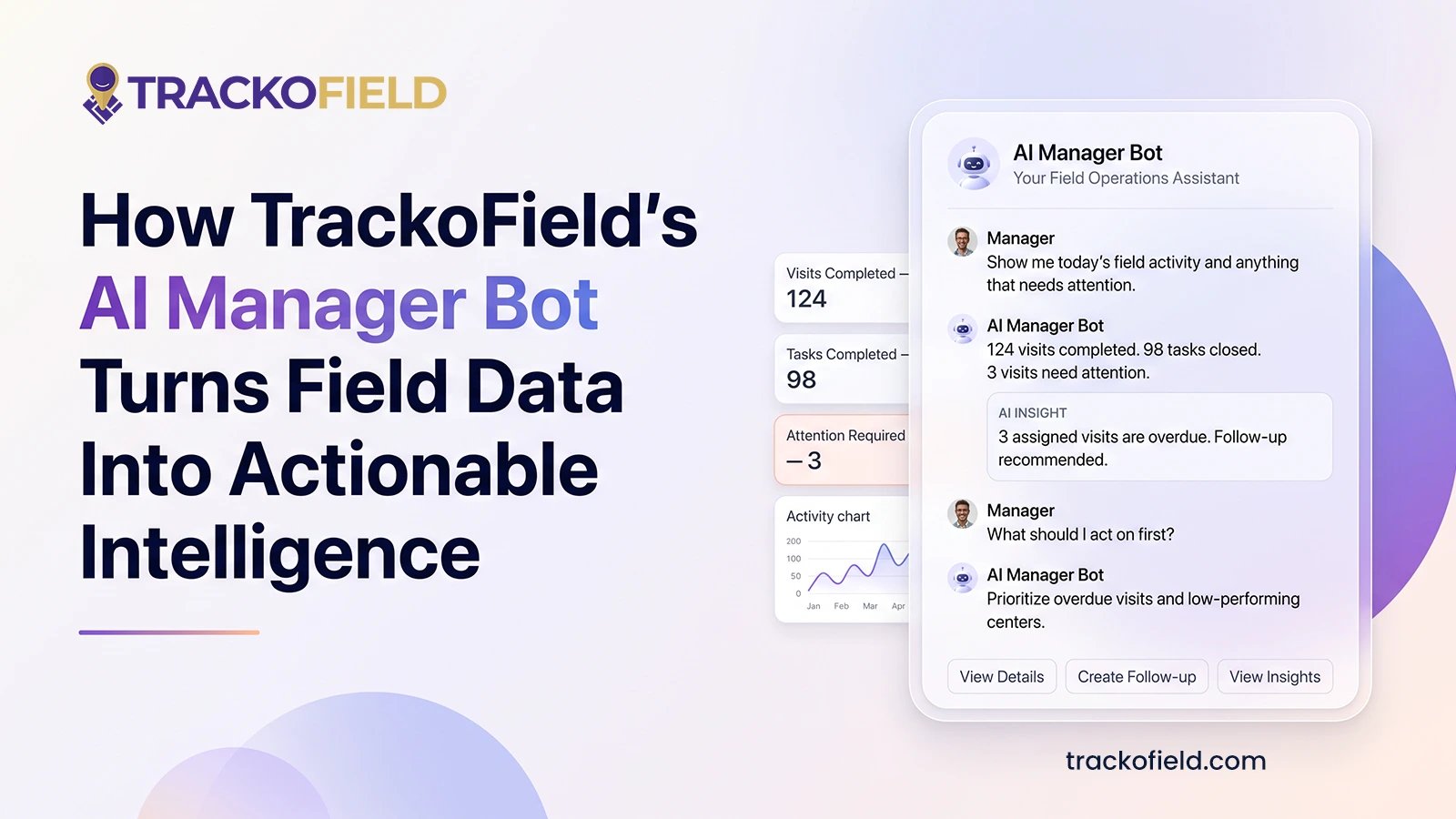
TrackoField’s Manager Bot: Bringing the Future of Field Force Intelligence to You Today
Artificial intelligence has been one of the biggest innovations of the 21st century. It has transformed various industries and domains…

Face Recognition: What It Is, How It Works & Benefits for Field Teams
Facial recognition is a way of identifying or confirming an individual’s identity using their facial features. Read this guide to…

What is Face Recognition Attendance Software & How Does It Work?
This blog explains the concept of face recognition attendance software. We will also explore how it enhances attendance monitoring for…
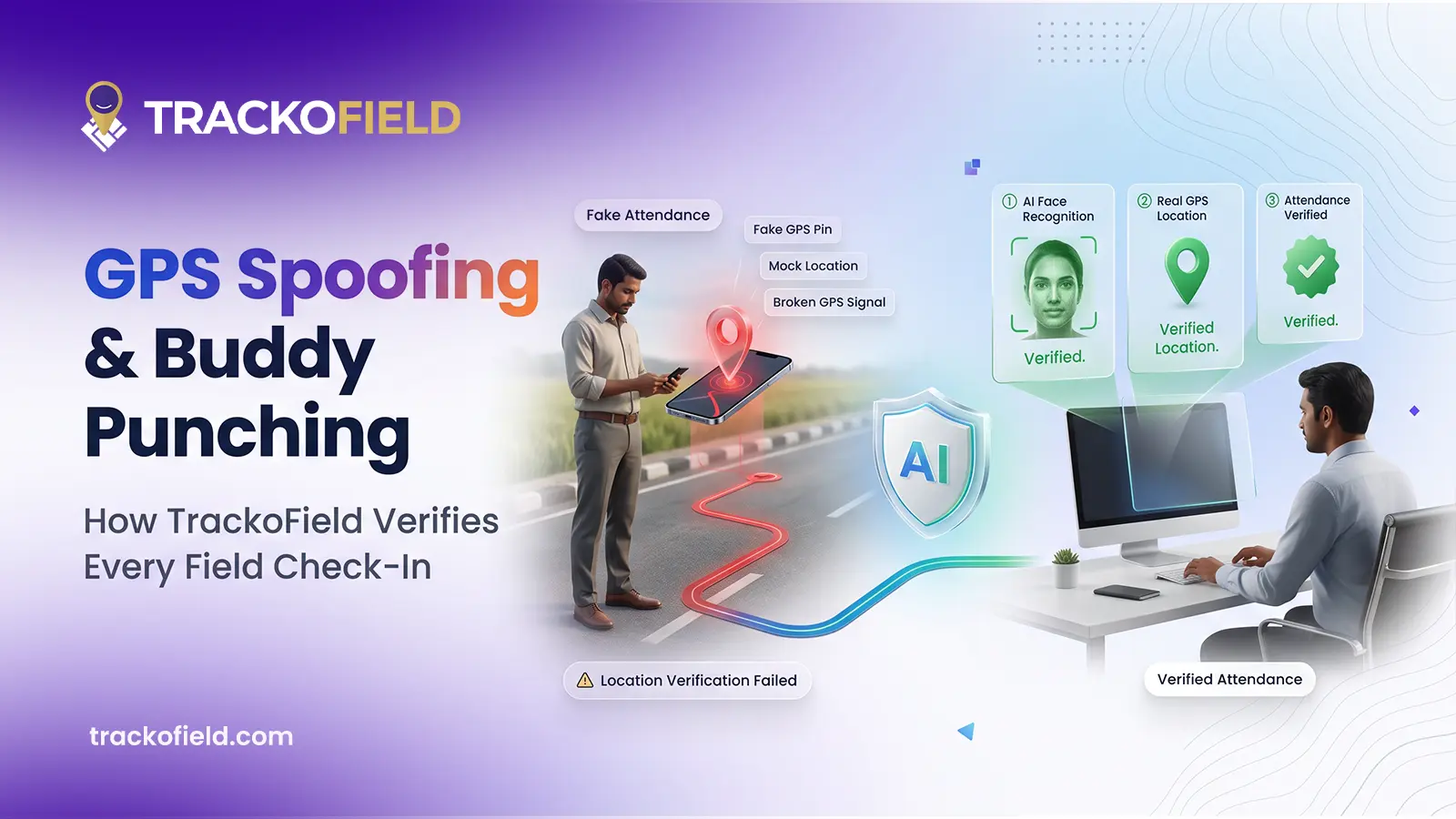
How TrackoField Stops GPS Spoofing and Buddy Punching in Field Teams
Your field team’s attendance data looks clean. The question worth asking is whether it’s real. Here’s how GPS spoofing actually…


Your inbox awaits a welcome email. Stay tuned for the latest blog updates & expert insights.
"While you're here, dive into some more reads or grab quick bites from our social platforms!"Stay Updated on tech, telematics and mobility. Don't miss out on the latest in the industry.