
Quick Summary

- GPS spoofing is easy to execute, allowing false attendance data to appear legitimate, which can mislead managers.
- TrackoField addresses GPS spoofing by combining AI facial recognition with geo-verified location to ensure accurate attendance tracking.
- The financial impact of GPS spoofing includes lost client relationships and inaccurate performance data, costing businesses significantly.
- When evaluating field tracking software, prioritize systems that verify employee identity alongside GPS data to prevent fraud.
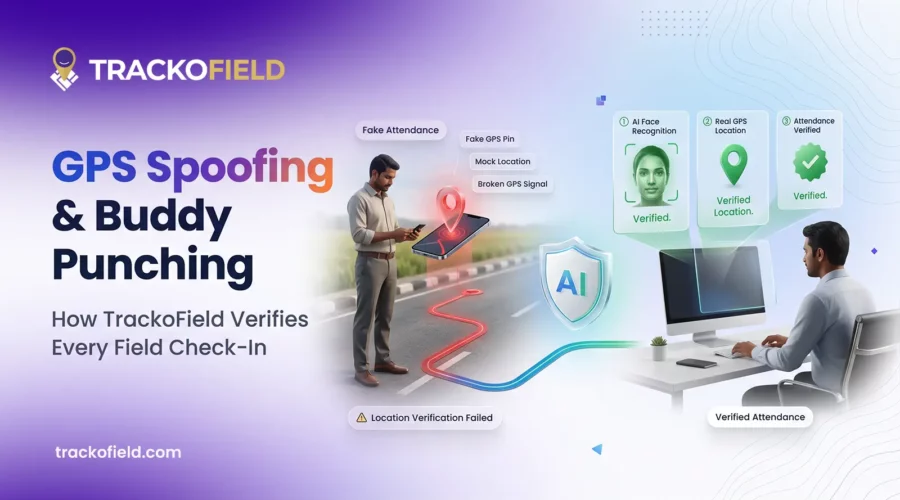
Your field team’s attendance data looks clean. The question worth asking is whether it’s real. Here’s how GPS spoofing actually works, why it’s more common than most managers assume, and how TrackoField is built to catch it.
A field agent doesn’t show up to a client site. On paper, the attendance log says otherwise: on time, right coordinates, verified check-in. The location data looks perfect because the app was fed a false coordinate, not because anyone reviewed and approved it.
That’s GPS spoofing, and it’s not a rare, sophisticated hack. It’s a free app, a few taps in developer settings, and about ninety seconds of setup. Once enabled, every app on the phone, including the attendance software the business pays for, reads the fake coordinate as real.
To be clear upfront: most field employees show up, do the work, and log it honestly. This isn’t about assuming otherwise. It’s about the fact that even a small number of spoofed check-ins can quietly corrupt an entire team’s data, and a business has no way to tell which check-ins to trust without a way to verify them properly. That’s a data integrity problem worth solving for everyone’s benefit, honest employees included, not a reason to treat a whole field agents as suspects.
What GPS Spoofing Actually Is, and Why It’s Easier Than Most Managers Think
On Android, enabling mock location takes four steps: open developer options, select a mock-location app, install a free spoofing app from the Play Store, and drop a pin anywhere in the world. From that point, the device reports the fake coordinates to every app running on it, attendance software included. The phone isn’t hacked or compromised in any technical sense. It’s simply configured to report a location that isn’t real.
This isn’t a fringe practice, and it isn’t unique to any one industry or workforce. The top 10 GPS spoofing apps on Google Play combine for more than 50 million downloads, and the method is discussed openly online, the same way any workaround gets shared. The point isn’t that field teams are dishonest. It’s that when the tool to fake a location is this easy to find, a business’s attendance data needs a way to verify itself, not just assume good faith.
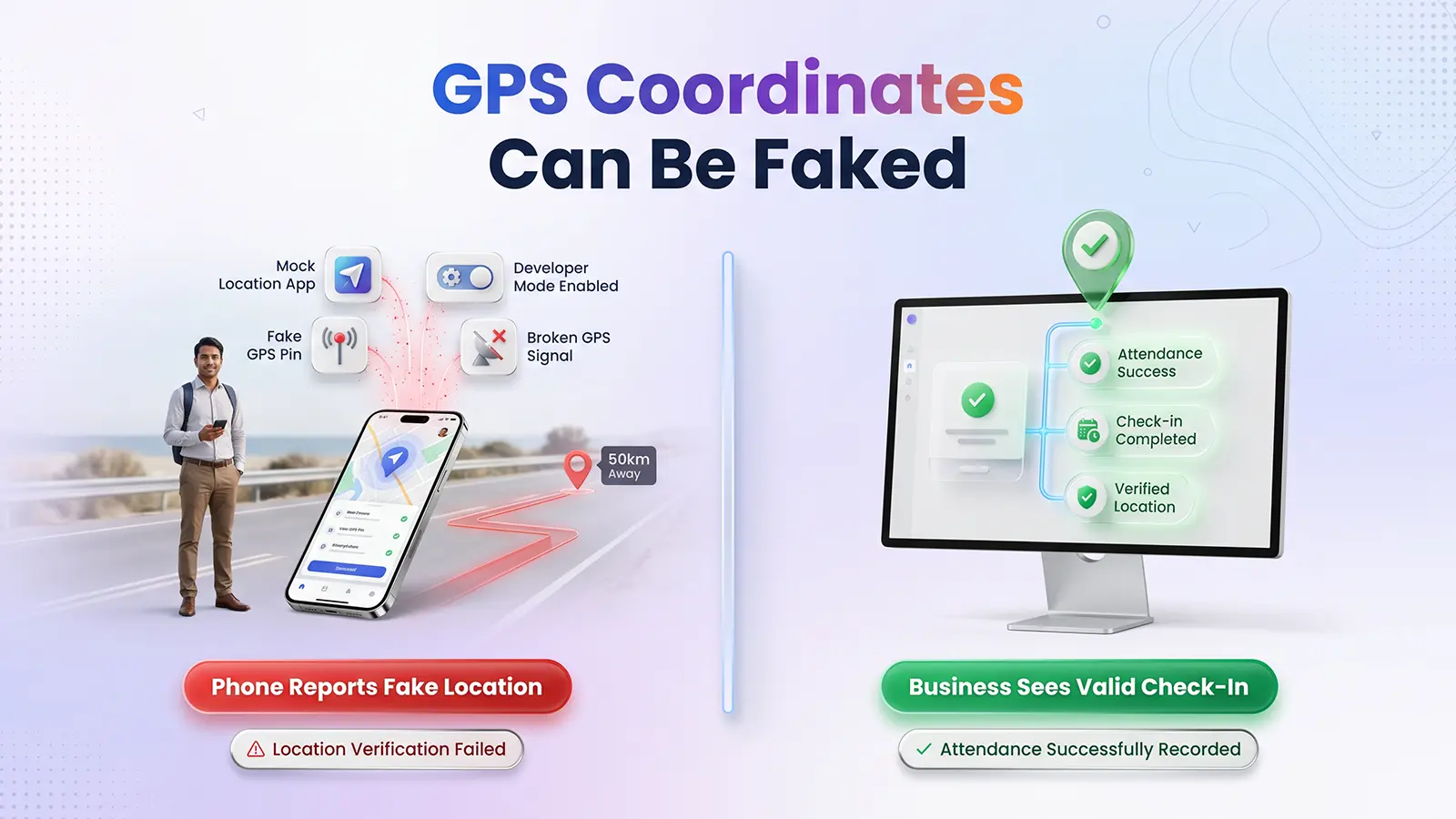
GPS spoofing makes fake check-ins appear legitimate
Why This Costs More Than Most Businesses Realise
Time theft, which includes buddy punching, extended breaks, and location fraud, costs employers billions of dollars a year in the US alone, according to payroll industry estimates. GPS spoofing sits inside that number, and it’s the hardest slice to catch, because unlike a late clock-in or an obviously absent employee, spoofed data looks exactly like real data at a glance.
The cost isn’t only the paid hours nobody worked. When a field visit is faked:
- Client relationships take the hit first: A “completed” visit that never happened means a customer who was never actually served, and a manager who finds out only when the client calls to complain.
- Reimbursements get paid on fiction: Distance-based travel claims tied to a spoofed route mean the business pays for kilometres nobody drove.
- Performance data becomes unusable: Beat plan coverage, visit counts, and productivity scores all quietly go wrong the moment even a small percentage of check-ins are fake, and a manager making decisions on that data doesn’t know which parts to trust.
Why GPS Alone Was Never Enough
Most attendance and field tracking tools check exactly one thing: do the GPS coordinates match the assigned zone. That’s precisely the layer a spoofing app is built to defeat, since the whole function of a mock-location app is to make fake coordinates look valid. A system that only checks location coordinates has no way of knowing whether the phone reporting them is telling the truth.
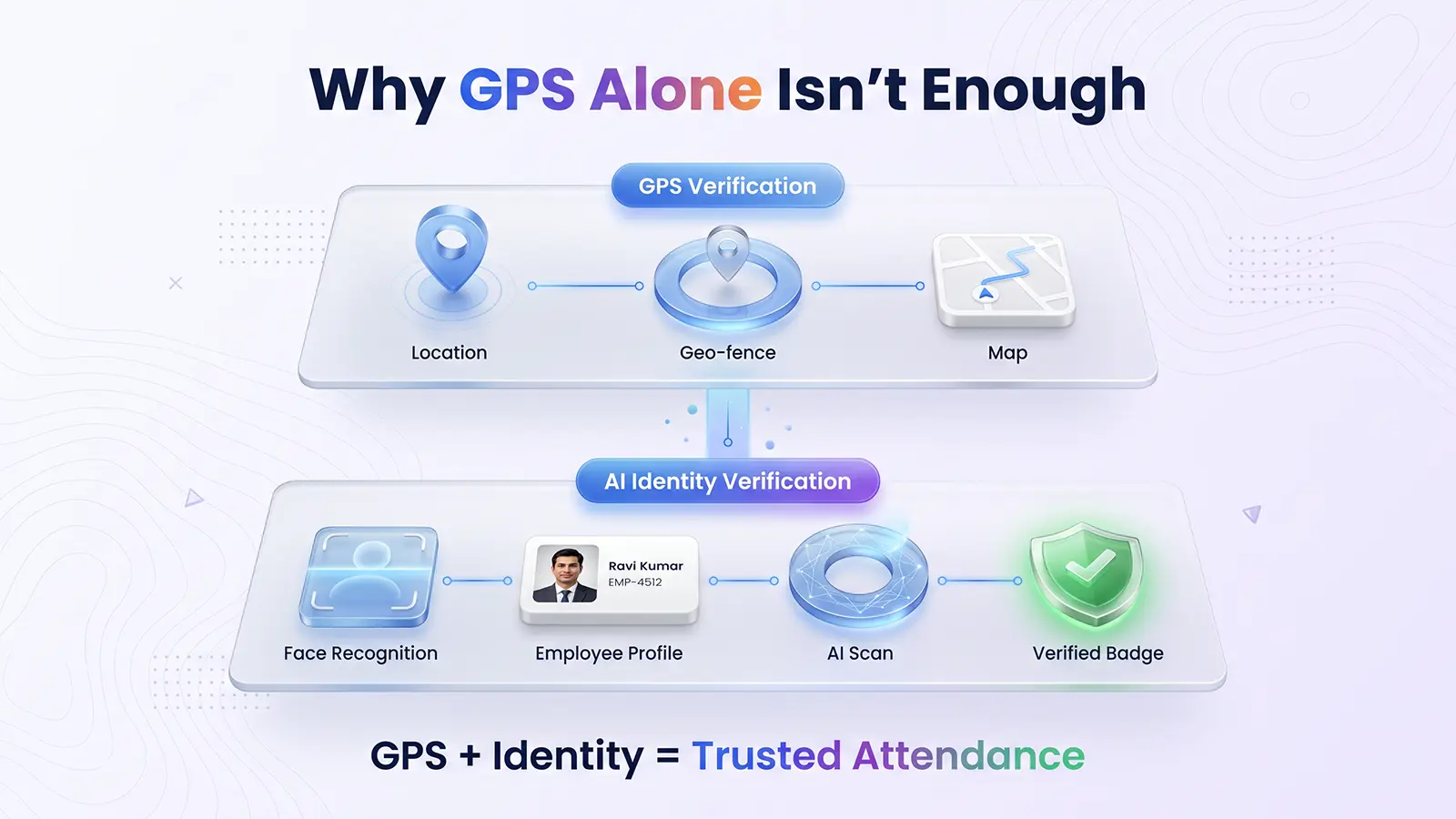
Identity + location create trusted attendance
This is the gap TrackoField’s AI facial recognition attendance is built to close. Rather than trusting location data alone, it verifies who is actually present at the moment of check-in, using visual intelligence to confirm employee identity in real time, alongside the geo-verified location. A spoofed coordinate can fake where a phone says it is. It can’t fake who’s holding it.
What TrackoField Actually Checks at Every Mark-In
TrackoField’s approach to attendance management is built around one principle: location data alone is not proof of presence. Every check-in is verified on two layers working together:
- Identity verification AI facial recognition confirms the person marking attendance is the actual assigned employee, not a substitute and not an empty check-in triggered from somewhere else entirely.
- Geo-verified location The check-in is tied to time and place together, creating an audit trail that holds up for compliance and internal review, not just a coordinate pin on a map.
Together, this is designed to make TrackoField’s attendance data something a manager can actually act on, not a number that looks clean until a client calls to say otherwise.
What This Means If You’re Evaluating Field Force Software
If you’re comparing field employee tracking software, the question worth asking every vendor isn’t “do you track GPS.” Every vendor does. The real question is what happens when the GPS is fake. A system that only logs coordinates has no answer. A system built around verifying the person, not just the pin, does.
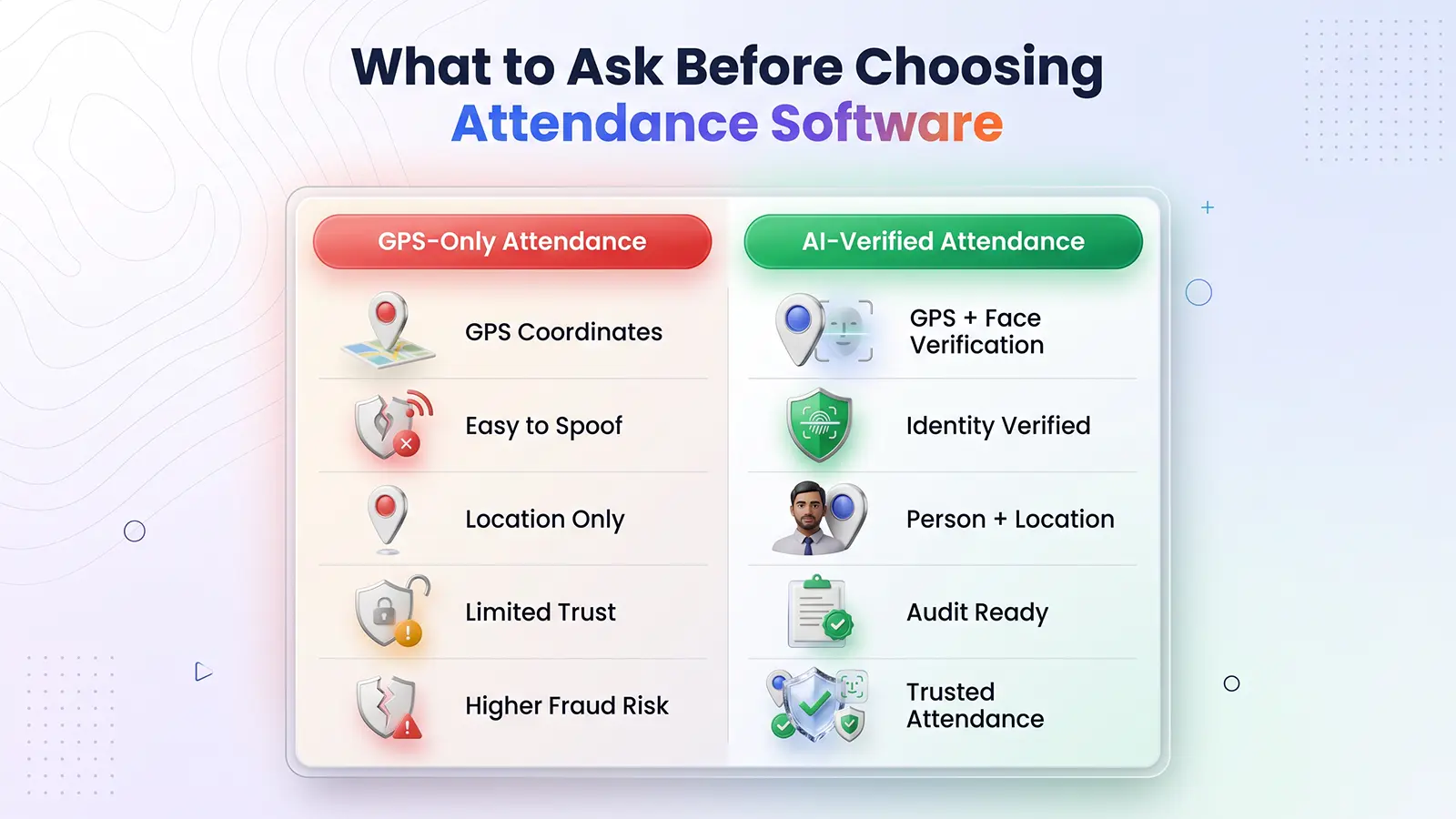
Evaluate attendance systems beyond GPS tracking
For industries where field trust is directly tied to revenue and compliance, NBFCs and MFIs running collection agents, BFSI field teams, pharma MR networks, and FMCG field sales, this isn’t a nice-to-have. A single faked collection visit or a fabricated client call can carry real financial and regulatory weight, not just a productivity dent.
Conclusion
GPS spoofing isn’t a hypothetical risk sitting in a security whitepaper somewhere. It’s a free app, ninety seconds of setup, and a method that’s easy enough to find that a business shouldn’t have to rely on trust alone to rule it out. Attendance software that stops at GPS coordinates was never built to verify that. TrackoField’s AI facial recognition attendance was.
The goal isn’t to police a field team. It’s to make sure the data a business builds decisions on, and the credit an honest field team earns for the work it actually does, can both be trusted without question.

Frequently Asked Questions
-
What is GPS spoofing in field employee attendance?
GPS spoofing is when an employee uses a mock-location app to make their phone report a fake location to attendance or tracking software, while physically being somewhere else entirely.
-
Can GPS-only attendance software detect spoofing?
Not reliably. Systems that check only location coordinates are exactly what spoofing apps are designed to fool, since the fake coordinates look identical to real ones from the software’s perspective.
-
Why does GPS spoofing matter more for NBFC and BFSI field teams?
Because a faked collection visit or client call in these industries carries direct financial and compliance risk, not just a productivity gap, making verified attendance a business-critical requirement rather than a convenience feature.
-
How common is GPS spoofing among field employees?
It’s more common than most managers assume. The most-downloaded GPS spoofing apps on the Play Store combine for tens of millions of downloads, and the practice is discussed openly in online communities rather than hidden.
-
How does TrackoField prevent GPS spoofing and buddy punching?
TrackoField combines AI facial recognition with geo-verified location at every check-in, confirming both who is present and where, instead of relying on location data alone.

Apoorva Raizada is the Content Marketing Manager at TrackoBit. With over a decade of experience across media, advertising, and B2B SaaS, she brings a sharp editorial mindset to technology-led business... Read More


Related Blog

Sales Territory Management: 6 Best Practices for High-Performing Teams
Poor sales territory management can quietly stifle sales growth. Understand how companies can create high-performing territories.

TrackoField’s Manager Bot: Bringing the Future of Field Force Intelligence to You Today
TrackoField’s AI Manager Bot transforms field force management into field force intelligence by turning operational data into instant AI-powered insights.
Face Recognition: What It Is, How It Works & Benefits for Field Teams
Facial recognition is a way of identifying or confirming an individual’s identity using their facial features. Read this guide to…
Field Operations Manager: Roles, Challenges & How to Optimize Performance
Field operations managers handle on-ground activities with challenges like visibility, control, and coordination. This blog covers their roles, key challenges,…


Your inbox awaits a welcome email. Stay tuned for the latest blog updates & expert insights.
"While you're here, dive into some more reads or grab quick bites from our social platforms!"Stay Updated on tech, telematics and mobility. Don't miss out on the latest in the industry.