


What is Task Allocation?
Task allocation is the process of assigning tasks to the right resource in a structured and organized manner. In field operations, the task allocation meaning goes beyond simply assigning work. It involves deciding who should handle each task based on their role, availability, skill, and workload. This helps managers reduce confusion, avoid missed visits, and balance workloads across teams.
Task Allocation Example
Task allocation looks different depending on the field operations. Here are three common examples:
1. NBFC Collections
A collection agent has 30 overdue customer visits for the day. Some customers are in the same area, while others are farther away. The manager groups nearby customers and assigns them to the agent based on their area and workload.
2. Field Service
A service team receives multiple repair requests in the morning. One job involves a machine that needs a specialist. Another is a routine repair. Now, the manager assigns each job based on the technician’s skills and location for efficient results.
3. Sales
A sales manager needs to cover both new and existing customers. New customer visits may need more experienced representatives. However, routine follow-ups can go to other team members. The manager allocates visits accordingly.
How to Allocate Tasks to a Field Team?
Allocating tasks becomes challenging when managers are handling large field teams. Poor field work allocation can lead to:
- Missed Customer visits
- Uneven workloads
- Delayed tasks
- Time spent low-priority work
It also makes it difficult to track target achievement and spot gaps through manual reports. Over time, this affects productivity, customer coverage, and revenue.
A practical task allocation process looks like:
- List the tasks: Note the tasks, deadlines, priorities, and expected outcomes.
- Understand the requirements: Check the skills, location, time, and resources each task needs.
- Check team capacity: Review availability, existing workload, skills, and current assignments.
- Allocate the tasks: Assign work based on the best fit between the task and available resource.
- Review performance: Track completion, target vs achievement, and workload to make changes where needed.
However, managing these factors becomes difficult when your team grows and works across multiple locations. The solution lies in investing in field task allocation software.
How Field Task Allocation Software Simplifies the Process?
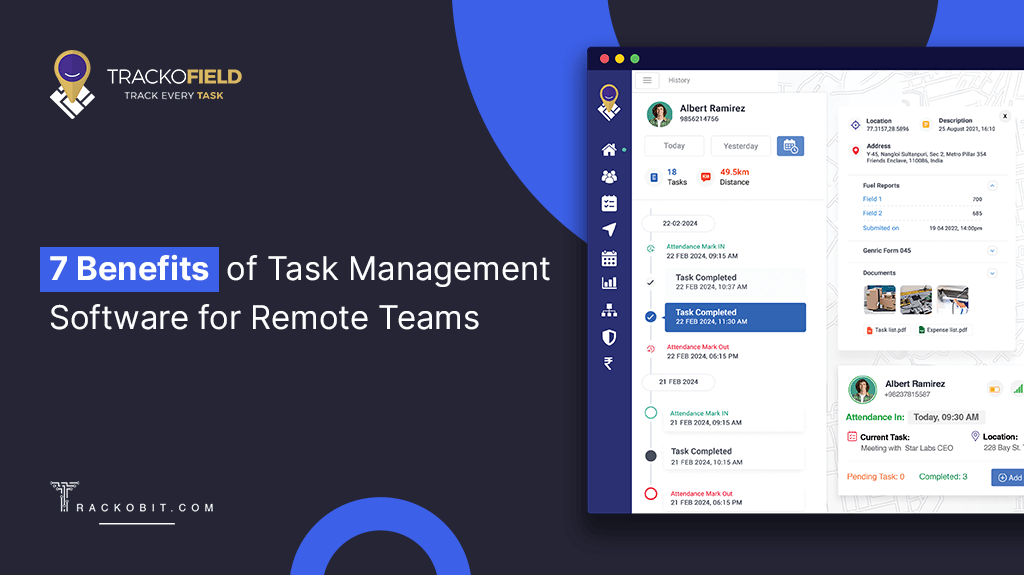
Task management software, such as TrackoField, centralize task information, employee availability, location, schedules, and workload. Managers can assign planned and ad-hoc tasks and track status in real-time. Managers are also able to make changes when priorities change.
The software also provides reports regarding task completion, target vs. achievement, and employee performance. This simplifies the task allocation process, particularly for large field teams.