


-
TrackoBit
Manage commercial vehicles with the new-age Fleet Management Software
TrackoBit -
TrackoField
Streamline your scattered workforce with Field Force Management Software
TrackoField -
Features Resources


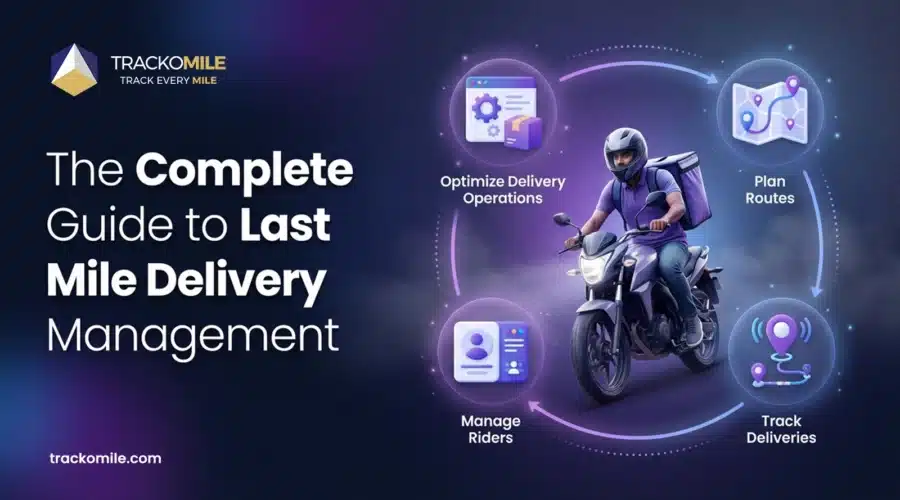
Last mile delivery management helps businesses to optimize routes, improve delivery efficiency, and maintain real-time visibility. Here’s how logistic managers can take control.
In delivery operations, the last mile is where efficiency matters the most. Here, every package, route, and rider interaction directly affects revenue and timelines. This is why businesses focus on optimizing last mile delivery management to ensure shipments are delivered efficiently and on time.
However, optimizing the last mile isn’t simple. Teams need to balance several factors, including route planning, rider performance, and real-time visibility. The most efficient delivery teams focus on three things: planning routes carefully, tracking deliveries, and giving riders the support they need to complete deliveries smoothly.
For logistic managers, mastering the last mile is no longer optional, but it’s essential. Keep reading to learn how modern last mile delivery solutions helps you to optimize operations.
Why Last Mile Delivery Management is Critical for Businesses?
Last mile delivery directly affects profit margins, customer satisfaction, and brand loyalty. Here’s what happens when you get it right:
- Shipping costs stay under control as last mile is the biggest chunk of delivery expenses (approx 53%).
- 76% of shoppers say a positive delivery experience influences their decision to repurchase. So on-time delivery is that important
- Fewer missed deliveries and delays, keeping your team and customers happier.
- Your brand earns trust and loyalty because every on-time delivery counts.
Now that you know why last mile is important, the real challenge is solving the problems challenges that come with it.
5 Key Challenges in Last Mile Delivery Management
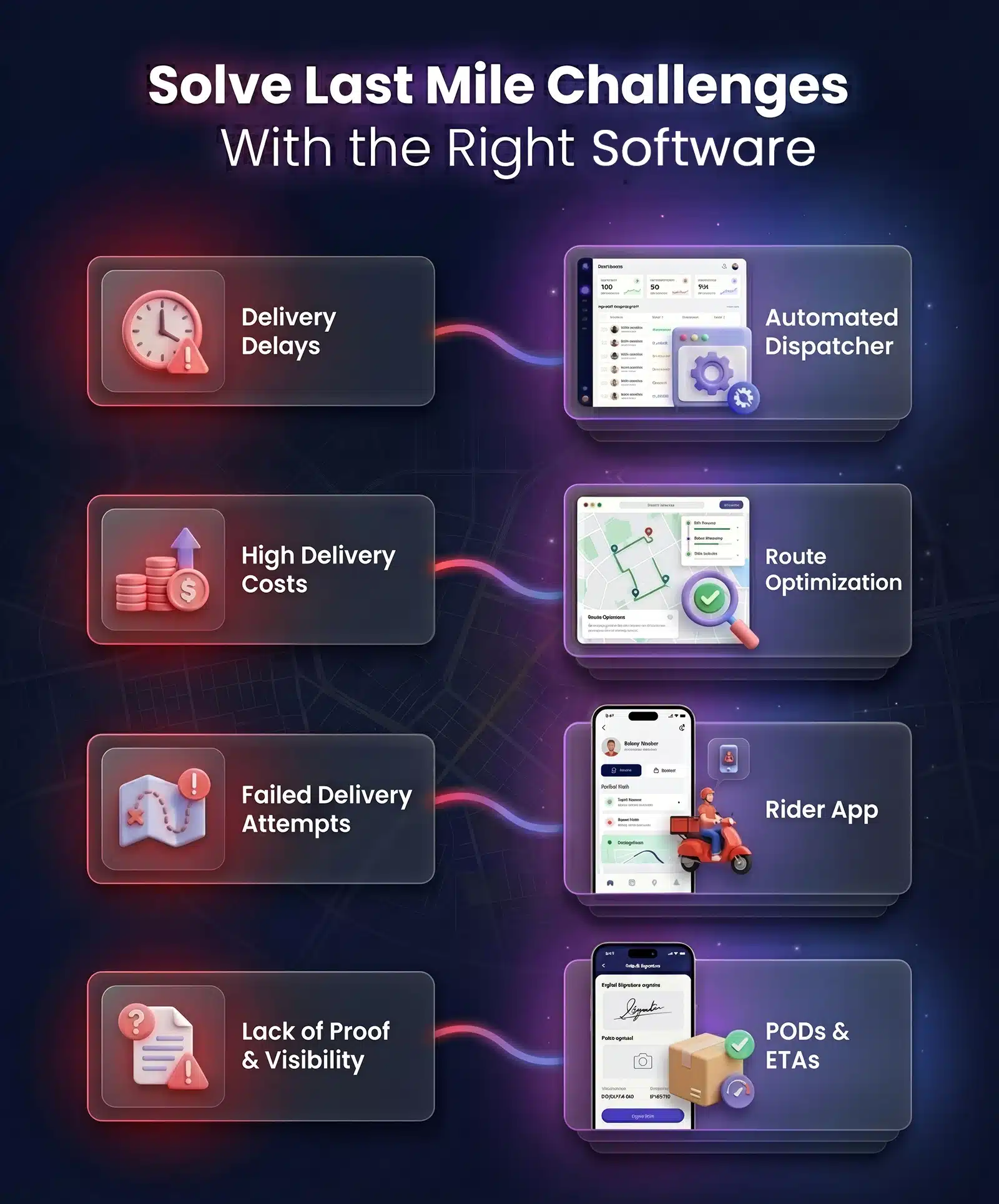
Solve Last-Mile delivery challenges
From inefficient routing to high delivery cost, these are the challenges of last mile delivery:
1. Inefficient Route Planning
When routes are not planned well, fuel usage goes up and riders end up spending extra hours on the road. Plus, deliveries get delayed, and ETAs are missed.
2. Customer Unavailability
Failed deliveries are common when customers are not at home. Riders put in extra time and effort, facing traffic or bad weather, only to have deliveries fail. They often need to make another trip without knowing if the customer will be available. This leads to fuel, time, and resource wastage.
3. Real-Time Tracking Gaps
Without live tracking, managers can’t see where deliveries are or spot delays. Riders end up idling, changing routes unnecessarily, and burning fuel. These gaps slow operations, increase costs, and directly impact profit margins.
4. Rider Performance & Retention
Assigning the right rider to the right vehicle and route isn’t easy. Managers also have to track delivery metrics, schedules, and team performance at the same time. Mistakes or inefficiencies here slow operations and impact costs.
5. High Delivery Cost
Last mile delivery can quickly get expensive. Extra trips, idling, and fuel wastage all add up. Overtime and labor costs pile on top, squeezing profit margins. It’s one of those challenges that keeps managers up at night.
Read More: Last Mile Delivery Logistics: Challenges, Solutions & Key Trends
What are the Key Components of Effective Last Mile Delivery Management?
Efficient route planning, dispatch management, and electronic proof of delivery (ePOD) are the key components of an effective last mile delivery management. Let’s discuss these in detail.
1. Efficient Route Planning
Route planning decides how smoothly delivery operations run each day. Managers usually look at delivery locations, traffic conditions, vehicle capacity, and rider availability.
If the routes are not planned properly, riders spend more time on the road. Fuel usage goes up, and deliveries start falling behind schedule.
2. Dispatch Management
Dispatch management is about assigning deliveries to the right rider based on vehicle capacity and route requirements.
When this step is not handled carefully, some riders end up with too many deliveries while others have fewer. This creates delays and slows down the whole operation.
3. Real-time tracking
Real-time tracking shows the live location of riders during deliveries. Managers can view rider movement, route progress, and delivery status while orders are still on the road.
4. Electronic Proof of Delivery
ePOD provides confirmation that a shipment is handed over to the customer. It records details such as the delivery time, location, and a customer’s signature or photo.
5. Delivery Performance Monitoring
Logistic managers review how deliveries are performing. They usually look at numbers like delivery time, completion rates, and how many orders fail on the first attempt.
Last Mile Delivery Process Explained
The last mile delivery process often consists of a few fundamental step such as order allocation, route planning and dispatching. The process may vary from company to company, but these are the typical steps in the process.
- Once an order is ready, managers assign it based on location, delivery priority, and available delivery slots.
- Next, routes are planned. The system groups the nearby orders considering distance, traffic, and delivery times.
- Then it assigns the deliveries to riders based on vehicle capacity, route, and rider availability.
- Rider follows the assigned route and starts delivering packages while the managers monitor their progress.
- Customers also receive a tracking link or delivery update, so they know when their order is expected to arrive.
- Once the order reaches the customer, the delivery is confirmed through ePOD such as a signature or photo.
This is how most delivery teams move orders from the hub to the customer’s doorstep.
Benefits of Last Mile Delivery Management Software
Last mile delivery software helps businesses save on fuel costs, ensure timely deliveries, and efficiently utilize their resources. Continue reading to know in detail.
1. Lower Delivery Costs
Advanced route planning through delivery management software helps riders take the most efficient paths, saving fuel and reducing unnecessary mileage. Recent industry reports show that such software can cut fuel use by 18–22% and total mileage by 25–35% in the first year.
2. Higher First-Attempt Delivery Success
With delivery management software, orders reach customers on the first attempt more often. It sends real-time updates to the customers, like “Your Order is Out for delivery” or “Will reach you today.” This reduces missed deliveries, avoids repeat trips, and saves fuel and time.
3. Better Delivery Performance Insights
Managers can see how deliveries are actually running. They know which orders were late and how each rider is performing. This makes it easier to fix issues quickly and plan routes smarter.
4. Optimized Resource Utilization
The software helps assign the right rider and vehicle to each delivery. This makes the most of vehicle capacity and reduces wasted rider hours. As order volumes grow, teams can handle more deliveries without adding extra staff.
How TrackoMile Improves Last Mile Delivery Management?
TrackoMile considers over 120+ variables such as vehicle capacity, delivery windows, rider availability, and geofenced zones, to plan the most efficient route. It automatically assigned deliveries to the right rider, and the system schedules tasks to balance workloads across the team.
Plus, it offers a bird-eye view to the managers to track vehicles in real time. It sends real-time alerts to customers about their order, and deliveries are confirmed through ePOD.
Industries That Need Last Mile Delivery Management
From e-commerce to food, healthcare to retail, last mile delivery software are making a real difference.
- High-volume e-commerce deliveries move fast. If routes aren’t planned well, riders spend extra time on the road. Returns can pile up, and customers call to ask where their orders are.
- Healthcare and pharmaceutical deliveries can’t afford mistakes. Every package has to be reached on time. Proof of delivery keeps everything accountable.
- Retail and consumer goods get busy during holidays. Routes and riders must be planned carefully. Live monitoring helps avoid mistakes.
- Courier and logistics companies manage many riders and vehicles. Without automation and clear visibility, deliveries get delayed.
Best Practices for Optimizing Last Mile Delivery
Here are some practical ways businesses can make their last mile delivery faster, smoother, and more efficient:
- Plan routes smartly to save time and fuel.
- Assign the right rider and vehicle based on availability and capacity.
- Provide live ETAs to customers so they know when to expect the order.
- Capture digital proof of delivery to eliminate human errors and disputes.
Conclusion
While many teams focus on just moving packages, managing the last mile properly is about more than deliveries. It’s about efficiency, cost control, and keeping customers happy.
Last mile delivery management software like TrackoMile brings route planning, real-time tracking, rider performance, and proof of delivery together in one clear process. When done right, managers can reduce costs and improve their overall delivery performance.
Frequently Asked Questions
-
Why is Last Mile Delivery important?
The last mile is an essential part of the entire logistics process. This is because, at the end of the day, it is the last mile that will bring you closer to your customers. It is therefore important that you get it right so that you can save on fuel, save on cost, and ensure customer satisfaction.
-
What is the Difference Between Last Mile Delivery and Last Mile Delivery Management?
Last mile delivery is simply getting a package to the customer. Whereas last mile delivery management is a complete process from planning to deliveries. It involves assigning riders, tracking progress, and ensuring deliveries are on time and efficient.
-
What is the Best Last Mile Delivery Management Software?
TrackoMile is the best last mile delivery management software. By using this software businesses can plan routes, assign the right rider, and track deliveries in real time. Plus, you can send updates to customers and confirm drop-off. This makes the last mile smoother, faster, and more reliable.

Parul is a content writer with 2+ years of experience in B2B and SaaS domains. She creates clear, actionable content for TrackoBit and TrackoMile, focusing on fleet management, last-mile delivery, and... Read More


Related Blogs
-
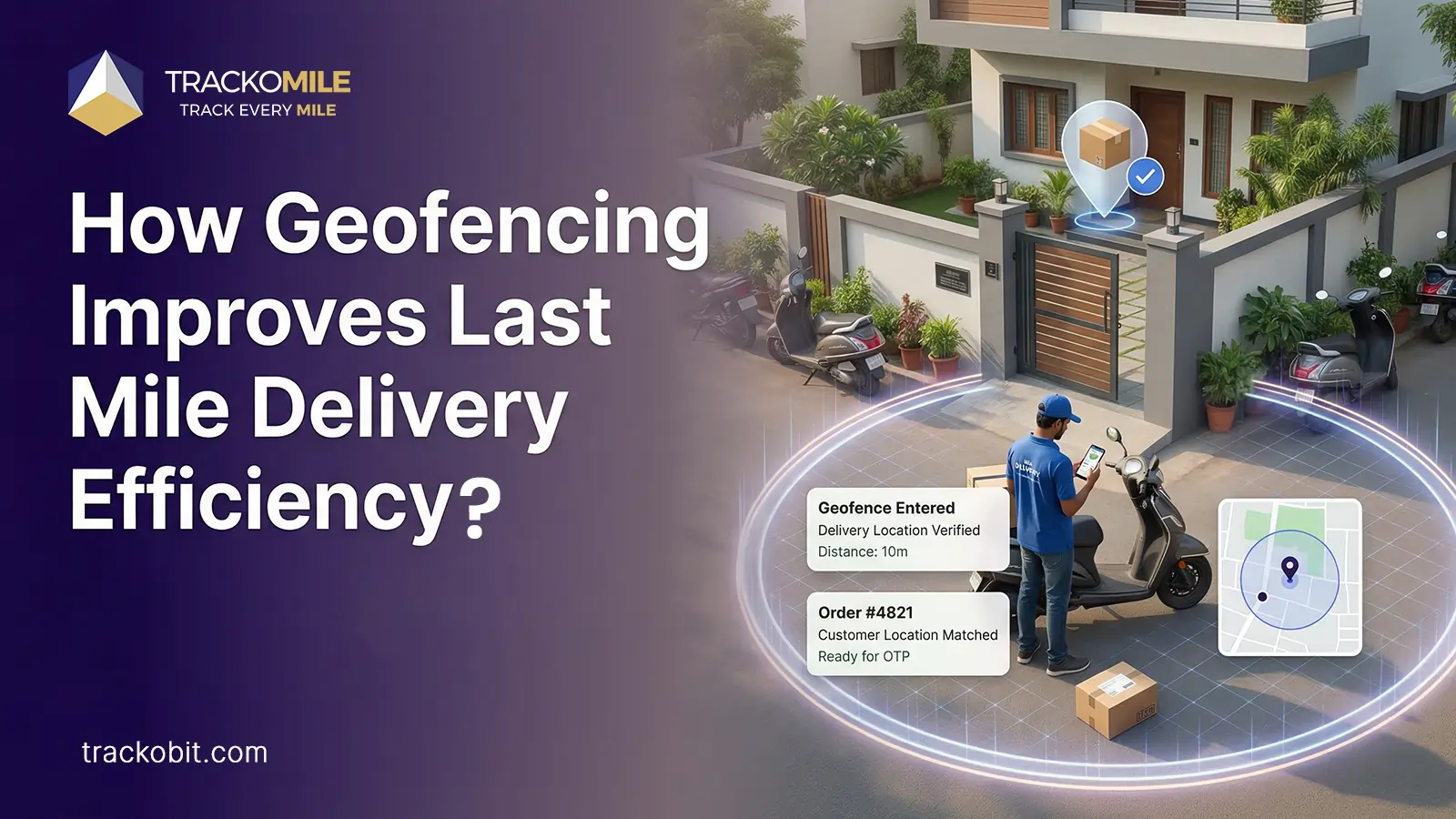
How Geofencing Improves Last Mile Delivery Efficiency in 2026
Geofencing in last mile delivery improves operations by using GPS boundaries to trigger alerts when drivers enter or leave zones.…
-
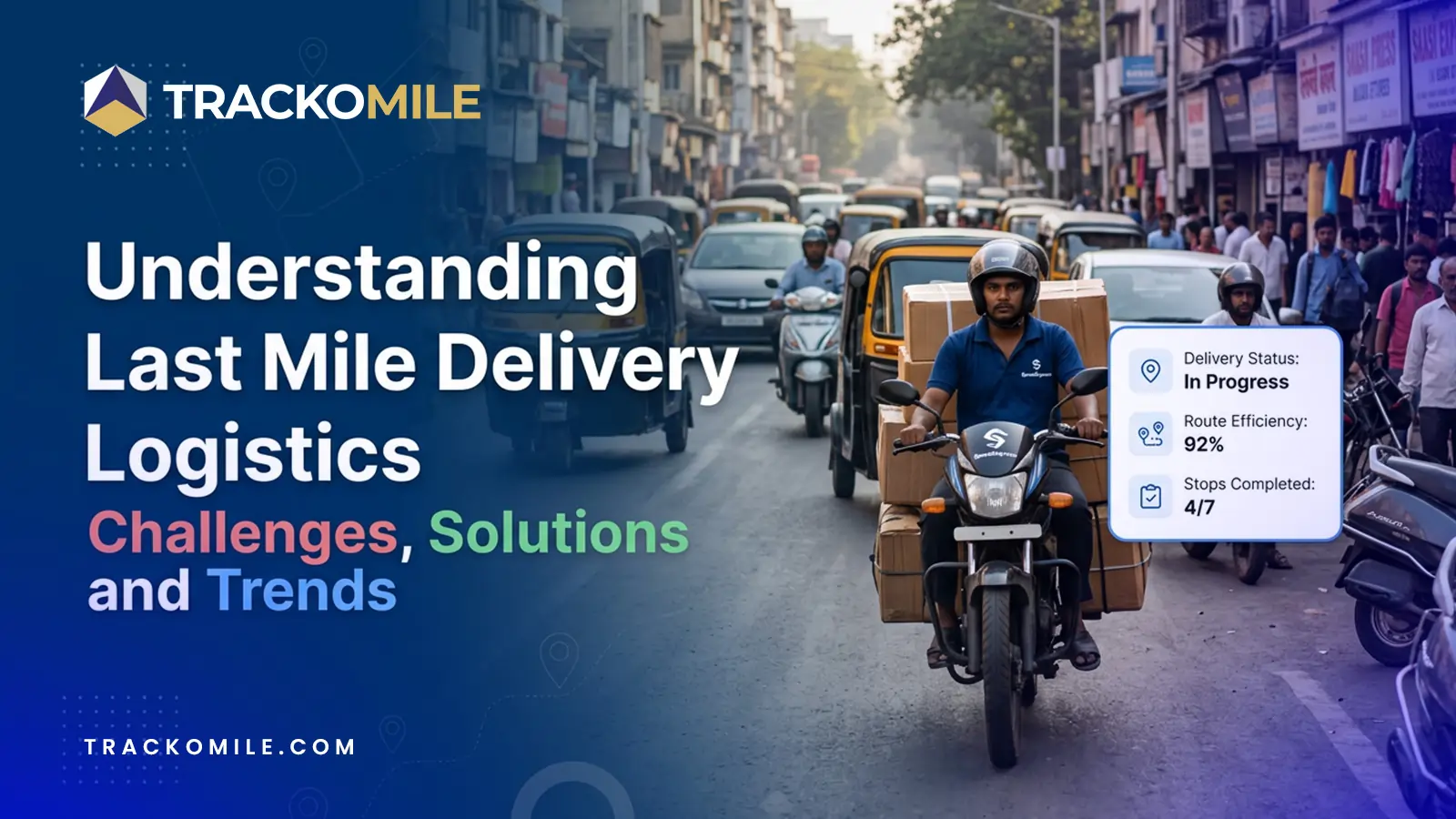
Last Mile Delivery Logistics: Challenges, Solutions & Key Trends
See what last mile delivery logistics is, its challenges and smart solutions. Learn how it is shaping faster, efficient, customer…
-
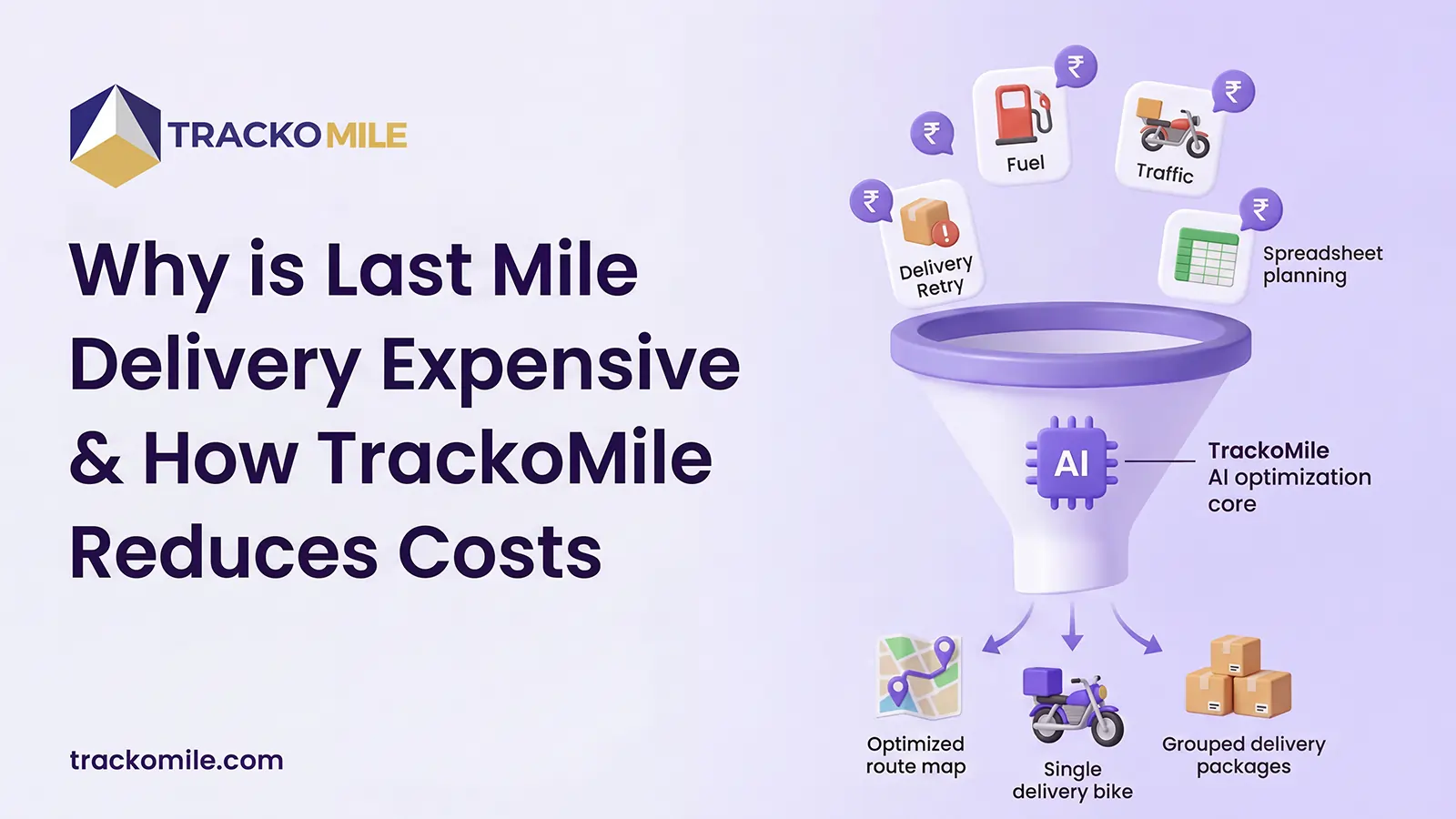
Why Is Last Mile Delivery Expensive & How To Optimise It
From high fuel usage and urban traffic to failed deliveries, uncover the real reasons that make last mile delivery expensive…
-
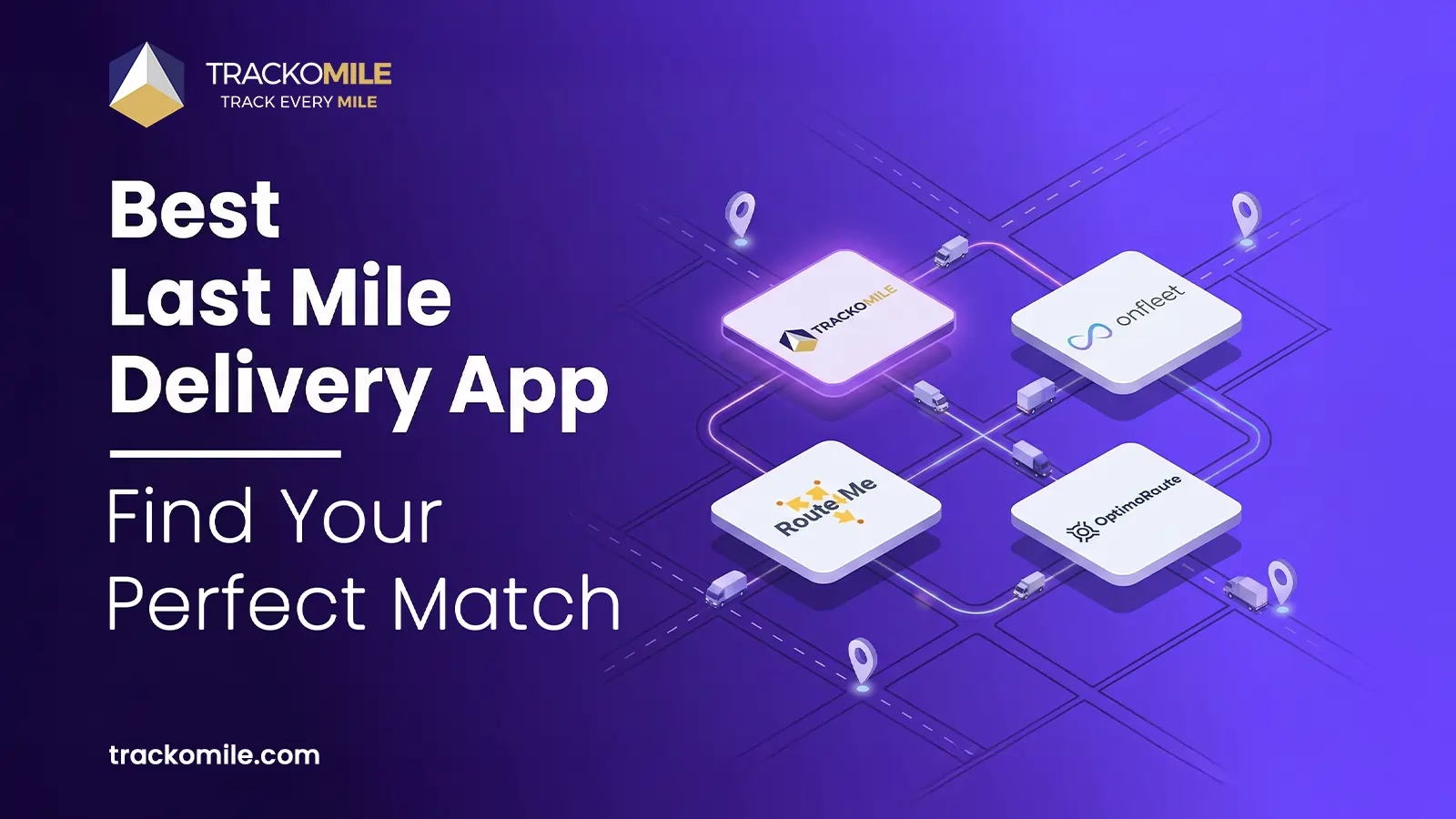
Best Last Mile Delivery Apps: Features, Benefits & Right Solution
The best last-mile delivery app gives companies tools like route optimization, dispatch management, and real-time tracking. Helping teams deliver faster,…


Your inbox awaits a welcome email. Stay tuned for the latest blog updates & expert insights.
"While you're here, dive into some more reads or grab quick bites from our social platforms!"Stay Updated on tech, telematics and mobility. Don't miss out on the latest in the industry.