
Quick Summary

- Geofencing in last mile delivery uses GPS boundaries to enhance operational efficiency by sending alerts to managers and drivers when entering or leaving zones.
- It provides real-time tracking, allowing managers to spot delays and update customers automatically, improving accountability and customer satisfaction.
- Geofencing reduces manual follow-ups by automatically logging updates as riders move through delivery zones, streamlining communication and operations.
- The technology enhances delivery accuracy and safety, ensuring timely deliveries and building trust with customers through reliable updates.
Geofencing in last mile delivery improves operations by using GPS boundaries to trigger alerts when drivers enter or leave zones. Helping managers spot delays and update deliveries automatically.
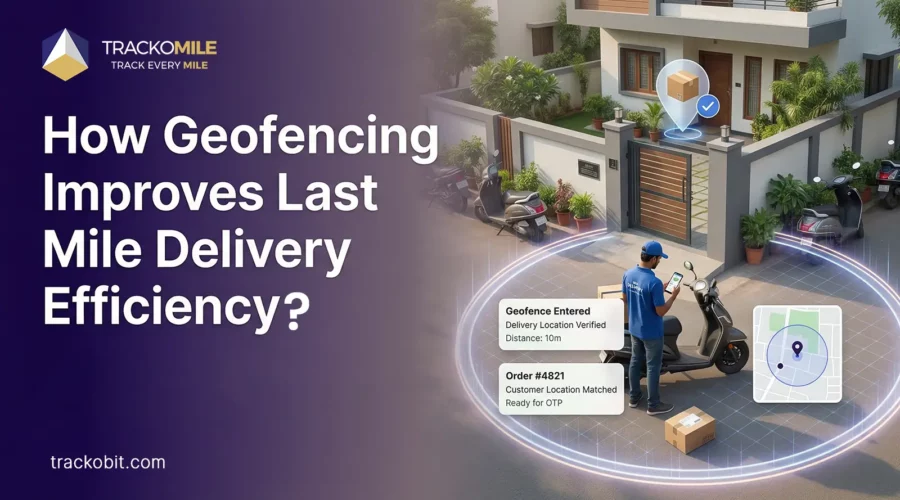
Imagine drawing an invisible circle on a map. This could be around your office, warehouse, or any business site. Now, whenever someone walks in, your phone gets a notification! This little magic trick? Well, that’s geofencing for you! It is nothing but a digital boundary in the real world.
Geofencing was invented back in the 90’s. Time travel to 2026, it is a critical success parameter in several industries including the last-mile delivery. Studies have found that over 90% of customers actively track their orders every day. Expecting to know exactly where their delivery is and when it will arrive.
Geofencing in last mile delivery is here to help manage deliveries and keep things on track.
It sends updates automatically as a rider moves through delivery zones. Managers know when a rider reaches a location, spots delay early and keeps routes moving without constant follow-ups.
Now, you must be thinking about how exactly geofencing improves your last-mile operations. This guide has all your answers. So, continue reading.
What is Geofencing in Last Mile Delivery?
Geofencing offers real-time delivery tracking insights to the managers. In the last-mile ecosystem, it typically does the following:
- Notifies managers and riders when they enter or leave the delivery zones.
- Alerts managers if there are unexpected delays or route deviations.
- Automatically updates the customer about delivery status.
Why is Geofencing Important for Last Mile Operations?
Geofencing is important as it offers real-time visibility and control over deliveries. Managers can ensure accountability, enforce compliance and maintain operational accuracy.
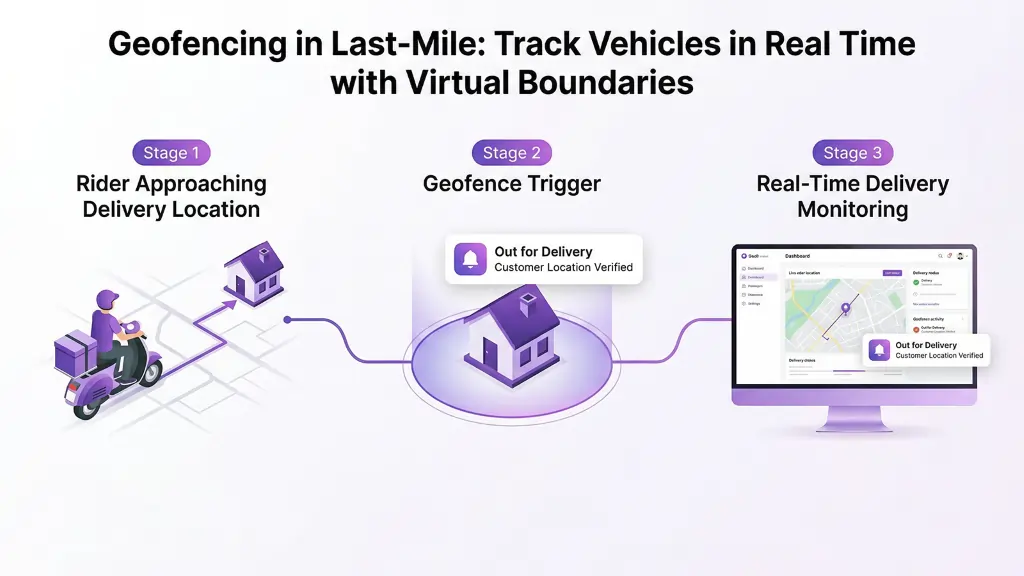
Geofencing in Action
Last mile delivery is directly linked with customer satisfaction and brand loyalty. Nearly 98% of customers say delivery experience affects if they stay with a brand. One late delivery or wrong update can cost their trust.
So, managers need to know exactly when a rider reaches the delivery location. Plus if the delivery is completed within the expected window. And let’s be honest here, when you manage multiple deliveries, manual follow-up is no longer reliable.
But, geofencing for delivery management solves this gap for logistics companies. Managers get real-time alerts without constant follow-ups. While customers receive accurate delivery updates they can trust.
Continue reading to know more.
8 Ways Geofencing Improves Last Mile Delivery
Geofencing improves last mile delivery efficiency through accurate ETAs, automated route tracking, and timely delivery status updates.
1. Efficient Fleet Management
Geofencing helps managers control fleets and schedules by setting GPS-based perimeters. Whenever a vehicle enters or exits a zone, the system records the event. It then matches it with the driver’s assigned route.
Platforms like TrackoMile use route optimization software to plan efficient routes and turn route movement into clear signals. Managers can see delays, long stoppages, or route deviations as they happen.
2. Accurate Delivery ETAs
With geofencing in place, ETAs are triggered by real delivery events, not assumptions. When a driver enters a delivery zone or gets close to a stop, a system like TrackoMile automatically updates the expected arrival time for managers and customers.
This creates a shared real-time view of when the delivery will happen. Managers can plan better, riders face fewer follow-calls, and customers know when to be ready for delivery. This makes last mile operations predictable and efficient.
3. Better Rider Management
When you are managing multiple drivers, it gets messy to call each one of them manually to get updates. Geofencing cleans this up by automatically tracking when riders reach delivery locations.
Along with that, managers can see who’s on track, who’s delayed, and who needs support, all in real time.
4. Stronger Customer Experience & Trust
Geofencing makes the delivery experience more reliable for customers. By creating the virtual boundary, it sends real-time delivery tracking updates when a rider is nearby or arrived.
It sends messages like “rider is about to reach” or “rider has arrived”. This keeps customers informed and builds trust among them.
5. Faster Exception Handling
Manually handling exceptions usually means manually watching routes. Calling riders, or finding issues after a delivery is already delayed.
But logistic companies can automate this with geofencing. It gives instant alerts for route deviations, unexpected stoppages, or skipped locations. When combined with ePOD, issues can be verified and resolved early, before they disrupt the entire route.
6. Better Delivery Accountability
In last-mile delivery, disputes often come down to one question; did the rider actually reach the location? Geofencing adds clarity by validating delivery activity based on location.
Deliveries can only be marked complete when the rider is near the location. This prevents fake confirmations and ensures authenticity.
7. Reduced Manual Follow-Ups
When there’s no proper delivery route monitoring, managers end up calling riders just to ask where they are. It turns into endless follow-ups and eats up a lot of time during the day.
With geofencing, route monitoring is driven by location triggers. As riders enter or exit delivery zones, updates are logged automatically. So, managers know what’s happening without calling anyone.
8. Better Driver Safety
In last mile, things always don’t go as planned. Traffic piles up, route changes or drivers get stuck. When that happens, the first thing to know if your driver is safe, because they are the driving force of your business.
Geofencing helps you here by flagging when a vehicle moves outside approved delivery zones. This could point to an emergency or unauthorized movement.
Conclusion
Geofencing makes last-mile delivery more predictable. Managers, riders, and customers can see exactly where a delivery is. They can spot delays early, and act before small issues turn into bigger problems.
Geofencing works best when it’s part of a platform that keeps every delivery visible and on track. TrackoMile is a last-mile delivery management solution. It combines geofencing with delivery route monitoring, route deviation alerts, and real-time delivery visibility. This gives you a bird-eye view of your deliveries and improves last mile delivery efficiency.
FAQs
-
How to Implement Geofencing in Delivery Operations?
Geofencing in last mile delivery works by setting GPS-based virtual boundary around delivery locations. As riders enters or exit these zones, the system automatically sends delivery alerts to managers and customers.
-
How Does Geofencing Improve Delivery Efficiency?
Geofencing improves delivery efficiency by sending updates automatically as drivers move through their routes. Managers can see delays as they happen, keep routes on track, and avoid constant follow-ups, so deliveries stay on schedule.
-
How Does Geofencing Helps Improving Customer Experience?
Geofencing helps customers know what’s happening with their delivery. It sends them updates like “rider is on the way,” “will reach shortly,” or “arrived,” so they aren’t left waiting or guessing. This makes deliveries feel reliable and builds trust naturally.
-
How Do Geofencing Transforms Modern Supply Chain?
Geofencing transforms the modern supply chain by replacing manual tracking with location-based automation. It provides real-time visibility into rider movement. So, managers can prevent delays and reduce blind spots.
-
Can Geofencing Reduce Failed Deliveries?
Yes, geofencing can reduce failed deliveries. It sends real-time alerts when a rider is nearby or has reached. So, managers can prevent missed handovers and ensure accurate delivery timing.

Parul is a content writer with 2+ years of experience in B2B and SaaS domains. She creates clear, actionable content for TrackoBit and TrackoMile, focusing on fleet management, last-mile delivery, and... Read More


Related Blog
Building Resilient Delivery Operations with TrackoMile in 2026 and Beyond
Logistics businesses build resilient delivery networks with TrackoMile. But how exactly? With real-time route optimization, automated scheduling, and end-to-end fleet…
How to Scale Quick Commerce Beyond 10 Minutes with TrackoMile
TrackoMile transforms chaotic last-mile logistics into a predictable, automated, and high-margin retail powerhouse. See how it works in quick commerce.
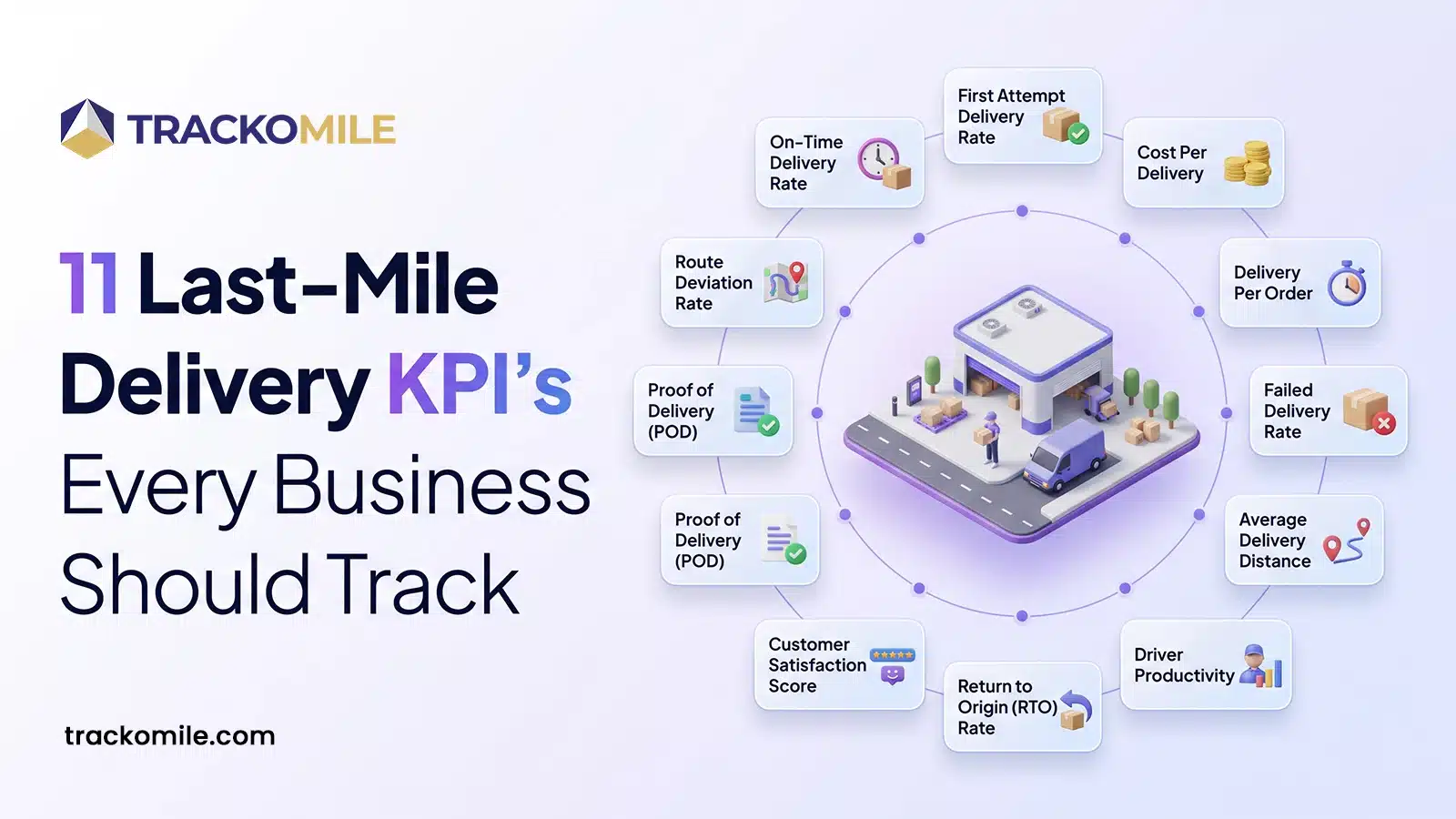
Last Mile Delivery KPIs & Metrics: 11 Essential Metrics to Track
To improve last mile operations, it’s important to track 11 essential last mile delivery KPIs like on-time delivery rate, cost…
Last-Mile Technology: 6 Technologies Transforming Delivery Operations
Learn how last-mile technology combines routing, dispatch, tracking, ePOD, and analytics. Improve your businesses’ delivery speed, visibility, efficiency, and customer…


Your inbox awaits a welcome email. Stay tuned for the latest blog updates & expert insights.
"While you're here, dive into some more reads or grab quick bites from our social platforms!"Stay Updated on tech, telematics and mobility. Don't miss out on the latest in the industry.