
Quick Summary

- Last Mile Delivery Apps optimize routes, enhance dispatch management, and offer real-time tracking, improving delivery efficiency.
- Rising costs in last-mile delivery necessitate digital solutions to mitigate delays and enhance customer satisfaction.
- Key features of the best last mile delivery apps include route optimization, electronic proof of delivery, and automated notifications.
- Top apps like TrackoMile and Onfleet provide essential tools for managing fleets, ensuring timely deliveries, and meeting customer expectations.
The best last-mile delivery app gives companies tools like route optimization, dispatch management, and real-time tracking. Helping teams deliver faster, reduce delays, and run operations more efficiently.
The last mile is the shortest part of a delivery, yet it’s now the most expensive. Over the past few years, its share of shipping costs has climbed from around 40% to over 50%.
Delays, inefficient routes, and failed delivery attempts here quickly affect both customer satisfaction and delivery costs. As delivery volumes increase, this becomes risky. Manual tracking cannot keep up with daily route changes and delivery pressure.
This is why businesses now turn to digital delivery solutions. Delivery management apps are now the go-to apps for handling last-mile operations. For managers, choosing the best last mile delivery app is about running predictable, controlled last-mile operations, not just completing orders.
This blog shows the key features to look for. It also explains how to pick the right solution for your business.
Why Businesses Need Last Mile Delivery Apps?
The growing demand for real-time tracking and delivery transparency is why many businesses adopt last-mile delivery apps.

Last Mile Market Growth
Here are some common reasons why businesses look for a last-mile delivery services app beyond basic tracking:
1. Manual Operations Cause Inefficiencies
When you manage things manually, you can’t see route changes, traffic jams, or if a rider is standing idle at that moment. So most of the time, the delivery updates aren’t accurate.
2. Rising Fuel Costs
Riders take longer routes due to traffic and route changes. Idling at delivery points wastes fuel. Without route visibility, fuel costs increase on every delivery run.
3. Lack of Visibility
Teams are not able to track rider attendance or manage daily rosters accurately. Route deviations go unnoticed. Proof of delivery is often delayed or missing. This leads to missed delivery windows.
4. Customer Expectations
Customers expect accurate ETAs and timely delivery updates. When delays are not communicated, follow-up calls increase. Delivery trust drops quickly.
5. Real-Time Tracking Demand
Businesses are expected to share accurate ETAs and on-time deliveries. Customers ask for live order updates. Without real-time tracking, teams can’t explain delays or meet delivery deadlines.
If these are core reasons you are looking for the best app, you’re at the right place.
Keep reading.
Key Features of a Powerful Last Mile Delivery App
A powerful last-mile delivery app offers features like route optimization, real-time tracking, and dynamic dispatcher. Keep reading to learn how each feature improves delivery efficiency.
1. Route Optimization
Look for a last mile delivery app that plans the most efficient route for deliveries. It should sequence multi-stop routes based on rider shifts, vehicle load, and delivery windows. This helps reduce idle time and save fuel. It ensures deliveries are completed on time.
2. Real-Time Tracking
Last mile delivery app should provide live visibility for riders’ locations. It should send customers tracking links via SMS, WhatsApp, or email. Customers can get updates like “Dispatched” or “Out for Delivery” and contact the rider if needed.
3. Dynamic Dispatch
A reliable last mile delivery app assigns orders based on rider availability and capacity. The process works automatically or with minimal intervention. So, managers reduce labor costs, shorten service time, and keep deliveries on schedule.
4. Electronic Proof of Delivery
ePOD is a crucial feature of last-mile logistics. A delivery management app allows riders to capture proof of delivery on-site using OTP, images, and barcodes. This reduces disputes, prevents errors, and improves accountability without extra follow-up.
5. Delivery Analytics
Look for a last mile application that provides detailed analytics on completed, delayed, and reattempted deliveries. It should track average delivery time, route efficiency, and delivery volume per rider or route. So, managers can improve overall operations.
6. Driver Performance Tracking
It should show average delivery time, attendance, and route adherence. This helps teams spot underperforming riders and manage resources without manual follow-ups.
7. Geo-Fencing
A last-mile delivery app should offer advanced geocoding. This ensures riders reach the right location on time and reduces failed deliveries.
8. Automated Notifications
Ensure the app has the capacity to send automated messages to customers via SMS, WhatsApp, and/or email. It should keep them notified on dispatch and out for delivery status.
Types of Last Mile Delivery Apps
Each type of last-mile delivery app serves a specific business need. Continue reading to choose the right app based on your delivery model.
1. Courier Delivery Apps
Courier delivery apps are designed for parcel and document deliveries with multiple stops per day. A delivery management application monitors shipments and captures proof of delivery.
2. Enterprise Delivery Management Apps
Enterprise delivery apps are designed for big delivery operations. They support vehicle management, rider allocation, complex routing, and real-time tracking across cities.
3. Hyperlocal Delivery Apps
Hyperlocal delivery apps are built for same-day or instant deliveries. They help businesses manage short-range, high-frequency orders like food, groceries, or retail.
4. B2B Distribution Apps
These apps are designed to be used by businesses delivering goods to retailers, wholesalers, or partners. Offers order management, delivery tracking, inventory management, and proof of delivery for accountability.
5. Fleet-Integrated Delivery Apps
Designed to work with existing fleets. A real-time delivery tracking app comes with live location tracking, route planning, and tools to use your fleet properly. Teams can check how vehicles are performing, reduce waiting time, and make sure deliveries run more smoothly.
Cost of Last Mile Delivery Apps
The cost of a last mile delivery app depends on factors like vehicle capacity, delivery volume, and delivery windows. Some businesses charge per user, others per vehicle, or via a monthly SaaS subscription. Cost may include setup, training, and getting your team used to the system.
Even if the initial cost feels high, a last-mile delivery app pays quickly. It cuts fuel and labor waste. Routes are clearer. ETAs are easier to meet. Operations become more predictable and easier to manage.
Benefits of Using Last Mile Delivery Apps
Some of the benefits of the best last mile delivery apps include:
- Optimized routes, reduced failed delivery attempts, and reduced idle time help reduce fuel and labor costs for each trip.
- Managers can track riders, monitor vehicles idle time and assign deliveries based on capacity. Vehicles are fully utilized.
- Orders are assigned automatically or with minimal intervention. Dispatch happens quickly. This reduces delays and speeds up deliveries.
- Last mile application sends live updates, accurate ETAs, and proof of delivery. This ensures customer satisfaction and builds trust.
- Managers can monitor deliveries, track route deviations, and spot delays early. This makes last-mile operations predictable and controlled.
By using a last mile delivery app, businesses can reduce costs and improve fleet efficiency. Customers get timely deliveries. These benefits make last-mile operations more efficient and reliable.
Best Last Mile Delivery Apps & Software
TrackoMile, Onfleet and Route4Me are the reliable choices for last mile delivery app. Each has its own offering strength.
1. TrackoMile
TrackoMile
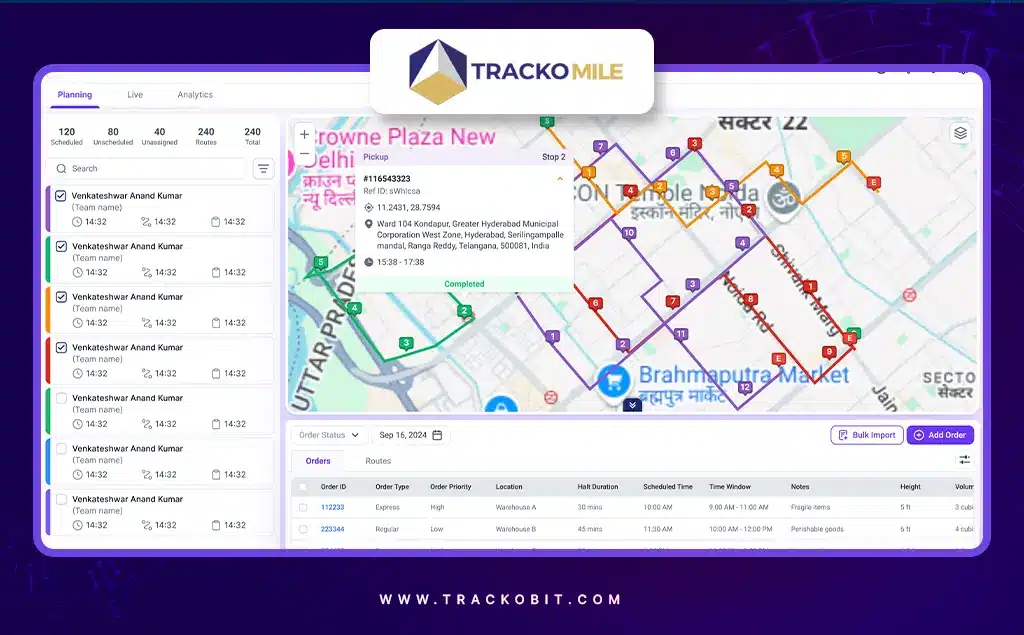
TrackoMile is a last mile delivery software. It is designed for enterprises managing both fleets and last-mile operations. Managers get clear visibility into rider locations, delivery status, and route adherence across fleets and locations.
The platform brings routing, dispatch, and proof of delivery into one system. It also offers delivery reports and rider performance tracking. So, managers can reduce delays and improve first-attempt delivery rates.
Best For:
Best for enterprises looking for end-to-end fleet and last mile intelligence. Ideal for teams handling multiple vehicles and high delivery volumes.
Key Strengths:
- Real-time tracking of riders and deliveries.
- Optimized multi-stop routes based on delivery windows and vehicle capacity.
- Dynamic dispatch automatically allocates order based on rider availability.
- Electronic proof of delivery (ePOD) using OTPs, images, and barcodes.
- Delivery analytics and driver performance tracking for operational visibility.
2. Onfleet
Onfleet
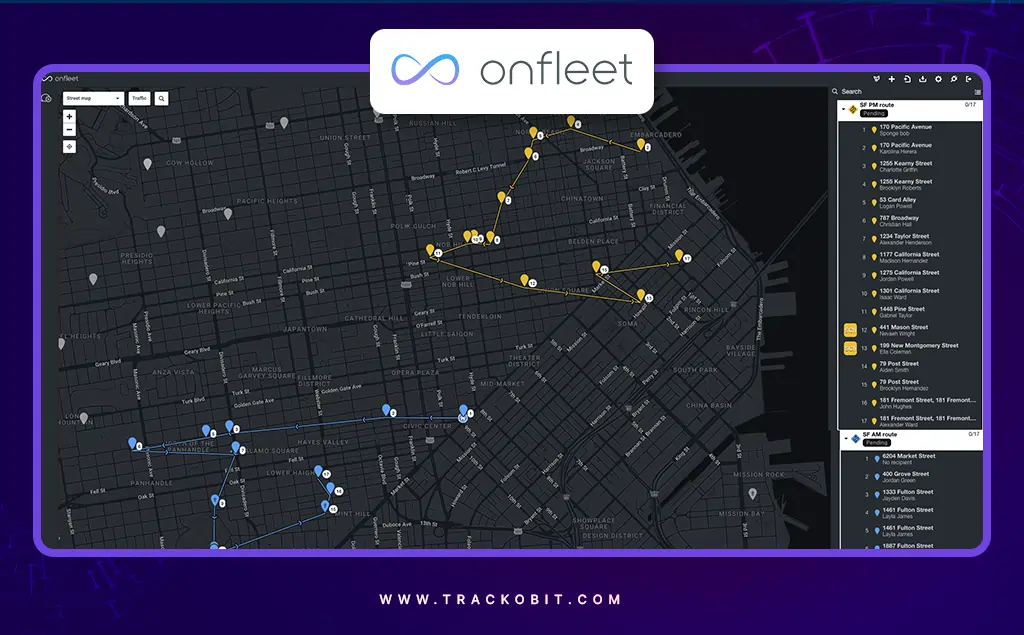
Onfleet is a top-notch delivery management software. Managers can plan routes, track riders, and see where every order is in real time, and that all from one place. This improves visibility, coordination, and on-ground execution across orders.
Best For:
It is best for small to medium fleets.
Key Strengths:
- Real-time driver tracking with accurate ETAs.
- Faster deliveries through smart dispatch and better routes.
- Customer updates and delivery reports for clear visibility
3. Route4Me
Route4Me
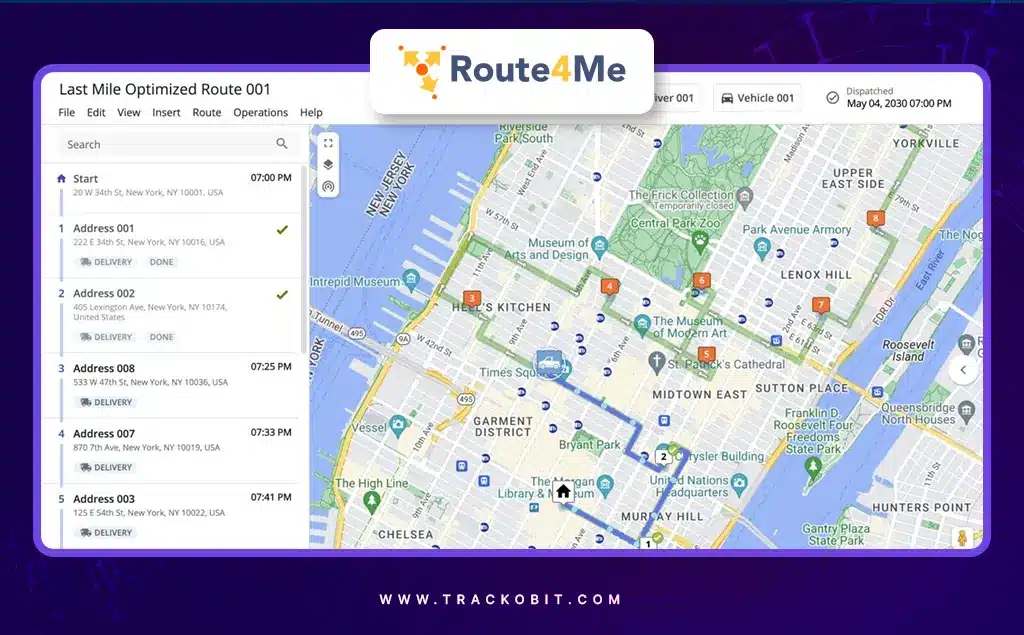
Rout4Me is a route planning and optimization app. It helps businesses manage multi-stop deliveries efficiently. This helps to cut down on travel time, fuel costs, and route complexity. Teams are able to plan their routes on time.
Best For:
Route4Me is best for small to medium fleets looking for software to manage frequent route changes.
Key Strengths:
- Multi-stop route optimization to save time and fuel.
- Dynamic route adjustments based on traffic and delivery change.
- Easy-to-use mobile and web interface for drivers and managers.
4. OptimoRoute
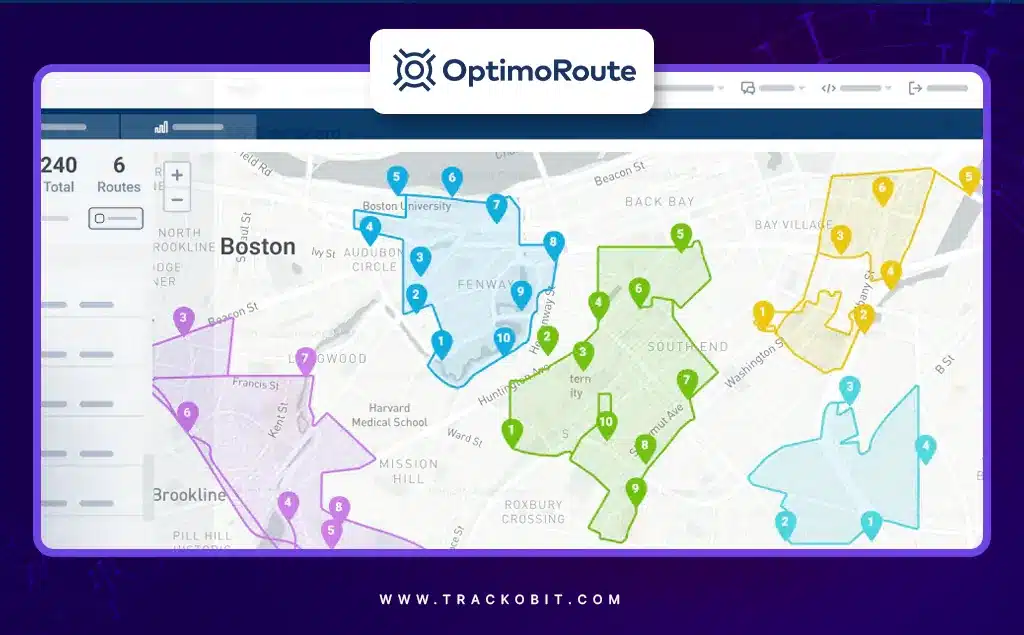
OptimoRoute
OptimoRoute is mainly used for route planning and delivery schedules. Offers live tracking, automated dispatch, and customer updates. Makes delivery operations more predictable and scalable.
Best For:
Ideal for businesses looking to cater to recurring and on-demand deliveries.
Key Strengths:
- Automated route planning and delivery assignment.
- Real-time driver tracking and performance monitoring
- Optimized scheduling to maximize deliveries per shift
When choosing the best last mile delivery app, consider scalability and mobile usability. The app should handle growing fleets. Adapt to your workflows. Give riders and managers easy access on the go. Platforms like TrackoMile excel in all three. This makes it a strong choice for enterprises. Especially for this looking for end-to-end fleet and last mile intelligence.
Common Challenges Without a Delivery App
Without a last mile delivery services app, logistic operations face inefficiencies. Teams struggle to track deliveries, manage riders, and keep operations predictable.
- Manual Route Planning: Routes are planned on paper or spreadsheets. Changes due to traffic or delays require constant manual updates.
- Fuel Wastage: Inefficient routes are taken, and idling occurs at the point of delivery.
- Delivery Delays: Delivery delays go unnoticed without real-time tracking. Managers find out only after a delivery is missed. This leads to reattempts and unhappy customers.
- Paper-Based Proof of Delivery: Manual signatures or stamps increase errors and delivery disputes
- Lack of Performance Insights: Managers lack clear performance data. Rider efficiency, route adherence, and delivery success remain hard to measure.
Why TrackoMile Is a Smart Last Mile Delivery App
With TrackoMile, managers can make deliveries run smoother. It allows them to save both time and fuel, all while keeping full control of last-mile operations. The platform suggests better routes for deliveries. So, riders can take shorter paths and finish deliveries faster.
Logistic managers can track every vehicle in real time. With powerful dynamic dispatched, orders are assigned automatically. Based on rider availability and capacity. Proof of delivery is captured digitally on-site with OTPs, photos, or barcodes. So, no more lost paperwork.
It offers detailed insights into delivery performance, route efficiency, and driver productivity. With these insights, dispatchers can make data-backed decisions. Plus, it improves last-mile operations day by day.
Conclusion
Rising delivery costs and higher customer expectations are making last mile operations harder to manage. However, by choosing the best last mile delivery app, businesses can take control of their products. It allows them to plan better routes and reduce idle time, so riders can ensure ETAs.
Platforms like TrackoMile empowers businesses with real-time visibility and automation. It also brings accountability across every delivery workflow. It ensures every route taken, distance claimed, and delivery marked complete is verified.
The result: smoother operations, better performance, and reliable deliveries.

FAQs
-
What are Last Mile Delivery Apps?
Last mile delivery apps manage the final leg of deliveries. By using these apps logistics companies can plan routes, track riders in real-time and capture proof of delivery. So they can ensure smooth last-mile operations.
-
Are delivery apps suitable for B2B logistics?
Yes, delivery apps work well for B2B logistics. They help managers track vehicles, plan routes for multiple stops, and close deliveries with digital POD. As a result, deliveries stay on schedule and operations don’t vary from one client or location to another.
-
Is a last mile delivery app suitable for small businesses?
Yes, last mile delivery apps work well for small businesses. You can opt for a platform that scales as per your fleet size and needs like TrackoMile. So that you can improve your on-time delivery rate without any operational burden.
-
How much does a last mile delivery app cost?
The cost of a last mile delivery app depends on fleet size, delivery volume, and features. Businesses typically pay per vehicle, per user, or via a SaaS subscription, which makes it scalable to various business sizes.
-
Can last mile delivery apps handle multi-stop routing?
Yes, last mile delivery apps can manage multi-stop routing efficiently. Platforms like TrackoMile optimize routes across multiple deliveries based on traffic. So, managers can reduce delays, save fuel, and improve first-attempt delivery rates.
-
How does route optimization improve delivery efficiency?
Route optimization software allows managers to plan the most efficient routes for deliveries. It considers different factors like traffic, delivery windows, and vehicle capacity. So, managers can reduce delays, cut costs, and increase first-attempt delivery success.

Parul is a content writer with 2+ years of experience in B2B and SaaS domains. She creates clear, actionable content for TrackoBit and TrackoMile, focusing on fleet management, last-mile delivery, and... Read More


Related Blog
Building Resilient Delivery Operations with TrackoMile in 2026 and Beyond
Logistics businesses build resilient delivery networks with TrackoMile. But how exactly? With real-time route optimization, automated scheduling, and end-to-end fleet…
How to Scale Quick Commerce Beyond 10 Minutes with TrackoMile
TrackoMile transforms chaotic last-mile logistics into a predictable, automated, and high-margin retail powerhouse. See how it works in quick commerce.
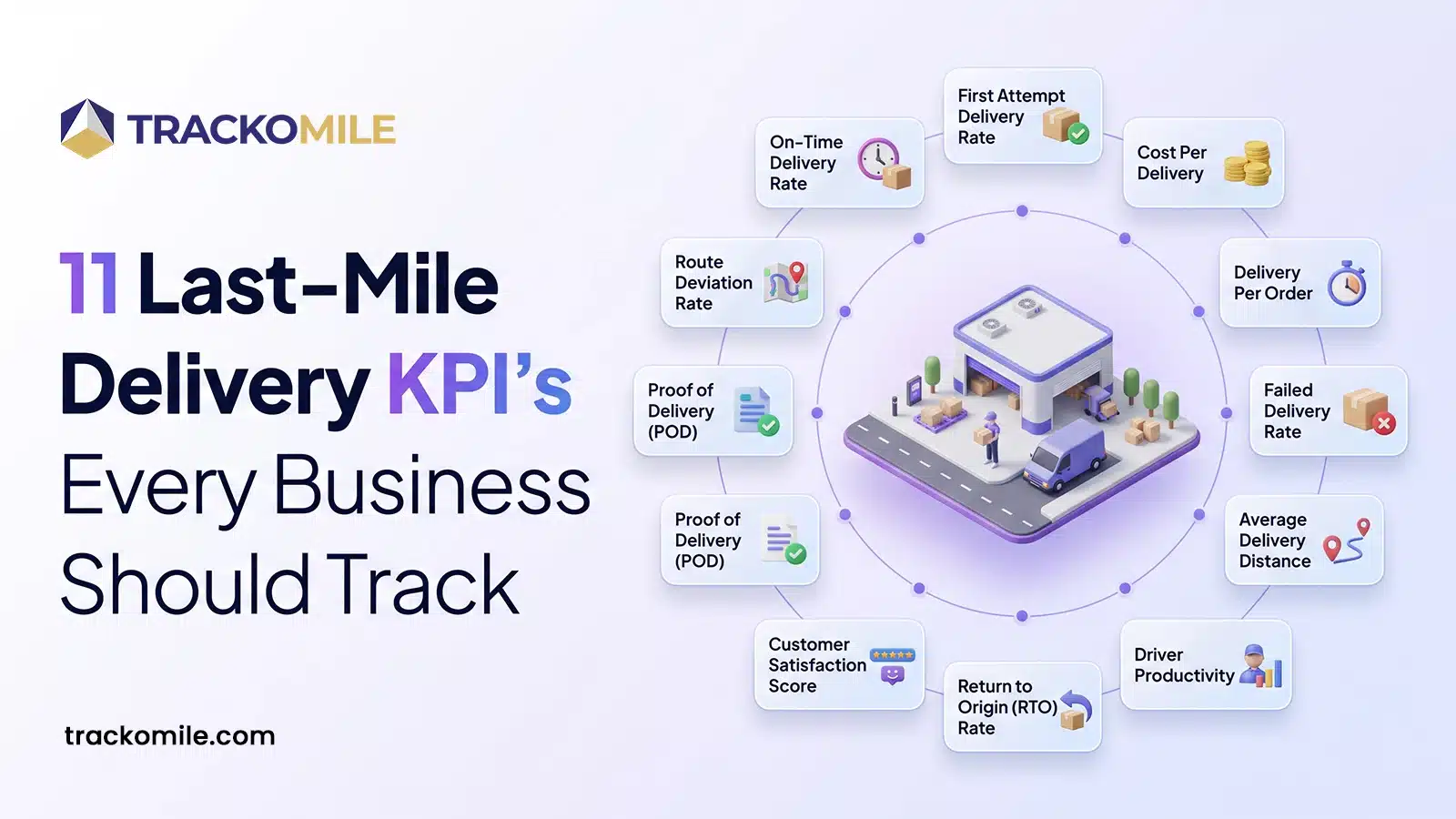
Last Mile Delivery KPIs & Metrics: 11 Essential Metrics to Track
To improve last mile operations, it’s important to track 11 essential last mile delivery KPIs like on-time delivery rate, cost…
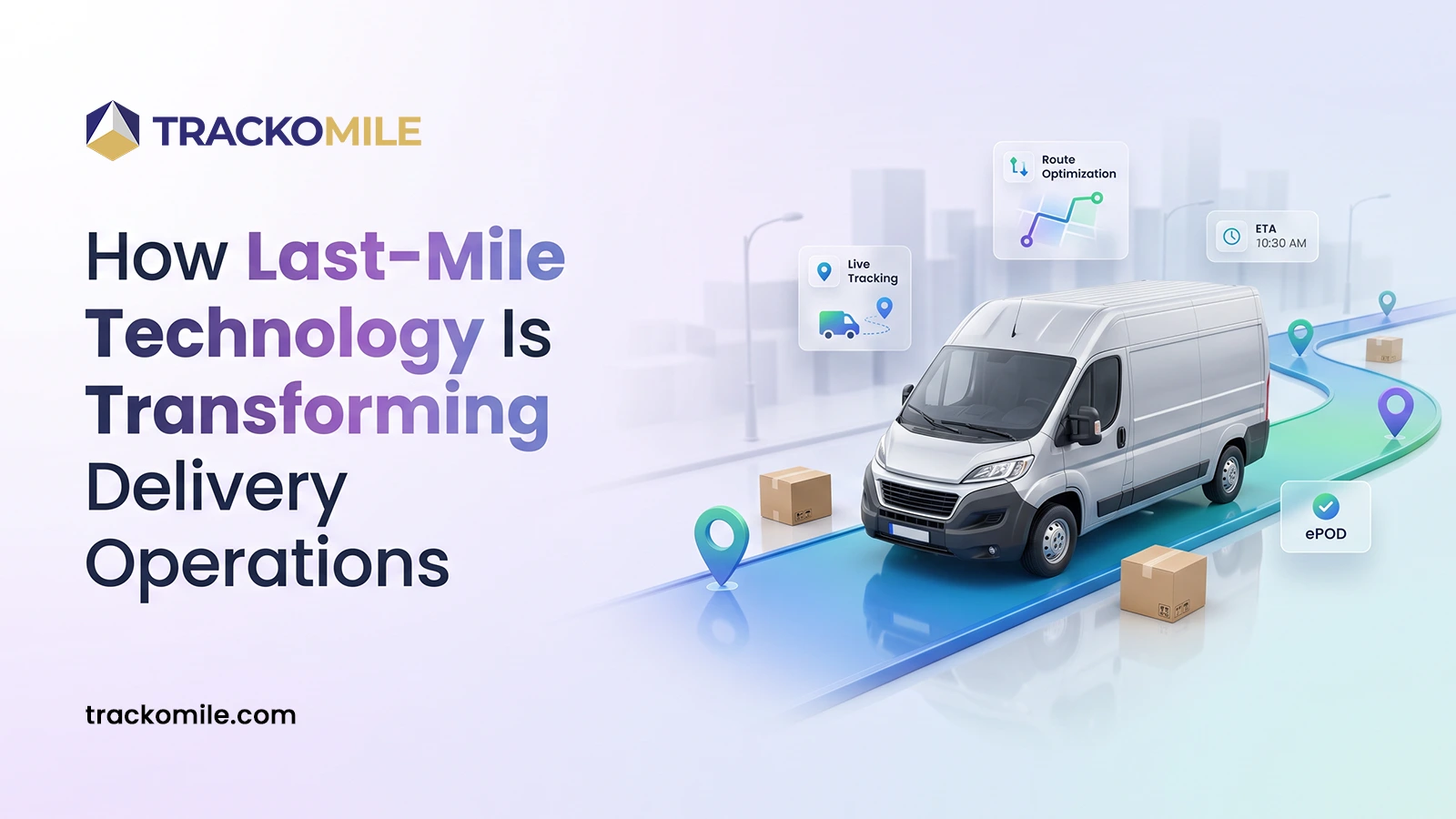
Last-Mile Technology: 6 Technologies Transforming Delivery Operations
Learn how last-mile technology combines routing, dispatch, tracking, ePOD, and analytics. Improve your businesses’ delivery speed, visibility, efficiency, and customer…


Your inbox awaits a welcome email. Stay tuned for the latest blog updates & expert insights.
"While you're here, dive into some more reads or grab quick bites from our social platforms!"Stay Updated on tech, telematics and mobility. Don't miss out on the latest in the industry.