
Quick Summary

- Last mile carrier tracking enhances customer relations by providing transparency on deliveries, crucial for e-commerce growth.
- The last mile delivery market is projected to reach $288 billion by 2031, driven by the pandemic and e-commerce boom.
- Tracking solutions offer precise ETAs and mitigate delays, improving operational efficiency and customer trust.
- Integrating last mile carrier tracking into delivery management systems can be challenging but is essential for competitive advantage.
Last mile carrier tracking provides real-time visibility, better dispatch control, faster deliveries, and reduced operational costs across the last mile. Read on to learn more.
Did you know 93% of consumers want to receive proactive updates throughout the shipping process? At the same time, nearly half of the shoppers will not return to a brand after a single poor delivery experience. While this reflects customer expectations, the underlying issues go deeper into logistics operations. It points to high operational costs driven by inefficient tracking, limited real-time visibility, and gaps in fleet monitoring that impact safety and compliance. Plus, poor fleet visibility directly affects safety and compliance.
This is where last mile carrier tracking comes in. It allows logistics companies to track and manage deliveries from a single place. Managers monitor deliveries, identify delays early, and offer quick resolutions. At the same time, it also improves operational coordination by offering predictable delivery timelines with the end customers.
Read on to understand how it works for businesses like yours.
What is the Last Mile Carrier Tracking?
Last mile carrier tracking is a strategic process of monitoring orders in transit from the distribution center to the end consumer. It allows managers to keep a bird’s eye view into their rider’s movement, route progress, and delivery status. Plus, they can share live delivery updates with the customers. This includes ETAs, out for delivery updates, and also add simple instructions like “leave at the door”.
A simple example can be seen in the modern ecommerce delivery system. Here customers can view real-time shipment status from dispatch to delivery. Last mile carrier tracking software provides the same level of visibility to logistics teams across different routes and vehicles.
Why is Last Mile Carrier Tracking Important in 2026?
Last mile carrier tracking is important because it helps businesses improve real-time visibility, control costs, and improve customer retention.
1. To Ensure Real-Time Visibility & Transparency
With real-time updates on order location, routes, and delivery delays, managers can make faster decisions and maintain better control over daily operations. At the same time, it also keeps customers informed about their orders.
2. To Reduce Manual Tracking Loads
Carrier tracking helps managers reduce WISMO calls by sharing timely updates. This reduces dependency on manual checks and improves the efficiency of logistics teams.
3. To Reduce Failed Deliveries
When shipments are tracked accurately, execution is more predictable. For businesses, this reduces the chances of failed and reattempt deliveries. At the same time, it builds trust among your customers.
4. To Improve Client Experience & Retention
By reducing uncertainty during delivery with real-time updates, ecommerce businesses can build trust and ensure a more consistent client experience. This leads to better retention.
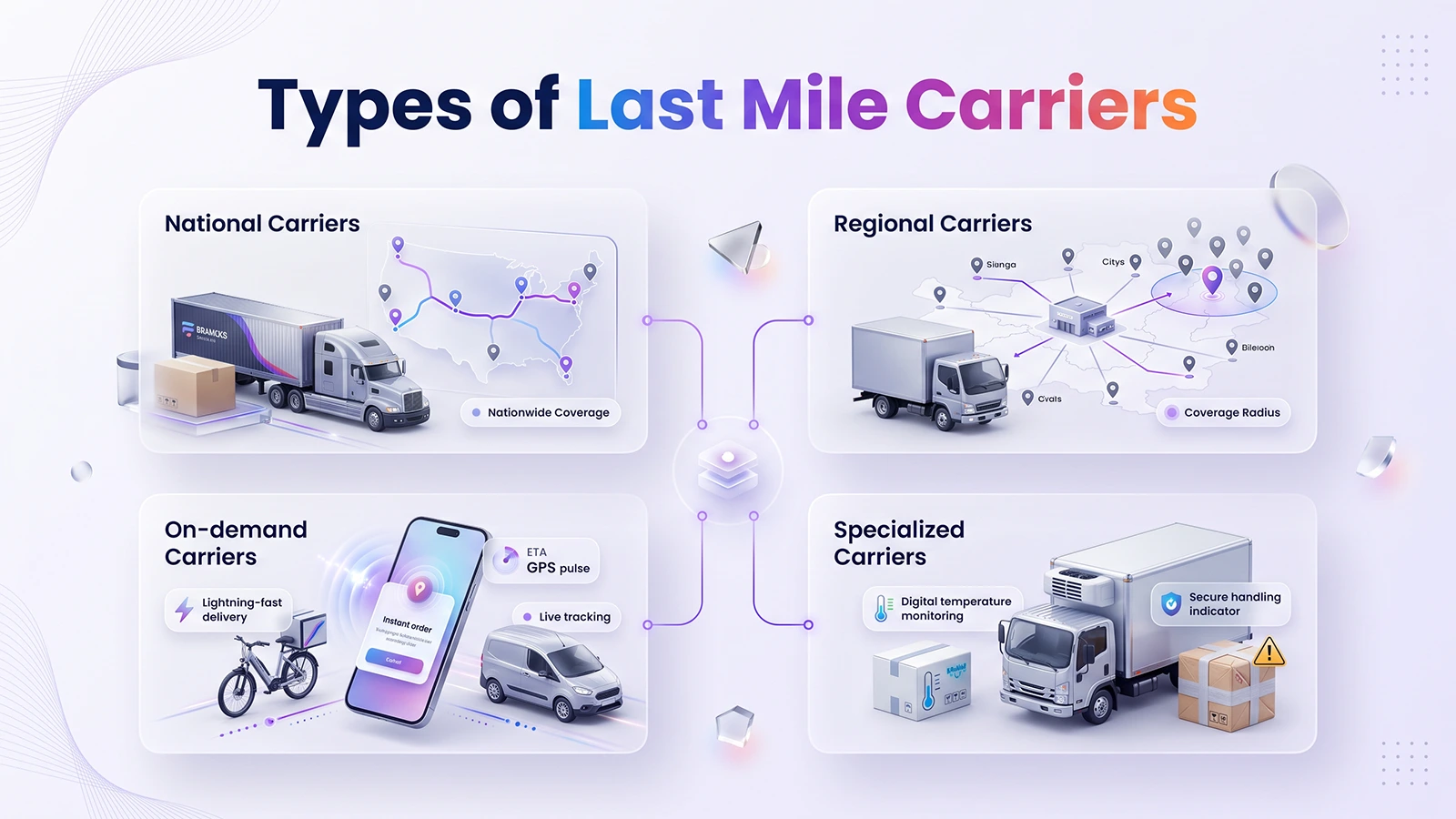
4 Types of Last Mile Carriers?
National, regional, and specialized carriers are major types of last mile carriers. Continue reading to know more about each of them.
Types of Last Mile Carriers
1. National Carriers
These are large logistic companies that operate across the country. They are commonly used for:
- Intercity deliveries
- Standardized shipping
2. Regional Carriers
Regional carriers operate within a specific region or state. These are often fast and cost-effective for local deliveries. They are used for:
- Regional distribution
- Faster turnaround in specific zones
3. Hyperlocal/On-demand Carriers
These carriers focus on quick deliveries within a city or specific area. They are commonly used for:
- Same-day or instant delivery
- Food, grocery, and quick commerce
4. Specialized Carriers
These carriers handle specific types of deliveries that require extra care or compliance. They are commonly used for:
- Temperature-sensitive goods
- High-value items like cash
- Fragile shipments like glass
How Last Mile Carrier Tracking Works?
Final mile carrier tracking works by assigning orders, tracking deliveries in real-time, and sharing live updates. Here is a step-by-step process of how it works:
1. Dispatch from Hub
Orders reach the delivery hub, get scanned, and are prepared for last mile delivery to move toward the customer location.
2. Order Assignment
Dispatch management systems assign the orders to the delivery agents based on different parameters. These include route, location, and capacity to name a few.
3. Out for Delivery
Delivery agents mark it out for delivery as they begin the final journey to the customer. It also sends a live tracking link with the customers.
4. Real-Time Tracking
Real-time tracking allows managers to track delivery progress in real-time. You can track rider movement, delivery status, and quickly spot any delays.
5. Customer Notifications
Last mile carrier tracking allows you to share real-time updates with customers. They receive delivery status, ETAs, and alerts, so they know when to expect their order.
6. Delivery Confirmation
Once delivered, the rider captures ePOD through photos, OTPs, signatures, and barcodes. So, you can reduce the chances of disputes and false claims.
Key Challenges Faced by Last Mile Carriers?
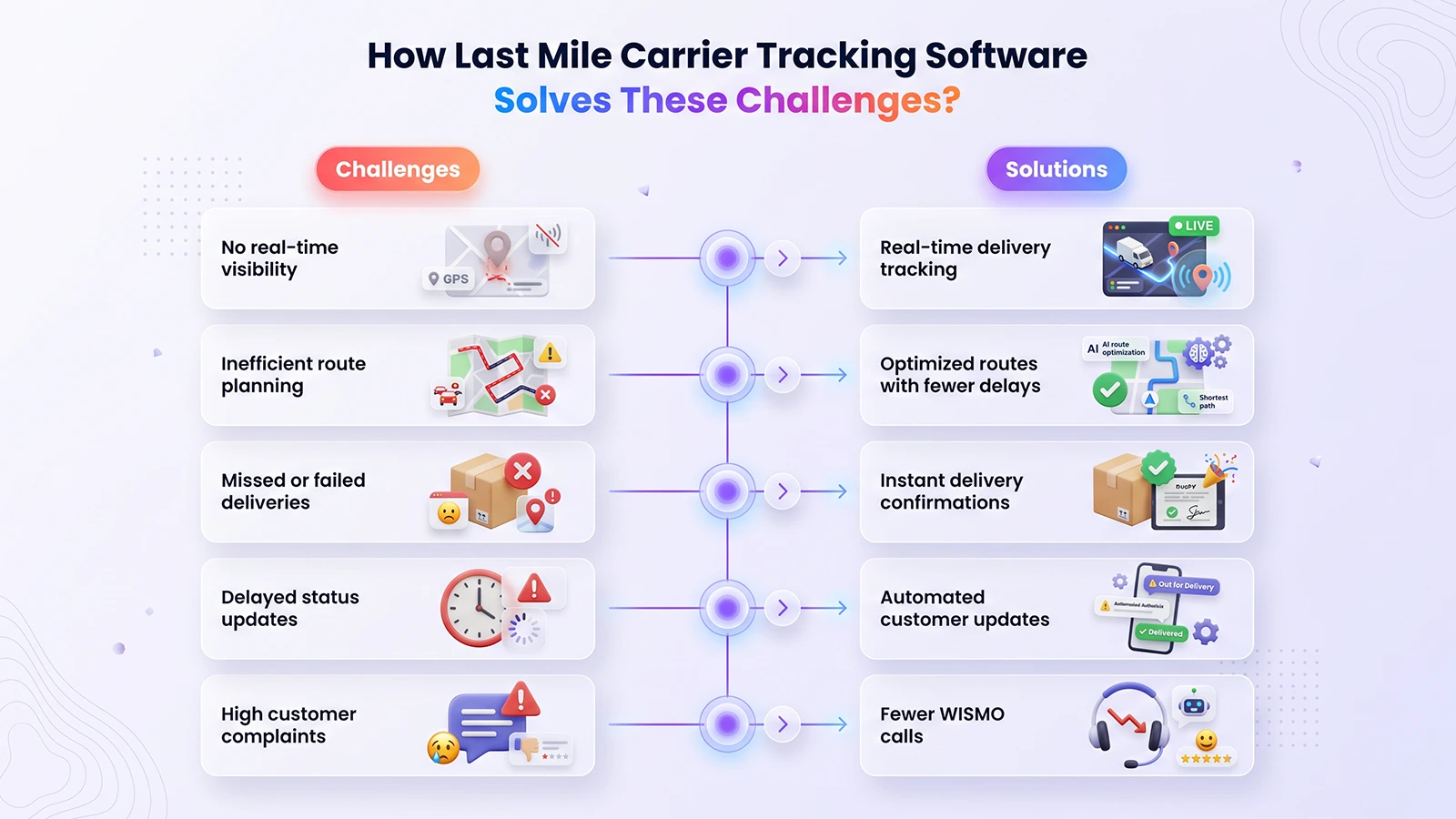
Dispatch management, real-time visibility and route planning are some of the common challenges last mile carriers are facing. These directly impact your revenue and profit margins.
1. Improper Dispatch Management
Dispatch planning often relies on manual coordination and static routing logic. This leads to imbalance rider allocation, high cost, and poor first-attempt delivery rates. Ultimately, this can impact service reliability across distribution channels like Amazon.
2. Poor Route Planning
Finding an optimized route for deliveries is a critical challenge in last mile delivery. Static routes often fail to account for live traffic conditions, delivery density, or last-minute order changes.
3. Lack of Real-Time Visibility
Poor visibility is one of the biggest last mile delivery challenges for logistic companies. In most cases, managers don’t get live movement updates, route changes, or accurate delivery status in real time. This leads to high operational costs and affects SLA performance.
4. High Delivery Costs
Inefficient routing, idle vehicle time, and poor load management all lead to high per-delivery costs. This directly affects your profit margins.
5. Lack of Delivery Proof
In many last mile operations, delivery proof is still not captured in a consistent way. This later creates issues during disputes or confusion about whether the item was actually delivered.
However, you can solve all these challenges by using the right last mile carrier tracking software.
Solve Challenges with a Last Mile Carrier Tracking Software
How to Choose the Right Last Mile Carrier Solution?
Look for features, pricing, user reviews and ease of use to choose the right last mile delivery software for carrier tracking.
1. Features
Look for a software that offers core features like route optimization, rider management system , and dispatch management. This may vary as per your specific business needs.
2. Ease of Use
Choose software that both you and your riders can easily use. So, you will not end up investing extra time in onboarding your team.
3. Pricing
Do not just look for the upfront fee of any software. Look for the ROI it delivers to your business. So, it will not feel like an added burden on your team.
4. Use Reviews
Before you make any decision, check user reviews from your industry. Look at what they say about real-world performance, support, and integration capabilities.
How TrackoMile Helps Optimize Last Mile Carrier Operations?
TrackoMile is a last mile delivery management software designed to help last mile carrier businesses. So, they can manage deliveries with better visibility, control, and efficiency. It brings core capabilities in a unified system such as:
- Real-time rider tracking with live movement status.
- Route optimization software to reduce idle time and fuel costs.
- Automated dispatching for faster order allocation.
- Order and capacity management for balanced workload.
- Rider roaster to manage trips, attendance, and POD
By combining tracking, dispatch, and execution in one system, TrackoMile helps businesses shift from fragmented processes to a more structured and scalable last mile delivery model.
Frequently Asked Questions
-
What is the difference between a last mile carrier and last mile delivery?
A last mile carrier is a company which is responsible for transporting and delivering goods to the end customers. A last mile delivery on the other hand is the process of moving a package from the distribution center to the customer’s doorstep. It involves tracking, route planning, and collecting ePOD.
-
Which is the best last mile carrier tracking software?
TrackoMile is the best last mile carrier tracking software in 2026. It offers real-time tracking, rider management, route optimization, and ePOD. This helps solve daily operational challenges. TrackoMile allows you to manage your riders and orders from a single place.
-
How long does a last mile carrier take to deliver?
The delivery time of a last mile carrier usually depends on distance, traffic, density, route planning efficiency, and type of delivery. In most cases orders are usually delivered on the same day, the next day, and within 1-5 days.

Parul is a content writer with 2+ years of experience in B2B and SaaS domains. She creates clear, actionable content for TrackoBit and TrackoMile, focusing on fleet management, last-mile delivery, and... Read More


Related Blog
How to Scale Quick Commerce Beyond 10 Minutes with TrackoMile
TrackoMile transforms chaotic last-mile logistics into a predictable, automated, and high-margin retail powerhouse. See how it works in quick commerce.
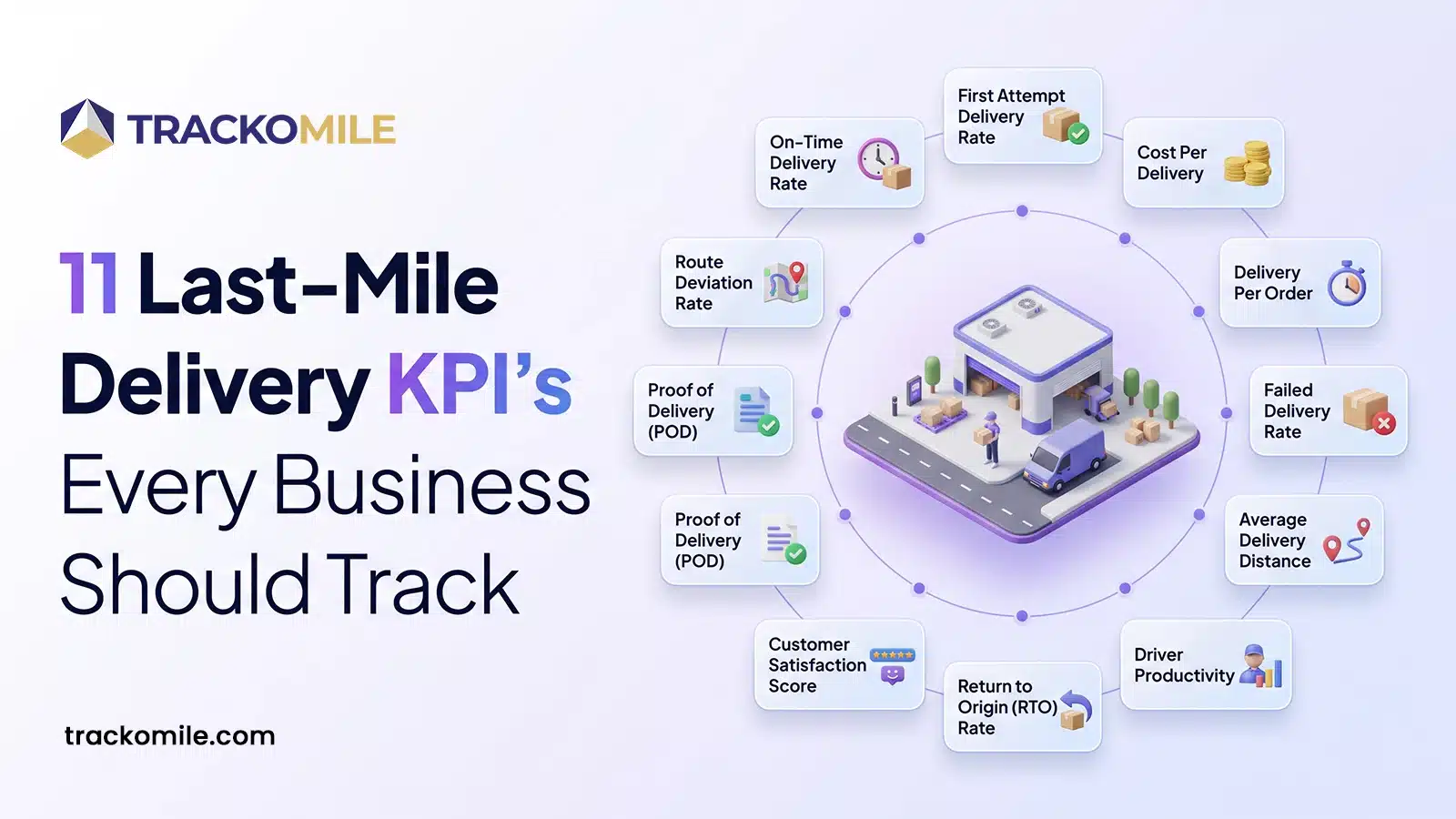
Last Mile Delivery KPIs & Metrics: 11 Essential Metrics to Track
To improve last mile operations, it’s important to track 11 essential last mile delivery KPIs like on-time delivery rate, cost…
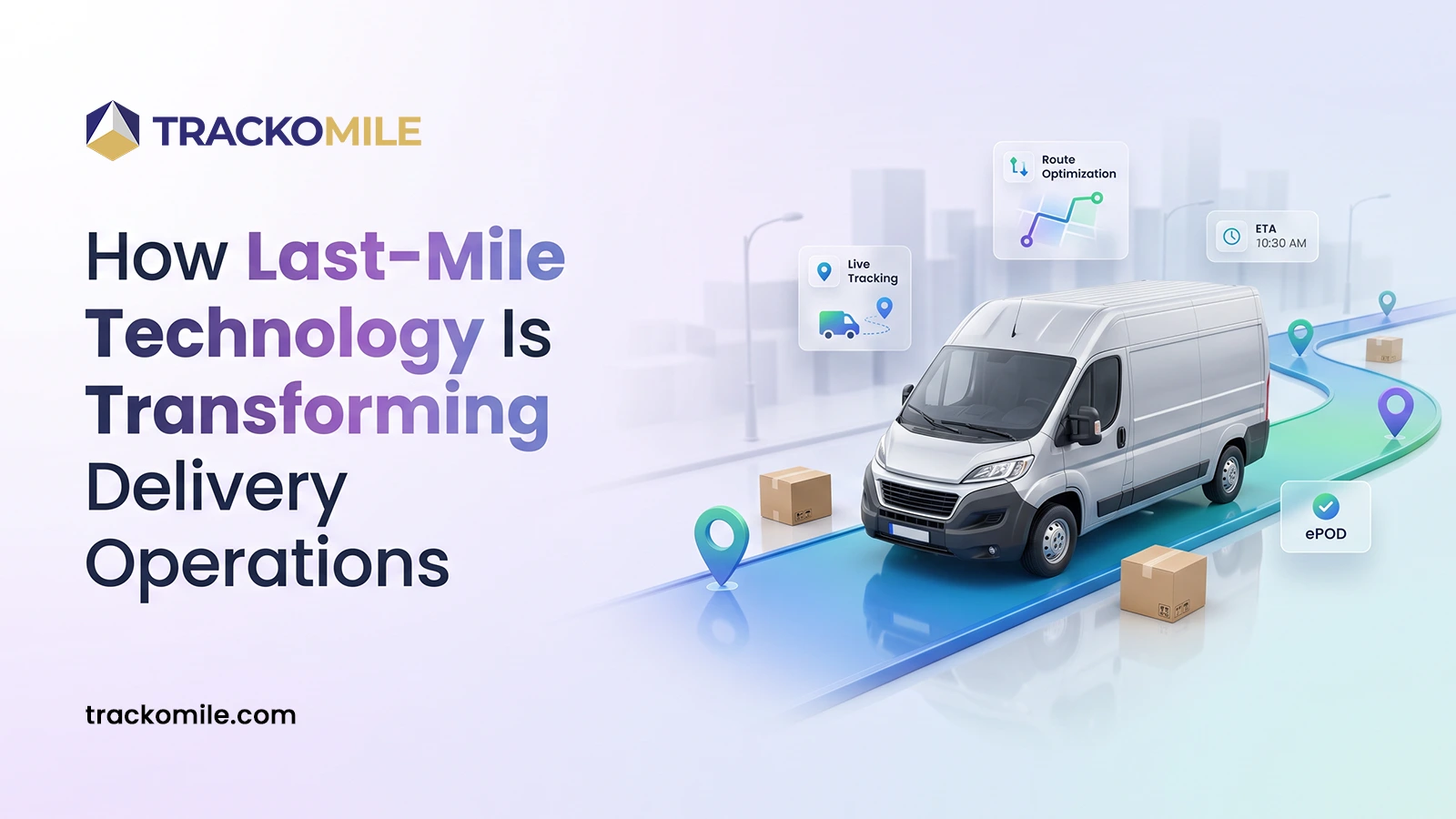
How Last Mile Technology Improves Delivery Speed, Visibility, and Customer Experience
Learn how last-mile technology combines routing, dispatch, tracking, ePOD, and analytics. Improve your businesses’ delivery speed, visibility, efficiency, and customer…
What is On-Demand Delivery Management Software: Types, Features, & Benefits
This blog explores on-demand delivery management software, its key benefits, and must-have features. Also, we will explore how to choose…


Your inbox awaits a welcome email. Stay tuned for the latest blog updates & expert insights.
"While you're here, dive into some more reads or grab quick bites from our social platforms!"Stay Updated on tech, telematics and mobility. Don't miss out on the latest in the industry.