
Quick Summary

- Fleet visibility should align with operational hours to enhance clarity and reduce data overload.
- Continuous tracking generates excessive data, leading to inaccurate insights and privacy concerns.
- Time-based tracking captures only relevant movements, improving mileage accuracy and compliance.
- TrackoBit's new features offer time-filtered reporting and restricted tracking, ensuring meaningful insights and better trust with drivers and clients.
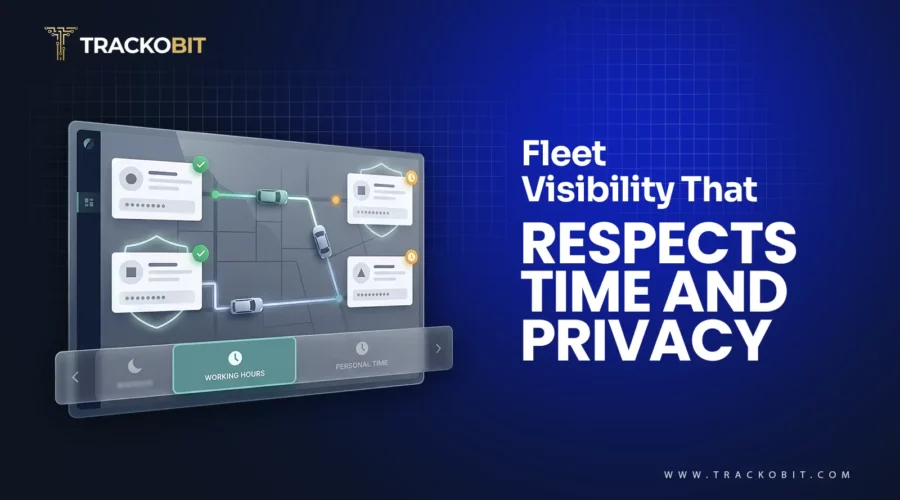
Read on to understand why fleet tracking works better when it follows working hours. Because visibility should support operations, not overwhelm them.
Fleet visibility has long been associated with continuous tracking. While this approach once brought clarity, it is now creating new challenges for modern fleet operations.
Today’s fleets operate on schedules, shifts, and defined usage windows. Yet many tracking systems still apply the same rules to every vehicle, every hour of the day. The result is excessive data, inaccurate insights, and growing concerns around privacy.
To move forward, fleet tracking software needs a new perspective. One that understands time as a core operational factor, not an afterthought.
The Core Problem: When Data Creates Bigger Gaps
The problem is not the volume of data fleets to collect. It is how that data is captured and interpreted across time. When every movement is treated equally, meaningful insights get buried. Without the right insights, operational clarity suffers.
Too much data, too little relevance
Continuous tracking generates massive volumes of movement data. However, not all movements are operational. Without context, fleets are left sorting through noise instead of insights.
Inaccurate or misleading reports
Travel outside work hours skews mileage, utilization, and productivity metrics. This makes billing, reimbursements, and performance reviews harder to justify and defend.
Rising privacy concerns on the ground
Employees increasingly feel over-monitored when personal and work-related movement is mixed. This impacts trust and long-term adoption of tracking systems.
One-size-fits-all tracking models
The same tracking logic is applied everywhere.
- To school buses.
- To rental vehicles.
- To cabs.
- To logistics fleets.
Even though their schedules and usage patterns are vastly different.
Why Time Truly Matters in Fleet Operations
Fleet movement is structured around time, not randomness. Every vehicle on the road operates within defined schedules, shifts, or usage windows. When fleet management software ignores time context, the data may look complete. But it lacks real operational meaning.
1. Shift-based Fleets
Logistics, field services, and delivery operations typically function in shifts. Vehicles may be active for a specific number of hours each day, often varying by region or team. Tracking outside these shifts adds idle movement, detours, and personal travel to reports.
The result is distorted productivity and unreliable utilization metrics. Time-aware tracking ensures that only operational movement is measured and analyzed.
2. School Transport
School transport fleets operate on strict pickup and drop schedules. Vehicles may remain idle for long hours between trips or be used for non-operational movement. Without time-based tracking, reports can reflect unnecessary mileage and inflated usage. Tracking aligned with school hours keeps data accurate, compliant, and easy to audit.
3. Rental and Shared Vehicles
In rental and shared mobility models, vehicle usage is limited to booking periods. Tracking outside these windows adds no value. Worse, it can raise serious privacy concerns. Time-based tracking captures data only during active rentals.
It ensures accurate usage records. And respects customer privacy when vehicles are not in use.
4. Public Transport and Cab Services
Public transport and cab services are driven by peak-hour demand. Morning and evening windows see maximum activity.
Off peak hours follow a different operational rhythm. Tracking everything equally fails to reflect real performance. Time-based visibility helps fleets focus on service efficiency during critical windows.
It keeps reports clean by removing non-peak data.
5. Compliance and Regulatory Windows
Many fleets operate under specific regulations. These define when and how vehicles must be monitored.
This includes-
- Labor laws,
- Operational hour limits,
- Local compliance rules.
Time-bound data is often mandatory. Time-based tracking aligns reports with regulatory windows.
It reduces compliance risk and manual corrections.
When fleets are tracked beyond operational windows, data becomes noisy and unreliable. Custom date range reports calculate insights only within defined working hours. This restores accuracy and relevance.
TrackoBit’s Latest Introduction – Time-Based Control
TrackoBit introduces time-based visibility to match how fleets operate on the ground.
Instead of tracking every hour the same way, fleets choose when movement is tracked, analyzed, and shared. So, visibility aligns with real working hours and real responsibilities.
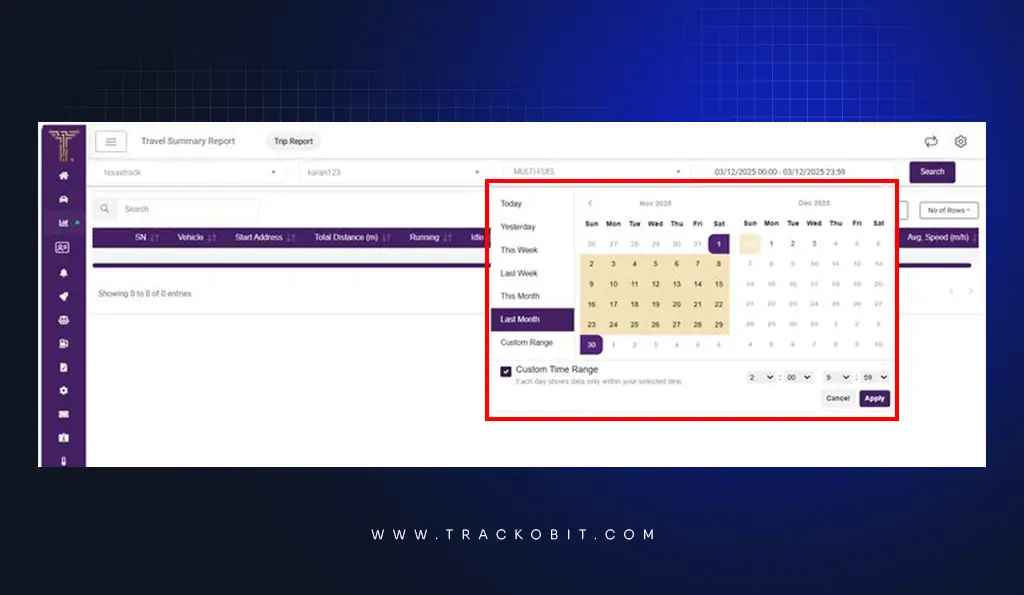
a. Time-Filtered Reporting for Internal Decisions
In day-to-day operations, managers rarely need to analyze vehicle movement across the entire day. What matters is understanding how vehicles perform during working hours.
- Custom date ranges to review performance for a specific billing cycle, shift period, or operational phase
- Specific daily time windows that reflect actual duty hours rather than full-day movement
- Travel calculations limited to selected hours, ensuring only work-related travel is measured
- Day-wise report breakdowns for clearer comparisons and easier performance tracking
How is this Beneficial:
- Accurate mileage calculations that reflect real operational movement
- Fair fuel and expense reimbursements without personal or off-hour travel inflating numbers
- Cleaner dashboards with only relevant data and no non-operational noise
Time-Filtered Reporting for Internal Decisions
b. Time-Restricted Tracking for External Sharing
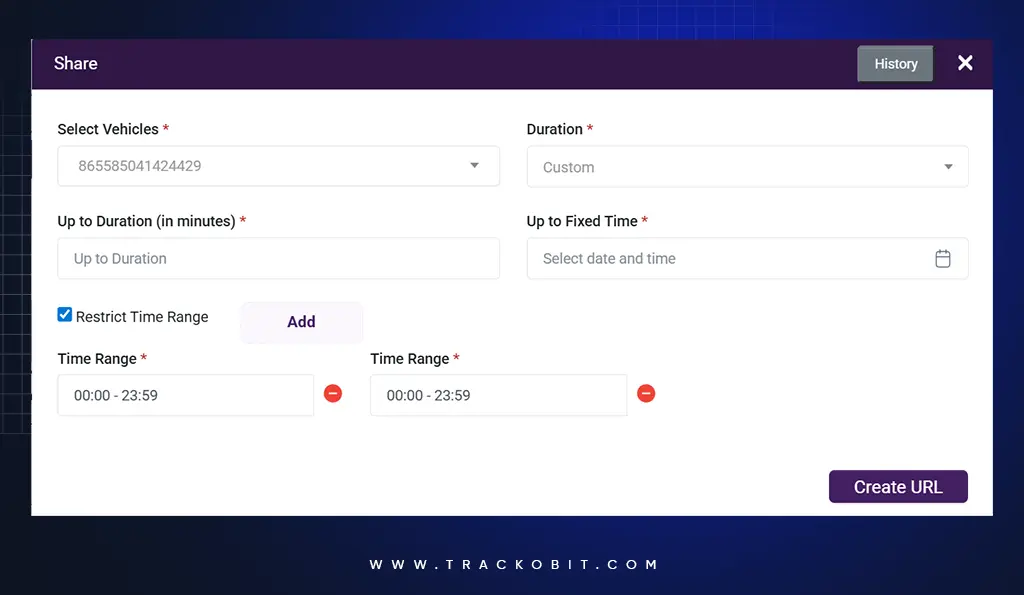
In many fleet operations, external visibility is required only for a short, defined period. Continuous access is unnecessary and often creates privacy concerns.
Tracking links can be shared with defined time limits, making them ideal for:
- Clients who need to monitor service progress during operational hours
- Passengers who want real-time visibility during pickup and drop windows
- Temporary stakeholders who require short-term access for coordination or oversight
- Once the approved time window ends, visibility automatically stops, without any manual intervention.
How this is beneficial:
- Transparency when needed, limited to active service hours
- Privacy when it’s not, protecting drivers and fleet data outside operations
- No manual tracking controls required, reducing operational overhead and errors
Time-Restricted Tracking for External Sharing
The Results You Can Expect from This Latest Launch
By aligning tracking and reporting with real operational timelines, fleets see cleaner data. And the insights become far more relevant. Resulting in improvement that go far beyond.
1. Cleaner Insights
When data is captured only during working hours, reports reflect actual work performed. Not idle movement, off duty travel, or personal usage. This makes insights easier to trust and act on.
2. Better Billing and Compliance
Mileage, travel time, and utilization reports align with defined schedules and internal policies. This ensures billing, reimbursements, and compliance reporting stay accurate and consistent. And they become far easier to justify.
3. Stronger Trust with Drivers and Clients
Clients receive visibility only when services are active, improving transparency without overexposure. Drivers feel respected when movement is tracked only during duty hours. This strengthens trust and adoption.
4. Smarter Fleet Control
With irrelevant data removed, decisions are made based on context, not clutter. Operations teams identify inefficiencies faster.
They respond better and manage fleets with greater confidence.
From Constant Visibility to Relevant Visibility
Fleet tracking no longer needs to show everything all the time. It needs to show the right things at the right time. TrackoBit’s latest launch brings time-based control to tracking and reporting.
It turns raw movement data into meaningful operational insight.
With time-restricted tracking links, visibility is shared only during active hours. With custom date range reports, travel data is calculated only when work actually happens.
The result is clearer visibility. Accurate billing. Easier compliance. Better driver trusts.
Data stays relevant. Dashboards stay clean. Decisions become faster and more confident.
This launch reflects a smarter way to manage fleets. One where visibility is intentional, privacy is respected, and operations stay aligned with time.

Tithi Agarwal is an established content marketing specialist with years of experience in Telematics and the SaaS domain. With a strong background in literature and industrial expertise in technical wr... Read More


Related Blog
Fleet Management Requirements: The Complete Guide for 2026
Every wondered what exactly fleet management requirements are? Or, why do they matter? This guide helps you understand in detail.
7 Fleet Management Best Practices Every Fleet Manager Needs
Learn 7 fleet management best practices to improve safety, vehicle utilization, efficiency, and fleet performance in 2026.
What Are the Roles and Responsibilities of a Fleet Owner?
Behind every well-run fleet is a fleet owner juggling tasks like vehicle maintenance and driver management without letting anything fall…
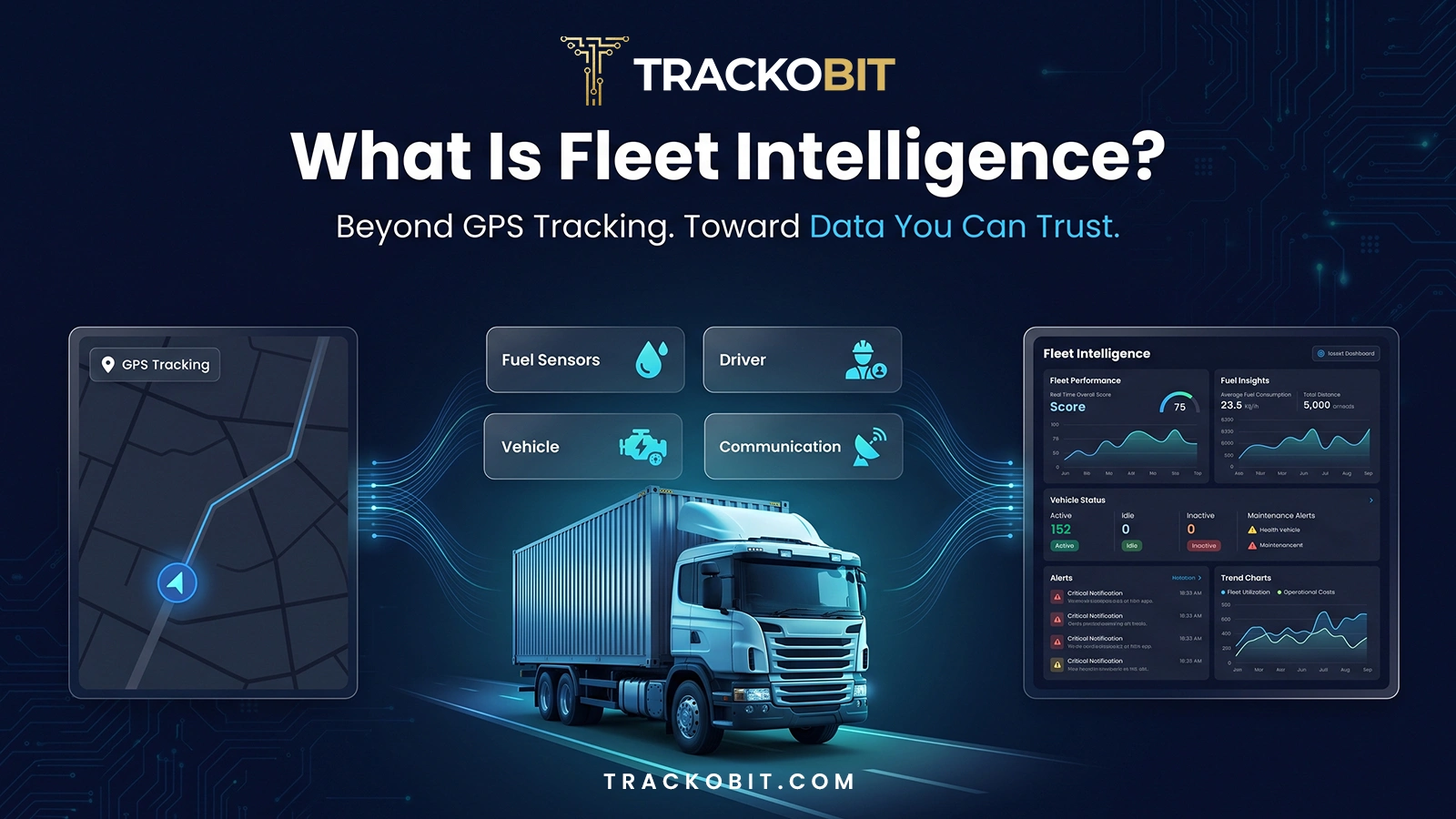
What Is Fleet Intelligence? TrackoBit Goes Beyond GPS Tracking
Fleet intelligence is the layer of trustworthy data, driver-level accountability, and consistent identity that sits above GPS tracking. It turns…


Your inbox awaits a welcome email. Stay tuned for the latest blog updates & expert insights.
"While you're here, dive into some more reads or grab quick bites from our social platforms!"Stay Updated on tech, telematics and mobility. Don't miss out on the latest in the industry.