
Quick Summary

- A Driver Drowsiness Detection System is essential for fleet management, preventing accidents caused by driver fatigue and reducing operational risks.
- Fatigue is a significant risk factor in fleet operations, contributing to 17.6% to 21% of fatal collisions, leading to increased downtime and insurance costs.
- The system provides real-time monitoring and alerts, allowing managers to intervene early when drowsiness is detected, enhancing fleet safety and efficiency.
- Investing in this technology not only improves safety but also leads to lower insurance premiums, reduced vehicle downtime, and better compliance with regulations.
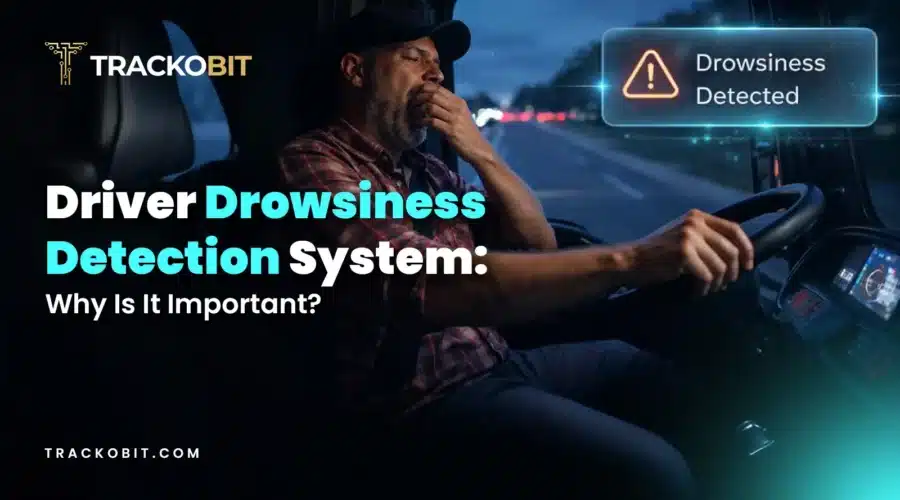
A driver drowsiness detection system is critical for fleet management. It helps prevent fatigue-related accidents and reduces operational risks through early intervention.
Driver drowsiness is a hidden risk factor in fleet operations. Unlike mechanical failures like a route deviation, fatigue develops silently. It goes unnoticed until there is a complete loss of vehicle control, and thus, an accident. Beyond accidents, it also increases downtime and insurance costs. Studies have found that drowsy drivers contribute to a major portion of crashes. The estimate ranges between 17.6% to 21% of all fatal collisions. These cause legal liabilities and long-term reputation damage.
But, here’s the bright side! A driver drowsiness detection system in fleet management can detect early signs of inattention. It notifies managers as soon as the in-cabin camera detects drowsiness. They can instantly take corrective action by communicating through a 2-way channel. In short, the system transforms fleet safety. The result is a more resilient operations and stronger control.
Why is Driver Drowsiness a Serious Problem in Fleet Operations?
Driver alertness is not just a safety concern anymore. Impaired reaction time and reduced motor skills directly impact fleet performance and profitability. Fatigue continues to build in high-pressure logistics environment. This could be due to monotony and disrupted fleet cycle. For fleet owners, the cost of overlooking this risk is not just measured in accidents. It is measured in long-term business disruption.
Why Does Driver Drowsiness Happen?
Long driving hours and tight delivery timelines are the core reasons. See in detail below.
Long-driving hours: This puts constant pressure on drivers. It causes slow reaction time. There is a loss of situational awareness, too.
Tight Delivery Timelines: Such timelines leave little room for rest. This makes tiredness common and reduces concentration power. Thus, feeling sleepy comes naturally.
Poor Rest Cycle: Irregular schedules and inconsistent sleep patterns hamper recovery. This is possible even with mandated breaks. With time, cumulative fatigue impacts decision-making and overall driving performance.
Risk Negligence: A fatigued driver misses warning signs. This causes abnormal safety incidents. Thus, the risks of human error become serious.
All of these lead to legal and compliance risks after accidents. Post-accident investigation comes with regulatory scrutinies and compliance penalties.
Why Traditional Detection Measures Fall Short?
Historically, fleet safety frameworks focused on policies. Factors like driver safety and post-incident controls were considered. These were not designed to address risks that come without visible warning. At present, driver training and education includes fatigue management. This means, 7-9 hours of sleep and planned breaks.
However, what happens when these precautions fail? Even the most well-rested driver can experience alertness lapse. Basic telematics and GPS tracking can only update speed, location, and engine data. Thus, with no visual monitoring, fleet managers are left without a way to intervene. The moments go unmanaged. This creates a blind spot in fleet safety. So, how do you tackle these?
Introducing Driver Drowsiness Detection App: What Is It?
A driver drowsiness detection software is an advanced automotive technology. It is designed to offer 360° in-cabin visual supervision. The software detects a driver’s alertness in real time. This includes yawning and drowsiness. Data records time, location, driver’s name, and vehicle number. Managers get an instant notification along with visual reference whenever drowsiness is detected.
Wondering how all of this system works? Well, a dashcam is installed in the fleet exactly like sensors. These record events and send pictures. Thus, drowsiness can never go unnoticed. In fact, smoking and general distraction are also recorded. All of this data is presented on a consolidated dashboard for quick view.
How Driver Drowsiness Detection System Works?
Driver fatigue is a hidden risk in fleet. It is highly responsible for accidents and downtime. This is where a drowsiness detection keeps your fleet safer. It is an easy-to-understand technology that helps managers reduce friction.
Driver Drowsiness Detection See How It Works
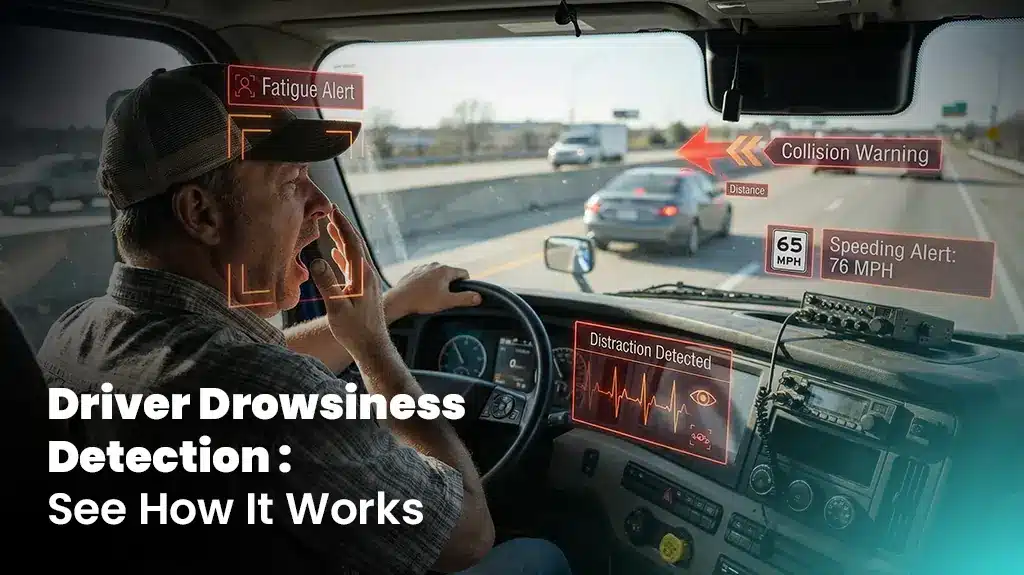
See the elements that make it work:
In-Cabin Camera: Two camera set-up to help monitor eyes, face, and head movements to detect fatigue.
Real-Time Alerts: Managers are sent an instant alert to take corrective action.
2-Way Communication: Built-in intercom supports real-time voice exchange.
Video Playback: Managers can look back at specific instances with playback feature.
Hardware Agnostic: The best video telematics software can integrated with Howen, Richmore, and Streamax. Any dashcam that supports JT808/JT1078 will work on the server.
Additionally, a driver drowsiness detection system offers live streaming with 2-camera input. So, fleet managers get real-time visual context. This allows them to assess the driver’s condition instantly. Also, they can verify accidents and take timely actions.
Key Benefits of Driver Drowsiness Detection for Fleet Management
Fleet safety investment must ensure measurable returns. This is exactly what a driver fatigue monitoring system does. It prevents losses before they occur. The result? Well, stronger ROI with safer fleet operations. Plus, it directly impacts cost, uptime, and liabilities while protecting lives.
1. Reduction in Fatigue-Related Incidents
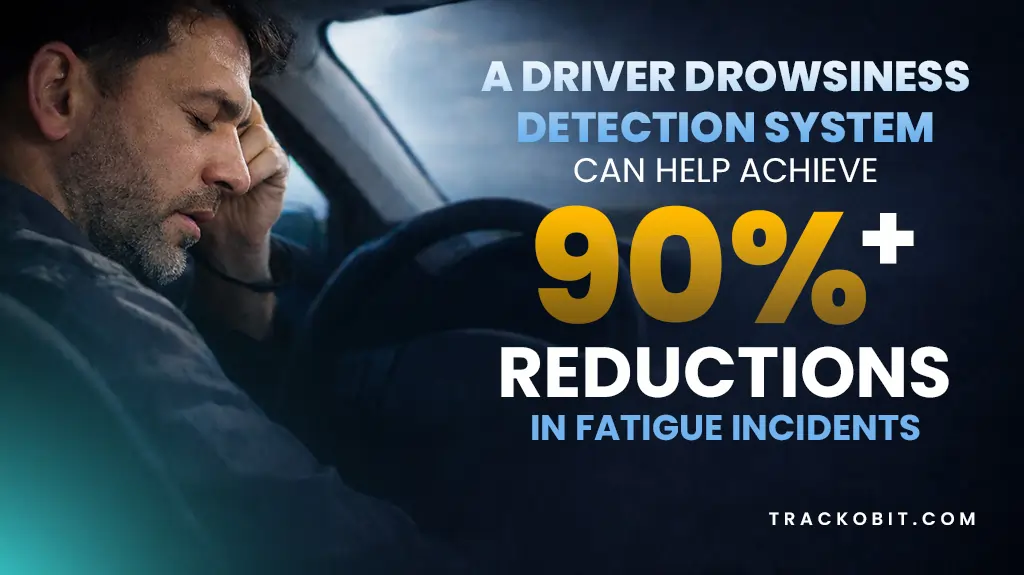
Fatigue is responsible for 5-25% of road accidents. Early and instant detection stops this. It thus saves companies from losses that are hard to recover from. Safety automatically improves without disrupting operations.
2. Achieving Sustainability Goals
Fleets save unnecessary fuel loss and vehicle damage. This prevents precious resource wastage. Fewer incidents also mean lower emissions from repairs and replacements. Over time, safer driving practices contribute to responsible operations.
3. Lower Premium and Insurance Claims
Accidents drive insurance costs upward. However, proactive monitoring lowers the chances of claim frequency and severity. This is because insurers value data-backed safety measures which strengthen negotiations.
4. Reduced Vehicle Downtime
Vehicles are central to fleet operations. Having a drowsiness detection system prevents fatigue-related incidents and protects these assets. Overall, this directly improves predictability and continued revenue.
5. Data-Backed Driver Training
Subjective feedback might create friction. However, objective data helps managers focus on patterns and provide fair training. Thus, performance improves without micromanagement or assumptions.
6. Strong Compliance
A driver drowsiness detection system records every event. These are accurately time and location stamped. Compliance reports thus become faster. Ultimately, there are lower risks of disputes during audit trials.
Driver Drowsiness Monitoring System Statistics
How Does Driver Drowsiness Detection Improves Fleet ROI?
Driver drowsiness directly affects operational costs. A detection system turns safety into a measurable financial outcome. See how.
1. Accident Reduction
Early alerts reduce high-severity crashes. Fleets start seeing a significant drop in accident rates. Lower incidents automatically translate into cost savings.
2. Insurance Cost Savings
Accidents lead to higher deductibles and claims scrutinies. However, reduced incident frequency improves risk profiles. Insurers also tend to react positively to preventive safety systems.
3. Maintenance Cost Reduction
Wear, repairs, and unplanned maintenance are common after accidents. However, preventing fatigue-led incidents protects vehicle health. Over time, this minimizes maintenance expenses.
4. Better Driver Productivity
Fatigue hampers eye movement, motivation, and decision-making. On the other hand, alert drivers complete routes more efficiently. Fewer incidents mean less downtime, which boosts overall productivity.
5. Lesser Legal Exposure
Fatigue-related accidents carry high legal risks. This is since they are viewed as preventable. If fatigue is proven, liability can extend to the fleet operator. Therefore, having a detection system can save such hassles.
How to Choose the Right Driver Drowsiness Detection System?
Considering factors like video intelligence with real-time alerts and dashboards is helpful. Understand in detail below.
1. Visual Supervision
The system must warn managers instantly via audio and visual footage. This can safeguard both the driver and the fleet companies.
2. Integration Capability
The software must smoothly integrate with GPS tracking devices, cameras, and sensors. In short, it must be compatible with existing fleet monitoring tools.
3. Scalability
Choose a solution that performs consistently across all fleet types and sizes. The best ones do not increase operational complexity.
4. Transparent Pricing
Check for clear software and subscription costs. Confirm zero hidden charges to save yourself from last minute disappointments.
Conclusion: Fleet Safety Begins With Alert Drivers
Fleet safety does not quite begin with reports or audits. It begins with alert and conscious drivers with timely interventions. A driver drowsiness detection system helps move from reactive measures to proactive prevention. Thus, investing in a real-time driver monitoring system is not just a safety choice. It is quite a strategic one.

FAQs
-
Is driver drowsiness detection mandatory for fleets?
Currently, driver drowsiness detection is not legally mandatory for most commercial fleets. However, it is recommended by safety regulators and insurers as a best practice.
-
Can drowsiness detection integrate with GPS tracking systems?
Yes. Modern driver drowsiness detection systems, like TrackoBit, can integrate with GPS tracking systems. This provides fleet managers with real-time location and driver behavior data. It enables proactive safety interventions and better operational control.
-
How does TrackoBit help prevent fatigue-related accidents?
TrackoBit’s driver drowsiness detection system uses in-cabin cameras to spot fatigue early. It sends real-time alerts to managers and logs events on a cloud dashboard for managers. This helps fleets reduce accidents and improve overall safety.

Shemanti is a Content Marketing professional with 7+ years of experience in shaping credible narratives across B2B products. As the Content Team Lead for TrackoBit, TrackoField, and TrackoMile, she br... Read More



Related Blog
ADAS System in Cars: How It Works and Why It Matters
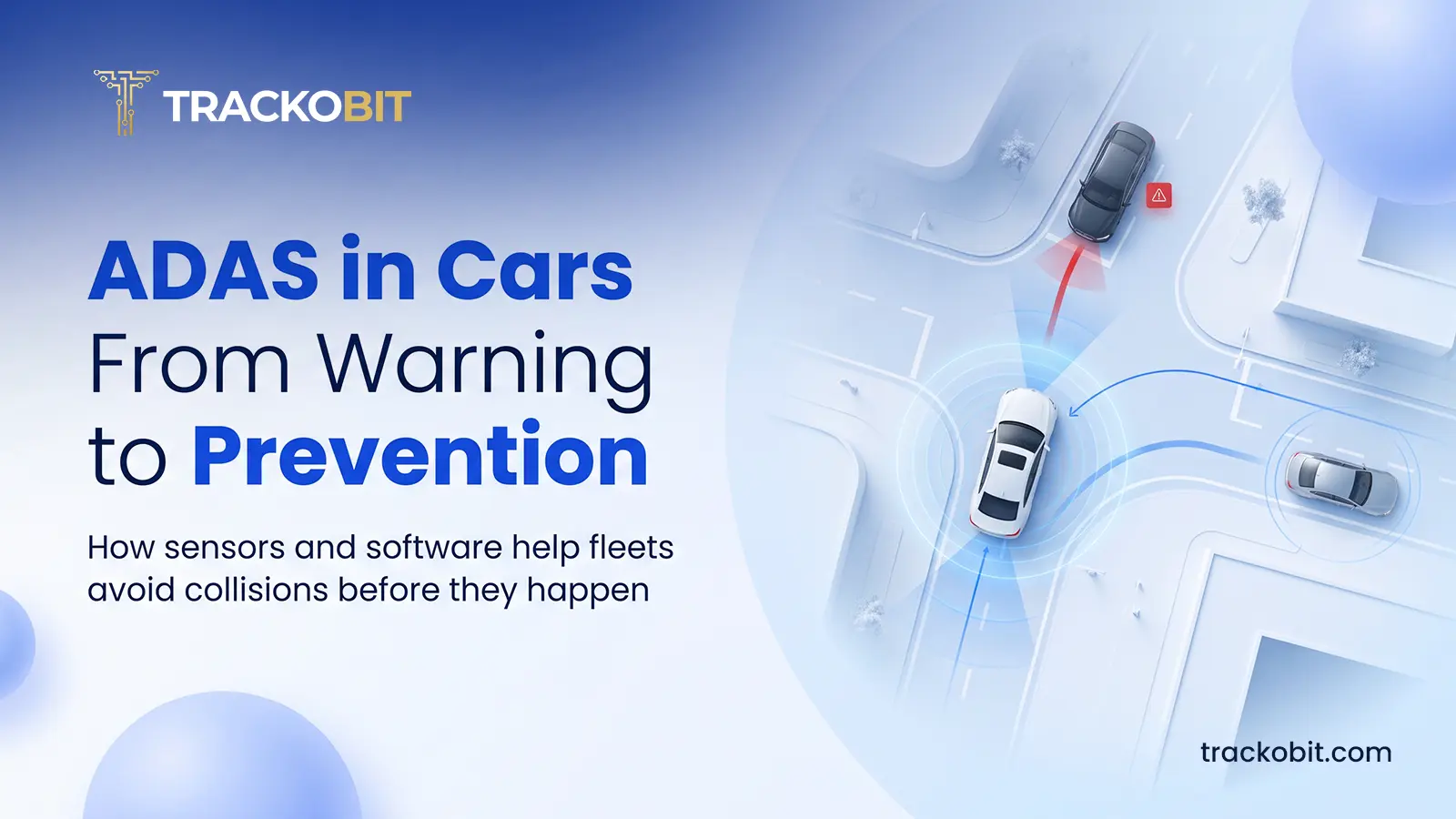
ADAS road safety system is a technology that uses sensors and software to detect danger and alerts the driver to…
Safer Alerts, Shareable History, Faster Maintenance in TrackoBit
TrackoBit now adds an Evidence Model and authority-based access for ADAS and DMS alerts in video telematics, Vehicle History Sharing…
Fleet Management Requirements: The Complete Guide for 2026
Every wondered what exactly fleet management requirements are? Or, why do they matter? This guide helps you understand in detail.

7 Fleet Management Best Practices Every Fleet Manager Needs
Learn 7 fleet management best practices to improve safety, vehicle utilization, efficiency, and fleet performance in 2026.


Your inbox awaits a welcome email. Stay tuned for the latest blog updates & expert insights.
"While you're here, dive into some more reads or grab quick bites from our social platforms!"Stay Updated on tech, telematics and mobility. Don't miss out on the latest in the industry.