
What is a Dash Cam?
A dash cam is a small video camera that is attached to the windshield or the dashboard of a vehicle in a viewable angle. It records the road ahead, the driver, and the environment while the engine remains on. Now, what does a vehicle dash cam do? Basically, a dash cam records and stores every moment of a drive for later review and proof of accidents. Presently, various fleets use a dash cam primarily for safety purposes.
Types of Dash Cams
Dash cams for commercial vehicle operators can be basically grouped into four categories: single channel, dual channel, multi-cam or 360-degree, and AI dash cam. Commercial vehicle operators choose a dash cam type for their fleet based on vehicle size and safety requirements. They are:
- Single-channel dash cam: The camera records the front road view of the car for tracking collisions.
- Dual-channel dash cam: The camera captures both the road and inside the driver’s cabin for behavior monitoring.
- Multi-camera-360°dash cam: It films every side of the car. It is mostly convenient for large fleets.
- AI-dash cam: The AI detects unsafe driving events as they happen in real time. This is the most suitable safety technology now.
Key Features of Fleet Dash Cam
The key features of a fleet dash cam integrated with the vehicle telematics are live-streaming, event-based recording, driver alert system for safe driving, DMS and ADAS features. These features capture the footage of any incident and identify any risky behavior of the driver. Here is how you can benefit from each of the features:
- Live stream: Fleet managers can watch the footage from afar and whenever they want.
- Event-based recording: Hard braking or hard acceleration will cause the system to record automatically.
- Driver behavior alerts: Highlights the driver’s bad habits while giving driver behavior analysis.
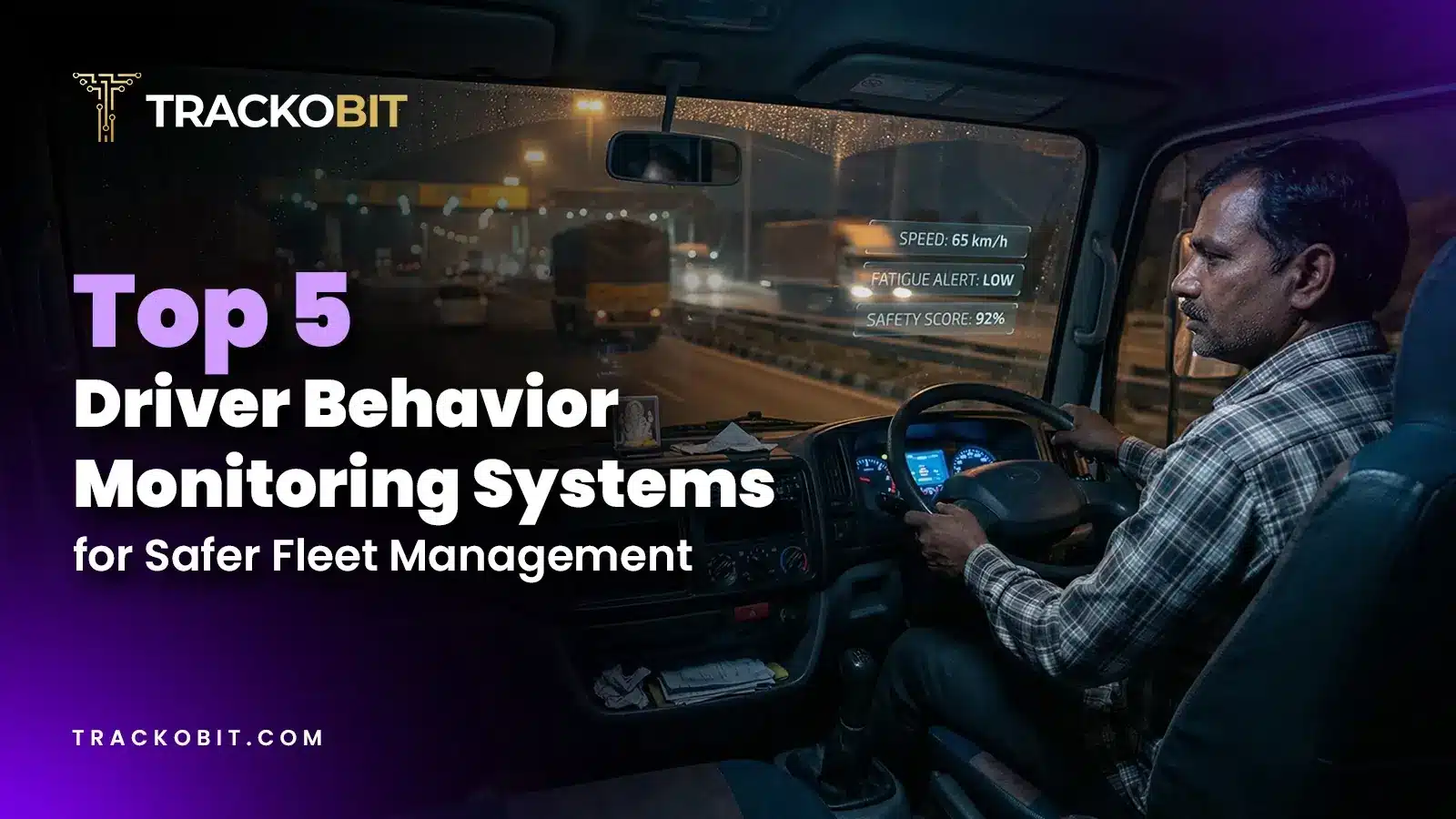
- DMS record: Shows the actions and behavior of the drivers from within the vehicle.
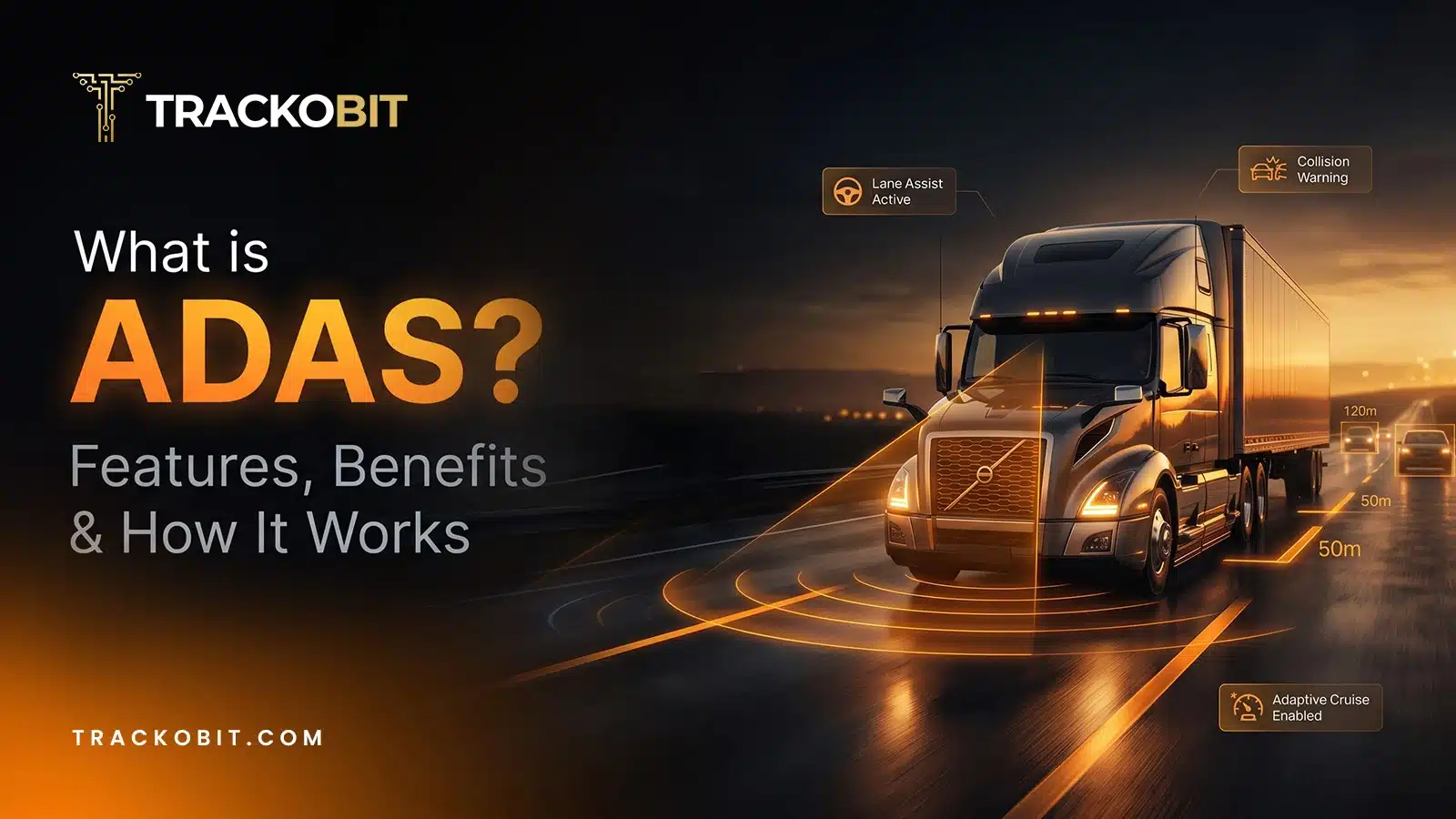
- ADAS support: Collision detection, lane departure, unsafe proximity, etc., are done before the incident takes place.
- Incident evidence: Gives clear proof to support claims and settle disputes.
How Dash Cams Work in Fleet Management
You can integrate the fleet dash cam with the telematics software in case of managing bigger fleets. Also known as dash cam telematics, it is a live streaming dash cam automatically recording events and triggering alerts about the driver’s behavior.
When paired with GPS and engine data, it produces a complete picture of every trip. All data is integrated in one dashboard through this feature.
Features of Trackobit’s Dash Cam That Benefit Fleets
TrackoBit offers AI-powered video telematics software that integrates with all dash cams. Together, the system provides constant surveillance for drivers on the road to develop safer habits and lower insurance costs. It also captures video footage which can speed up the gathering of evidence in case of an accident or incident.
The in-built ADAS software warns the drivers about the different types of risks that might cause accidents. With Trackobit’s video telematics, the fleets can get not only the videos but also the data about the vehicles in one place.