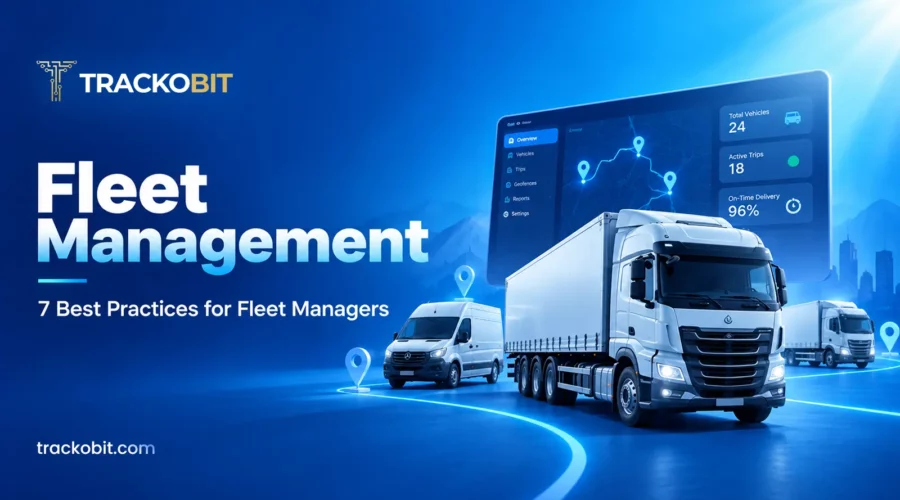
Learn 7 fleet management best practices to improve safety, vehicle utilization, efficiency, and fleet performance in 2026.
In 2026, knowing a vehicle’s location is just the starting point. Fleet management today is about getting an idea of what is happening on the road. There are several factors that often turn operations into a daily juggling act. These are rising fuel costs, driver safety concerns, and high delivery volumes. Even the most well-sized fleet can lose efficiency without the right processes.
The good news? No need to start from scratch. Implementing a few practical habits plus using a fleet management software can improve visibility. The risks are reduced to a great extent, too. Fleet managers get real value from every vehicle. The ultimate objective is simple: fewer surprises and better decisions. Let us look at the fleet management best practices that can make these happen. Keep reading.
What is Fleet Management?
Fleet management is using systems and technologies to oversee a company’s vehicles. It includes everything from routine maintenance to safety checks. Other processes include driver monitoring and meeting compliance. The core pillars of fleet management are productivity and people. Others are optimization, scalability, and sustainability. See the core pillars of fleet management:
- Productivity: Better utilization of vehicles and resources.
- People: Manage fleet managers, drivers, and stakeholders.
- Optimization: Ensure better fuel efficiency and maintenance.
- Scalability: A system that can scale through integration.
- Sustainability: Lower environmental impact with smarter fleet operations.
- Compliance: Aligned drivers and vehicles as per regulatory compliance.
When combined, these pillars help build fleets that are safer and ready to scale.
Why Do Fleet Management Best Practices Matter in 2026?
The global fleet management market size is all set to reach $88.49 billion in 2032. The numbers are growing, and so are fleet expectations. In 2026, fleet managers cannot simply keep vehicles moving. They need to make every trip count with data-driven systems. Following the right practices helps control costs. It also improves on-road safety and helps businesses stay ready for what’s next.
Managers can shift from last-minute fixes to better planning and timely action. Following the right vehicle fleet management practices creates greater visibility across fleet. This helps fleet operators and teams identify inefficiencies and improve vehicle utilization. There are fewer risks of vehicle downtime, too. The end result is a fleet that is easier to manage and more predictable to operate.
The 7 Fleet Management Best Practices
Prioritizing preventive driver monitoring, maintenance, and fleet tracking are the best practices. See details for an informed decision.
1. Preventive Maintenance
Preventive maintenance is inspecting, servicing, and repairing vehicles regularly. It helps identify issues earlier. This is a good way to avoid vehicle downtime. For example, regularly check tires to detect low tire pressure. It helps avoid unnecessary hassles and expenses.
Why Does It Matter?
Downtimes disrupt deliveries. They also increase repair costs and might put vehicles off-road during peak seasons. This can break operational continuity.
How To Do It?
- Create service schedules
- Set regular maintenance alerts
- Track vehicle health and history
- Always prioritize critical repairs
- Monitor recurring faults closely
2. Monitoring Driver Behavior
The automated tracking and analysis of driving skills is driver behavior monitoring. It includes harsh cornering, excessive driving, and freewheeling. Over speeding is another major aspect. Curbing these with quick alerts ensures safer driving.
Why Does It Matter?
Tracking stops operational disruptions. It also guards drivers from risks. There are fewer risks of accidents, legal issues, and insurance claims. Drivers can further achieve eco-driving.
How To Do It?
- Use a driver monitoring system
- Set speed and safety thresholds
- Identify high-risk driving patterns
- Check driver scorecards regularly
- Create targeted training programs
3. Tracking Fleet in Real Time
Using GPS and telematics to get visibility into vehicle activities is tracking fleet live. It includes location, fuel, routes, stops, and general fleet status. Real-time tracking gives fleet managers a view of where vehicles are. It also sends updates about ongoing trips.
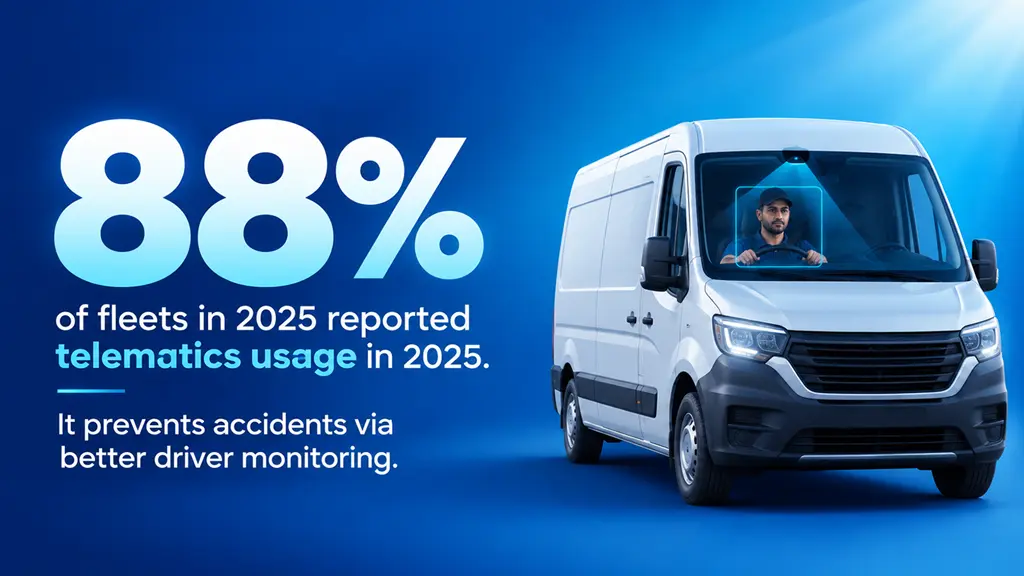
The Importance of Telematics in Fleet Management
Why Does It Matter?
Visibility ensures quick responses to delays, route deviations, and unauthorized usages. There is lower fuel wastage, fewer repairs, and theft protection.
How To Do It?
- Install GPS tracking devices
- Integrate a GPS tracking software
- Track trips from a central dashboard
- Set alerts for multiple events
- Review trip history regularly
4. Control Fuel Consumption
Fuel management involves tracking consumption, refueling, idling, and potential misuse. This controls fuel expenses to a significant expense. Managers are also able to understand which driving patterns are increasing fuel wastage.
Why Does It Matter?
Fuel is one of the largest expenses for most fleets. So, even the slightest improvement adds across a large fleet. Higher visibility can also help flag potential fuel theft, pilferage, and wastage due to idling.
How To Do It?
- Integrate a fuel monitoring software
- Track idling, theft, or excess usage
- See consumption across fleets and drivers
- Set alerts for unusual fuel activities
- Monitor regularly to save costs
5. Monitor Vehicle Health
Vehicle health monitoring is analyzing vehicle data, inspections, and maintenance records. This helps understand fleet conditions. It also helps identify warning signs before they develop expensive failures. This prevents impacting the operational budget.
Why Does It Matter?
Early detection reduces roadside breakdowns. This keeps vehicles safe and 100% available for deliveries when required.
How To Do It?
- Monitor critical vehicle parameters in real time
- Set alerts for abnormal readings or faults
- Schedule inspections with maintenance
- Track recurring issues to address them
6. Optimize Routes
Route optimization involves planning vehicle journeys based on multiple parameters. These are traffic, weather, stops, availability, and requirements. Modern routing tools can help teams move beyond manually planned routes.
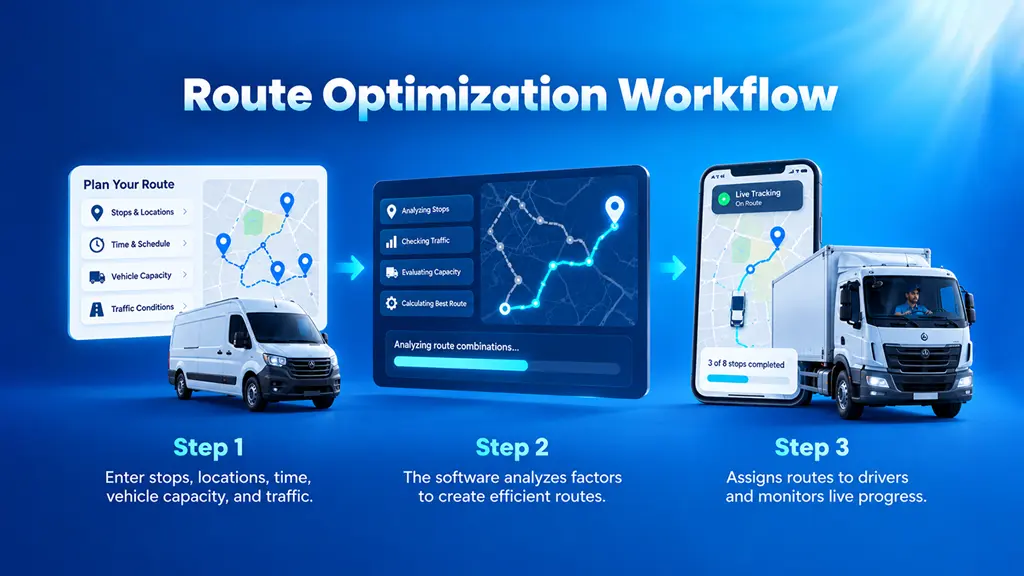
Route Optimization Workflow
Why Does It Matter?
Better routes reduce unwanted mileage. Travel time and fuel consumption are minimized too. They can further help complete more trips with the same fleet capacity.
How To Do It?
- Consider a route planning software
- Group nearby stops where possible
- Check traffic and delivery windows
- Monitor real routes for future plans
7. Use Fleet Data
Fleet data combines vehicle, drivers, fuel, and route information. Managers can leverage this data instead of relying on assumptions. Reports, analytics, and dashboards make it easy to spot patterns.
Why Does It Matter?
Data-driven decisions can help businesses control costs. They can also utilize vehicles better while identifying inefficiencies earlier.
How To Do It?
- Track key fleet management KPIs regularly
- Use dashboards to spot trends/anomalies
- Compare vehicles and driver performance
- Turn recurring issues into corrective actions
Fleet Management KPIs to Track
The top fleet management KPIs are cost per mile, fleet uptime, and fuel efficiency. Check the table below for more detailed information.
| Metric | What It Reveals |
| Cost Per Mile | Shows how much it costs to operate each mile to identify expenses. |
| Fleet Uptime | Measures how often vehicles are available for operational use. |
| Vehicle Utilization Rate | Reveals how effectively vehicles are being used vs sitting idle. |
| Fuel Efficiency | Shows fuel consumption patterns and opportunities to improve |
| Maintenance Compliance Rate | Checks if vehicles receive scheduled maintenance on time. |
| SLA Adherence | Measures how fleets meet delivery/service commitments consistently. |
| Driver Safety Score | Indicates driver performance based on behaviors such as speeding, harsh braking, or cornering. |
The right KPIs turn everyday data into clear insights. This helps managers see what’s working, what’s slipping, and areas of improvement.
Fleet Management Software Selection Checklist
The top factors to check for selecting a fleet management software are defining fleet size, identifying features, and checking compatibility. Discover the full list below.
- Outline your vehicle type, fleet volume, and logistical needs.
- Get features like location tracking and driver monitoring.
- Look for integration with current hardware and sensors.
- Analyze data privacy, user access controls, and compliance.
- Compare equipment, installation, subscription, and integration costs.
- Ask for live demos and test real workflows before finalizing.
- Inspect onboarding, training, customer support, and response time.
- Check scalability to ensure software grows with your business.
- Explore pricing customization to get the best return for yourself.
For businesses looking for a scalable solution, TrackoBit could be a practical choice. See what it can do for you.
How Does TrackoBit Help Implement the Best Practices?
TrackoBit helps implement fleet management requirements and practices with real-time tracking, driver behavior monitoring, and AI video telematics. See details.
- Live GPS Tracking: Follow every vehicle as it moves! This includes locations, routes, stops, and trip activities in real-time.
- Fuel Management: Connect the fuel monitoring system to keep a tab on fuel consumption, theft, spillages, and refueling.
- AI-Powered Video Telematics: Catch signs of driver fatigue, smoking, drowsiness, and on-road behavior using ADAS and DMS .
- Driver Monitoring: Get alerts when a driver is over speeding, harsh braking and accelerating, and cornering.
- Route & Trip Visibility: Compare planned roads with the ones drivers take. Tracking this deviation and correcting them improves fleet efficiency.
- Reports & Analytics: BRAG reports and analytics dashboards, turn raw fleet data into actionable insights.
Conclusion
Modern fleet management in 2026 means a few consistent fundamentals. This includes real-time visibility, preventive maintenance, and data-led decisions. Start with the areas that cause the most risk or rise in costs. It could be fuel leaks or unsafe driving. The fleets that lead this year will be those that detect issues early.
Market leaders like TrackoBit bridge the above discussed technical gaps. With advanced telematics tracking and geospatial qualities, it integrates with your existing infrastructure. This empowers fleet businesses to execute data-backed decisions.

Frequently Asked Questions
-
What are the biggest challenges of fleet management?
The biggest challenge undoubtedly is cost control. Fuel and insurance are others challenging areas. A single breakdown on a busy week can wipe out profit margins. Driver management is also quite tough. However, using software like TrackoBit reduces these issues to avoid operational disruptions.
-
How to improve my fleet management?
One effective way is real-time tracking. Others are driver behavior, route monitoring, and preventive maintenance. These come together to your fleet to stay ahead of competitors. Improving them increases the chances of better profits. Businesses can expect lucrative revenue.
-
How frequently should fleet managers conduct fleet audits?
Audits must be conducted at least once a year. However, monthly and quarterly reviews are a must for greater operational control. It gives more opportunities for instant corrective actions. Fleet managers do not have to wait till the year-end. Efficient audits are a must for daily fleet discipline.
-
Which metrics should fleet managers track consistently?
Fleet managers must track fleet uptime and fuel efficiency. Others are cost per mile and sustainability. They must consider SLA adherence and driver safety too. This helps understand fleet performance better.

Shemanti is a Content Marketing professional with 7+ years of experience in shaping credible narratives across B2B products. As the Content Team Lead for TrackoBit, TrackoField, and TrackoMile, she br... Read More


Related Blog
ADAS System in Cars: How It Works and Why It Matters
ADAS road safety system is a technology that uses sensors and software to detect danger and alerts the driver to…
Safer Alerts, Shareable History, Faster Maintenance in TrackoBit
TrackoBit now adds an Evidence Model and authority-based access for ADAS and DMS alerts in video telematics, Vehicle History Sharing…
Fleet Management Requirements: The Complete Guide for 2026
Every wondered what exactly fleet management requirements are? Or, why do they matter? This guide helps you understand in detail.
What Are the Roles and Responsibilities of a Fleet Owner?
Behind every well-run fleet is a fleet owner juggling tasks like vehicle maintenance and driver management without letting anything fall…


Your inbox awaits a welcome email. Stay tuned for the latest blog updates & expert insights.
"While you're here, dive into some more reads or grab quick bites from our social platforms!"Stay Updated on tech, telematics and mobility. Don't miss out on the latest in the industry.