
Quick Summary

- Fleet efficiency is crucial for reducing operational costs and improving profitability through effective resource utilization.
- Measuring fleet efficiency involves multiple KPIs, including fuel productivity, asset utilization, and delivery reliability, to track performance accurately.
- Implementing structured strategies and reliable fleet management software enhances fleet efficiency by optimizing routes and reducing idle time.
- Data-driven approaches, such as video telematics and preventive maintenance, help fleets minimize costs and improve safety, ultimately boosting overall productivity.
Learn what fleet efficiency is? How to calculate it, and ways to boost operational productivity. Because it reduces costs, delays, and risks altogether.
Fleet operations now feel like constant battle of rising costs and inconsistent executions.. But in the midst of the battle every manager is trying to win over fleet efficiency. It is now not a mere concern. Rather, it has become a measurable driver of profitability, utilization, and timely delivery.
As fleet operations scale, it becomes more complex. In this case keeping fleet efficiency consistent will need more efforts. It will need structured strategies and reliable fleet management software. This blog explains how to track fleet efficiency and ways to boost productivity.
As fleet operations scale and become more complex, keeping fleet efficiency consistent will demand more effort. It will need structured strategies and a reliable fleet management software to drive it. This blog explains how to track fleet efficiency and ways to boost productivity.
What is Fleet Efficiency?
Fleet efficiency calculates how well the fleet is turning fuel, time and assets. It calculates productive output. While controlling operational costs. It ensures that the resources are used wisely so that each trip delivers value.
Practically efficiency depends on productive movement and not just activity. Fleets lose values through lpoor driving behavior, and weak planning and execution. Whereas a strong fleet performance management elevates output quality and reduces costs. And by ensuring consistent trip execution.
How to Measure Fleet Efficiency?
Fleet efficiency cannot be defined by a single KPI. Rather, it is a system of interrelated activities that has to be tracked together. For example, KPIs like fuel productivity, asset utilization, idling cost, and delivery reliability.
Fleet businesses are already moving towards a structured measurement framework. Over 60% of fleet operating businesses in North America are relying on fleet management software to improve efficiency.
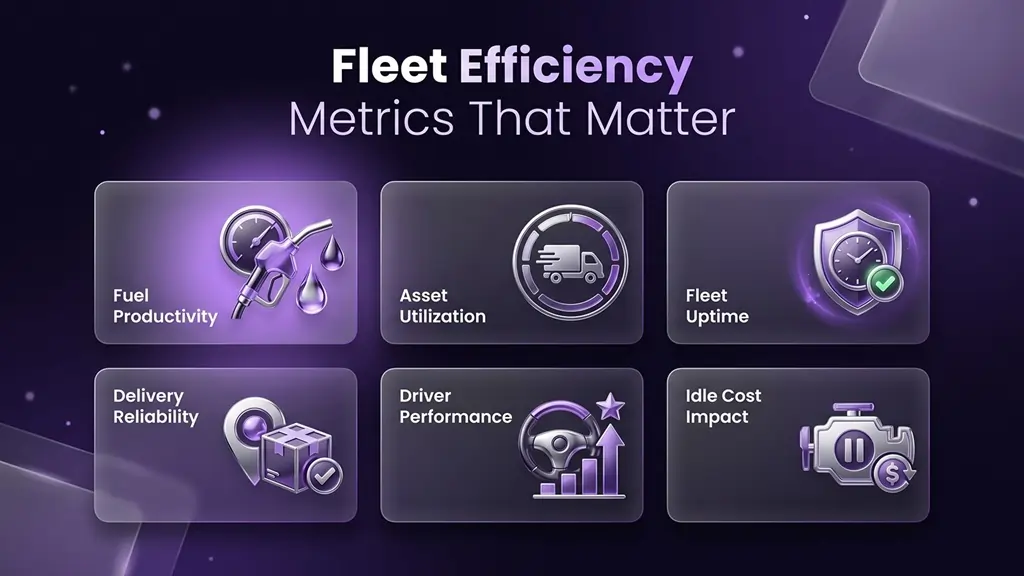
Core Metrics That Define Fleet Efficiency
1. Fuel Productivity
Fuel Productivity= Revenue-Generating Distance/ Total Fuel Consumed
Calculating mileage is not enough. What matters is measuring productive distance as it gives a more accurate view. It excludes empty runs and unnecessary detours which hamper efficiency.
2. Asset Utilization
Utilization (%)= Revenue-Generating Hours/ Total Available Hours ×100
Returns depend on how often assets are generating value. If a vehicle is stuck in the garage or loading is delayed, overall efficiency drops.
3. Idle Cost Impact
Idle Cost=Idle Time (hours)×Fuel Burn Rate per Hour
Most fleet dependent companies are tracking the idle time. But they rarely analyze the financial impact. Converting idle time into cost shows the real scale of inefficiency. For businesses with large fleets, even a small percent of idle ration will turn into a big monthly fuel loss.
4. Trip Efficiency Ratio (Planned vs Actual Performance)
Trip Efficiency (%) = Planned Distance or Time/ Actual Distance or Time ×100
This metric calculates how accurately the operation was executed. It compares planned trips with the actual outcome. Any detected deviations highlights –
- Inefficient routing
- Driver adherence
- Real time visibility gaps
5. Delivery Reliability Index (SLA Adherence)
Delivery Reliability (%) = On-Time Deliveries/Total Deliveries×100
No fleet efficiency can be calculated without taking into account delivery reliability.
Late deliveries lead to –
- Increase in operational costs
- Impacts customer satisfaction
- Cause cascading supply chain inefficiencies
6. Maintenance Efficiency
Fleet Uptime (%)= Operational Time/ Total Time ×100
Instead of only tracking downtime, advanced fleets focus on maximizing uptime. A vehicle that is operational more often contributes directly to revenue and efficiency.
7. Driver Performance Index
Driver Score=100−(Harsh Braking + Rapid Acceleration + Overspeeding + Excess Idle Events)
Driver behavior can be controlled to improve fleet efficiency. Unsafe or aggressive driving increases fuel consumption and accelerates wear and tear. It also raises risk exposure for both vehicles and drivers.
Using systems like driver behavior monitoring, fleets can quantify behavior and increase accountability.
6 Proven Ways to Improve Fleet Efficiency
Efficient routes, enhanced visibility, and reduced behavior-driven costs improve fleet efficiency. Read in detail.
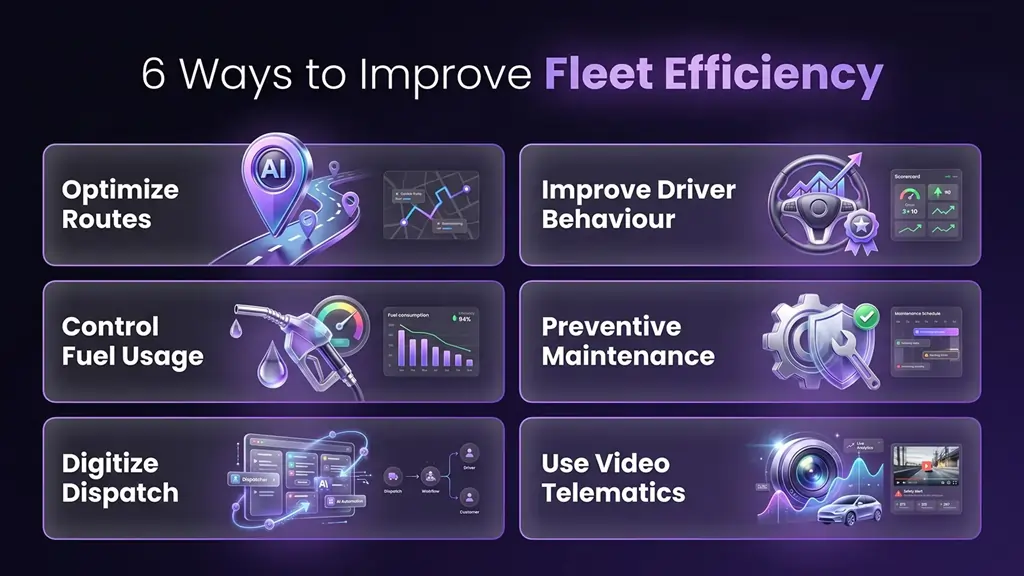
Six Practical Ways to Improve Fleet Efficiency
1. Efficient Routes with Real time Intelligence
Manual routes planning often is inefficient as there is no stop sequencing. Also chances of longer route assigning are more. This naturally causes delays.
But automated and dynamic routing uses route planning software. It continuously adjusted routes in real time. This will reduce detours and improve trip predictability. It even ensures that there is optimal fuel usage and faster deliveries.
2. Reduce Behavior Driven Cost Leakages
The way drivers perform directly impacts fuel consumption, maintenance cost and safety. Harsh braking, rapid acceleration, or overspeeding like patterns increases risks.
Fleets get driver scorecards, BRAG reports and alerts to track and identify events. Data-driven feedback, alerts, and training help standardize driving practices . Also, reduce unnecessary cost leakage.
3. Control Fuel with Data, Not Assumptions
Fuel accounts for 30-40% of total fleet operation costs. Lack of structured monitoring, inefficiencies, and pilferage often go undetected.
But having a fuel monitoring system is a big help. It provides granular visibility into fuel consumption, refueling patterns, and anomalies. This helps identify irregularities, optimize usage, and enforce better fuel control policies.
Did You Know? Driver behavior monitoring via digital platforms reduces accidents by an average of 22%.
4. Shift from Reactive to Preventive Maintenance
Schedules get disrupted when there are too many unplanned breakdowns. It also increases the cost of repair and reduces fleet availability. This leads to reactive maintenance, which is often more expensive.
TrackoBit’s fleet management software digitalizes maintenance processes. This marks a move to preventive maintenance becomes easy. It sends alerts to remind you of upcoming maintenance. This enables timely servicing, reduces downtime, and improves overall fleet uptime and reliability. Afterall, organizations using digital maintenance scheduling see a 20% increase in vehicle uptime.
5. Digitize Trip and Dispatch Workflows
Manual trip planning and dispatch processes create inconsistencies, delays, and coordination gaps. These inefficiencies impact both utilization and delivery timelines.
Digitized workflows streamline –
- Trip allocation
- Automate scheduling
- Improve communication
Having a driver app and manager app helps facilitate communication. This leads to better resource utilization and faster turnaround across operations.
6. Use Video Telematics for Risk and Cost Control
Safety incidents increase operational costs and disrupt service continuity. Without visual context, it is difficult to analyze and prevent such incidents.
With video telematics software like TrackoBit, fleets gain visual insights into on-road events. And also on driver behavior through ADAS and DMS. This improves accountability, supports incident analysis, and reduces safety-related disruptions.
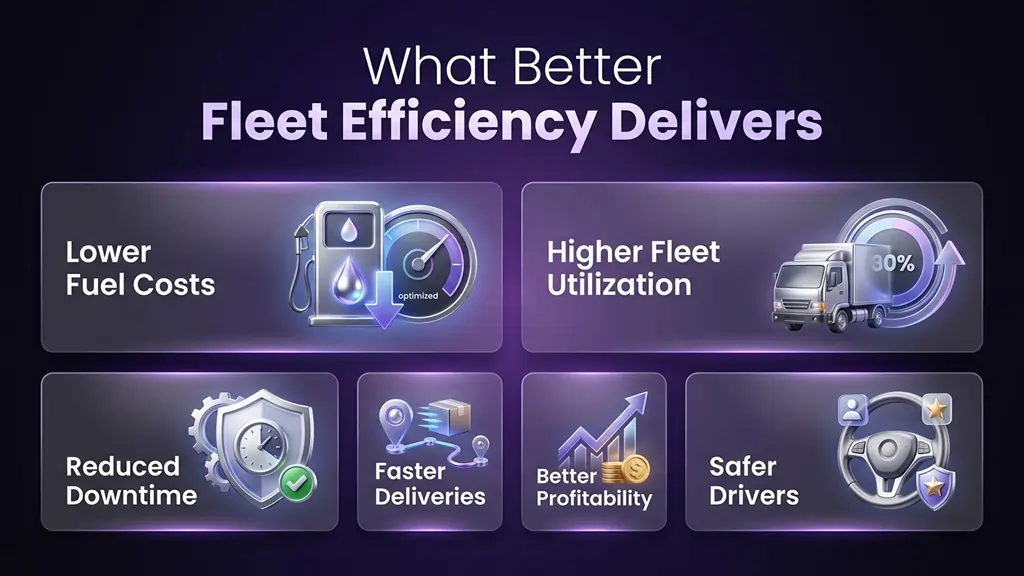
Business Outcomes of Better Fleet Efficiency
How Fleet Management Software Improves Efficiency
As fleets scale, manual optimization breaks under complexity. Data gets scattered across trips, drivers, fuel logs, and vehicles. Thus, making control reactive and inconsistent.
An integrated fleet management software like TrackoBit. brings every operational layer into a single, intelligent system. It does not just track activity. It translates data into actionable insights.
It enables:
- Real-time visibility with GPS fleet tracking software. It monitors movement, idle time, and route deviations
- Advanced driver analytics using driver behavior monitoring. This reduces fuel loss, unsafe driving, and compliance risks
- Video-backed intelligence through video telematics software for incident analysis and on-road visibility
- Fuel and cost control via fuel monitoring system and fuel cost calculator. To detect anomalies and optimize consumption
- Multi-layered reporting across trips, vehicles, and drivers. This is to benchmark performance and identify inefficiencies instantly
For logistics-heavy operations, fleet management for logistics ensures consistent execution at scale. The result is not just visibility. It is control, predictability, and scalable efficiency.
Conclusion
Fleet efficiency is no longer just a reporting metric. It directly affects cost, utilization, and delivery reliability. Fleets that rely on disconnected systems struggle to spot inefficiencies and scale operations. Real improvement starts when data from vehicles, drivers, fuel, and trips come together.
This allows faster decisions, smoother execution, and continuous improvement. Businesses using data to manage operations gain better control over costs and performance. TrackoBit helps improve fleet efficiency through real-time visibility and control.

Frequently Asked Questions
-
What is fleet efficiency?
Fleet efficiency measures how effectively fleet converts fuel and time into productive output. And also minimizes costs. With TrackoBit’s fleet management software, businesses track and improve efficiency through real-time data.
-
What are key fleet efficiency metrics?
Key metrics include fuel consumption per productive kilometer, vehicle utilization and idle. Other metrics are cost, trip efficiency, driver performance, and on-time delivery. TrackoBit brings all these metrics into one dashboard for better control and analysis.
-
What tools help improve fleet efficiency?
GPS tracking, route planning software and fuel monitoring systems help improve fleet efficiency. Fleet management software combines these capabilities into a single platform. So that you are getting visibility and control.
-
How do you measure fleet efficiency?
It is measured using metrics like fuel productivity, utilization rate and idle cost. And also through delivery reliability, and uptime. TrackoBit’s fleet management software helps track these metrics in real time. Thus, enabling faster decisions and continuous performance improvement.
-
How can fleet efficiency be improved?
Fleet efficiency improves through route optimization, real-time tracking and driver monitoring. Fuel control, and preventive maintenance also play a role. TrackoBit enables these through integrated tools that reduce inefficiencies and improve execution consistency.
-
How does GPS tracking improve fleet efficiency?
GPS tracking improves fleet efficiency by enabling real-time visibility and preventing route deviations. Through it fleets gain insights that help optimize routes and reduce operational costs.

Apoorva Raizada is the Content Marketing Manager at TrackoBit. With over a decade of experience across media, advertising, and B2B SaaS, she brings a sharp editorial mindset to technology-led business... Read More


Related Blog
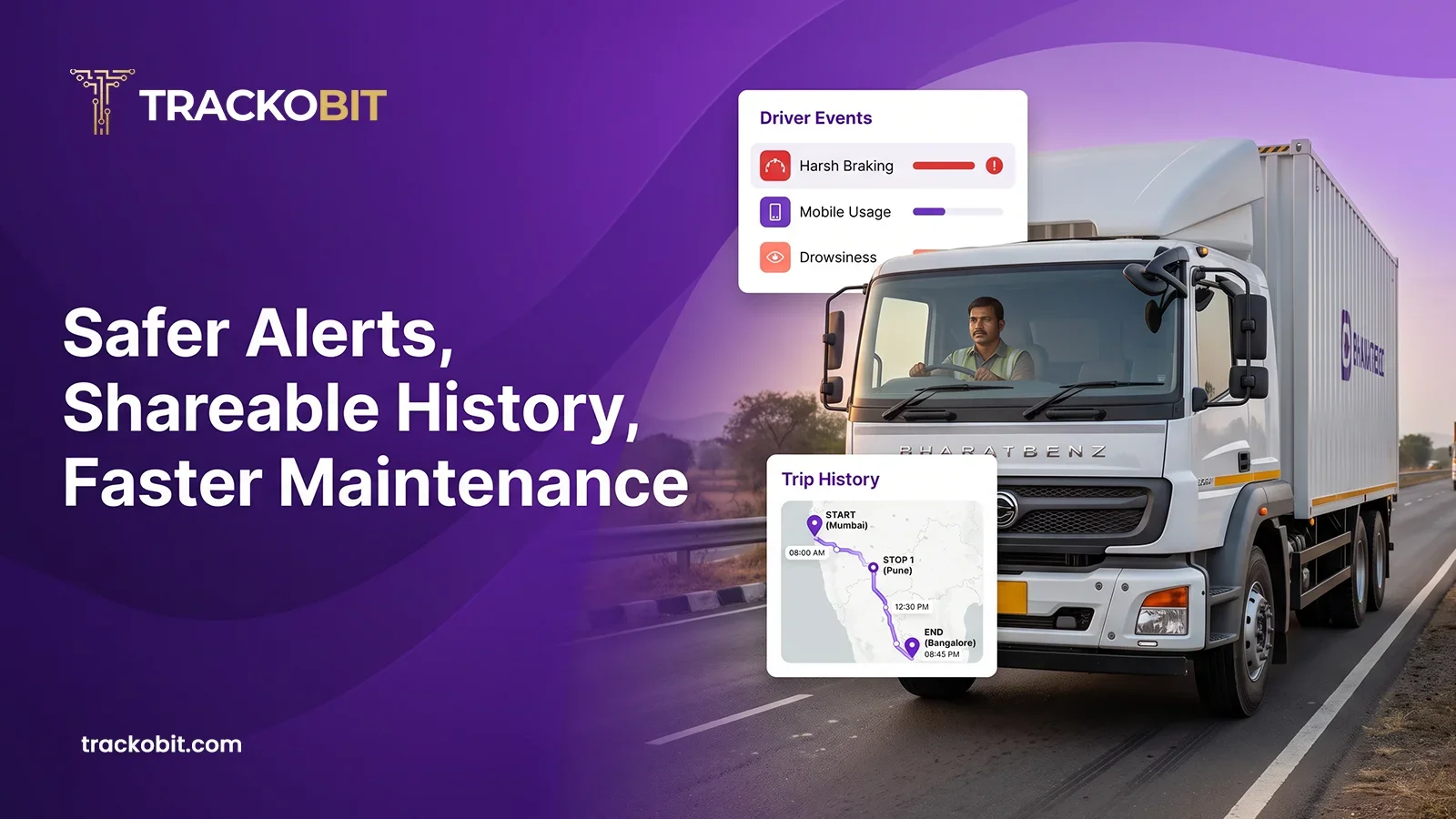
Safer Alerts, Shareable History, Faster Maintenance in TrackoBit
TrackoBit now adds an Evidence Model and authority-based access for ADAS and DMS alerts in video telematics, Vehicle History Sharing…
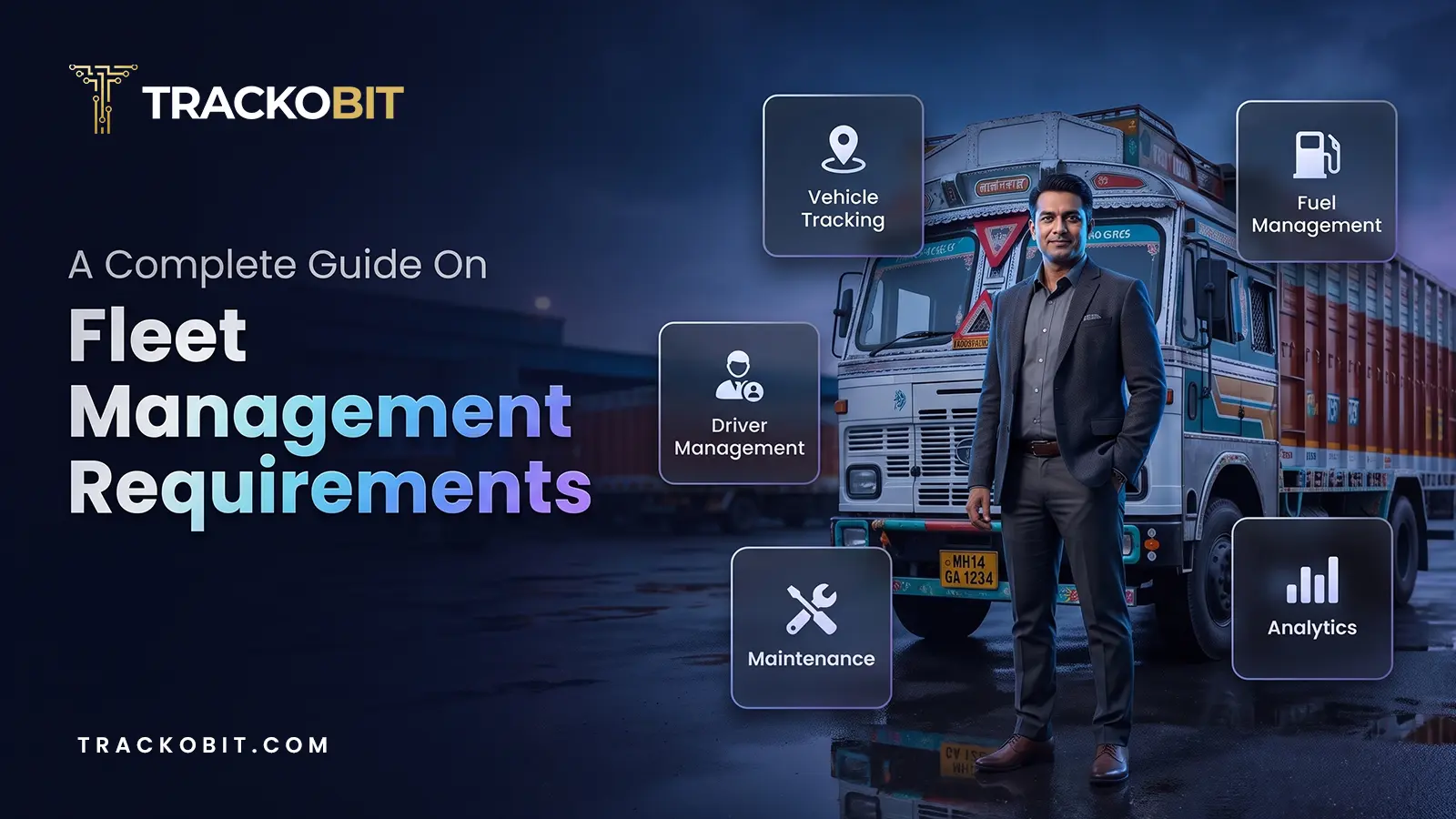
Fleet Management Requirements: The Complete Guide for 2026
Every wondered what exactly fleet management requirements are? Or, why do they matter? This guide helps you understand in detail.
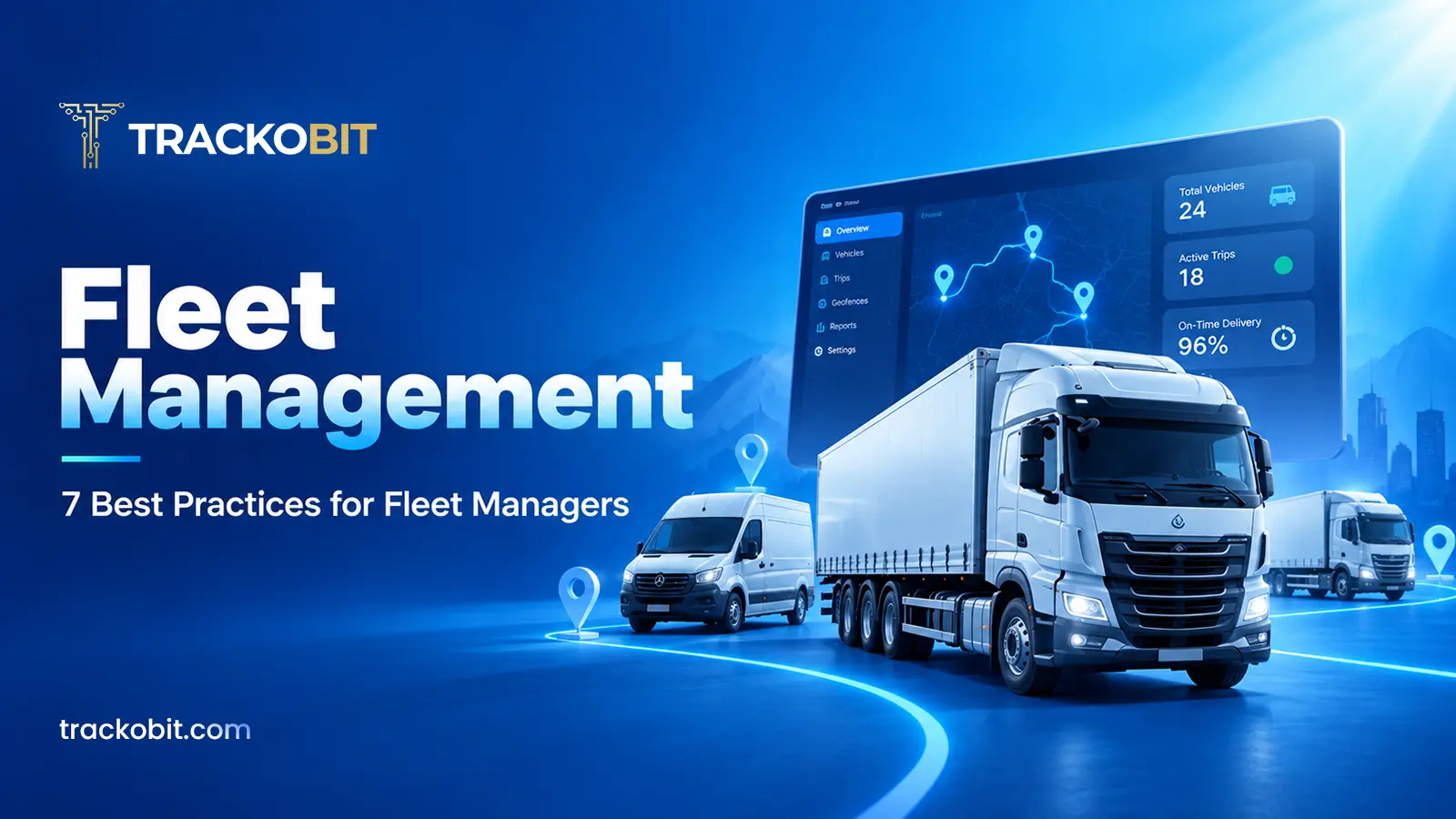
7 Fleet Management Best Practices Every Fleet Manager Needs
Learn 7 fleet management best practices to improve safety, vehicle utilization, efficiency, and fleet performance in 2026.
What Are the Roles and Responsibilities of a Fleet Owner?
Behind every well-run fleet is a fleet owner juggling tasks like vehicle maintenance and driver management without letting anything fall…


Your inbox awaits a welcome email. Stay tuned for the latest blog updates & expert insights.
"While you're here, dive into some more reads or grab quick bites from our social platforms!"Stay Updated on tech, telematics and mobility. Don't miss out on the latest in the industry.