
Behind every well-run fleet is a fleet owner juggling tasks like vehicle maintenance and driver management without letting anything fall through the cracks. Read in detail.
Owning a fleet seems straightforward. Buy the vehicle, hire drivers, and keep them moving. In reality, it is far more complex. Behind every on-time delivery, there is someone who owns and manages it all. It is the fleet owner. Their role extends far beyond owning commercial vehicles. They balance operational efficiency, driver safety, maintenance schedules, and compliance requirements. In other words, they are not simply managing vehicles. They are managing an operation that ultimately impacts the bottom line.
As fleets become more tech-driven, responsibilities continue to grow. To manage these, businesses often rely on robust fleet management software. A reliable one helps gain real-time visibility and streamline operations. This aids in data-driven decisions. In this blog, we’ll explore who a fleet owner is and how they contribute to building high-performing fleet operations. Read on.
What is a Fleet Owner?
A fleet owner is an individual or organization that owns and is responsible for managing a group of commercial vehicles. These may include trucks, vans, buses, and taxis. Ownership here means taking complete responsibility for purchasing and maintaining vehicles.
Beyond this, they are accountable for fleet operations in compliance with industry regulations. The global fleet management market size is expected to increase by $57.99 billion between 2025 and 2030 at a 15.3% CAGR. This highlights an increasing demand for smarter fleet operations and digital transformation.
As fleets expand, the responsibilities of fleet owners become more strategic. Depending on organization size, they manage operations directly or work alongside fleet managers or dispatch teams. They may lease vehicles to drivers or companies too. The primary objective is to ensure the fleet delivers maximum value.
Fleet Owner vs. Fleet Manager vs. Owner-Operator
The roles are interchangeable. But they vary greatly in terms of ownership, responsibilities, and financial accountability. Check the table below.
| Criteria | Fleet Owner | Fleet Manager | Owner-Operator |
| Primary Role | Owns and oversees a fleet of commercial vehicles. | Manages day-to-day fleet operations. | Owns and operates own commercial vehicles. |
| Vehicle Ownership | Owns multiple vehicles. | Does not own the fleet. | Owns one or a few vehicles. |
| Day-to-Day Involvement | Focuses on business strategy, investments, and operational oversight. | Handles dispatch, maintenance, driver management, and fleet performance. | Drives the vehicle and manages daily operations independently. |
| Financial Liability | Responsible for fleet investments, operating costs, insurance, and profits. | Responsible for operational budgets but not vehicle ownership. | Bears all expenses related to vehicles like fuel and repairs. |
| Operational Scale | Manages fleets ranging from a few to 1000+ vehicles. | Oversees fleets of varying sizes on behalf of an organization. | Usually operates a single vehicle/a small fleet. |
Wrapping up, a fleet owner focuses on strategic ownership. A fleet manager handles daily execution. Both ownership and driving responsibilities are combined by an owner-operator.
Roles & Responsibilities of a Fleet Owner
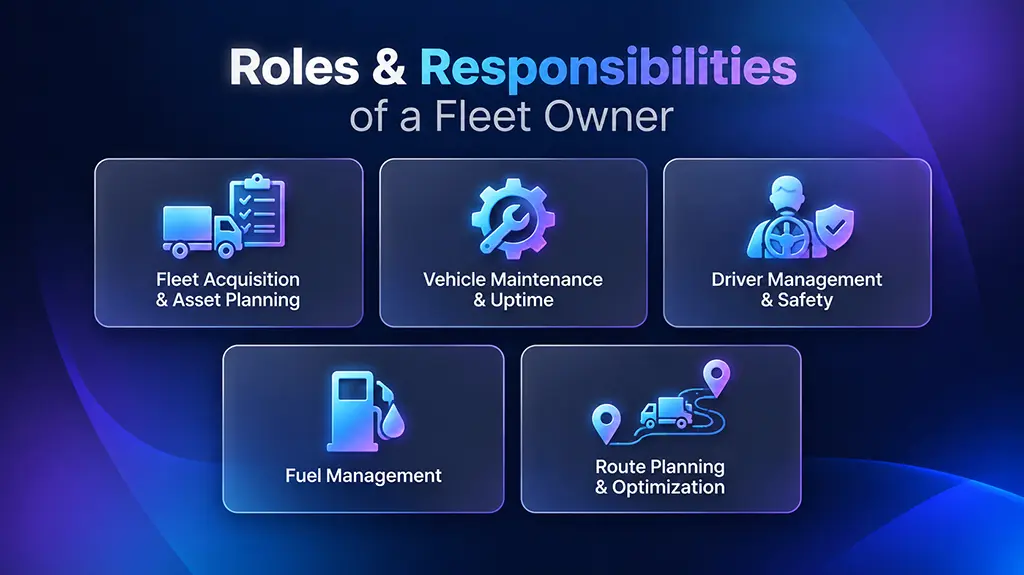
Roles & Responsibilities of a Fleet Owner
The top roles and responsibilities are fleet acquisition, vehicle maintenance, driver management, and fuel management. In short, fleet owners wear multiple hats. See detail.
1. Fleet Acquisition and Asset Planning
Fleet owners determine when to purchase, lease, or replace vehicles. This is based on business requirements and long-term growth plans. Cost, expected ROI, and operational efficiency are significant factors too.
2. Vehicle Maintenance and Uptime
They ensure that every vehicle is serviced on time. This is through preventive fleet maintenance schedules which reduce unexpected breakdowns. This maximizes fleet availability.
3. Driver Management and Safety
Fleet owners hire competent drivers, monitor their behavior, and enforce safety policies. This way, they are responsible for building a safe, accountable workforce.
4. Fuel Management
A fleet manager monitors fuel consumption. This reduces fuel wastage and identifies inefficiencies. Ultimately, one of the fleet’s largest expenses is controlled.
5. Regulatory Compliance
Fleet owners must ensure vehicles comply with national and state laws. These are local transportation regulations, licensing requirements, and safety protocols.
6. Route Planning
Efficient route planning and vehicle allocation help reduce travel time. Fleet owners thus contribute to improving service delivery and overall fleet productivity.
7. Cost and Budget Management
Fleet owners oversee and streamline multiple expenses. This includes fuel, repairs, insurance, maintenance, and vehicle procurement. It helps with profitability while maximizing return on investment.
8. Fleet Performance Monitoring
Fleet owners track KPIs regularly. These are vehicle utilization, idle time, fuel efficiency, driver productivity, and maintenance costs. It helps identify improvement opportunities.
What Challenges Do Fleet Owners Face?
Fleet owners face a multitude of challenges like high fuel spending, safety breaches, and risky driver behaviors. Read in detail.
1. High Fuel Spending
A fuel variation of 2% to 5% never immediately appears alarming. However, if this remains unchanged, it can lead to losing lakhs of rupees every month. Fuel accounts for 35% to 45% of fleet expenditure. Silent pilferages can kill profitability if not monitored closely. Other ways fleets lose fuel are theft, idling, and unauthorized withdrawal. Without a fuel monitoring system, these are hard to control.
2. Safety Breaches
Indian terrains often present unique challenges. There are diverse infrastructural and geographical constraints. For example:
- Harsh weather, landslides, and potholes.
- Hairpin bends, blind corners, and sharp turns.
- Saltwater exposure in the coastal regions.
- Inadequate lighting/sinkage in rural areas.
These can alter the safety of both vehicles and drivers. Otherwise, it impacts the overall fleet performance and erodes profits over time.
3. Risky Driving Behaviors
Speeding, aggressive maneuvers, harsh braking, lane changes, and phone usage threaten lives. Drivers under the influence and distracted driving are equally concerning. For fleet owners, the challenge goes beyond identifying these behaviors. It increases the risks of collisions and legal fines. Unsafe driving can lead to higher insurance costs, too. This is especially true if drivers are not trained and coached for safe driving.
4. Poor Operational Visibility
Lack of visibility in fleet movement causes operational disruptions. Fleet owners are unable to monitor overdue oil changes or miss an inspection. There could be false claims, fuel loss, and safety risks. Drivers might be overused or underused. In short, it becomes difficult to track fleet performance and respond to issues in real-time.
5. Compliance Concerns
Maintaining compliance with permits, licenses, and insurance is a tough nut to crack. As fleets grow, so does the volume of documents. Fleet owners might struggle to stay on top of renewal dates, HOS, and regulatory requirements. This increases the risks of fines, vehicle downtime, and compliance violations.
The good news? Fleet owners can consider AI-powered fleet management software. It brings fuel consumption, driver monitoring, and vehicle health in one place. Fleet owners can spot inefficiencies early with real-time data and automated alerts. In short, the right software turns fleet management from a daily game of catch-up to data-driven operations.
How to Become a Fleet Owner?
Starting a fleet business is easy. However, building the one that brings profit requires a little more planning. See how to get started efficiently.
- Step 1: Decide what type of fleet you wish to operate. It could be logistics, delivery, or passenger transport. This can be done by identifying your target customers and service areas. Keep your business model like partnership or corporation in mind too.
- Step 2: Estimate the cost of vehicles, registrations, insurance, and maintenance. Fuel, drivers, technology, and operating costs are other considerations. Factor in both your initial investment and ongoing expenses. Now, secure capital like loans or grants to fund your fleet business.
- Step 3: Choose the right vehicles based on your needs. It must include payload, fuel efficiency, route conditions, and expected usage. Purchase or lease them as per your budget and business requirements.
- Step 4: Finish registrations for both your business and vehicles. Next, get the required permits and licenses. Keep track of their renewal dates. This helps avoid compliance issues and legal complications later.
- Step 5: Hire experienced drivers with the necessary experience and licenses. Provide regular coaching on road safety and vehicle handling. They must also understand on-road compliance. Altogether, these help with safe and sustainable driving practices.
Lastly, consider investing in telematics-powered fleet management software.
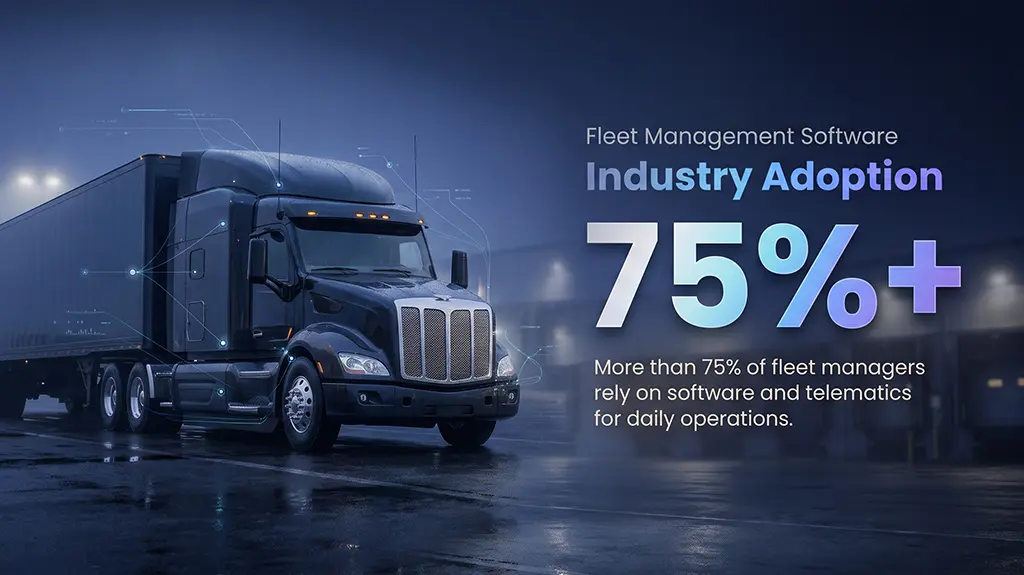
Fleet Management Software Adoption
It helps monitor vehicles, track fuel consumption, and manage drivers on-the-go. Fleet owners get real-time, centralized visibility into their operations. It will make your business far more streamlined and scalable.
How Does a Fleet Management Software Help Fleet Owners?
A fleet management software integrates with hardware and centralizes your data. This gives fleet owners a single view of daily operations. It can help:
- Track your commercial vehicles in real-time to detect issues early.
- Monitor fuel to cut unusual consumption via theft, idling, or spillage.
- Optimize routes by planning efficient journeys and reducing travel time.
- Boost driver safety by tracking risky actions like smoking or sleepiness.
- Use video telematics to capture road events like lane changes and speeding.
- Centrally manage fleet maintenance with alerts and automated schedules.
- Monitor performance with reports and analytics to control operating costs.
Together, these capabilities help fleet owners improve visibility and keep their fleets safer. They are ultimately able to outpace competition and run their business profitably.
Conclusion
Being a fleet owner goes beyond owning a set of vehicles. Fleet owners keep operations efficient, drivers safe, and vehicles road-ready. They also keep expenses under control while meeting customer expectations. As fleets grow, managing these manually becomes a hassle. So, it is a wise decision to consider an AI-powered fleet management software provider. It helps with real-time visibility to ensure smarter decisions.

Frequently Asked Question
-
What does a fleet owner do?
The meaning of fleet owner is a person who is accountable for ownership and operational decisions. They take care of key aspects like maintenance, fuel costs, driver safety, and compliance. Fleet owners may also manage decisions around routes, maintenance, replacements, and utilization. Altogether, their responsibility is to ensure efficient and profitable business.
-
What is the difference between a fleet owner and an owner-operator?
A fleet owner manages and operates multiple commercial vehicles. An owner- operator typically owns a single truck or small fleet of vehicles. They could even personally drive one. Both are responsible for vehicle ownership and operations.
-
How do fleet owners improve driver safety?
Fleet owners improve driver safety with a driver behaviour monitoring software. A competent one collects, analyses, and displays insightful data. Drivers can be monitored during their working hours with video evidence to avoid false blames. Fleet owners can investigate accidents objectively and protect drivers.
-
What is the difference between fleet owner and fleet manager?
A fleet owner owns the vehicles. They are responsible for the fleet’s financial and operational performance. On the other hand, a fleet manager typically looks after daily workflows. This means driver management, vehicle maintenance, and compliance. In larger organizations, a fleet owner may rely on a fleet manager.
-
What software does fleet owners use?
Fleet owners typically use fleet management software. The best ones are powered by AI and telematics. They can help monitor vehicles, manage drivers, and plan routes. Further, they offer GPS tracking, driver behavior monitoring, and real-time analytics. These help fleet owners improve safety and make data-backed decisions.

Shemanti is a Content Marketing professional with 7+ years of experience in shaping credible narratives across B2B products. As the Content Team Lead for TrackoBit, TrackoField, and TrackoMile, she br... Read More


Related Blog
ADAS System in Cars: How It Works and Why It Matters
ADAS road safety system is a technology that uses sensors and software to detect danger and alerts the driver to…
Safer Alerts, Shareable History, Faster Maintenance in TrackoBit
TrackoBit now adds an Evidence Model and authority-based access for ADAS and DMS alerts in video telematics, Vehicle History Sharing…
Fleet Management Requirements: The Complete Guide for 2026
Every wondered what exactly fleet management requirements are? Or, why do they matter? This guide helps you understand in detail.
7 Fleet Management Best Practices Every Fleet Manager Needs
Learn 7 fleet management best practices to improve safety, vehicle utilization, efficiency, and fleet performance in 2026.


Your inbox awaits a welcome email. Stay tuned for the latest blog updates & expert insights.
"While you're here, dive into some more reads or grab quick bites from our social platforms!"Stay Updated on tech, telematics and mobility. Don't miss out on the latest in the industry.