
Quick Summary

- Fleet operations involve daily vehicle activities like driver management and route planning, aiming to enhance productivity and control costs.
- Key components include vehicle management, driver performance tracking, route optimization, and compliance monitoring to ensure efficient operations.
- Challenges such as rising fuel costs, vehicle downtime, and driver shortages necessitate a data-driven approach for effective fleet operations management.
- Utilizing advanced fleet operations software can improve real-time visibility, optimize routes, and enhance driver performance, ultimately leading to better operational efficiency.
Discover what is fleet operations? Learn about key components, fleet challenges, and which are the important KPIs to track.
Fleet operations cover the daily activities of vehicles. It includes driver management, route planning, and monitoring every aspect of the vehicle. The main goal of a structured and efficient fleet operation is to control costs. And to reduce downtime and improve trips.
It does not matter whether you manage 200 vehicles or 2000. Ensuring strong fleet operations are a game changer. It creates a foundation for better visibility, smoother workflows, and higher asset utilization.
What Is Fleet Operations?
It covers the daily activities of a fleet-dependent business. Like vehicle scheduling, route planning, fuel management, and performance monitoring. Together, these processes ensure vehicles remain productive, safe, and available for operations.
The main purpose of fleet operations is to maintain and improve the trip and service quality. Meanwhile, it also controls costs and improves productivity. It should not be confused with fleet management. It focuses on strategy and planning. Fleet operations concentrate on daily execution. Also, on keeping vehicles, drivers, and resources working efficiently.
Key Components of Fleet Operations
Vehicle and driver management and route planning are some of the key components. Read in detail below.
Vehicle Management
Vehicles need regular inspections, servicing, and monitoring to operate optimally. These are vital for maintaining good conditional. This automatically reduces breakdowns and downtime.
Driver Management
How the driver performes directly impact fuel usage, vehicle health and safety. Driving tracking becomes a must to have a visibility. Only then will operators be able to plan schedules and ensure compliance.
Route Planning
Efficient route planning is vital to reduce travel time. It also helps prevent unnecessary mileage and fuel consumption. These improve delivery timelines and customer service.
Fuel Management
Fuel remains one of the largest fleet expenses. Excessive idling, rash driving, and detours affect fuel economy negatively. Also, fuel efficiency helps identify avoidable costs.
Maintenance Management
Preventive maintenance can actually be keeping your fleet up and running smoothly. It is critical because unplanned repairs may cost 3-5x more than scheduled maintenance. Timely servicing reduces the risk of unexpected failures. It keeps vehicles available for operations and minimizes downtime.
Compliance and Safety
Fleet operators must maintain valid vehicle documents, driver records, permits, and safety standards. SARATHI and VAHAN like platforms are of big help in the process. After all, missing compliance requirements can result in penalties and operational disruptions.
What Does a Fleet Operations Manager Do?
A fleet manager is the one responsible for managing daily fleet activities. Its their duty to ensure trips are running smoothly. They oversee which vehicle goes where. Which driver is assigned to which vehicle. And most importantly they are the ones planning the entire fleet trip schedules.
The responsibilities of a fleet operations manager often include:
- Monitoring vehicle availability
- Managing driver schedules
- Tracking fleet performance
- Coordinating maintenance activities
- Reviewing fuel usage
- Ensuring regulatory compliance
- Resolving operational issues
A typical day may involve responding to route delays and checking maintenance schedules. They are also reviewing performance reports and coordinating with drivers and field teams.
As fleets grow larger, the role becomes more complex. They have to depend on real-time visibility and accurate operational data.
Fleet Operations Challenges in 2026
Rising fuel costs, vehicle downtime, and detours are common fleet challenges. Fleet operations are continuously under pressure to expand and scale. They cannot do it without balancing efficiency, compliance, and cost control.
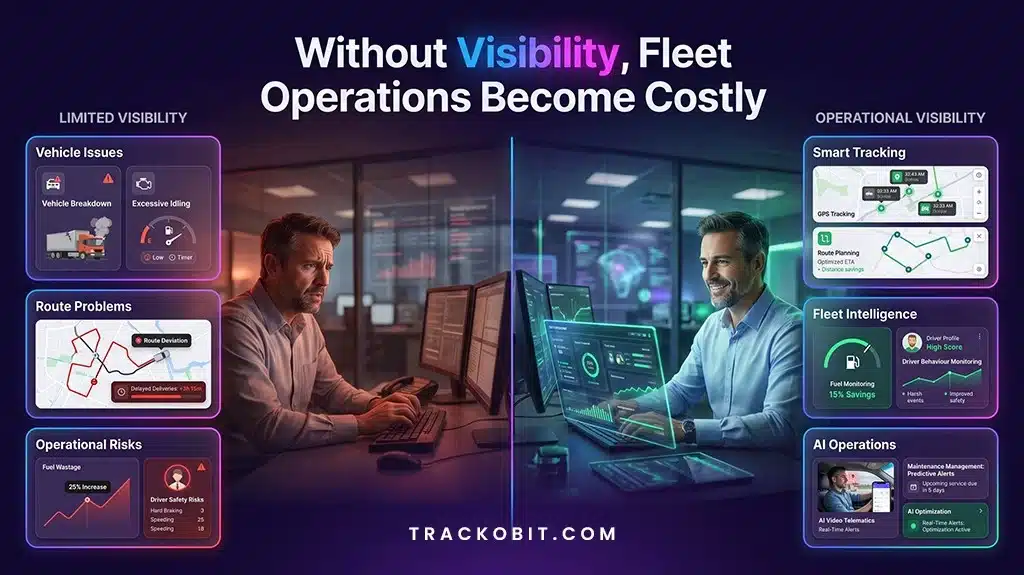
Visibility Solves Operational Challenges
Some common fleet challenges include:
Rising Fuel Costs
Fuel prices remain unpredictable and directly affect operating expenses. Even small inefficiencies can create significant costs across large fleets.
Vehicle Downtime
Unexpected breakdowns disrupt schedules, reduce productivity, and increase maintenance expenses. Downtime often affects customer commitments and resource planning.
Driver Shortages
Many industries continue to face challenges in recruiting and retaining qualified drivers. Limited driver availability can impact service levels and fleet utilization.
Limited Operational Visibility
Without live data, fleet teams will have no idea about delays and route deviations. Vehicle idling and health will continue going haywire if not controlled.
Compliance Management
As fleets grow, the number of vehicles and driver onboarding will increase. That means managing permits, insurances and documents will grow and become more complex.
How to Improve Fleet Operations
Optimizing routes and monitoring performance are ways to improve operations. But taking a data-driven approach will elevate the trip and daily decision-making.
Here are a few practical ways to improve fleet operations:
1. Track Vehicle Utilization
Monitor how often vehicles are being used and identify underutilized assets. Better utilization improves return on fleet investments. It also prevents unnecessary vehicle purchases and ensures existing assets are used effectively.
2. Optimize Routes
Review routes regularly to eliminate unnecessary mileage, reduce delays, and improve trip efficiency. Shorter and better-planned routes save fuel, reduce travel time, and improve service reliability.
3. Monitor Driver Performance
Track speeding, harsh braking, rapid acceleration, and excessive idling. Consistent monitoring supports safer and more efficient driving habits. It also reduces vehicle wear and lowers the risk of accidents.
4. Schedule Preventive Maintenance
Routine servicing reduces unexpected breakdowns and extends vehicle life. Addressing minor issues early prevents costly repairs. Also, increases vehicle safety and ensures availability for daily operations.
5. Use Real-Time Fleet Data
Access to live vehicle information improves response times and supports faster operational decisions. Real-time visibility also makes it easier to identify delays. Managers are getting prompt alerts incase of deviations and operational issues.
6. Measure Performance Consistently
Tracking key metrics reveals trends, inefficiencies, and opportunities for improvement. Regular performance reviews provide a clear picture of fleet health and operational efficiency.
What to Look for in a Fleet Operations Software?
Fleet size, features offered and integration capabilities are what to look for in fleet operations software. Here is a list –
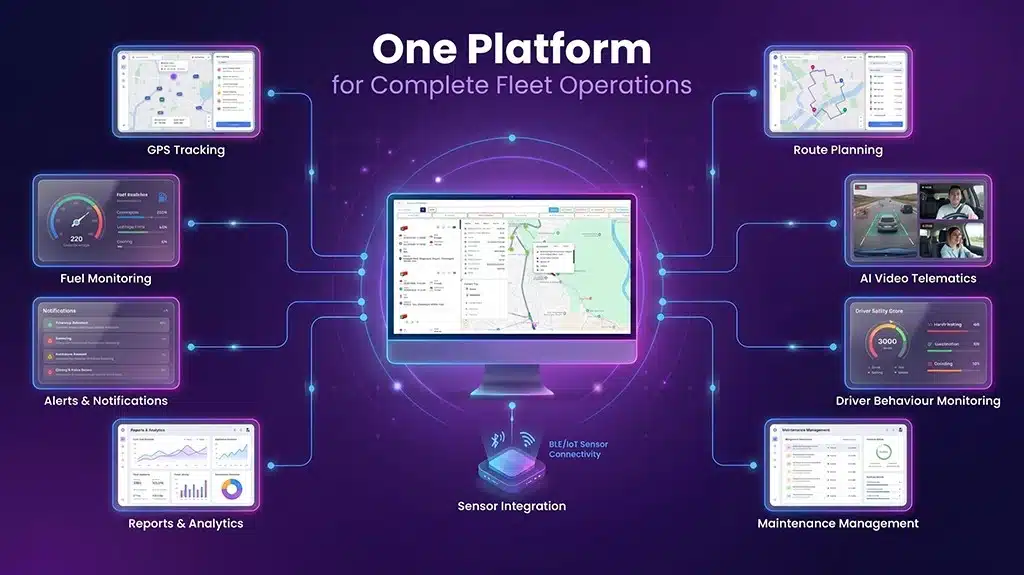
Core Capabilities of Fleet Operations Software
Real-Time Vehicle Tracking
Live vehicle visibility makes it easier to monitor trips. The responses are faster and verification of information is not required. It also supports faster decision-making when unexpected events occur on the road.
Route Planning and Optimization
Built-in route planning reduces unnecessary travel and supports faster trip completion. Better route planning improves vehicle utilization and minimizes avoidable fuel expenses.
Driver Performance Monitoring
Driver scorecards and performance reports provide visibility into multiple trip events. These insights support safer driving and reduce operational risks.
Fuel Monitoring
Fuel monitoring software identifies unusual consumption patterns and improves fuel accountability. Fleet teams can detect fuel wastage, excessive idling, and fuel theft more effectively.
AI Video Telematics
AI-video telematics provide visual visibility of the fleet activity. There are alerts on events such as distracted driving, tailgating, and lane departures. Video evidence also supports faster incident investigations and insurance claims.
Sensor and Tracker Integration
These platforms should support integration with-
- GPS trackers
- Fuel sensors
- Temperature sensors
- TPMS devices
- Telematics hardware.
This will help to create an ecosystem where the data flows into a centralized platform.
Compliance and Document Management
Managing permits, insurances, and driver documents becomes easier with automated alerts. The software also centralizes records. This reduces the risk of missed renewals and compliance violations.
Reporting and Analytics
Reports on trip, fuel, events and expenses all help make the operations a success. Go for a platform that has reports like BRAG and driver performance reports. These help identify top drivers. And also, identify areas that require attention.
Custom Dashboards and Alerts
Custom dashboards allow different teams to monitor the metrics that matter to them. Instant alerts for –
- Overspeeding
- Route deviation
- Excessive idling
- Maintenance due dates
- Fuel anomalies
Together, these help to support quicker responses.
Fleet Operations KPIs You Must Track
Vehicle utilization rate and fuel use are some of the fleet operations KPI that must be tracked. Regular KPI tracking highlights operational issues before they become larger problems.
Some of the most important fleet operations KPIs include:
Vehicle Utilization Rate
This measures how effectively fleet assets are being used. Low utilization may indicate excess capacity or poor resource allocation.
Fuel Consumption
Tracking fuel usage provides visibility into operating costs and vehicle efficiency.
Fleet Downtime
Downtime measures the amount of time vehicles remain unavailable. This could be due to maintenance or repairs.
On-Time Delivery Rate
This KPI shows how consistently vehicles meet planned schedules and service commitments.
Maintenance Cost Per Vehicle
Monitoring maintenance expenses helps identify aging vehicles and recurring repair issues.
Driver Safety Score
Safety scores provide insight into driver behavior and overall fleet risk levels. Fleet teams should review these metrics regularly. They can use them to guide operational decisions.
The Future of Fleet Operations
Fleet operations are becoming data-driven, automated, and connected. New technologies are changing how fleets manage vehicles, drivers, and resources.
AI-Powered Predictive Maintenance
Managers should not be reacting to breakdown news and reports. Rather, they should receive predictive maintenance alerts. This will help operators deflect issues even before failure occurs. This will considerably reduce breakdowns and repair expenses.
EV Fleet Integration
As electric vehicle adoption increases, fleet teams need visibility into charging schedules. They also need better insights into battery health and energy consumption.
Autonomous Vehicle Readiness
While large-scale adoption may take time, autonomous technologies are already improving fleet safety. They are also helping optimize vehicle operations and decision-making.
Sustainability Reporting and Emissions Tracking
Many organizations are placing greater focus on environmental goals. Tracking fuel usage, emissions, and vehicle efficiency will become increasingly important.
Connected Fleet Ecosystems
IoT-enabled fleet management is what the industry is moving towards. It has integrated telematics devices, AI-dashcams, and sensors all together. This creates an ecosystem with centralized information and visibility. Which is much needed to improve and speed up decision making.
Fleets that adapt early will be better positioned to manage costs and compliance. They will also be able to scale operations more efficiently.
Conclusion
High-performing fleet operations form the backbone of every commercial fleet. From vehicle maintenance to driver management, these activities impact daily productivity. They also play a major role in controlling operating costs.
As fleets grow, managing operations manually will naturally become challenging. What operators will need is real-time visibility and insights. Also, the connected fleet technology lays the foundation of a much more robust operation.
The right processes and KPIs help improve fleet efficiency. Modern fleet management tools support reliable and scalable operations.
Frequently Asked Questions
-
What is the difference between fleet operations and fleet management?
Fleet operations focus on the day-to-day activities required to keep vehicles running efficiently. Fleet management covers broader responsibilities. For example, budgeting, policy creation, asset planning, vendor management, and long-term strategy. Fleet operations are a key part of overall fleet management.
-
What software is used for fleet operations?
Fleet operations software is typically used. It includes GPS tracking, route planning, video telematics and fuel monitoring. Also has driver behavior monitoring and other reporting tools. These platforms provide centralized visibility. Operators are able to view and connect with drivers, vehicles and operational performance.
-
What does a fleet operations manager do?
A fleet operations manager oversees daily fleet activities. This could include vehicle scheduling, driver coordination, and tracking driver activities. The main responsibility is to keep the operation running smoothly. While also maintaining safety, productivity, and cost of the fleet.
-
How much does fleet downtime cost?
Fleet downtime costs vary by industry, fleet size, and vehicle type. Costs often include lost productivity, delayed deliveries and repair expenses. Other expenses can be the cost of replacement vehicles and customer service disruptions. Even short periods of downtime can significantly affect overall operational performance.

Apoorva Raizada is the Content Marketing Manager at TrackoBit. With over a decade of experience across media, advertising, and B2B SaaS, she brings a sharp editorial mindset to technology-led business... Read More


Related Blog
Safer Alerts, Shareable History, Faster Maintenance in TrackoBit
TrackoBit now adds an Evidence Model and authority-based access for ADAS and DMS alerts in video telematics, Vehicle History Sharing…
Fleet Management Requirements: The Complete Guide for 2026
Every wondered what exactly fleet management requirements are? Or, why do they matter? This guide helps you understand in detail.
7 Fleet Management Best Practices Every Fleet Manager Needs
Learn 7 fleet management best practices to improve safety, vehicle utilization, efficiency, and fleet performance in 2026.
What Are the Roles and Responsibilities of a Fleet Owner?
Behind every well-run fleet is a fleet owner juggling tasks like vehicle maintenance and driver management without letting anything fall…


Your inbox awaits a welcome email. Stay tuned for the latest blog updates & expert insights.
"While you're here, dive into some more reads or grab quick bites from our social platforms!"Stay Updated on tech, telematics and mobility. Don't miss out on the latest in the industry.