
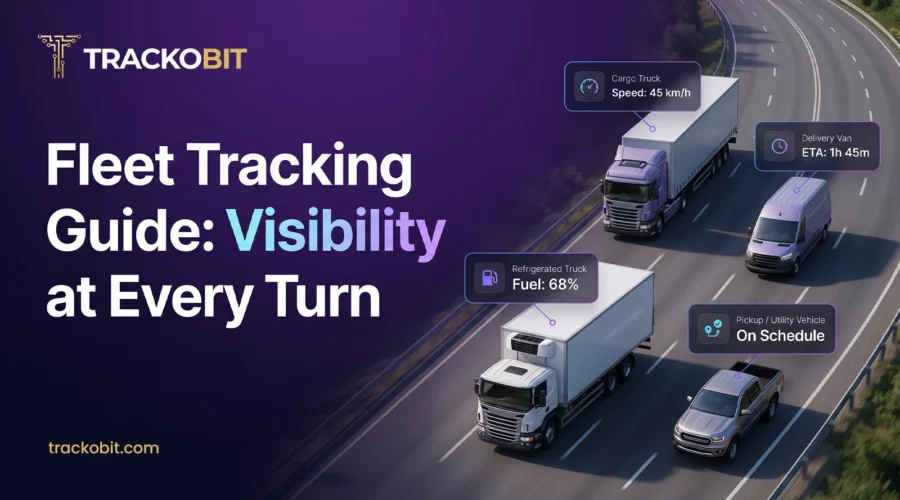
Quick Summary

- Fleet tracking enables real-time monitoring of vehicles, assets, and drivers, enhancing operational efficiency.
- It utilizes GPS devices and centralized software for comprehensive visibility, improving decision-making and reducing costs.
- Key benefits include better fuel management, efficient routing, and enhanced driver safety through behavior monitoring.
- Industries like logistics, construction, and healthcare leverage fleet tracking for improved management and security of their operations.
Fleet tracking allows businesses to track and manage vehicles, assets, and drivers in real time. Read this blog to know in detail.
Did you know that just 2 minutes of idling uses as much fuel as driving one mile? For a single vehicle, this may seem negligible. Across a fleet, it becomes a recurring cost that impacts profit margins. Idle time, inefficient routing, and driver behavior are the hidden costs of an untracked fleet. These are caused by limited visibility.
Fleet tracking solves this by offering real-time visibility over fleet movement, analysis of driver behavior, and resource utilization. But the result goes beyond visibility. It is more about turning data into profit so you can stay ahead of your competitors.
In this blog we will discuss how fleet tracking works and how to use it to manage your fleet more efficiently and profitably.
What is Fleet Tracking?
Fleet tracking uses GPS and connected software to show the live location and movement of your vehicles. It helps managers know which vehicles are active, which ones are idle, and how drivers are operating on the road without depending on manual updates.
Plus, it is not just about visibility. A modern system also shows how they’re being driven, how long they are idle, and which routes they’re taking. With this kind of visibility, you can stop reacting to issues and start making more controlled data-backed decisions.
How GPS Fleet Tracking Works?
It works through a combination of a GPS device and a centralized dashboard, usually part of a fleet management software. It helps you connect everything in one place. It majorly involves these two components:
- GPS tracking devices: These are installed in every vehicle to record real-time data such as location, speed, and movement.
- Vehicle tracking software: Managers can see this information in a dashboard. Here they can monitor all vehicles, trips, and drivers.
Together, this offers complete visibility to the managers. You can follow diversion of routes, fuel consumption, events on the road, and in-cabin driver activities, including accidents, aggressive driving, or driver exhaustion.
7 Best Fleet Tracking Apps for Real-Time Monitoring
The top fleet tracking apps for real-time monitoring are TrackoBit, Wialon, Samsara, Fleetio, and Uffizio. Discover the full list with details below.
1. TrackoBit
TrackoBit is an advanced, AI-powered fleet management software. It helps businesses monitor vehicles, drivers, routes, and fuel, while calculating fuel costs before a trip starts.TrackoBit supports 1500+ GPS hardware and sensors. Its fleet intelligence is built for varied fleet types.
Top Features:
- Track vehicles in real-time with GPS-based fleet visibility.
- Monitor driver behavior like smoking and drowsiness.
- Track fuel consumption with a fuel monitoring system.
- Analyze vehicle health to stay ahead of maintenance.
- Use AI-powered video telematics with ADAS and DMS.
Industries: Logistics, transportation, FMCG, e-commerce, employee transportation, and waste management.
Pricing: Starts at $6/vehicle/year (Standard), $12/vehicle/year (Advanced), $24/vehicle/year (Elite).
2. Wialon
Wialon is a fleet management and telematics platform. It helps monitor vehicles, equipment, and mobile assets. The platform combines real-time tracking with fuel management, route optimization, and video telematics.
Top Features:
- Set geofences and receives location-based alerts.
- Monitor fuel consumption and fleet performance.
- Analyze trips, events, and historical fleet data.
Industries: Farming, agriculture, public transportation, leasing, and equipment tracking.
Pricing: Custom pricing
3. Samsara
Samsara provides connected fleet and telematics solutions. It brings vehicles, drivers, and equipment into one platform. Samsara’s GPS tracking capabilities focus on real-time visibility, driver safety, and vehicle diagnostics.
Top Features:
- Track commercial vehicles with live fleet visibility.
- Get intuitive tools and pre-built fleet reports.
- Use AI-powered cameras for video telematics.
Industries: Field services, transportation, construction, food & beverage, and logistics.
Pricing: Custom pricing
4. Fleetio
Fleetio is a fleet management platform. It is heavily focused on vehcile lifecycle, fuel, expenses, maintenance, and asset utilization. It centralizes fleet information to help manage vehicles and keep maintenance organized.
Top Features:
- Track fleet assets and maintain detailed vehicle records.
- Manage maintenance with service schedules/ inspections.
- Integrate telematics data with other fleet workflows easily.
Industries: Service businesses, transportation, trucking, construction, and government fleet.
Pricing: $4/vehicle/month (Essential), $7/vehicle/month (Professional), and $10/vehicle/month (Premium)
5. Verizon Connect
Verizon Connect offers GPS fleet tracking and fleet management solutions. These help businesses with visibility, driver safety, and productivity. The platform also offers dashboards, reports, and alerts.
Top Features:
- Use AI dashcams and video telematics for safety risks.
- Custom alerts/notifications for unauthorized vehicle usage.
- Track vehicle locations in real-time with GPS fleet tracking.
Industries: Beer distribution, farming, cable & telecom, government, and enterprise fleets.
Pricing: Not revealed
6. Uffizio
Uffizio offers telematics and IoT solutions. This helps fleet businesses ‘monitor, track, and manage their operations effectively. They get real-time visibility and better coordination for improved performance across industries.
Top Features:
- Set alerts and geofences to monitor critical fleet events.
- Use Gen-AI powered chatbot to find information quickly.
- Get video telematics with ADAS and DMS capabilities.
Industries: Waste collection, personal vehicles, indoor tracking, and EV.
Pricing: Custom pricing
7. Fleetx
Fleetx is an AI-powered fleet and logistics platform. It provides real-time visibility, intelligent routing, dispatch, and operational analytics. Fleetio combines GPS, IoT, AI, and logistics workflows to help businesses manage fleet movement.
Top Features:
- Track vehicles and drivers with live visibility.
- Optimize routes based on operational needs.
- Monitor fuel to ensure optimal consumption.
Industries: Ecommerce, construction, passenger transit, cold chain, and transportation.
Pricing: Not revealed
5 Benefits of Using GPS Fleet Tracking Software
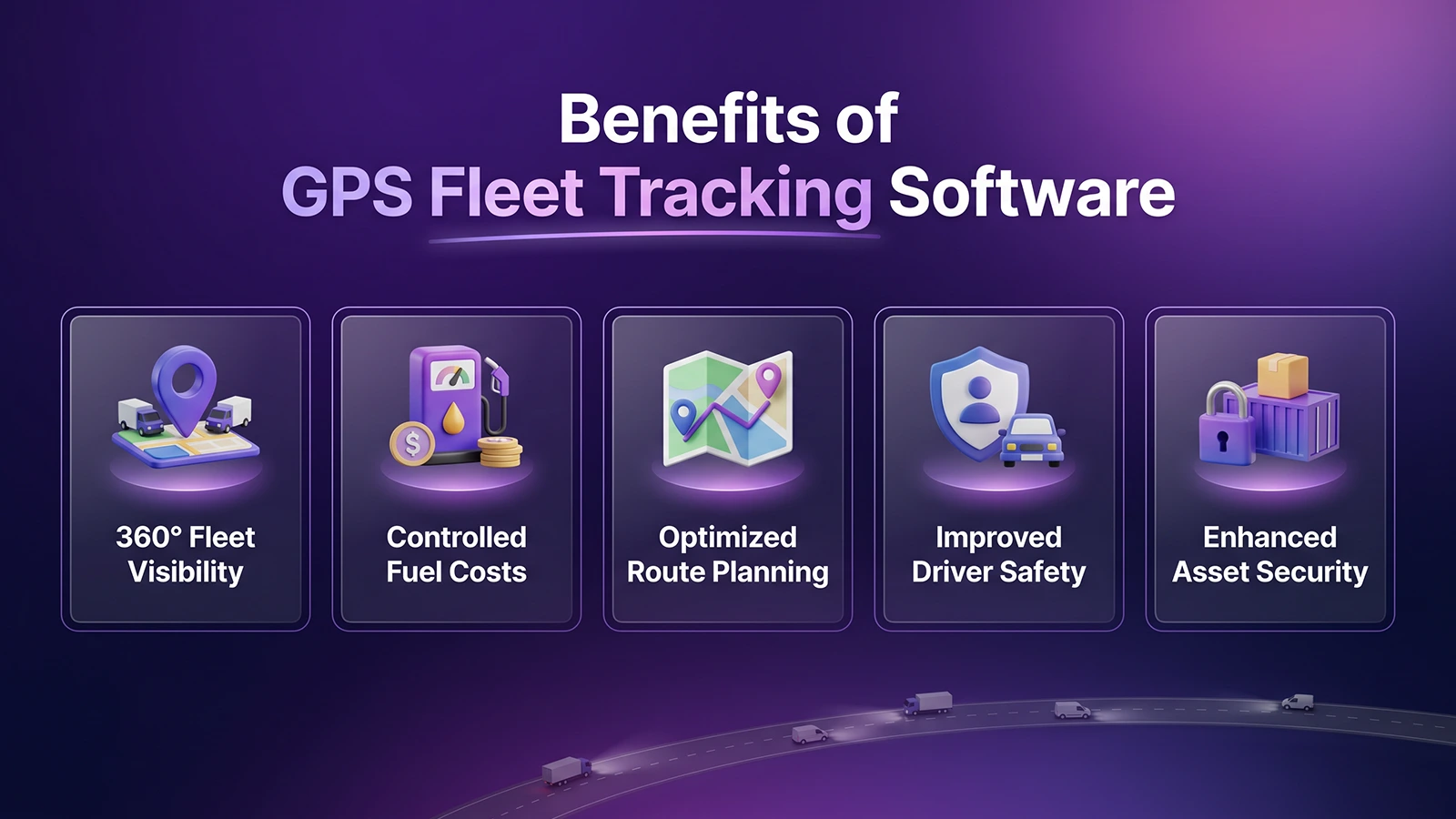
Benefits of GPS Fleet Tracking Software
The main advantages of GPS fleet tracking software are enhanced visibility, better cost management, and safety of the drivers.
1. Better Visibility Across Fleets
GPS tracking helps you to know your vehicles and asset locations. When a vehicle is jammed up in the traffic, you can reroute them instantly without wasting time and having vehicles idling.
2. Improved Management of Fuel Expenses
You will be able to monitor the consumption of fuel by the fleet. In case a vehicle spends too much time in idling or having inefficient paths, you will be able to take action in a short time, saving unnecessary fuel expenditure.
3. Efficient Routing and Planning
A fleet management app helps you to plan routes using previous trip history, traffic flow and weather information. When a route is delayed continuously, you can plan ahead to avoid delays and save on cost.
4. Improved Driver Safety and Accountability
You can see how vehicles are being driven on the road. If a driver is over speeding, braking harshly, or showing signs of fatigue, you can step in early to reduce risk and improve safety.
5. Better Security and Theft Prevention
In case a vehicle is stolen or moved without permission, you can act instantly. In addition, fuel theft is detectable by monitoring refill patterns and unexpected drops in fuel.
5 Core Features of Fleet Tracking Software?
Real-time location tracking, geofencing, and driver behavior monitoring are the most important features to look in fleet management software
- Real-Time Location Tracking: Monitor vehicles’ current condition and track them in real-time.
- Geofencing Capabilities: Create virtual barriers around particular places and receive alerts when a vehicle crosses in and out of predetermined areas.
- Driver Behavior Monitoring: Monitor driving behavior like over speeding, harsh braking, and idling to enhance safety and accountability.
- Route Optimization Software: Optimize routes, adjust them based on traffic, distance, and history to minimize delays and inefficiency.
- Mobile Access: Access fleet data on the go using a mobile app. So, you can keep track and monitor from anywhere.
These features are beneficial for several industries. Read on to discover the various ways in which businesses apply GPS tracking on an everyday basis.
Who Needs Fleet Tracking? Top Industries & Use Cases
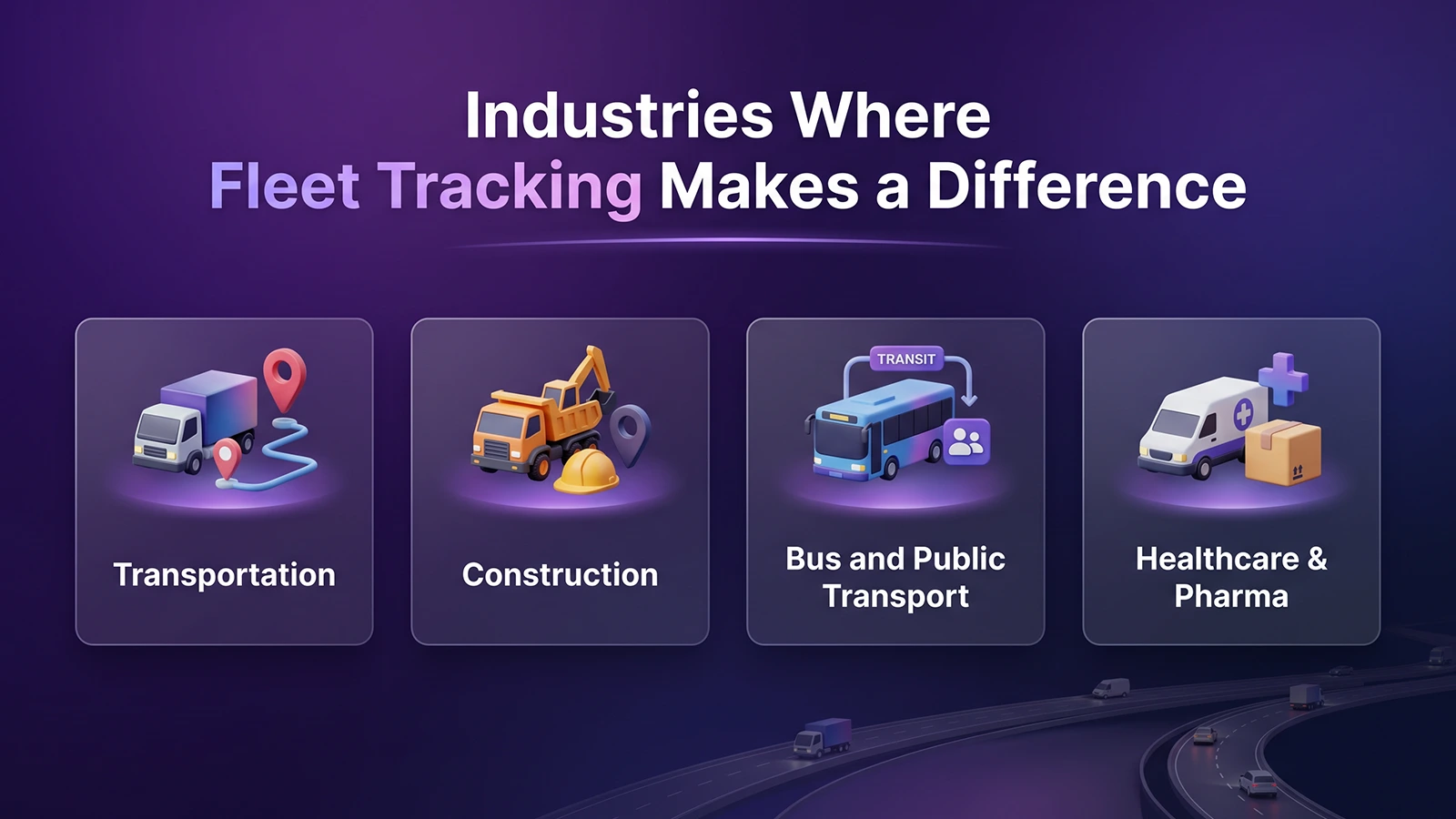
Industries where Fleet Tracking makes a difference
Logistics & transportation, and pharma sectors are actively using vehicle management software to manage their day-to-day operations. Read on to know industries using fleet tracking.
1. Transportation
Logistics managers now use fleet management software to track shipments, plan multi-stop routes and manage delivery timelines across fleets. They can set up routes with defined stops, reduce wait times at loading points and make sure drivers stick to the planned routes.
2. Construction
Construction companies use vehicle tracking software to track vehicle and equipment movement across job sites. With geofencing, managers can ensure that expensive vehicles and machinery are only used within authorized zones.
3. Bus and Public Transport
Bus and public transport operators use real-time tracking to monitor routes, manage traffic-related delays, and provide accurate arrival estimates.
4. Healthcare & Pharma
Healthcare companies are using GPS tracking to manage the delivery of temperature-sensitive and high-risk consignments. It allows them to monitor temperature with alerts and oversee the complete journey of drivers.
How to Choose the Best Fleet Tracking App?
5 things you should consider while choosing a GPS fleet management app includes features, pricing, user reviews, integration capabilities and scalability. Read on to know in detail.
1. Features
Ensure that the software has such features as real-time tracking, route optimization, fuel monitoring, and driver behavior tracking. These have direct effects on efficiency and cost control.
2. Pricing
The software must be an valuable investment for both you and your clients. Pricing should not feel like an added burden on you.
3. User Reviews
Check real user reviews to understand ease of use, customer support, and real-world performance. Ratings often highlight gaps that you can miss in product demos.
4. Integration Capabilities
The system should support integration with different hardware devices like GPS trackers and sensors. This reduces dependency on specific hardware and avoids additional replacement costs.
5. Ease of Use
The software must be easy to use for both managers and drivers. So, you will spend less hours training your team.
Why Fleet Operators Choose TrackoBit for Fleet Tracking?
Fleet operators choose TrackoBit because it goes beyond basic fleet tracking and fits real-world operations. It works with 1500+ GPS trackers, making integration easy. Along with that, it offers precise real-time visibility, HOS compliance, and support for 30+ ADAS and DMS events. So, you can improve driver safety and reduce operational risks.
It also comes with self-hosted video telematics, along with analytics and BRAG reports that help you make sense of your data. It supports BLE sensors, fuel monitoring, alerts, and a mobile app. This offers visibility and faster decision making across your fleets.
Frequently Asked Questions
-
How much does fleet tracking software cost?
The cost of fleet tracking software depends on the features and number of fleets. If we talk about TrackoBit, the prices range from $6 to $24 per vehicle per year, depending on features and customizations. Also, in case you look for advanced capabilities like fuel tracking, and analytics, it will influence the price.
-
What is the difference between fleet tracking and fleet management?
Vehicle tracking focuses on real-time vehicle location, movement, and route monitoring using GPS. Fleet management is broader. It includes tracking but also covers fuel management, maintenance, compliance, and overall operational efficiency. In short, tracking is one part of a complete fleet management system.
-
Does TrackoBit have a mobile fleet tracking app?
Yes, TrackoBit offers a dedicated mobile fleet management app for both managers and drivers. Managers can track their vehicles and assets on live map, add or remove vehicles, set geofencing and a lot more. On the other hand, drivers can mark their attendance and get instant alerts for updates.

Parul is a content writer with 2+ years of experience in B2B and SaaS domains. She creates clear, actionable content for TrackoBit and TrackoMile, focusing on fleet management, last-mile delivery, and... Read More


Related Blog
Fleet Management Requirements: The Complete Guide for 2026
Every wondered what exactly fleet management requirements are? Or, why do they matter? This guide helps you understand in detail.
7 Fleet Management Best Practices Every Fleet Manager Needs
Learn 7 fleet management best practices to improve safety, vehicle utilization, efficiency, and fleet performance in 2026.
What Are the Roles and Responsibilities of a Fleet Owner?
Behind every well-run fleet is a fleet owner juggling tasks like vehicle maintenance and driver management without letting anything fall…
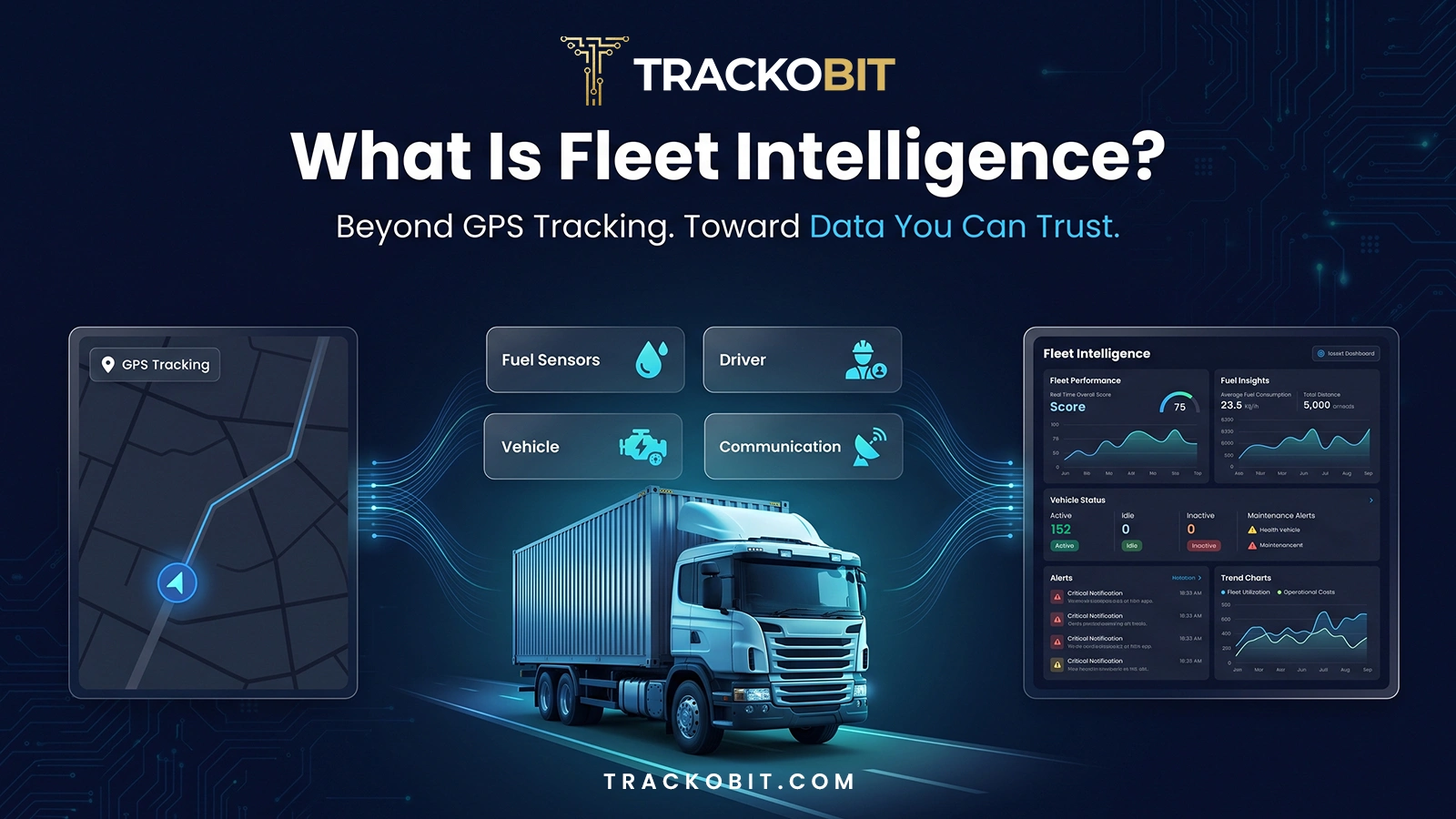
What Is Fleet Intelligence? TrackoBit Goes Beyond GPS Tracking
Fleet intelligence is the layer of trustworthy data, driver-level accountability, and consistent identity that sits above GPS tracking. It turns…


Your inbox awaits a welcome email. Stay tuned for the latest blog updates & expert insights.
"While you're here, dive into some more reads or grab quick bites from our social platforms!"Stay Updated on tech, telematics and mobility. Don't miss out on the latest in the industry.