
Quick Summary

- Last mile delivery automation is crucial for meeting rising customer expectations and managing operational costs in 2026.
- Automation addresses key challenges like route inefficiencies, visibility issues, and failed deliveries, enhancing overall delivery performance.
- Core features of last mile delivery automation include AI-driven route planning, real-time tracking, and automated dispatch, which improve efficiency and customer satisfaction.
- Choosing the right last mile automation software involves assessing operational needs, scalability, and ease of use to ensure sustainable business growth.
Learn why last mile delivery automation is essential in 2026, the challenges it solves, its core features, and how to choose the right platform for your business. The last mile is a complex stage. Here, businesses either protect their margin or lose it. Research shows 91% of customers actively track parcels in real-time. They expect live updates and faster deliveries. However, behind every successful delivery lies route balancing, live tracking, and operations optimisation.
Businesses relying on manual dispatch and route planning are falling behind. It’s 2026, and automation is essential to manage delivery operations. So, businesses across logistics, e-commerce, FMCG and food delivery are heavily investing in last mile delivery automation software. The top companies include Zomato, Amazon, DHL, and UPS.
The best ones are error-free, fast and intelligent. Managers get better operational control, reduce delivery costs, and substantially boost rider productivity. Ultimately, customer satisfaction improves too.
Read on to learn in detail about the advantages of last mile automation and how it can help your business scale operations sustainably.
Why Last Mile Automation Is No Longer Optional in 2026
Last mile delivery automation is essential to cater to increasing customer expectations, high delivery volumes, and territory expansion while optimising operational costs.
Last mile operations have changed rapidly in the last few years. Businesses nowadays aren’t just competing on product quality or pricing. They are also competing on delivery speed and customer experience. Plus, last mile delivery is the most critical and expensive stage of the supply chain. Any mistake or delay in delivery can cost you a customer or affect your market credibility.
To ensure the success of your last mile operations in 2026, you need a last mile delivery automation platform. It helps you eliminate errors, delays and gaps from your last mile operations using features like:
- AI-driven route planning
- Automated dispatching
- Real-time tracking
- Digital proof of delivery,
It makes managers proactive rather than reactive. They no longer wait for problems to happen. They identify and fix bottlenecks in real time.
Key Challenges That Last Mile Automation Solves
Last mile logistics involves several challenges like route inefficiencies, last-moment cancellations, lack of visibility and no performance monitoring. These can be solved with last mile automation tools. It prevents small inefficiencies from becoming large operational problems. Here are all the challenges plaguing last mile deliveries.
1. Growing Delivery Volumes & Rising Customer Expectations
The growth of e-commerce, hyperlocal and quick commerce brands have increased delivery volumes significantly.
Managing thousands of deliveries manually becomes difficult and error-prone. Plus, customers now expect:
- Same-day or next-day delivery
- Accurate delivery windows
- Live order tracking
- Fast issue resolution
Poor delivery experiences can quickly lead to customer loss.
2. Route Inefficiency
Poor route planning increases delivery time and fuel usage. Manual route allocation often ignores:
- Traffic conditions
- Delivery priorities
- Vehicle capacity
Automation systems use AI and GPS data to assign better delivery routes. This improves delivery speed while reducing fuel expenses.
3. Lack of Delivery Visibility
Many businesses still struggle with limited last-mile visibility. Managers often depend on calls and messages to check delivery status. This leads to delayed and inaccurate reporting.
4. Failed Deliveries
Failed delivery attempts increase operational costs significantly. Common reasons include:
- Incorrect addresses
- Customer unavailability
- Poor route planning
- Communication gaps
5. Paperwork & Manual Operations
Paper-based proof of delivery processes slow down operations. Riders often spend extra time handling invoices, signatures, and manual reporting. Managers also compile reports and analyse data manually, leading to slow decisions.
6. Poor Performance Monitoring
You cannot improve what you don’t know. Businesses need accurate performance data to identify gaps and find areas of improvement. Manual reporting systems make it tough for managers to analyse metrics like:
- Delivery success rates
- Rider productivity
- Fuel efficiency
- Delivery turnaround time
- Customer satisfaction
7. Inflation & Fuel costs
Fuel is a commodity that’s always on the rise along with inflation. Geopolitical factors further affect fuel costs and availability. High failure rate and poor route planning also add to fuel costs. Riders using their vehicles for personal use is quite common as well. Good customer experience shouldn’t come at a high delivery cost. Therefore, inflation and market fluctuations remain a major concern in last mile operations.
These challenges, as concerning as they seem, can be easily tackled using a modern last mile delivery automation software like TrackoMile. It helps improve delivery speed, visibility, and operational control while reducing manual work and delivery delays.
6 Outcomes of Last Mile Delivery Automation
Last mile automation has several core features like route optimisation, rider tracking, automated dispatch, ePOD, and customer communication. These are essential to provide the best customer experience and ensure seamless deliveries.
1. Route Optimisation
Route optimisation is one of the most important features in last-mile delivery automation. Without it, deliveries get delayed, operations costs increase and customer experience is affected. A good route optimisation software automatically creates the most efficient delivery routes based on:
- Traffic conditions
- Delivery priority
- Distance
- Vehicle capacity
- Delivery time slots
- Multi stop trips
This reduces travel time, fuel usage, and delivery delays. Riders can complete more deliveries in less time, using less fuel while travelling shorter distances.
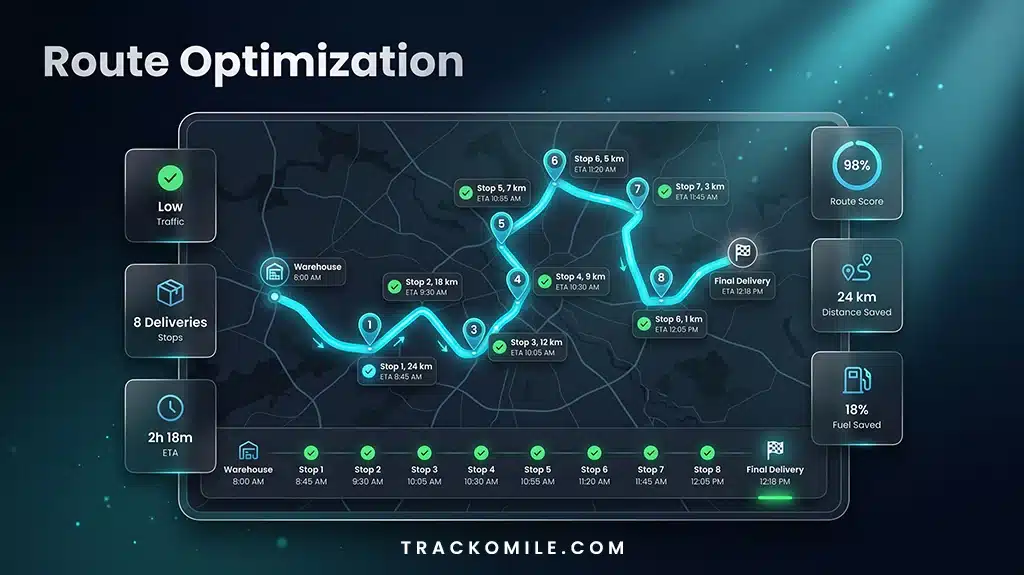
Route Optimisation in Last Mile Delivery Software
2. Automated Dispatch Management
Manually assigning deliveries wastes time and increases errors. Automated dispatch management software allocates orders to riders based on:
- Rider availability
- Location
- Delivery zones
- Workload capacity
This improves operational efficiency and speeds up dispatch processes. Managers can also view delivery status and order assignment on the central dashboard. Last-mile delivery software like TrackoMile shows delivery status as:
- On the way to Pickup
- On the way to Drop Off
- On the way to Service
- Servicing Started
- Picked Up
- Dropped Off
- Serviced
- Failed
- Cancelled
3. Real-Time Rider Tracking
Live GPS tracking helps businesses monitor delivery teams continuously. Managers can track:
- Rider location
- Availability
- Delivery completion
- Delays or stoppages
- Route deviations
4. Electronic Proof of Delivery (ePOD)
Proof of delivery is critical for delivery verification and dispute management. Managers have to know if deliveries were made correctly and on time. Modern last-mile automation systems support ePOD in the form of:
- Digital signatures
- Geo-tagged delivery confirmation
- Photos & Documents
- OTP verification
This removes paperwork and improves record accuracy.
5. Customer Communication
Customer experience plays a major role in delivery success. With automation, customers receive timely information about:
- Order tracking links
- Order details
- Delivery status
- Rider profile
- Estimated arrival time
This reduces customer anxiety and support calls.
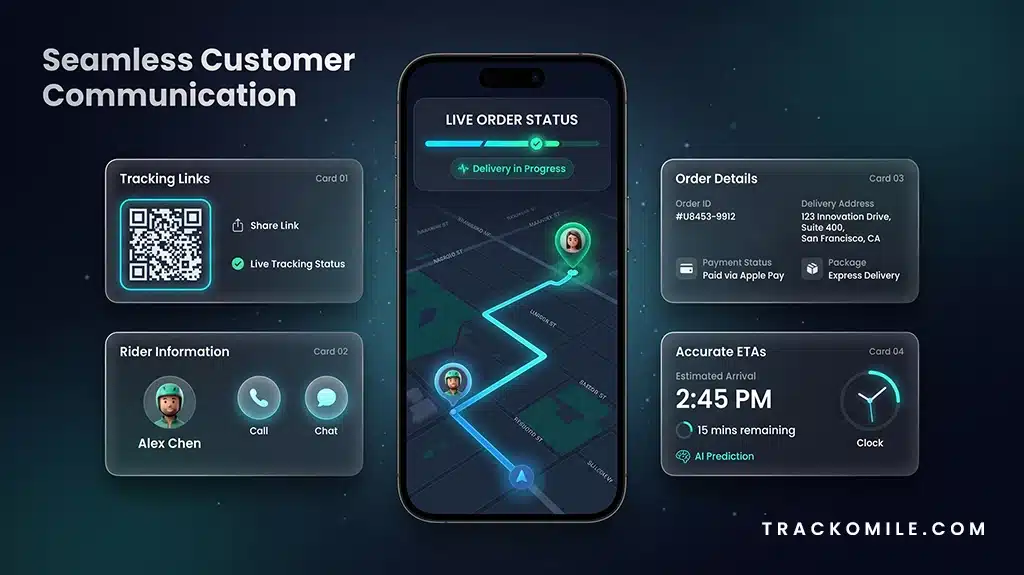
Making Customer Communication Seamless With Automation
6. Analytics and Reporting
Data-driven delivery operations are more efficient and scalable. Managers can download reports to evaluate how their operations are running. It helps identify bottlenecks, improve planning, and optimise resource allocation continuously. Software like TrackoMile help managers check reports for:
- Order fulfilment
- Missed orders
- Unproductive days
- Attendance activity
- Unreachability
- Distance travelled
The platform also tracks expenses incurred during deliveries like food, fuel or lodging along with route deviations.
How to Choose the Right Last Mile Automation Software?
Businesses should choose last-mile automation software based on operational needs, scalability, and ease of use. The platform should be budget friendly. You only need to pay for features that are relevant to your business model. Having all the core last mile features but not using them will prove to be expensive in the long run.
You can also look for third-party integration support. This will help you sync your last mile software with ERP, CRM, and accounting tools.
The next factor to consider while choosing an automated last-mile delivery app for your business is its ease of use for riders. The app should have a short learning curve, shouldn’t be complex, and shouldn’t drain the mobile battery while tracking.
The app should also provide last mile tracking links, rider info, accurate ETAs and real-time alerts to customers. Most importantly, the software should:
- Reduce manual work
- Improve delivery speed
- Support sustainable business growth
- Not increase your budget
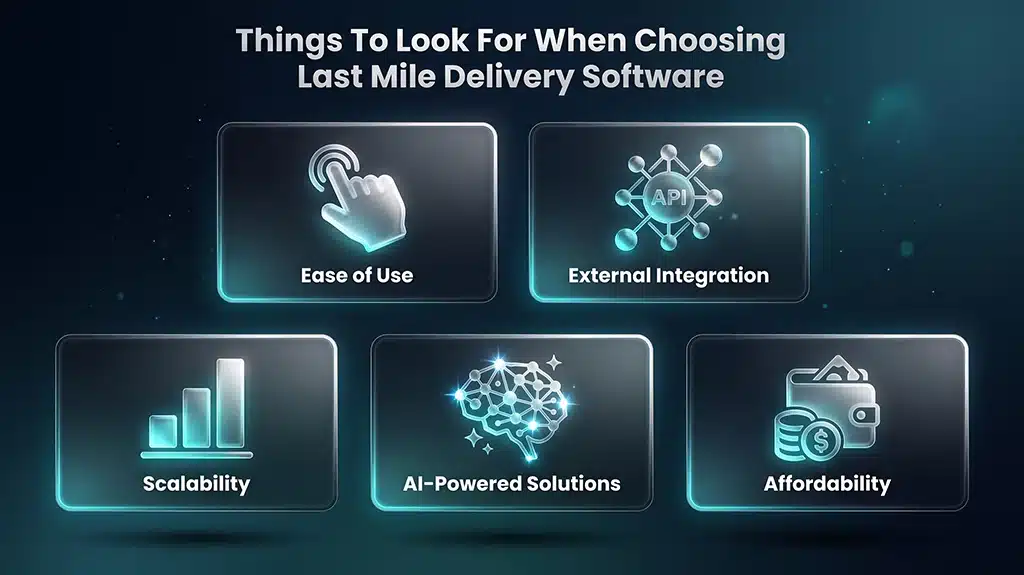
What To Look For When Choosing Last Mile Delivery Software
Conclusion: The Future of Last Mile Delivery
Last mile delivery automation will continue evolving rapidly in the near future. AI, predictive analytics, IoT, and advanced route intelligence will make delivery operations even more efficient.
Businesses will increasingly adopt last mile automation to stay ahead of the competition. Plus, it will become the most effective method to handle rising delivery demands while maintaining profitability.
Some major trends shaping the future include:
- AI-driven dispatch
- Predictive route optimisation
- Hyperlocal delivery expansion
- Last-mile drone delivery
However, the core objective of last mile operations will remain the same: faster deliveries, lower costs, better visibility, and stronger customer experience. So, be sure to consider investing in the right last mile automation platform like TrackoMile to improve delivery efficiency, scale operations smoothly, and build stronger customer trust.

Frequently Asked Questions
-
How does last mile automation cut delivery costs?
Last-mile automation helps companies save fuel and reduce travel time. It uses AI and live GPS data to generate shortest and quickest delivery routes for riders. This cuts delays and failed deliveries. Teams can finish more orders each day. Managers also spend less time on calls, manual updates, and route planning.
-
What is the difference between last mile automation and delivery management software?
Delivery management software mainly helps firms track and manage orders. Last mile automation does much more than simple tracking. It handles route plans, auto dispatch, buyer alerts, and proof of drop. This cuts manual work and helps firms improve speed and daily output.
-
How does route optimisation work in last mile automation?
Route optimisation helps riders travel on the shortest and fastest delivery routes. The system checks traffic, trip length, and drop points using live data. Riders avoid slow roads and wasted travel time. This cuts fuel use, boosts speed, and helps firms finish more deliveries daily.
-
What are the key features of last mile automation software?
The key features of good last mile delivery automation software are GPS tracking, route planning and dynamic dispatch. It also supports digital proof of work, buyer alerts, and live reports. Many tools include rider apps and task tracking. These features help firms run fast and smooth delivery operations.
-
How does last mile automation improve customer experience?
Last mile automation helps buyers get fast and smooth deliveries. Buyers receive live tracking links and exact drop updates. This keeps them aware during the full delivery trip. Fewer delays and better updates also build trust and improve the overall buyer experience.

Mudit is a seasoned content specialist working for TrackoField. He is an expert in crafting technical, high-impact content for Field force manage... Read More


Related Blog
How to Scale Quick Commerce Beyond 10 Minutes with TrackoMile
TrackoMile transforms chaotic last-mile logistics into a predictable, automated, and high-margin retail powerhouse. See how it works in quick commerce.
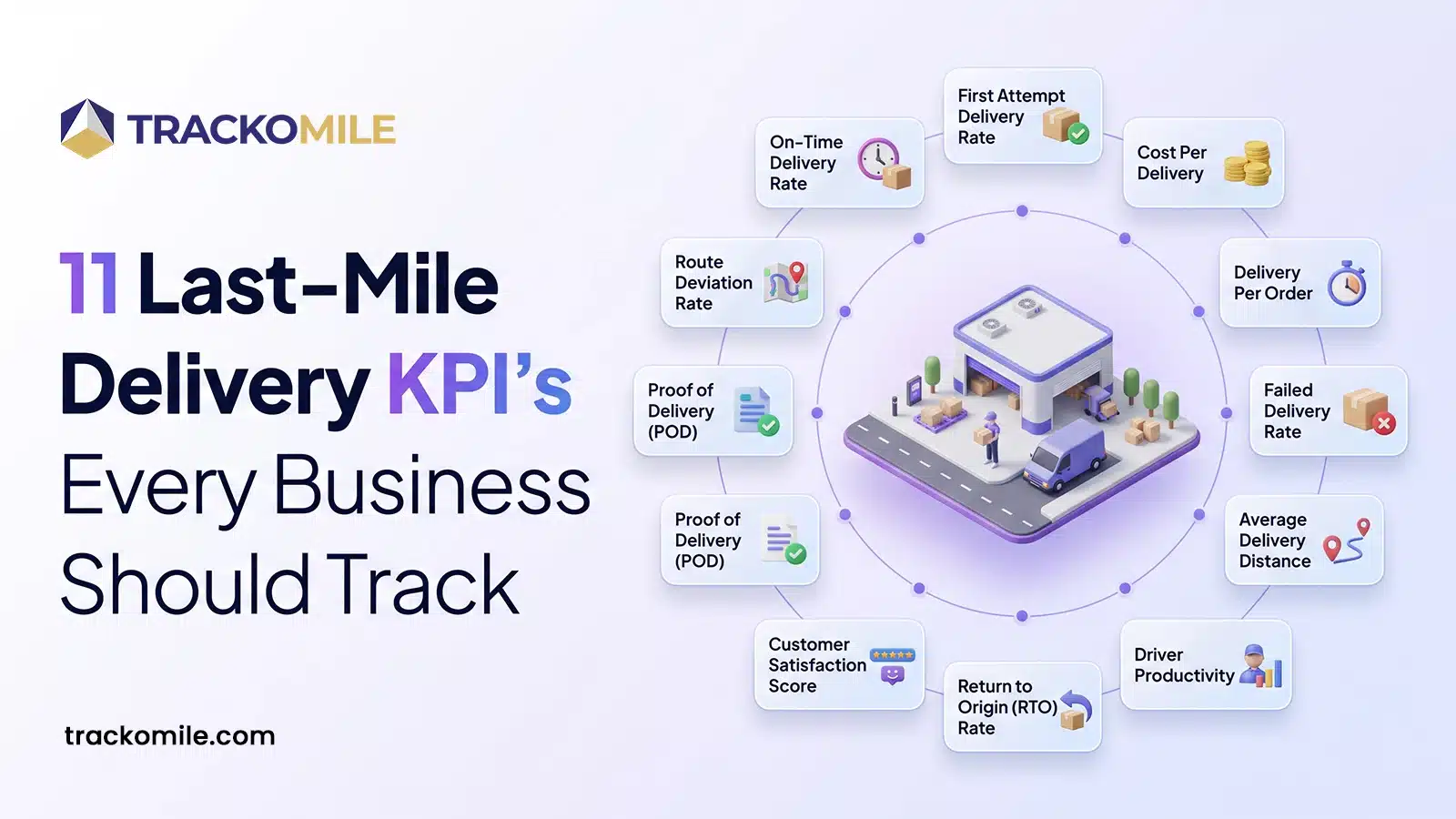
Last Mile Delivery KPIs & Metrics: 11 Essential Metrics to Track
To improve last mile operations, it’s important to track 11 essential last mile delivery KPIs like on-time delivery rate, cost…
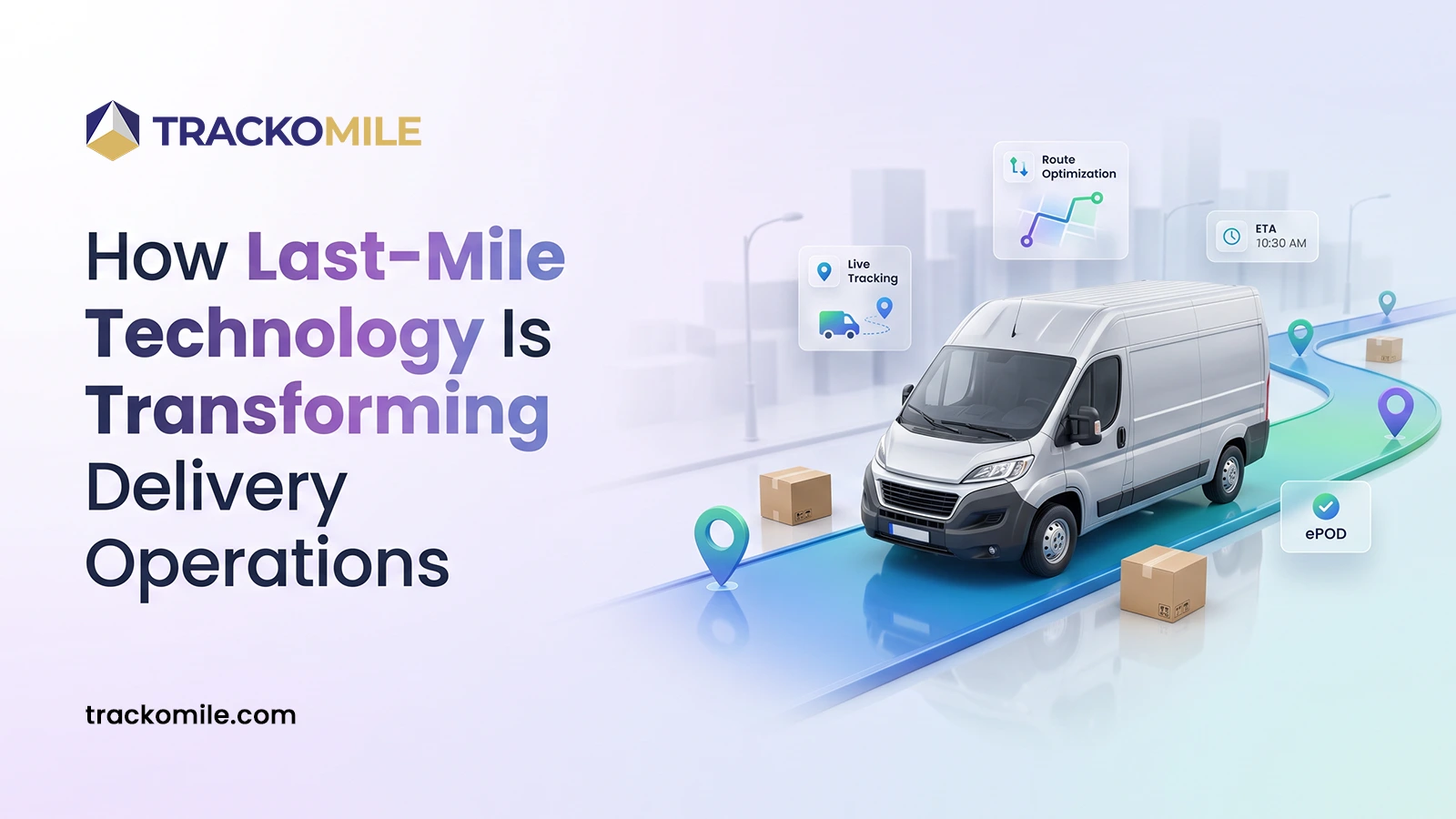
Last-Mile Technology: 6 Technologies Transforming Delivery Operations
Learn how last-mile technology combines routing, dispatch, tracking, ePOD, and analytics. Improve your businesses’ delivery speed, visibility, efficiency, and customer…
What is On-Demand Delivery Management Software: Types, Features, & Benefits
This blog explores on-demand delivery management software, its key benefits, and must-have features. Also, we will explore how to choose…


Your inbox awaits a welcome email. Stay tuned for the latest blog updates & expert insights.
"While you're here, dive into some more reads or grab quick bites from our social platforms!"Stay Updated on tech, telematics and mobility. Don't miss out on the latest in the industry.