
Quick Summary

- Last mile drone delivery enhances logistics by offering faster, cost-effective solutions, avoiding traffic and reducing operational costs.
- Drones can deliver packages directly to customers' doorsteps, significantly cutting delivery times and increasing efficiency for businesses like Walmart.
- The growing drone delivery market, projected to reach $10.47 billion by 2030, highlights its potential in addressing last mile challenges.
- Despite regulatory and technical hurdles, advancements in drone technology and last mile delivery software are paving the way for scalable solutions.
Last mile drone delivery helps businesses reach customers faster, avoid traffic, and reduce costs. Read to know how.
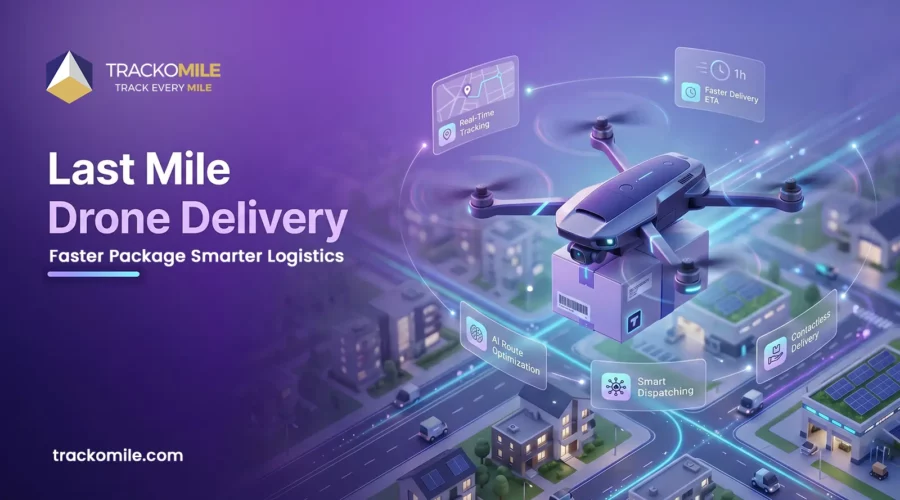
Think of a small drone lifting off from your warehouse and dropping the package at the doorstep. No traffic jams, no missed ETAs, and no wasted fuel. That’s the reality of last mile drone delivery solutions.
Now imagine the impact that last mile drone delivery software is already having on day-to-day deliveries for large companies. Retail giant Walmart has completed more than 150,000 drone deliveries, with many orders landing at customers’ doors in 30 minutes or less.
So, if drones can help Walmart deliver thousands of packages in just 30 minutes, then the question is: how can you leverage them to solve daily last mile delivery challenges? Well, this blog is for you. Continue reading to know in detail.
What is Last Mile Drone Delivery?
A drone is a small, remote-controlled and autonomous vehicle that can carry packages from warehouse or fulfillment center to customer doorstep. In last mile delivery, drones handle the final leg of shipment, often the most expensive part of the supply chain.
Not only retail but other industries such as hospitality, energy, and food delivery are using drones in last mile delivery. This helps businesses deliver goods on time across different locations. Along with that, businesses can reduce operational costs and make deliveries more reliable.
Why Drone Delivery Is the Future of Last-Mile Logistics?
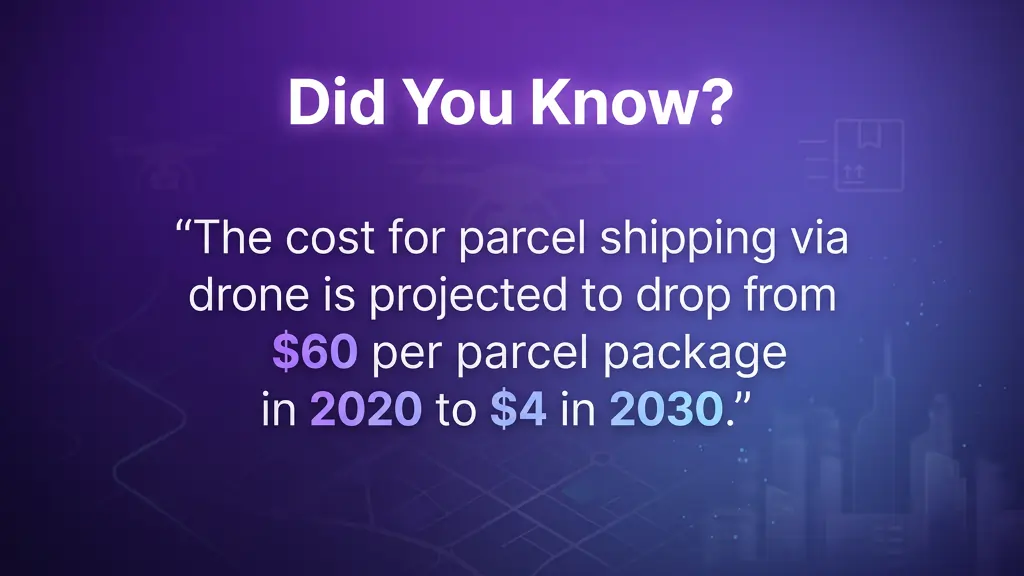
More last mile delivery logistics companies are now exploring drone deliveries as order volumes continue to grow. A Grand View Research report estimates the global delivery drone market could reach about $10.47 billion by 2030. This shows how quickly businesses are investing in aerial delivery solutions.
A lot of this interest comes from the pressure logistics teams face in the last mile. Here, traffic, long routes, and increased fuel costs make deliveries slower. This is where last mile drone delivery software started to make a difference. Instead of relying only on road-based fleets, drones allow businesses to:
- Deliver packages through direct aerial routes instead of long road networks.
- Reduce delivery times by avoiding traffic congestion.
- Reach remote or difficult locations more easily.
- Support faster urgent and on-demand deliveries.
Recent improvements in drone technology are also making this shift possible. Better battery capacity, autonomous navigation systems, and safer flight controls are helping companies run drone deliveries more reliably than before.
Market Stats
What Are the Key Benefits of Drone Delivery in Last Mile?
Drones in last mile delivery benefit businesses by increasing delivery speed and efficiency, reducing operational costs and ensuring ETAs. Here are some of the benefits in detail.
1. Faster Deliveries
One of the greatest benefits of drone delivery is the speed at which the delivery is made. Some pilot programs have shown that drone delivery can save 30% to 50% of the delivery time.
2. Access to Remote Areas
Drones are invaluable delivery options for remote locations where human delivery is not possible or complex. Industry reports from PwC and Mordor Intelligence show they are 50% faster than vans in rural areas by traveling in a direct line.
3. Lower Environmental Impact
Most last mile delivery drones are electric powered, which helps businesses save fuel consumption and emissions. As businesses strive to adopt green last mile logistics, drone delivery is becoming an option for businesses.
4. Reduced Delivery Costs
Last mile deliveries often account for over 50% of total logistics costs. Drone delivery can help reduce fuel usage and vehicle dependency. This allows businesses to save on fuel, rider pay, and extra vehicle costs.
4 Challenges in Adopting Drone Delivery
Adopting drones in last mile delivery on a global scale is not without hurdles. While the technology is ready, here are the 5 major challenges in adopting drone delivery as of 2026:
1. Regulatory and Airspace Complexity
The biggest barrier remains on the “legal flight path.” In 2026, authorities like the FAA (USA) and EASA (Europe) are still finalizing frameworks for BVLOS (Beyond Visual Line of Sight) operations.
India is in the same phase at the moment too. This is because most drone delivery services require approval for BVLOS operation. The DGCA has introduced a license system for pilots operating BVLOS, but drone delivery is still in the pilot project and drone corridors phase in the country.
2. Battery Life and Payload Limits
Another last mile drone delivery comes from battery life and fly limits. Most commercial delivery drones can carry small packages of around 2–3 kg and usually stay in the air for about 15–30 minutes.
Because of this, drone deliveries mostly work for lightweight items like food, medicines, or small electronics.
3. Adverse Weather Conditions
Unlike delivery vans, drones are highly sensitive. High winds, heavy rain, and extreme cold can drain batteries faster or cause “groundings” for safety. According to industry reports, maintaining a reliable 365-day schedule is difficult when minor storms can halt an entire fleet.
4. Public Privacy and Noise Concerns
When drones fly over neighborhoods, some people worry about their privacy. They’re not always comfortable with cameras passing above their homes.
Noise can also be an issue, especially in busy cities. If a lot of drones are flying around the same area, the buzzing sound can start to get annoying for people nearby.
Despite these challenges, ongoing advancements in drone technology are likely to make drone deliveries more scalable in the future.
How Last Mile Delivery Software Accelerates Drone Delivery Integration
Even if the company is using drones, the dispatching of the drones will still have to be managed. Dispatchers must plan routes, assign delivery tasks, and monitor flights while orders are in transit. This is where last mile delivery software becomes important, because it helps manage drone operations in a more organized way.
With the right system in place, logistic managers can:
- Plan drone deliveries routes faster, so automatic dispatchers can assign orders with manual intervention.
- Track drones in real time. This gives managers real-time visibility of active order.
- Manage delivery assignments from one dashboard, instead of handling multiple tools.
- Monitor ETAs and delivery status, so teams know if a delivery is on time or needs attention.
Conclusion
Last mile drone delivery in 2026 is gradually becoming a reliable delivery method for logistics teams. As delivery volumes increase, businesses are exploring faster ways to move small packages across short distances. Drones help avoid road traffic and reach locations that are often difficult for traditional delivery vehicles.
As more businesses start testing drone deliveries, managing them alongside regular delivery fleets will become important. This is where last mile delivery management software like TrackoMile can help teams plan routes, track deliveries in real time, and manage orders from one place.

Frequently Asked Questions
-
Can small businesses use drone delivery?
Yes. Last mile drone delivery app is useful for both small and big firms, especially for lightweight and local deliveries. They make it easier to reach customers quickly without relying only on traditional vehicles.
-
What are the benefits of drone delivery for Ecommerce?
Drones are transforming the e-commerce sector by offering faster delivery services and reducing costs as it saves fuel and rider pay. Plus, it is environmental friendly as drones emit zero emissions.
-
How much does drone delivery cost?
Drone delivery costs are not the same for every business. It usually changes based on how far the package needs to go and how heavy it is. Most companies use drones for small and nearby deliveries where they can save time compared to road transport.

Parul is a content writer with 2+ years of experience in B2B and SaaS domains. She creates clear, actionable content for TrackoBit and TrackoMile, focusing on fleet management, last-mile delivery, and... Read More


Related Blog
Building Resilient Delivery Operations with TrackoMile in 2026 and Beyond
Logistics businesses build resilient delivery networks with TrackoMile. But how exactly? With real-time route optimization, automated scheduling, and end-to-end fleet…
How to Scale Quick Commerce Beyond 10 Minutes with TrackoMile
TrackoMile transforms chaotic last-mile logistics into a predictable, automated, and high-margin retail powerhouse. See how it works in quick commerce.
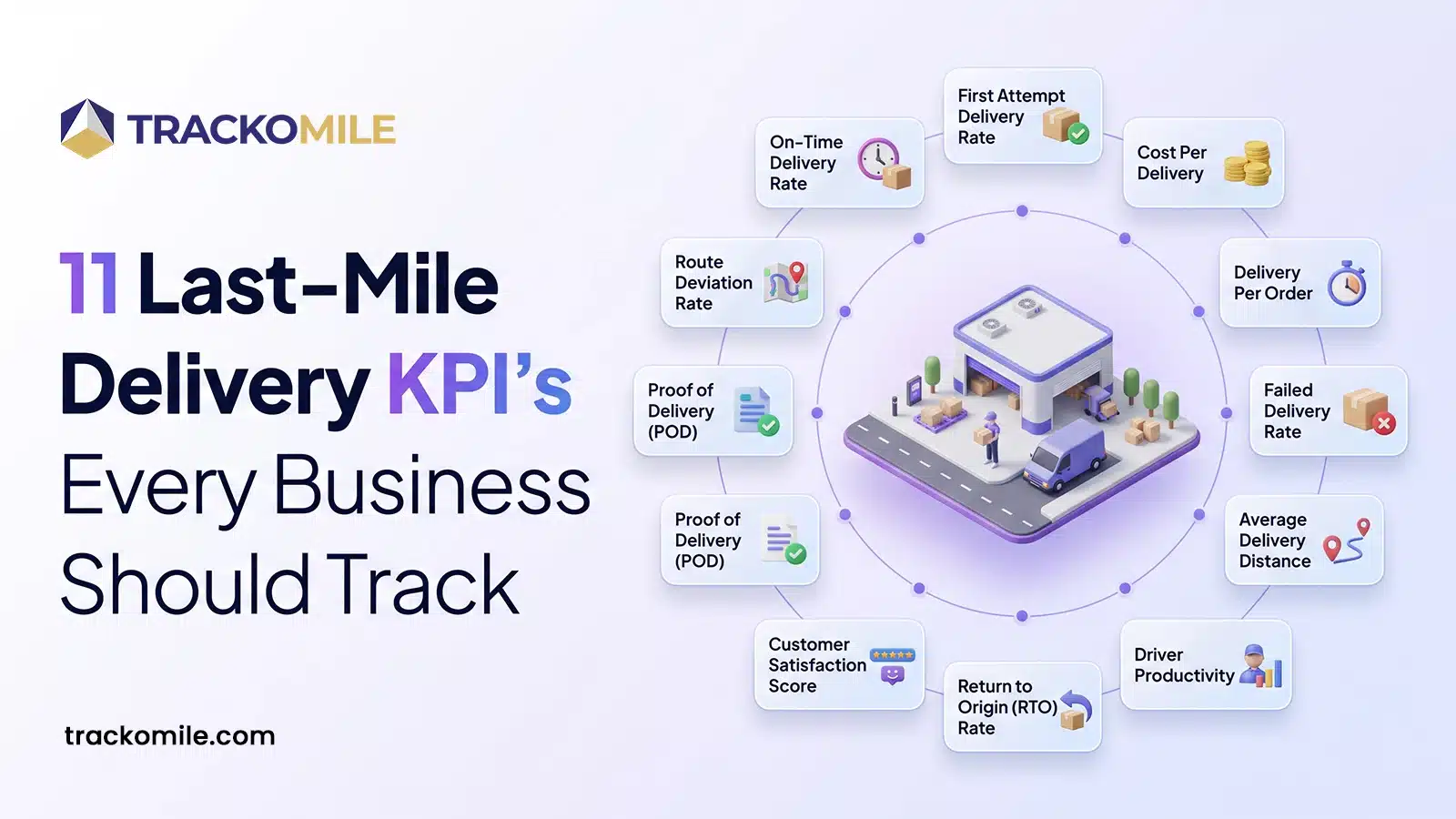
Last Mile Delivery KPIs & Metrics: 11 Essential Metrics to Track
To improve last mile operations, it’s important to track 11 essential last mile delivery KPIs like on-time delivery rate, cost…
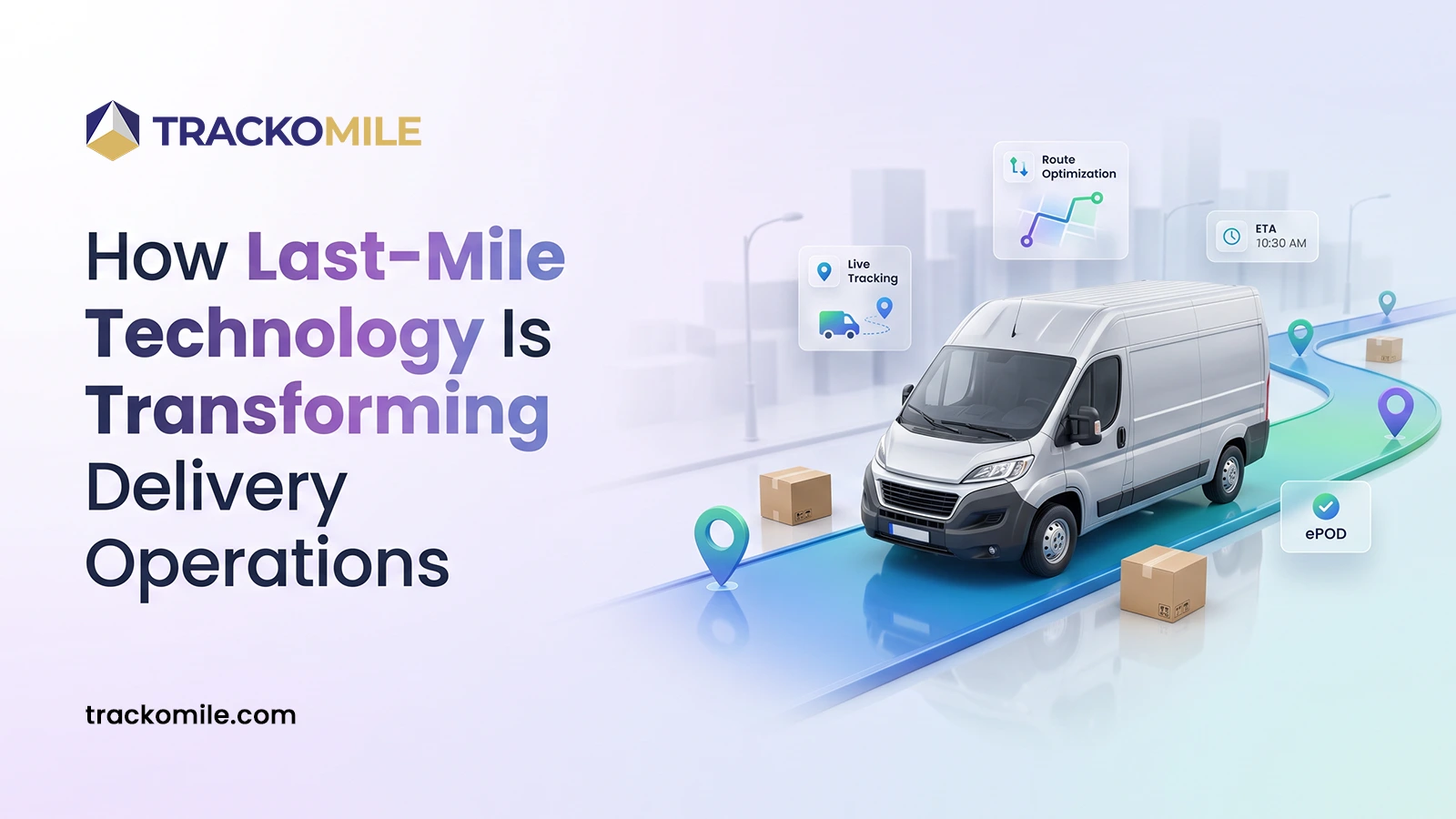
Last-Mile Technology: 6 Technologies Transforming Delivery Operations
Learn how last-mile technology combines routing, dispatch, tracking, ePOD, and analytics. Improve your businesses’ delivery speed, visibility, efficiency, and customer…


Your inbox awaits a welcome email. Stay tuned for the latest blog updates & expert insights.
"While you're here, dive into some more reads or grab quick bites from our social platforms!"Stay Updated on tech, telematics and mobility. Don't miss out on the latest in the industry.