
Quick Summary

- Small last mile delivery trucks are cost-effective and fuel-efficient, making them ideal for urban logistics.
- They navigate congested areas better, allowing for more delivery stops per route compared to larger vehicles.
- These trucks reduce fuel and operating costs, using up to 40% less fuel per mile than standard vans.
- Integration with last mile delivery software enhances route planning and efficiency, improving overall delivery performance.
Small last mile delivery trucks are ideal because they’re cost-effective, fuel-efficient, easy to navigate, perfect for dense city routes, and help manage multi-stop deliveries efficiently.
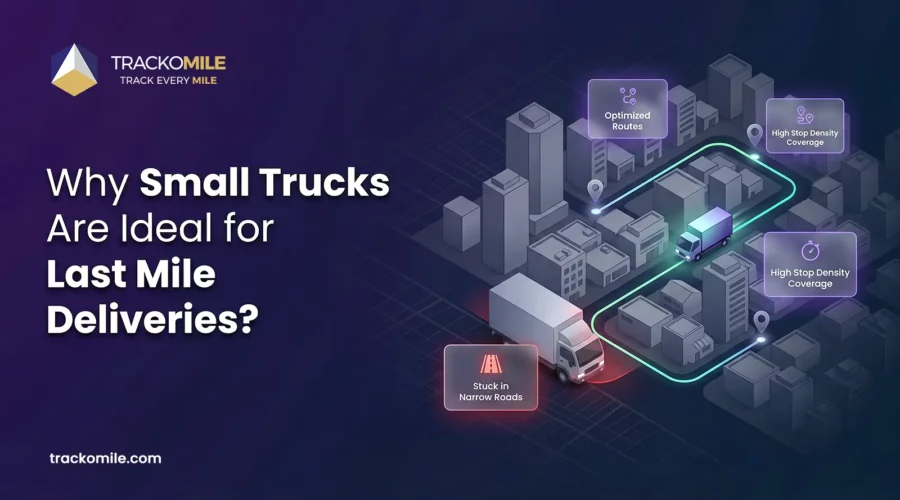
In last-mile operations, vehicle selection is not just a fleet decision, but it directly impacts delivery control, route precision, and overall profitability. In busy city areas, bigger vehicles don’t always work well. They get stuck in narrow streets, take longer on multi-stop routes, and end up increasing fuel costs.
Last-mile delivery trucks are solving these challenges. They can move through narrow streets and handle multi-stop deliveries. But the real impact shows when small trucks are used with last mile delivery software. This combination gives teams better control over routes, improves planning accuracy, and reduces unnecessary costs.
In India, companies like Delhivery and Shadowfax are already using smaller trucks in dense areas. These nimble vehicles are reshaping delivery operations by reducing delivery times and boosting first-attempt success rates.
In this guide, we will discuss 5 reasons why small last mile delivery trucks are particularly effective for busy cities.
The Rise of Small Commercial Vehicles in India
Small trucks are becoming central to last-mile logistics in India. Today, Tata Ace, Mahindra Jeeto, and Ashok Leyland Dost are some of the most used small commercial vehicles in India. These are affordable, easy to finance, fuel-efficient, and built for dense delivery routes where larger vehicles can cost high.
The numbers reflect this shift toward the rise of last mile delivery small trucks:
- In early FY26, around 369,793 SCVs were sold, a 7% increase compared to last year.
- Tata Motors leads mini trucks category with around 52% share, while Mahindra dominates pick-ups at 60%.
Now that small trucks are becoming more common, the next question is why they are so effective in last mile delivery logistics. Here are the key reasons.
5 Reasons Small Trucks Improve Logistics Efficiency
Easy navigation, faster delivery times, and low operational costs are some of the key reasons why small trucks are becoming the preferred choice for last-mile deliveries.
But what really makes them so useful in day-to-day delivery operations? Let’s explore in detail.
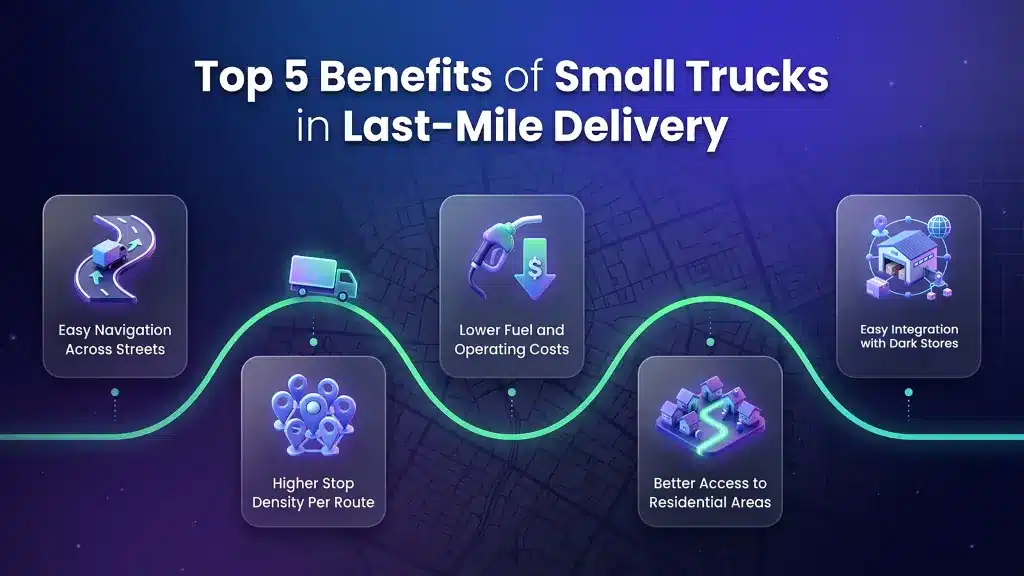
1. Easier Navigation in Congested Urban Areas
In urban environments, drivers have to deliver in narrow streets, heavy traffic, and limited parking. This creates operational challenges. Small trucks solve this problem because they are built for maneuverability.
- Turning radius of 14–16 ft vs 19–22 ft for standard vans.
- Can access narrow residential lanes.
- Require less parking space.
For logistics teams, this means fewer delays, faster stops, and smoother delivery routes.
2. Higher Stop Density per Route
Last-mile delivery is not about distance. It is about how many stops a vehicle can complete in one route. Studies show that small trucks can complete up to 22% more delivery stops per route as compared to larger vehicles. ogistics managers now use modern route optimization software.
- Driver shifts
- Delivery windows
- Load capacity
So, managers can plan routes to handle multi-stop routes without overloading the driver.
Benefits of Last Mile Delivery Trucks
3. Reduce Fuel and Operating Costs
A small change in distance or idle time quickly adds up across the overall vehicle operating costs. This includes fuel, one of the top expense drivers. Small trucks help managers to control these costs. These trucks use smaller engines and consume less fuel on the same route.
For example:
| Vehicle Type | Average MPG |
| Mini Truck | 25–35 MPG |
| Cargo Van | 15–18 MPG |
This means mini trucks can use up to 40% less fuel per mile compared to larger vans.
4. Better Access to Residential Delivery Zones
In last mile, the final drop usually happens inside residential areas. This is where bigger vehicles start facing issues. They struggle to enter:
- Residential neighborhoods
- Apartment complexes
- Pedestrian streets
- Low-emission zones
Small last mile delivery trucks handle this better. They can get into narrow streets where larger vehicles can’t easily go. In some urban delivery trials, compact trucks were able to access around 90%+ of restricted zones.
5. Better Integration with Urban Micro-Fulfillment Centers
In cities, deliveries are now being managed through smaller hubs like micro-fulfillment centers and dark stores. This changes how vehicles operate on ground. Small trucks are ideal for these hubs because they can:
- Make frequent short-distance runs.
- Operate in tight warehouse spaces.
- Quickly replenish inventory.
By using last mile delivery small trucks, businesses can reduce per-stop delivery costs by around 20% in dense clusters. And here the best part is this shift towards smaller hubs is already part of the future of last mile delivery. Faster turnaround and closer inventory placement are becoming standard.
How Different Businesses Use Small Trucks in Last Mile?
Not every delivery setup is the same. Where and how small last mile delivery trucks are used depends on the type of operations.
1. E-Commerce Deliveries
In e-commerce, the challenge is not distance. It’s the number of stops in one route. Drivers often cover the same area with 20–30 deliveries, mostly in narrow residential lanes.
Here, logistics managers prefer to use small trucks to move between nearby delivery points and handle multiple drop-offs within the same area in one run.
2. Pharma and Medical Deliveries
In pharma, deliveries are time-bound. Orders need to be reached within a fixed window.
Small trucks are used for faster movement in city areas, especially for urgent or same-day medical deliveries. So, managers can handle urgent deliveries without missing time windows.
3. Grocery and Quick Commerce
In quick commerce, vehicles are used for constant movement, not long routes, but repeated short trips.
Here, small trucks are used to move inventory between dark stores and nearby zones throughout the day.
4. FMCG Distribution in Urban Areas
In FMCG, the same routes are followed daily with multiple retail drop-offs.
Managers prefer to use last-mile delivery small trucks to handle these repeat routes and carry stock across multiple small stores in one run. So routes stay consistent, and extra trips don’t add to fuel costs.
Conclusion
Small last mile delivery trucks are becoming a reliable choice for last-mile delivery in dense urban areas. But the real advantage is not just the vehicle. It’s how well those vehicles are managed on the ground. Last-mile delivery management software plays a key role here. It gives managers control over routes and real-time visibility into deliveries. When small trucks are backed by the right system, deliveries become more predictable, and managers can handle high volume orders.
This is where solutions like TrackoMile make a clear difference. It helps logistics teams plan smarter routes, track deliveries in real time, and manage riders and vehicles from a single platform.
If you are already using small trucks or planning to, the goal is not to add more vehicles. It’s to build a system that helps you use every vehicle more efficiently.
Frequently Asked Questions
-
What is a last mile delivery truck?
A last mile delivery truck is a small vehicle specifically used to transport goods from a local hub or warehouse to the end customers. These trucks are especially designed for urban route to handle multi-stop delivery, navigates narrow streets, and supports timely deliveries in dense delivery networks.
-
What are the benefits of last Mile delivery for truck?
Last mile delivery trucks make city deliveries faster and more reliable. They help logistics managers to handle multiple stops, access tight streets, and complete more deliveries per route. When paired with last-mile delivery software, managers get better visibility, can track ETAs, and reduce fuel and operational costs.
-
How much does a last mile delivery truck cost in India?
The cost of running last mile delivery trucks isn’t just about the truck itself. Fuel, maintenance, and how efficiently it’s used make a big difference. Businesses are now using advanced last mile delivery software to track fuel consumption and keep costs under control.
-
How much do last mile delivery trucks affect fuel costs?
Fuel cost isn’t just about distance, but it adds up across multiple stops. Small trucks use lighter engines and smaller frames, which can reduce fuel usage on urban routes. Managers can see the savings clearly when they track fuel consumption.

Parul is a content writer with 2+ years of experience in B2B and SaaS domains. She creates clear, actionable content for TrackoBit and TrackoMile, focusing on fleet management, last-mile delivery, and... Read More


Related Blog
How to Scale Quick Commerce Beyond 10 Minutes with TrackoMile
TrackoMile transforms chaotic last-mile logistics into a predictable, automated, and high-margin retail powerhouse. See how it works in quick commerce.
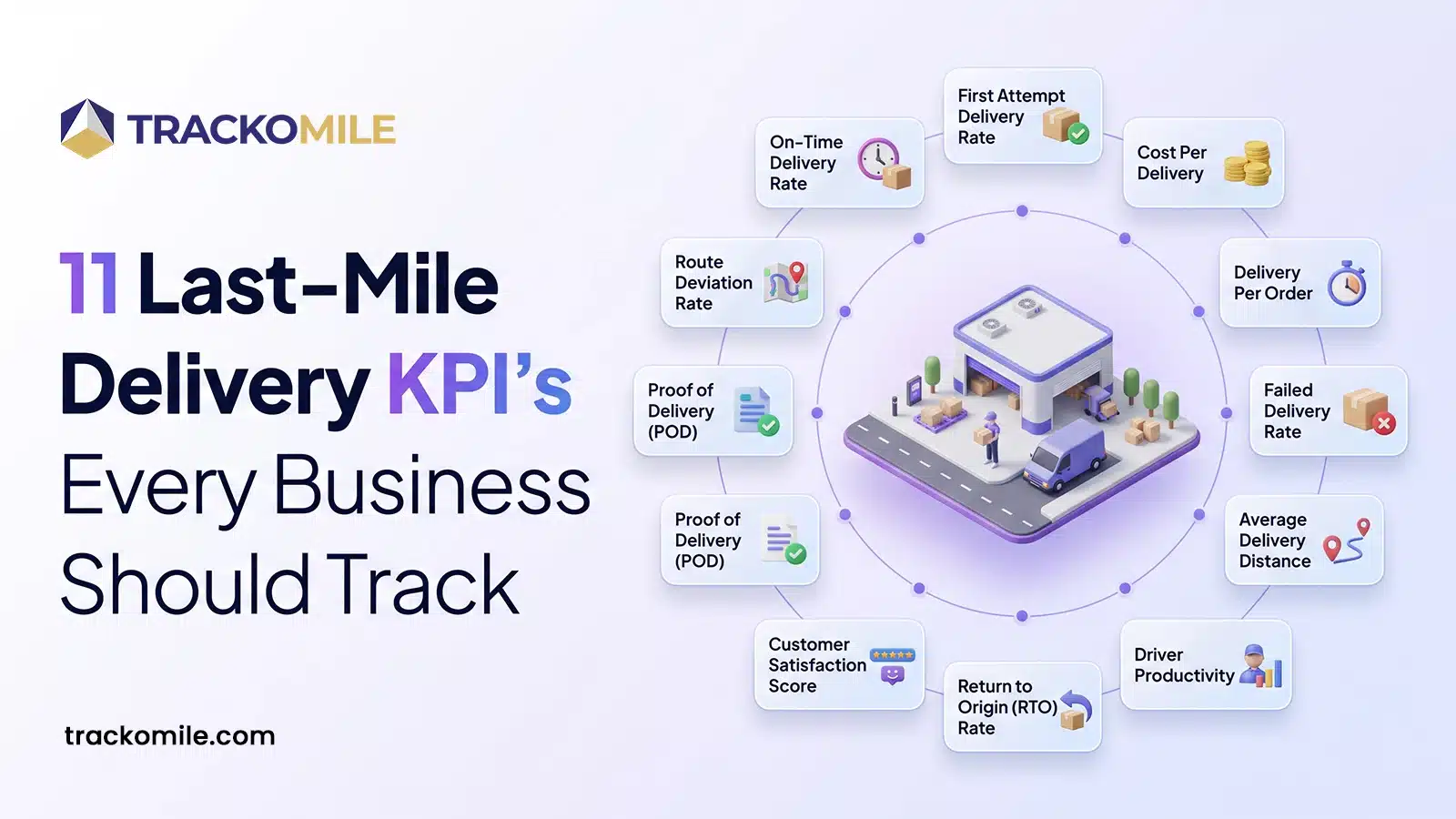
Last Mile Delivery KPIs & Metrics: 11 Essential Metrics to Track
To improve last mile operations, it’s important to track 11 essential last mile delivery KPIs like on-time delivery rate, cost…
Last-Mile Technology: 6 Technologies Transforming Delivery Operations
Learn how last-mile technology combines routing, dispatch, tracking, ePOD, and analytics. Improve your businesses’ delivery speed, visibility, efficiency, and customer…
What is On-Demand Delivery Management Software: Types, Features, & Benefits
This blog explores on-demand delivery management software, its key benefits, and must-have features. Also, we will explore how to choose…


Your inbox awaits a welcome email. Stay tuned for the latest blog updates & expert insights.
"While you're here, dive into some more reads or grab quick bites from our social platforms!"Stay Updated on tech, telematics and mobility. Don't miss out on the latest in the industry.