
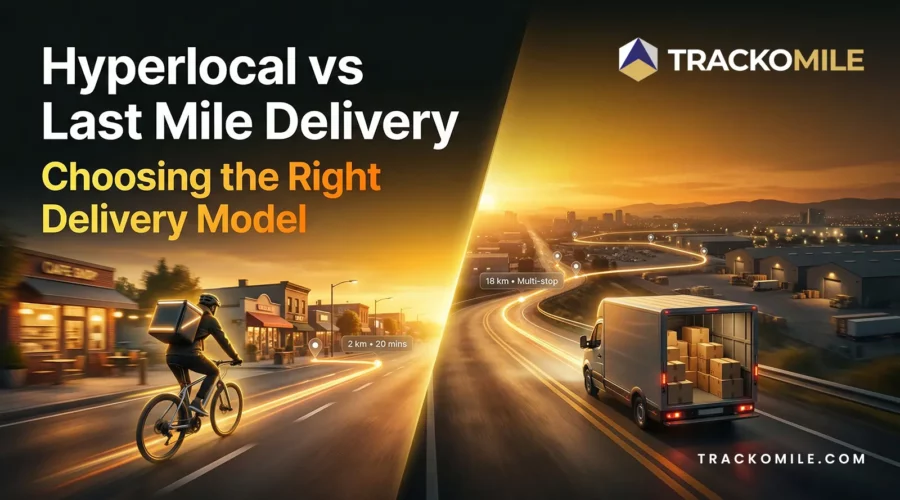
Quick Summary

- Hyperlocal delivery focuses on short distances (1-5 km) and fast fulfillment (30 minutes to a few hours), while last mile delivery covers larger areas (5-50 km) with longer timelines (12-16 hours).
- Hyperlocal delivery typically uses local stores for order fulfillment, whereas last mile delivery relies on warehouses and distribution centers.
- Understanding the differences between hyperlocal delivery and last mile delivery is crucial for effective operational planning and resource allocation.
- Both delivery models are essential for e-commerce, impacting cost efficiency, speed, and customer satisfaction in today's competitive market.
This guide compares hyperlocal vs last-mile delivery, explaining differences in delivery area, timelines, order types, and operational needs.
If you are running ecommerce deliveries, you have probably heard the terms hyperlocal delivery and last mile delivery more times than you count. Chances are, you might even be using one or both, thinking these two are the same.Better Fleet Use:
And that’s understandable.
On ground, both involve getting orders to the customers. Riders, routes, timelines, delivery promises; it all feels similar. So, businesses often use these terms interchangeably.
But they’re not the same.
Last-mile delivery vs hyperlocal delivery, both are designed for different operational needs. Treating them one can lead to planning gaps, high cost, and poor resource allocation. This guide will break down the difference between hyperlocal vs last mile delivery. So, managers can choose the right delivery model for their operations.
What Are Last-Mile Delivery and Hyperlocal Delivery?
Both last-mile and hyperlocal delivery focus on the final step of order fulfilment. But the way these operate, handle orders, and delivery window is very different. So, let’s break them down one by one.
What is Last Mile Delivery?
Last mile delivery is the final step of the supply chain, where an order moves from a warehouse or distribution center to the doorstep of customer.
It typically covers larger geographic areas, often spanning an entire city or multiple zones within a city. Delivery distances can range anywhere from 5–50 km. In this model, orders are usually planned in advance rather than instant delivery.
To manage this at scale, managers use last-mile delivery software to plan routes, assign deliveries, and meet same-day or next-day timelines, rather than handling instant, on-demand fulfillment. Orders are assigned to vehicles or riders and grouped into optimized routes that consider:
- Delivery timelines and committed time slots
- Fuel usage and overall delivery cost
- Vehicle or rider capacity
- Live traffic conditions and road restrictions
- Delivery windows at customer locations
- Rider availability and shift constraints
This approach helps teams maintain control over delivery speed, costs, capacity, and customer experience as volumes scale.
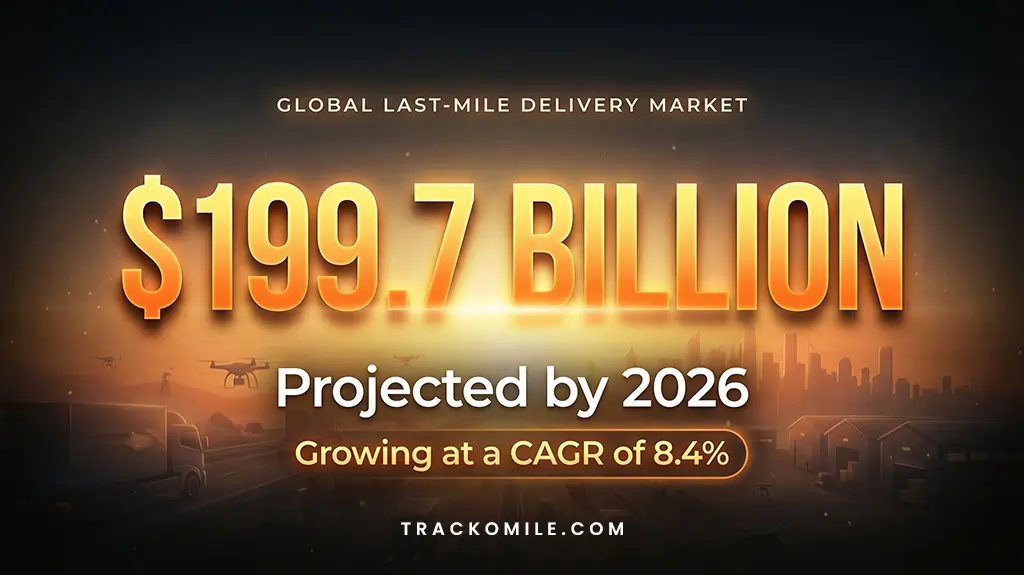
Last Mile Delivery Market Stats
What is Hyperlocal Delivery?
Hyperlocal delivery model is focused on fulfilling orders within a very limited geographic area. In this model, orders are delivered from nearby stores, dark stores, or local hubs, not from warehouses. Delivery distances are typically 1–5 km, and orders are delivered often within 30 minutes to a few hours.
Unlike last mile delivery, hyperlocal works on on-demand delivery. Orders are not planned far in advance; they are dispatched as they come in.
Hyperlocal delivery is commonly used in grocery, food, pharmacy, and other on-demand categories. Here customers value speed more than scheduled delivery slots.
Quick Comparison Table: Last-Mile Delivery vs Hyperlocal Delivery
| Comparison Point | Last-Mile Delivery | Hyperlocal Delivery |
| Delivery Area |
|
|
| Typical Distance |
|
|
| Delivery Timelines |
|
|
| Fulfillment Source |
|
|
| Order Planning |
|
|
| Common Use Cases |
|
|
Head-to-Head Comparison: Hyperlocal Delivery vs Last-Mile Delivery
The main difference between hyperlocal and last-mile delivery is the type of product, delivery window, and area of delivery. Continue reading to know in detail.
Time Taken for Delivery
In hyperlocal delivery, orders are delivered fast because the delivery area is limited. Usually, a courier or delivery agent delivers orders within 2–3 hours. In some cases, delivery can take up to 6–8 hours.
In the last mile, delivery timelines are longer. Most last-mile deliveries take about 12–16 hours. In big cities or when the delivery areas are spread out, some packages might take a bit longer, sometimes pushed the next day.
The Delivery Area
In hyperlocal delivery, the delivery area is short. Orders are fulfilled within a small radius, usually 1–5 km, from a nearby store, dark store, or local hub.
However, in the last mile, the delivery area is much wider. Orders are delivered across an entire city or multiple city zones, often covering 10–50 km. A single rider or vehicle may handle deliveries across different localities within a route.
Products Delivered
Last mile delivery orders may include electronics, home essentials, documents, or even bulky and high-value items. Businesses use last mile delivery software like TrackoMile to assign orders based on vehicle capacity.
Whereas, hyperlocal deliveries usually handle daily-need and urgent items. This includes groceries, food orders, medicines, flowers, and small household items.
Volume and Weight Restrictions
For last mile delivery, there are no such package restrictions. Deliveries are assigned to bikes, vans, or trucks based on load capacity. This allows businesses to move multiple orders on a single route, including bulk, large, or heavier items.
Hyperlocal deliveries are designed for low volume and lightweight orders. There is usually a cap of 10-12 kg when delivering products. Since riders use bikes or three-wheelers, they have to be cautious about their weight.
The Relevance of Last-Mile & Hyperlocal in Today’s Times
Last mile and hyperlocal deliveries are relevant due to rising orders volumes, cost pressures and the need for speed. For managers, these models directly affects margins, fleet efficiency, and delivery reliability.
According to recent logistics research, the fastest-growing segment of e-commerce delivery involves last-mile and hyperlocal fulfillment.
Here’s why Last-Mile & Hyperlocal Deliveries Matter Today:
- Cost Efficiency: Saves fuel and rider hours, helping managers keep operating costs under control.
- Speed: Helps managers meet ETAs and tight delivery windows.
- Better Fleet Use: Vehicles and riders handle multiple orders on the same route with route optimization software. This cut fuel costs, boosts productivity and profit margins.
- Real-time Visibility: Managers know exactly where orders are, spot delays instantly, and provide instant updates to customers.
- Scalable Operations: Handle more orders without constantly adding staff or extra vehicles.
Conclusion
Both last-mile and hyperlocal delivery help you reach your customers the way they expect today. Now that you know the difference between the two, you can pick the right model for your business operations.
For last-mile deliveries, managers can use tools like TrackoMile for route planning, assigning orders, and monitoring progress in real time. This ensures deliveries stay on time while keeping costs and fleet use under control.
The takeaway: mastering last-mile delivery vs hyperlocal delivery lets your business balance speed, coverage, and efficiency.

Frequently Asked Questions
-
Is hyperlocal delivery part of last mile delivery?
No. Hyperlocal delivery is all about quick, short-distance orders from nearby stores or local hubs. Last-mile delivery, on the other hand, handles larger areas with planned routes, optimized loads, and scheduled deliveries.
-
How does delivery software improve hyperlocal operations?
Delivery software can help track riders, manage short routes, and monitor order status. This gives managers visibility and control even in fast, small-zone deliveries. Plus, managers can generate reports to optimize operations and reduce costs over time.
-
Which delivery model is better for e-commerce?
E-commerce businesses benefit from both models. Last-mile delivery software like TrackoMile works best for wider coverage and larger orders. While hyperlocal delivery ensures fast, short-distance fulfillment.
-
Which delivery model is better for small businesses?
Small businesses benefit from both hyperlocal and last mile delivery model. Hyperlocal gets local orders out fast, while last-mile, with tools like TrackoMile, helps plan routes, manage deliveries, and keep costs under control across wider areas.
-
Can one software manage both hyperlocal and last mile delivery?
Yes. Some advanced delivery platforms can manage both. However, before making any decision, businesses should ask the software provider if their platform support both. Or if they can customize it as per your operations.

Parul is a content writer with 2+ years of experience in B2B and SaaS domains. She creates clear, actionable content for TrackoBit and TrackoMile, focusing on fleet management, last-mile delivery, and... Read More


Related Blog
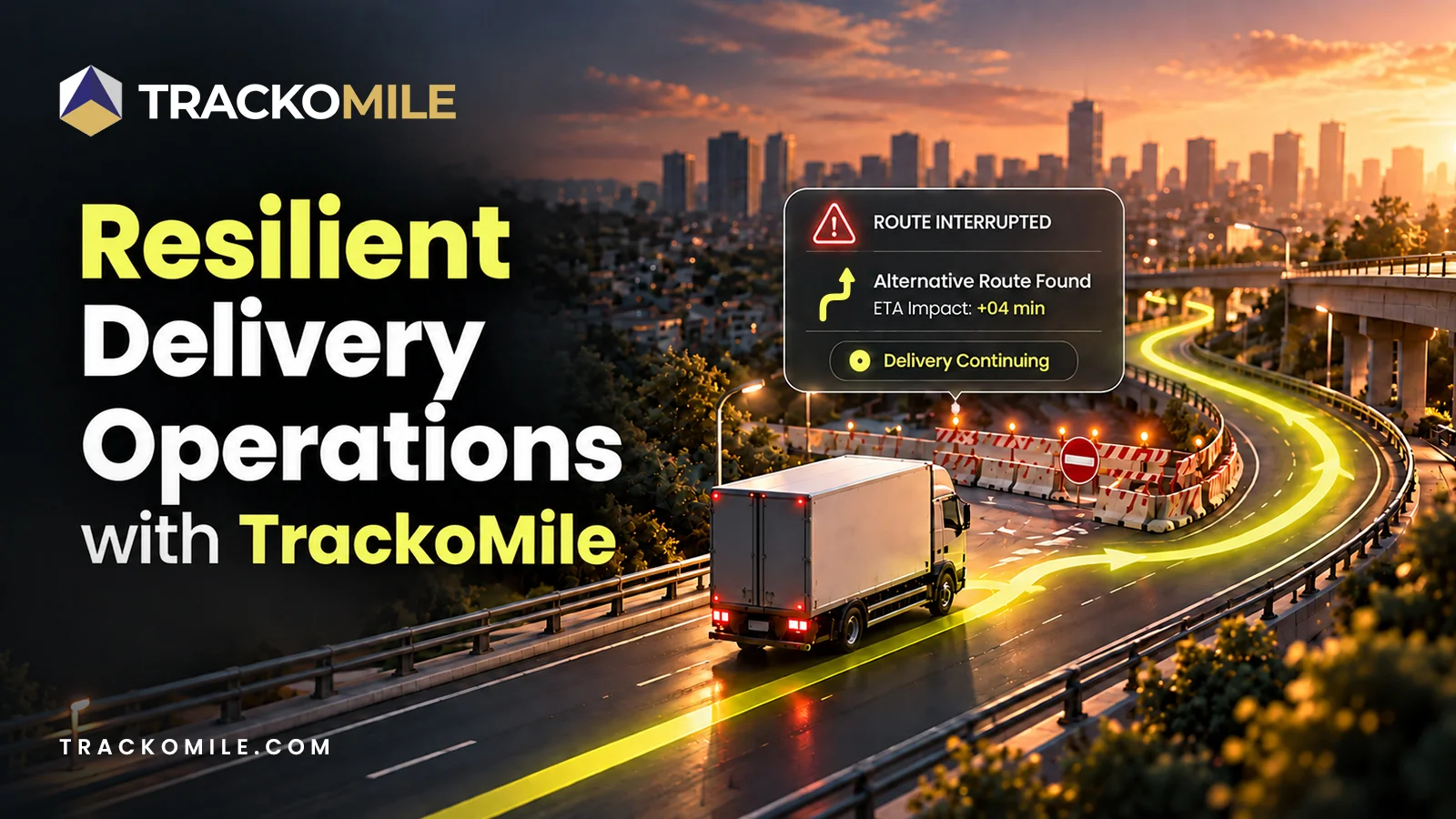
Building Resilient Delivery Operations with TrackoMile in 2026 and Beyond
Logistics businesses build resilient delivery networks with TrackoMile. But how exactly? With real-time route optimization, automated scheduling, and end-to-end fleet…
How to Scale Quick Commerce Beyond 10 Minutes with TrackoMile
TrackoMile transforms chaotic last-mile logistics into a predictable, automated, and high-margin retail powerhouse. See how it works in quick commerce.
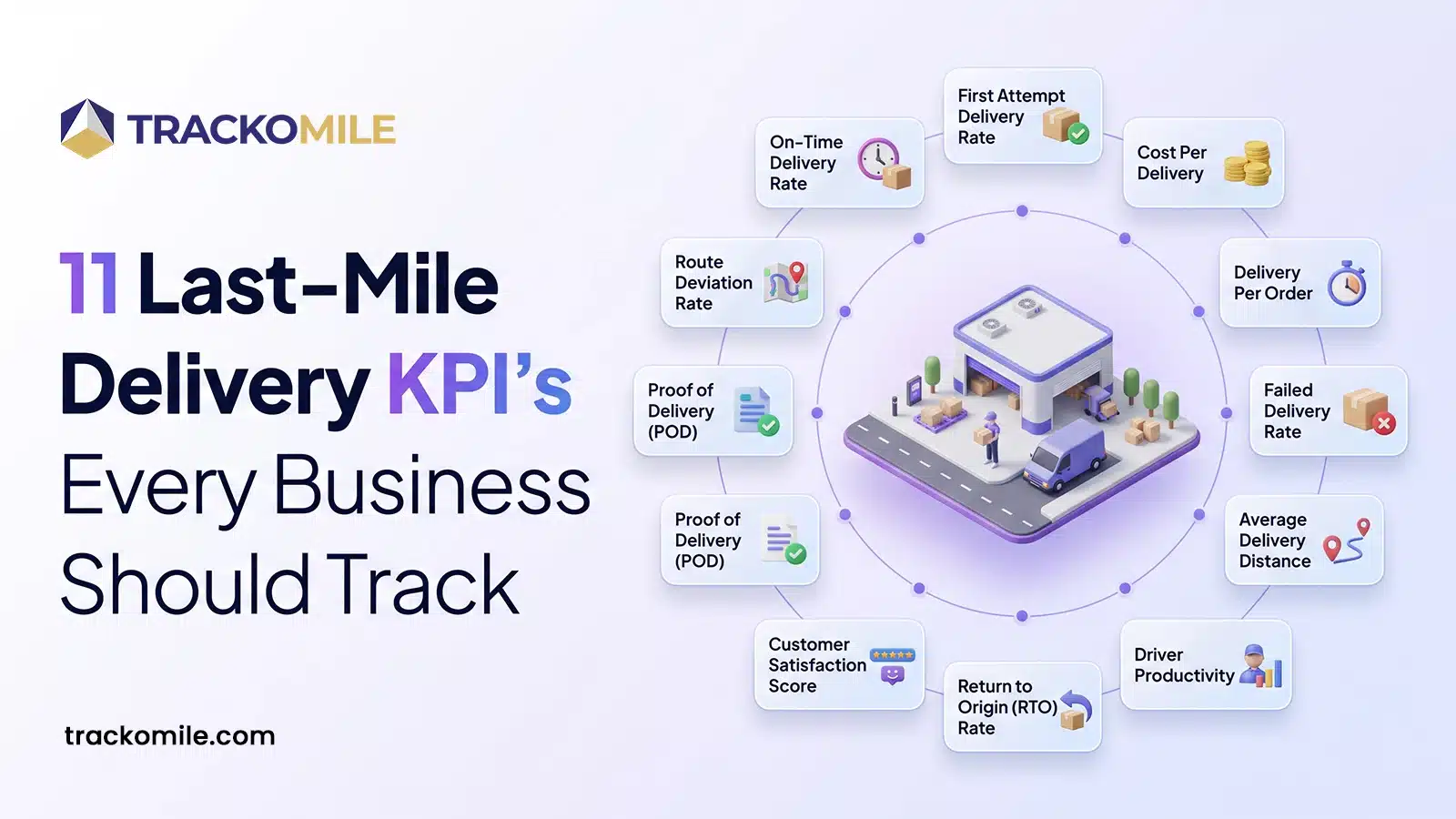
Last Mile Delivery KPIs & Metrics: 11 Essential Metrics to Track
To improve last mile operations, it’s important to track 11 essential last mile delivery KPIs like on-time delivery rate, cost…
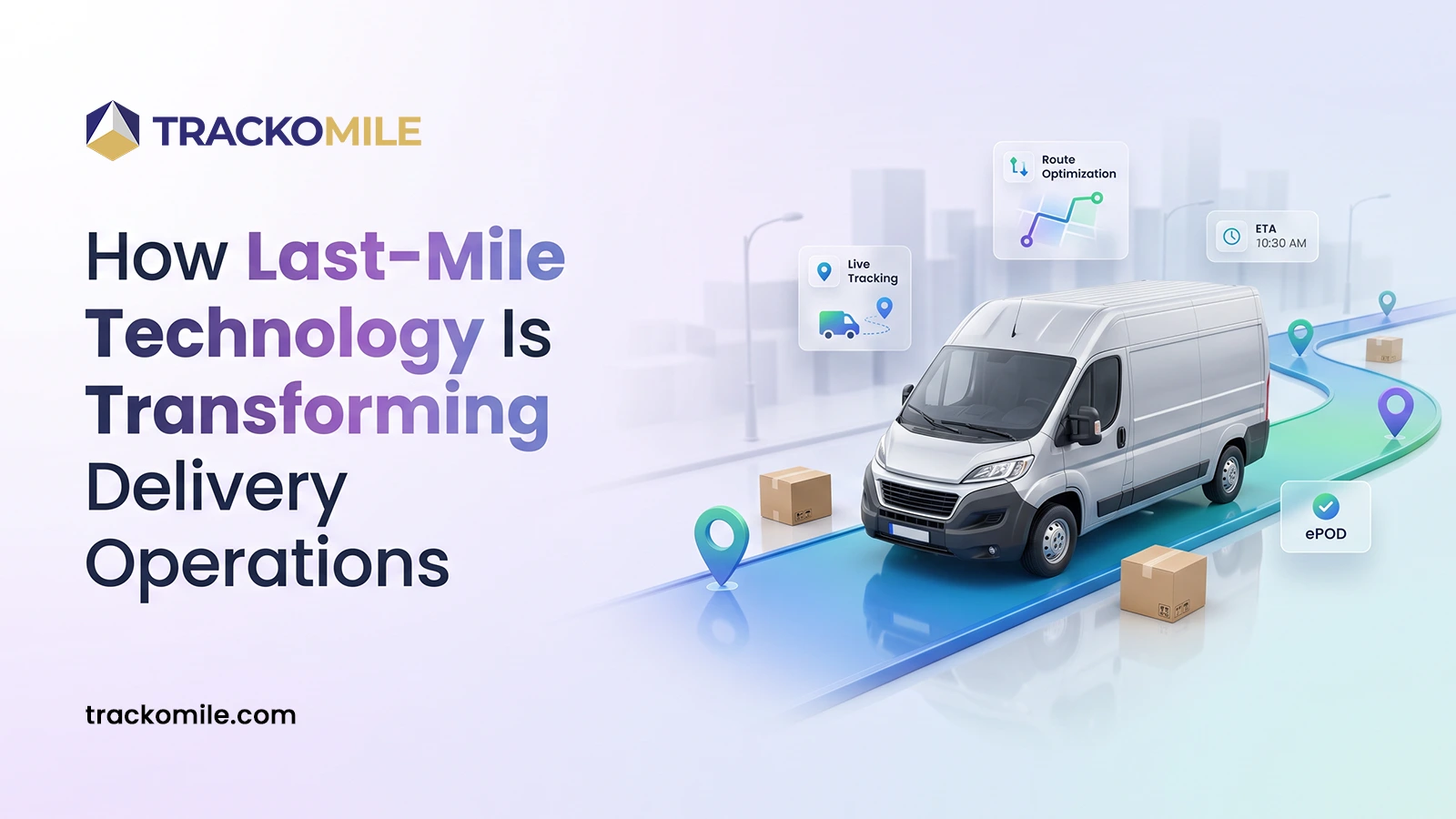
Last-Mile Technology: 6 Technologies Transforming Delivery Operations
Learn how last-mile technology combines routing, dispatch, tracking, ePOD, and analytics. Improve your businesses’ delivery speed, visibility, efficiency, and customer…


Your inbox awaits a welcome email. Stay tuned for the latest blog updates & expert insights.
"While you're here, dive into some more reads or grab quick bites from our social platforms!"Stay Updated on tech, telematics and mobility. Don't miss out on the latest in the industry.