
Quick Summary

- Last mile delivery times vary based on factors like route planning and traffic, typically ranging from 2 hours for hyperlocal to 7 days for standard delivery.
- Key factors affecting lead time include route optimization, weather conditions, human error, and real-time visibility.
- Businesses can reduce last mile delivery lead time by using smart route planning, efficient order allocation, and real-time tracking solutions.
- AI-powered tools like TrackoMile enhance last mile delivery efficiency by optimizing routes, automating dispatch, and providing live updates to customers.
This guide covers how long does last mile delivery take, the factors that affect it, and practical solutions to keep last mile deliveries predictable and efficient.
Did you know 52% customers switch brands due to slow deliveries? Well in last mile delivery, speed is more than a metric. It is a competitive factor that quietly eats into your margins. It directly impacts customer retention and SLA adherence too. No wonder companies today strive to deliver within 1-2 days. In fact, e-commerce giants like Myntra and BigBasket have heavily adopted AI and ML. These technologies power quicker deliveries and reduce risks of high customer churn rates.
However, speed does not come from intent. Businesses need to understand factors like poor visibility and zero route optimization that compound to large-scale delays. This blog breaks down how long does last mile delivery take and factors that affect these timelines. Plus, there are a few practical ways to make your operations predictable and scalable.
How Long Does Last Mile Delivery Take?
Last-mile delivery time is not the same for every order because it changes based on what you’re delivering, where it is going, and how well your last-mile operations are managed. A short city route with a package might take a couple of hours, on the other hand, a bigger route across multiple areas could take a full day for delivery. Typical last-mile delivery timelines generally look like this:
- Hyperlocal or Instant Delivery: 2–3 hours.
- Same-Day Delivery: Usually 4–8 hours.
- Next-Day Delivery: 1–2 days.
- Standard Delivery: 3–7 days.
However, these are estimates. Next, let’s explore the factors that actually influence last-mile delivery time.
5 Key Factors That Affect Last Mile Delivery Lead Time
Route planning, weather conditions, and vehicle capacity are some common factors that affect the speed of last-mile delivery. Learn in detail.
1. Route Planning
If routes are not planned properly, considering factors like traffic conditions, vehicle capacity, and rider availability, it affects delivery timelines. Plus, it leads to extra fuel consumption and missed ETAs.
2. Traffic and Weather Conditions
Traffic directly affects last-mile delivery time, especially during peak hours. Plus, accidents or bad weather like heavy rain can delay shipments and slow down the entire route.
3. Human Element
Human error is another significant factor that affects how long does last-mile delivery take. Incorrect addresses, and failed delivery attempts can increase the delivery time.
4. Lack of Real-Time Visibility
Real-time visibility directly affects last-mile delivery duration. Riders can take longer routes on their own, and delays go unnoticed.
5. Order Allocation
If orders aren’t assigned based on rider’s location or workload, some riders end up overloaded while others stay underutilized during deliveries.
How to Reduce Last Mile Delivery Lead Time?
Businesses can reduce last-mile delivery lead time with route planning, real-time visibility and smart dispatch management. The way routes are planned, how orders are assigned, and how well deliveries are tracked on the ground, all these matters. Here’s what actually helps:
1. Plan Smarter Routes, Not Just Shorter Ones
The shortest route is not always the fastest. Traffic, delivery density, and time windows matter for last mile delivery. Route optimization software helps plan routes based on traffic, delivery priority, and stop sequence, not just distance.
2. Assign Orders Based on Location, Not Guesswork
A nearby rider should get the order. Sounds obvious, but in many operations, orders are still assigned manually or in bulk. That’s where time gets lost.
3. Avoid Overloading Riders
Giving too many deliveries to one rider leads to delayed deliveries and missed time windows. Balanced allocation keeps deliveries moving at a steady pace.
4. Track Deliveries in Real-Time
If you want faster deliveries, then you need to know where every order is. With real-time visibility, managers can see riders on the map and avoid delays by rerouting riders.
Managing all of this manually becomes difficult as operations grow. This is where AI-Powered last-mile delivery software like TrackoMile helps bring better control and consistency.
How TrackoMile Improves Last Mile Delivery Lead Time?
Improve Last Mile Delivery Performance
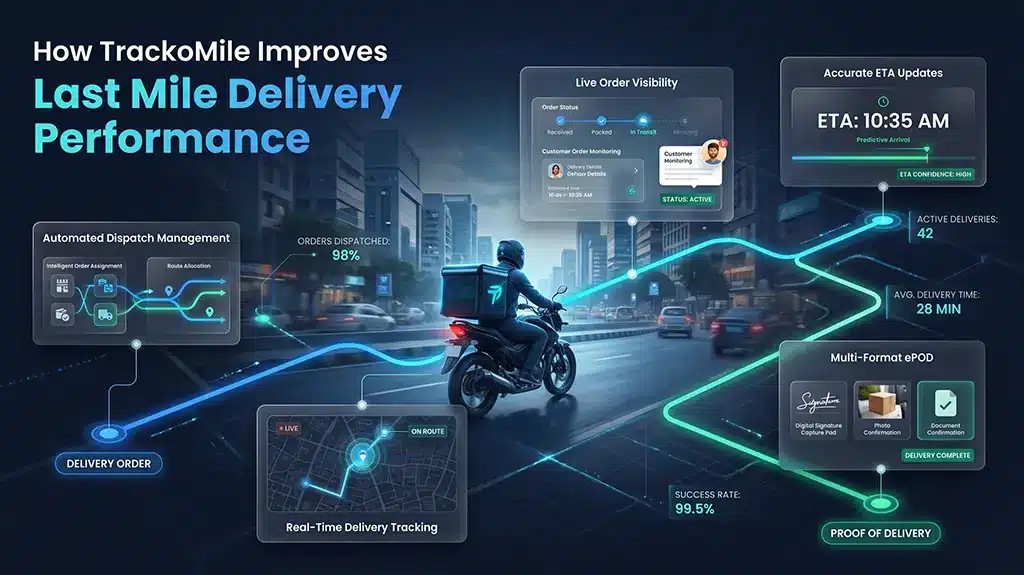
TrackoMile helps businesses reduce last-mile delivery lead time by offering advanced route optimization, smart capacity management, and real-time tracking to make deliveries faster and more reliable.
1. Smart Route Optimization
Its advanced route optimization software helps businesses to plan the most efficient route for their deliveries. It does so by analyzing 120+ factors like:
- Stop sequencing
- Distance from pickup to drop off location
- Traffic patterns and weather conditions
This helps managers to reduce the average last mile delivery time.
2. Automated Dispatch and Rider Allocation
TrackoMile doesn’t just plan routes, but it also automates which rider gets which order. The system considers:
- Rider location and availability
- Delivery priority and time windows
- Workload balance across the team
This removes the dependency on manual planning and ensures faster task allocation. By balancing workloads and minimizing idle time, businesses can ensure consistent last-mile delivery performance.
3. Real-Time Visibility & Tracking
It offers live visibility into every delivery, so managers know exactly where each rider is and how deliveries are progressing. TrackoMile helps businesses to track:
- Rider location in real time
- Completed and pending deliveries
- Delays due to traffic or customer availability
With this visibility, businesses can better predict how long last mile delivery will actually take. Instead of guessing or reacting after delays happen, managers can intervene early, reassign orders, or adjust routes if needed.
4. Timely Updates to Customers
TrackoMile allows managers to keep their customers in loop, so they know exactly when to expect their delivery. Businesses can share:
- Live tracking links with customers
- Accurate ETAs for each delivery
With timely updates, customers can plan their availability, and there are less chances of reattempts.
5. Multi-Format ePOD
ePOD (Electronic Proof of Delivery) is a must for last mile deliveries. TrackoMile supports multiple formats, including:
- Geotagged images
- Timestamps
- eSignatures
- OTP (Happiness Code)
This helps businesses verify completed deliveries and reduce disputes. Plus, managers can maintain accurate and reliable records.
Conclusion
Understanding how long does last mile delivery take is the key to running efficient operations. In last mile, delays happen when routes aren’t optimized, rider workloads are uneven, or visibility is missing.
TrackoMile helps businesses take control of these challenges of the last mile. It allows you to plan routes, track riders in real-time, and automatically assign tasks. Managers can keep a bird’s-eye view on deliveries and send timely updates to customers. This reduces last mile delivery duration and improves first-attempt success rates.
Frequently Asked Questions
-
Can last mile delivery be done the same day?
Yes, you can complete last mile deliveries on the same day. E-commerce companies like Myntra and Amazon are offering same day deliveries to their customers by using advanced delivery management software.
-
How to track last mile deliveries in real time?
The easiest way to track last mile deliveries is by using modern software like TrackoMile. It shows live updates for every rider and order. Managers can see where each delivery is, spot delays early, and reassign routes if needed. With real-time tracking, deliveries stay on track and operations become much more predictable.
-
Why is last mile delivery slow?
Last mile delivery gets slow because of real-world challenges. Riders can get stuck in traffic, make long trips if stops are not grouped efficiently and waste their time if customers are not available. Businesses can reduce these delays by using tools like TrackoMile for their last mile deliveries. This allows them to plan routes, manage and track deliveries and share timely updates with customers.
-
How is the lead time calculated in last mile delivery?
Lead time in last mile delivery is calculated from the moment an order is confirmed or dispatched to the time it reaches the customer. It includes order processing, route planning, dispatch delays, travel time, and delivery completion. Any gaps in these steps directly increase the overall lead time.

Parul is a content writer with 2+ years of experience in B2B and SaaS domains. She creates clear, actionable content for TrackoBit and TrackoMile, focusing on fleet management, last-mile delivery, and... Read More


Related Blog
How to Scale Quick Commerce Beyond 10 Minutes with TrackoMile
TrackoMile transforms chaotic last-mile logistics into a predictable, automated, and high-margin retail powerhouse. See how it works in quick commerce.
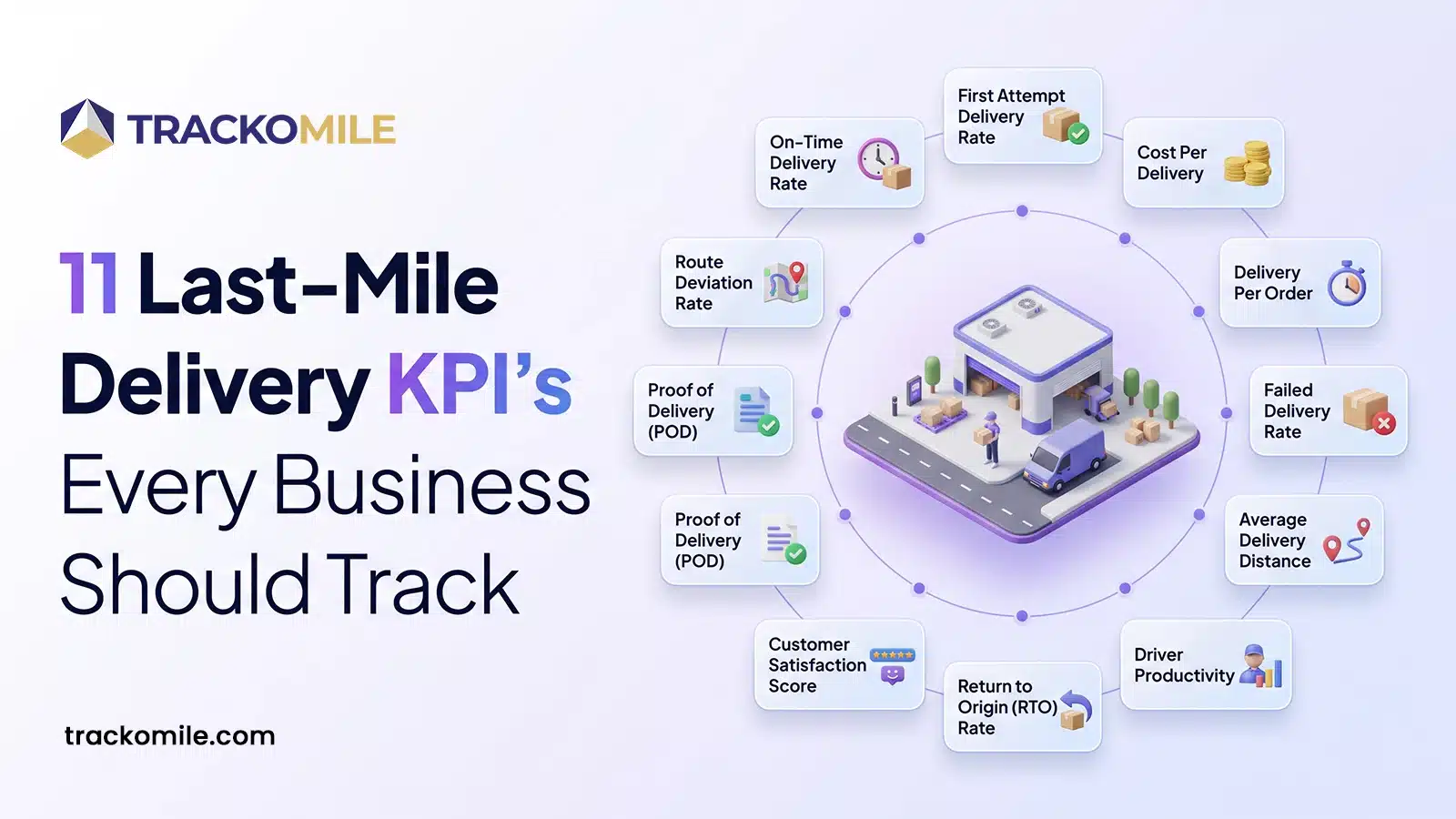
Last Mile Delivery KPIs & Metrics: 11 Essential Metrics to Track
To improve last mile operations, it’s important to track 11 essential last mile delivery KPIs like on-time delivery rate, cost…
Last-Mile Technology: 6 Technologies Transforming Delivery Operations
Learn how last-mile technology combines routing, dispatch, tracking, ePOD, and analytics. Improve your businesses’ delivery speed, visibility, efficiency, and customer…
What is On-Demand Delivery Management Software: Types, Features, & Benefits
This blog explores on-demand delivery management software, its key benefits, and must-have features. Also, we will explore how to choose…


Your inbox awaits a welcome email. Stay tuned for the latest blog updates & expert insights.
"While you're here, dive into some more reads or grab quick bites from our social platforms!"Stay Updated on tech, telematics and mobility. Don't miss out on the latest in the industry.