
Quick Summary

- The future of Last Mile Delivery will be shaped by autonomous systems, including drones and robots, projected to handle over 30% of deliveries by 2040.
- Companies are transitioning to carbon-neutral operations, investing in electric fleets and smart routing to reduce emissions by up to 80%.
- Micro-fulfillment centers are emerging to speed up deliveries, with Walmart leading the charge in local automated inventory management.
- Real-time visibility in Last Mile Delivery is becoming essential, enhancing customer experience and operational efficiency through updated tracking and alerts.
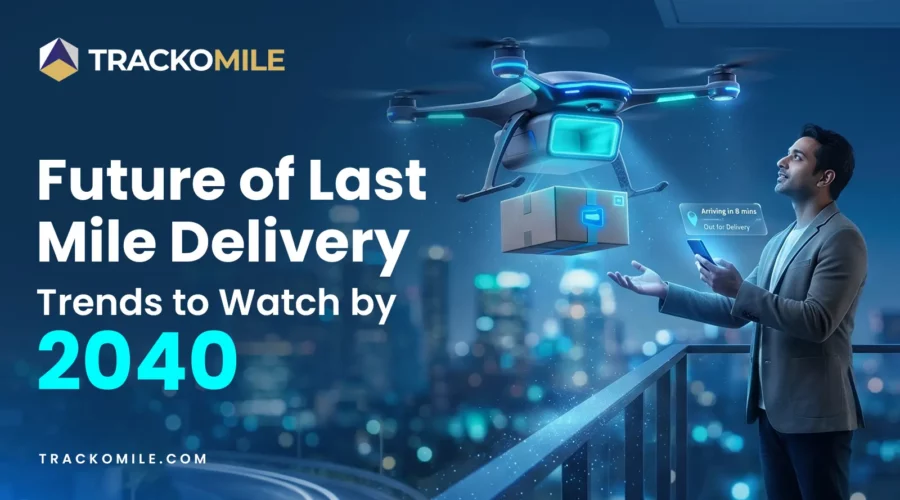
The future of last-mile delivery is driven by robots, drones, electric fleets, smart routing and real time visibility shaping 2040 logistics.
Last mile delivery, the final stretch from warehouse to customer doorstep, is already the most costly and emission-intensive part of the supply chain. In fact, it usually makes up over 50% of the total shipping cost. But by 2040, the future of last mile delivery will be defined by a radical shift toward the autonomous delivery system.
We are moving toward a world where delivery is quiet, green, and incredibly fast. We aren’t just talking about faster vans, but a total shift in urban movement. By 2040, it is estimated that autonomous vehicles like drones will be handling over 30% of all last-mile delivery.
This shift can reduce the delivery-related carbon emission by up to 80%, making our cities cleaner and packages deliver faster.
If you are curious to know how these trends are shaping the last mile delivery future, then continue reading this blog.
7 Key Trends Shaping the Future of Last Mile Delivery
From drones to food delivery robots, here are the 7 key trends changing how last mile delivery is shaping up for the future.
#Trend 1: Carbon Neutral Operations
By 2030, many cities will start limiting fuel-powered vehicles in busy areas. This shift is already happening on the ground. Amazon has rolled out over 30,000 electric Rivian vans across the U.S. and Europe. This shows that the transition to electric delivery fleets is no longer future planning, it’s already happening.
Along with that, companies like FedEx and UPS are also adding thousands of electric vehicles and even e-cargo bikes to their fleets. This isn’t just about trends. It’s part of a bigger shift toward cleaner last mile operations as they work toward their 2040 carbon-neutral goals.
#Trend 2: Food Delivery Robots
Food delivery is getting a high-tech and robotic makeover. By 2040, the “delivery rider” for your lunch or groceries will likely be a small, autonomous droid. In fact, a few cities are already seeing autonomous food delivery in action.
In Alexandria, Virginia, Serve Robotics partnered with Uber Eats has rolled out sidewalk‑navigating delivery robots. Plus, in Jersey City, Coco Robotics launched a fleet of self-driving food delivery robots with local support. These pilots show how robots are shaping the future of last mile delivery.
#Trend 3: Green Logistics
Last mile delivery companies like FedEx and Amazon are already leading the way towards green logistics. These companies are investing billions into electric and hybrid vehicles to make deliveries cleaner. Their fleets also use smart route planning to save energy on every trip.
Along with that, it is not just about vehicles. Logistics hubs are turning into “solar nerve centers”, powering electric fleets and even sending extra energy back to the city. With Net-Zero 2040 in sight, every package delivered by last mile delivery companies could have a fully green footprint.
#Trend 4: Drones and Sidewalks Bots
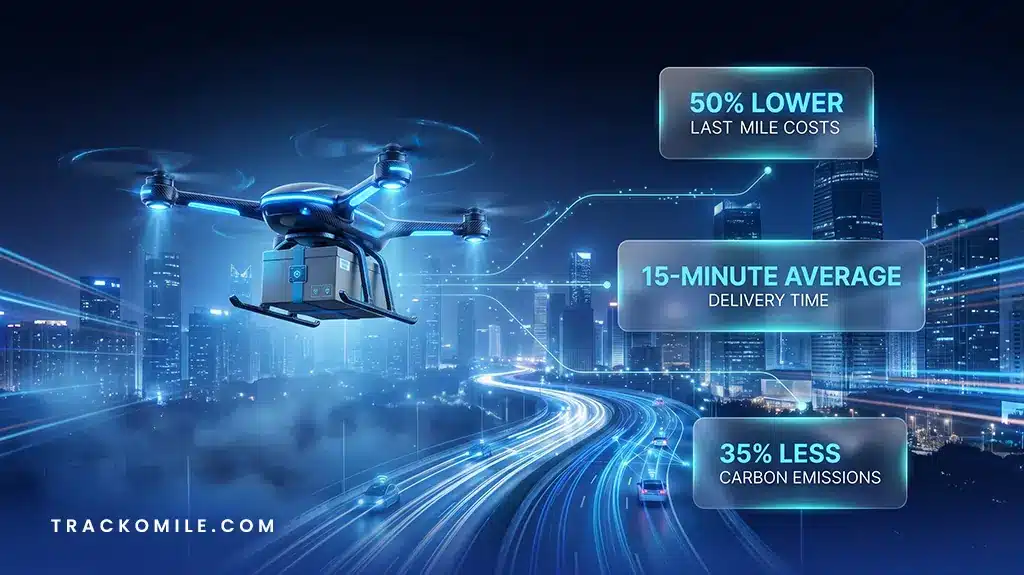
Drones in Last Mile Delivery
Imagine stepping outside and finding a small robot waiting with your lunch. Or watching a drone quietly drop a package at your door. By working on both sidewalks and in the air, these bots can skip traffic and make short, fast deliveries feel normal.
In February 2025, Avride rolled out sidewalk delivery bots on Uber Eats in Jersey City. What feels new today will soon blend into everyday neighborhood life as part of the future of last-mile delivery.
#Trend 5: Micro-Fulfillment Centers
Micro-fulfillment centers are simply smaller warehouses placed closer to customers. Instead of shipping everything from one big facility, inventory is kept nearby so orders can go out faster. Many of these hubs use automation to pick and pack quickly. In February 2026, Walmart made it clear that this isn’t experimental anymore. It’s investing heavily in these local automated centers to speed up deliveries.
Today, almost 60% of Walmart stores already get stock from these nearby centers. That’s one big reason 30-minute deliveries are starting to feel possible in cities. You can see the shift in the numbers too. The micro-fulfillment market was about $8.5 billion in 2025, and it’s set to grow quickly over the next few years, crossing $125 billion by the mid-2030s.
#Trend 6: AI-Powered Route Optimization
Route optimization software helps delivery teams figure out the best way to complete their drops as the day unfolds. It looks at traffic, weather, delivery urgency, and road conditions, and adjusts plans on the go.
Instead of sticking to one fixed route, deliveries keep changing through the day. If traffic slows things down, a road is blocked, or an order runs late, the route updates automatically. For last mile delivery companies, this saves fuel, avoids delays, keeps customers happier, and drives more profit.
#Trend 7: Real-time Visibility & Experience First Delivery
Last mile delivery is shifting from a basic logistics task to brand experience. Customers and operations teams will expect to see the exact status of every order. What’s packed, what’s out for delivery, and what’s delayed, all this without calling anyone.
For last mile delivery companies, this kind of visibility really matters. When teams can see where an order is, get delay alerts, and share clear ETAs, they can fix issues early, before customers start calling or complaining.
Last-Mile Delivery Innovations We’re Seeing Today
We keep talking about the future of last mile delivery, but the future is already here. Robots are rolling out sidewalks, drones are flying short routes, and smart delivery hubs are popping up in the urban cities.
In the US, Zipline is expanding drone delivery services to cities like Houston and Phoenix. These are carrying everything from groceries to medical supplies.
Autonomous delivery robots are also rolling out in real neighborhoods. For example: DoorDash introduced its “Dot” robot in Phoenix. It is a larger sidewalk bot designed to carry heavier deliveries efficiently.
Apart from these, big retailers such as IKEA are investing in AI and robotics to improve the last mile delivery future. These last mile delivery trends shows that the ideas we are talking about for 2040, are already stepping into everyday delivery.
Conclusion
New last-mile delivery trends isn’t only about better customer experience. It also helps logistics teams deal with everyday challenges, like rising delivery costs and growing pressure to operate more sustainably.
As we move forward, the future of last mile delivery is getting more automated and easier to manage. The trends shaping 2026 and beyond are helping businesses deliver faster and plan their day with a lot more clarity.
At TrackoMile, we are already preparing for what’s next. Our last-mile delivery software is built to adopt these changes. With automation, dynamic dispatch, and smarter route planning, our software is designed for real on-ground operations.

Frequently Asked Questions
-
How will last mile delivery be shaped in 2040?
By 2040, last mile delivery will look very different. More electric vehicles. More robots and drones. Better tracking and smarter routes. All of this will help deliveries move faster, stay cleaner, and work better in busy cities.
-
Is there a future of last mile delivery PDF available?
Yes, you can find future of last mile delivery PDFs from reliable industry sources. These PDFs usually break down how electric vehicles, delivery robots, and route planning are being used today, and how city deliveries are changing. Teams mostly use them to get a quick understanding, pass it around internally, or plan their next moves.
-
What are the latest last mile delivery innovations in india?
In India, last mile deliveries are changing fast with electric delivery bikes, dark stores and hyperlocal hubs. Companies like Swiggy, Zomato, and Flipkart are testing EV fleets and faster dispatch systems. So, they can easily handle volumes orders in crowded cities.
-
What is last mile drone delivery?
Last mile drone delivery is something when you use a small drone to deliver packages. These are generally used for short distances and lightweight packages. Companies are using this to deliver urgent orders like food, groceries, and medicines.

Parul is a content writer with 2+ years of experience in B2B and SaaS domains. She creates clear, actionable content for TrackoBit and TrackoMile, focusing on fleet management, last-mile delivery, and... Read More


Related Blog
How to Scale Quick Commerce Beyond 10 Minutes with TrackoMile
TrackoMile transforms chaotic last-mile logistics into a predictable, automated, and high-margin retail powerhouse. See how it works in quick commerce.
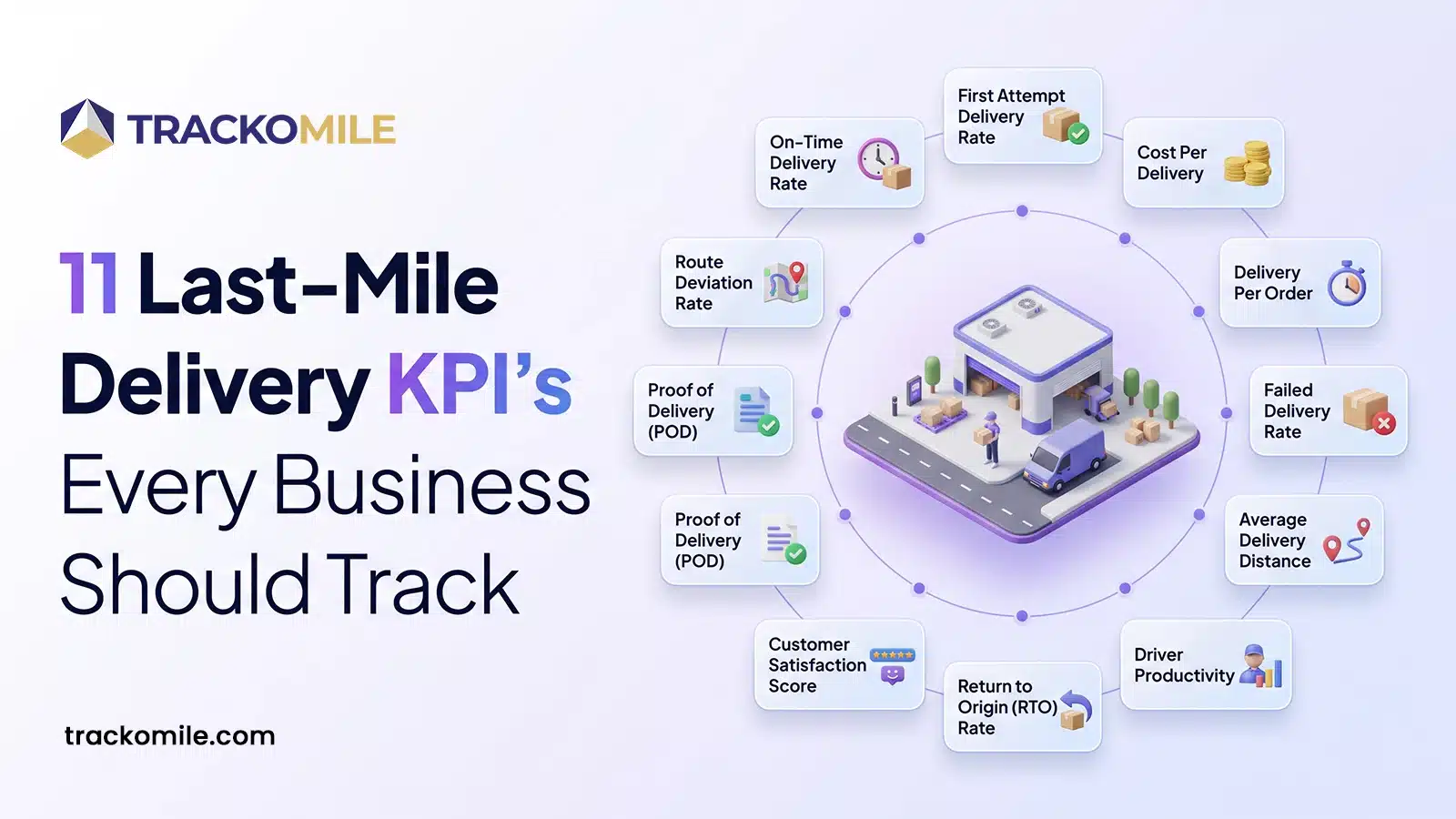
Last Mile Delivery KPIs & Metrics: 11 Essential Metrics to Track
To improve last mile operations, it’s important to track 11 essential last mile delivery KPIs like on-time delivery rate, cost…
Last-Mile Technology: 6 Technologies Transforming Delivery Operations
Learn how last-mile technology combines routing, dispatch, tracking, ePOD, and analytics. Improve your businesses’ delivery speed, visibility, efficiency, and customer…
What is On-Demand Delivery Management Software: Types, Features, & Benefits
This blog explores on-demand delivery management software, its key benefits, and must-have features. Also, we will explore how to choose…


Your inbox awaits a welcome email. Stay tuned for the latest blog updates & expert insights.
"While you're here, dive into some more reads or grab quick bites from our social platforms!"Stay Updated on tech, telematics and mobility. Don't miss out on the latest in the industry.