
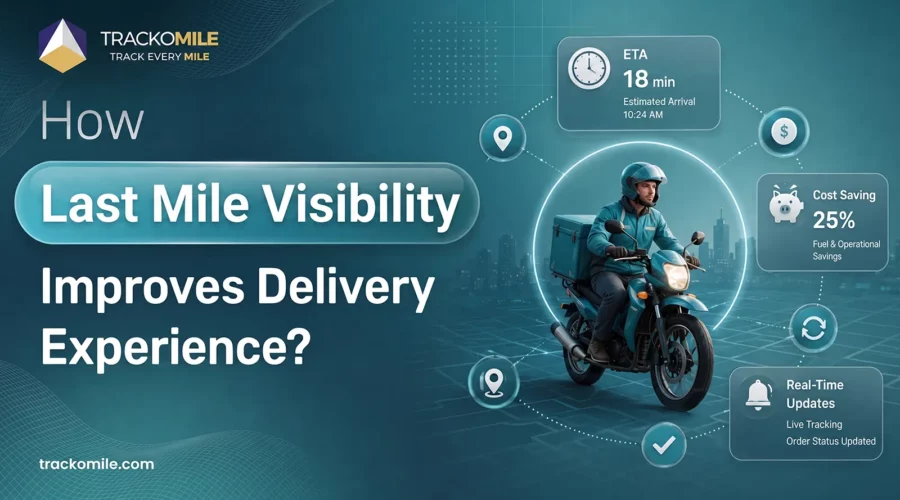
Quick Summary

- Last Mile Visibility enhances delivery tracking and efficiency through real-time updates, improving customer satisfaction and operational control.
- Businesses face challenges like fixed routes and high WISMO calls without real-time visibility, impacting costs and delivery performance.
- Technologies like GPS, AI, and IoT enable last mile visibility, allowing for dynamic route adjustments and accurate ETAs.
- Industries such as e-commerce and food delivery benefit from last mile visibility by reducing delays and improving on-time delivery rates.
This blog explains how last mile visibility improves delivery tracking and route efficiency. Plus, we will look at how it helps you boost customer satisfaction and operational control.
In the early 2010s, on-demand delivery apps changed logistics forever. They proved that real-time tracking was possible. Yet more than a decade later, clear visibility gaps still exist across many B2B and B2C operations. Managers rely on delayed updates, static routes, and manual follow-ups that do not provide a live view of delivery movement. This lack of last mile visibility directly affects delivery performance, costs, and profitability.
In the meantime, expectations are rising. Businesses are now expected to provide the same level of transparency set by companies like Amazon. They need to share live tracking, accurate ETAs, and timely updates at every step. This is where real time tracking comes in handy. It gives businesses the visibility they need to manage deliveries proactively. So they can improve the overall delivery experience. Continue reading this blog to know in detail.
What is Last Mile Visibility?
Last mile visibility is the outcome of tracking and monitoring deliveries in real-time from dispatch to the end customer. It is achieved using GPS location data, rider app updates, and system integrations with order and dispatch platforms. It also provides live alerts to flag delays, failed attempts, or route deviations.
Traditional tracking only shows fixed updates like “out for delivery” or “delivered”. Last mile delivery visibility ensures a continuous, live view of delivery movement. So, managers can respond faster and manage deliveries better. Also, they can maintain a more consistent delivery experience.
Why Last Mile Visibility Matters (Business Impact)?
Last mile delivery visibility is important because it impacts the delivery cost, growth, and efficiency. In fact, according to a recent report by Fortune Business Insights, the connected logistics market is expected to grow to USD 44.21 billion by 2025. As real-time visibility platforms will enhance the control and execution of last mile deliveries.
This shift is not just a technology trend. It reflects how last mile logistics companies are evolving towards real-time decision-making. So, they can track, measure, and optimize every delivery in real-time. As a result, visibility is now directly linked to:
- Operational costs through better route optimization.
- Delivery efficiency with fewer delays and missed deliveries.
- Customer experience through accurate ETAs and proactive updates.
In short, businesses that lack last mile visibility continue to face higher costs and high WISMO calls. Also, they face inconsistent delivery performance. Read on to know more.
5 Challenges Businesses Face Without Real-Time Visibility
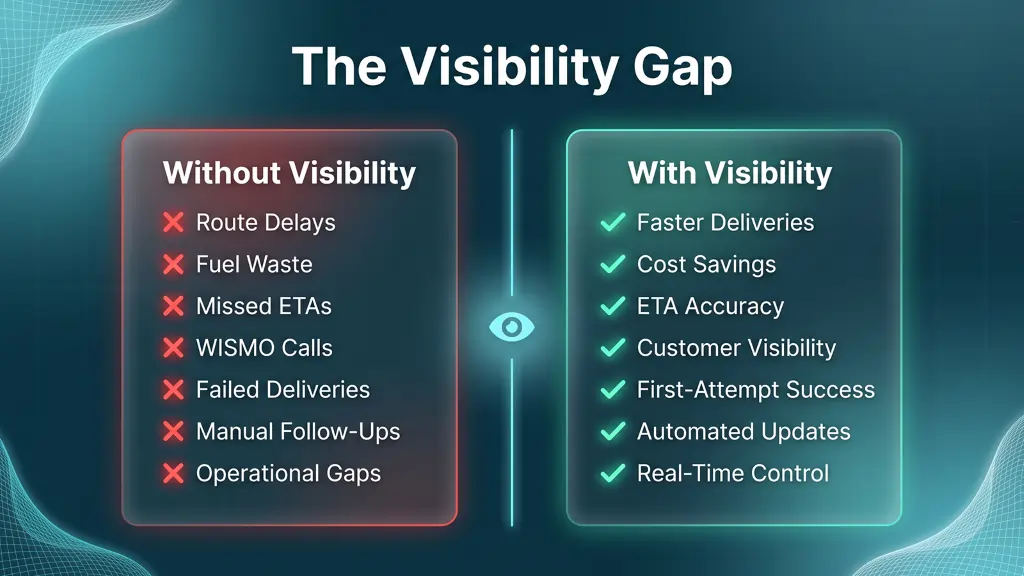
Visibility Gaps
Inefficient routes, high fuel costs, and high WISMO calls are some common challenges businesses face due to lack of visibility.
1. No Dynamic Route Adjustment
Routes are usually fixed at dispatch. Managers cannot plan delivery routes as per live traffic. Plus, weather conditions, or local events or congestion are often ignored. This leads to high fuel costs and missed ETAs.
2. Multi-Stop Deliveries
Without real-time last-mile tracking, managers lack clear visibility in multi-stop sequence. Also, they cannot track delivery progress and pending drops in multi-stop routes. This leads to missed or delayed deliveries and repeated customer follow-ups.
3. High WISMO Calls
Due to lack of delivery updates, customers often ask “Where is my order”. This negatively impacts brand trust and repeat purchase behavior. Plus, the competitive positioning in high-expectation delivery markets.
4. Uncertainty Around Proof of Delivery
Managers often lack immediate confirmation of whether an order has been successfully delivered. This creates gaps in order status accuracy and customer communication.
5. Missed or Delayed Inputs from Riders
Riders may ignore task updates, go offline, or deviate from assigned routes due to usability issues or network constraints. These gaps block route-level tracking and delay issue alerts. As a result, managers do not have clear visibility into what is actually happening on the ground.
Businesses can solve these challenges by using last-mile delivery software like TrackoMile. It provides full visibility from start to end on all routes, riders and deliveries.
How Last Mile Visibility Works: The Tech Stack
GPS tracking, geofencing, IoT, and delivery apps are the main technologies behind it. These work together to give complete visibility from dispatch to final delivery.
1. GPS Tracking
GPS tracking is used to monitor the real-time location of delivery agents and vehicles. Managers can monitor the process of the route, delays, and delivery status in real-time. Businesses can also provide live tracking links to customers. So, they can increase transparency and minimize WISMO calls.
2. Geofence
Geofencing is the act of creating virtual boundaries around delivery locations or service areas. It helps managers to track rider entry and exit from defined areas. Plus, they can share order updates like “arriving soon”.
3. Artificial Intelligence (AI)
AI in last-mile delivery is used to optimize routes, improve ETAs, and predict delivery delays. It is done so based on traffic patterns, order density, and historical delivery data. So, managers can make faster decisions and reduce delays.
4. API Integrations
API integrations help different delivery systems to exchange data in real time. Last mile delivery software connects with multiple systems. This includes OMS and payment gateways to ensure seamless data flow across operations
5. Internet of Things
IoT devices capture real-time signals from delivery vehicles during active trips. This allows managers to track vehicle movement, idle time, and delivery status in real-time.
6. Delivery Apps
Delivery agents usually use mobile apps to update delivery status. At the same time, they can capture proof of delivery, collect payments, and communicate with customers.
7. Electronic Proof of Delivery (ePOD)
ePOD technology is used to digitally verify successful deliveries in real-time. It allows riders to capture OTP, signature, or image, to avoid disputes later.
How Different Industries Use Last Mile Visibility?
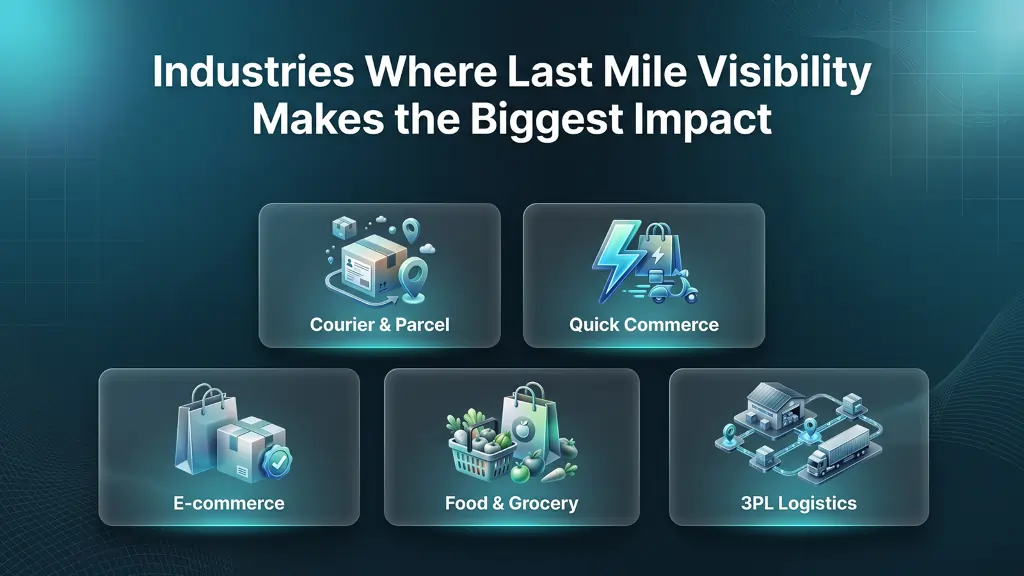
Industries using Last Mile Visibility
Industries use last mile tracking to reduce fuel cost, improve first-attempt delivery, and reduce WISMO calls. See the use cases based on each industry type.
1. Courier and Parcel Services
Courier and parcel companies use last mile courier software to track riders, vehicles, and shipments. From dispatch to final delivery, they can track in real time. It optimizes route execution, lowers fuel costs and boosts first-attempt delivery success rate. Plus, it provides accurate, timely delivery updates to managers and customers.
2. Quick Commerce
Quick commerce companies use last mile visibility to manage time sensitive hyperlocal deliveries. It helps monitor rider movement in real time, reduce delays in micro-zones, and improve ETA accuracy. Plus, managers can ensure consistent on-time delivery performance under high demand pressure.
3. E-commerce
Last mile visibility is crucial for e-commerce businesses. It provides live order tracking from dispatch to delivery. It allows customers to reduce delivery delays, improve ETAs, and minimize failed deliveries.
4. Third-Party Logistics (3PLs)
Last mile delivery visibility helps 3PL logistics track multi-client deliveries. They can track across large and distributed delivery networks in real time. It helps them to optimize route execution, and ensure transparent, SLA-driven delivery performance.
5. Food and Grocery Delivery
Food and grocery delivery businesses use last mile visibility to track orders in real time from dark store to customer delivery. So, they can improve on-time delivery and reduce delays for perishable items. This ensures fresh and accurate order fulfillment.
Key Delivery Metrics Improved by Last Mile Visibility
Last mile visibility improves both day-to-day delivery performance and overall business results. With real-time tracking, route optimization, and automated updates, companies can identify operational gaps. This directly improves several important delivery metrics including:
- On-time delivery rate
- First attempt delivery success rate
- Fuel and operational costs
- WISMO calls
- Rider productivity
- Profit margins
- Customer satisfaction
Now that we understand the impact of last mile visibility, let’s look at how businesses can improve it. That too with modern last mile delivery software like TrackoMile.
How to Improve Last Mile Visibility with TrackoMile?
TrackoMile is an advanced last-mile delivery management. It brings all delivery operations- riders, routes, and order into a single software. It helps businesses to improve last mile visibility by offering:
- Rule-based dispatch management software to assign orders and routes instantly.
- Real-time dashboards to monitor riders, vehicles, and delivery movement live.
- Route optimization software to optimize delivery routes and reduce delays.
- Live ETA tracking to improve delivery accuracy, customer visibility, and reduce WISMO calls.
- Automated alerts to detect delays, route deviations, and failed deliveries instantly.
- Electronic proof of delivery (ePOD) to capture OTP, image, and signature-based delivery confirmation.
- Rider management system to assign tasks, manage rosters, and track rider availability in real time.
With all delivery operations connected into one system, businesses can improve delivery visibility. Also, it helps them to reduce delays, optimize routes, and maintain better control across last mile operations in real time.

Frequently Asked Questions
-
Why is last mile visibility important for customer satisfaction?
Last mile visibility helps customers know where their order is and when it will arrive. By sharing live tracking links and accurate ETAs, businesses can keep customers informed. Also, they can reduce WISMO calls. This improves customer trust, delivery experience, and repeat purchases.
-
What is the difference between last mile visibility and supply chain visibility?
Supply chain visibility allows companies to track goods throughout the entire supply chain. Whereas last mile visibility focuses only on the final delivery stage. Here businesses track the order from the warehouse or hub to the end customer.
-
What is WISMO and how businesses can reduce it with last mile visibility?
WISMO stands for “Where Is My Order?”. These are customer queries asking about their order status. Reports show WISMO tickets can make up 30–40% of support requests. Businesses can reduce them through live order tracking. Plus, delivery updates, and accurate ETAs with last mile visibility software. This helps build better customer trust and satisfaction.
-
How does real-time delivery tracking work?
Real-time delivery tracking works through GPS tracking and mobile applications. It provides instant feedback on deliveries. The system continues to update the order location, delivery status, and estimated delivery time as the rider moves. So, you can ensure that the delivery is tracked in real-time, by both managers and customers.

Parul is a content writer with 2+ years of experience in B2B and SaaS domains. She creates clear, actionable content for TrackoBit and TrackoMile, focusing on fleet management, last-mile delivery, and... Read More


Related Blog
Building Resilient Delivery Operations with TrackoMile in 2026 and Beyond
Logistics businesses build resilient delivery networks with TrackoMile. But how exactly? With real-time route optimization, automated scheduling, and end-to-end fleet…
How to Scale Quick Commerce Beyond 10 Minutes with TrackoMile
TrackoMile transforms chaotic last-mile logistics into a predictable, automated, and high-margin retail powerhouse. See how it works in quick commerce.
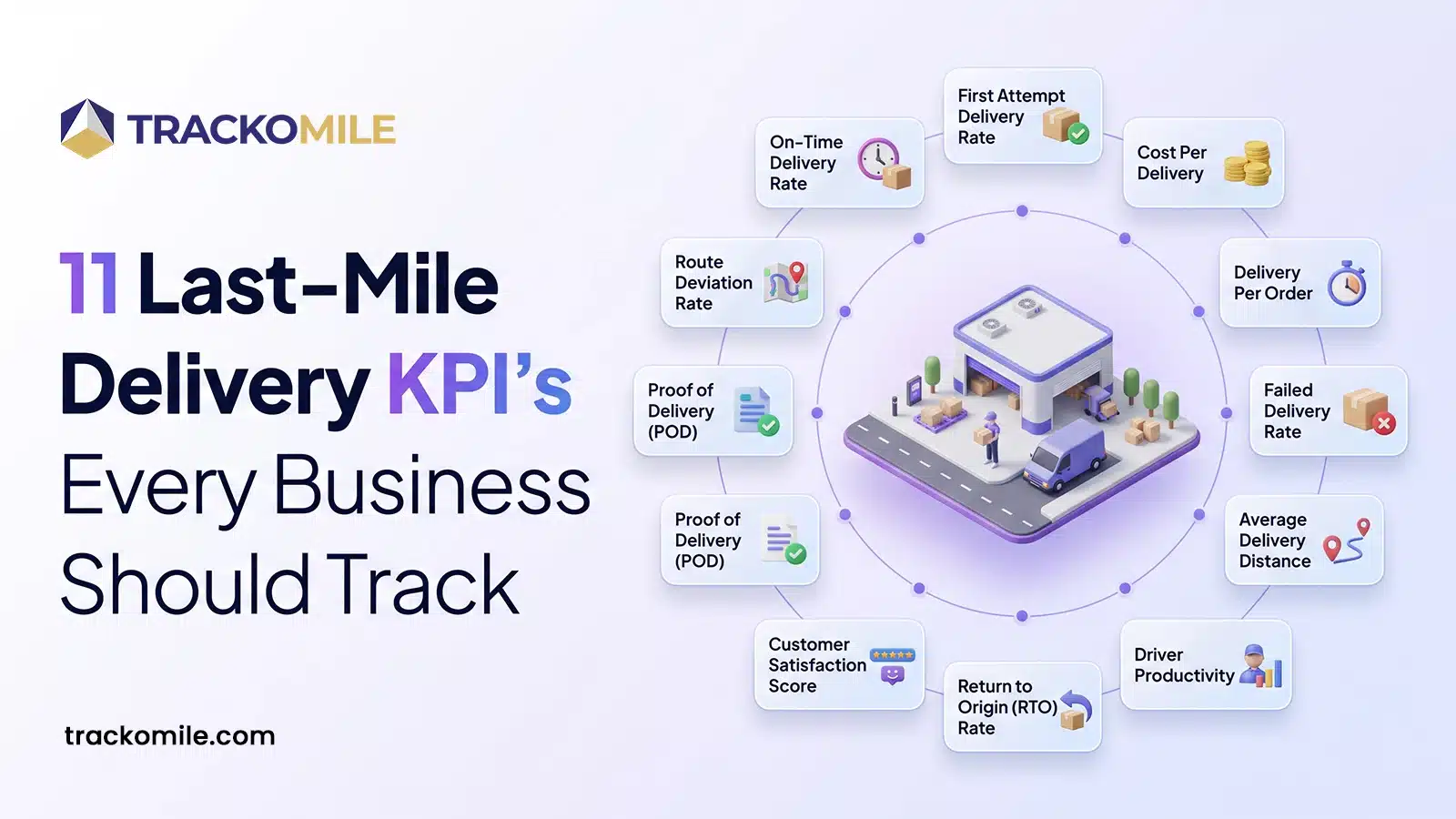
Last Mile Delivery KPIs & Metrics: 11 Essential Metrics to Track
To improve last mile operations, it’s important to track 11 essential last mile delivery KPIs like on-time delivery rate, cost…
Last-Mile Technology: 6 Technologies Transforming Delivery Operations
Learn how last-mile technology combines routing, dispatch, tracking, ePOD, and analytics. Improve your businesses’ delivery speed, visibility, efficiency, and customer…


Your inbox awaits a welcome email. Stay tuned for the latest blog updates & expert insights.
"While you're here, dive into some more reads or grab quick bites from our social platforms!"Stay Updated on tech, telematics and mobility. Don't miss out on the latest in the industry.