
Quick Summary

- Last-mile tracking enhances customer experience by providing real-time updates on delivery status, which is crucial for building trust and reducing delivery anxiety.
- Companies that implement last-mile tracking can optimize delivery routes, decrease operational costs, and improve overall efficiency in logistics management.
- The demand for last-mile tracking is growing, with consumers willing to pay more for faster delivery options, making it essential for businesses to stay competitive.
- Successful last-mile tracking systems not only benefit consumers but also reduce customer support inquiries and chargebacks, leading to improved brand perception.
Last mile tracking helps businesses monitor deliveries in real time, improve visibility, reduce costs, enhance customer satisfaction, and optimise last mile deliveries.
Last mile is the stage in the supply chain where products move from the dealer or warehouse to the end customer. It’s a critical part of logistics and often the most expensive one too.
Last-mile delivery is also where your customers directly interact with your business. They aren’t aware of what happened in the earlier stages of the supply chain. Your brand’s first impression on customers depends on how you execute last mile deliveries. Any delays, miscommunication, or error can diminish your standing in the customers’ eyes.
This is where last-mile tracking becomes essential. To ensure your orders reach customers on time, you need to know where your last mile delivery teams are and how they are faring. In this guide, take a look at what last mile tracking is and how it can be optimised using last mile delivery software.
What is Last Mile Tracking?
Last mile tracking is the process of monitoring and managing deliveries during the final stage of the supply chain. It begins when an order leaves the local warehouse or delivery hub and ends when it reaches the customer. Last mile tracking also involves monitoring riders, vehicles, customers and travel routes.
It ensures both customers and managers can see the live location of riders, delivery status, and accurate ETAs. As a result, managers no longer depend on calls, delayed updates or EOD performance reports to monitor delivery operations. Customers stay informed throughout the entire delivery journey.
Last-Mile Delivery vs Last-Mile Tracking
Many people confuse last-mile delivery with last-mile tracking. Both are two different processes.
Last-mile delivery is the actual delivery process. This is where the product reaches the customer’s doorstep from the delivery hub.
Last-mile tracking refers to the monitoring and management of this delivery process. It helps businesses track riders, delivery status and communicate with customers.
Here’s an example to better grasp last-mile tracking:
Assume a customer orders a table fan online. The fan then moves from the main warehouse to a secondary warehouse and then to the local distribution centre. Now, the fan will be dispatched to the customer. This part is the last mile. And tracking this final step with the help of digital tools is called last mile tracking.
| Aspect | Last Mile Delivery | Last Mile Tracking |
| Meaning | The actual process of delivering a product to the customer | Monitoring and managing the delivery process |
| Focus | Physical movement of goods | Visibility and control of delivery operations |
| What happens | Product moves from hub to customer doorstep | Business tracks riders, delivery status, and updates |
| Role | Execution | Monitoring + communication |
| Example | Delivering a table fan to a customer’s home | Tracking the rider, ETA, and delivery status of that fan |
What is the Aim of Last-Mile Delivery Tracking?
The main aim of last mile tracking is to improve operational efficiency. This means reduced fuel expenses and adherence to delivery schedules. Customer experience is another critical factor here. Altogether, last mile tracking provides real-time visibility which keeps the supply chain running.
Proper last mile management involves keeping the customers informed about order status. This is done through ETA and tracking links. The result most businesses get is fewer failed deliveries and better rider productivity.
Why is Last-Mile Tracking Important for Businesses?
Last-mile tracking is important for businesses mainly because it improves customer satisfaction, reduces delivery costs, and supports faster business growth.
Customers usually judge a logistics business based on the delivery experience. If unhappy, they may order the same product from a different company next time. This is why last-mile tracking plays such a critical role in business operations today. Here are all the benefits it offers:
1. Higher Customer Satisfaction
Customers want clear updates about their orders. They want to know:
- Where the package is
- When it will arrive
- If there is a delay
When businesses fail to provide this information, customers quickly become frustrated. Their confidence in the brand drops. But the good news is that last-mile tracking provides much-needed transparency. Customers receive timely updates and rider details along with live tracking links. This also reduces frequent support calls and complaints.
2. Lower Delivery Costs
Last-mile delivery is one of the most expensive stages in logistics and supply chain. This is mainly due to factors like:
- Poor route planning
- Repeated delivery attempts
- Extra fuel use
- Delayed deliveries
Last-mile tracking can help businesses improve route planning and rider productivity. It reduces unnecessary travel and helps save both time and money.
3. Higher Delivery Success Rate
Failed deliveries lead to 25-30% revenue loss. This can happen due to a variety of reasons like:
- Sometimes the customer is unavailable
- The address is incorrect
- The delivery agent cannot find the location easily
With live rider tracking and better communication, businesses can reduce failed delivery attempts and improve first-attempt delivery rates. As a result, customers feel satisfied and repeat delivery costs are avoided.
4. Better Operational Control
Managers often use phone calls and texts to get details of delivery activities. They generate manual reports to know how teams performed at the end of the day. This is a time-consuming and error-prone process, and makes smart decision-making difficult.
Live delivery tracking and real-time dashboards in software like TrackoMile help managers to:
- Better visibility into what is happening on the ground
- Be more proactive and take faster action on problems
- Check delivery progress live and resolve delays quickly
5. Sustainable Business Growth
Handling rising delivery order volume can be difficult. Last mile tracking helps businesses manage more deliveries using less manual effort. It also optimises costs and ensures the business scales sustainably.
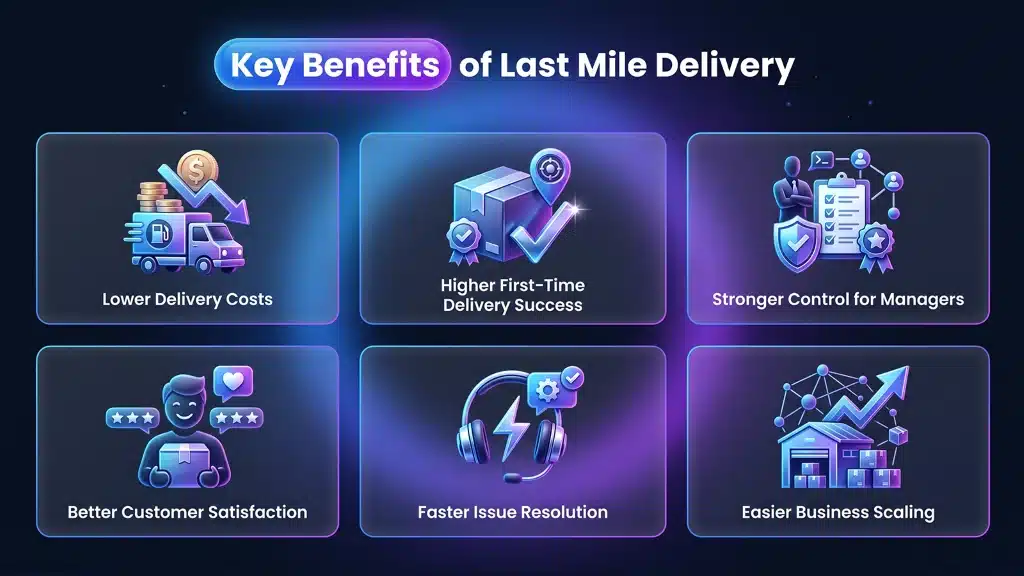
Key Benefits of Last Mile Delivery
How Last-Mile Tracking Works – Step by Step Process
Last-mile tracking is not just about GPS location monitoring. It is a complete delivery workflow that involves order allocation, route planning, digital proof of delivery and more. Every step helps improve speed, reduce mistakes, and keep customers informed.
Step 1: Order Assignment
Once order reaches the warehouse, it is assigned to a delivery agent or rider. This is not done randomly. The following factors are usually checked:
- Delivery location
- Rider availability
- Vehicle type & capacity
- Order priority
- Route feasibility
- Customer availability
This ensures the right person handles the right delivery. It improves delivery accuracy and prevents confusion. It also prevents unequal work distribution.
Step 2: Route Optimisation
After order assignment, the software plans the best route for the delivery agent. It considers:
- Traffic conditions
- Rider working hours
- Delivery deadlines
- Multiple delivery stops
- Total travel distance
This reduces unnecessary travel and saves fuel costs. Better route optimisation also improves delivery speed and reduces late deliveries.
Step 3: Live GPS Tracking Begins
Once riders mark their attendance, their live tracking begins. All their stops, deliveries, routes and order status can be monitored in real time by managers. They can check whether the correct route is being followed and whether there are delays.
Step 4: Customer Notifications
As the delivery moves forward, customers receive tracking links with ETAs. This also includes delivery partner details and OTPs for order verification. This helps keep customers informed without them relying on support teams. Transparent communication prevents failed deliveries and allows for quick rescheduling.
Step 5: Delivery Completion with Proof
When the order is delivered, proof of delivery must be collected. This can include OTP verification, digital signatures, documents, photo or audios. It protects both the business and the customer, helping prevent false delivery claims or disputes.
Step 6: Performance Reporting
After delivery is completed, managers review reports to analyse performance. These include delivery success rates, rider productivity, average delivery time, etc.
These reports help businesses improve future delivery planning. Taking informed decisions becomes easier when supported by accurate data.
Key Characteristics of Last-Mile Tracking
A strong last mile tracking system has characteristics like automation, real-time tracking, mobile app support, and more. It helps improve speed, control, and customer satisfaction.
1. Real-Time Visibility
Businesses should always know where riders are and what stage the delivery has reached. This helps managers respond quickly before small delays become major problems. Real-time visibility also improves accountability by tracking and verifying every movement.
2. Smart Route Optimisation
The system should automatically pick the best delivery routes and update them whenever there’s a traffic jam or a roadblock. That way, riders get to their destinations faster and use less fuel. When you’re moving a lot of packages, good route optimisation software makes a lot of difference in ensuring smooth and fast deliveries.
3. Customer Communication
A strong last-mile tracking system should keep customers in the loop with regular updates. When customers know what’s going on, they trust you more and there are fewer calls asking for info. Plus, clear updates mean fewer missed deliveries since customers can quickly let delivery teams know when they’ll be available.
4. Proof of Delivery
OTP verification, timestamped and geotagged photos, digital signatures, and documents provide proof that a package was actually delivered to the customers. It cuts down on disputes, boosts accountability, and builds a foolproof data trail for audits.
5. Mobile App For Field Teams
Delivery agents work in the field, not in offices. A desktop-only system cannot support field operations effectively. Riders need a fast and easy-to-use mobile app to receive tasks, update delivery status, upload proof, and communicate with managers.
6. Reports & Analytics
To make informed decisions, managers need reports that show:
- Delivery delays
- Failed attempts
- Rider productivity
- Customer feedback.
- Cost per delivery
Without these reports and accurate insights, identifying weak areas and improving future delivery planning becomes difficult.
7. External Integration
Tracking isn’t the only operation in logistics. Businesses also rely on ERP, CRM, warehouse management and customer support tools. It’s essential that your last mile delivery tracking platform works smoothly with other digital tools. Disconnected systems create delays and increase manual work, especially in syncing data.
5 Common Last Mile Tracking Challenges
Rising delivery costs, high failure rate, urban traffic and seasonal demands are some key last mile delivery challenges.
1. Rising Delivery Costs
Fuel prices are increasing and so are labour costs. Yet, customers still expect fast and budget-friendly deliveries. This creates pressure on businesses to improve their last mile operations while keeping expenses low.
2. Failed Deliveries
Customer is the king! If a customer is unavailable, the delivery has to be rescheduled or cancelled. Sometimes the address is wrong, or the rider is unable to deliver the order. Every failed delivery means extra travel, more fuel use, and dwindling customer satisfaction.
3. Traffic and Route Complexity
Urban traffic is chaotic! Riders often deal with congestion, restricted areas, parking issues, and unexpected delays. Manual route planning is not compatible with the delivery conditions in large cities.
4. Lack of Real-Time Visibility
Many businesses still depend on manual reporting and phone calls to track deliveries. This is prone to error and can lead to delays because managers do not know what is happening on the ground in real time.
5. Poor Delivery Accountability
Without proper proof of delivery, it gets tough to verify if the customer received the right order at the right time. Without actual confirmations of deliveries, businesses can face risk of disputes. It also reduces trust between customers, riders, and management teams.
6. Seasonal Delivery Pressure
Delivery volumes increase a lot during festive sales, holiday seasons, or year-end. Without a last-mile tracking system and prior planning, operations can become difficult to manage in times of high demand.
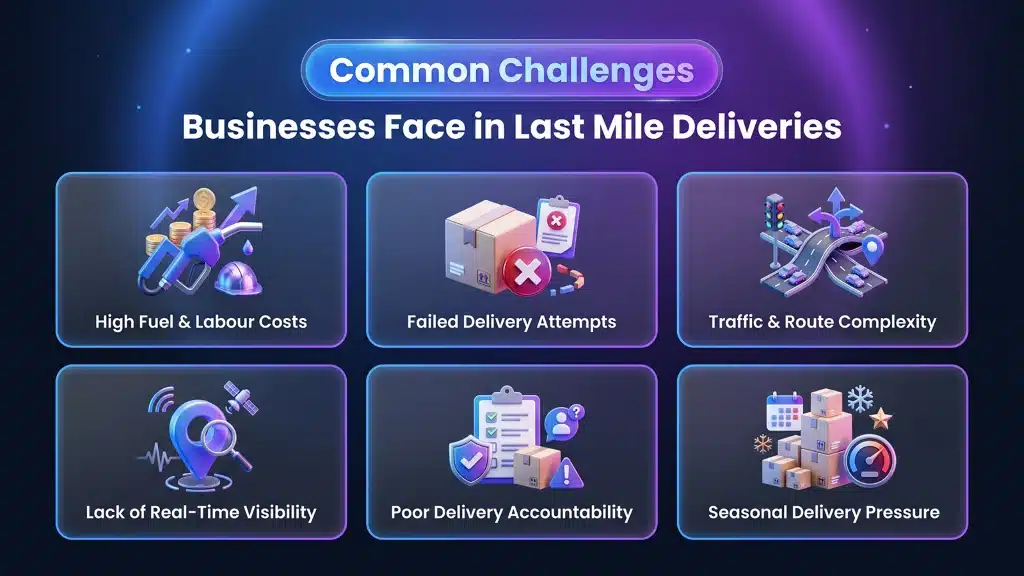
Common Challenges Businesses Face in Last Mile Deliveries
Which Businesses Benefit The Most From Last Mile Tracking?
Businesses that manage regular deliveries benefit the most from last-mile tracking. This includes:
- E-commerce companies
- Retail brands
- FMCG businesses
- Food delivery services
- Healthcare suppliers
- Courier companies
- Logistics providers
Any business that delivers orders directly to customers at a scheduled time can benefit from last mile tracking. Companies that utilise it gain better route planning, accurate proof of delivery, and live tracking of riders. This helps reduce delays, improve delivery success, and keep customers satisfied.
How TrackoMile Optimises Last-Mile Tracking?
TrackoMile is a leading last-mile delivery management software that offers order visibility, route planning and ePOD. It helps companies track deliveries in real time and improve efficiency. The best thing? TrackoMile ensures smooth deliveries from a single centralised platform.
1. Real-Time GPS Tracking
TrackoMile allows managers to monitor their delivery teams live. They can check location, route movement, delays, stoppages, and delivery progress from one dashboard.
2. Smart Route Planning
TrackoMile helps businesses choose better delivery routes using a rule-based engine. It’s dynamic and algorithm-based. Better routes reduce fuel usage, save time, and improve the delivery success rate.
3. Instant Proof of Delivery
Digital proof of delivery is captured instantly through:
- OTP verification
- Photo uploads
- Customer signatures
Also, all the activities are recorded with timestamps and geotags. This improves accountability and helps prevent delivery-related disputes further down the line.
4. Dispatch Management
TrackoMile analyses 120+ factors while dispatching riders. All orders are assigned using dynamic algorithms. Plus, managers can track order status in real time and contact riders in case of any issues. This improves team productivity and reduces delays caused by poor communication.
5. Automated Customer Updates
Customers receive automatic delivery updates throughout the journey. They also get tracking links, ETA and happiness codes while accepting orders. This improves transparency, builds trust, and ensures accurate deliveries.
6. Performance Reports and Analytics
TrackoMile provides managers with detailed reports on:
- Delivery performance
- Failed deliveries
- Rider productivity
- Pending Orders
- Route history
Businesses identify areas of improvement and develop strategies accordingly.
Conclusion
Last-mile delivery is where customer trust is either won or lost. It is also one of the most expensive and difficult parts of logistics. To ensure smooth operations, it’s essential businesses use delivery management software with automated last mile tracking. It prevents delayed or failed deliveries and improves customer experience.
Last-mile tracking also gives businesses real-time control over delivery operations. Businesses can monitor last mile activities in real-time and manage routes and orders smartly. The result is improved customer satisfaction and reduced delivery costs.
In 2026, this is no longer just another upgrade. It has become a basic business need. It saves you from struggling with slow operations and constant customer complaints. Businesses that use top last mile management platforms like TrackoMile fare better in the market. They gain better control, faster deliveries, and stronger customer trust. If you too want to make a difference, explore TrackoMile today.

Frequently Asked Questions
-
What is a last mile tracking number?
A last mile tracking number is a unique code given to an order or package during the final delivery to customer. It helps customers and businesses track the package from the local hub to the customer’s address and verify delivery.
-
What is the difference between last-mile tracking and regular package tracking?
Regular package tracking covers the full shipping journey from warehouse to customer. Last-mile tracking only focuses on the final delivery stage. It gives better updates about doorstep delivery, rider location, and final delivery confirmation.
-
What features should I look for in last-mile tracking software?
You should look for GPS tracking, route planning, proof of delivery, mobile app for riders, and reports. Easy integration with ERP and CRM systems also helps improve delivery operations and control.
-
How does last-mile tracking reduce delivery costs?
Last-mile tracking reduces delivery costs by improving route planning and optimising fuel usage. It also reduces repeated delivery attempts and saves rider time. This helps businesses complete more deliveries in less time and lower operational expenses.
-
What is last mile tracking in logistics businesses?
Last mile tracking in logistics refers to monitoring an order as it leaves the local delivery hub and reaches the customer’s doorstep. Last mile tracking ensures businesses know all about their riders, routes, delays, and proof of delivery capture in real time.
-
Can last-mile tracking reduce RTO (Return to Origin) rates?
Yes, last-mile tracking helps reduce RTO rates by improving delivery accuracy. Live tracking links and customer alerts further prevent any delays or miscommunication. Better route planning, and proof of delivery also help reduce failed attempts or reaching wrong addresses.
-
Does last-mile tracking work for B2B deliveries?
Yes, last-mile tracking works for B2B last-mile deliveries too. Sometimes, the final customer could be a business instead of an individual. This is common in order delivery to restaurants or corporate offices.

Mudit is a seasoned content specialist working for TrackoField. He is an expert in crafting technical, high-impact content for Field force manage... Read More


Related Blog
How to Scale Quick Commerce Beyond 10 Minutes with TrackoMile
TrackoMile transforms chaotic last-mile logistics into a predictable, automated, and high-margin retail powerhouse. See how it works in quick commerce.
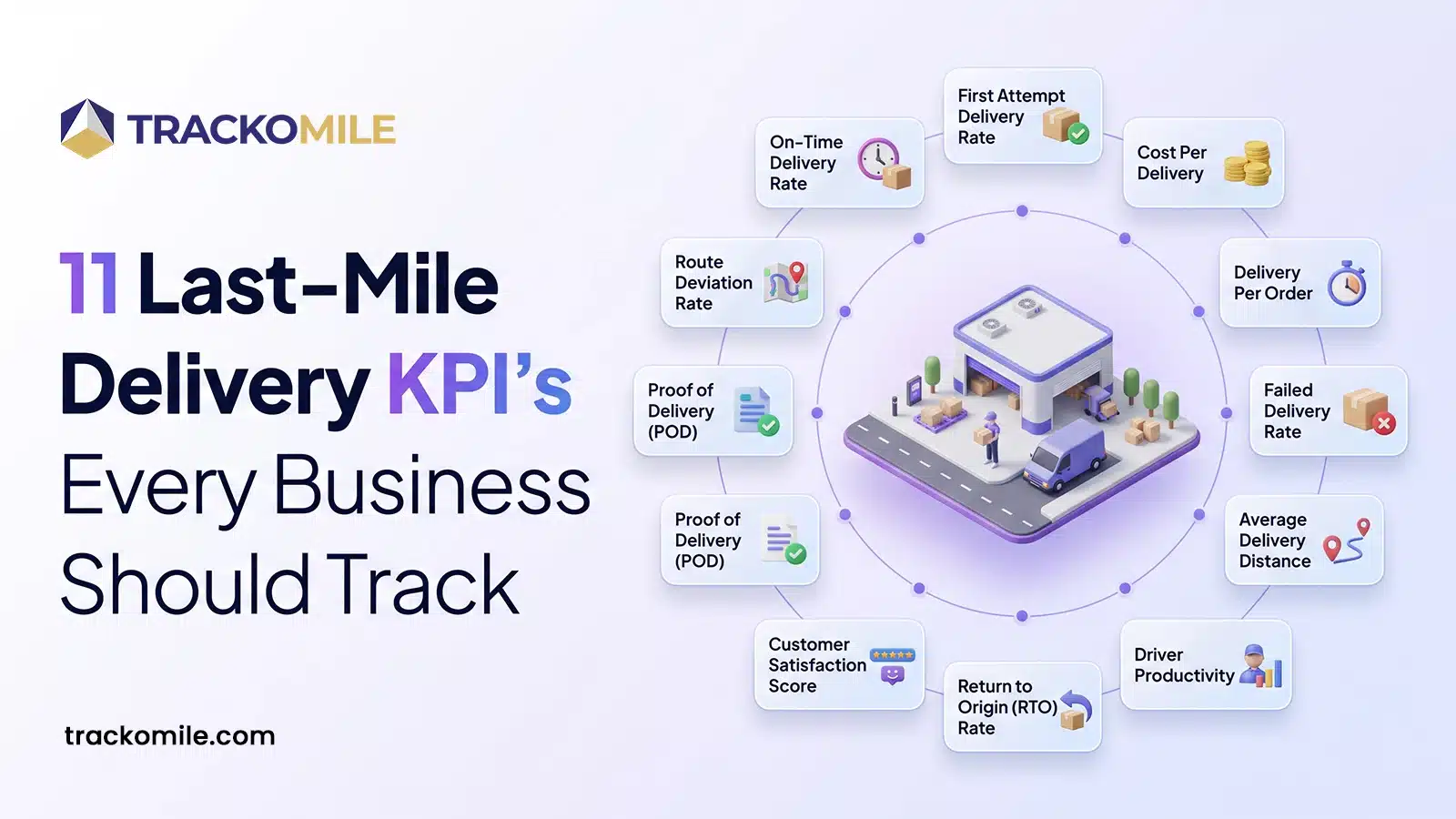
Last Mile Delivery KPIs & Metrics: 11 Essential Metrics to Track
To improve last mile operations, it’s important to track 11 essential last mile delivery KPIs like on-time delivery rate, cost…
Last-Mile Technology: 6 Technologies Transforming Delivery Operations
Learn how last-mile technology combines routing, dispatch, tracking, ePOD, and analytics. Improve your businesses’ delivery speed, visibility, efficiency, and customer…
What is On-Demand Delivery Management Software: Types, Features, & Benefits
This blog explores on-demand delivery management software, its key benefits, and must-have features. Also, we will explore how to choose…


Your inbox awaits a welcome email. Stay tuned for the latest blog updates & expert insights.
"While you're here, dive into some more reads or grab quick bites from our social platforms!"Stay Updated on tech, telematics and mobility. Don't miss out on the latest in the industry.