
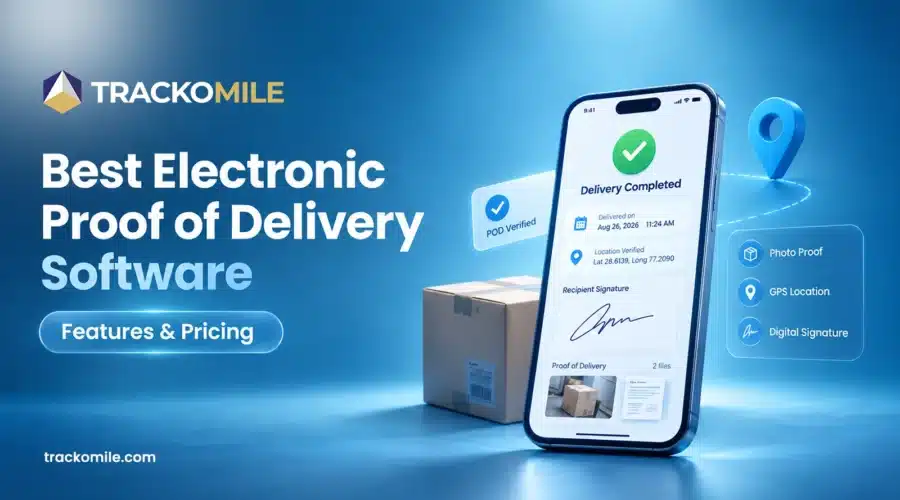
Quick Summary

- Electronic Proof of Delivery Software (ePOD) enhances logistics by ensuring accuracy, visibility, and compliance in deliveries.
- Key features of ePOD software include digital signatures, photo proof, GPS tracking, and offline capabilities for seamless operations.
- Choosing the right ePOD software is crucial for meeting rising customer expectations for speed and transparency in deliveries.
- Top ePOD software options in 2026 include TrackoMile, Upper, Track-POD, and others, each offering unique features to improve delivery management.
Compare the best electronic proof of delivery software in 2026. Explore what each tool offers and choose the right fit for your business.
Proof of delivery has always been an important part of the delivery process. Traditionally, it meant getting a customer’s signature on a receipt and carrying that document back to the office. Simple enough when delivery volumes are manageable. But as businesses started handling more orders across more locations, managing these paper records became a different challenge altogether.
The delivery was completed. The customer received the order. But when the customer later says, “I never received it,” the real work begins. The operation team now has to find the receipt and check the delivery details. So, they can confirm what actually happened at the doorstep. And when there are hundreds of deliveries to track, doing this manually can quickly become difficult. If the proof is missing or difficult to access, a simple delivery dispute can turn into a lack of trust, delayed payments, and potential revenue loss.
This is where electronic proof of delivery (ePOD) software comes in. But what exactly is ePOD, and how does it change the way businesses capture and manage delivery proof? Let’s find out.
What is Electronic Proof of Delivery Software?
Electronic proof of delivery (ePOD) software is a solution that helps businesses capture, manage, and store proof of delivery digitally. Instead of collecting a customer’s signature on a physical receipt, delivery teams can use a mobile app to record details electronically.
Depending on the software, delivery teams can capture proof of delivery in different formats. This includes an OTP, esignature, photo, and barcode scan. Once captured, the details are stored digitally. Authorized teams can access them whenever required.
What is the Difference Between Paper-based POD vs Digital Proof of Delivery?
Both paper-based and digital POD help confirm a delivery. But the way they collect, store, and manage information is quite different. Here’s a quick comparison.
| Factor | Paper-based POD | Digital Proof of Delivery |
| Proof Collection | Paper signature | Digital capture |
| Proof Types | Signature | OTP, photo, signature |
| Record Access | Manual search | Instant access |
| Record Storage | Physical files | Cloud storage |
| Data Entry | Manual | Automated |
| Delivery Verification | Delayed | Real-time |
| Dispute Resolution | Time-consuming | Faster |
| Record Accuracy | Prone to errors | More reliable |
| Operational Visibility | Limited | Better visibility |
| Scalability | Difficult at scale | Easy to scale |
Why Do You Need an Electronic Proof of Delivery Software?
Paper-based POD may work when delivery volume is low. But as order volumes increase, managing physical records becomes harder. Teams must collect, store, verify, and retrieve delivery records manually. This can create several challenges for delivery operations.
In fact, the problem is bigger than paperwork. A 2025 Microlise study found that more than 40% of respondents had lost a POD document, which then contributed to a customer dispute. Also, 51% had experienced delays in processing paper-based delivery documents. For businesses handling high delivery volumes, these small delays can quickly become an operational burden.
These challenges show why businesses are switching to electronic proof of delivery software. It makes delivery operations faster, more reliable, and easier to manage. Continue reading to find out the benefits in detail.
What Are the Benefits of an ePOD Software?
ePOD software helps businesses to reduce delivery costs, improve team productivity, resolve delivery disputes faster, and manage growing delivery volumes more efficiently.
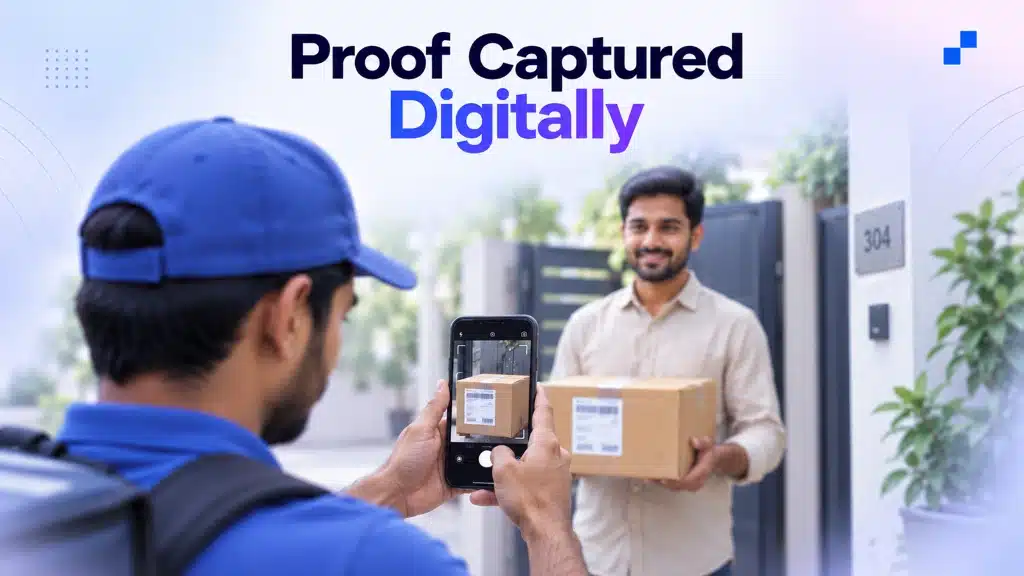
Proof at Every Delivery
1. Reduce Delivery Costs
ePOD reduces the time and effort spent managing paper-based POD. Teams can capture and access delivery records digitally. This helps them reduce the overall last mile delivery costs.
2. Improve Team Productivity
Teams spend less time chasing delivery records. They can quickly find the proof they need instead of checking receipts or asking drivers for updates.
3. Faster Dispute Resolution
Businesses can respond to delivery disputes faster. Teams can easily verify what was captured at the doorstep and resolve customer queries without lengthy back-and-forth.
4. Reduce Revenue Loss from Disputes
Businesses have stronger evidence when a customer questions a delivery. This makes it easier to verify the order, resolve disputes, and avoid unnecessary revenue loss.
5. Better Customer Experience
Delivery confirmation software sends automatic post-delivery messages to customers. At the same time, teams can quickly check the delivery proof and share the relevant details. This reduces back-and-forth and builds trust.
5 Must-Have Features of an ePOD Software
GPS Geo-stamping & timestamps, multiple ePOD options, and barcode & QR scanning are the must have features of an ePOD software. Let’s explore these and more in detail.
1. GeoStamping and Timestamp
GPS geo-stamping records the delivery location and timestamps show when the delivery was completed. It helps businesses verify what happened at the delivery point. This shows:
- Delivery location
- Delivery date and time
- Location at the time of proof capture
- Delivery activity history
This helps businesses verify deliveries faster and maintain reliable records when a customer raises a dispute.
2. Multiple ePOD Options
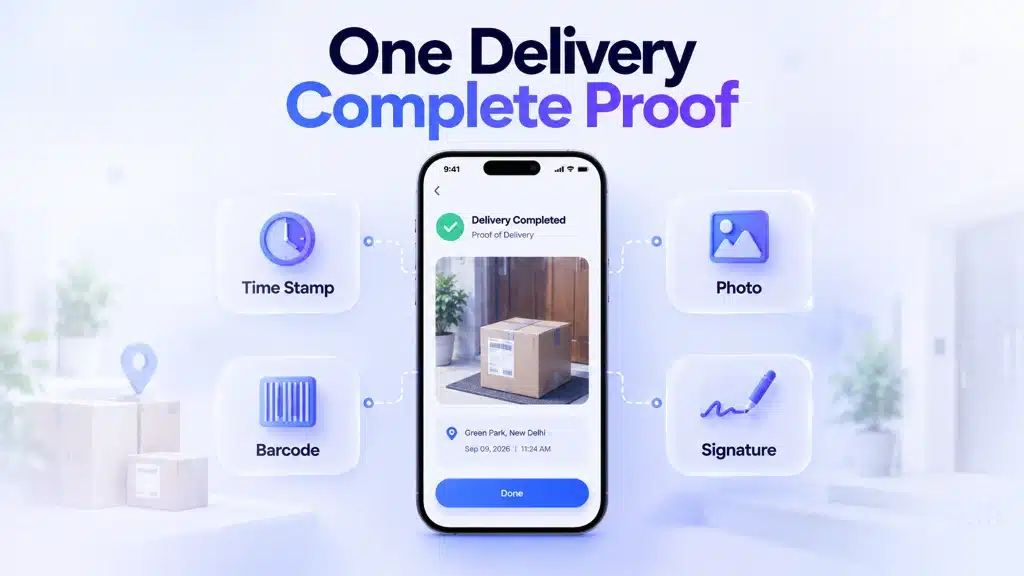
Multiple ePOD options let delivery teams capture proof in the format that best fits the delivery. For example, a quick photo works for early morning grocery deliveries without involving the customer. OTP works well for high-value, secured deliveries. This gives businesses more flexibility when confirming an order. These are the common options:
- OTP
- Digital signature
- Delivery photo
- Barcode or QR scan
Flexibility speeds up the cycle and reduces gaps when verifying completed orders.
3. System Integration
System integration connects ePOD software with the tools your business already uses. This includes order management, ERP, billing, and CRM systems. This keeps proof-of-delivery data connected across teams. It helps with:
- Order data synchronization
- Delivery status updates
- POD data transfer
- Invoice and billing updates
This reduces duplicate data entry. Also, it keeps delivery records consistent across their existing systems.
4. Real-Time Data Sync
Real-time data sync keeps delivery information updated across teams. It gives managers a current view of completed deliveries and helps them make faster operational decisions. It provides:
- Updated delivery status
- Latest POD details
- Delivery exceptions
- Centralized records
This helps businesses maintain better delivery visibility and respond faster to issues.
5. Offline Tracking
Offline tracking keeps delivery teams connected to the POD process even in areas with weak or no internet connectivity. Delivery records remain available and can be updated without disrupting the delivery workflow. It supports:
- Offline proof capture
- Delivery status updates
- Location and timestamp records
- Automatic sync when connectivity returns
This helps businesses avoid missing delivery records and maintain consistent operations across areas with unreliable network coverage.
Multi-Format ePOD Capture
What to Look for When Choosing ePOD Software?
Look for user reviews, pricing, and integration support when choosing ePOD software. Here’s a practical checklist to help you choose the best fit for you.
1. User Reviews
Look for real user reviews from similar businesses on platforms like Capterra and G2. Check what they say about the product’s performance and reliability. This will give you a better idea about how the software performs in the real world.
2. Compare Pricing
Always compare the total cost, not just the advertised subscription cost. Check out what features are included in each plan. Also, whether you will pay extra for additional users, integrations, or proof options. The best advice is to look for software with custom pricing.
3. Check Integration Support
Check whether the software works with the existing system. This could include your ERP, billing, and order management. Good integrations keep your delivery data connected and avoid extra manual work.
4. Ask for a Free Demo or Trial
Ask for a demo or trial before you commit. Use it to check how easily your team can capture, access, and manage PODs. This helps you see whether the software fits your actual delivery workflow. It is a good idea to pick a company offering free demos.
5. Ease of Use
Choose software that your delivery teams can use without extensive training. Check how easily riders can capture POD using rider app. A complicated interface can slow down adoption and reduce the value of the software.
10 Best Electronic Proof of Delivery Software in 2026
TrackoMile, Upper, Route4Me, and Routific are the best electronic proof of delivery software in 2026. Each one is picked based on its unique features, pricing, and user feedback. Read on to know in detail.
| Software | Key ePOD Features | Pricing |
| TrackoMile |
|
Custom pricing |
| Upper |
|
Custom pricing |
| Track-POD |
|
Custom pricing starting at $49/month per driver/vehicle, billed annually |
| Routific |
|
Free up to 100 orders/month; paid plans start at $150/month |
| Route4Me |
|
Custom pricing |
| OptimoRoute |
|
Custom pricing starting at $39/driver/month |
| DispatchTrack |
|
Not publicly disclosed |
| Tookan |
|
Starts at €29/vehicle/month |
| SmartRoutes |
|
Starts at €29/vehicle/month |
| eLogii |
|
Custom pricing |
1. TrackoMile
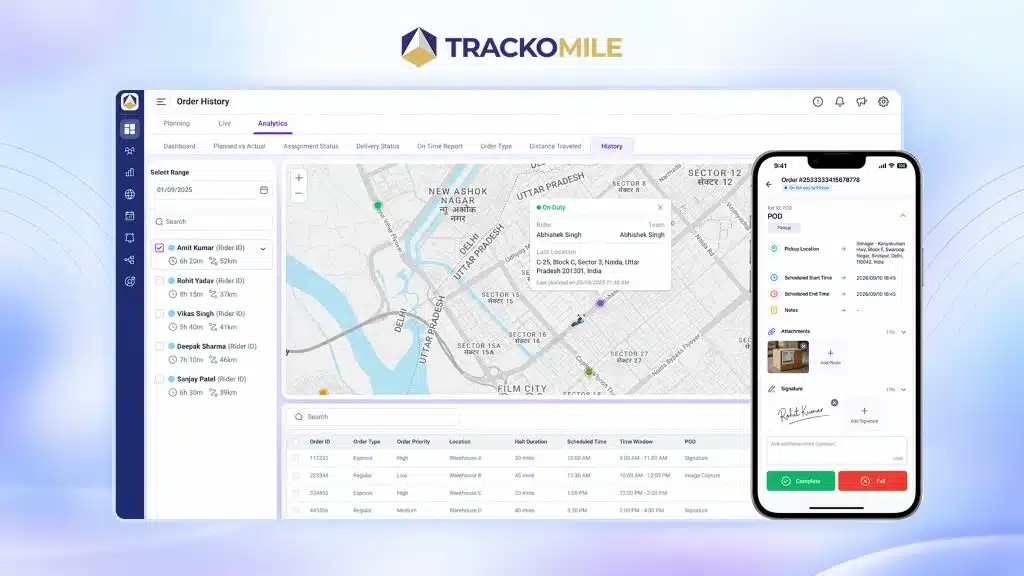
TrackoMile
TrackoMile is a last mile delivery software. It is trusted by 500+ logistics teams worldwide. Teams can plan, assign, track, and manage deliveries from dispatch to completion. TrackoMile offers intelligent dispatching features, such as slot-based scheduling and route optimization.
It brings every proof format together in one platform such as digital signatures, timestamps, and barcode verification. Customer feedback can be collected instantly through “Happiness Codes”. TrackoMile goes beyond recording proof. It integrates proof into the complete delivery workflow. The business gains unmatched control and visibility.
Key Features
- Multiple ePOD options (OTP, photo, digital signatures, barcode)
- GPS-stamped timestamps recorded automatically
- Full audit trail accessible from the manager dashboard
- Happiness Codes for instant customer feedback
- Geofencing for delivery location verification
- Predictive ETAs and automated customer notifications
- Analytics and delivery performance reporting
- Advanced route optimization software
Pricing
TrackoMile offers a custom pricing model.
2. Upper
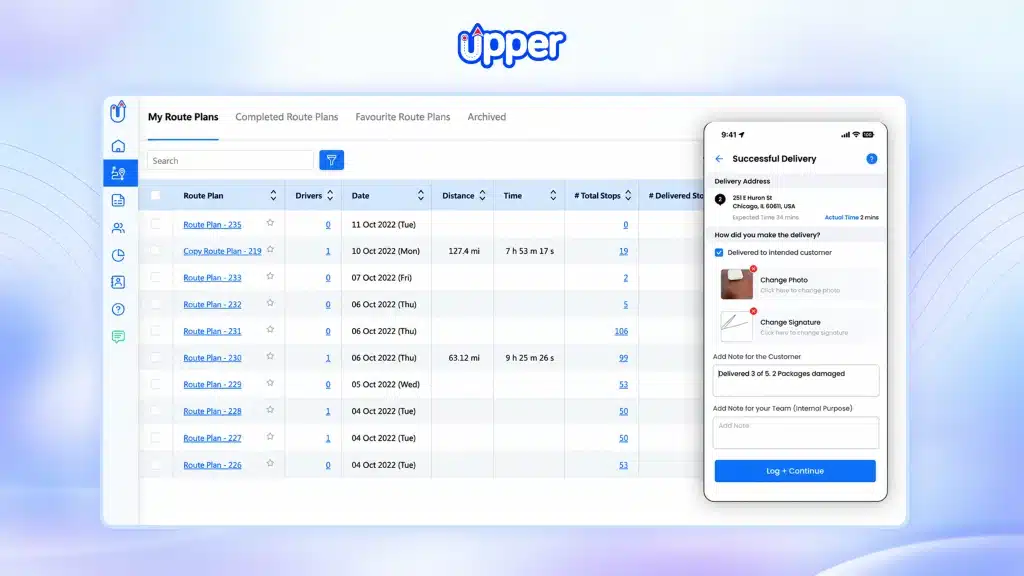
Upper
Upper is a well-known ePOD software especially for small to medium-sized businesses. It combines route planning, delivery tracking, and electronic proof of delivery in a single platform. The platform also sends delivery confirmation to customers through SMS or email. Also, it keeps proof records searchable in the dashboard.
Key Features
- Photo and e-signature capture
- GPS verification and timestamps
- Automatic customer notifications
- Searchable delivery history
- Custom proof requirements
- Barcode and custom field support
Pricing
Custom Pricing
3. Track-POD
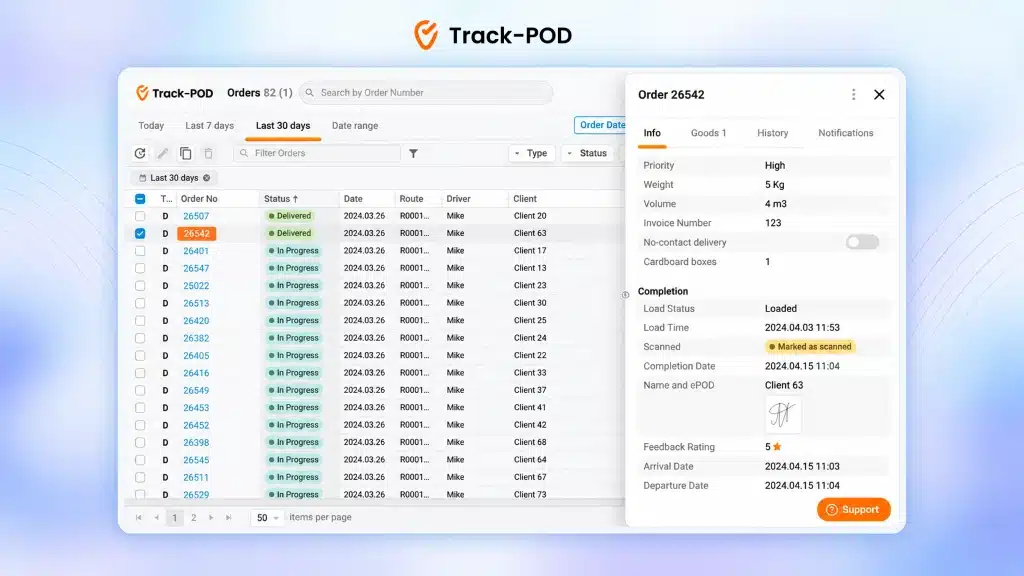
Track_POD
Track-POD is a delivery management software with an ePOD app for managing deliveries and collections. Its mobile app supports digital signatures, photos, geotags, timestamps, and barcode or QR scanning. It also supports offline proof of capture for low internet areas.
Key Features
- Real-time vehicle and delivery tracking
- GPS geotags and timestamps
- Barcode and QR scanning
- Offline ePOD capture and data sync
- Customizable ePOD forms
- Live customer ETAs and tracking links
- SMS and email delivery notifications
Pricing
Custom pricing starting at $49 a month per driver/vehicle billed annually.
4. Routific
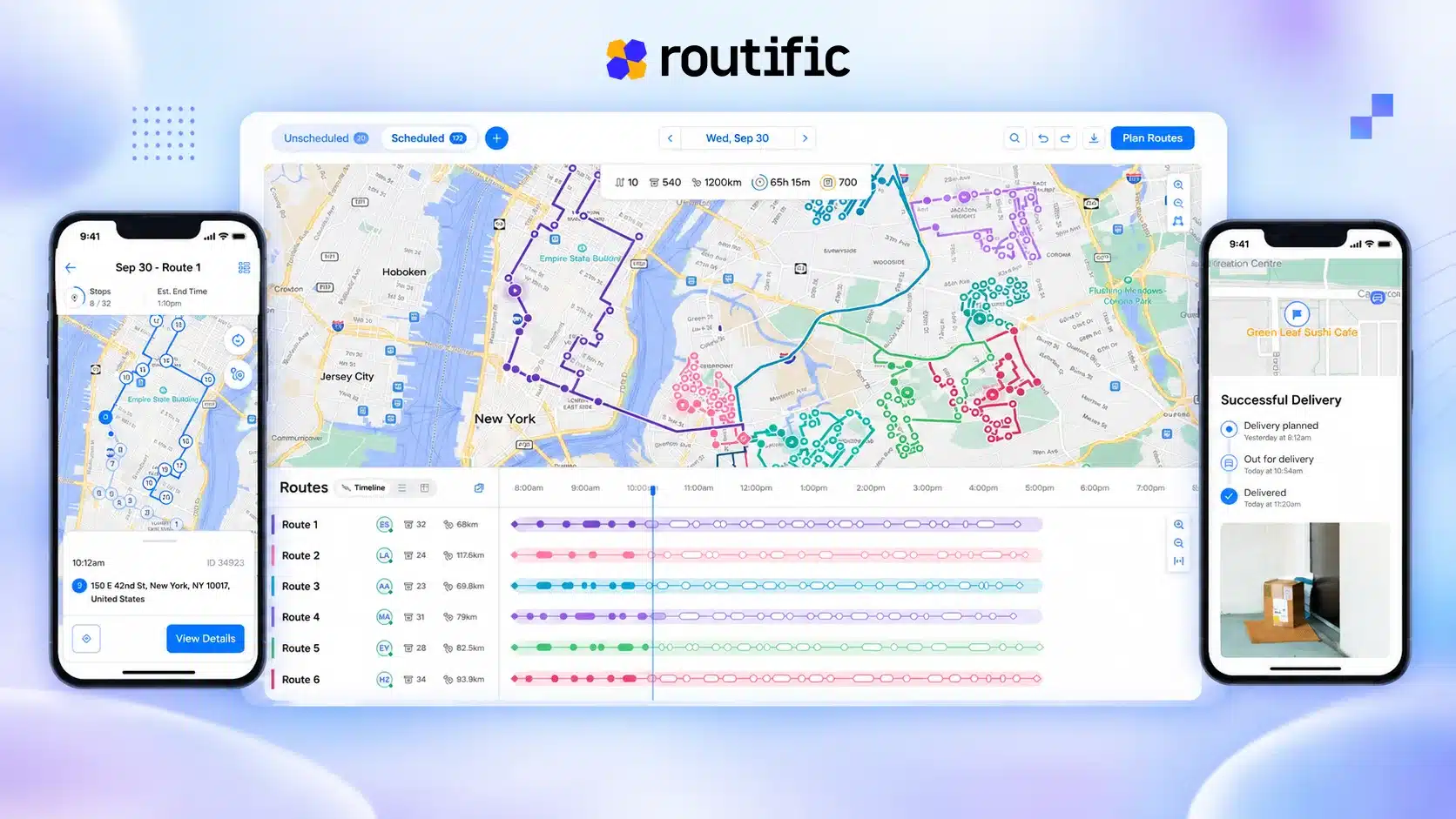
Routific
Routific is primarily focused on route optimization. It is designed for businesses that manage scheduled and multi-stop deliveries. Its ePOD features let riders capture photos, signatures, and barcode verification directly through the mobile app.
Key Features
- Photo proof of delivery
- Digital signature capture
- Real-time GPS tracking
- Customer delivery notifications
- Route optimization
- Failed delivery and re-attempt options
- POD access from the dispatcher dashboard
Pricing
Routific offers a free tier for up to 100 orders per month. Its paid plan starts at $150/month.
5. Route4Me
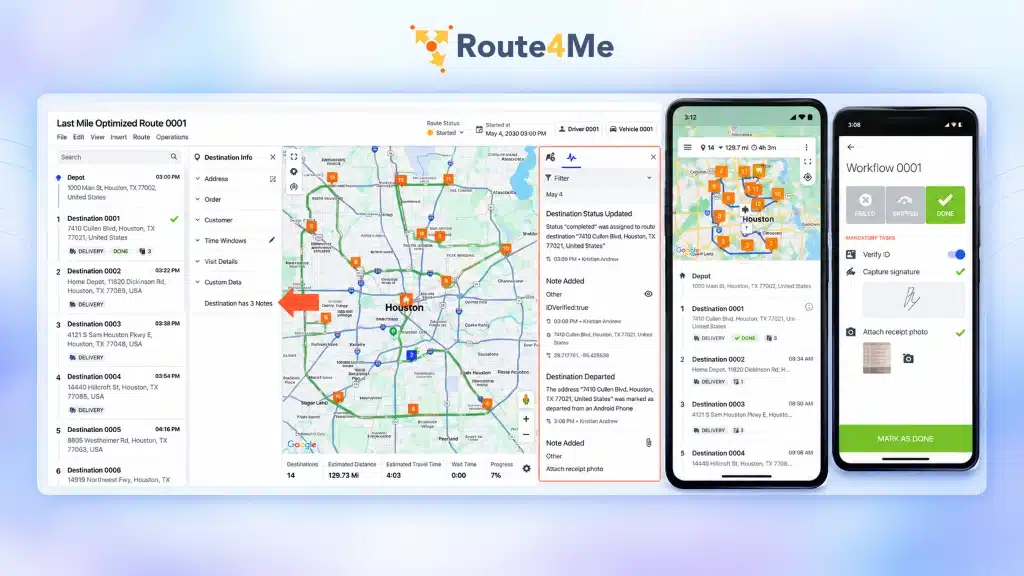
Route4Me
Route4Me is a route optimization and delivery management software. its mobile app supports paperless proof of delivery capture at delivery stops. Businesses can create workflows that require specific proof before a stop is marked to complete. It supports multiple ePOD formats like signatures, photos, videos, notes, and barcode scans.
Key Features
- Custom proof requirements
- Geotagged delivery proof
- Offline POD capture
- Mandatory proof before stop completion
- Route-linked POD records
- Real-time data synchronization
Pricing
Custom Pricing.
6. OptimoRoute
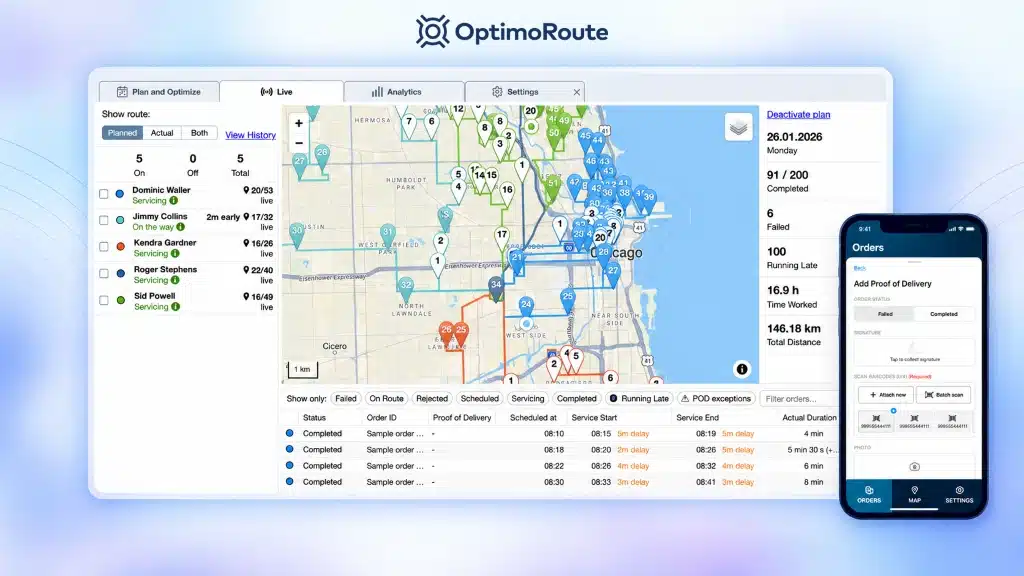
OptimoRoute
OptimoRoute is a delivery and field service management software with built-in proof of delivery capture. Its driver app lets teams capture proof directly at each step and attach it to the relevant order. This gives dispatchers and managers a digital record they can use to verify deliveries and resolve customer claims.
Key Features
- Real-time proof availability for dispatchers
- Custom proof of delivery forms
- Failed delivery documentation
- Delivery and service completion records
- Automated order updates
Pricing
Custom pricing starting at $39.00per driver per month.
7. DispatchTrack

DispatchTrack
DispatchTrack is a well-known last mile delivery management platform. It combines route planning, real-time tracking, and electronic proof of delivery. Its ePOD tools let drivers capture signatures, photos, and notes through the mobile app. It also uses machine learning to validate delivery photos to ensure the right item is delivered.
Key Features
- AI-powered photo validation
- Photo and note-based proof
- Timestamped delivery records
- Real-time POD access
- Configurable service and compliance forms
- Automated customer notifications
Pricing
Not disclosed publicly.
8. Tookan

Tookan
Tookan is a delivery and dispatch management platform. It combines dispatch, driver tracking, and task management, with POD features available through the driver app. It is often used by on-demand businesses like courier companies, food delivery, and local service businesses.
Key Features
- Multi-format proof of delivery capture
- GPS location attached to delivery records
- Real-time driver tracking
- Customer notification with live ETAs
- White-label branding available
- Modular add-ons for payments, forms, and integrations
Pricing
Plans start at $129 per month.
9. SmartRoutes

SmartRoutes
SmartRoutes is a reliable delivery management platform with built-in ePOD software. It allows riders to capture photos, electronic signatures, timestamps, and GPS location data at the point of handover. SmartRoutes also sends automated post-delivery notifications to customers. So, you can reduce delivery related disputes.
Key Features
- Photo proof at each delivery stop
- GPS-stamped timestamps
- Barcode scanning for item verification
- Automated post-delivery notifications with proof
- Customizable delivery confirmation messages
- Failed delivery recording with reason codes
Pricing
Plans start at €29 per vehicle per month.
10. eLogii
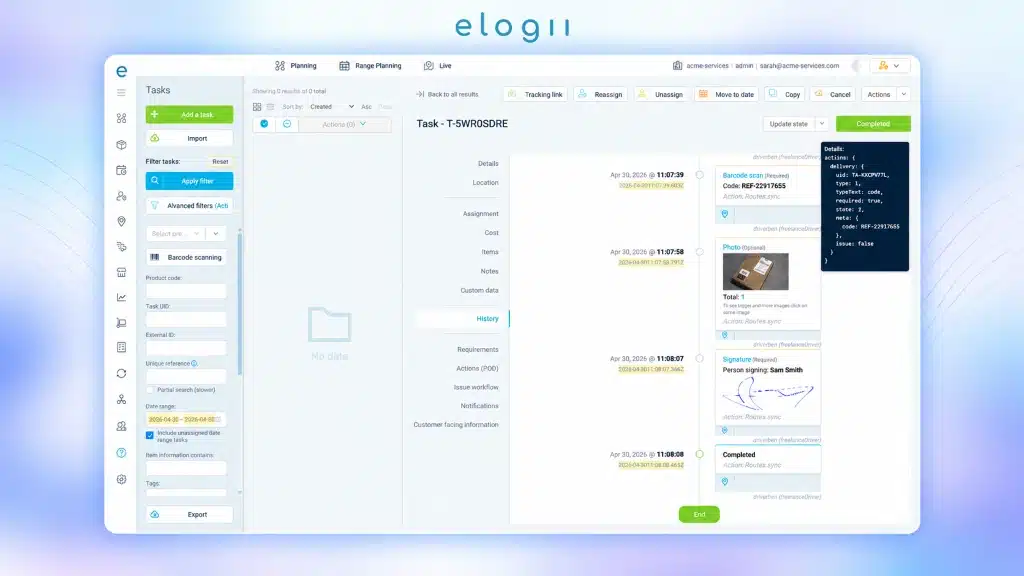
eLogii
eLogii is a cloud-based delivery management and electronic proof of delivery software for small businesses. Its standout feature is the ability to define proof requirements at system, customer, task, and item levels. It also supports item-level tracking, geofence-verified completion, and automated workflows for failed or partially completed deliveries.
Key Features
- Multiple proof types, including photos, signatures, barcodes, OTP, and custom forms
- Item-level proof and chain-of-custody tracking
- Geofence-verified task completion
- Partial delivery and item-level failure tracking
- Automated failed-delivery and reattempt workflows
- Barcode and QR verification
Pricing
Custom Pricing.
Which Industries Use ePOD Software?
eCommerce, retail, and courier & parcel businesses use ePOD software to capture digital proof of deliveries and manage delivery records. Here’s how it helps:
| Industry | How ePOD Software Is Used |
| E-Commerce | Confirms doorstep deliveries with photos, signatures, OTPs, and delivery timestamps. |
| Courier & Parcel | Records proof for individual shipments and helps verify disputed or failed deliveries. |
| Healthcare & Pharma | Documents the handover of medicines, medical supplies, and other sensitive products. |
| Construction | Confirms material and equipment deliveries at project sites with location-stamped proof. |
| Retail | Verifies stock deliveries to stores and outlets, including recipient and quantity confirmation. |
| Third-Party Logistics (3PL) | Keeps proof organized across multiple clients, routes, drivers, and delivery orders. |
| FMCG & Distribution | Captures delivery confirmation and quantity details when products reach retailers and distributors. |
| Food & Beverage | Records order handover and delivery confirmation across restaurants, outlets, and business locations. |
Conclusion
Electronic proof of delivery software is a practical choice for businesses that need reliable and accessible delivery records. It gives the team a clear view of what was delivered, when, and where. The right software, however, depends on your delivery volume, proof requirements, workflow, integrations, and budget. Compare the tools based on the capabilities that matter most to your business rather than choosing only by price.
TrackoMile, a delivery management software, is a strong choice for businesses looking beyond basic proof of delivery. Along with multiple ePOD options, it offers GPS-stamped timestamps, geofencing, audit trails, predictive ETAs, and automated customer notifications. These capabilities connect delivery proof with the wider delivery workflow. This gives teams better visibility and control.

Frequently Asked Questions
-
What is the difference between electronic and paper proof of delivery?
Electronic proof of delivery stores delivery confirmation digitally. It includes signatures, photos, GPS location, timestamps, or barcode scans. Paper POD relies on physical documents. It comes with a risk of lost records, manual errors, and delayed access to proof.
-
What should be included in a proof of delivery document?
A proof of delivery document should include the order details, delivery date and time, delivery location, recipient details, and confirmation of receipt. Depending on the business, it may also include photos, signatures, barcode scans, GPS data, and delivery notes.
-
What is the difference between a proof of delivery and a bill of lading?
A bill of lading documents the shipment and its terms before or during the transit. Whereas proof of delivery confirms that the shipment was delivered to the right recipient. A bill of lading includes details such as the shipper, carrier, goods, and destination. POD records the actual delivery, including the recipient, time, location, and confirmation.
-
How much does electronic proof of delivery software cost?
There is no fixed cost of an ePOD software. Pricing depends on factors such as the number of drivers, delivery volume, features, and billing model. Some providers offer plans starting at a monthly per-driver fee. While others use custom pricing.
-
Why is ePOD software important for logistics businesses?
ePOD software helps logistics businesses verify deliveries instantly, reduce disputes, improve delivery accuracy, enhance customer satisfaction, and gain real-time visibility into delivery operations while eliminating manual paperwork.

Parul is a content writer with 2+ years of experience in B2B and SaaS domains. She creates clear, actionable content for TrackoBit and TrackoMile, focusing on fleet management, last-mile delivery, and... Read More


Related Blog
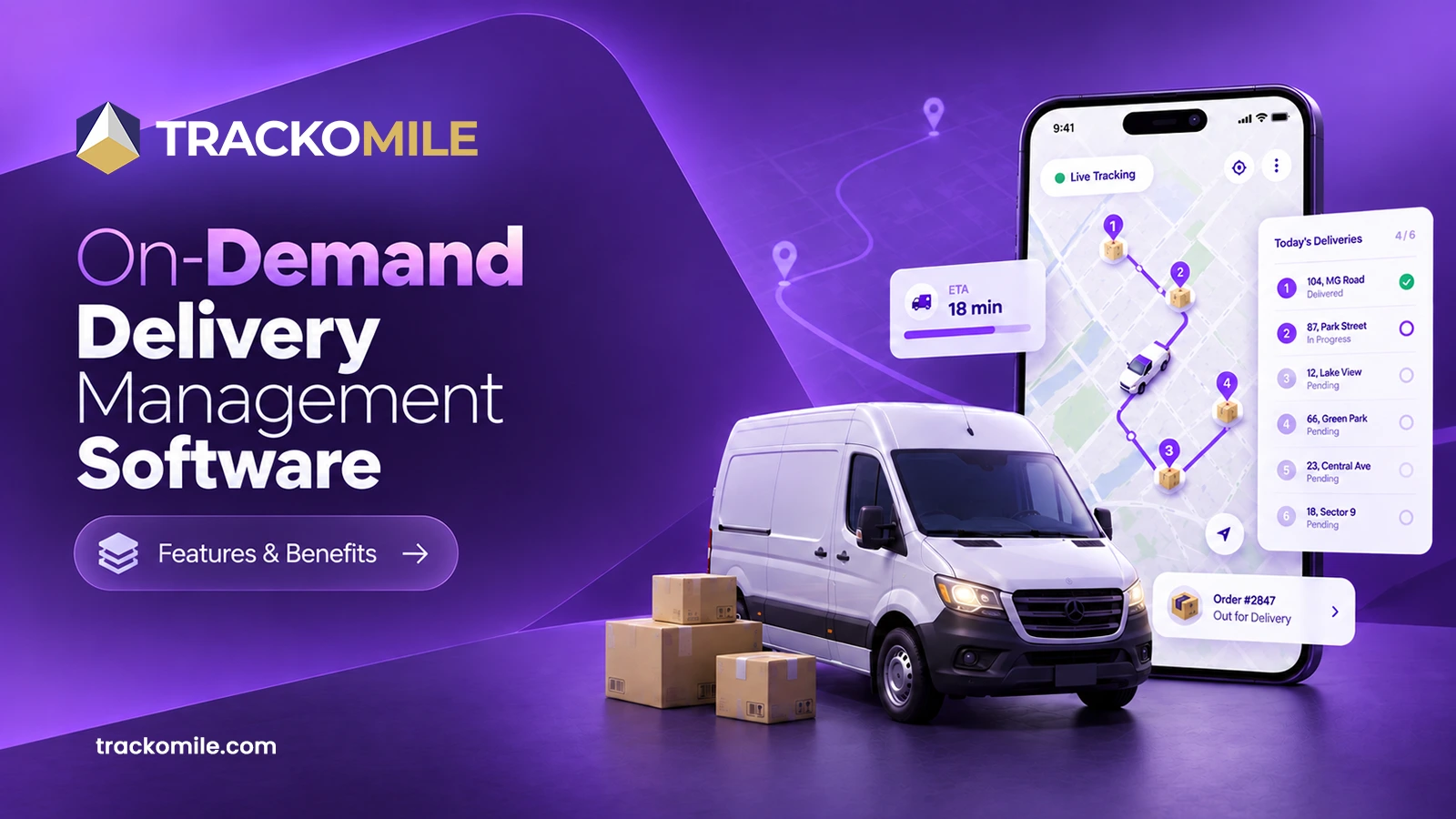
What is On-Demand Delivery Management Software: Types, Features, & Benefits
This blog explores on-demand delivery management software, its key benefits, and must-have features. Also, we will explore how to choose…
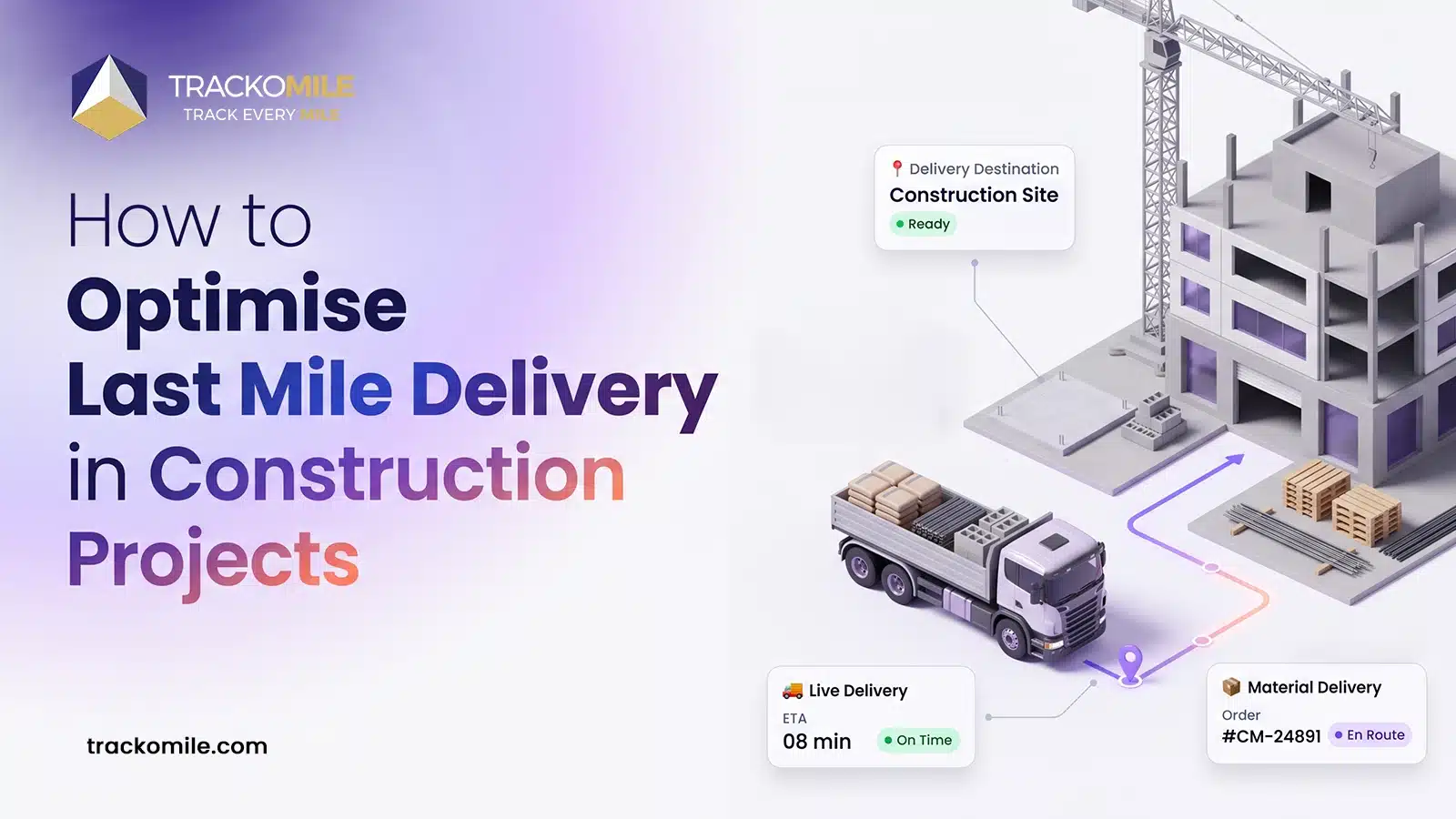
Last Mile Delivery in Construction: Challenges, Solutions & Optimization Strategies
This guide explains how last mile delivery construction software can help improve efficiency, visibility and site coordination.
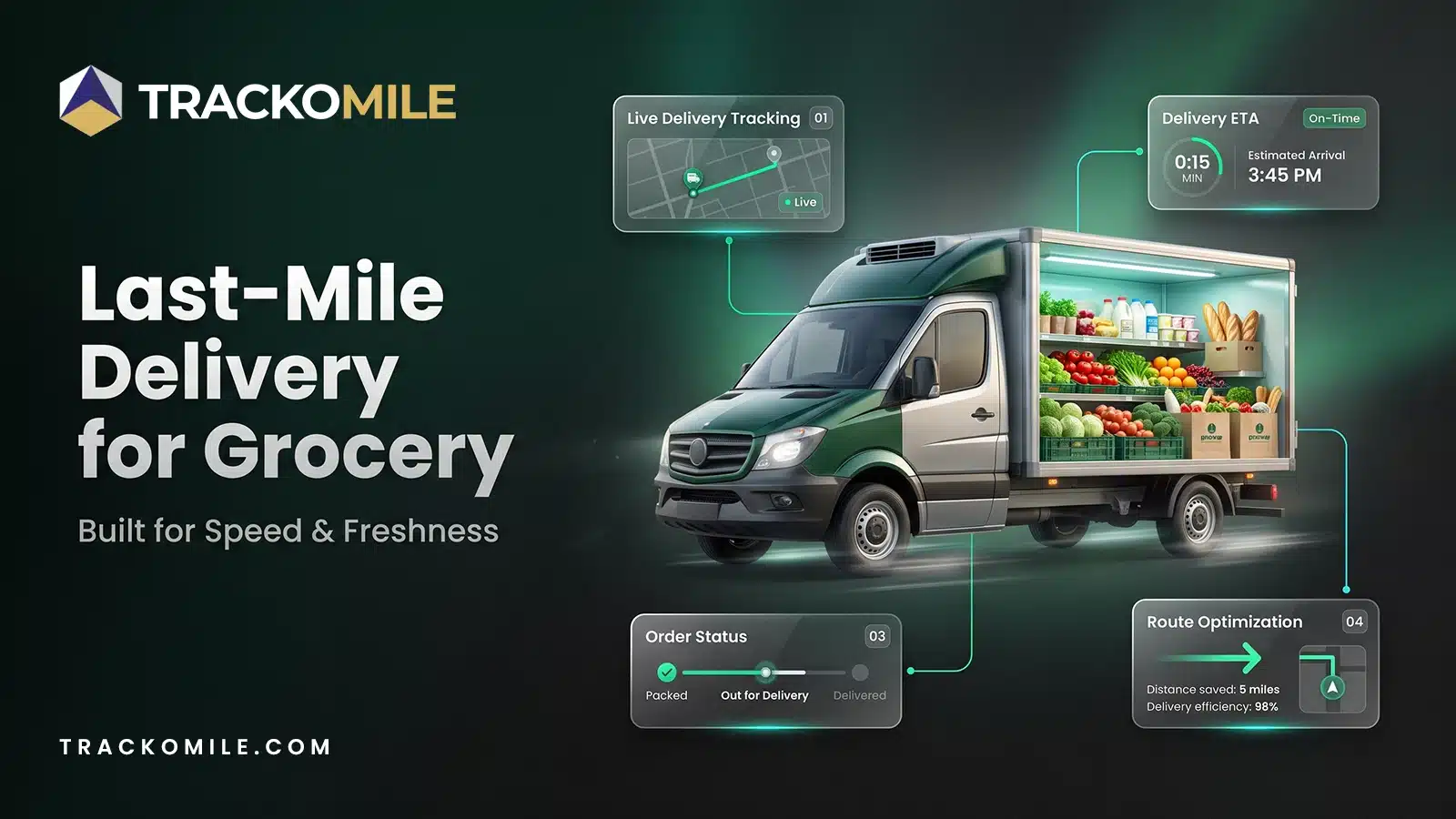
Last Mile Delivery for Grocery and Food Industry
This blog talks about last mile delivery for grocery & food industry. We will look at how advanced software improves…
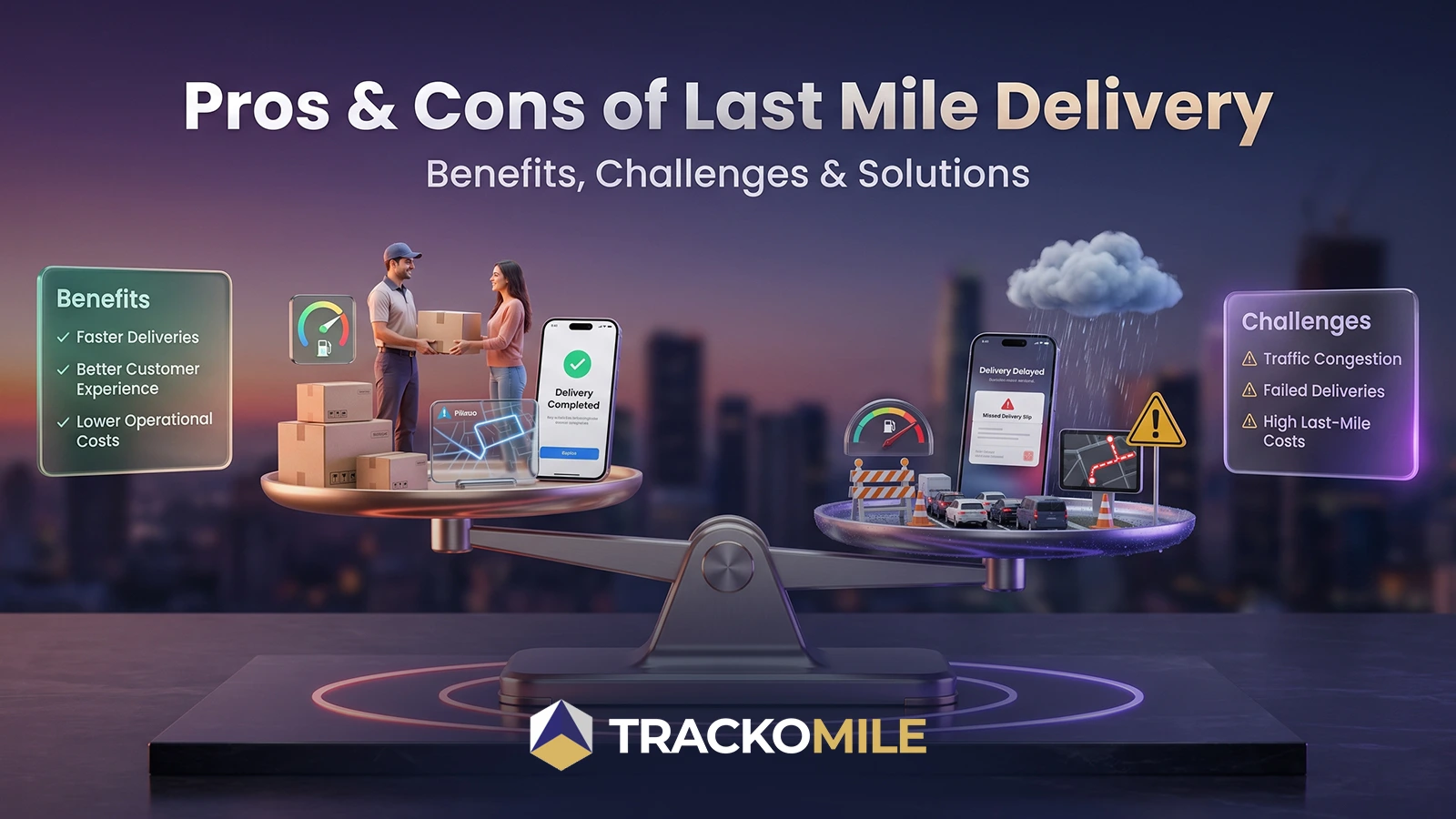
Pros and Cons of Last Mile Delivery: A Guide for 2026
This blog explores the pros and cons of last mile delivery. It also looks at how businesses can overcome common…


Your inbox awaits a welcome email. Stay tuned for the latest blog updates & expert insights.
"While you're here, dive into some more reads or grab quick bites from our social platforms!"Stay Updated on tech, telematics and mobility. Don't miss out on the latest in the industry.