
Quick Summary

- Last mile routing software optimizes delivery processes from distribution hubs to customers, enhancing efficiency and visibility.
- Key challenges include rising fuel costs, traffic congestion, failed deliveries, and lack of real-time tracking, impacting profitability.
- Dynamic dispatching, route optimization, and real-time tracking are essential strategies for improving last mile routing efficiency.
- Top software options like TrackoMile, FarEye, and Locus provide tools for effective last mile routing, ensuring better control and cost management.
This blog explores what last mile routing is and the key challenges businesses face. Also, we will explore how last mile delivery software can improve delivery performance in 2026.
Last mile routing has come a long way from static route planning and manual dispatch decisions. Traditionally, it relied on fixed schedules and manual coordination. Also, businesses have limited visibility once riders are out for delivery. Fast forward to 2026, last mile delivery routing has now become a more dynamic and tech-enabled function. It is focused on real-time tracking and better execution control across delivery operations. What has changed is how critical routing has become for business performance. It directly affects delivery costs, profitability, and customer experience.
As a result, businesses rely on last-mile routing software to manage dynamic route conditions. So, they can control costs and maintain visibility across deliveries. Continue reading this blog to learn more.
What is Last Mile Routing & How it Works?
Last mile routing is the process of planning and sequencing deliveries from a distribution hub to the final customer in the most efficient way. It defines order assignment, delivery sequence, and how routes are planned for deliveries.
Last mile routing usually involves a route optimization software. It analyzes delivery data to determine the shortest and best route. The software considers factors like
- Delivery schedules
- Rider availability
- Traffic conditions
- Delivery priority
- And location data to find the most efficient routes.
It enables logistics, retail, courier, and ecommerce businesses to enhance their delivery planning. Also, they can optimize their high-volume last-mile operations.
Why is Last Mile Routing the Most Critical Part of the Delivery?
Last mile delivery routing is the most important component of the supply chain. It directly influences the efficiency of delivery, operational cost, and customer experience. Any routing inefficiency, no matter how minor, can result in:
- High fuel costs,
- Delivery re-attempts,
- Low productivity,
- Poor vehicle utilization.
These directly affect profit margins and make it harder for businesses to stay competitive. That’s why logistics companies are investing in last mile route planning software. These solutions help them to optimize routes based on location, rider skills, weather, and traffic to name a few. For example, as reported by Business Insider, with better route planning companies have reduced the number of routes from 30-40 to 16-20. This allows Riders to complete more deliveries within the same working hours.
5 Key Challenges in Last Mile Routing in 2026?
The primary challenges of last mile routing are poor route optimization, late deliveries, and urban congestion. Let’s take a closer look at these challenges.
1. Rising Fuel and Operational Costs
Unpredictable fuel prices create a challenge for logistics teams to manage costs. This is because poor routing results in longer travel distances and idle time, increasing fuel usage and delivery cost.
Market Insights
During the 2026 West Asia crisis, PM Modi encouraged faster EV adoption to reduce fuel dependency. For logistics businesses, this highlights the growing importance of fuel-efficient delivery operations.
2. Traffic Congestion
Traffic congestion continues to be the biggest challenge in last-mile delivery routing. Logistics teams struggle to keep delivery schedules accurate due to peak hour traffic. Also, the state of the road, social events, and construction affects the route. This results in delays and reattempts.
3. Failed or Delayed Deliveries
Missed delivery attempts and delivery rescheduling are common due to incorrect address,. Customer unavailability, and poor route planning. Multiple delivery attempts can have a major effect on customers’ performance and SLA. As a result, it affects the profitability for logistics companies.
4. Lack of Real-Time Visibility
Without real-time tracking, managers often find it difficult to track rider activity. Also, they cannot track delivery progress and delays during transit. This lack of visibility affects decision-making, customer communication, and operational control.
5. Managing Dynamic Routes & Delivery Priorities
Last mile delivery routes continuously change throughout the day. This happens because of sudden orders, reschedules, traffic jams, or delivery cancellations. Without intelligent last mile route optimization, frequent route changes can reduce delivery efficiency. Plus, it increases delays and reduces overall efficiency.
Top Strategies for Optimizing Last-Mile Routes
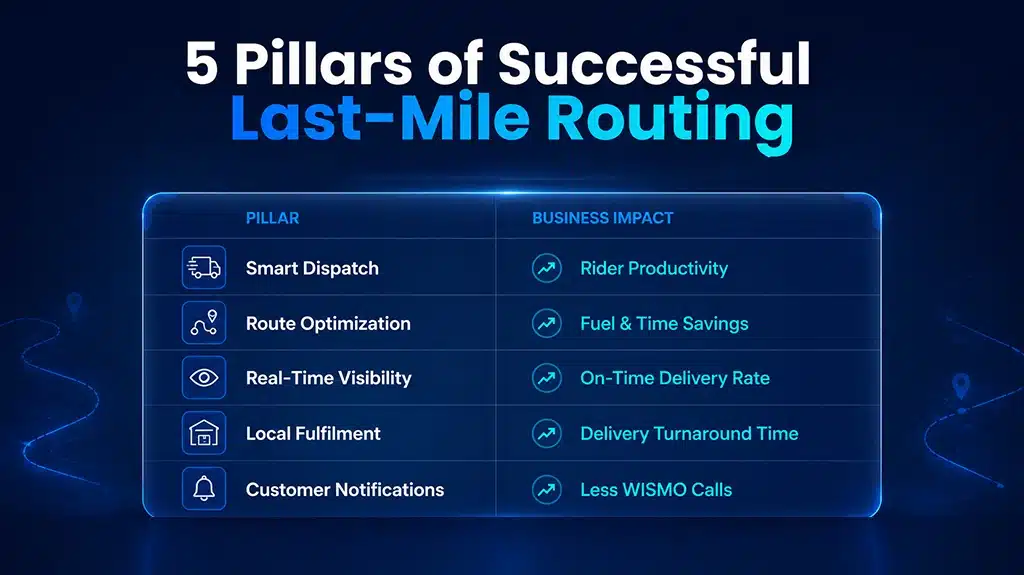
Businesses can optimize last-mile routes by using dynamic route planning, real-time tracking, and dynamic dispatching.
5 Pillars of Successful Last-Mile Routing
1. Dynamic Dispatching & Routing
Automated dispatch management software helps businesses to assign the right rider, vehicle and delivery routes. It considers factors like:
- Priority
- Location
- Vehicle capacity
- Rider availability.
So, managers can reduce manual errors and ensure better control over delivery timelines.
2. Route Optimization Software
Companies use route optimization software to plan delivery routes based on real-world conditions. It consider factors like traffic, weather, skill, vehicle capacity, and road conditions to plan the most efficient path. So, managers can save both fuel costs and time.
3. Real-Time Tracking & Visibility
Real-time last-mile tracking allows you to monitor delivery progress and rider movements. This provides clear visibility into delays, route deviations, and order status during execution. So, managers can respond quickly to issues, reduce delivery delays. Also, they can maintain consistent control over last mile performance.
4. Micro-Fulfilment & Local Hubs
Position inventory closer to end users by using micro-fulfilment centers and local hubs. This way companies can reduce travel distance and per-order logistics cost in high-demand zones.
5. Alerts & Notifications
Real-time alerts and delivery notifications keep both managers and customers updated. They can track delivery status, delays, and exceptions as they happen. Businesses can share accurate ETAs and live delivery links via SMS or email. This way, you can reduce manual follow-ups and WISMO calls.
Top 5 Last Mile Delivery Routing Software
TrackoMile, FarEye, and Locus proudly stands among the best last mile routing software in 2026.
1. TrackoMile
TrackoMile
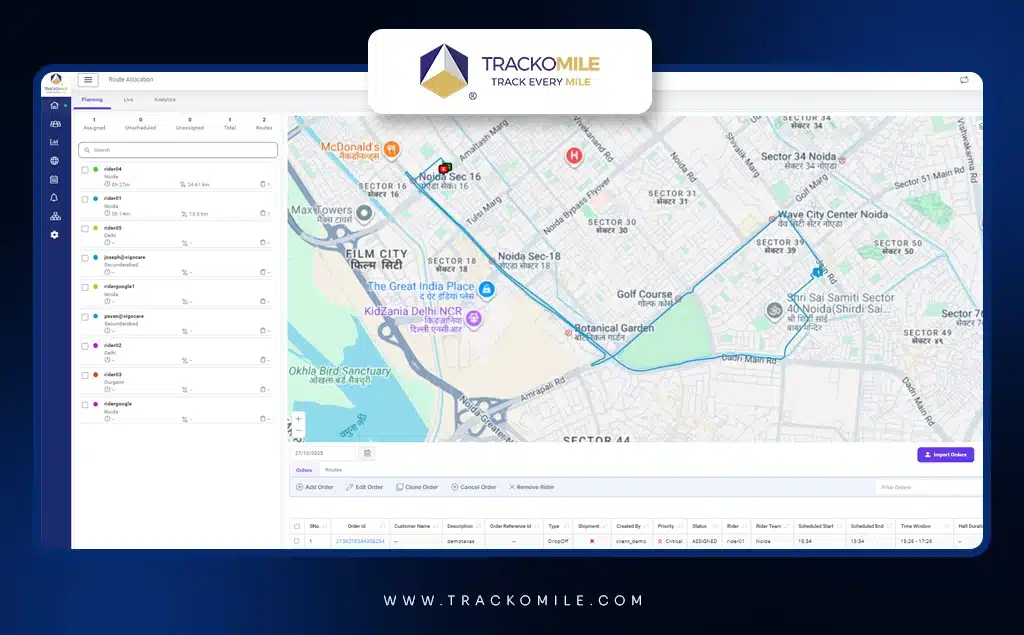
TrackoMile is a leading last-mile delivery software in India. It brings dispatch management, route optimization, rider roster, and POD into a single system. So, businesses can reduce operational costs and ensure visibility. They can also maintain better control over deliveries.
Key Features of TrackoMile
- Smart order allocation
- Dispatch management & route planning
- Real-time tracking & visibility
- Digital proof of delivery
- Customer communication and ETAs
2. FarEye
FarEye
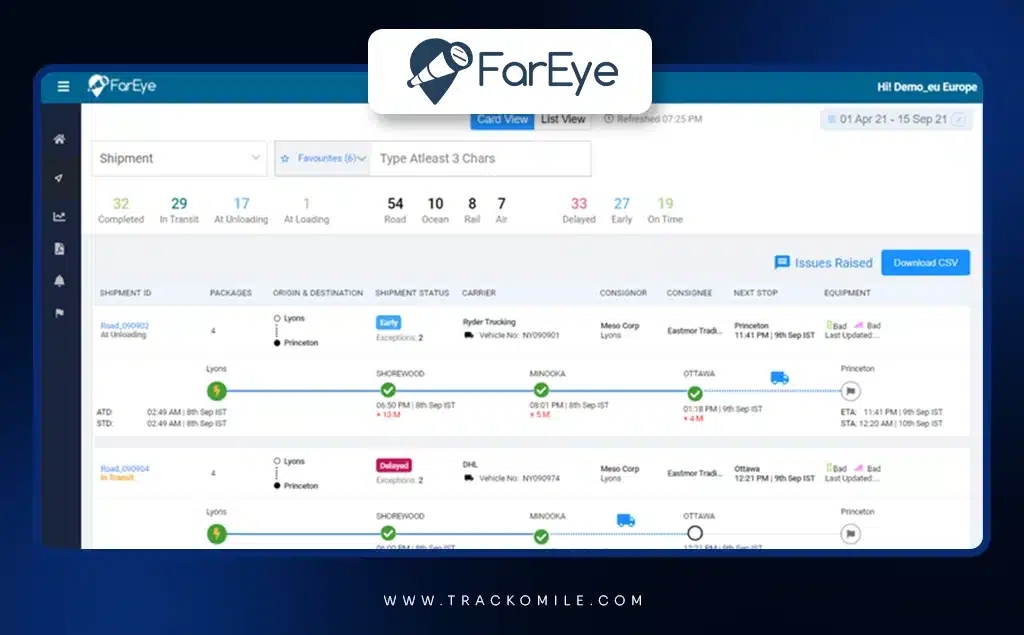
FaeEye is a well-known last-mile delivery platform. It offers AI-powered route planning and real-time shipment tracking. It is used by large logistics and enterprise teams to manage complex last mile delivery operations.
Key Features of FarEye
- Route optimization
- Real-time visibility
- Predictive analytics
3. Locus
locus
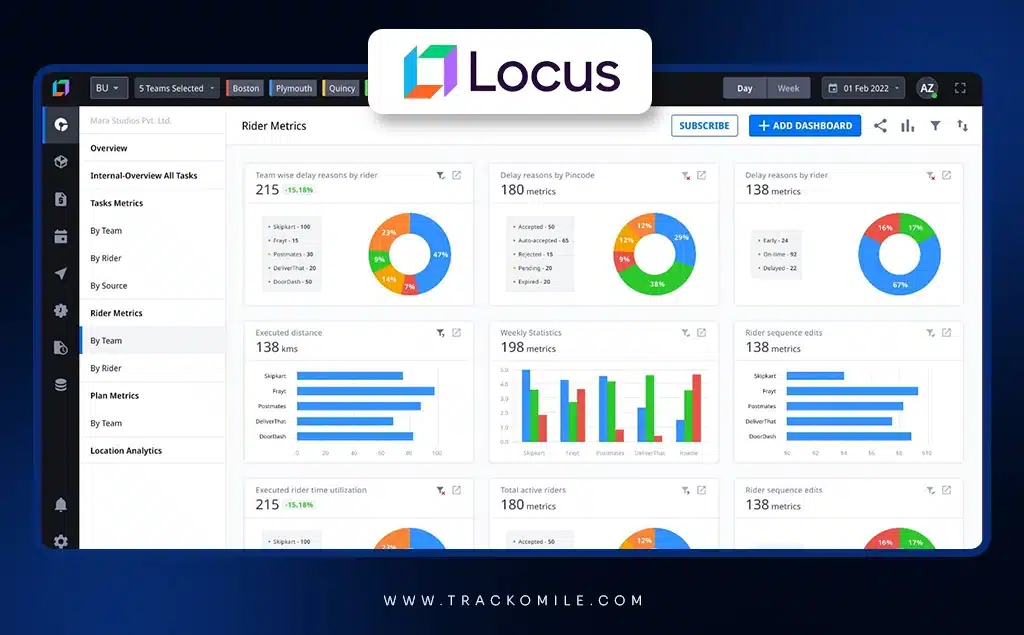
Locus is an AI-powered logistics optimization platform. It is used by enterprises to manage last mile delivery planning and execution. It offers route optimization and dispatch planning software. So, businesses can improve delivery efficiency and manage large-scale operations.
Key Features of Locus
- AI-powered multi-route optimization
- Real-time order tracking
- Capacity management
4. Route4Me
Route4Me
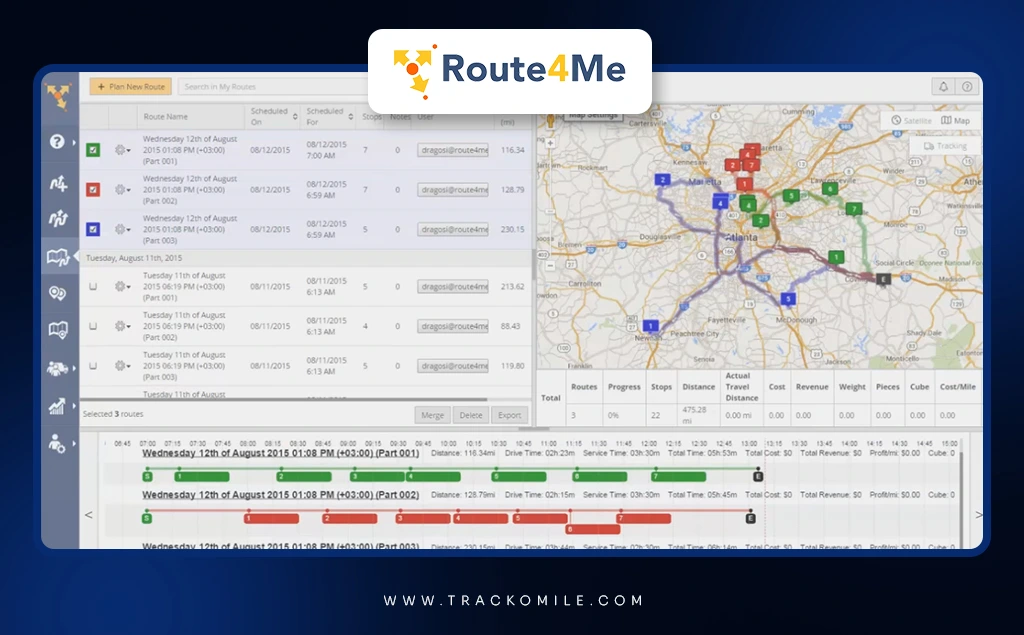
Route4Me proudly stands among the best last mile delivery routing software in 2026. It offers route sequencing, multi-stop planning, and navigation support to efficiently manage deliveries.
Key Features of Route4Me
- Real-time visibility
- Rider tracking & monitoring
- Multi-stop route planning
5. Onfleet
Onfleet
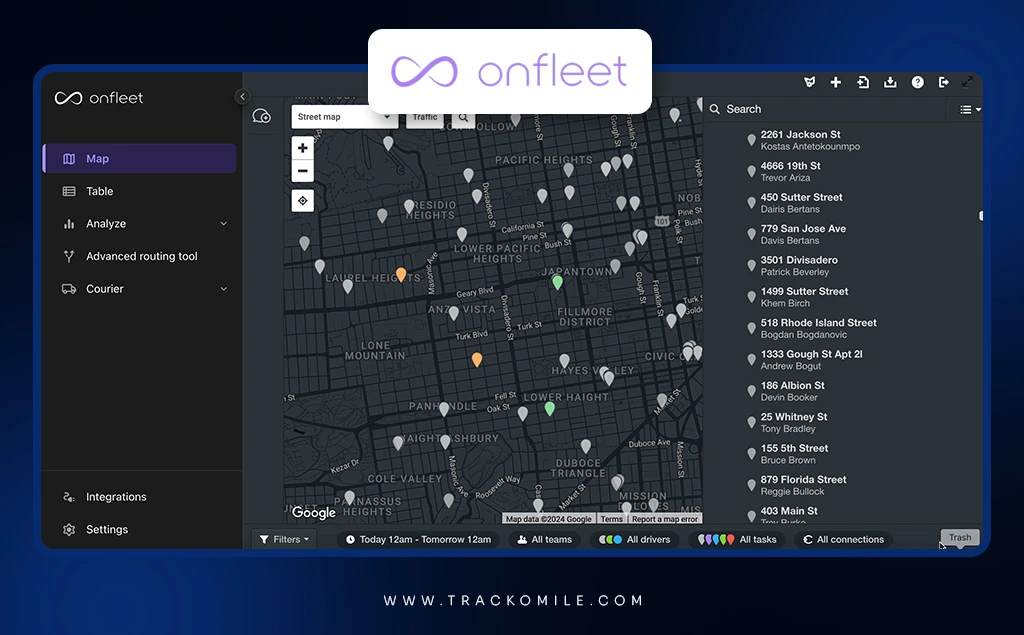
Onfleet is a well-known last-mile delivery management software. It is used by businesses to manage dispatch, Rider tracking, and delivery execution. It offers real-time tracking, route optimization, and proof of delivery in a single platform.
Key Features of Onfleet
- AI-driven route optimization
- Real-time Rider tracking
- Customer communication & ETA
How to Choose the Right Last Mile Routing Software?
While choosing the right last-mile delivery software, companies should consider their features, pricing, and user reviews. Here is a detailed checklist for you to evaluate your options.
Features
Look for features like dynamic dispatching, route optimization, and real-time tracking. This helps businesses to maintain visibility and control costs.
Ease of Use
Choose software that is easy to use for both your riders and managers. You can assess this by booking a free demo. So, you will have to invest less time in onboarding and training your team.
Pricing
You should evaluate the cost based on features, flexibility, and expected savings from visibility. Pricing should feel like ROI instead of an added burden.
User Reviews
Look for reviews from real users from your industries and see what they say about the performance in real-world situations. This will give you deep insights that you will not find in product demos.
Why TrackoMile is the Best Last Mile Routing Software?
TrackoMile stands out as the best last mile routing software. It connects planning, dispatch, tracking, and delivery confirmation in one workflow. It offers all key delivery operations into a single system. So, businesses can control costs, ensure visibility, and maintain better control. TrackoMile offers:
- Smart rule-based engine that assigns order based on capacity, vehicle type and availability.
- Dynamic dispatch management software to improve delivery accuracy and turnaround time.
- Route planning and optimization based on real-delivery conditions like traffic, weather, and distance.
- Live tracking links with updates on delays and route deviations.
- Digital proof of delivery through OTP, signature, photo, or barcode.
- Rider roster management with automated duty logs and shift planning.
- Customer communication with live tracking links via SMS or email and real-time ETAs.
By bringing these capabilities together, TrackoMile help logistic teams reduce manual efforts. Also, they can plan optimized routes and ensure 100% visibility across their operations.

Frequently Asked Questions
-
What are the factors that affect route optimization in real delivery operations?
Weather, traffic, road condition, rider availability, vehicle type, order priority, and location density. These are the major factors that you should consider for optimizing routes. Modern route optimization software like TrackoMile helps you plan optimized routes based. So, you can reduce delays and control overall delivery costs.
-
How is last mile routing different from route optimization?
Last mile routing is the overall process of planning and managing deliveries from a distribution hub to the end customers. Route optimization on the other hand, is a part of that process. It focuses specifically on calculating the most efficient path for deliveries. It considers factors like traffic, distance, delivery windows, and vehicle capacity.
-
How much does last mile delivery software cost?
The cost of a last mile delivery software depends on multiple factors like features, number of riders, and the size of operations. However, it may also include additional costs for advanced features. This includes route optimization, integration capabilities, and multi-branch operations. This may affect the overall cost.
-
Is last mile routing software suitable for small businesses?
Yes, last mile delivery software is an ideal choice for small businesses. It helps them automate routing, dispatch, and planning, so they can improve efficiency and reduce manual errors. Companies can consider a software like TrackoMile that scales as your business grows.

Parul is a content writer with 2+ years of experience in B2B and SaaS domains. She creates clear, actionable content for TrackoBit and TrackoMile, focusing on fleet management, last-mile delivery, and... Read More


Related Blog
Building Resilient Delivery Operations with TrackoMile in 2026 and Beyond
Logistics businesses build resilient delivery networks with TrackoMile. But how exactly? With real-time route optimization, automated scheduling, and end-to-end fleet…
How to Scale Quick Commerce Beyond 10 Minutes with TrackoMile
TrackoMile transforms chaotic last-mile logistics into a predictable, automated, and high-margin retail powerhouse. See how it works in quick commerce.
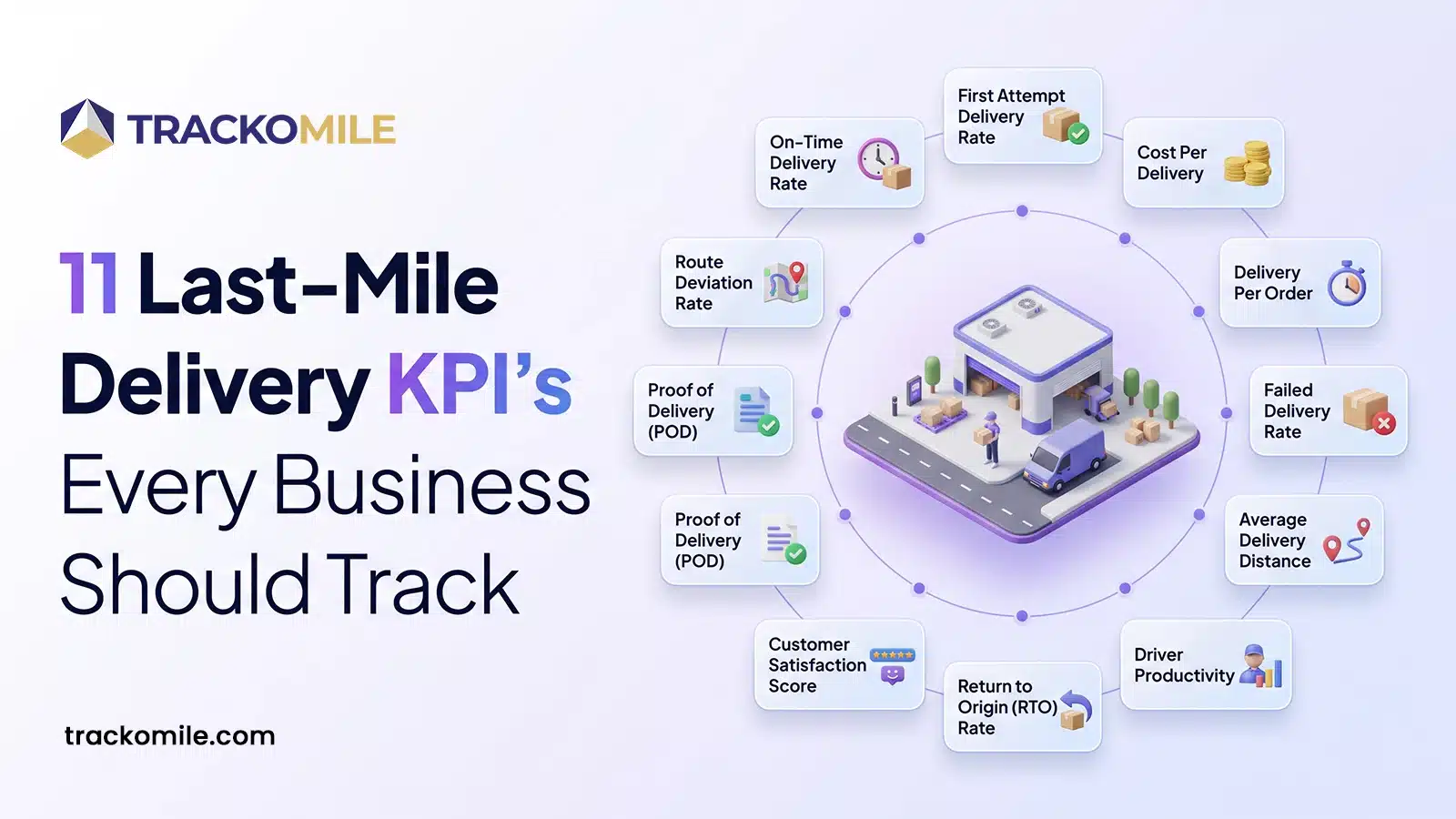
Last Mile Delivery KPIs & Metrics: 11 Essential Metrics to Track
To improve last mile operations, it’s important to track 11 essential last mile delivery KPIs like on-time delivery rate, cost…
Last-Mile Technology: 6 Technologies Transforming Delivery Operations
Learn how last-mile technology combines routing, dispatch, tracking, ePOD, and analytics. Improve your businesses’ delivery speed, visibility, efficiency, and customer…


Your inbox awaits a welcome email. Stay tuned for the latest blog updates & expert insights.
"While you're here, dive into some more reads or grab quick bites from our social platforms!"Stay Updated on tech, telematics and mobility. Don't miss out on the latest in the industry.