
Quick Summary

- Last-mile delivery is crucial for profit margins, accounting for 53% of total shipping costs, necessitating efficient software solutions.
- Consumer expectations for fast, low-cost delivery have increased, placing pressure on logistics to optimize last-mile execution.
- Challenges in last-mile delivery include rising costs, failed delivery attempts, and urban congestion, impacting efficiency and customer satisfaction.
- TrackoMile's last-mile delivery software enhances operations through route optimization, real-time tracking, and improved customer communication, ensuring timely deliveries.
Last-mile delivery decides the real profit margin. That is why smart logistics companies are fixing this part first by betting on powerful last-mile delivery software.
Consumer behavior has fundamentally shifted in 2026. This is particularly in the context of e-commerce. The baseline expectation is fast and low cost (often free) delivery. For most shoppers, speed is a standard part of their purchasing experience.
This places an unprecedented pressure on the last mile. It is the most cost-intensive and complex segment of the supply chain. As a direct connection between the brand and customer, last-mile execution must be precise and consistent. Any friction here can impact brand reputation, trust, and SLA adherence.
The only way to make this possible is by considering a last-mile delivery tracking software. The software guarantees optimized and on-time delivery.
Read this last mile delivery guide to learn everything there is to know about last-mile process.
What is Last-Mile Delivery?
In 2026, last mile delivery refers to the final goods movement from a distribution hub to the customer’s doorstep. This is powered by route optimization, ePOD, real-time tracking, and AI-driven approach. Last-mile delivery is one of the most expensive legs and accounts for 53% of total delivery costs. It is simple due to high delivery density, traffic delays, fuel and labor, and rising same-day delivery expectations.
Why Is Last-Mile Delivery The Biggest Challenge in Logistics Today?
Logistics networks are heavily expanding. Complexities are compounding at the final touchpoints. Margins are shrinking and customer expectations are rising. SLAs are getting tighter than ever. In 2026, the last mile is no longer an operational step. It is the primary pressure point for cost, customer experience, and scalability.
What looks like a short distance on the map becomes the longest stretch in execution.
1. Rising Fuel and Delivery Costs
Last-mile delivery can account for up to 53% of total shipping expenses. Fuel prices, driver wages, and vehicle maintenance continue to rise. For urban operators, per-drop costs have also increased by 10-20% in the last few years.
2. Failed Deliveries and Re-attempts
Studies show 8-20% of first delivery attempts fail. This depends on geography and order type. Each reattempt can boost delivery expenses. Returns and reverse logistics also strain bandwidth and profitability.
3. Customer Availability Issue
This remains a major bottleneck. It is typically due to gated communities and flexible work schedules. Missed calls and limited delivery window slow down route completion. Poor coordination, ultimately, leads to reduced drops per rider in a day.
4. Urban Congestion
Traffic delays in metro cities delay deliveries by 20-30%. This is especially true during peak hours. Parking restrictions and narrow lanes add friction.
5. Visibility Gaps
Despite digital transformation, about 30-40% logistics operations still lack real-time tracking. At the last mile, this leads to blind spots in delivery execution. Without visibility, POD updates, and instant alerts, businesses struggle to reduce delays. Managing customer communication also gets tough.
How Does Last Mile Delivery Work? Step-By-Step Process
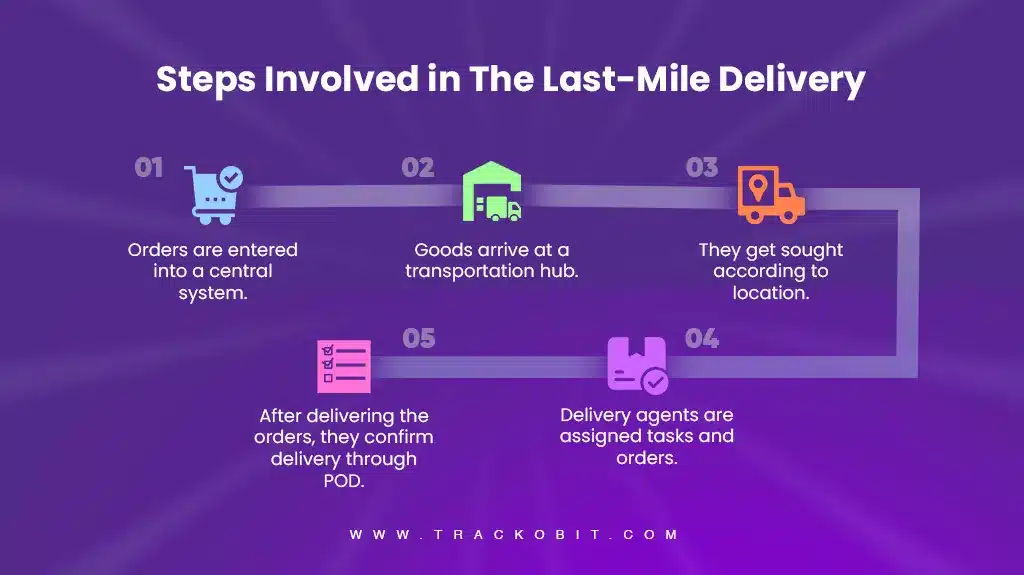
Last-mile delivery works in 6 stages. This includes order allocation, driver dispatch, and route planning. The next are live tracking, POD, and customer feedback. Read in detail.
1. Order Allocation: The first step involves scanning and digitally entering orders into the central system. But, it is not part of the last-mile process. A tracking ID is created so that all stakeholders can track and monitor the parcel.
2. Driver Dispatch: The second step includes orders arriving at the warehouses or fulfillment centers. This is the beginning of the last-mile transportation process. Orders are being assigned to riders and prepared for dispatch.
3. Route Planning: In the third step, orders are assigned to riders after considering many factors. The agents are given recipient addresses and briefed about the optimized routes. This is essential for an optimized, cost-effective last-mile delivery operation.
4. Live Tracking: Once the rider is on the move, live tracking begins. Both the logistics team and customers can monitor parcel movement. This is possible via GPS-enabled system.
5. Proof of Delivery (POD): The package arrives at its destination. The rider confirms the delivery by collecting ePODs. This step is critical for verifying the delivery and signaling the end of the process
6. Customer Feedback: After successful delivery, customers are encouraged to share their experience. Feedback is essential for measuring service quality. It ultimately improves future last-mile deliveries.
How Last Mile Delivery Works
Key Last-Mile Delivery Challenges
The top challenges are inefficient route plans and lack real-time tracking. As EV logistics scale, these operational bottlenecks can directly impact cost and efficiency. Read in detail to understand well.
1. Inefficient Route Planning
Manual or poorly optimized routes increase delivery time. Fuel consumption also rises. This causes missed SLAs and higher ops issues.
2. Higher Delivery Cost
Unoptimized dispatching and idle time can hike per-order costs. Margins start shrinking when expenses rise without visibility.
3. No Real-Time Driver Tracking
Lack of live tracking can limit operational control. Managers struggle to respond quickly to delays and route
4. No Customer Communication
Without real-time updates, customers are left uncertain about delivery timelines. This can impact brand perception to a great extent.
5. Proof of Delivery (POD) Issues
Manual PODs create room for errors and manipulation. Disputes become harder to resolve.
How TrackoMile Helps Mitigate These Challenges?
Technology solutions can solve or eliminate these challenges. Last-mile tracking software like TrackoMile helps businesses meet customer demands and expectations across industries. This technology boosts customer satisfaction and optimizes operations and costs. It also reduces reliance on unreliable third-party apps.
With it, logistics companies can stay agile without sacrificing efficiency or customer experience.
1. Assigning Deliveries
The first step is to set and assign delivery targets for each agent. Last-mile software makes this easy by automating the assignment process. It evenly divides order volume, matches riders to orders, and suggests optimal routes. Managers can also track the real-time status of deliveries completed by agents.
You also get rider roaster and right algorithms for scheduling drivers and deliveries.
2. Dispatch Management
Using the best dispatch management software lets you plan and assign deliveries smartly. This involves allocating deliveries according to
- Vehicles available and suitable
- Nature of the goods
- Especial request made by the consumers
- Riders available and skills
Route planned
3. Route planning and Optimization
Consumers expect fast and affordable deliveries, and route optimization is the key. This feature helps plan the best and shortest route possible. It considers 120+ factors before suggesting routes like:
- Distance
- Weather
- Past Data
- Vehicle’s towing and payload capacity
- and more.
With optimized routes, riders can deliver on-time while lowering fuel wastage. This is beneficial for resource optimization and handling large volumes of orders.
4. Live Tracking/ Providing Live Updates
Customers can feel frustrated when they are unaware of the status of their order. This is especially true during unexpected events when the cause of the delay is unclear. They might even consider canceling their order.
Live tracking and notifications will help you build their trust in your services. This is essential for managers. It helps them track employee locations and gain visibility into on-ground activities.
5. ETAs and ePOD
ETA is crucial in last-mile, keeping consumers informed about their orders’ status. It helps them prepare for COD payments and reduces number of attempted deliveries.
ePOD ensures safe delivery and enhances transparency by confirming order fulfillment. The software automates this with four POD methods:
- automatic
- OTP
- e-signature
QR code scan via the agent’s app.
6. Analytical Reporting
Analytical reports reveal the causes of rising costs and second-attempt deliveries. For example, the last-mile’s analytical reporting system allows you to monitor key metrics like:
- Success rates,
- On-time delivery
- Failed or reattempted deliveries,
- Distance traveled, etc.
Analytical reports aid in decision-making and budget formation. Managers get an overview of the success of the strategies employed. These reports play a vital role in helping logistics companies scale.
7. Rider App
Last-mile technology comes with a rider app, which is a game changer. Through it the riders get access to data and features that are time saving and helpful in delivering orders. The app consists of task-related data. All information on their delivery route to address is available on it.
It even has an inbuilt chat box that allows them to connect with their in-office staff in case of any query or difficulty completing their job. Through the rider app, the agents are able to work lucratively.
Benefits Of Using TrackoMile For Last-Mile Delivery
Over time, the final mile industry has seen technological advancements that have worked in its favour. Technology like automation, artificial intelligence, and telematics has smoothened out a lot of wrinkles in the logistics industry’s processes.
Because of current technology, last-mile businesses can access solutions that enhance their work process. These solutions can yield benefits like augmented productivity, reduced expenses, etc.
1. Shortens Delivery Time
Logistics companies lose business due to delayed deliveries. But through route-optimizing solutions, courier companies can chalk out the fastest and least congested route for transportation. This shortens delivery time, thus leading to customer retention.
2. Cost Optimization
The digitalization of the last-mile process has improved the quality of service and enhanced its affordability. Optimized route, live updates, and driver behavior monitoring helps to eliminate time and cost-inefficient habits of the agents like idling fuel pilferage, and reckless driving.
3. Real-Time Tracking
Many logistics companies are now resorting to using last-mile delivery technology to keep tabs on the movement of orders. And the same facility is being provided to customers who, too, can track their orders in real time. In addition, logistics companies track consignments and agents for visibility and accountability.
4. Better Customer Service
Fast and cheap, and smooth process are responsible for customer satisfaction. With the help of technology and software, all these parameters are easily met. It is only due to the advancement in technology customers are able to gain end-to-end visibility of their orders. This transparency has a positive impact on brand and consumer relations.
How Has the Delivery System Evolved Over the Year?
Over the years, the consumption and demand patterns of consumers have evolved. Back then, they were happy to wait for a week to receive their orders, but now they expect 10-minute door-to-door delivery. Let’s explore some forms of evolving and emerging forms of deliveries.
1. Quick Commerce
Quick commerce has been a game changer for the e-commerce industry. Through it the brands are able to offer the one-day delivery option or even less. Quick commerce relies on large warehouses, local vendors, and also micro fulfillment centers.
e-Commerce giants such as Amazon are leveraging this option to offer its consumers one-day or less than 24 hours delivery options. Time is the ruling factor in such kind of system.
2. Hyperlocal Delivery:
Hyperlocal system involves delivering goods and products directly from the seller to the consumers. Geography is a prominent factor in this system. This is because it promises a 10-15 minute delivery, due to which geography becomes a restriction.
It requires the agent to pick up the order from the seller or a warehouse and deliver it directly to the customer’s location. This type of transport is done in a smaller geographical area within a few minutes or hours.
Businesses like Zomato, Expressbees, Blinkit, Dunzo, and Wefast that deal with FMCG products like food and groceries and same day deliveries require a flawless system.
Difference between Hyperlocal and Last Mile delivery
How is Hyperlocal Delivery different from Last-Mile Delivery?
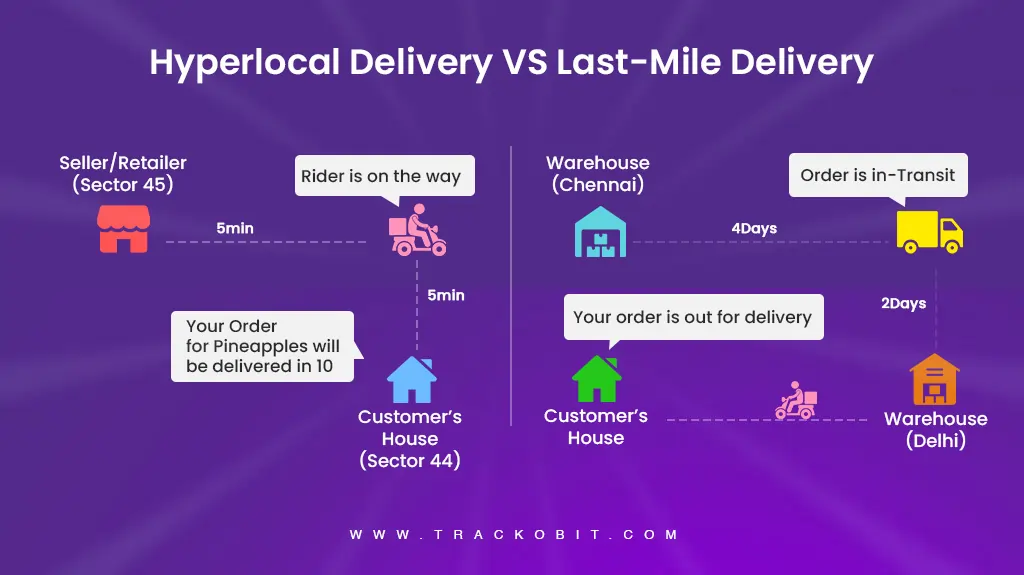
To prevent you from getting confused, here is a difference between the two.
1. Time Taken for Delivery
Last Mile Delivery:
The time taken for the last-mile is not less than 12-16 hours. You will receive a message stating that the delivery agent will deliver your order today. The time could sometimes be more than 16 hours, especially in metropolitan cities where the delivery agents have to cover more areas.
Hyperlocal Delivery:
In hyperlocal delivery, the aim is to deliver the order either in a few minutes or a few hours, like 2-3 hours. This is because the geographical area to be covered is less than what it is in the last-mile delivery system.
2. Delivery Responsibility
Last Mile Delivery:
The responsibility of delivering the orders in the last mile is on the assigned agent of the courier company. A single logistics company carries out the end-to-end process.
Hyperlocal Delivery:
In the hyperlocal delivery method, the order can be completed either by the sellers’ field employees or by the delivery company they appoint.
3. Delivery Area
Last Mile Delivery:
There is no delivery area restriction in the last-mile. The delivery agent delivers in a radius of up to 30km. The location of the central transportation hub determines the delivery area.
Hyperlocal Delivery:
The delivery radius is way smaller in hyperlocal delivery. The maximum distance the delivery can be done is a 5-15km radius.
4. Products Delivered
Last Mile Delivery:
A range of products, like televisions, clothes, etc., can be delivered through the last mile. There is no restriction in the product category.
Hyperlocal Delivery:
The delivery of fresh food or FMCG products is only possible with the hyperlocal delivery system.
Last-Mile Delivery With TrackoMile
Last-mile delivery is vital to the supply chain, yet even top players struggle to achieve flawless express delivery.
Last-mile delivery software simplifies these challenges, enabling fast, affordable deliveries. TrackoMile is the ultimate solution, offering real-time agent tracking, route optimization software, and dispatch management. It’s the go-to tool for seamless last-mile delivery.
Book a free demo to see how TrackoMile optimizes your last-mile operations.
Frequently Asked Questions
-
Why is Last-mile delivery so expensive?
The average cost of last-mile delivery is $1.50 per mile, accounting for up to 53% of a product’s total shipping cost. This cost includes:
- Labor costs,
- Fuel prices,
- Cargo carriers’ costs,
- And the driver’s salaries.
Therefore, a failed operation only adds up to this already expensive process.
-
How does TrackoMile improve delivery efficiency?
TrackoMile improves delivery efficiency by providing real-time tracking, ePOD, intelligent route optimization, and automated task management on a single platform. It reduces delivery time and fuel costs by assigning efficient routes. TrackoMile also minimizes delays with live alerts, improves first-attempt delivery success through better visibility.
-
What are the upcoming trends in last-mile deliveries?
Here are some of the last-mile delivery trends to keep an eye on in 2026:
- Smart technology for tracking
- Robotic and drone deliveries
- Undertaking steps toward sustainability
- Micro Warehousing
-
Which software is best for last mile delivery?
The best last-mile delivery software combines real-time visibility, intelligent route optimization, and automated ePOD. TrackoMile stands out by offering all of this with a strong focus on operational control and cost efficiency. It helps businesses reduce delivery delays, improve first-attempt success rates, monitor rider performance live, and streamline reporting.

Tithi Agarwal is an established content marketing specialist with years of experience in Telematics and the SaaS domain. With a strong background in literature and industrial expertise in technical wr... Read More


Related Blog
Building Resilient Delivery Operations with TrackoMile in 2026 and Beyond
Logistics businesses build resilient delivery networks with TrackoMile. But how exactly? With real-time route optimization, automated scheduling, and end-to-end fleet…
How to Scale Quick Commerce Beyond 10 Minutes with TrackoMile
TrackoMile transforms chaotic last-mile logistics into a predictable, automated, and high-margin retail powerhouse. See how it works in quick commerce.
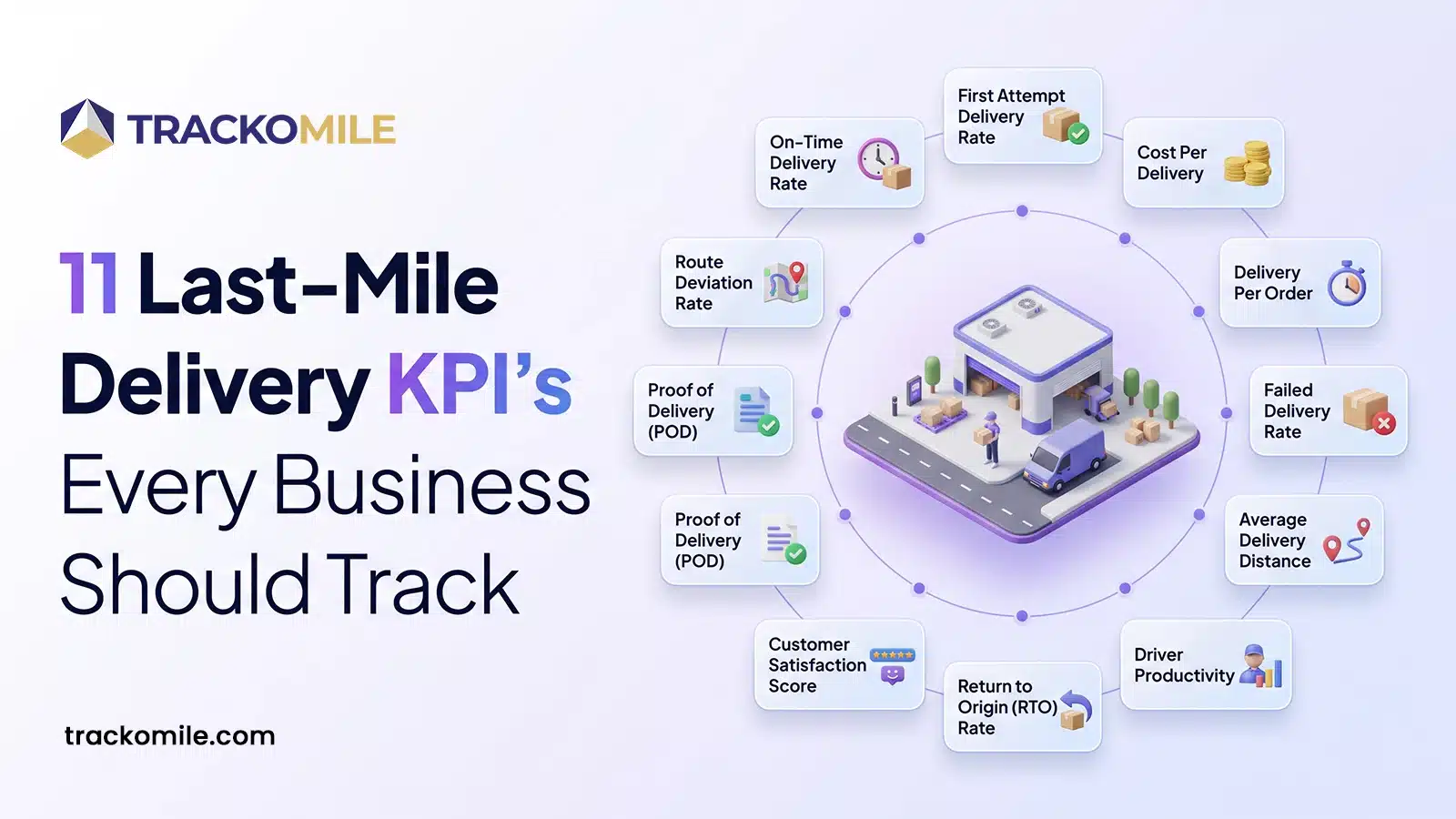
Last Mile Delivery KPIs & Metrics: 11 Essential Metrics to Track
To improve last mile operations, it’s important to track 11 essential last mile delivery KPIs like on-time delivery rate, cost…
Last-Mile Technology: 6 Technologies Transforming Delivery Operations
Learn how last-mile technology combines routing, dispatch, tracking, ePOD, and analytics. Improve your businesses’ delivery speed, visibility, efficiency, and customer…


Your inbox awaits a welcome email. Stay tuned for the latest blog updates & expert insights.
"While you're here, dive into some more reads or grab quick bites from our social platforms!"Stay Updated on tech, telematics and mobility. Don't miss out on the latest in the industry.