
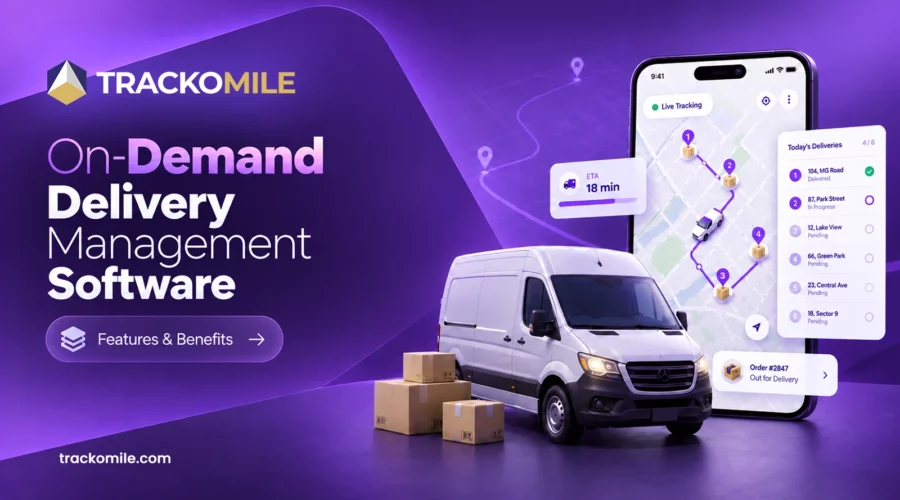
This blog explores on-demand delivery management software, its key benefits, and must-have features. Also, we will explore how to choose the right software.
Managing on-demand delivery puts operation teams under constant pressure. Orders do not wait for a fixed dispatch cycle. Decisions must be made in real-time. Which rider should take the order? Which vehicle is available? Can two nearby deliveries be clubbed? What route should the rider take? And will the order still reach the customer within the promised time?
Managing all of this manually leads to delays and failed deliveries, especially when order volumes grow. Managers must track hundreds or thousands of deliveries across different locations. At the same time, rider availability, traffic, weather, and order volumes keep changing. A small delay in one decision can affect several deliveries that follow.
On demand delivery management software solves these issues. It allows businesses to manage time-sensitive deliveries through a single system. When a new order comes in, the software triggers instant alerts and assigns it to an available rider within a defined delivery radius. It also supports short delivery windows, such as 10–15 minutes.
Business involves handling time-sensitive deliveries, they should first understand how the operation works. So, let’s understand.
What Is On-Demand Delivery Management Software?
On-demand delivery management software allows businesses to take orders and fulfill them quickly as per customer demand. It links order management, delivery scheduling, and route planning. It provides real-time tracking to effectively manage the delivery process.
The software employs technologies such as GPS tracking and route optimization. This helps businesses deliver orders in the shortest possible time. It also helps operations teams coordinate riders, vehicles, and orders as demand changes. Teams can follow up on ongoing deliveries and manage delays to meet ETAs.
How Does On-Demand Delivery Software Work?
On-demand delivery process works by instant order processing and delivery allocation. It also involves dispatch, route planning, real-time tracking, and delivery confirmation.
1. Order Placement
The process begins when a customer orders something via the website or mobile app. The system records the order information. This can be customer data, delivery address, or anything else specific.
This information is then passed to the operation team on priority for order fulfillment.
2. Order Processing
The businesses prepare the order for delivery at the appropriate store, warehouse, or restaurant. The order is immediately assigned for fulfillment rather than being held in a queue. Once completed, it is available for dispatch.
3. Order Dispatch
Now, the dispatch management software instantly assigns the order to the most appropriate vehicle and rider. It takes into account availability, location, capacity, and delivery distance.
After the rider is selected, they will be notified on the rider app with order details.
4. Route Optimization
Route optimization software calculates the most efficient and fastest route for deliveries. It takes into account traffic, weather, driver change, and vehicle load.
In case of Ad-hoc orders, the software dynamically updates the existing route. So, it accommodates the new delivery without disrupting ongoing deliveries.
5. Real-Time Delivery Tracking
After the rider has left the warehouse, the orders can be tracked by both managers and customers. Managers will be able to monitor whether the rider is on the correct route and see the delivery status. In addition, live ETAs are provided to customers.
6. Delivery Confirmation
The software will log proof of delivery upon completion of the delivery. Modern software can handle multiple formats including OTP, bar code, digital signature, and photo upload.
7. Customer Feedback
Once the delivery is made, customers can give feedback and rate their experience. This feedback can be utilized by businesses to pinpoint areas of service that need improvement. Also, it optimize service delivery.
Types of On-Demand Delivery Applications
Food delivery, grocery delivery, and retail delivery are common on demand delivery applications.
| Type | Typical Use | Major Operational Needs |
| Food Delivery Apps | Restaurants, cloud kitchens, food chains |
|
| Grocery Delivery Apps | Supermarkets, grocery chains, quick-commerce businesses |
|
| Transportation Apps | Cab, bike, and other ride-hailing services |
|
| Retail Delivery Apps | E-commerce, electronics, fashion, and D2C businesses |
|
| Medicine Delivery Apps | Pharmacies, healthcare retailers, and e-pharmacies |
|
| Courier Delivery Apps | Courier companies, local businesses, and 3PLs |
|
6 Key Benefits of On-Demand Delivery Management Software
Faster order fulfillment, low delivery costs, and real-time visibility into orders are the key benefits of on demand delivery solutions. Read on to know the benefits in detail.
1. Faster Order Fulfillment
In on-demand delivery every minute matters. Here a delayed order means a missed delivery window, a cancellation, or an unhappy customer. On-demand delivery platforms allow businesses to process and fulfill orders in real-time. Businesses can:
- Delivery orders to customers faster
- Handle sudden increases in order volume
- Complete more deliveries during peak hours
- Reduce waiting time between order placement and delivery
For example: A food or grocery business may receive a sudden spike in order during lunch hours or weekends. With on-demand delivery model, instead of holding orders for the next dispatch cycle, it can process and send them out as they come in. This was businesses can serve more customers and turn high demand into revenue gains.
2. Lower Delivery Costs
On-demand delivery management apps help businesses reduce costs per delivery. Instead of sending separate riders to inefficient delivery routes. Businesses can group suitable deliveries and plan better routes.
This way they can reduce travel time and bring down the cost per delivery. Businesses can:
- Reduce empty or unnecessary trips
- Lower fuel and vehicle operating costs
- Make better use of available riders and vehicles
- Deliver more orders without increasing delivery costs
3. Better Handling of Demand Spikes
Order volumes can change quickly during weekends, holidays, or peak ordering hours. On-demand delivery model helps businesses cater this demand without slowing down their operations. Businesses can:
- Fulfill more orders during high-demand periods
- Avoid losing sales because of delivery delays
- Maintain SLAs during peak hours
- Increase revenue from temporary demand surges
4. Improved Delivery Visibility
On-demand delivery management software gives businesses a live view of their deliveries. Teams can see where orders are, which deliveries are in progress, and when they are expected to arrive. This helps businesses to:
- Monitor multiple deliveries from one dashboard.
- Track order status in real time.
- Identify delayed or off-route deliveries
- Share accurate ETAs with customers
5. Higher First-Attempt Delivery Success
First-attempt delivery saves the businesses from the cost and time of re-attempt. On-demand delivery platforms improve first-attempt success. They help businesses plan accurate routes, share ETAs, and respond to delivery issues quickly. This helps businesses to:
- Reduce re-delivery and return costs.
- Avoid unnecessary trips.
- Improve customer satisfaction.
- Complete more successful deliveries each day.
For example,
A customer is not available when the rider arrives. The order may need another delivery attempt. Whereas with live ETAs and tracking links, customers know when their order will arrive. This reduces the chances of failed deliveries.
6. Higher Customer Satisfaction
The platform helps businesses keep customers informed and deliver orders more reliably. Customers receive timely notifications when their order is packed, dispatched, or out for delivery. Modern software shares live tracking links with customers.
This gives customers more clarity about their orders and reduces the uncertainty around delivery. It can help businesses:
- Reduce delivery-related complaints
- Build trust with customers
- Encourage repeat orders
What are the Must-Have Features of On-Demand Delivery Platform?
Route optimization, instant order alerts, and real-time tracking are the specific features of on-demand delivery platform. Read on to know more.
1. Automated Dispatch
Automated dispatch management software assigns a new order to the nearest available rider. It considers factors such as location, availability, and capacity to make a quick assignment. This helps businesses reduce waiting time and fulfill orders within the promised timeline.
2. Smart Route Optimization
In on-demand delivery, route optimization is the key. Route optimization software allows businesses to plan the most efficient route for deliveries. It looks at factors like traffic, distance, and delivery locations to avoid traffic heavy or inefficient routes. So, orders reach customers on time.
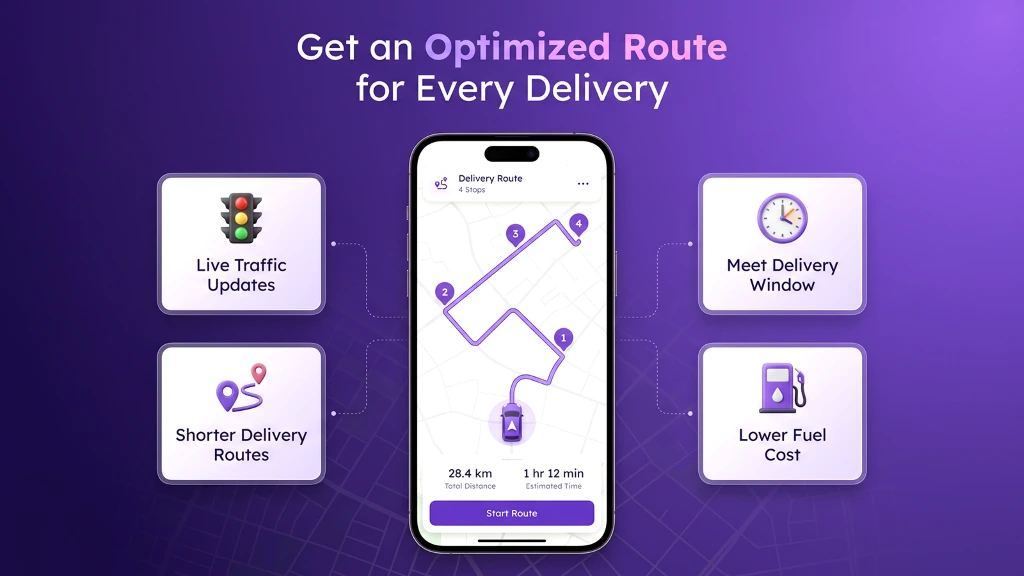
Optimized Route for Every Delivery
3. Instant Order Alerts
Instant pop-up alerts notify riders when a new order is assigned. They can see key details such as the pickup location, delivery address, and order information.
4. Automated Customer Notifications
On-demand delivery solution keeps customers updated throughout the journey. They can receive alerts when the order is confirmed, dispatched, or out for delivery, along with the latest ETA. This keeps customers informed while reducing WISMO calls.
5. Real-Time Delivery Tracking
Real-time delivery tracking allows managers to see the live location and status of every delivery. Managers can monitor whether an order has been picked up, is on the way, or has been delivered. Along with that, they can spot delays and take timely actions.
6. Digital Proof of Delivery (POD)
ePOD gives businesses a clear record that an order was handed over to the customer. Riders can capture proof through OTPs, digital signatures, photos, or barcode scans from the delivery app. This is helpful for both businesses handling their own deliveries and 3PL clients.
7. Analytics and Custom Reporting
Analytics and reporting help businesses understand how their delivery operations are performing. Managers can review average delivery time, peak hour volume, delays, costs, and other key metrics in one place. This helps them make better decisions based on actual delivery data.
How to Choose the Right On-Demand Delivery Management Software?
Look for user reviews, features, integration support and pricing to choose the right on-demand delivery management software. Below is a detailed buying checklist for you.
1. User Reviews
Look for user reviews from businesses similar to yours. Check reviews on trusted platforms like G2 and Capterra. Pay attention to what users say about ease of use, after sales support, and actual delivery performance.
2. Check Features
Look for software that fits your delivery model and industry. A food business may need quick dispatch and short delivery windows. While a 3PL may need multi-client management, POD, and delivery tracking. This way you can avoid paying for features you don’t need or compromising on what is important for you.
3. Check Integration Support
Make sure the software offers integration with tools your business already uses. This includes an eCommerce platform, order management system, ERP, or CRM. Also check whether the integration is native or API-based. Plus, you should check if it supports real-time data updates.
4. Compare Pricing
Do not compare software on the base price. Check what is included in the plan. Also look for costs such as implementation, integration, support, or extra users. The best advice is to look for a software with custom pricing.
5. Ask for Free Demo or Trail
Do not choose the software based on a sales demo. Ask for a demo or trial and see how it fits your actual delivery workflow. This helps you see whether the platform is easy for your operations team and riders to use before you commit. Free trials and demos are common among delivery management platforms.
Conclusion
On-demand delivery is all about speed, visibility, and reliable fulfillment. When order volumes increase, manual handling of dispatch, routes, riders, and customer updates can be a challenge.
The right on-demand delivery management software can help to unify these operations. It can automate dispatch, optimize routes, track deliveries in real-time, and provide customers with updates throughout the entire delivery process.
TrackoMile is a last-mile delivery management software. It enables businesses to schedule deliveries within 10 minutes. TrackoMile streamlines their last-mile operations. It offers capabilities like automated dispatch, route optimization, real-time tracking, and scheduled deliveries. It provides more control over the delivery process. Whether you are processing on-demand orders or planned deliveries.

Frequently Asked Questions
-
How is on-demand delivery different from standard delivery?
On-demand delivery is designed for orders that need to reach customers quickly. It often has short delivery windows. Standard delivery is usually planned in advance with a fixed schedule. On-demand delivery gives businesses more flexibility to handle urgent and time-sensitive orders.
-
What role does automation play in on-demand delivery operations?
Automation helps businesses handle deliveries faster with less effort. It can assign orders and optimize routes. Plus, it sends auto customer updates and track delivery status. This reduces delays and repetitive work. So, teams can manage higher order volumes while keeping delivery operations smooth.
-
Is on-demand delivery software suitable for small businesses?
Yes. On-demand delivery software is helpful for small businesses. It helps them automate order dispatch, plan routes, track riders, and share updates with customers. So, they can save time, reduce costs, and provide faster deliveries without increasing workload.
-
How does on-demand delivery differ from scheduled delivery models?
On-demand delivery starts when a customer places an order and needs it delivered quickly. Scheduled delivery is planned for a specific date or time slot. On-demand delivery gives businesses more flexibility to fulfill orders immediately. While scheduled delivery helps them plan deliveries in advance.

Parul is a content writer with 2+ years of experience in B2B and SaaS domains. She creates clear, actionable content for TrackoBit and TrackoMile, focusing on fleet management, last-mile delivery, and... Read More


Related Blog
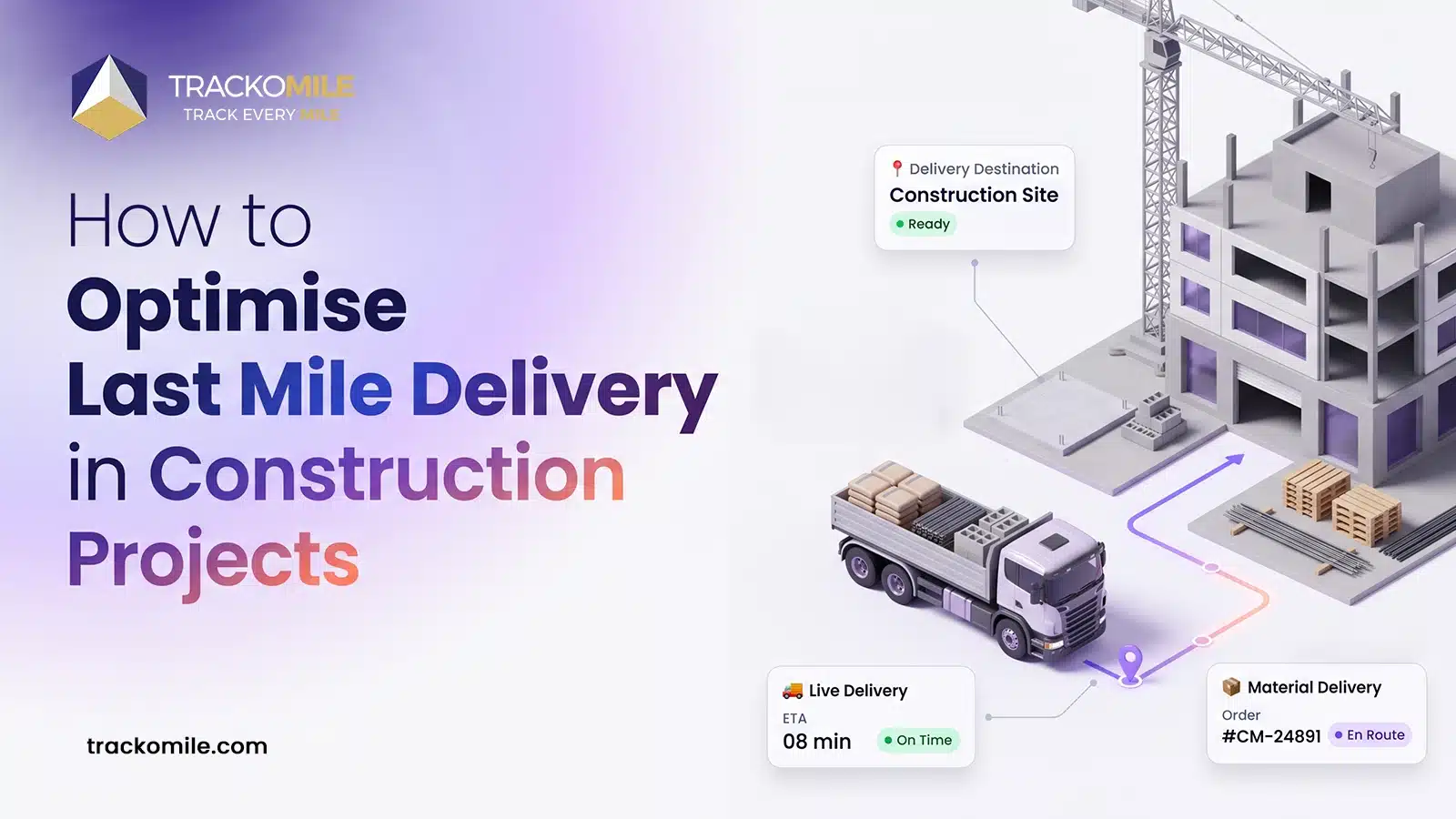
Last Mile Delivery in Construction: Challenges, Solutions & Optimization Strategies
This guide explains how last mile delivery construction software can help improve efficiency, visibility and site coordination.
Last Mile Delivery for Grocery and Food Industry
This blog talks about last mile delivery for grocery & food industry. We will look at how advanced software improves…
Pros and Cons of Last Mile Delivery: A Guide for 2026
This blog explores the pros and cons of last mile delivery. It also looks at how businesses can overcome common…
Customer Intelligence & Verified Dispatch: Now Live in TrackoMile
Strengthen last-mile visibility and reliability with TrackoMile’s latest release. See delivery performance as it happens, adjust dispatch plans mid-trip, and…


Your inbox awaits a welcome email. Stay tuned for the latest blog updates & expert insights.
"While you're here, dive into some more reads or grab quick bites from our social platforms!"Stay Updated on tech, telematics and mobility. Don't miss out on the latest in the industry.