
Quick Summary

- Starting a Last Mile Delivery business requires a clear plan, licenses, and efficient delivery management software to optimize operations.
- Businesses are investing in last mile delivery solutions to reduce costs, improve efficiency, and enhance customer satisfaction through real-time tracking.
- Types of last mile delivery services include on-demand, same-day, white-glove, and specialized deliveries, each catering to different market needs.
- Key challenges in last mile delivery include poor route planning and high fuel costs, which can be mitigated with advanced technology and software solutions.
Wondering how to start a last mile delivery business? You are at the right space. We have covered 6 simple steps to make the journey easy. Read on to know.
Last mile delivery has been around for over a century. It began with milkmen and neighborhood deliverymen who ensured milk was delivered to people’s doorsteps before the advent of e-commerce. It has now grown into a fast-moving logistics service as a result of e-commerce expansion and the need for quicker fulfilment. This transition is a great opportunity for anyone thinking about getting into the last mile delivery business, as it is a very competitive and fast-growing market.
But today, to start a last-mile delivery business, the real challenge is not just “owning a van.” It’s about navigating a world where 80% of consumers say delivery speed is the deciding factor in their brand loyalty. To survive this, you need more than just riders and vehicles. You need a robust delivery management software that turns complex routes into automated and profitable operations.
This blog gives you a practical guide on how to start and run a profitable last mile delivery company in 2026. Continue reading to know in detail.
Why Businesses Are Investing in Last Mile Delivery Solutions?
Businesses are investing in last mile delivery software to reduce costs, improve efficiency, and gain real-time visibility.
1. Reduce Per Order Delivery Cost
Businesses are shifting to advanced route optimization software that adjust routes based on live traffic, vehicle type and delivery density. So, they can reduce fuel usage, idle time, and improve cost efficiency per order.
2. Improve Rider and Vehicle Utilization
Companies are investing in automated dispatch management software to effectively assign orders across riders and vehicles. It considers factors like rider skills, location, vehicle capacity, and distance. This way, you can optimize resources and reduce idle time.
3. Digital Proof of Delivery (ePOD)
To reduce disputes and package theft claims, companies are investing in ePOD software. By using these, riders can capture OTPs, photos, and digital signatures instantly. This creates a clear record of completion, improves accountability, and reduce revenue leakage from false claims.
4. Solving the WISMO Crisis
Businesses are investing in last mile delivery software to reduce WISMO calls. It offers customer-facing tracking links to provide live delivery updates. This removes constant follow-ups.
What are the Types of Last Mile Delivery Businesses
Types of Last Mile Delivery
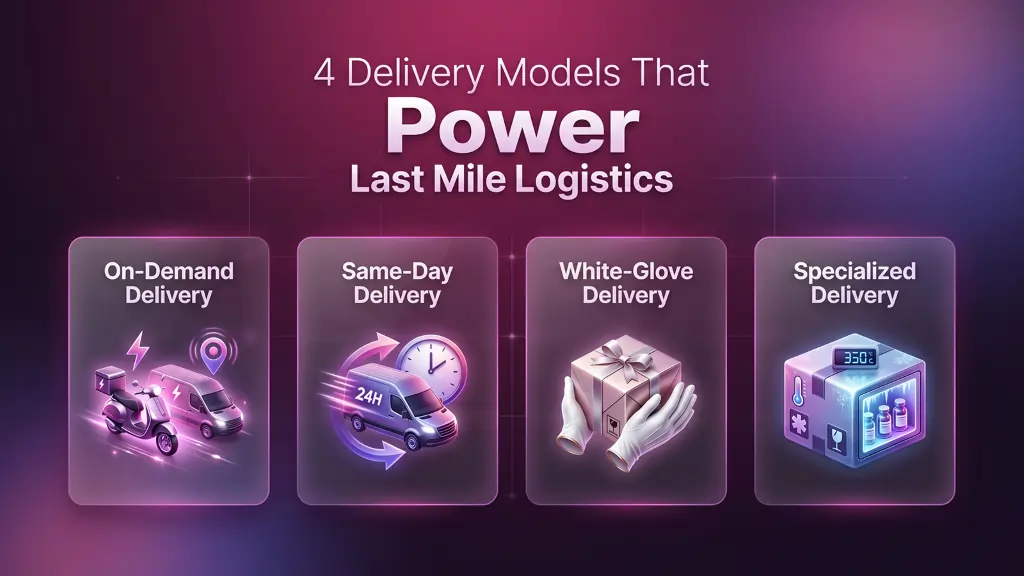
Same day delivery, on-demand services, and white glove services are the most common types of last mile delivery business. When planning how to start a last-mile delivery company, choosing the right type of delivery is crucial. Read on to choose one:
1. On Demand Delivery Services
On-demand delivery services involve fulfilling orders as soon as they are received. It is widely used for food, groceries, and medicines.
2. Same Day Delivery
As the name says, last mile delivery businesses complete orders within the same day. This model is mostly used in e-commerce and retail. It requires efficient dispatch planning and strong coordination to meet tight delivery timelines.
3. White-Glove Delivery Services
White-glove delivery services involve offering extra care and customer support. This includes tasks like inside delivery, installation, or product setup. It is commonly used for furniture, electronics, and high-value items.
4. Specialized Delivery Services
Specialized delivery services involve handling goods that require specific conditions or processes during transit. This includes items like medicines, perishable goods, or high-value products.
How to Start a Last Mile Delivery Business (Step-by-Step Guide)
To start a last-mile delivery company, you need a clear business plan, licenses, delivery management software, and a skilled team.
Follow the below step-by-step guide to start a last mile delivery business.
1. Conduct Market Research
Start by defining business objectives and understanding potential customers. This sets out the foundation for a delivery business. Focus on the following:
- Identify who you want to serve (eCommerce, retail, pharmacy)
- Decide the delivery area (city, zone, or hyperlocal)
- Analyze your competitors (local players, niche services)
2. Define Business Model
The right last mile delivery business model depends on how many owners and stakeholders are involved. This affects ownership, liability, and how you operate in the long run. For example, choose from
- A sole proprietorship
- A partnership or corporation
- LLC or private limited company
Choose a model as per investment plans, risk exposure, and long-term goals.
3. Get Licenses and Permits
When you are planning how to start a last mile delivery business, make sure it is legally registered and complaint. Focus on the basics like:
- Business registration
- GST registration (if applicable)
- Vehicle registration and commercial permits
- Driver licenses and insurance
This helps you avoid disruptions and run operations without legal issues.
4. Estimate Cost and Investment
Once you have the idea of customers and business type, analyze how much you need to invest. Plus, think of the ongoing costs. This helps you avoid cash flow issues later. Focus on:
- Vehicle cost (purchase or rental)
- Fuel and maintenance
- Rider salaries or payouts
Also, estimate your per order last mile delivery cost and expected margins. This gives you a clear view of profitability from the start.
5. Choose the Right Delivery Management Software
Delivery management software helps you to start a profitable last mile delivery business. Company owners use it to:
- Automate order assignment and reduce manual effort
- Track every delivery in real time
- Plan efficient routes to save time and fuel
- Monitor rider activity and delivery performance
This gives you better control over dispatch and improved delivery efficiency. Plus, you can handle more orders without hiring an extra team.
6. Hire Skilled Team
Last mile delivery business plan involves hiring a skilled team of riders, dispatchers and managers. You should:
- Hire riders with valid licenses
- Verify documents and ensure proper onboarding
- Train them to use last mile delivery management software
A structured team setup helps you maintain consistency, reduce delivery issues, and keep operations reliable as order volumes grow.
5 Key Components of Last Mile Delivery Plan
Real-time tracking, route optimization and ePOD are the key components of a last mile delivery plan. Keep reading to know how these help you to run a profitable last mile delivery company.
1. Real-Time Tracking
Real-Time Tracking
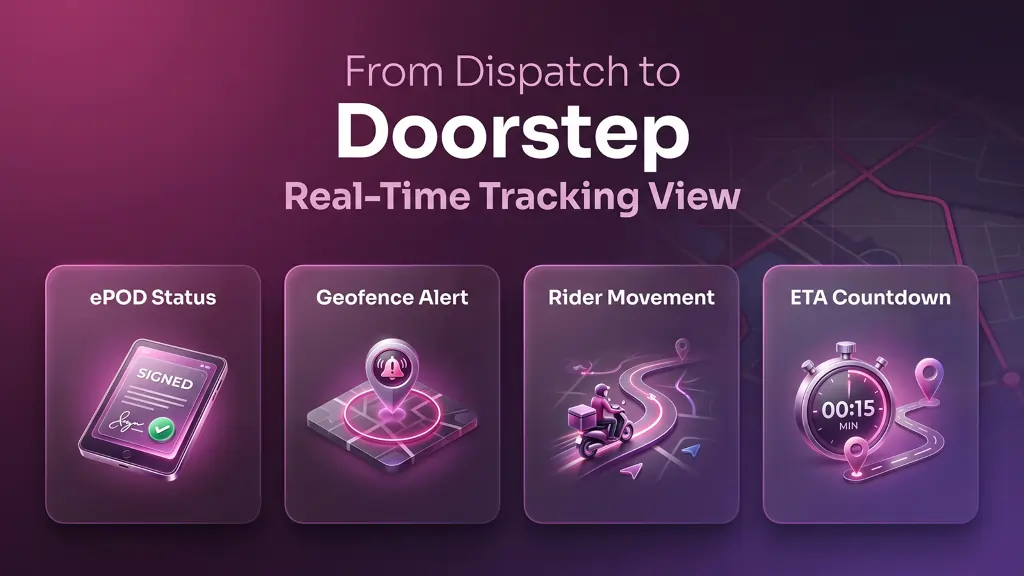
Real-time tracking offers live visibility of orders and rider movement. You can share customer-facing links on SMS. This helps you reduce WISMO calls and delivery reattempts.
2. Route Optimization
Route optimization software helps you plan the most efficient route for deliveries. It considers different parameters like traffic, weather, distance, and vehicle type. So, you can reduce fuel usage, avoid unnecessary detours, and improve drop density.
3. Resource Allocation
Dispatch management helps assign orders based on rider location, availability, and delivery priority. With auto-dispatch, you can improve allocation accuracy, especially during peak hours.
4. Electronic Proof of Delivery (ePOD)
ePOD captures delivery confirmation through OTP, photos, or digital signatures. Geofencing ensures deliveries are marked complete only at the correct location. So, you can reduce false claims and chances of theft.
5. Performance Monitoring
Performance monitoring helps you monitor what is actually happening on the ground. This involves delivery on time, turnaround time, and the number of orders that each rider is completing. Delays and underperforming routes are easily identified.
5 Biggest Challenges in Last Mile Delivery & How Technology Solves Them
Poor route planning, high fuel costs, and lack of real-time visibility are the biggest challenges that you will face while starting a last mile delivery business. Here’s how you can solve these challenges by using modern delivery management software.
1. Delivery Delays and Poor Route Planning
Unplanned routes often leads to delays, high fuel cost, missed delivery windows and reattempts.
Route optimization software helps plan efficient routes based on traffic, distance, and order clusters. So, you can reduce delays and per delivery costs.
2. Poor Resource Utilization
Riders spend idle time waiting for orders, taking longer routes, or handling uneven workloads.
Dispatch management software helps you assign orders based on vehicle capacity, distance, driver skill, and proximity. This improves rider utilization and per stop deliveries.
3. No Real-Time Visibility
Once orders are dispatched, there is limited visibility on delays or rider movement.
Live tracking dashboards give real-time order and rider status. You can identify delays, reroute deliveries, and manage exceptions instantly.
4. Delivery Disputes
Without proper proof, businesses face disputes and unclear delivery status. This often leads to revenue loss.
ePOD with OTP, photos, and geofencing ensures deliveries are verified at the correct location. This reduces disputes and improves accountability.
5. High WISMO Calls
Customers keep calling for updates because they have no visibility. This increases support workload and delays issue resolution.
Last-mile delivery management allows you to share tracking links with customers. This reduces WISMO calls and frees up support teams.
How TrackoMile Helps You Start a Profitable Last Mile Delivery Business?
TrackoMile helps you understand how to start a last-mile delivery business by giving you a structured way to set up operations from day one. It offers 100% real-time visibility and rule-based smart engine for order allocation.
With TrackoMile, you can group deliveries based on 120+ factors like distance, weather, and traffic. Plus, it offers rider management system to mark attendance and prevent time theft. With customer tracking links, ePOD, and rider management, you can reduce delay and control costs. In short, it supports you in building a profitable setup from the beginning.
Frequently Asked Questions
-
What technology do I need to start a last mile delivery company?
To start a last mile delivery company, you will need to invest in reliable delivery management software like TrackoMile. It is like a central dashboard where you can manage all your deliveries, vehicles, and riders. TrackoMile brings real-time visibility, automated dispatch management, ePOD, route optimization and rider management at one place.
-
Which software is best for last mile delivery management?
TrackoMile is the best last mile delivery management software. It offers automated dispatch, route optimization, and real-time tracking. It also provides customer tracking links, ePOD, and rider management software. This helps businesses manage deliveries efficiently, reduce costs, and scale operations with better control.
-
What are the licenses needed to start a last mile delivery business in India?
A last mile delivery business in India generally requires business registration (proprietorship, LLP or a private limited) and GST registration. Plus, you will need vehicle registration with commercial permits, and valid driver licenses. Apart from this, as per your operations, you may also require insurance and local transport permits.

Parul is a content writer with 2+ years of experience in B2B and SaaS domains. She creates clear, actionable content for TrackoBit and TrackoMile, focusing on fleet management, last-mile delivery, and... Read More


Related Blog
Building Resilient Delivery Operations with TrackoMile in 2026 and Beyond
Logistics businesses build resilient delivery networks with TrackoMile. But how exactly? With real-time route optimization, automated scheduling, and end-to-end fleet…
How to Scale Quick Commerce Beyond 10 Minutes with TrackoMile
TrackoMile transforms chaotic last-mile logistics into a predictable, automated, and high-margin retail powerhouse. See how it works in quick commerce.
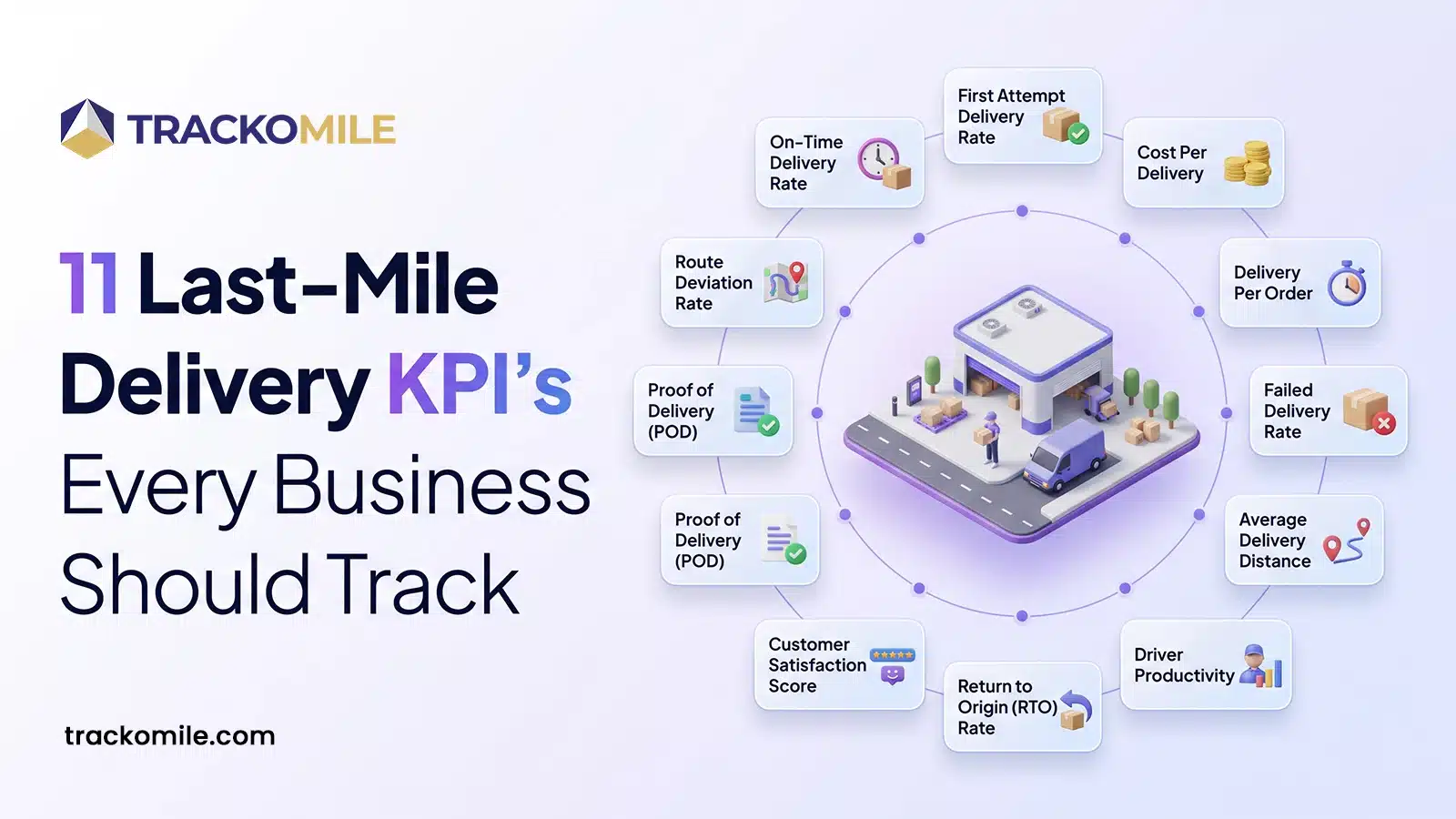
Last Mile Delivery KPIs & Metrics: 11 Essential Metrics to Track
To improve last mile operations, it’s important to track 11 essential last mile delivery KPIs like on-time delivery rate, cost…
Last-Mile Technology: 6 Technologies Transforming Delivery Operations
Learn how last-mile technology combines routing, dispatch, tracking, ePOD, and analytics. Improve your businesses’ delivery speed, visibility, efficiency, and customer…


Your inbox awaits a welcome email. Stay tuned for the latest blog updates & expert insights.
"While you're here, dive into some more reads or grab quick bites from our social platforms!"Stay Updated on tech, telematics and mobility. Don't miss out on the latest in the industry.