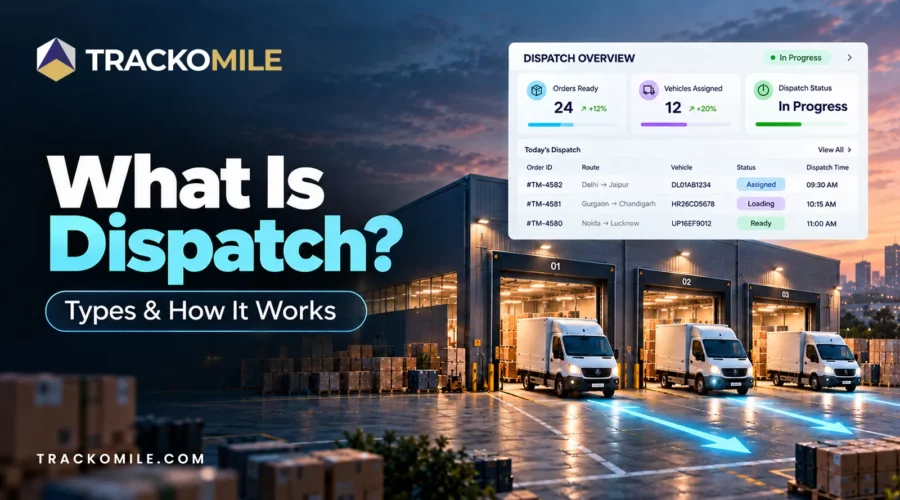
Poor dispatch can lead to delivery delays and higher costs. Learn how dispatch works and how businesses can improve it.
Late deliveries, idle vehicles, and poor communication often have one thing in common: inefficient coordination. Without a clear system for assigning and managing tasks, businesses can struggle with delays, higher operational costs, and dissatisfied customers.
For a few deliveries, managing this manually may still work. But as order volumes grow, vehicles increase, and schedules keep changing, it becomes much harder to keep delivery operations running smoothly. Someone has to decide which vehicle should handle which order, who should take it, and when it should leave. This is where dispatch comes in.
What is Dispatch?
Dispatch is the process of assigning the right task to the right resource at the right time. It might be assigning a delivery order to a rider, a shipment to a truck, a technician to a service request or an emergency response team to an incident, depending on the industry. The aim is to get the work done efficiently and in a timely manner.
In today’s last mile logistics environment, dispatch involves assigning orders to the appropriate vehicle and rider. It serves as the link between the warehouse and delivery team. Its aim is to make sure that deliveries are done on time, delays are minimized, and vehicles and riders are used to the best effect. From 50 deliveries a day to 5,000, a good dispatch process makes it smooth, on-time and cost-effective.
Why is Dispatch Important in Logistics?
In logistics, dispatching plays a crucial role in enhancing productivity, optimizing costs, and guaranteeing timely deliveries. A dispatch system can intelligently route orders, schedules, and/or routes to ensure that each vehicle is used to the greatest extent possible.
In fact, the impact goes beyond daily operations. According to a 2026 ACT News report, businesses using automated dispatch planning reduced empty miles by over 20%. So, they can save on fuel costs and use resources more effectively. An efficient dispatch process helps businesses:
- Increase productivity of vehicles and riders.
- Optimize the use of vehicles and riders.
- Reduce fuel and operational costs.
- Keep deliveries on schedule and improve on-time delivery rates.
- Respond quickly to urgent orders and last-minute changes.
- Improve coordination between warehouse, dispatch, and delivery teams.
- Scale delivery operations without adding unnecessary resources.
How Does Dispatch Work in Logistics? (A Step-by-Step Guide)
The dispatch process works by assigning each order to the right resource, planning the best routes, tracking delivery progress, and collecting ePOD. Below, we have explained the process in detail.
Step 1: Order Confirmation
The dispatch process starts once the order is confirmed. The team examines the details of the order, the address of delivery, the priority and any special instructions before they place it for delivery.
Step 2: Resource Allocation
Then the best vehicle and rider are called up to the order. This is done according to the delivery location, the capacity of the vehicle, the number of riders, workload, and delivery priority.
Step 3: Route Planning
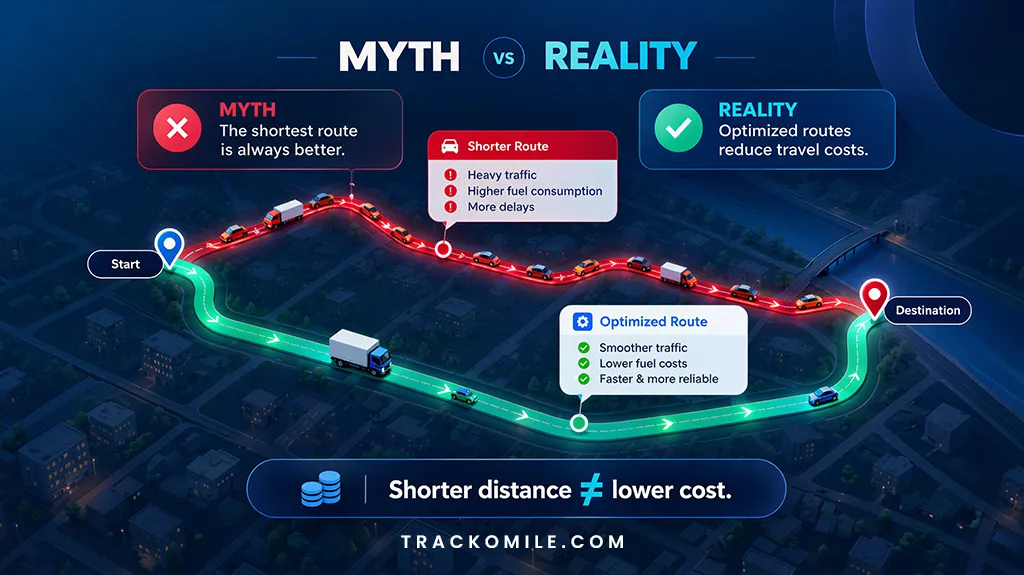
Routes are planned based on delivery locations, traffic conditions, distance, and delivery time to make an efficient route. The aim is to minimize travel time, fuel usage, and delivery delays.
Step 4: Dispatch and Delivery Tracking
Once the plan is complete, the vehicle is dispatched. Throughout the journey, dispatchers monitor delivery progress and share updates with riders. Live tracking links are shared with customers to reduce WISMO calls.
Step 5: Proof of Delivery
The process ends when the order is successfully delivered after collecting proof of delivery. The delivery status is changed and set to complete.
What are the Different Types of Dispatch?
There are two ways of dispatching in delivery operations, which are manual and automated. Today’s companies are also using a hybrid model involving human dispatch and software dispatch. Let’s take a closer look at each of these methods.
1. Manual Dispatch
Manual dispatch is the standard method used to dispatch orders to vehicles and riders by the subjective judgment of manual dispatchers. They decide who to deliver based on the phone call, spreadsheets, messaging apps, or from personal experience.
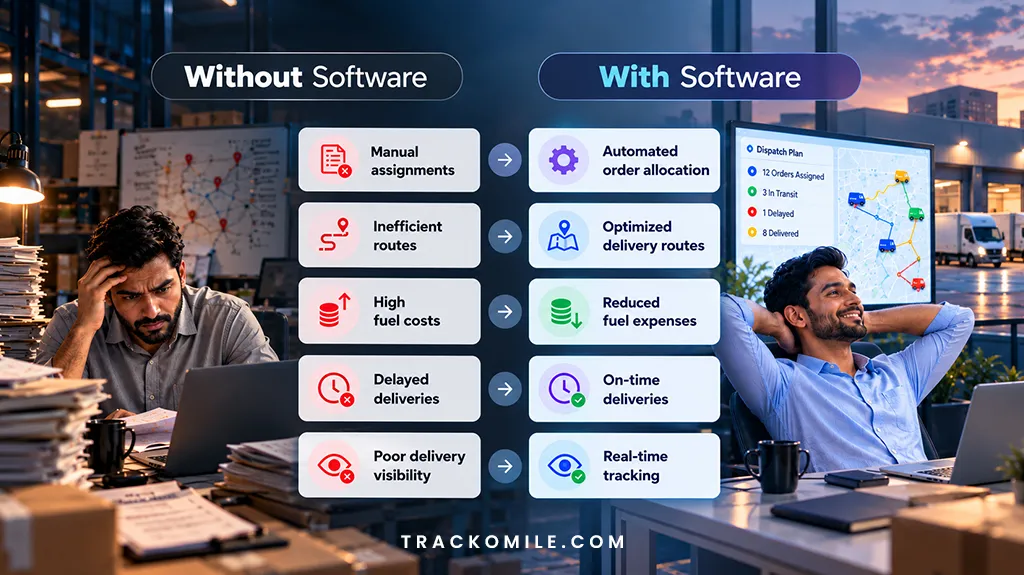
This way, dispatchers can make individual decisions to match real-life situations. But it can be time-consuming and challenging for enterprises that have to deliver lots of items.
2. Automated Dispatch
Automated dispatch involves using dispatch management software to automatically route orders to the best rider and vehicle. The software places orders depending on the delivery location, capacity, availability of the vehicle, and the order priority.
In this manner, firms can send orders quicker, cut down on manual tasks, and boost productivity.
Smarter Delivery Operations
3. Hybrid Dispatch
Hybrid dispatch combines manual decision-making with dispatch management software. The software helps with tasks like route planning, order assignment, and delivery tracking. On the other hand, dispatchers review assignments and make changes whenever needed.
It provides businesses with automation and manual control for key delivery decisions.
Manual Dispatch vs Automated Dispatch
| Manual Dispatch | Automated Dispatch |
| Every order is assigned manually. | Orders are assigned automatically using predefined rules. |
| Best when delivery volumes are low. | Handles high delivery volumes with ease. |
| Changes are managed through calls and messages. | Orders can be realigned in real-time. |
| Decisions depend on the dispatcher’s experience. | Decisions follow consistent business rules. |
| Difficult to maintain service levels during peak demand. | Maintains consistent dispatch even during peak demand. |
| Limited operational visibility. | Real-time visibility into orders, vehicles, and riders. |
5 Key Use Cases of Dispatch in Different Industries
Many business processes where vehicles, riders, drivers or service teams must be deployed quickly use dispatch. Let’s consider a few of its most common uses:
1. Last Mile Delivery
Last mile delivery is heavily reliant on dispatch. Each order must be matched with the right rider at the right time. This can be automated with dispatch management software, such as TrackoMile, which features real-time rider tracking and route optimization, along with rule-based order allocation. It enables businesses to:
- Automatically assign orders to the most suitable rider.
- Plan deliveries to optimize routes for quicker delivery.
- Real-time tracking of track riders and deliveries.
- Move orders in and out of assignments with a single click.
- Provide real-time ETAs to customers.
2. Freight & Logistics
Freight & logistics is all about transporting items from one location to another. This could be between warehouses, distribution centers, factories, or business locations. Dispatch is used to help businesses plan these movements.
- Loads cargo to the correct trucks.
- Arranges for pick-ups and deliveries.
- Plan routes for transportation.
- Follows the movement of shipments along the road.
- Helps manage delays when they happen.
3. Home and On-site Services
Businesses, such as YesMadam and Urban Company, that provide services to customers often have to dispatch service representatives to the customer’s site. Assigning the right person, by skill, location and availability, is made easier with dispatch. It allows them to:
- Plans jobs to the right technician.
- Schedules customer visits.
- Matches jobs according to skills and availability.
- Real-Time tracking of technicians.
- Manages emergency and rescheduled appointments.
4. Emergency Services
When it comes to emergency services, seconds count. When an ambulance is called or a fire reported, the first thing to do is find the nearest available response team. The dispatch unit helps control rooms to determine the closest ambulance, fire truck or police car. They can:
- Find the closest response unit.
- Share the incident location with the team.
- Track vehicles that are on the road.
5. Ride-Hailing Services
Ride-hailing services, such as Uber, Ola, and Lyft, rely on dispatch to connect passengers with drivers in the area. The system verifies the passenger’s location, identifies a driver who can provide assistance and schedules a ride within seconds. It helps businesses:
- Schedules rides according to driver availability.
- Proposes the quickest route
- Reschedule rides if a driver has cancelled.
What are the Best Practices for Efficient Dispatch?
The most effective ways of dispatching efficiently are planning routes by location, real-time tracking, and analyzing reports. Read on to know in detail.
1. Assign Routes based on Location feature.
Check delivery sites before dispatching vehicles. Take note of delivery deadlines, traffic and distance. Target deliveries to be made in groups to minimize travel and fuel expenses. Businesses should:
- Put all deliveries together on one route.
- Take traffic and delivery time windows into account.
- Avoid unnecessary backtracking.
- Match the most appropriate vehicle or rider to a route.
2. Real-time Tracking of deliveries.
Track delivery progress continuously to identify delays, delivery changes or delivery failures. It is beneficial for businesses to:
- Monitor the movement of vehicles and riders in real-time.
- Recognize delays and prevent them from affecting delivery schedules.
- Provide customers with new ETAs.
- Take quick action on delivery issues.
3. Integrate with Other Systems
Dispatch teams need accurate information before assigning orders or vehicles. Integrating dispatch with systems like order management, fleet tracking, or customer communication tools helps keep data updated across teams. This way businesses can:
- Automatically sync order details.
- Get real-time vehicle and driver information.
- Minimize manual data entry.
- Enhance coordination between operations teams.
4. Analyze Dispatch Reports
When businesses are aware of what’s working and where they’re falling behind, they can make better decisions. Checking on performance reports helps:
- Monitor delivery performance
- Monitor vehicle utilization.
- Determine common delays and missed deliveries.
- Identify opportunities for improvements in routes and assignments.
These practices can enhance dispatch process. But it’s quite time-consuming to follow them by hand. To overcome this, businesses are investing in dispatch management software. Later in this blog, we will explore how it helps businesses.
Myth vs. Reality
What are the Common Dispatch Challenges Businesses Face?
Manual order assignments, poor route planning, communication gaps, and lack of real-time visibility are the common dispatch challenges businesses face during dispatch.
1. Manual Order Assignment
In a manual order system, dispatchers are responsible for verifying all information. However, with increasingly larger volumes, it becomes difficult to manage. It will be more time-consuming and may result in incorrect assignments or missed deadlines.
This challenge can result in:
- Slower order allocation.
- Increased reliance on experience of the dispatcher.
- Increased risk of errors in assignments.
- Time delays at peak times.
2. Poor Route Planning
If an error in the route is made, it can affect the whole delivery program. Vehicles are driven longer distances, for longer periods on the road and are using more fuel. If not planned properly, dispatch teams may find it difficult to:
- Determine the optimal delivery order.
- Avoid traffic-related delays.
- Manage multi-route deliveries.
- Maintain delivery ETAs.
3. Lack of Real-Time Visibility.
When vehicles are on the road, regular updates are required from the dispatch team. If no real-time tracking, it’s difficult to determine if all is going to plan. If something goes wrong, managers can’t take timely actions. This can make it challenging to:
- Spot delays early.
- Provide correct ETAs to customers.
- Be responsive to route changes.
- Solve delivery problems in advance of other orders.
4. Poor Communication
It’s difficult to keep everyone up to date during delivery. Customers are looking for accurate ETAs and riders for real-time route updates. One mistake can mean delayed times. Dispatch teams frequently have to respond to numerous calls as well as oversee deliveries. As a result, it leads to:
- Increased customer calls for WISMO.
- Lack of delivery status updates
- Missed delivery instructions
- Increased workload for dispatchers and support staff
5. Managing Rider Availability
Growing teams make managing multiple riders for different routes difficult. Some may already be on another job. Some others might not be present or at their capacity. This means it is hard to:
- Find the right driver or rider quickly.
- Distribute workload evenly among team members.
- Manage peak demand delivery.
- Reassign orders if someone is not available.
6. Lack of Performance Insights
It is impossible to improve what you can’t measure. The number of deliveries that are delayed and the increased costs are widely known. But they don’t know why that is. If dispatchers don’t have the proper reports, they make incorrect decisions.
It is challenging to:
- Assess on-time delivery.
- Determine any delays and frequent problems.
- Monitor driver and vehicle productivity.
- Enhance dispatch planning for future calls.
Fortunately, businesses can overcome all these issues by implementing automated dispatch management software such as TrackoMile. Read on to find out how.
How Dispatch Management Software Solves These Problems?
Dispatch management software helps businesses plan, assign, manage, and track deliveries from a single platform. So that dispatch teams can reduce manual work, costs, and delays.
Modern software like TrackoMile offers features that help businesses solve common dispatch challenges with ease. It provides:
- Rule-based order assignment to automatically assign orders based on location, vehicle capacity, rider availability, and delivery priority.
- Route optimization software to create efficient delivery routes and reduce travel time, fuel costs, and delays.
- Real-time tracking to monitor riders, vehicles, and deliveries from a single dashboard.
- Live ETA sharing to keep customers informed and reduce WISMO calls.
- Electronic Proof of Delivery (ePOD) to capture OTP, signatures, photos, or QR-based delivery confirmation.
- Rider management system to assign jobs, manage rosters, and track rider availability in real time.
- Geofencing to automate arrival and departure updates at hubs and delivery locations.
- Reports and analytics to measure delivery performance, rider productivity, and dispatch efficiency.
By bringing all dispatch activities together on one platform, it helps improve delivery accuracy and manage growing delivery operations better.
Conclusion
Dispatch is not only about assigning orders to riders. It has a direct impact on delivery speed, costs, and customer experience. As delivery operations grow, managing everything manually becomes challenging. More orders, more vehicles, and more riders means high chances of delays and extra costs.
This is the reason why businesses are investing in dispatch management software. It helps businesses automate daily tasks and track deliveries in real-time. So, teams can easily manage everything from one place.
If you are looking for a way to simplify dispatch and improve delivery operations, a last-mile delivery management software like TrackoMile can help. From automated dispatch and route optimization to live tracking, rider management, and ePOD, it gives your team everything they need. This helps you to run efficient and reliable delivery operations.
Frequently Asked Questions
-
What is the difference between dispatch and delivery?
Dispatch is the process of assigning orders to the right vehicle and route. It also involves planning efficient routes for deliveries. Whereas delivery starts after dispatching. It is the process when an order leaves the delivery hub to reach its final destination. These are two completely different stages of an order journey.
-
How long does delivery take after an order is dispatched?
There is no fixed delivery time after an order is dispatched. It depends on the shipping method, delivery location, and courier service. Some businesses offer instant, same-day, or next-day delivery. Others may take 3–7 business days or longer for long-distance shipments.
-
What is an automated dispatch?
Automated dispatch is the process of using dispatch management software to assign orders automatically. The software considers factors such as delivery location, rider availability, vehicle capacity, and order priority before assigning each delivery. Managers can also make changes if needed.
-
Which industries use dispatch systems?
Ecommerce, courier & parcel, healthcare, construction, and retail are the common industries that use dispatch systems. Other sectors like ride-hailing services, home services, and emergency response also use this. In short, any industry that needs to assign any vehicle, rider, or technician can benefit from dispatch.
-
What does a dispatcher do?
A dispatcher is responsible for assigning orders to the most suitable rider or vehicle. They also plan delivery routes, monitor ongoing deliveries, communicate with riders, and handle delays or delivery issues. Their goal is to keep operations running smoothly and ensure deliveries are completed on time.

Parul Choudhary writes for TrackoField and TrackoMile at InsightGeeks, covering field workforce operations and delivery management. Her work spans dispatch workflows, task allocation, driver SLA track... Read More


Related Blog
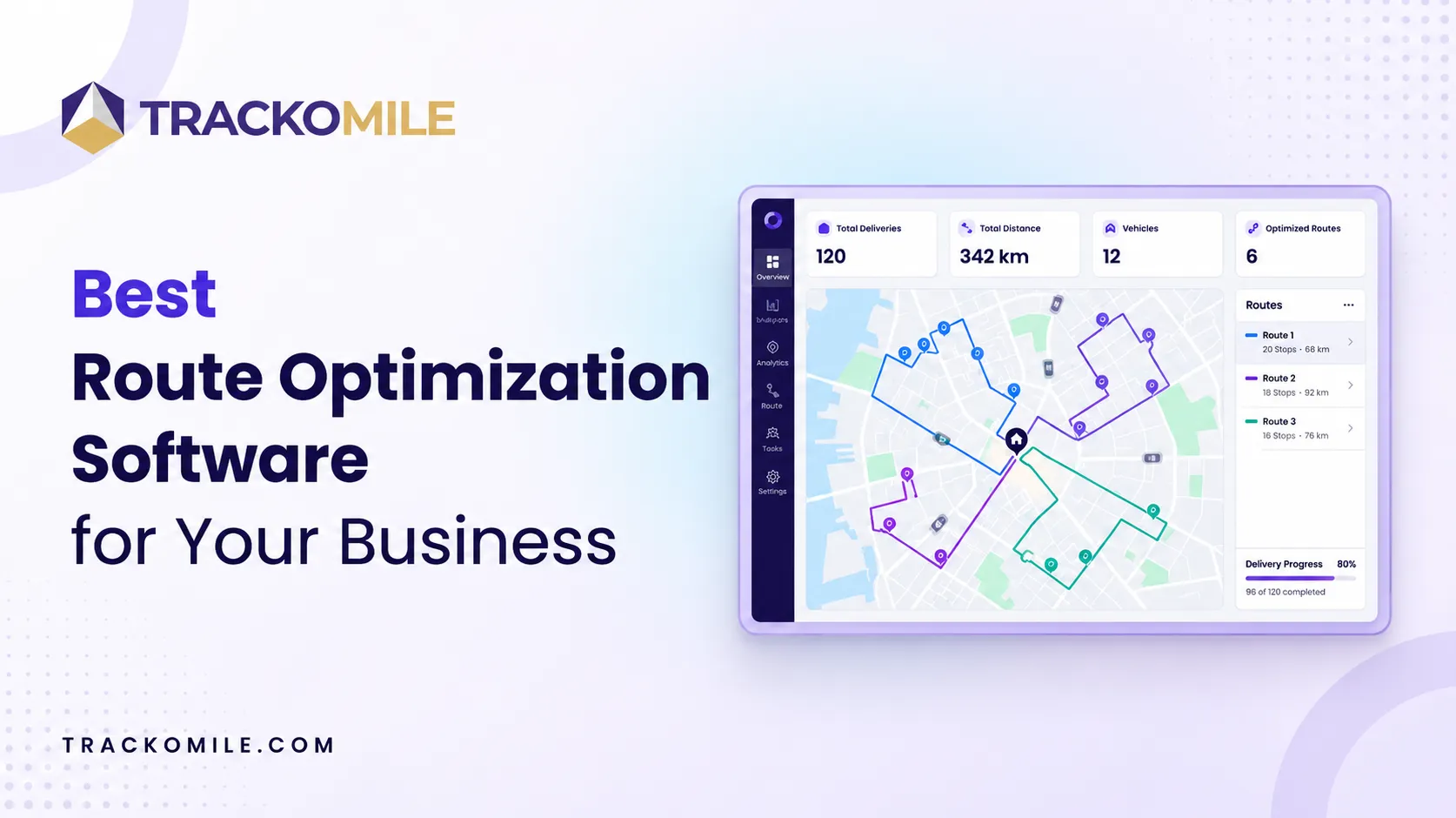
10 Best Route Optimization Software: 2027 Buyer’s Guide
This guide compares 10 best route optimization software on features, pricing, ratings, and best-fit use case.
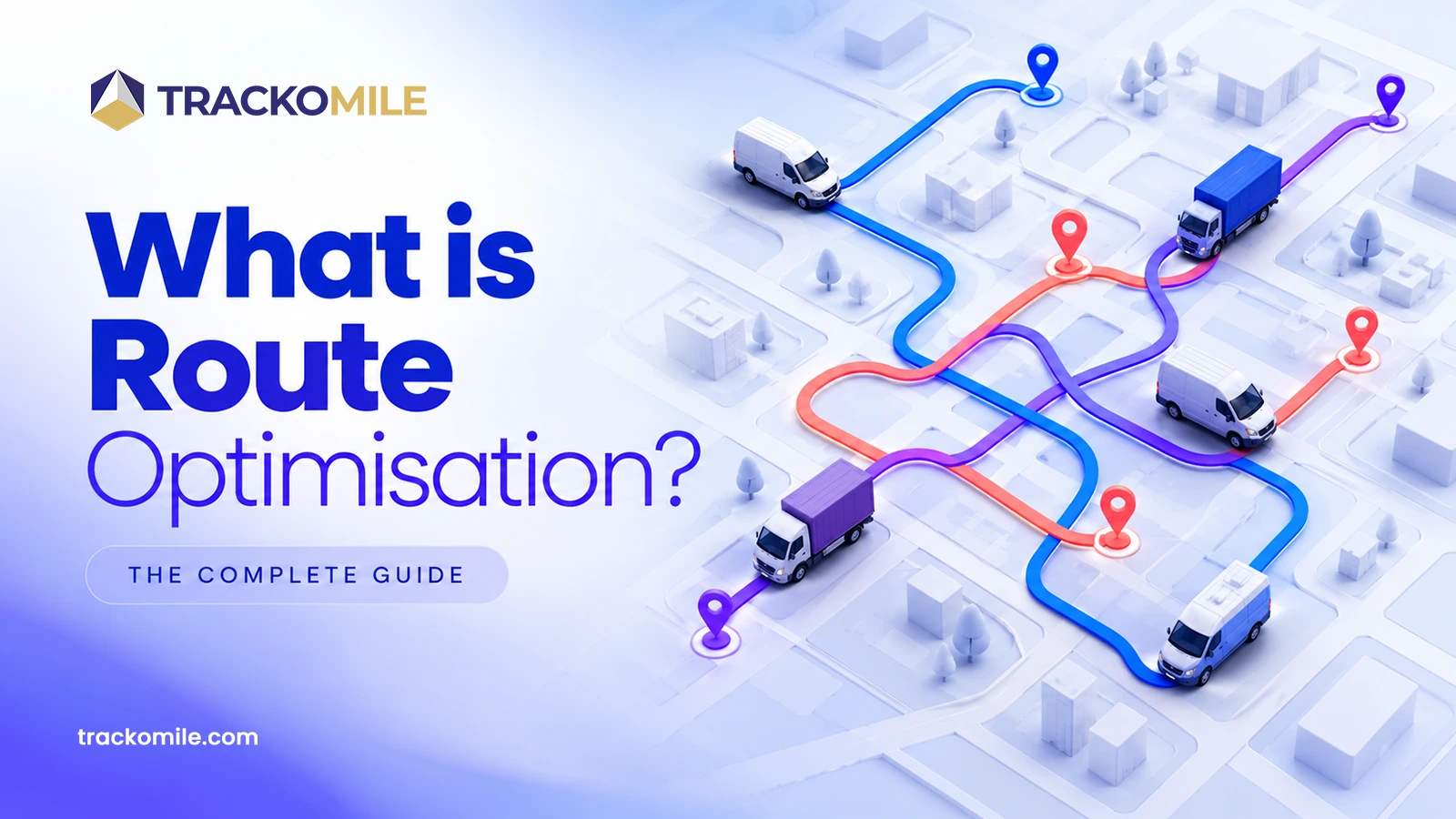
What is Route Optimization: The Complete 2027 Guide
Explore route optimization, how it works, why it is essential for last-mile delivery, and the best practices for choosing the…
10 Delivery Management Best Practices Every Logistics Team Should Follow
Following delivery management best practices can improve order allocation, real-time tracking, and KPIs. These tips reduce delays and last-mile delivery…
What Is Delivery Management? Process, Challenges & Best Tools
Delivery management streamlines order allocation, route optimisation, dispatch, and tracking to reduce costs, improve efficiency, and boost customer experience.


Your inbox awaits a welcome email. Stay tuned for the latest blog updates & expert insights.
"While you're here, dive into some more reads or grab quick bites from our social platforms!"Stay Updated on tech, telematics and mobility. Don't miss out on the latest in the industry.