
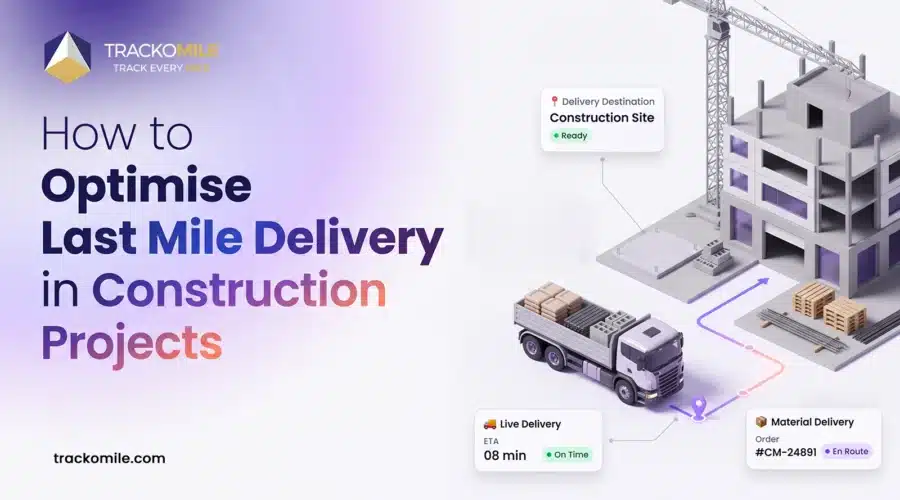
This guide explains how last mile delivery construction software can help improve efficiency, visibility and site coordination.
Construction projects require intricate planning and are heavily dependent on deadlines. The right material must reach the right site at the right time. Any delay can slow down the entire project, leading to worker downtime. Several workers will have to sit idle often without pay due to a late delivery. This is why it is important to optimise last mile delivery in the construction industry.
For this, manual coordination must be replaced with automated last mile delivery management software. It allows construction companies to deal with transport challenges and manage rising fuel costs, spread out vendors, and remote locations.
Managers get better visibility while drivers ensure construction materials are delivered on time. Construction companies improve operational control and complete projects faster. Check this guide on last mile delivery in construction to learn about its challenges and benefits.
What is Last Mile Delivery in Construction & Why is it Important?
Last mile delivery in construction refers to the final movement of materials, equipment, or supplies from warehouses or distribution hubs to construction sites. Residences, schools, commercial real estate, public works and nearly all sectors require raw materials. So, construction companies navigate:
- Large and heavy materials
- Remote project sites
- Time-sensitive schedules
- High-value equipment
- Frequent route changes
- Weather-related disruptions
Meeting deadlines is paramount for construction companies. If cement, steel, pipes, machinery, or tools arrive late, work stops immediately. This is especially true for emergency procurement during active construction stages. A delay at one site can impact multiple teams at once. Hundreds of labourers end up sitting idle. This increases operational costs significantly.
That is why last mile delivery is becoming a major focus area for construction companies. A strong last mile delivery software helps construction businesses:
- Reduce project delays
- Track driver movement live
- Improve delivery accuracy
- Reduce fuel wastage
- Improve contractor communication
- Increase operational visibility
Modern delivery management platforms also help managers respond faster to problems. If a route is blocked or a vehicle is delayed, teams can quickly reroute deliveries and avoid major disruptions. This level of visibility can be game changing for large construction projects.
Top Challenges in Last Mile Delivery for Construction Companies
Construction companies face several challenges during last mile delivery operations like delays, no visibility, remote locations and poor teamwork. These challenges directly impact project timelines, labour productivity, and operational costs.
1. Delivery Delays
Traffic congestion, route issues, and poor planning often delays deliveries. Construction projects follow tight schedules. Even small delays can stop work and affect several teams, which includes
- Civil engineers
- Site supervisors
- Electrical teams
- Interior teams
2. Lack of Real-Time Visibility
Many businesses still depend on manual calls and spreadsheets to track deliveries. This affects decision making and causes gaps in delivery operations. Managers often do not know:
- Where delivery teams are
- What they are doing
- Delivery status of materials
- Which routes drivers followed
- Why delays happened
3. High Operational Costs
Last mile deliveries are expensive. Plus, construction deliveries usually involve long-distance movement and heavy vehicles. Poor route planning increases travel distance and fuel usage. Repeated trips also increase other costs like vehicle maintenance and driver expenses.
4. Multiple Site Coordination
Construction companies manage several project sites at the same time. Each site may require different materials and delivery schedules. Large, spread-out teams and complex operations cannot be managed manually.
5. Failed or Incorrect Deliveries
Wrong deliveries create major project delays. For example, if the wrong pipe size or material type reaches the site, workers may not be able to continue the task. This increases return trips and delivery costs.
6. Remote Sites
Many construction sites are located in remote or developing areas. This makes delivery tracking and verification tougher. Drivers may face:
- Poor road conditions
- Weak mobile connectivity
- Route confusion
- Lack of proper location mapping
7. Poor Coordination Between Teams
Warehouse teams, dispatchers, riders, drivers and site supervisors often work separately. Without a connected system, updates are delayed. This creates confusion and slows execution.
How to Improve Last Mile Delivery in Construction – Key Features to Look For
Live updates, real-time visibility, centralised dashboards, and smart route planning are some of the key features that improve last mile delivery in construction businesses. Here are all the features to look for:
1. Real-Time Vehicle Tracking
Managers should be able to track delivery vehicles live. This helps them:
- Monitor delays
- Improve route planning
- Track staff movement
- Improve delivery visibility
2. Route Optimisation
Construction deliveries often involve multiple stops and changing routes. A strong route optimisation software helps businesses:
- Reduce fuel costs
- Avoid traffic-heavy roads
- Improve delivery speed
- Increase daily delivery capacity
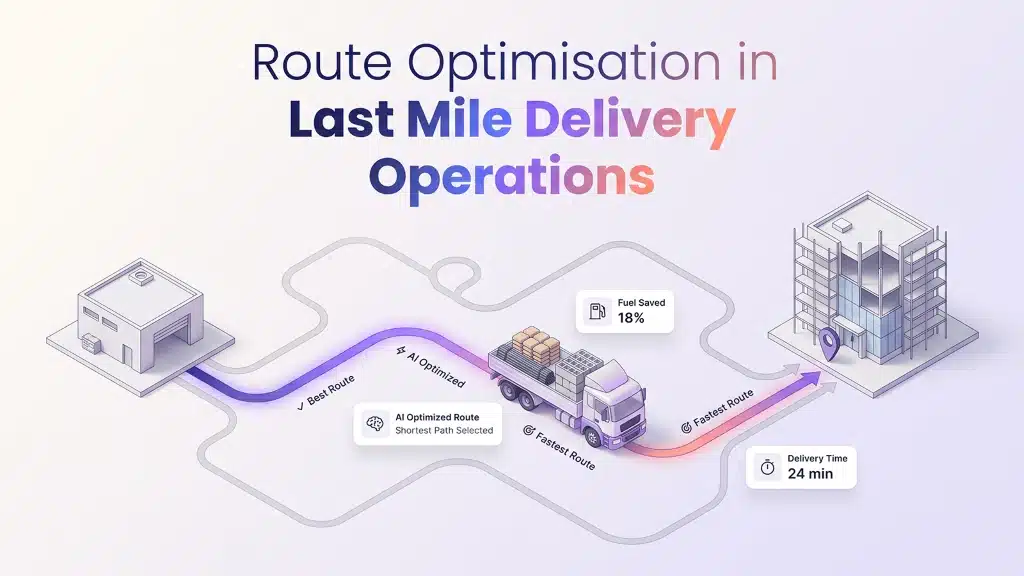
Route Optimisation in Last Mile Delivery Operations
3. Delivery Status Updates
In last mile delivery in construction, managers require timely and live updates to coordinate with delivery teams. These include:
- Dispatch status
- Delivery progress
- Arrival time
- Delivery completion
Live updates reduce communication gaps between delivery and site teams.
4. Geofencing
Geofencing helps businesses monitor whether drivers entered or exited assigned delivery zones on time. This improves:
- Delivery verification
- Route compliance
- Staff accountability
- Site entry tracking
Geofencing also ensures all employees operate within their assigned zones.
5. Proof of Delivery
Construction businesses require digital proof of delivery tools. It reduces disputes and helps maintain foolproof delivery records. Delivery teams can upload:
- Photos
- Signatures
- Documents
- Barcode scans
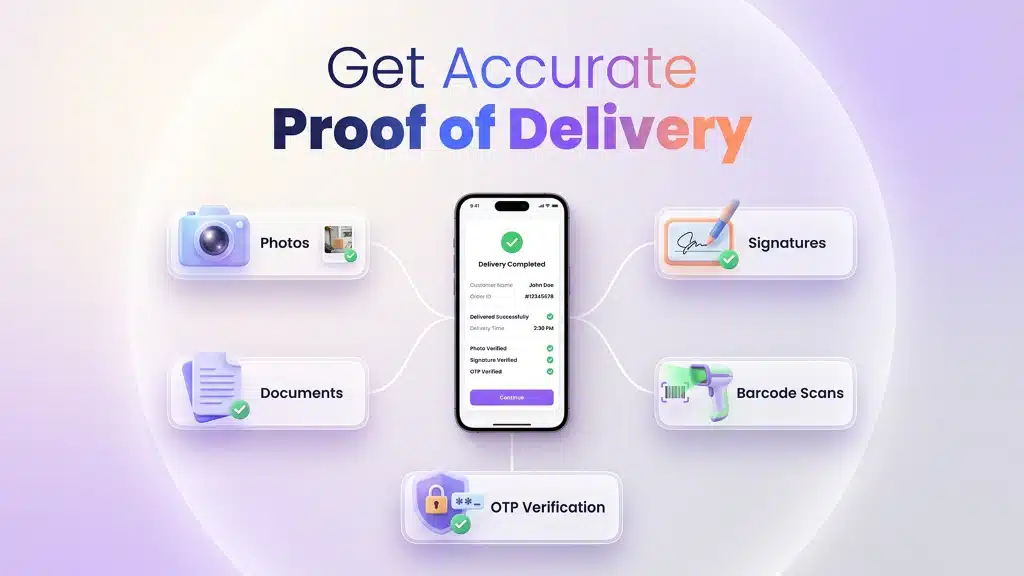
Get Accurate Proof of Delivery With Last Mile Construction Software
6. Centralised Dashboard
Managers need a single dashboard to monitor all delivery operations. A centralised system improves:
- Delivery visibility
- Delivery planning
- Driver management
- Site coordination
- Reporting accuracy
This comes in handy for businesses handling multiple project sites.
7. Automated Reporting
Manual reporting wastes time. On the other hand, a modern last mile delivery platform simplifies reporting and provides valuable insights about:
- Delivery timelines
- Vehicle usage
- Staff productivity
- Fuel efficiency
- Delivery success rates
How TrackoMile Helps Construction Businesses Optimise Last Mile Delivery
TrackoMile helps construction companies optimise their last mile delivery operations through better live visibility, staff tracking, and operational control. Construction businesses can use TrackoMile to:
- Track vehicles & drivers in real time
- Plan and optimise delivery routes
- Monitor delivery timelines
- Manage multiple project sites
- Confirm delivery with ePOD
- Reduce fuel wastage
- Verify deliveries digitally
TrackoMile also improves teamwork between dispatchers, drivers, and site managers. Managers receive live updates on delivery movement and project status. This helps businesses respond faster to delays and reduces WISMO calls.
The platform supports geofencing and proof of delivery features as well. Businesses can verify site visits, monitor route compliance, and maintain digital delivery records.
Conclusion
When it comes to last mile delivery in construction, time is of the essence. Even minor delays can cause chain reactions affecting several teams. This is where manual planning fails and automated last mile delivery management becomes critical.
Software like TrackoMile ensures construction projects run smoothly. It helps delivery materials timely across remote and scattered locations. It also helps manage large delivery teams and tight timelines through live tracking, route optimisation, and automated reporting.
The result is fewer delays, better site coordination, lower fuel costs and more transparent operations.
Frequently Asked Questions
-
How to improve last mile delivery efficiency in construction?
Route planning and live tracking are the best ways to improve last mile efficiency in construction. They help reduce travel time and plan deliveries better. Smart planning also improves team coordination and leads to faster dispatch. Drivers complete deliveries on time and work more efficiently.
-
Which software is best for construction last mile delivery?
TrackoMile is a strong tool for last mile delivery for construction. It is automated, fast, and accurate. It provides features like live tracking, route optimisation, and proof of delivery. These solutions improve delivery speed and field visibility.
-
How does proof of delivery help construction businesses?
Proof of delivery confirms that materials reached the correct site. Delivery staff can upload photos, signatures, and notes. Managers can view the uploaded data with precise geotags and timestamps. This reduces disputes and improves accountability. Managers also get better delivery records and stronger visibility across operations.
-
Why do construction projects face delivery delays?
Construction projects face delays because of poor work planning, route issues, and no visibility. Remote and scattered sites also create delivery problems. Some businesses also use manual tracking. It is slow and error prone, leading to increased project costs.
-
What are the benefits of optimized last mile delivery in construction?
Optimized last mile delivery reduces delays and fuel costs. It improves delivery speed and site productivity. Businesses also get better visibility, smart teamwork, smoother operations. This helps construction projects stay on schedule with fewer disruptions.

Mudit is a seasoned content specialist working for TrackoField. He is an expert in crafting technical, high-impact content for Field force management software With years of experience rooted in the me... Read More


Related Blog
What Is Delivery Management? Process, Challenges & Best Tools
Delivery management streamlines order allocation, route optimisation, dispatch, and tracking to reduce costs, improve efficiency, and boost customer experience.
Building Resilient Delivery Operations with TrackoMile in 2026 and Beyond
Logistics businesses build resilient delivery networks with TrackoMile. But how exactly? With real-time route optimization, automated scheduling, and end-to-end fleet…
How to Scale Quick Commerce Beyond 10 Minutes with TrackoMile
TrackoMile transforms chaotic last-mile logistics into a predictable, automated, and high-margin retail powerhouse. See how it works in quick commerce.
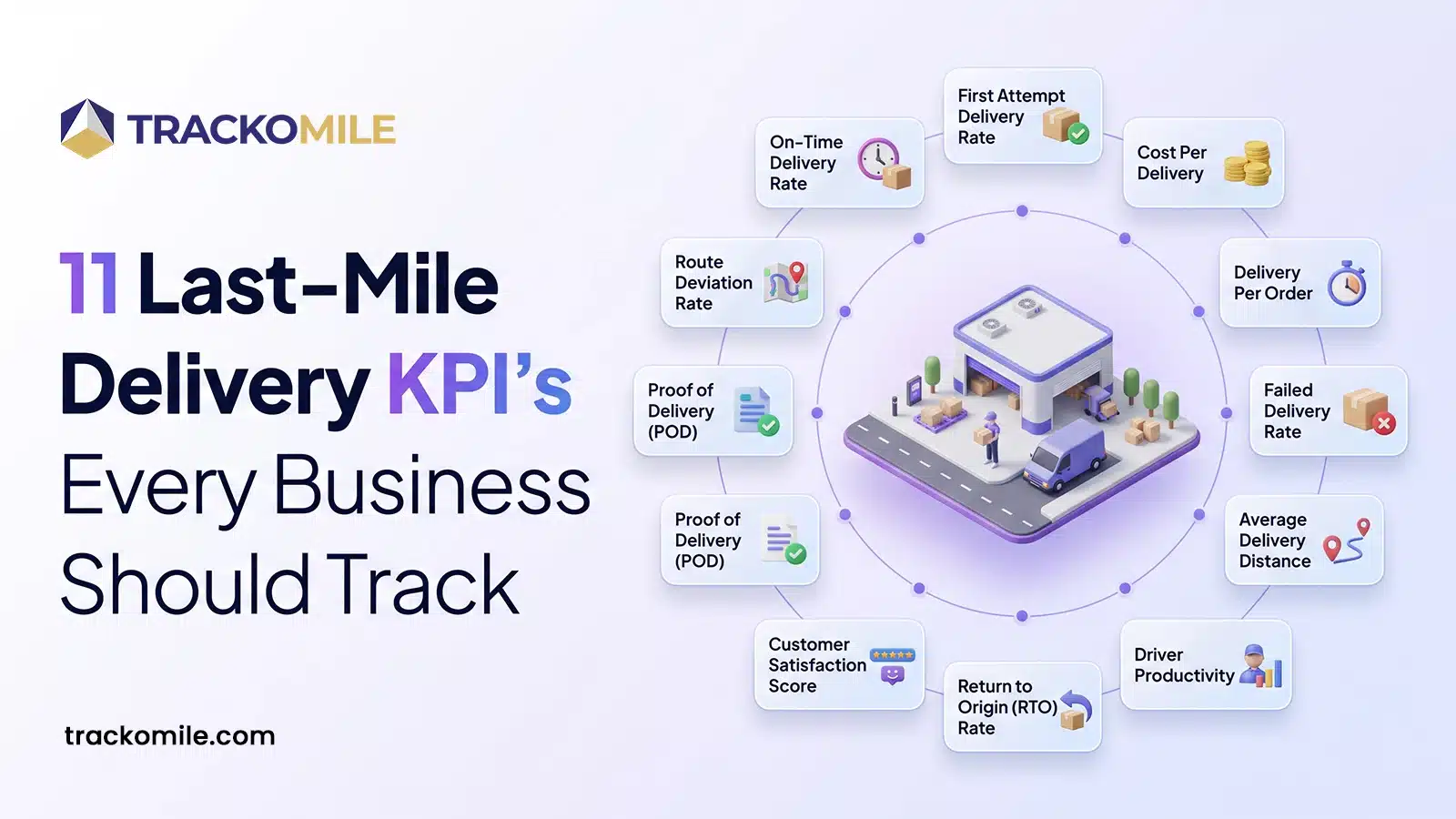
Last Mile Delivery KPIs & Metrics: 11 Essential Metrics to Track
To improve last mile operations, it’s important to track 11 essential last mile delivery KPIs like on-time delivery rate, cost…


Your inbox awaits a welcome email. Stay tuned for the latest blog updates & expert insights.
"While you're here, dive into some more reads or grab quick bites from our social platforms!"Stay Updated on tech, telematics and mobility. Don't miss out on the latest in the industry.