
Quick Summary

- Implement AI-driven route optimization to enhance delivery accuracy and reduce delays in last mile logistics.
- Utilize predictive dispatch and behavior-based fleet optimization to improve resource utilization and operational efficiency.
- Adopt customer-facing transparency tools for better communication, enhancing customer satisfaction in last mile deliveries.
- Leverage automation and data-driven strategies to streamline operations, ensuring scalable growth and improved last mile delivery performance.
Having a successful last mile delivery strategy in place is vital. Here are 10 ways you can improve on-time delivery and optimize operations. All the while increasing customer satisfaction and experience.
The goal of last-mile companies is to make on-time deliveries and win customer satisfaction. To achieve this they have to optimize operations. It is possible through a well-planned last-mile delivery strategy.
Without an efficient strategy in place, it becomes hard for businesses to stay ahead. At a broader level, they could lose revenue and hamper their brand reputation. Additionally, they might also suffer on a daily basis:
- Delayed deliveries
- Operational budget spilling over
- Drop in customer satisfaction and expectations.
But all of this can be avoided. We have compiled a list of 10 ways you can implement and improve your last-mile logistics strategies. Give it a read.
What is Last-Mile Delivery Strategy?
Last mile delivery strategy refers to the planning, use of technology, and operational decisions involved in delivery. It focuses on moving goods from the final distribution hub to the customer’s doorstep. The strategy focuses on choosing the most efficient routes for faster deliveries. It devices a successful order distribution method as well.
With optimized strategies in place, courier businesses are no longer reacting to strategies. Instead, they are standardizing workflows and improving consistency. Last mile delivery strategy is a combination of –
- Automation
- Analytics
- Real time visibility.
A good combination of all three ensures deliveries are faster, accurate, and scalable.
Why Last-mile Delivery Strategy Matters?
Last mile logistics strategy holds the power to make or break a business’s success. Effective ways also impacts the profits. Well-planned implementations will reduce operational inefficiencies. The prime cause of an increase in delays and costs. Business that are actively investing in structured delivery planning will –
- Improve fleet productivity
- Enhance customer satisfaction
- Minimize resource consumption.
Without clear strategies, operations are bound to fail or go haywire. Moreover, they will be more reactive and tough to scale. You can expect –
- Poor route planning
- Manual dispatching
- Lack of visibility.
All of this will ultimately lead to missed deliveries and rising expenses. The result? Competitors win over the market. Your customers’ loyalty slowly starts to erode.
10 Effective Ways to Improve Last-Mile Delivery Strategies
Last mile is shifting toward predictive planning and intelligent automation. And also real-time decision making. Gone are days of traditional workflows. Now teams are actively adopting technologies and strategies to improve success rates. This is helping them solve last mile delivery challenges proactively.
1. Shift from Static Planning to AI Driven Route Intelligence
Traditional routing will never fails to predict traffic patterns and fluctuating order volumes. But an AI-driven route optimization software can do that. With that is AI-driven, you sure can expect higher accuracy. It suggests routes based on –
- Live traffic
- Driver location
- Historical performance data
- 120 other factors.
This strategy reduces delays, increases delivery density, and improves fuel efficiency. Businesses move from reactive planning to predictive execution. Thus, enabling more consistent last mile delivery performance.
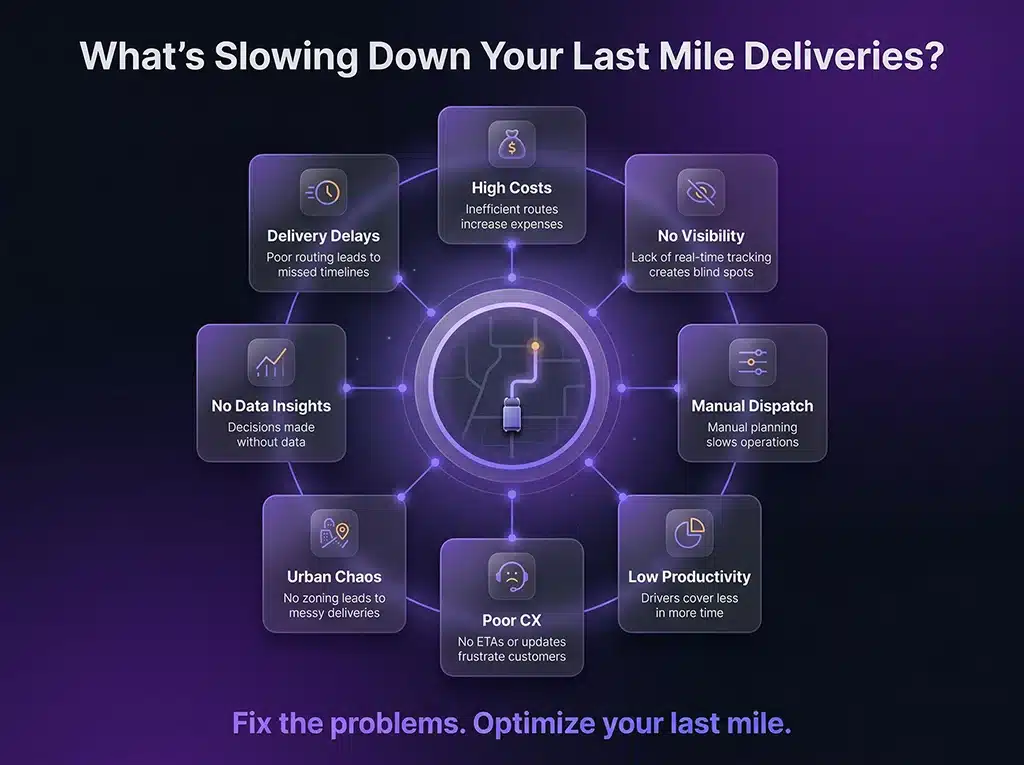
Last mile challenges these strategies can solve
2. Build a Control Tower with Unified Real Time Visibility
Manual dispatching slows operations and leads to uneven workload distribution. Predictive dispatch allocate tasks automatically. It uses factors like –
- Driver behavior data
- Location intelligence
- Delivery priority.
This strategy improves resource utilization and ensures faster turnaround. Businesses can scale delivery volumes without increasing operational complexity.
3. Use Predictive Dispatch Instead of Manual Scheduling
Driver performance has a direct impact on delivery timelines and operational costs. Behavior based optimization improve fleet efficiency by using –
- Driving patterns
- Idle time analysis
- Safety insights.
This strategy improves resource utilization and ensures faster delivery turnaround. Businesses can scale delivery volumes without increasing operational complexity.
4. Introduce Behavior-Based Fleet Optimization
Driver performance has a direct impact on delivery timelines and operational costs. Behavior based optimization improve fleet efficiency by using –
- Driving patterns
- Idle time analysis
- Safety insights.
By focusing on behavior analytics, businesses reduce fuel wastage and improve safety standards. This approach strengthens delivery reliability while minimizing operational risks.
5. Adopt Delivery Intelligence Dashboards for Continuous Optimization
Traditional reporting delays decision making. Delivery intelligence dashboards provide real-time insights into –
- Route performance
- Delayed zones
- Operational bottlenecks.
Continuous monitoring allows businesses to refine their last-mile delivery optimisation. They can do it throughout the day. Instead of waiting for reports, teams can optimize performance instantly.
6. Create Hyperlocal Micro Zone Delivery Models
Urban deliveries are becoming more complex. This is due to traffic congestion and dense delivery clusters. Hyperlocal micro zoning divides large delivery regions into smaller operational areas. This is a great way to improve efficiency.
This strategy shortens travel distance between stops. Also improves first attempt delivery success rates. It enables businesses to handle high density deliveries with greater precision.
7. Move Toward Data Driven Cost Optimization
Rising costs are pushing businesses to rethink resource allocation. Data driven cost optimization uses analytics to identify inefficiencies in –
- Routes travelled
- Fuel usage
- Driver productivity.
Instead of reducing resources, companies improve operational planning to maintain profitability. This strategy ensures long-term cost control without compromising quality.
8. Deliver Experience First with Customer Facing Transparency Tools
Customer expectations now extend beyond fast delivery to full transparency. Businesses are investing in customer-facing tracking tools. They provide accurate ETAs and proactive notifications.
This strategy reduces failed deliveries and enhances customer satisfaction. Clear communication transforms last mile delivery into a positive brand experience.
9. Build Automation First Workflows for Scalable Growth
As delivery networks expand, manual processes create bottlenecks. Automation-first workflows integrate dispatching, tracking, and reporting into a unified system.
Automation ensures consistency across regions. Also allows businesses to scale operations without increasing administrative workload. It supports growth while maintaining operational efficiency.
10. Digitize Compliance with Smart Proof of Delivery Ecosystems
Managing delivery documentation manually leads to errors and delays. ePOD digitally capture delivery confirmation automatically through formats like –
- Geo-tagged images
- Timestamps OTP.
Digitized compliance improves accountability and simplifies record management. Businesses gain a reliable audit trail while reducing administrative effort.
How TrackoMile Helps You Build a Winning Last Mile Strategy
TrackoMile provides advanced tools that help businesses optimize their last mile operations.
It offers features such as:
- Real-time rider tracking
- Route optimization
- Automated dispatching
- Rider and delivery performance analytics
- Order and capacity management
- Rider roaster and app
These capabilities help reduce delays, improve efficiency, and support better decision making.
TrackoMile combines tracking technology with data driven workflows. This helps businesses build a strategy that is efficient and easy to scale.
Conclusion
Last-mile delivery is where efficiency directly shapes customer experience. Every delay, every missed update, and every wrong turn impacts how your brand is perceived. Businesses that adopt strategies like AI-driven routing and predictive dispatch will stay ahead.
As delivery demands grow in 2026, a data driven strategy is no longer optional. With TrackoMile, businesses can simplify operations. They gain real time visibility, and make smarter decisions every day. This leads to faster deliveries, better control, and a strong competitive edge.

Frequently Asked Questions
-
How can last mile delivery strategy reduce costs?
A last-mile delivery strategy reduces costs through route optimization and resource utilization. It uses automation and data driven planning to reduce delays. This helps businesses optimize resources and avoid unnecessary expenses. Also maintain consistent delivery performance at scale.
-
How do real time tracking systems improve delivery performance?
Real time tracking systems improve delivery performance by providing visibility into rider movement. Also, into order status. This helps teams identify delays and respond quickly. It improves coordination and reduces missed deliveries. The system ensures a smoother and more reliable delivery experience.
-
What tools do I need for last mile optimization?
Last-mile optimization requires tools like route optimization system and automated dispatch platforms. Delivery analytics dashboards also help monitor performance. Together, these tools improve visibility and streamline operations. Enable faster and more efficient delivery management.
-
What are the best practices for last mile delivery?
Best practices for last mile delivery include using AI-driven routing and predictive dispatch. Automation also plays a key role. These practices help businesses improve efficiency and reduce delays. These practices build scalable delivery operations with better control and performance.

Tithi Agarwal is an established content marketing specialist with years of experience in Telematics and the SaaS domain. With a strong background in literature and industrial expertise in technical wr... Read More


Related Blog
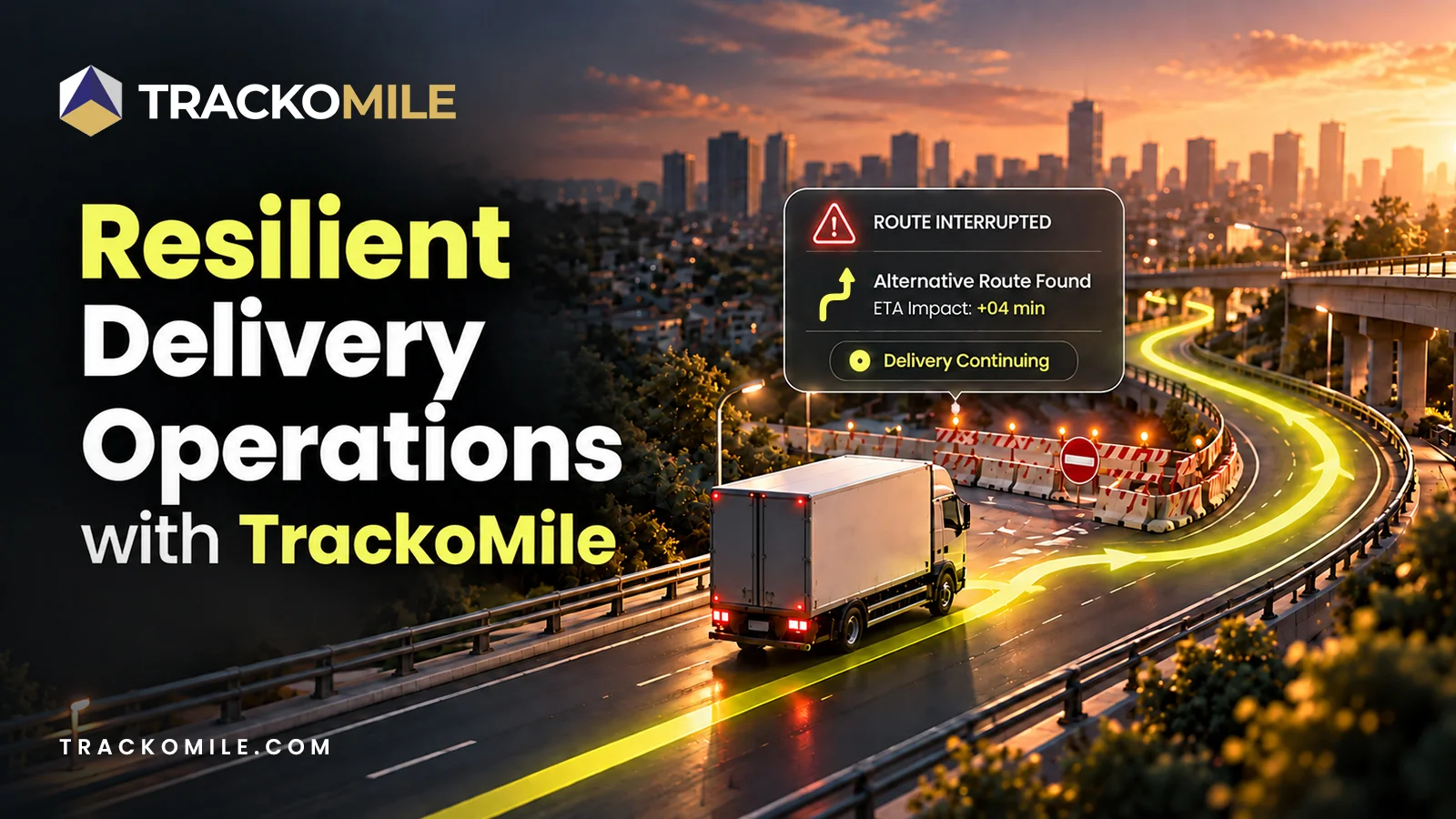
Building Resilient Delivery Operations with TrackoMile in 2026 and Beyond
Logistics businesses build resilient delivery networks with TrackoMile. But how exactly? With real-time route optimization, automated scheduling, and end-to-end fleet…
How to Scale Quick Commerce Beyond 10 Minutes with TrackoMile
TrackoMile transforms chaotic last-mile logistics into a predictable, automated, and high-margin retail powerhouse. See how it works in quick commerce.
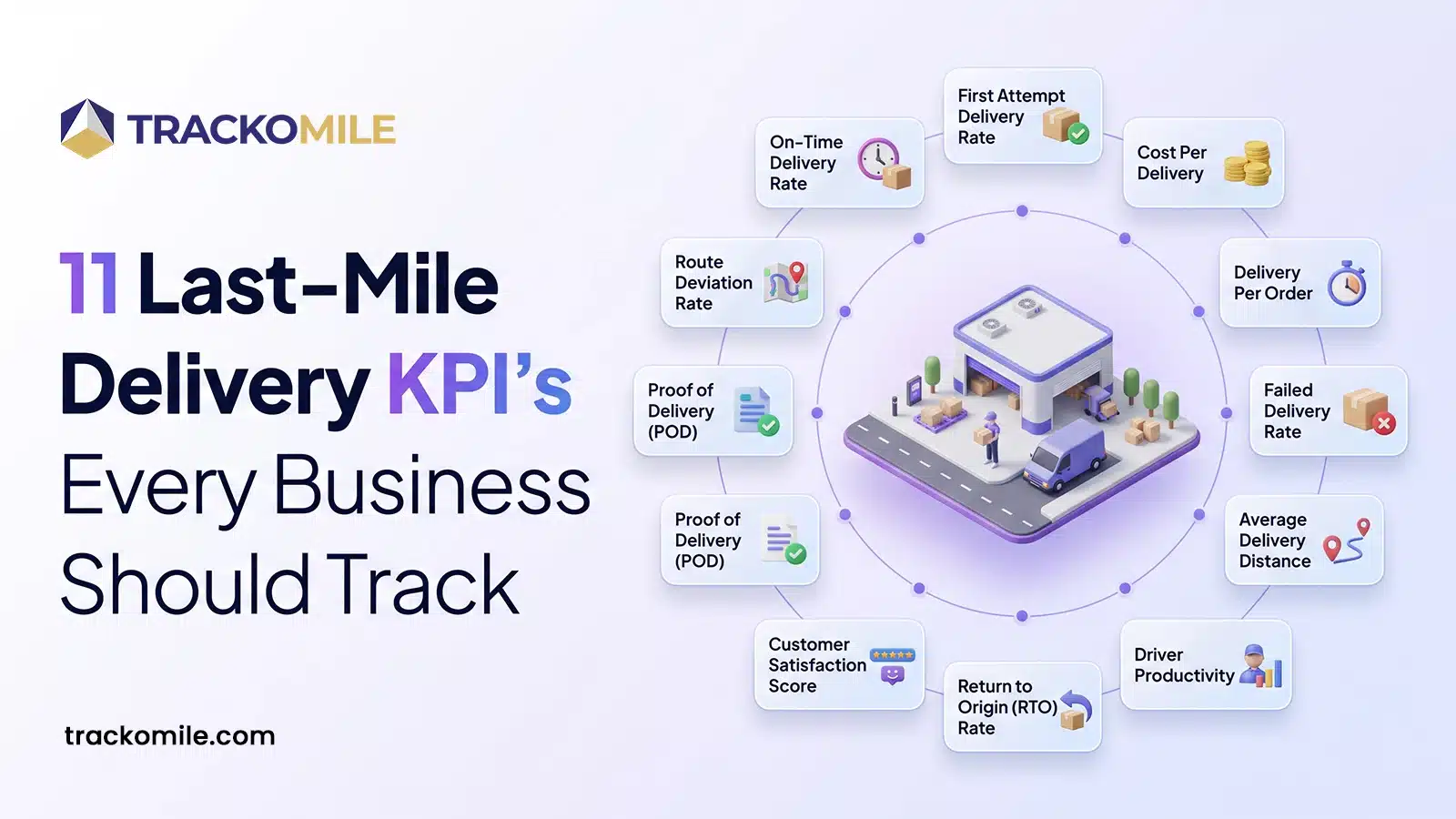
Last Mile Delivery KPIs & Metrics: 11 Essential Metrics to Track
To improve last mile operations, it’s important to track 11 essential last mile delivery KPIs like on-time delivery rate, cost…
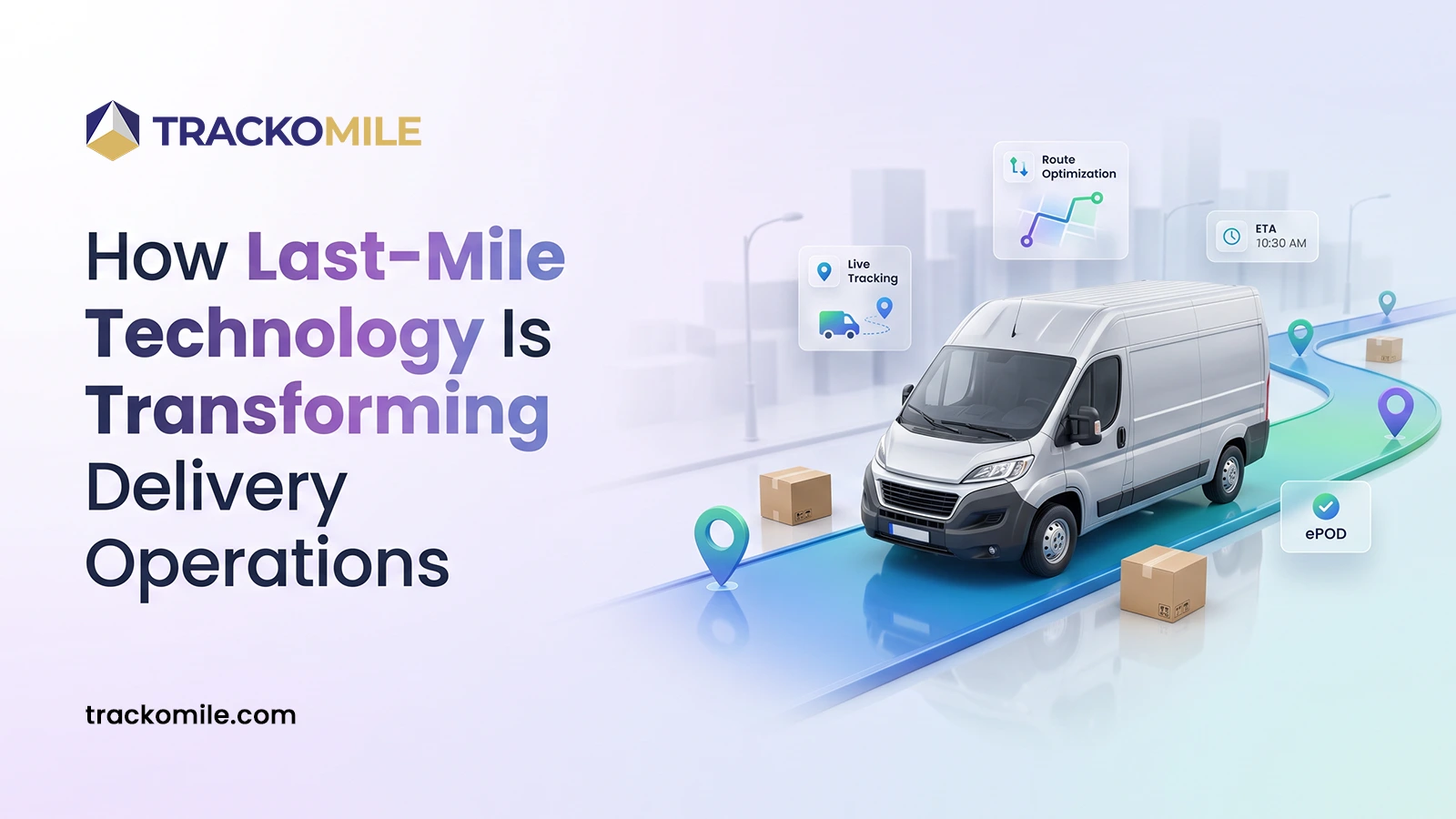
Last-Mile Technology: 6 Technologies Transforming Delivery Operations
Learn how last-mile technology combines routing, dispatch, tracking, ePOD, and analytics. Improve your businesses’ delivery speed, visibility, efficiency, and customer…


Your inbox awaits a welcome email. Stay tuned for the latest blog updates & expert insights.
"While you're here, dive into some more reads or grab quick bites from our social platforms!"Stay Updated on tech, telematics and mobility. Don't miss out on the latest in the industry.