
Quick Summary

- Last mile delivery is crucial for businesses, providing faster deliveries and improved customer experience, but it can also be costly, contributing to 53% of shipping expenses.
- Efficient last mile delivery enhances visibility for managers, allowing real-time tracking and better control over operations, which is key for maintaining service levels.
- Challenges include high fuel costs, limited visibility, and frequent delivery delays, which can lead to increased operational expenses and reduced profit margins.
- Implementing software solutions like TrackoMile can optimize route planning, improve tracking, and enhance delivery verification, addressing common last mile delivery issues effectively.
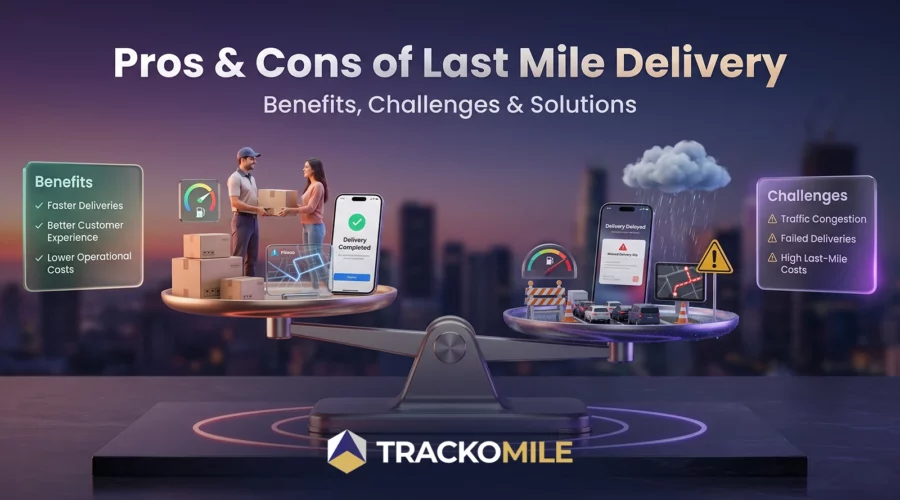
This blog explores the pros and cons of last mile delivery. It also looks at how businesses can overcome common challenges with the right software in place.
Last mile delivery is one of the fastest-growing segments in India’s logistics. At the same time, it contributes up to 53% of the total shipping cost. This makes the last mile the costliest part of the supply chain. Even minor factors such as route planning and visibility directly affect delivery performance. Also, it increases the per delivery cost.
This is the reason why businesses today are expanding delivery capacity. While controlling operational challenges. Understanding both last mile delivery advantages and disadvantages is important. This helps building efficient and scalable operations in 2026. Keeping this in mind, here are the pros and cons of last mile delivery that businesses should know.
What Are the Pros of Last Mile Delivery?
Better visibility, faster deliveries, and improved control over daily operation are some major advantages of last mile delivery. Continue reading to know in detail.
1. Faster and On-Time Deliveries
An efficient last mile delivery process helps businesses complete orders faster. With better route planning and structured dispatch control, managers can avoid delays. Also, they can ensure timely deliveries. It directly improves on-time delivery rate and ensures stronger SLA adherence.
2. Better Visibility for Managers
Managers track orders, riders, and delivery status in real-time. This reduces manual follow-ups and helps identify delays early. So, operational teams maintain better control over daily operations.
3. Improved Customer Experience
A structured last mile delivery process directly improves customer satisfaction. By sharing accurate ETAs and live tracking links, managers reduce uncertainty. This builds trust and improves repeat purchase behavior.
4. Competitive Advantage
Businesses that deliver efficiently in the last mile gain a clear competitive advantage. Fast and reliable delivery helps them stand out and operate more efficiently than competitors. This strengthens the market position and supports higher revenue and share.
5. Enhanced Brand Reputation
Consistent last mile delivery improves operational reliability and builds trust among clients. Missed deliveries or SLA breaches directly impact retention and future volumes. For growing logistics businesses, getting last mile execution right helps protect service reputation.
Together, these benefits show the importance of last mile delivery for business performance. Even this is also reflected in market growth. As per industry reports, the market has reached $184.2 in 2025 and is expected to grow to $277.76 billion in 2030.
However, if not managed well, last mile delivery can create several challenges for businesses. Continue reading to know in detail.
What Are the Cons of Last Mile Delivery?
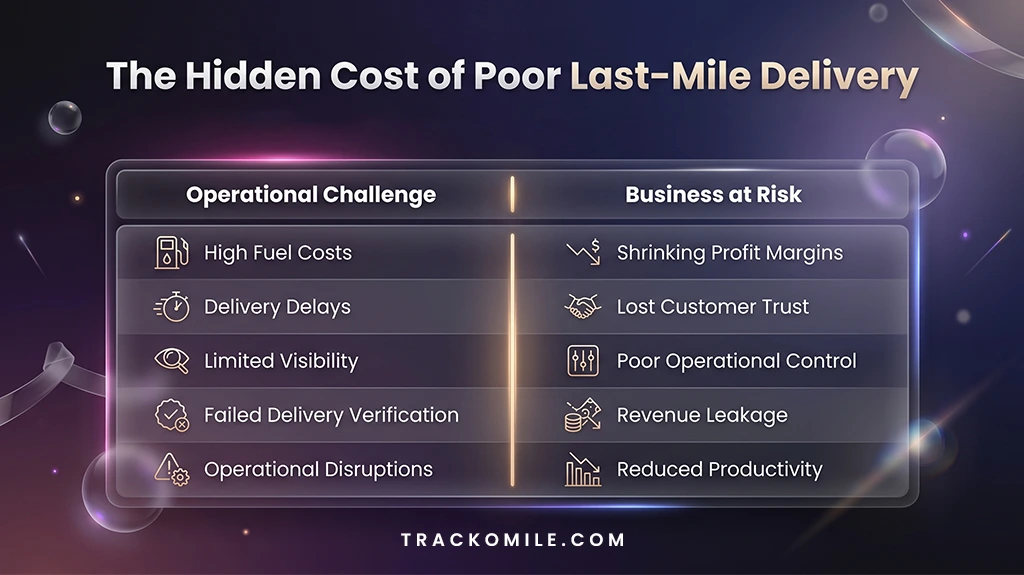
If deliveries are not managed efficiently, businesses face last mile logistics problems. These include high fuel cost, delivery re-attempts, and lack of visibility. Below, we have discussed these challenges in detail.
Cost of Poor Last-Mile Delivery
1. High Fuel Cost
Without proper route planning and optimization, riders often end up taking longer routes and spend more time stuck in traffic. This increases fuel usage and overall per delivery costs. This eventually reduces margin control for the business.
2. Limited Visibility
In manual or poorly managed systems, managers don’t get real-time updates on deliveries. This leads to delayed decision making and high WISMO calls. This affects the overall productivity of the team.
3. Frequent Delays and Re-Attempts
When deliveries are not executed properly, it can lead to missed ETAs, wrong routing, and delivery failures. This results in delivery re-attempts, extra fuel costs, and directly affects SLA compliance. It is especially important when you are handling large order volumes.
4. Unpredictable Operational Disruptions
Unexpected factors like weather, traffic, and road conditions can impact overall delivery flow. These events cause delays, missed deliveries, and high operating expenses when route is not planned properly and with a software.
5. Poor Delivery Verification
Without a proper software, managers often face proof of delivery gaps. This affects billing accuracy, dispute resolution, and overall operational accountability.
A Quick Difference: Pros and Cons of Last Mile Delivery
| Pros of Last Mile Delivery | Cons of Last Mile Delivery |
| Faster deliveries through planned routes and structured execution. |
Delays due to unplanned routes and poor coordination. |
| With the right software in place, managers gain real-time visibility across riders and deliveries. |
Lack of real-time visibility leads to missed updates and slow decision making. |
| Efficient delivery management helps improve profit margins over time. |
Inefficient last mile delivery is the most expensive part of the supply chain. |
| Better allocation of riders and vehicles improves productivity. |
Unstructured operations often lead to underutilized vehicles and rider inefficiency. |
How TrackoMile Solves Last Mile Delivery Problems?
TrackoMile solves last mile delivery challenges by bringing planning, tracking, and execution into a single system. Here’s how it helps businesses.
1. Smart Dispatch Management
TrackoMile’s dispatch management software helps businesses assign orders based on 50+ rules like
- Vehicle capacity
- Distance
- Driver skill
- Proximity to name a few.
So, that managers can reduce manual errors and ensure more structured operations.
2. Route Optimization
The route optimization software helps managers plan the most efficient route for deliveries. It considers real-world factors like:
- Weather
- Traffic
- Social events
- Road conditions
So, you can avoid delays and control fuel costs.
3. Real-Time Tracking & Visibility
Real-time last mile tracking allows managers to track and monitor deliveries in real-time. It also includes geofencing capabilities so managers can monitor entry or exist in a defined area.
4. Digital Proof of Delivery
Riders can capture proof of delivery through OTP, signature, and barcode. This way managers can ensure that every completed delivery is properly recorded. This ensures accurate billing, dispute handling, and operational accountability.
5. Analytics Dashboard
With TrackoMile’s analytical dashboard, managers can access up to 1 year of route history. They can monitor planned vs actual performance and total distance travelled. Also, managers can track rider performance, and historical data. So, they can make decisions based on real data and maintain better control over operations.
6. Reporting & Insights
TrackoMile offers detailed reports covering attendance, geofence, order performance, and rider productivity. Managers can track key metrics like total trips completed, average trip time, and total distance travelled. This helps them to identify delays and improve overall delivery performance. This also helps with accurate billing, payroll, and performance analysis.
Wrapping Up
Understanding the pros and cons of last mile delivery come down to how well the process is managed. A structured setup by using last mile delivery software like TrackoMile, businesses can improve speed, visibility, and SLA performance. At the same time, poor execution leads to delays, higher costs, and operational gaps that directly affect efficiency at scale.

Frequently Asked Questions
-
Why is last mile delivery the most expensive part of the supply chain?
Labor cost, fuel cost, and failed delivery are some of the reasons why last mile delivery is costly. On top of this, managing multiple stops and real-time traffic makes operations even more difficult. However, companies can manage these costs. They can do so by using last mile delivery management software such as TrackoMile. It aids managers to enhance planning, visibility, and execution.
-
Which software is best for last mile delivery tracking?
There is no single software that can be the best for last mile delivery tracking. However, the right solution depends on your business size, delivery volume, and operational requirements. Most businesses look for features like real-time tracking and route optimization. Also, automated dispatch, proof of delivery, and rider management affect the decision. Solutions like TrackoMile offers all these features under one platform. So, businesses can improve planning, visibility, and overall delivery execution.
-
What are the upcoming trends of last mile delivery in 2026?
Drone and sidewalk robots, micro-fulfillment centers, and real-time tracking. These are the major trends shaping the future of last mile delivery. Companies are also turning to EV fleets to cut fuel expenses. Also, it helps them support more sustainable operations, while ensuring reliable deliveries at scale.

Parul is a content writer with 2+ years of experience in B2B and SaaS domains. She creates clear, actionable content for TrackoBit and TrackoMile, focusing on fleet management, last-mile delivery, and... Read More


Related Blog
How to Scale Quick Commerce Beyond 10 Minutes with TrackoMile
TrackoMile transforms chaotic last-mile logistics into a predictable, automated, and high-margin retail powerhouse. See how it works in quick commerce.
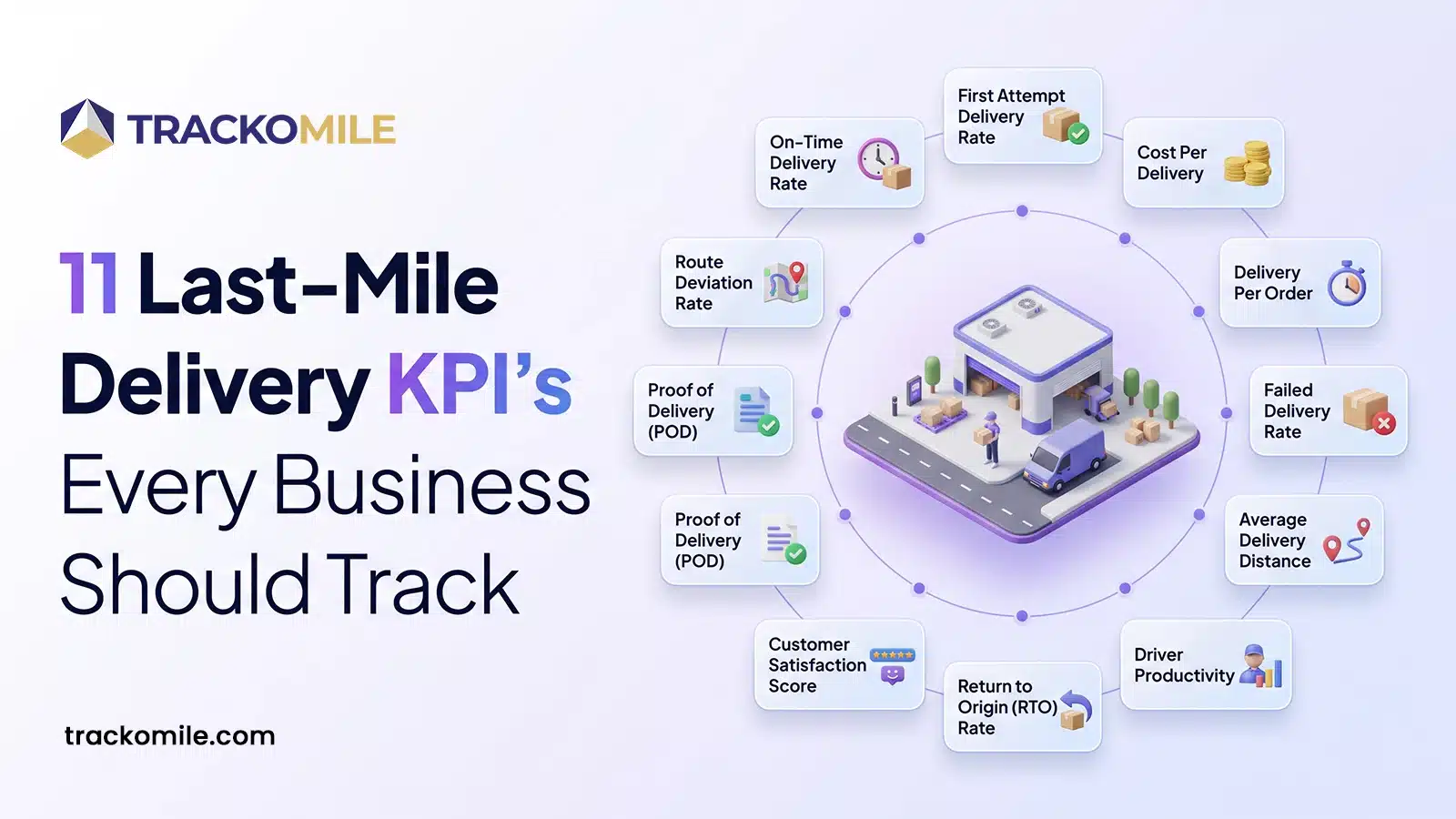
Last Mile Delivery KPIs & Metrics: 11 Essential Metrics to Track
To improve last mile operations, it’s important to track 11 essential last mile delivery KPIs like on-time delivery rate, cost…
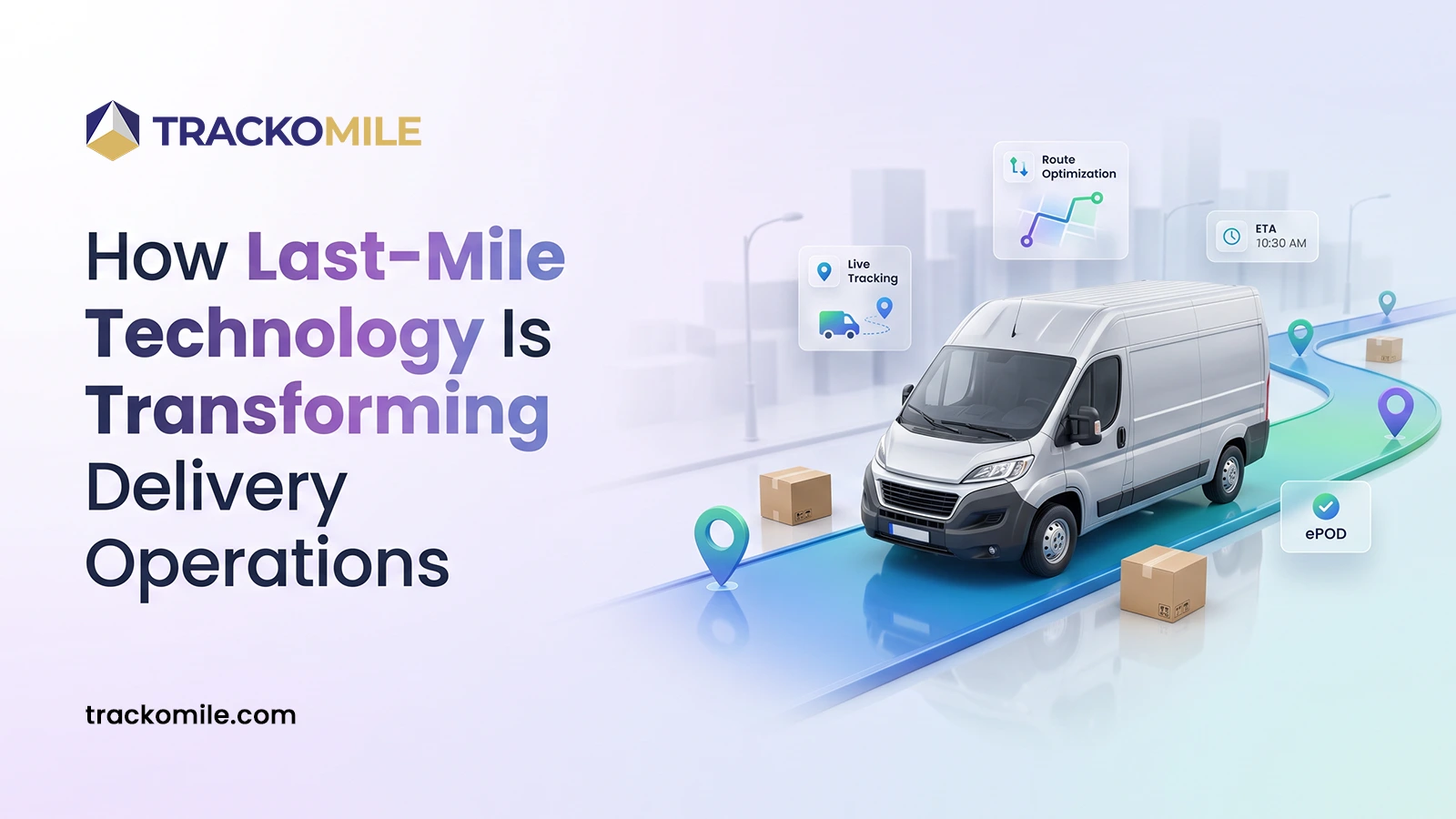
Last-Mile Technology: 6 Technologies Transforming Delivery Operations
Learn how last-mile technology combines routing, dispatch, tracking, ePOD, and analytics. Improve your businesses’ delivery speed, visibility, efficiency, and customer…
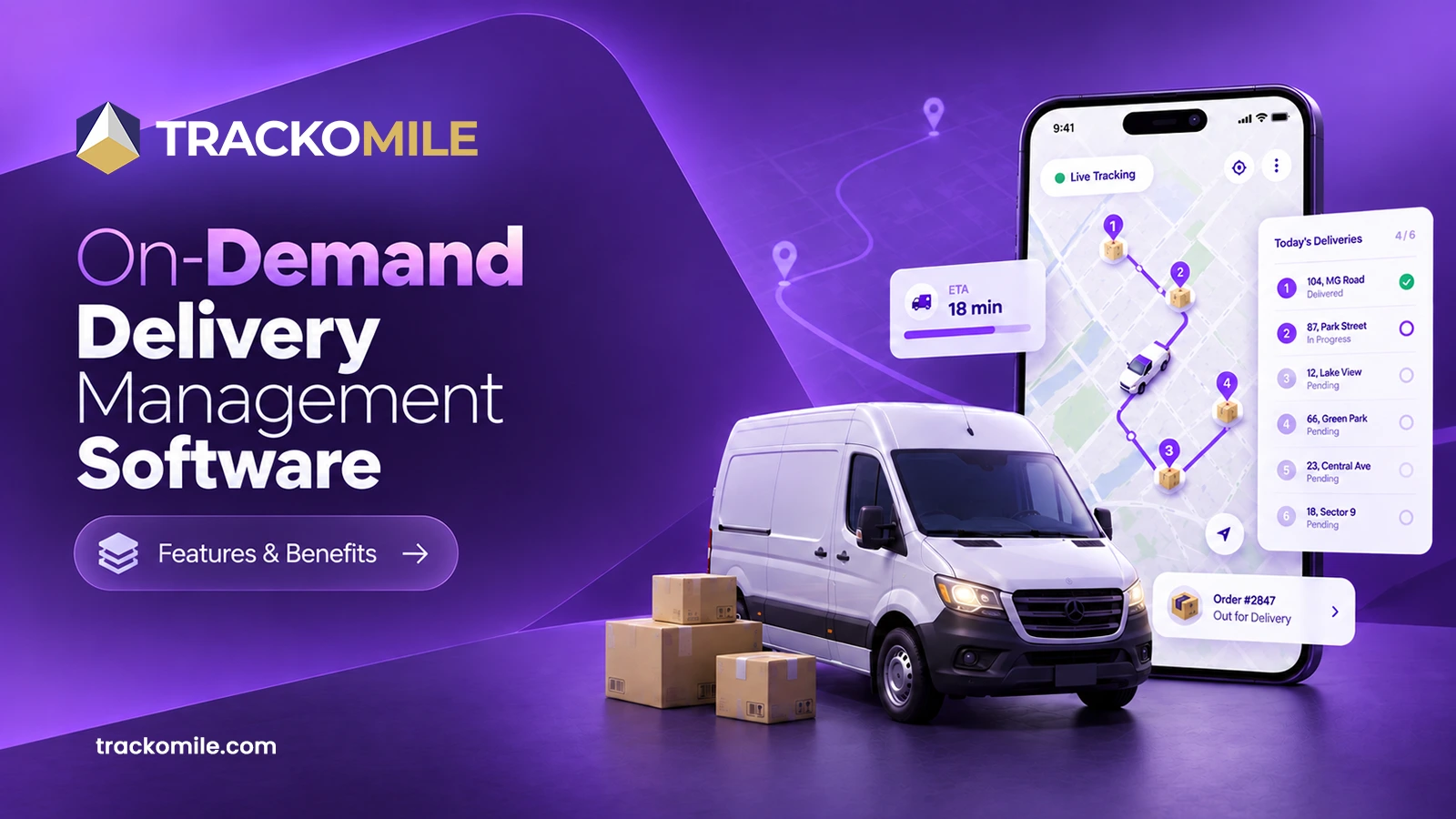
What is On-Demand Delivery Management Software: Types, Features, & Benefits
This blog explores on-demand delivery management software, its key benefits, and must-have features. Also, we will explore how to choose…


Your inbox awaits a welcome email. Stay tuned for the latest blog updates & expert insights.
"While you're here, dive into some more reads or grab quick bites from our social platforms!"Stay Updated on tech, telematics and mobility. Don't miss out on the latest in the industry.