
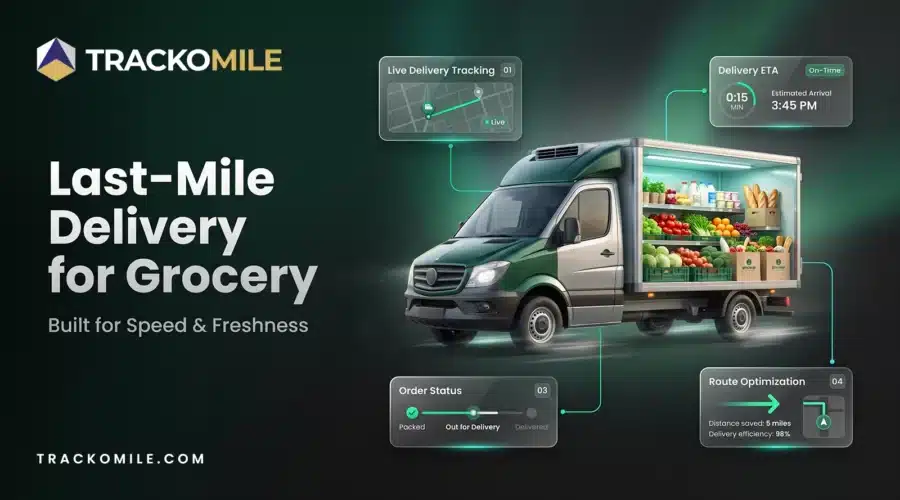
This blog talks about last mile delivery for grocery & food industry. We will look at how advanced software improves speed, routing, tracking, and overall delivery efficiency.
The grocery and food delivery industry is growing fast. Customers now prefer doorstep deliveries for groceries and dairy products. Also, for fresh produce, bakery items, and ready-to-eat food. Businesses are now handling larger delivery volumes and recurring customer orders. Also, delivery commitments are tighter than ever before. But with rising order volumes, daily delivery operations become harder to manage. Rising fuel costs, missed delivery slots, and poor route planning can quickly disrupt daily operations. Over time, these issues also affect customer experience, repeat orders, and overall profitability.
So, food and grocery businesses are now investing in last mile delivery software. It helps managers handle high-volume orders. Last mile grocery software offers better route planning, real-time tracking, and faster order dispatching. If you are wondering how, this blog is for you. We will look at how last mile delivery for groceries and food works every day.
Why the Grocery and Food Industry Needs Last Mile Delivery Solutions?
The global food and grocery market is expected to reach $14,781.1 billion by 2030, with a CAGR of 3.2%. This is not just a tech trend. But this means more orders, tight delivery windows, and high pressure on last mile operations.
Maintaining these operations manually causes delays. Plus, it leads to high delivery failures, high cost, and poor customer experience. However, last mile delivery software enables managers to effectively manage:
- Perishable goods
- Tight delivery windows
- Complex order sizes
- Last minute order changes
- High customer expectations
- Real-time tracking and updates
This allows businesses to maintain operational control and visibility across daily delivery operations.
6 Features Businesses Should Look for in Last Mile Food & Grocery Delivery Solutions
Real-time tracking, route optimization, rider app and POD are some common features. You should look for a last mile grocery delivery software.
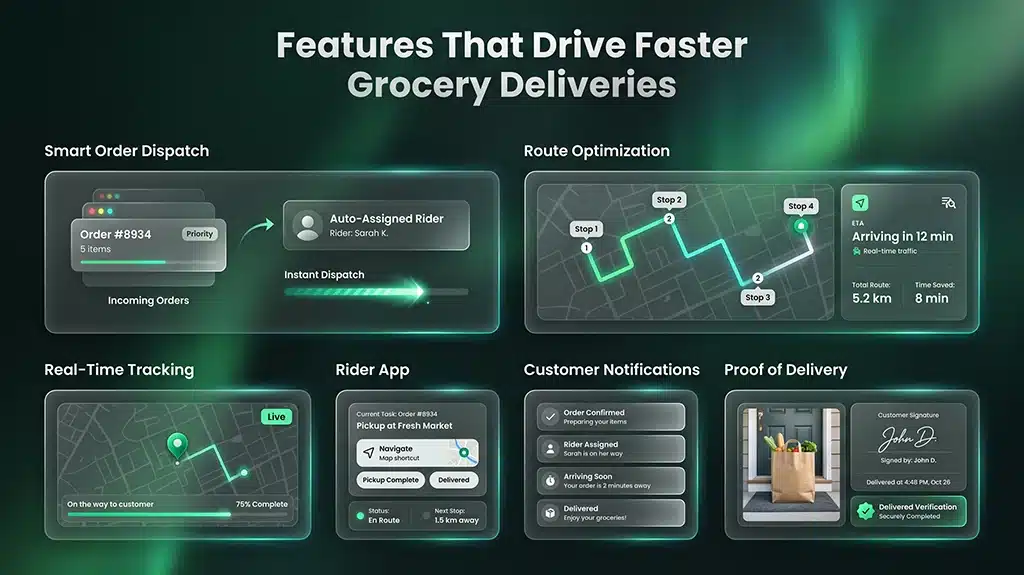
Last Mile Grocery Delivery Features
1. Automated Dispatch Management
Modern last mile solutions should automatically assign deliveries. It considers factors like:
- Rider location
- Delivery zones
- Order priority
- Workload capacity.
So, managers can reduce manual errors and improve operational efficiency.
2. Real-Time Tracking
Real-time tracking enables managers to track riders’ movements, delivery progress, delays, and ETAs. It also improves customer communication and reduces WISMO queries.
3. Route Optimization
Route optimization is one of the most important features of last mile delivery software. Look for software that can automatically calculate the fastest and most effective route. So, businesses can reduce fuel costs and improve overall efficiency.
4. Rider App
An advanced food & grocery delivery solution should offer rider management app. This allows riders to receive orders and navigate routes. Plus, they can update status, and complete deliveries without confusion.
5. Proof of Delivery
In grocery delivery, disputes like receiving missing or spoilt items are common. The software should offer proof of delivery feature through OTP, image, or signature. This ensures that every order is properly closed. So, managers can reduce delivery-related conflicts and maintain SLAs with their clients.
6. Analytics and Performance Monitoring
The software should provide insights into failed deliveries, rider productivity, and order completion. This enables managers to understand the cause of delays and enhance their planning and decision making to maximize ROI.
What are the Benefits of Optimized Last-Mile Delivery for Grocery & Food Industries?
Low delivery cost, faster deliveries, and scalable operations are the major benefits of optimized last mile delivery for grocery and food industry.
Lower Delivery Cost
Last-mile delivery cost is a major concern for businesses. But by optimizing your last mile process, you can solve that. With better route planning and faster dispatching, businesses can reduce fuel cost, idle time, and delivery delays.
Faster Deliveries
In food and grocery, faster deliveries can make a big difference. Particularly for perishables such as fruits, dairy and ready-to-eat foods. Optimizing the last mile delivery helps businesses handle traffic congestion and weather conditions. Also, they can mange routes with greater efficiency. So, they can ensure on-time deliveries and build customer trust.
Better Operational Control
Grocery deliveries in the same area are delayed when the same rider is late or falls behind schedule. Particularly in the evening peak period. Managers frequently make calls to get a sense of what’s holding up deliveries.
Optimized last-mile delivery provides real-time visibility on riders, orders and delayed areas. Therefore, managers can react quickly and avoid delivery delays. Before they impact customer experience and operational cost.
Better Scalability During Peak Demand
Order volumes can spike quickly during weekends, evenings, or festive times. Managing this growth manually often creates dispatch delays and operational confusion.
With better route planning and real-time coordination, businesses can handle higher delivery volumes. So, it will not affect delivery timelines or customer experience.
Improved Customer Experience
A late grocery order or cold food delivery quickly affects customer experience. There are high chances to lose your customers to competitors.
An efficient last mile delivery ensures more accurate ETAs. Plus; it offers smoother communication throughout the delivery process. This can lead to higher customer satisfaction, repeat business, and customer loyalty.
What are the Main Challenges in Grocery and Food Last Mile Delivery?
The major challenges for the food and grocery industries are high delivery cost, tight delivery window, and peak hour traffic.
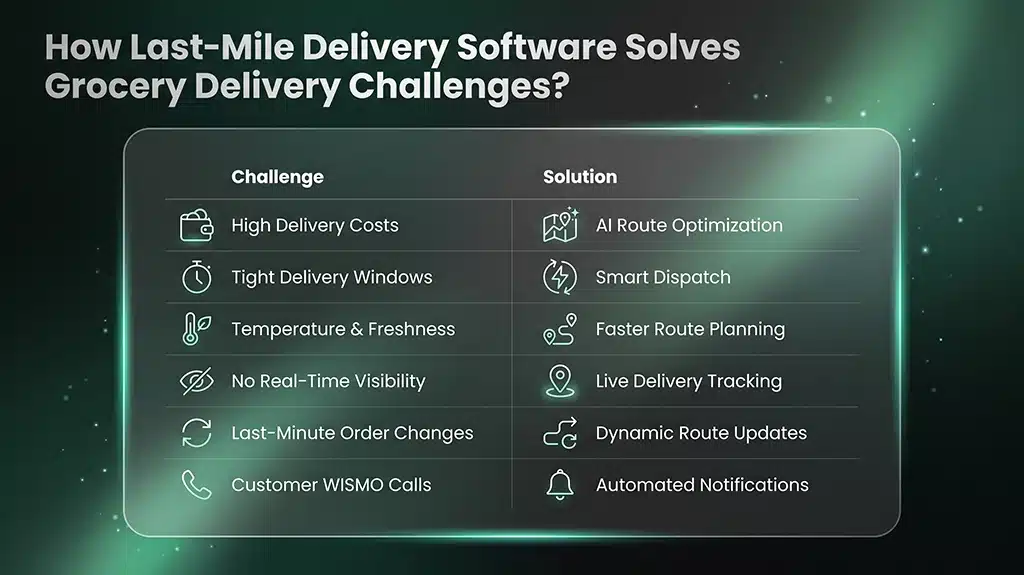
How LMD Software Solves Grocery Delivery Challenges
High Delivery Costs
In grocery and food delivery, operational costs can rise quickly. A single delayed route often leads to high fuel usage and repeated delivery trips in the same area.
During peak hours, businesses also end up spending more resources just to keep deliveries on time.
Managing Tight Delivery Windows
The food industry usually works on strict delivery timelines. Customers expect orders within specific slots, especially fresh groceries and ready-to-eat meals.
But traffic congestion, weather conditions, and last-minute order spikes often make timely deliveries difficult during busy hours.
Temperature Control and Freshness
In the food and grocery sector, timings directly affect product quality. Dairy products, frozen items, and meals can’t stay in transit for so long.
Even small delivery delays can affect freshness. This increase the chances of customer complaints, rejected orders or refunds. This directly hampers your profit margins and leads to financial losses.
Lack of Real Time Visibility
During busy operations, managers often do not realize a delivery is delayed until customers start calling for updates. One rider gets stuck in traffic; another delivery slot gets missed, and nearby orders slowly start getting affected as well.
Without real-time visibility, handling these situations becomes difficult during active delivery hours.
Handling Last Minute Order Changes
In last mile delivery, things often change at the last moment. A customer updates the address after the rider has already left. Sometimes the order itself gets split during delivery.
In this scenario, managers have to reassign stops or adjust the route during peak hours.
However, businesses can overcome last-mile delivery challenges by using food and grocery last mile delivery software like TrackoMile. Here’s how it helps.
How TrackoMile Solves Last Mile Challenges in Food and Grocery Logistics?
TrackoMile is an advanced last mile delivery management software. It helps food and grocery businesses optimize their operations. It offers advanced features like:
- Real-time delivery tracking
- Intelligent Route optimization
- Automated dispatch management software
- Rider and delivery performance analytics
- Order and capacity management
- Real time alerts and notification
- Rider roster and app
- Analytics dashboard
With these capabilities, managers can keep a bird’s eye view on every order. This helps businesses generate better revenue while staying ahead of their competitors.
Conclusion
For grocery and food industry, last-mile delivery directly impacts order freshness. Plus, it impacts if order reach on time and in usable condition. Delays, routing decisions, and dispatch execution can all affect the delivery outcome. Even slight delays here can result in spoilt perishables. Also, it leads to missed delivery windows and re-attempts. All this adds to high operational costs.
As order scales, manual coordination struggles to keep pace with routing changes and dispatch pressure. With TrackoMile, businesses bring structure to daily execution. It improves visibility and reduces delivery uncertainty. It helps teams manage last-mile delivery for grocery with more consistency as operations scale.
Frequently Asked Questions
-
What is last mile delivery for grocery?
Last mile delivery for grocery refers to the final stage of the supply chain. Here groceries are picked from the warehouse or dark stores and delivered to the end customer. It is the most expensive stage. It directly impacts delivery speed, freshness, and customer satisfaction.
-
What is the cost of last mile delivery for food and grocery companies?
The cost of a last mile delivery includes fuel, vehicle maintenance, and repeated delivery attempts. It also affects due to traffic congestion, peak demand hours, and failed deliveries. However, grocery companies can reduce this cost by using last mile delivery management software. Managers can plan routes and deliveries as per traffic, availability, and rider skills.
-
How does route optimization help grocery delivery businesses?
Route optimization software helps riders take the most efficient and route for the deliveries. So, they can reduce travel time and avoid traffic delays. It helps them complete multiple orders in a single trip. This improves delivery speed and reduces fuel usage. Businesses can manage high order volumes more efficiently.
-
How can grocery businesses reduce failed deliveries?
Grocery companies can reduce failed deliveries by sharing live tracking links. Plus, it shared accurate ETAs with their customers. Clear communication with riders and better route planning also helps avoid missed attempts. It ensures orders reach customers on time.

Parul is a content writer with 2+ years of experience in B2B and SaaS domains. She creates clear, actionable content for TrackoBit and TrackoMile, focusing on fleet management, last-mile delivery, and... Read More


Related Blog
What Is Delivery Management? Process, Challenges & Best Tools
Delivery management streamlines order allocation, route optimisation, dispatch, and tracking to reduce costs, improve efficiency, and boost customer experience.
Building Resilient Delivery Operations with TrackoMile in 2026 and Beyond
Logistics businesses build resilient delivery networks with TrackoMile. But how exactly? With real-time route optimization, automated scheduling, and end-to-end fleet…
How to Scale Quick Commerce Beyond 10 Minutes with TrackoMile
TrackoMile transforms chaotic last-mile logistics into a predictable, automated, and high-margin retail powerhouse. See how it works in quick commerce.
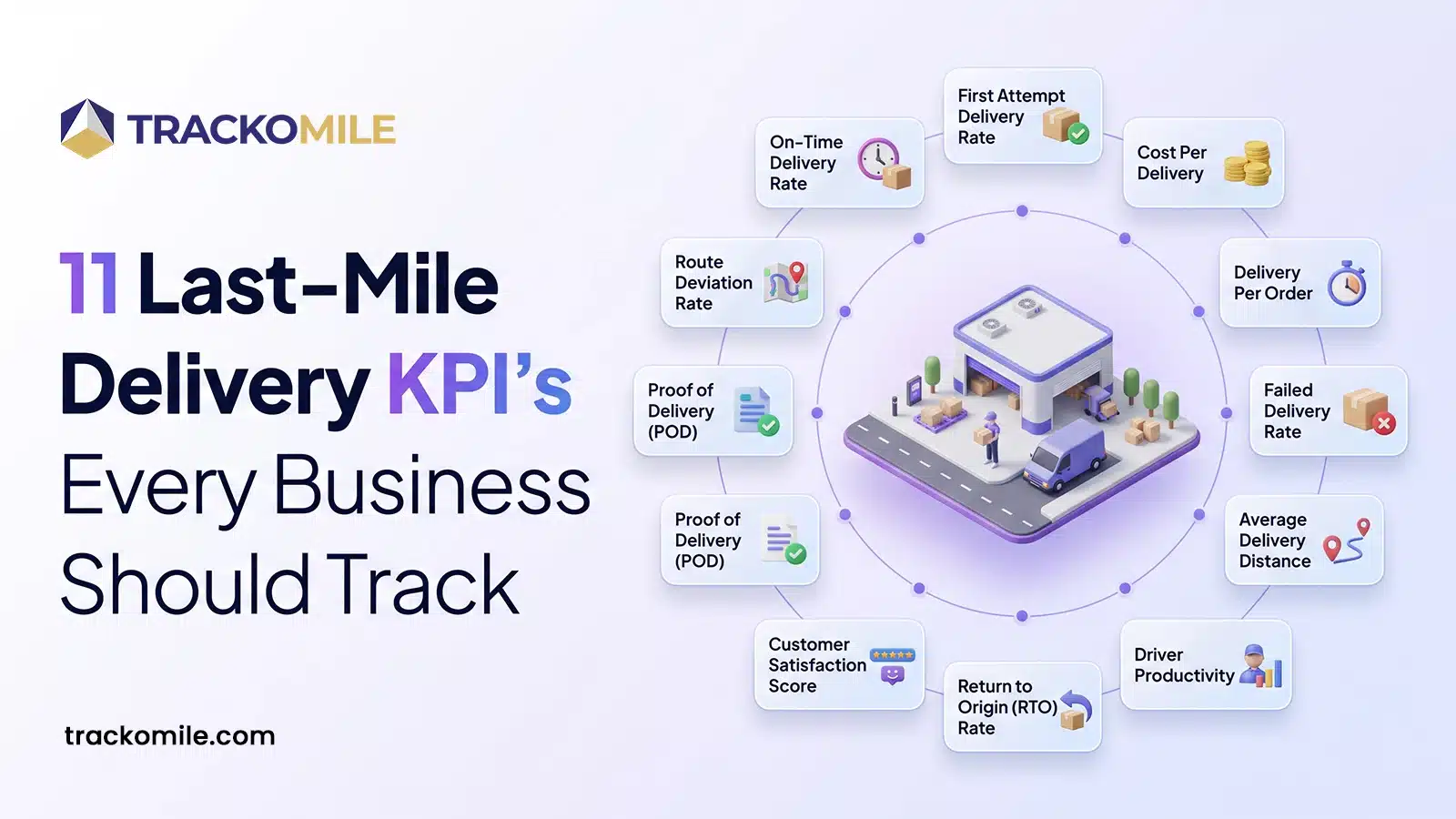
Last Mile Delivery KPIs & Metrics: 11 Essential Metrics to Track
To improve last mile operations, it’s important to track 11 essential last mile delivery KPIs like on-time delivery rate, cost…


Your inbox awaits a welcome email. Stay tuned for the latest blog updates & expert insights.
"While you're here, dive into some more reads or grab quick bites from our social platforms!"Stay Updated on tech, telematics and mobility. Don't miss out on the latest in the industry.