
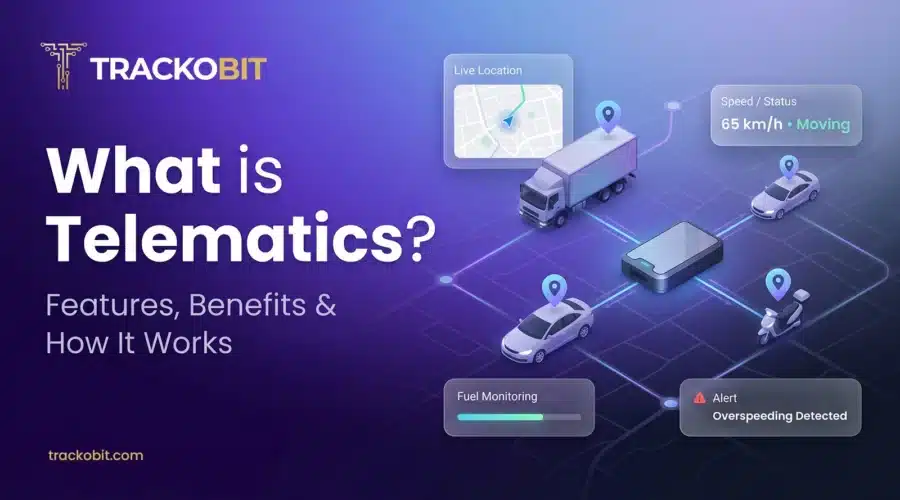
Quick Summary

- Telematics is a technology that combines telecommunications and informatics, providing real-time data for vehicle tracking and fleet management.
- It enhances operational efficiency by monitoring driver behavior, fuel consumption, and vehicle performance, ultimately reducing costs.
- Industries such as logistics, transportation, and agriculture benefit significantly from telematics, improving safety and productivity.
- The future of telematics includes advancements like AI and 5G, enabling predictive maintenance and automation in fleet operations.
Learn what is telematics, how it is helping with fleet management and the challenges that comes with it. Discover the industries that are benefiting from it and what the future holds.
You don’t lose money in fleet operations all at once. It happens in small ways; excessive idling, burning extra fuel, or frequent detours. These events are hard to catch and explain. But increased frequency can lead to major losses. For example, excessive idling burns 0.8 to 1 gallon per hour. These issues go unnoticed as fleet managers have no visibility of on-road activities.
But telematics changes that. It sources real time data from every vehicle in the fleet. You get a very clear picture of how the driver and the vehicle are performing. In this guide, learn what telematics is, how it works, and its benefits. Also, discover what the future hold for this technology.
What is Telematics?
Telematics is a technology that combines telecommunications and informatics. The technology collects, transmits, and analyses data from vehicles in real-time. For this, it is often termed as the ‘black box’ of the automotive world. Telematics uses GPS, onboard sensors, and connectivity networks. They are used for tracking location, monitoring driver behavior, and measuring vehicle performance. The collected data is raw, but the software processes it. This helps businesses gain visibility of how the operation is going on.
In simple terms, it helps turn vehicles into connected assets which can easily be monitored and managed remotely.
Who Can Use Telematics?
Telematics is used by any business that operates vehicles or field teams. It tracks movement, monitor performance, and stays in control of operations in real time. It increases visibility, which helps to reduce delays and improve operational efficiency.
Some prominent industries are logistics, transportation, construction, agriculture, insurance and field services. Fleet operators, aggregators, and even small businesses depend on it.
What Does a Telematics System Do?
A telematics system collects data from vehicles and converts it into actionable insights. These insights in turn help businesses manage operations more efficiently
On detecting abnormal behavior or excessive idling it send prompt alerts. Reports like driver performance report, BRAG, trip summary, fuel summary get generated in real-time. These help with better decision making and improved safety.
Is Telematics Important?
Telematics is important as it ensures control and visibility to businesses of their fleet through data. It accurately tracks vehicle location, monitors driver behavior, and captures performance metrics. The system does it through GPS and onboard sensors. Which also provides instant alerts and necessary data. Thus, it helps with fleet management, detecting issues early, improving overall safety, and reducing operational risks.
It also plays a vital role in cost savings and efficiency through data-based decisions. By relying on this system, you can reduce fuel consumption, time on roads, and idling. Productivity increases by improving driver performance and maximizing vehicle usage. It maintains constant control over operation by creating a data-driven environment.
How Does Telematics Work?
Telematics works by enabling a continuous flow of data between the vehicle, network, and software. It collects vehicle data, then sends it to the cloud. The data is then processed, and actionable data is presented. All this happens in real-time.
Here is a detailed step-by-step breakdown:
Step 1: Data Capture Through Telematics Device
A telematics device is installed in the fleet vehicles. It is usually connected to the OBD port or CAN bus system. This device acts as the main data collection unit.
It captures multiple data points such as:
- GPS location (live coordinates)
- Vehicle speed and movement
- Engine parameters (RPM, ignition status)
- Fuel level and consumption patterns
- Battery health like optimal charging
- Driver behavior monitoring (harsh braking, rapid acceleration, sharp turns)
Some of the advanced systems also integrate with OBD devices and cameras. They help move beyond basic GPS tracking. This helps ensure safety for cargo and general vehicle operations. In short, more data is captured in detail.
Step 2: Sensor and ECU Integration
The telematics device communicates with the vehicle’s ECU (Engine Control Unit) and onboard sensors.
This allows it to:
- Read engine diagnostics
- Detect faults and error codes
- Monitor real-time vehicle health
- Capture precise fuel and performance data
This step ensures that the data is not just surface level. Rather, it is deeply connected to the vehicle’s internal systems.
Step 3: Data Transmission via Connectivity Network
Once the data is collected, it is transmitted to a central server. It is done using a communication network.
Common transmission methods include:
- Cellular networks (LTE-M, NB-IoT, 4G, 5G)
- SIM-based communication modules
- Satellite communication (for remote areas)
This allows data to be sent:
- In real time (live tracking)
- At fixed intervals (batch updates)
Reliable connectivity ensures that the flow of data is uninterrupted.
Step 4: Cloud Storage and Data Processing
The transmitted data reaches a cloud server. It is there that the raw data is stored and processed.
At this stage:
- Raw data is cleaned and structured
- Duplicate or irrelevant data is removed
- Events are identified (e.g., overspeeding, idle time)
- Calculations are performed (distance traveled, fuel usage)
This step is vital as it converts raw inputs into usable datasets.
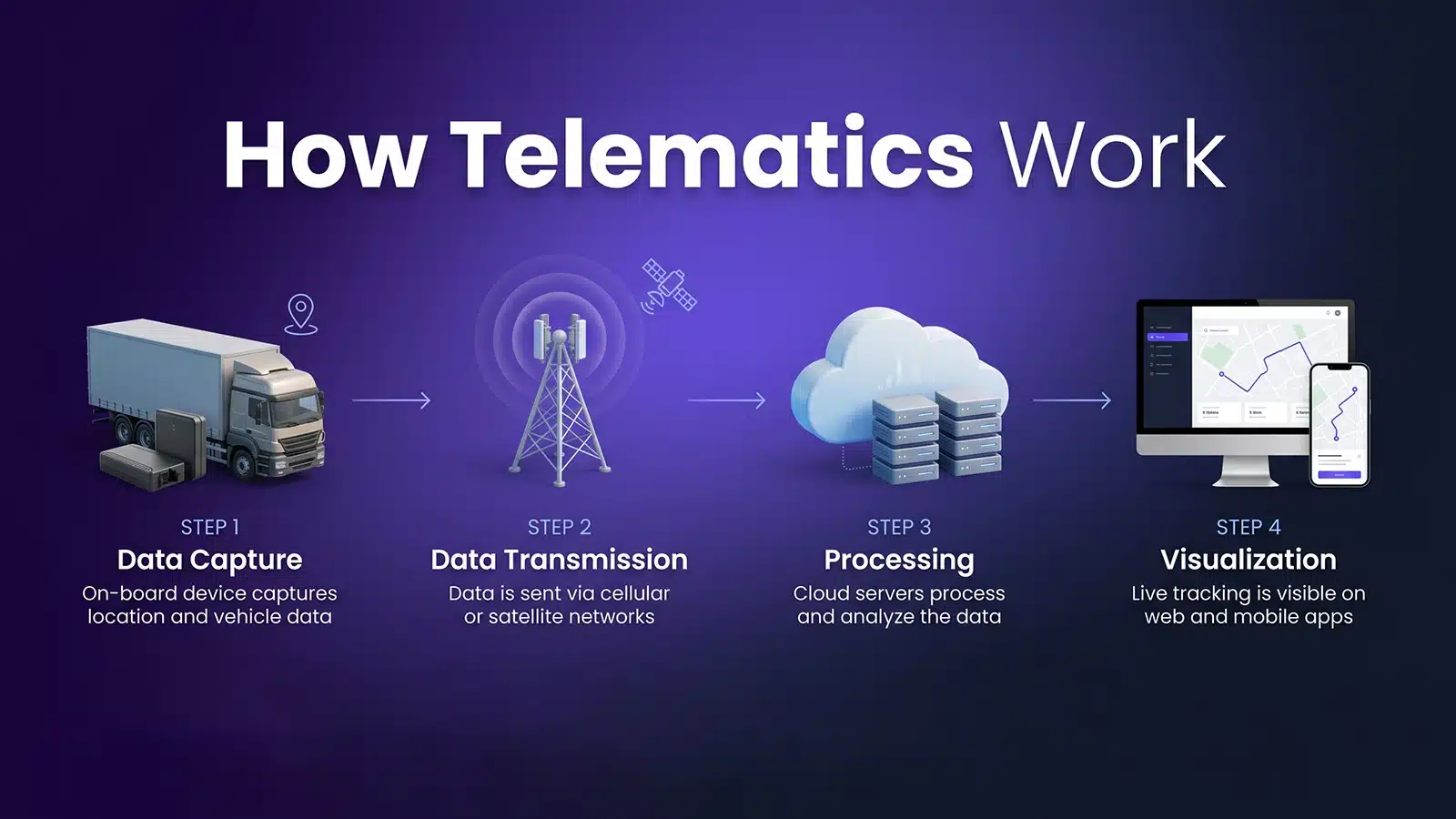
How Telematics Work
Step 5: Data Analysis and Insight Generation
The software processes and analyses the data. It presents data in a form that is easy to read and understand. For example, in the form of charts and graphs.
It helps identify:
- Unsafe driving patterns
- Fuel inefficiencies
- Route deviations
- Excessive idle time
- Maintenance needs
Advanced systems use AI and machine learning to:
- Predict vehicle breakdowns
- Recommend optimal routes
- Detect anomalies in behavior
This proves that this technology is a potent decision-making tool.
Step 6: Dashboard Visualization and User Access
All insights can be accessed through a software provider’s dashboard and remote driver app.
Users can:
- Track vehicles in real time on a map
- View fleet’s trip history and playback
- Monitor driver scorecards
- Access reports and analytics
- Manage alerts and notifications
Step 7: Alerts, Notifications, and Automation
Telematics systems generate real-time alerts based on predefined rules.
Examples include:
- Overspeeding alerts
- Geofence entry/exit alerts
- Unauthorized stop alerts
- Engine on/off alerts
- Preventive maintenance reminders
Some systems also trigger automated workflows, reducing manual intervention.
In Simple Terms –
Telematics works by collecting real-time data and the cloud processes it. The result is actionable and real-time insights and data. This helps businesses monitor, manage, and optimize fleet operations efficiently. Also generating new revenue streams by helping with asset utilization.
What are the Types of Telematics Systems and Key Components?
The systems range from basic GPS tracking to advanced AI-powered platforms. There are multiple types in the market. But the basic combination is common – GPS devices, sensors, connectivity and software.
Below are some of the main types of systems. Also mentioned are the key components that power them.
1. GPS Tracking Systems
GPS tracking systems are the most basic type. They primarily provide real-time locational data and route visibility. It is generally used by businesses who primarily need simple tracking and not in-depth operational insights.
Key components:
- GPS module to capture live location
- Telematics device to collect and transmit data
- SIM-based network for connectivity
- Dashboard to view location and trip history
With it businesses track vehicles, monitor routes, and reduce misuse. However, they offer limited insights into driver performance behavior or vehicle performance.
2. Fleet Telematics Systems
Fleet telematics systems are more advanced. They provide enhanced operational visibility. It does so by combining multiple data sources. In one go fleet managers are able to monitor performance, safety and efficiency.
Key components:
- Telematics device with CAN/OBD integration to access fleet data
- Sensors for tracking fuel usage, engine health, and driver behavior
- Connectivity network for real-time transmission of data
- Cloud-based software for presenting analytics, reports, and alerts
These systems work towards reducing fuel costs and optimizing fleet operations. The logistics and transportation industry heavily rely on this system.
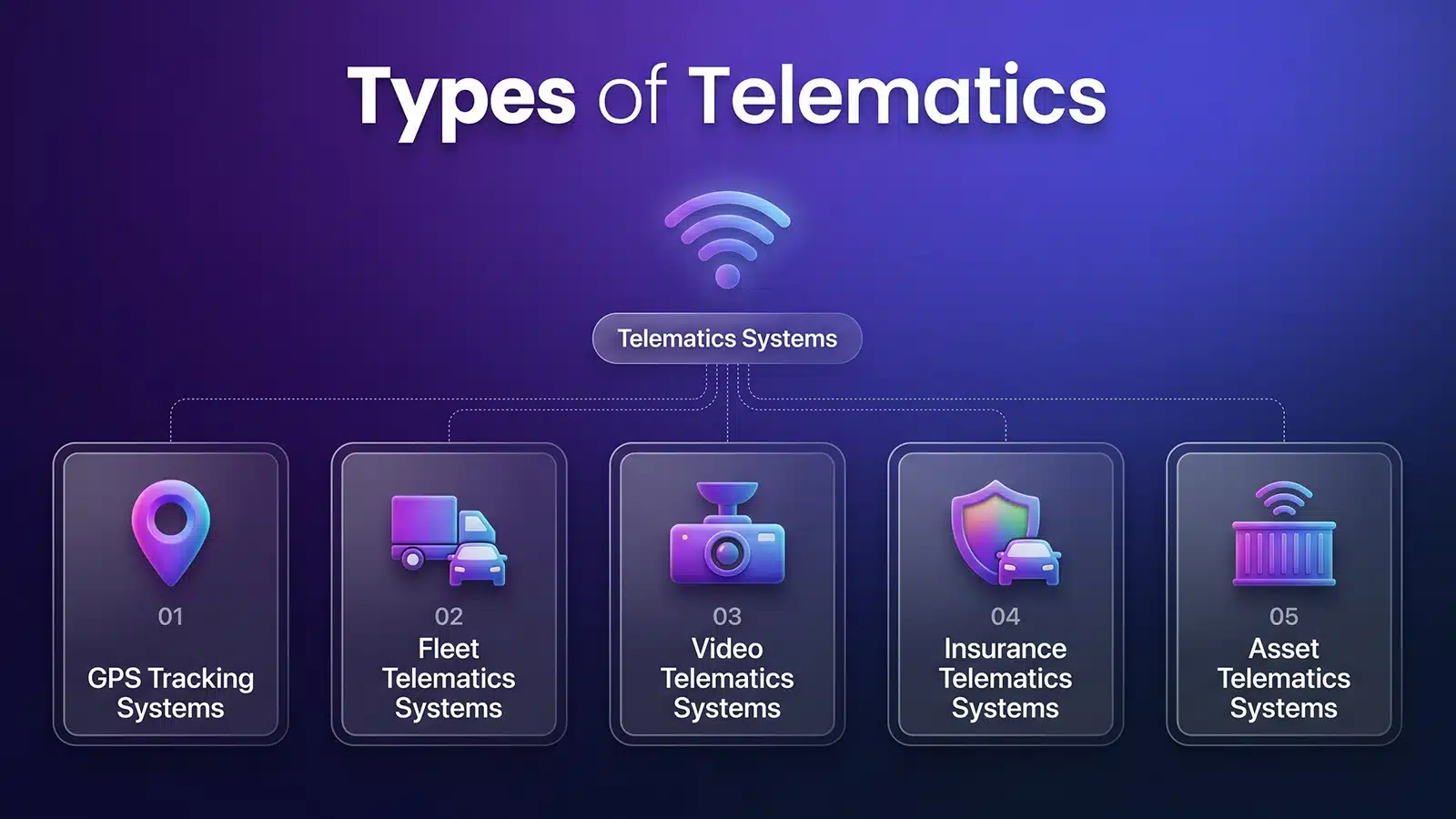
Types of Telematics Systems
3. Video Telematics Systems
Video telematics systems like TrackoBit enhances traditional telematics. It adds cameras and AI-based monitoring. They provide visual context for driving events and improve safety management.
Key components:
- Dashcams (road-facing and cabin-facing) to capture footage
- AI processors to detect risky behavior or incidents
- Telematics device to sync video with vehicle data
- Cloud storage and dashboard for video access and analysis
These systems provide visual monitoring. This is vital for reducing accidents and improving driver accountability. They also provide proof in case of disputes or claims.
4. Insurance Telematics Systems
Insurance telematics systems are helpful in assessing driving behavior and calculating risk levels. They are mostly used by insurance companies for usage-based pricing models.
Key components:
- Telematics device or mobile app for data collection
- Sensors to track speed, braking pattern, and driving style
- Connectivity network to transmit data like speed
- Analytics platform to generate risk scores
These systems encourage safer driving. Insurers also align prices with actual driver behavior. This way, businesses pay fair and personalized premiums.
5. Asset Telematics Systems
Asset telematics systems are designed to track non-powered assets such as trailers, containers, and equipment. They are useful for industries that manage large numbers of movable assets.
Key components:
- Battery-powered tracking device for independent operation
- GPS module to track asset location, routes, and movement
- Low-power connectivity network for long battery life
- Monitoring platform for tracking, reporting, and analytics
These systems help prevent asset loss and improve utilization. Manual tracking method also gets eliminated.
What are the 5 Benefits of Telematics for Fleet Businesses?
Telematics offers benefits like better fleet visibility, improved driver safety, and lowered fuel costs. The system uses GPS and vehicle data to provide complete control and insights of the operation. Below are the list of top 5 benefits.
1. Real-Time Fleet Visibility and Operational Control
You get continuous live locational data with the help of telematics. This helps fleet managers to know important details such as vehicle movement, trip status, and rule adherence.
Here is how modern solutions like TrackoBit helps:
- Track vehicle location with 99.89% accuracy
- Set geofences and receives alerts whenever vehicles enter/exit
- Detect route deviations and unauthorized stops
- Monitor trip timelines and delays
This improves dispatch planning and reduces chances of idling.
2. Improved Driver Safety Through Behavior Analytics
The system uses onboard sensors and vehicle inputs to capture driver behavior. It sends alerts in case of harsh braking, acceleration, cornering and more.
Here is how modern solutions like TrackoBit helps:
- AI-based ADAS and DMS alerts for risky driving patterns
- Real-time notifications in case of safety violations
- Driver scorecards based on multiple performance parameters
- Historical behavior trends for continuous improvement
3. Fuel Monitoring and Cost Optimization
Fuel consumption is impacted by driving behavior, idle time, and route efficiency. Telematics tracks and analyzes fuel usage at a granular level.
Here is how modern solutions like TrackoBit helps:
- Monitor fuel consumption using fuel sensor data
- Detect fuel theft or sudden drops in fuel levels
- Analyze idle time and reduce unnecessary fuel burn
- Compare fuel efficiency across vehicles and trips
4. Higher Productivity and Route Optimization
The technology improves fleet productivity by helping plan efficient routes. It also automates certain parts of the operations so that there are no more delays. Real-time data and historical patterns improve fleet trip planning.
Here is how modern solutions like TrackoBit helps:
- Providing efficient route planning
- Reducing idle time and unnecessary stoppages
- Enabling faster trip completion and turnaround
- Maximize resource utilization
With its help, fleets will be completing more trips. Also, resource consumption will be less.
5. Data-backed Decision Making and Actionable Insights
Large volumes of data are collected and processed by the software. This is used for further analyzing patterns and forecasting. The data is of and affects trips planned, fuel consumption, driver and vehicle performance.
TrackoBit provides:
- Analytical and live reports and dashboards for performance tracking
- Using historical data for identifying and analyzing trends
- Preventive alerts for maintenance and breakdown risks
- Custom insights for operational planning
This amount of data helps with proactive fleet management.
What are the 5 Challenges of Telematics?
There are some challenges like higher set up cost and data overload. Only when you are aware of these challenges can you solve them.
1. High Initial Setup Cost
The system initially requires hardware, installation, and software setup. But this can be a big upfront investment for businesses having a large fleet. However, long-term savings often balance this cost.
2. Data Overload
A large volume of data is generated on various aspects of the operation. Lack of proper knowledge and filters, interpreting this data can be hard. Initially, sometime must be given to understanding the analytical dashboard.
3. Driver Resistance
Naturally, drivers are bound to resist monitoring or tracking. They might feel uncomfortable. This can lead to resistance unless it is communicated how the system benefits them as well.
However, software providers like TrackoBit monitor only after the drivers are informed.
4. Integration with Existing Systems
Connecting the new software with exiting tools like ERP or fleet systems can be a bit challenging. If the system has only limited integration capability, that can be challenging.
5. Network Dependency
Telematics relies on cellular or satellite networks. In low coverage areas, real-time tracking and data updates may be affected.
The Future Of Telematics: AI, 5G, and Autonomous Vehicles
Telematics is shifting from tracking to prediction and automation. With AI emerging, owners will be able to now detect breakdowns way early. AI-enabled dashcams are already analyzing driver behavior with DMS and ADAS. These additions are very helpful in improving the safety of vehicles, drivers and optimizing operations.
With 5G, transfer of data will be at lightning speed with no lags and errors. This is important for enabling instant alerts and live video tracking. Go for telematics software providers who have self-hosted video telematics platforms. This is because there are no latency and interruption-free workflow.
In 2026, telematics supports connected and autonomous vehicles. For example, Tesla is collecting data from its vehicles. These are being used to improve self-driven cars. In the coming years, systems will fully automate fleet dispatching, monitoring, and compliance with minimal manual effort. Fleet management software providers like TrackoBit are already enabling this shift. It uses technology like ADAS, DMS, and AI-enabled video telematics to convert real-time data into smart, actionable insights.
Frequently Asked Questions
-
What is fleet telematics?
Fleet telematics is a system that uses GPS, sensors, and software to track and manage fleet vehicles. It monitors location, driver behavior, and performance. The data provided helps businesses optimize their operations in regard to costs, planning, and utilization. The system ensures that the owners have complete control of the vehicles.
-
Is telematics expensive?
No telematics is not expensive when compared with the value it provides. The initial cost includes purchasing and installing GPS trackers and sensors. Also, you will have to invest in software. But eventually the cost gets recovered as it reduces operational expenses and optimizes asset utilization.
-
How much does telematics cost?
Telematics cost depends on your fleet size, features selected and who your provider is. Generally it includes on-time device cost and possible software free. If you go for advanced features like video telematics or more alerts than the prices may go up. TrackoBit pricing plan is flexible and scales with fleet operations.
-
Is telematics worth it for small fleets?
Yes telematics is useful for small fleets. It helps to track vehicles, cut fuel costs and improve driver behavior. Even with only a handful of vehicles, systemF can assist companies to improve control, lower losses and improve efficiency.
-
How does telematics work in a car?
With the help of GPS trackers and installed sensors, system collects data of the car. Through it you are getting data like location, speed and driving behavior. The system collects raw data and processes it which is reflected in the dashboard.
-
What industries use telematics?
Industries like logistics, construction and waste management uses telematics. Bu it is not restricted to these industries. Any businesses that relies on vehicles can use and benefit from it. Afterall it is great for improving visibility, efficiency and safety.
-
How is telematics different from GPS tracking?
GPS tracking will only show the current location of the vehicle. But telematics provides way more data. Such as driver behavior, fuel usage, vehicle health and more. The ics system not just track but also help with optimize fleet operation and set utilization.
-
How do I choose a telematics provider?
Choose a telematics provider based on features, ease of use, and support. Look for real-time tracking, alerts, reports, and scalability. Make sure the system fits your business needs and can grow with your fleet over time.

Tithi Agarwal is an established content marketing specialist with years of experience in Telematics and the SaaS domain. With a strong background in literature and industrial expertise in technical wr... Read More


Related Blog
7 Fleet Management Best Practices Every Fleet Manager Needs
Learn 7 fleet management best practices to improve safety, vehicle utilization, efficiency, and fleet performance in 2026.
What Are the Roles and Responsibilities of a Fleet Owner?
Behind every well-run fleet is a fleet owner juggling tasks like vehicle maintenance and driver management without letting anything fall…
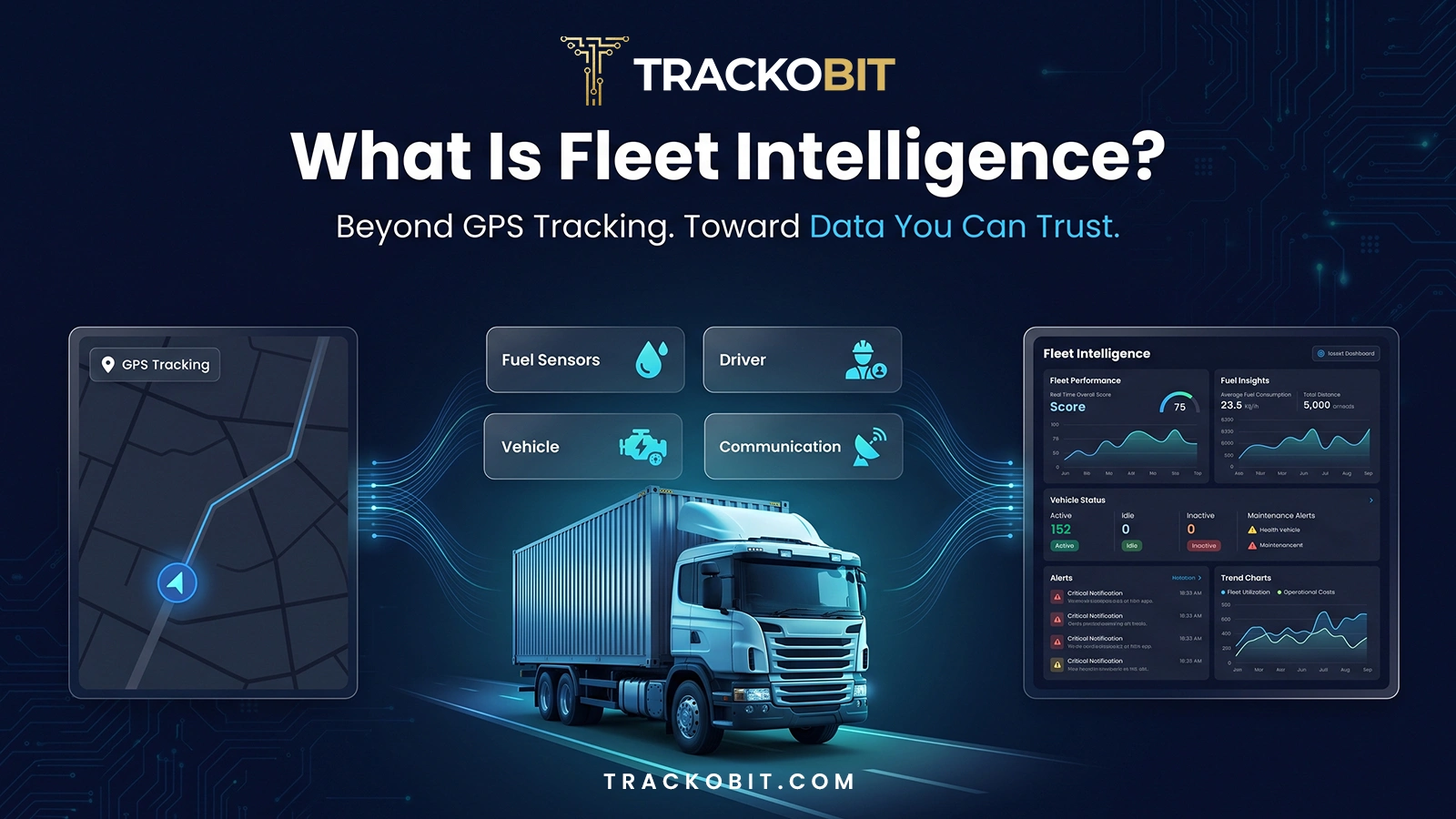
What Is Fleet Intelligence? TrackoBit Goes Beyond GPS Tracking
Fleet intelligence is the layer of trustworthy data, driver-level accountability, and consistent identity that sits above GPS tracking. It turns…
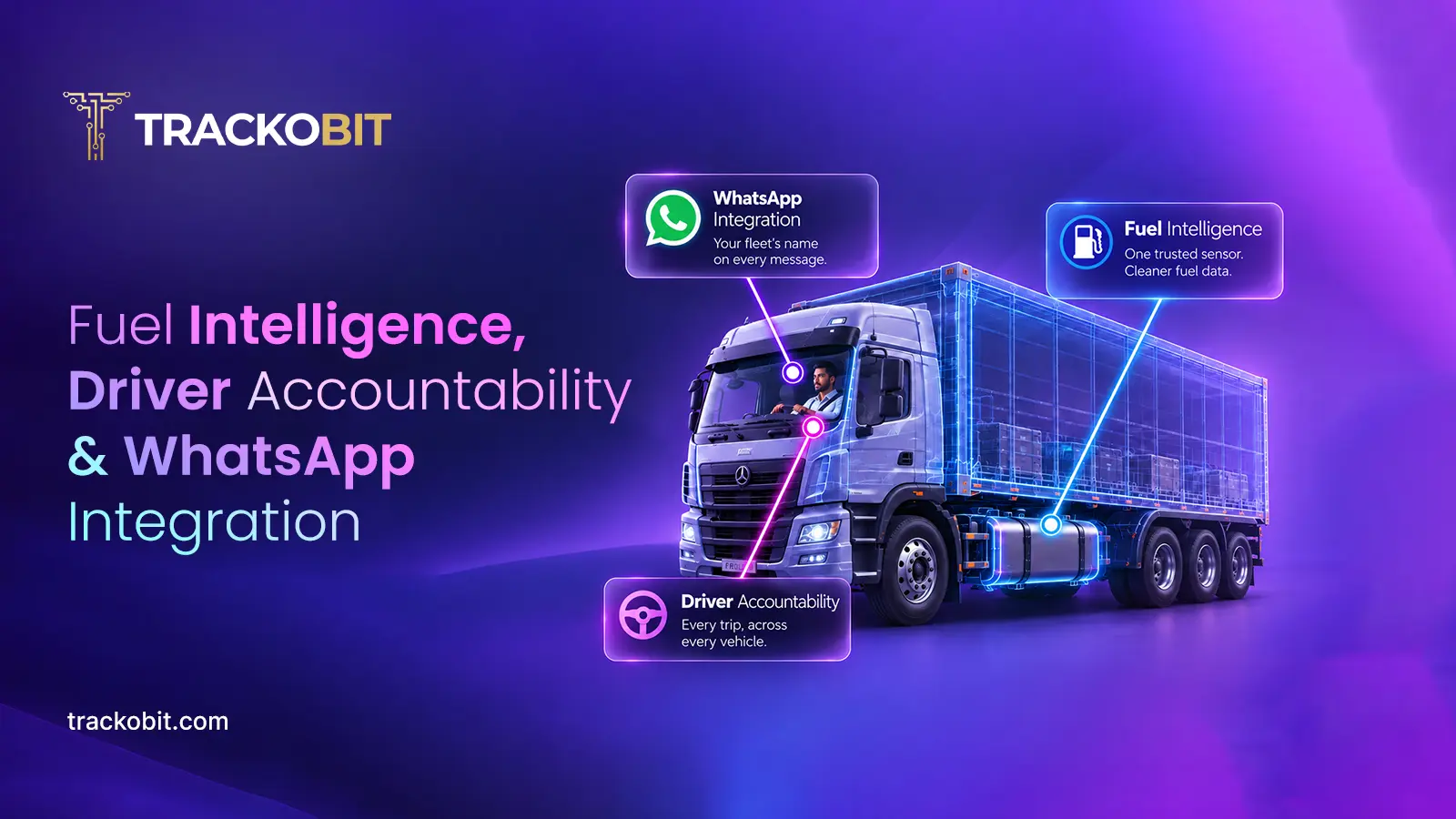
Fuel Intelligence, Driver Accountability & WhatsApp Integration: Now Live in TrackoBit
Fuel intelligence in fleet management is the use of sensor and telematics data to select accurate fuel sensors, filter road-induced…


Your inbox awaits a welcome email. Stay tuned for the latest blog updates & expert insights.
"While you're here, dive into some more reads or grab quick bites from our social platforms!"Stay Updated on tech, telematics and mobility. Don't miss out on the latest in the industry.