
Following delivery management best practices can improve order allocation, real-time tracking, and KPIs. These tips reduce delays and last-mile delivery costs in logistics.
Management of deliveries on a large scale is not an easy task. Delay, failed deliveries, poor coordination, and high costs may have a quick impact on daily operations. Delivery management best practices will play an important role in bridging gaps and ensuring that daily activities proceed as planned. The delivery manager will assign deliveries in line with the requirements and availability of drivers. The drivers will be able to follow the planned route. Managers can monitor delivery progress without constant follow-ups.
These practices matter because last-mile logistics can add major costs. This guide contains information about delivery management best practices in 2026. It covers practical ways for logistics managers to improve delivery efficiency and reduce the chances of delays.
Why Delivery Management Best Practices Matter
Delivery work gets harder as order volumes grow. Customer needs and delivery networks also increase the workload. Considering delivery management best practices reduce manual work. They can also spot delays, reduce avoidable failures, and track delivery performance. This matters for B2B businesses because lower delivery costs can help protect profit margins. Efficient delivery performance will also assist in retaining their customers. The right steps and digital tools make delivery work steady and easy to scale.
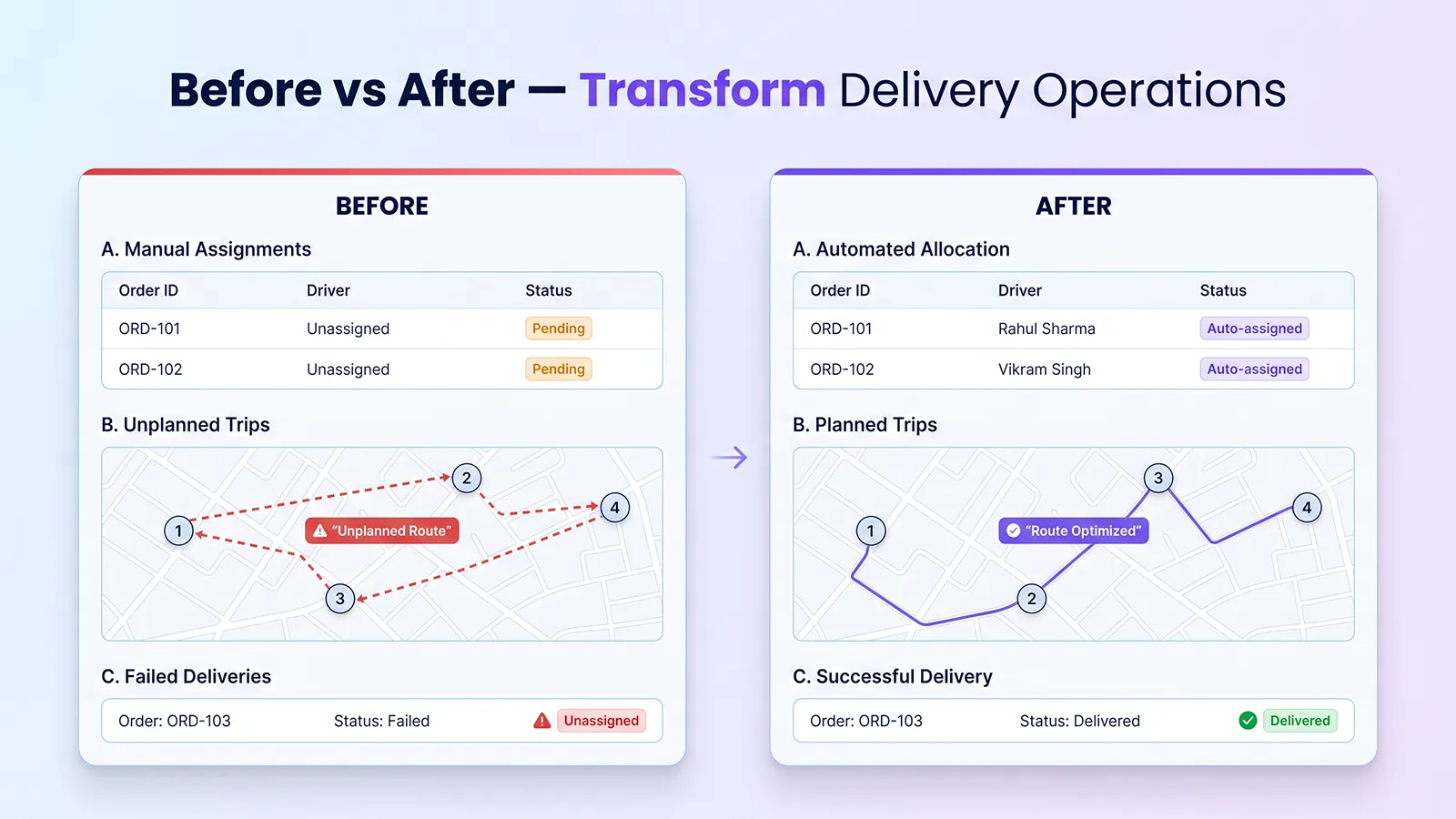
Before vs After
10 Delivery Management Best Practices for Last-Mile Delivery
The 10 best delivery management practices cover order assignments and trip planning. They also include live tracking and data analysis to improve delivery operations. These delivery management best practices help logistics teams cut delays. They also control costs and give a clear view of each delivery. Let’s look at each one:
1. Centralize Order Management
Keep order information in one central system. Teams can easily find assigned orders, delivery details, and status updates. It is the base of most delivery management best practices.
2. Automate Order Allocation
Automatically assign orders based on location, priority, capacity management, and needs. The automation process removes manual allocation. It helps teams assign orders faster and keep deliveries moving.
3. Assign Agents Based on Delivery Needs
Assign agents based on location, workload, availability, and delivery needs. This helps balance workloads and reduce delays.
4. Plan Trips Before Dispatch
Make plans ahead of the dispatch that includes stops, delivery windows, and instructions for the driver. This reduces confusion, delays, and last-minute changes.
5. Track Deliveries in Real Time
Track vehicles and agents live while deliveries are on the road. Real-time tracking helps managers spot delays and act fast.
6. Provide Customer Updates
Inform your clients through the entire process of delivery. The software sends updates through the email or SMS about the dispatch, status, delay, and estimated time of arrival.
7. Digitize Proof of Delivery
Collect the digital proof like photos, signatures, OTP, and timestamps after delivery. This proof confirms the delivery and avoids disputes.
8. Handle Failed Deliveries Promptly
Record the reason for each failed delivery and respond quickly. Reschedule or reassign orders to reduce repeat attempts, delays, and added costs.
9. Monitor Delivery KPIs
Track metrics like on-time rate, first-attempt success, delivery time, and failed deliveries. KPIs show how well your team is doing.
10. Use Delivery Data for Improvement
Review your delivery data often to find repeat issues and fix them. These insights help you fix resource gaps and other delivery process problems. This is one of the most useful delivery management best tips for long-term growth.
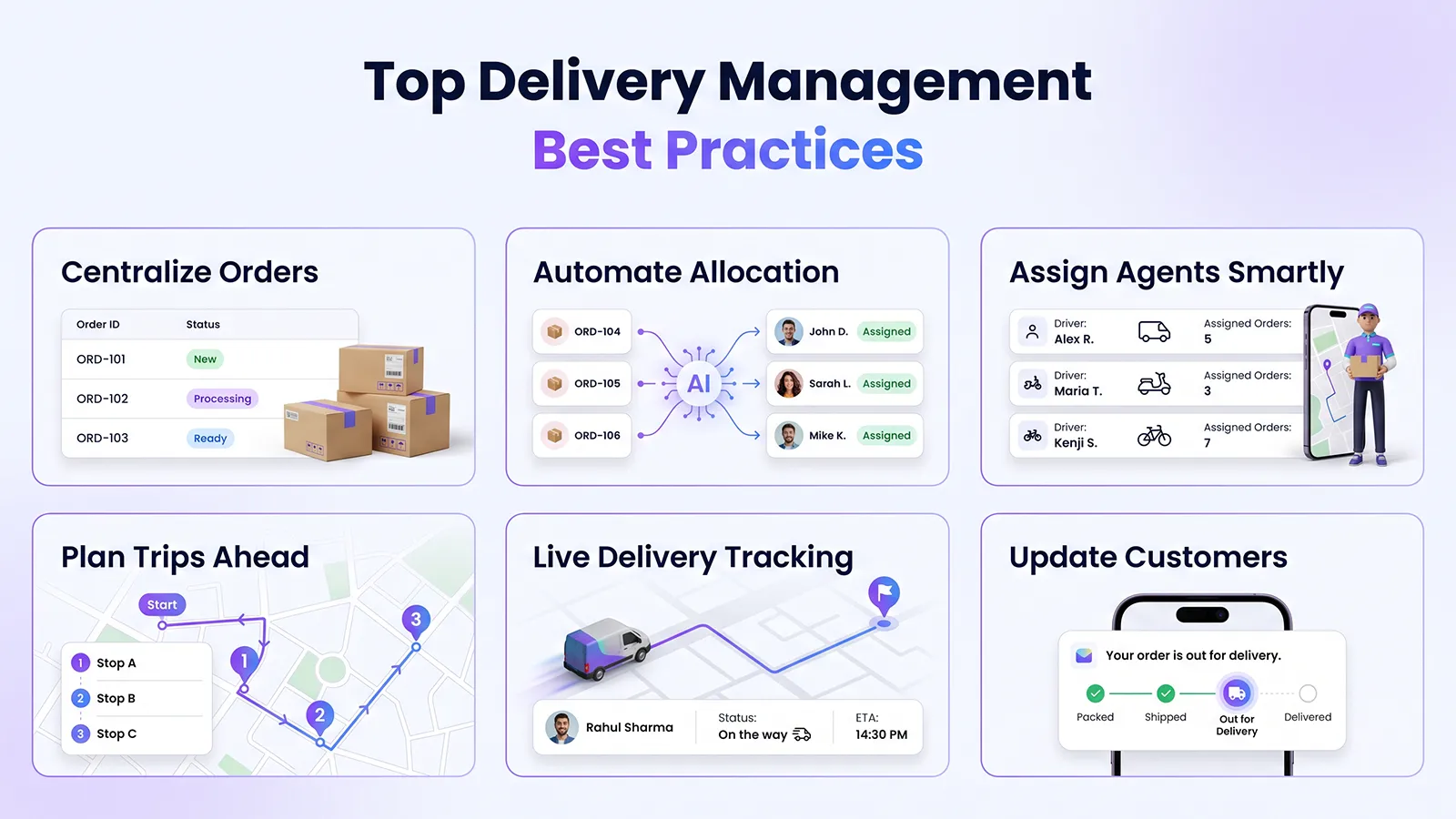
Top Delivery Management Best Practices
Common Delivery Management Challenges vs. Best-Practice Fixes
| Common Challenge | Best-Practice Fix |
| Assigning orders manually causes delays and errors. | Use automatic order assignment based on location, priority, and needs. |
| Poor agent assignment leads to uneven workloads. | Assign agents by who is free, where they are, and their workload. |
| Unplanned trips increase travel time and fuel use. | Create clear trip plans with delivery stops, schedules, and order details. |
| Low visibility makes live deliveries hard to track. | Use real-time tracking to follow vehicles, agents, and delivery progress. |
| Customers do not get updates on time. | Send automatic updates at key stages of delivery. |
| Lack of delivery proof results in conflicts. | Collect digital proof through photos, signatures, one-time passwords, or barcodes. |
| Failed deliveries result in repeated attempts and high costs. | Document the reason behind failure and reschedule or reassign the delivery. |
| Scattered data makes performance measurement difficult. | Utilize delivery reports for tracking KPIs, delays, failures, and agent performance. |
Delivery Management Best Practices Checklist
Clear delivery goals, dispatch readiness, cost reviews, and exception planning are key parts of the checklist. Performance measurement also helps teams track and improve delivery operations. Let’s understand the checklist in brief to improve the delivery operations:
1. Set Clear Delivery Goals
Set clear delivery goals by defining deadlines, service levels, and performance targets. This gives teams measurable expectations to follow.
2. Check Dispatch Readiness
Check dispatch readiness by confirming orders, vehicles, drivers, and trip details before dispatch. This helps avoid last-minute issues and delays.
3. Prepare for Exceptions
Prepare for delivery exceptions by setting clear steps for failures, delays, and complaints. This helps teams respond faster when issues occur.
4. Review Delivery Costs
Review delivery costs by tracking fuel, labor, vehicle, and other operating expenses. It helps managers find areas where costs can be reduced.
5. Measure Performance
Managers can track key delivery metrics such as on-time deliveries, failed attempts, and delivery costs. The managers can use these insights to find gaps.
6. Improve Processes
Improve delivery processes by using performance data and employee feedback. Fix repeat issues and update workflows when needed.
KPIs to Track for Delivery Management Success
| KPI | What It Measures | Why It Matters |
| On-Time Delivery Rate | Share of deliveries made within the promised time. | Shows how often the team meets its delivery promises. |
| First-Attempt Delivery Rate | Share of deliveries completed on the first attempt. | Helps cut repeat trips and extra delivery costs. |
| Delivery Success Rate | Share of assigned deliveries completed. | Shows how well your team delivers overall. |
| Average Delivery Time | Time from dispatch to delivery. | Helps spot delays and speed up deliveries. |
| Failed Delivery Rate | Share of deliveries that could not be completed. | Points out problems that stop orders from being completed. |
| Cost Per Delivery | Average cost of each delivery. | Helps businesses track and control delivery costs. |
| Vehicle/Agent Utilization | How well vehicles or agents are utilized. | Helps find unused capacity and use resources better. |
| Customer Complaint Rate | Number of delivery-related complaints received. | Helps find service problems and fix them early. |
Strategies to Enhance the Delivery Management Process
Businesses can improve delivery management by reducing manual work and improving coordination. This process also uses real-time data and regularly reviewing delivery performance. Let’s understand how managers can improve delivery management:
1. Automate Repetitive Tasks
Automate order allocation, status updates, notifications, and delivery documentation to reduce manual effort.
2. Improve Team Coordination
Keep dispatchers, drivers, warehouse teams, and managers connected through delivery management software.
3. Use Real-Time Visibility
Track active deliveries and monitor progress to identify delays. Managers can then take quick corrective action.
4. Standardize Exception Handling
Create clear procedures for delays, failed deliveries, address issues, and customer complaints.
5. Analyze Delivery Performance
Review delivery KPIs regularly to identify recurring problems and improve operational decisions.
6. Optimize Resource Usage
Monitor driver workloads and vehicle utilization. Track delivery volumes and operating costs to use resources efficiently.
How TrackoMile Helps You Put These Best Practices into Action
TrackoMile helps third party logistics teams manage deliveries from order allocation to final delivery. This software brings real-time tracking and proof of delivery on a centralized platform. It also supports proof of delivery and performance checks.
1. Trip Planning
Create multi-stop trip sequencing with delivery points and time windows. TrackoMile analyzes 120+ factors for group-based dispatch to improve trip planning.
2. Real-Time Tracking
Track active deliveries with 100% real-time delivery status visibility. Monitor trip progress, vehicle locations, and delivery updates from one dashboard.
3. Capacity Management
Manage vehicle capacity using 50+ parameters based on vehicle type and load size. Consider delivery needs before assigning orders.
4. Digital Proof of Delivery
Capture digital proof through photos, OTPs, e-signatures, and timestamps. This confirms completed deliveries and keeps delivery records clear.
5. Dynamic Dispatcher Management
Manage dispatches from one dashboard with real-time order and vehicle visibility. Automate assignments and respond quickly to delivery changes.
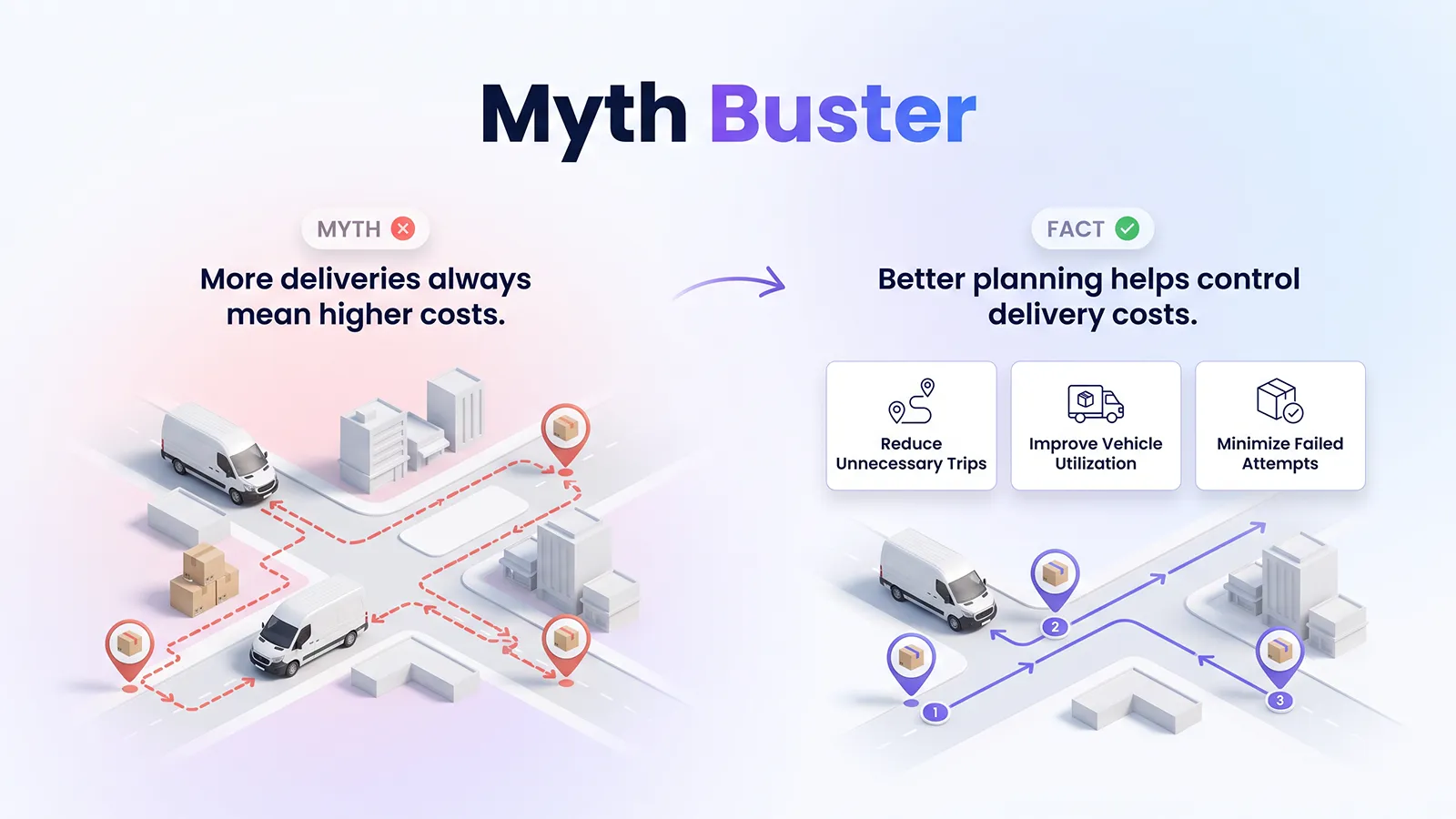
Myth vs Facts
Conclusion
Delivery management software helps businesses reduce delays, control costs, and improve customer service. AI and automation are changing delivery operations. Predictive analytics is also gaining ground. Real-time views help teams monitor deliveries. Using these delivery management best practices and tips can help you keep up. TrackoMile is last-mile delivery software that helps teams manage orders and plan trips. It also supports real-time tracking, ePOD, and performance monitoring from one platform.

Frequently Asked Questions
-
What are the key components of delivery management?
Key components of last-mile delivery software include order allocation, trip planning, real-time tracking, and delivery updates. Proof of delivery and failed delivery handling are also important. Implementing delivery management best practices bring these activities together. They help teams manage deliveries with better control.
-
What KPIs should I track in delivery management?
Track on-time delivery and first-attempt delivery rates. You can also track delivery time, failed deliveries, and cost per delivery. These KPIs show how your operations are performing. They also help teams find delays and improve delivery management.
-
How does delivery management software reduce costs?
Delivery management software automates order allocation and reduces manual work. It also improves trip planning and delivery visibility. This can reduce unnecessary trips and failed deliveries. Teams can also use vehicles and delivery agents more efficiently.
-
How can I improve my delivery management process?
Start by automating repetitive tasks. Keep order data in one system. Track deliveries in real time and review delivery data regularly. Following these delivery management best tips reduce manual work. They also improve visibility and make daily operations easier.
-
What's the difference between delivery management and last-mile delivery?
Delivery management covers the full delivery process. It includes planning, assignment, tracking, and completion. Last mile delivery focuses on the final stage, and this is when an order moves from a facility or hub to the customer.
-
What are common delivery management challenges?
Common challenges include manual order allocation and poor delivery visibility. Unplanned trips and failed deliveries can also increase costs. Missing delivery proof is another issue. Delivery management best practices help teams address these problems and improve daily operations.

We're not just a team but a collective force that makes this space come alive. Here, you'll find insights and inspiration from a variety of voices – our passionate staff members, expert guest contri... Read More


Related Blog
What Is Delivery Management? Process, Challenges & Best Tools
Delivery management streamlines order allocation, route optimisation, dispatch, and tracking to reduce costs, improve efficiency, and boost customer experience.
Building Resilient Delivery Operations with TrackoMile in 2026 and Beyond
Logistics businesses build resilient delivery networks with TrackoMile. But how exactly? With real-time route optimization, automated scheduling, and end-to-end fleet…

How to Scale Quick Commerce Beyond 10 Minutes with TrackoMile
TrackoMile transforms chaotic last-mile logistics into a predictable, automated, and high-margin retail powerhouse. See how it works in quick commerce.
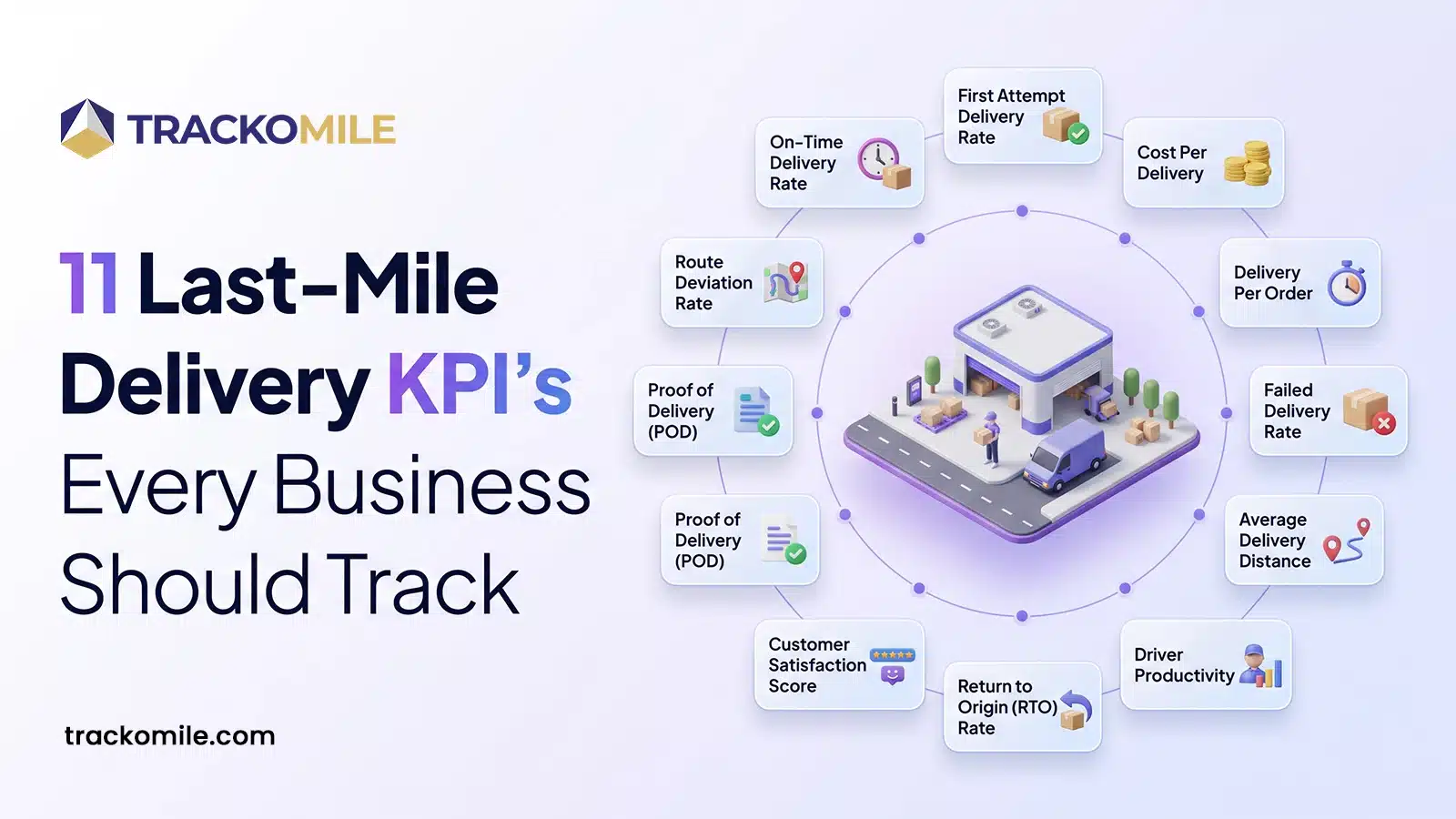
Last Mile Delivery KPIs & Metrics: 11 Essential Metrics to Track
To improve last mile operations, it’s important to track 11 essential last mile delivery KPIs like on-time delivery rate, cost…


Your inbox awaits a welcome email. Stay tuned for the latest blog updates & expert insights.
"While you're here, dive into some more reads or grab quick bites from our social platforms!"Stay Updated on tech, telematics and mobility. Don't miss out on the latest in the industry.