
Quick Summary

- E-commerce last mile delivery is crucial for customer satisfaction and brand loyalty, as poor delivery experiences can deter 84% of customers from reordering.
- Challenges include high delivery costs, lack of real-time visibility, poor route planning, and failed deliveries that increase operational expenses.
- Solutions like route optimization software, dynamic dispatch management, and real-time tracking help streamline last mile delivery processes.
- Emerging trends such as micro fulfillment centers, AI-powered logistics, and eco-friendly delivery methods are reshaping the e-commerce last mile delivery landscape.
This guide shows challenges, solutions, and recent trends in e-commerce last mile delivery to optimize operations, improve efficiency, and keep customers satisfied.
E-commerce last-mile delivery is the final step of the supply chain. The point where businesses either keep or break their promises. Late deliveries, missed drop-offs, and long routes aren’t just operational headaches. They directly cost revenue, loyalty, and customer trust in real time.
And data proves it. A study shows that up to 84% of customers will not order again after a bad delivery experience. Plus, nearly three-quarters say that delivery experience shapes how they see a brand. So, in e-commerce, optimizing the last-mile operations is not optional; it’s crucial.
The equation is simple: smart routing + real time data = on-time packages and happy customers.
However, execution is a real challenge. If you have felt that struggle too, you are at the right place. Keep reading to discover the strategies that actually work for last-mile delivery in e-commerce.
What is E-commerce Last Mile Delivery?
Last-mile delivery for e-commerce refers to the final step of delivery, where goods are delivered from the warehouse to the customer’s doorstep. It is where everything comes together. Warehouse prep, route planning, driver coordination, real-time tracking and what not. On top of that, it all collides with the realities of traffic, routes, and tight delivery window.
So, in e-commerce, last mile delivery is not just about speed. But it is about smarter decisions, better visibility, and using last mile delivery management software like TrackoMile, so you can handle more orders with less mistakes.
In short, the last mile is the stage that defines success in e-commerce logistics.
Why Last Mile Delivery Important in E-commerce?
While the last mile might seem like “just delivery”, it’s actually one of the biggest drivers of both profitability and efficiency in e-commerce. When done right, it cuts costs, improves profit margins, and gives smaller brands a competitive edge against giants.
Here’s why last mile delivery for e-commerce market matters:
High-Cost Stage: The last mile eats up more than half of your shipping costs. Labor and fuel are the biggest drivers. Even small changes here can make a real difference to your margins.
Scalability: By optimizing delivery routes and schedules, you can handle more orders with the same resources. This reduces mistakes and repeat trips.
Brand differentiation: As nearly 30% of retail shifting online by 2030, delivery isn’t just logistics anymore. It’s how customers decide whether your brand is worth coming back to. how customers decide whether your brand is worth coming back to.
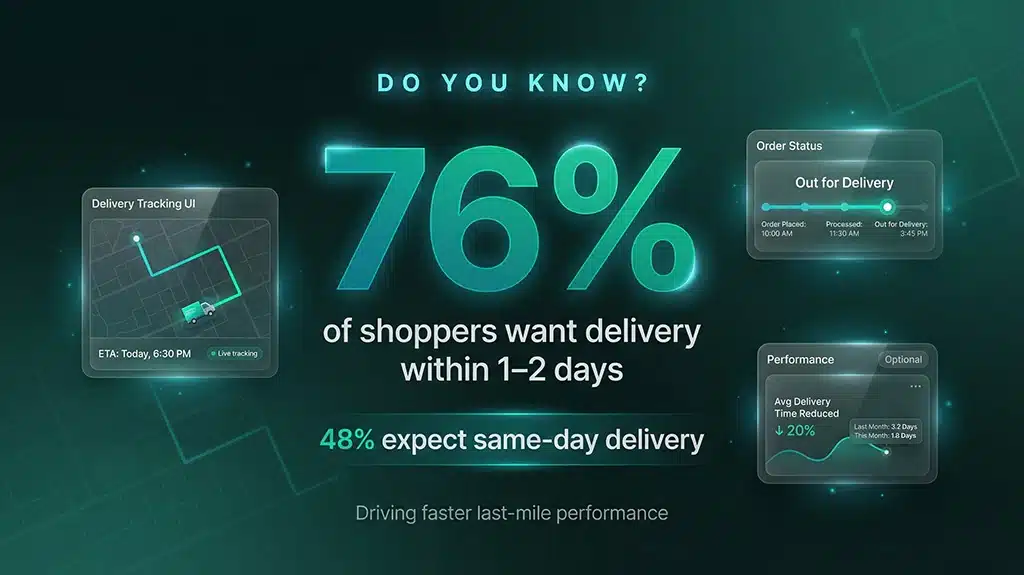
Same Day Delivery Statistics
What are the Challenges Faced in E-commerce Last Mile Delivery?
Real-time visibility, unpredictable routes, and high cost are the main challenges in last mile delivery for e-commerce. Keep reading to know the major 4 challenges of last mile delivery for e-commerce.
Challenge #1: Lack of Real-time Visibility
Without live tracking, nobody really knows where an order is. Riders can hit traffic or take a different route, and both managers and customers are left waiting, wondering what’s going on.
The result: missed delivery windows, delivery reattempts, and frustrated customers.
Challenge #2: High Delivery Costs
Fuel prices, rider hours and reattempts add up quickly. A single failed drop means another trip, more fuel, and more time lost. Over a day, these small costs pile up and quietly eat into already thin e-commerce margins.
Challenge #3: Poor Route Planning
Being a logistic manager, you know the struggle of manual route panning. The day starts messy. Drivers crisscross the same areas, waste fuel, and lose time. The ends with missed orders and tired drivers.
Challenge #4: Failed Deliveries and reattempts
Delivery reattempts is a common last mile delivery challenge in e-commerce. The customer isn’t at home, the phone goes unanswered, or the address is not clear. One small miss and the delivery have to be done again. It doubles the cost of the last mile.
If you are also facing any of these challenges, then keep reading. This blog covers solutions and strategies for e-commerce last mile delivery.
What are the Solutions to Common Last Mile Delivery Challenges
Route optimization software, real-time tracking, and better delivery planning help you to address last mile delivery challenges. Let’s break them down one by one.
Better Route Optimization
Route optimization sits at the heart of e-commerce last mile delivery. It helps last mile delivery companies find the most efficient paths to deliver orders. So instead of crisscrossing the routes, riders stay on track, save fuel, and ensure ETAs.
Software like TrackoMile consider 120+ factors including distance, time, fuel consumption, and the priority of different deliveries. It helps managers to plan a route that actually works on the ground.
Dynamic Dispatcher Management
This acts as a control center for daily e-commerce last mile delivery operations. The system automatically assigns orders based on distance, capacity, and priority. This removes delays, reduces errors, and improves TAT.
Last-mile delivery management software offers a bird’s-eye view to dispatchers. If something goes wrong, like traffic spiked or a road is blocked, routes are updated dynamically.
Electronic Proof of Delivery
ePOD helps you to confirm exactly when and where an order is delivered. Software’s like TrackoMile help logistic companies collect POD in different formats such as eSignature, photo and OTP. So, managers can avoid disputes and reduce follow-up calls.
Real-Time Order Tracking
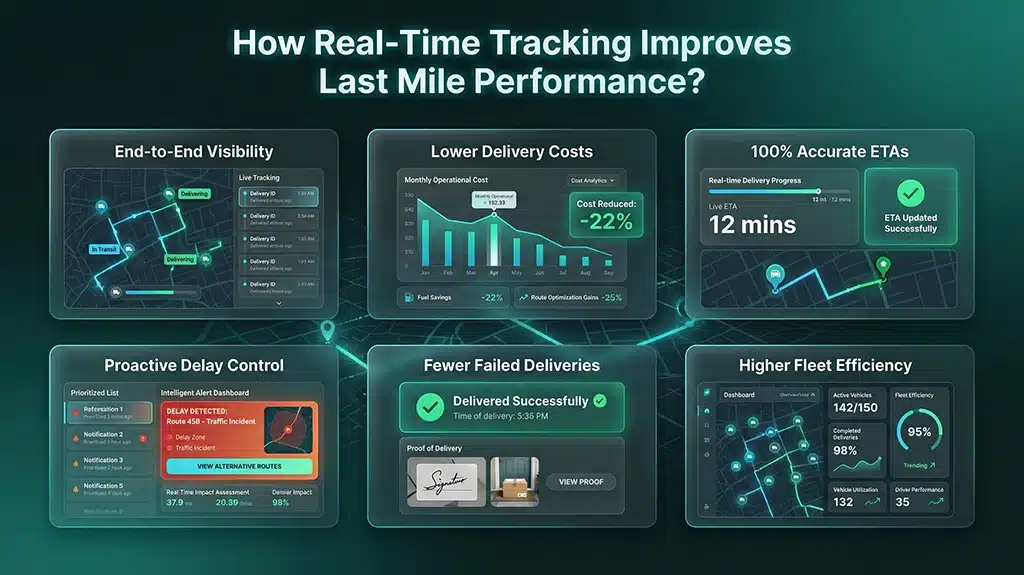
Boost Delivery Efficiency With Real-Time Tracking
When you can see what’s happening on the road, everything feels more under control. With software like TrackoMile, managers can see both actual and planned routes. This helps them to spot delays and act early.
Plus, it sends live tracking links with customers along with rider details. This cuts down “where is my order” calls and delivery reattempts.
Customer Communication and Updates
Customers just want to know what’s happening. Even a quick update about delivery time or a small delay stops all the endless questions.
5 Strategies To Improve Last Mile Delivery in eCommerce
To improve last mile delivery for the e-commerce market, businesses need better order control, smart routing, and real time visibility. Continue reading to learn more.
- Smart Order Management: It helps managers plan, group, and prioritize deliveries. By using tools like TrackoMile, managers keep every order on track and reduce last minute chaos.
- Dynamic Route Optimization: Managers can plan routes based on traffic, distance, and which deliveries matter most. This way, drivers take the fastest paths, use less fuel, and get orders delivered on time.
- Real-Time Delivery Tracking: Keep an eye on deliveries as they happen. Managers can spot delays early, guide drivers, and fix problems before customers even notice them.
- Balanced Rider Loads: Spread orders fairly across riders. Avoid overloading some drivers while others finish early, so all deliveries get done on time without stress.
- Customer Updates and Communication: Send timely updates to your customers. Quick order updates or delay messages reduce frustration and prevent follow-up calls.
What are the Key Trends & Innovations in Last Mile Delivery E-commerce Chain?
Hyperlocal delivery, drones, autonomous deliveries, and green logistics are the latest trends in last mile delivery for the e-commerce market. Read on to see how these are changing the game.
Micro Fulfillment Centers (MFCs)
E-commerce brands are actively setting up small warehouses right inside the cities. A recent Retail Dive report shows these hubs can cut distances by half and reduce last-mile costs by around 20%. The result: faster same day deliveries.
Drone, Robots and AI Delivery
Technology is taking e-commerce last mile delivery to the sky and sidewalks. Walmart is scaling drone delivery with partner Wing. They are expanding services to 150 + stores across multiple U.S. cities and aiming to reach roughly 40 million people by 2027.
Green and Eco-friendly delivery
E-commerce companies are going green. In India, Zype uses electric bikes and vehicles for deliveries. Customers love it, and it helps brands stand out while keeping deliveries fast and efficient. As per the reports, by using electric vehicles, last-mile delivery companies can cut carbon emissions by up to 50% compared to traditional fuel-based vehicles.
AI-powered Route Optimization
AI and automation are transforming last-mile delivery. The automated delivery market is booming, growing from $0.9 billion in 2023 to a projected $4.2 billion by 2030. Smart tools predict traffic and plan optimized routes. So, companies can save fuel, save time, and hit ETAs reliably.
Data Driven Last Mile Logistics
Logistic companies are actively adopting delivery analytics solutions. With software like TrackoMile, managers can see everything on a dashboard and get automatic reports. That way, they can plan routes better, save money, deliver faster, and make smarter choices on the spot.
Conclusion
E-commerce last mile delivery is more than just dropping packages. Missed routes, delayed orders, or lack of visibility affect both your operations and customer. The key is smart planning, real-time visibility, and advanced tools.
TrackoMile makes this easy for you. It is a last mile delivery management software that allows managers to keep everything on track in real time. From route to optimization to smart dispatcher and live tracking to ePOD, it offers everything you need in one dashboard.

Frequently Asked Questions
-
What are the core capabilities of a last mile delivery in e-commerce?
Last-mile delivery in eCommerce does a few key things: track orders in real time, plan smarter routes, manage dispatch, send automatic updates, and use ePOD. These make operations faster, cut mistakes, save money, and get orders to customers on time.
-
Which the best software for last mile delivery in e-commerce?
TrackoMile, FarEye and Locus are the best software for last mile delivery e-commerce in India. TrackoMile truly stands out of the among by offering real-time tracking, route optimization, smart dispatch, and ePOD.
-
How to optimize last mile delivery in e-commerce?
Managers can run last-mile delivery better by planning routes smartly, keeping an eye on orders in real time, balancing workloads, and giving customers automatic updates. Tools like TrackoMile make it easier to save money, work faster, and get deliveries done on time.
-
What is the future of e-commerce last mile delivery?
The future of eCommerce delivery is all about smarter routes, self-driving vehicles, drones, smaller fulfillment centers, and greener logistics. These changes help cut costs, speed up deliveries, make operations smoother, and give customers a better, more reliable experience.
-
Why does last mile delivery matter so much to the customer experience?
Last-mile delivery is the step where a customer interacts with your brand or services. With on-time deliveries, clear tracking, and smooth communication, you can create trust and satisfaction. While, delays or errors hurt loyalty.

Parul is a content writer with 2+ years of experience in B2B and SaaS domains. She creates clear, actionable content for TrackoBit and TrackoMile, focusing on fleet management, last-mile delivery, and... Read More


Related Blog
Building Resilient Delivery Operations with TrackoMile in 2026 and Beyond
Logistics businesses build resilient delivery networks with TrackoMile. But how exactly? With real-time route optimization, automated scheduling, and end-to-end fleet…
How to Scale Quick Commerce Beyond 10 Minutes with TrackoMile
TrackoMile transforms chaotic last-mile logistics into a predictable, automated, and high-margin retail powerhouse. See how it works in quick commerce.
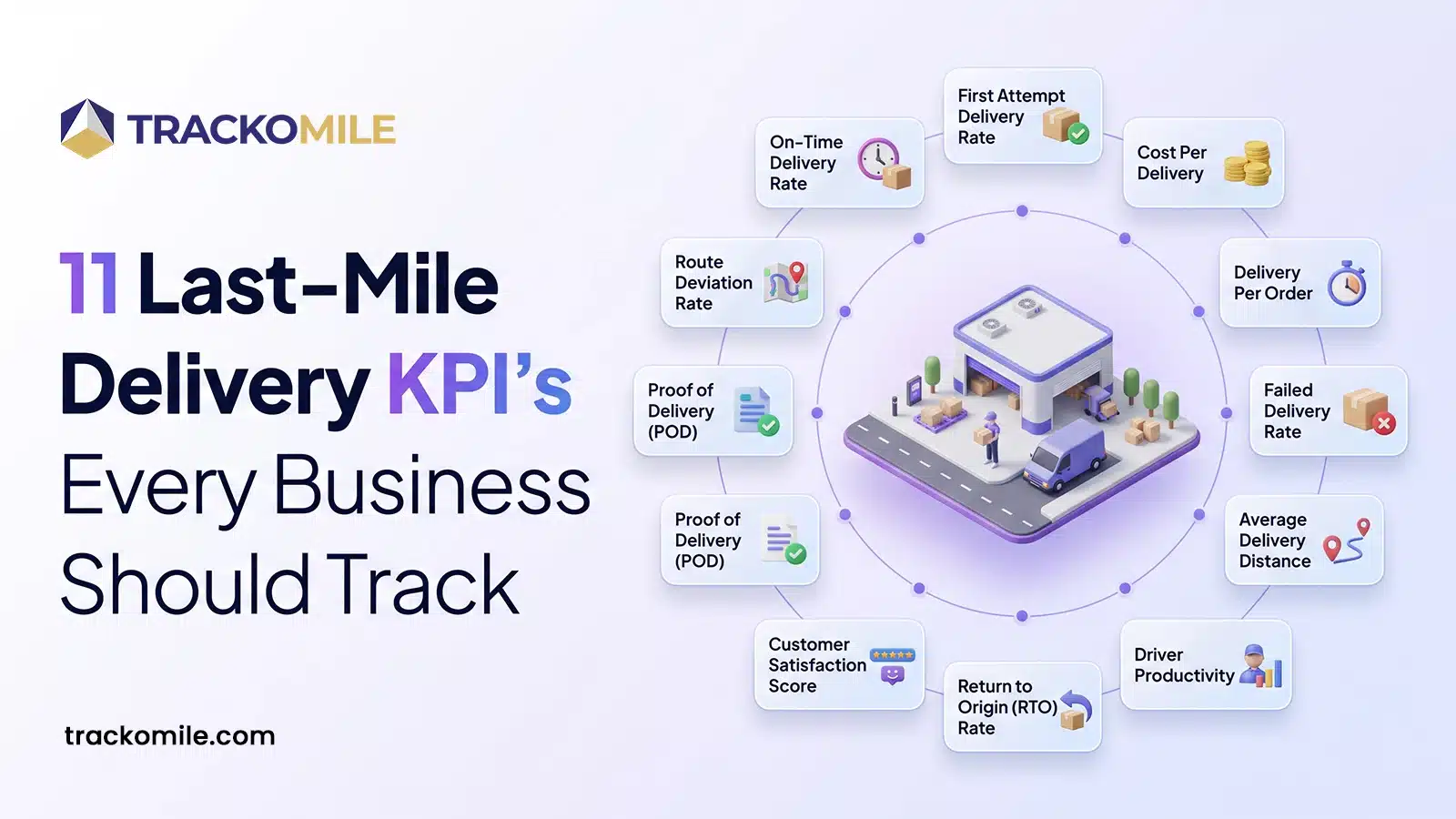
Last Mile Delivery KPIs & Metrics: 11 Essential Metrics to Track
To improve last mile operations, it’s important to track 11 essential last mile delivery KPIs like on-time delivery rate, cost…
Last-Mile Technology: 6 Technologies Transforming Delivery Operations
Learn how last-mile technology combines routing, dispatch, tracking, ePOD, and analytics. Improve your businesses’ delivery speed, visibility, efficiency, and customer…


Your inbox awaits a welcome email. Stay tuned for the latest blog updates & expert insights.
"While you're here, dive into some more reads or grab quick bites from our social platforms!"Stay Updated on tech, telematics and mobility. Don't miss out on the latest in the industry.