
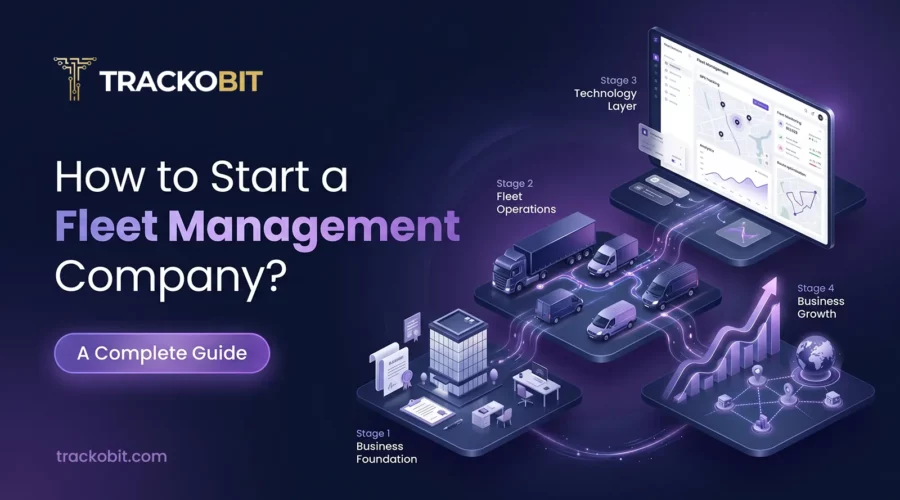
Quick Summary

- Starting a fleet management company requires thorough market research to understand customer needs and competitor offerings.
- Develop a solid business plan that outlines service types, pricing models, and long-term goals to ensure structured operations.
- Invest in reliable fleet management software to track vehicles and monitor performance, enhancing efficiency and profitability.
- Avoid common mistakes like poor route planning and neglecting maintenance to optimize operations and reduce costs effectively.
Wondering how to start a fleet management company? You’re at the right space. We have covered 10 simple steps to make the journey easy. Read on to know.
The concept of fleet management began in 1857. It was Butterfield Overland Company which managed 100+ stagecoaches. Back then, management meant repairs and scheduling. Time travel to today, starting a fleet management company is more complex than ever. It requires visibility, data, and control at scale. The real challenge is no more ownership. It is turning operations into measurable performance. Plus, every day profit margins depend on multiple factors including,
- Vehicle efficiency
- Driving patterns
- Real-time visibility
- And, vehicle movement data.
However, you can’t manage what you can’t measure. No matter whether you are beginning with one van or with a dozen of long-haul trucks, this guide will take you through the steps of creating a fleet management company. So, let’s start.
10 Actionable Steps to Start a Fleet Management Company
You need to define your business model, choose the right vehicles, choose reliable fleet management software, and ensure compliance to start a fleet management company.
1. Do Market Research
To start with, you need to know who your customers are and what they really need. It involves considering vehicle type, pricing, and marketing strategy based on your target audience.
Look at what your competitors are up to. What services they offer and how they price them. That way, you can build a fleet that actually fits demand.
2. Have a Business Plan in Place
Create a clear business plan to define how you will run your fleet and generate revenue. Look at service type, fleet size, target customers, pricing model, expected costs, and long-term goals.
By doing so, you will be able to estimate your investment plans and monitor your expenses. It also reduces unnecessary spending and sets up a solid foundation for running a well-structured fleet business.
3. Register Your Business and Get Required Licenses
Register your business under applicable state and local government. You can choose a type like LLP, or private limited company based on your investment plans, and long-term business goals.
Apart from this, based on the state, necessary permits are required to start a fleet management company. So, you can avoid penalties and ensure fleet runs smoothly without legal challenges.
4. Acquire The Right Mix of Vehicles
Choosing the right vehicle type is crucial to start a fleet management business. It generally depends on deliveries, routes, and the load requirements. Vehicle mix should match operations, whether it is bulk shipments, intercity transport, or a combination of both.
Also, as per the budget and long-term business goals, lease or buy your vehicles. Consider factors like maintenance needs and fuel costs. This will help you to make more informed decisions.
5. Get a Fleet Management Software
Invest in a reliable fleet management software like TrackoBit to track your vehicles, monitor driver activity, and manage daily operations in real time. Without a proper tool, it becomes difficult to identify delays, control fuel costs, and ensure drivers follow assigned routes. This directly affects efficiency and profitability.
For this, invest in a complete setup with GPS hardware installed in your vehicles. Connect with aggregators that offer bundled solutions compatible with different devices. So, you can easily equip your fleet and manage all vehicles from a single platform.

What Fleet Management Software Brings to Your Business
6. Hire Experienced Staff
You will eventually need skilled staff to handle the workload. Hire qualified drivers with clear records along with dispatchers and fleet managers. The right team helps you to reduce delays, errors, and downtime.
Once your team is in place, you can train them how to use fleet management software and safety protocols. This will help you to reduce insurance and maintenance costs.
7. Market Your Services
At an early stage, consistent client acquisition is critical. Instead of broad promotion, focus on reaching fleet owners, logistics operators, and businesses that rely on transportation.
You can build a website and establish your presence on logistics platforms. Use social media to boost visibility and attract more businesses. The goal is to generate consistent demand, so your fleet stays busy, and revenue grows steadily.
8. Monitor Fleet Performance
To run a profitable business, actively monitor the performance of your vehicles. Check where your vehicles are, how drivers are doing, and if deliveries are on time. So, you can reduce costs and ensure safety.
Over time, you’ll start seeing patterns. Some routes take longer, some vehicles burn more fuel, some drivers need extra guidance. This will help you to make better decisions for your fleets.
9. Maintain Vehicles Regularly
A fleet works well when your vehicles are in good condition. Closely check on vehicle health including oil level, tyre condition and brake performance. This will help you to avoid sudden breakdowns and keep your deliveries running without delays.
For this, you can use modern vehicle tracking software that sends you automatic maintenance alerts. So that your drivers stay safe and your fleet stays reliable.
10. Continuously Optimize Operations
Monitor delivery patterns and staff performance regularly. This will help you to adjust schedules, reassign vehicles, or refine processes based on real data. These ongoing improvements directly affect profitability.
By continuously optimizing operations, you can handle more deliveries without adding extra vehicles.
5 Mistakes to Avoid When Starting a Fleet Management Company
Poor route planning, neglecting preventive maintenance, fuel tracking, and driver monitoring are some of the key mistakes that you should avoid while starting a fleet management company.
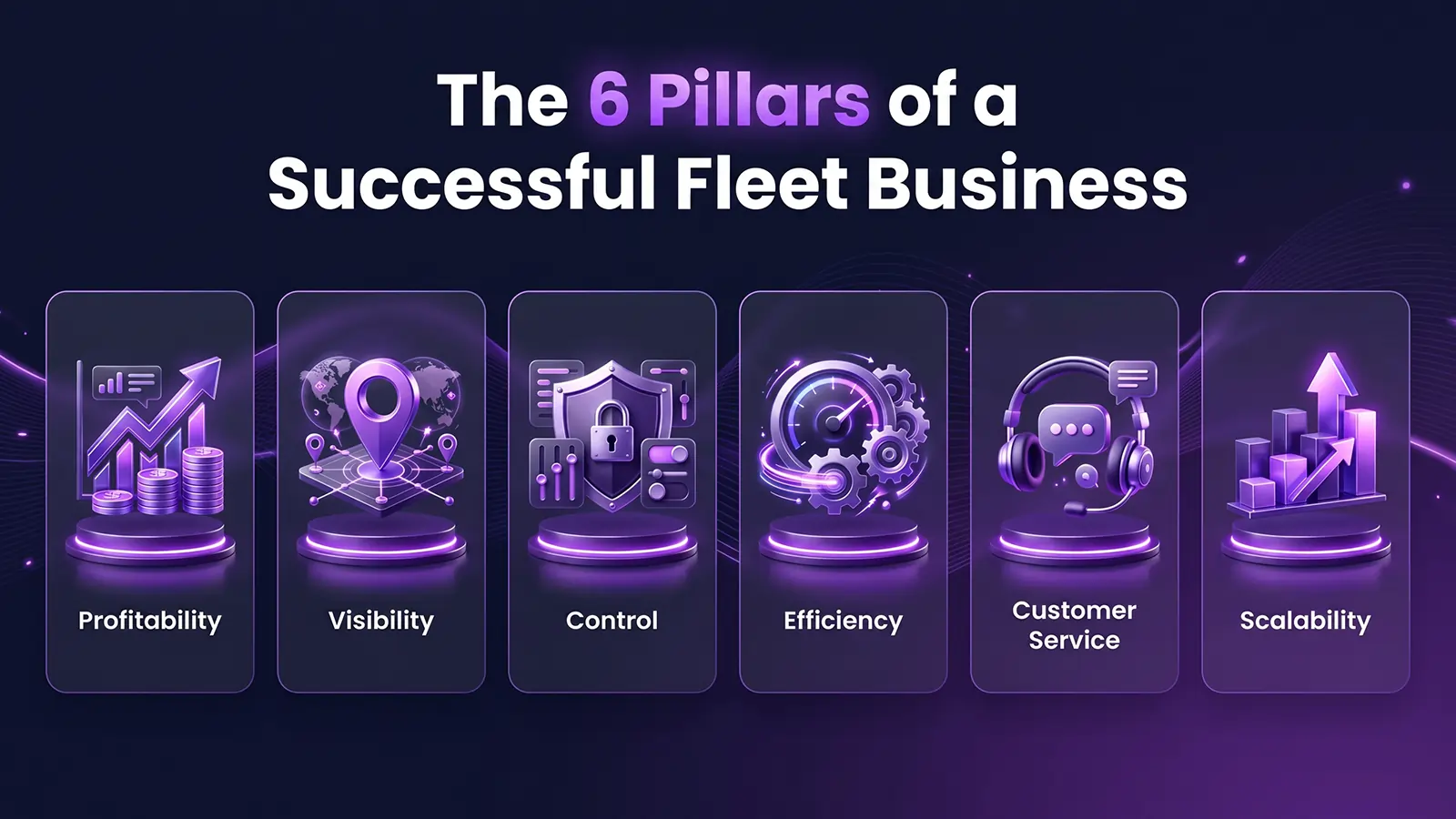
6 Pillars of a Successful Fleet Business
1. Poor Route Planning & Optimization
When you are starting out, route planning might not feel like a priority. But overtime, drivers end up taking longer routes, rerouting, and stay idle in traffic. This increases fuel costs and delayed deliveries.
To avoid these issues, you can early invest in route planning software. The software helps you to plan efficient routes, set predefine stops and add virtual boundaries using geofence. This way you can save both cost and time.
2. Ignoring Preventive Maintenance
Regular vehicle maintenance is important, but relying on post-breakdown fixes is costly. What starts as a small tire issue can turn into a long breakdown in the middle of a trip.
Preventive maintenance helps you catch these issues early, reduce breakdown risk, and keep operations predictable. You can use a modern vehicle tracking solution like TrackoBit. This will send you automated alerts and reminders for servicing. So, you can avoid breakdowns and ensure timely deliveries.
3. Poor Fuel Management Strategies
Fuel is one of the biggest running costs especially when you are starting a fleet management company. If fuel is not tracked early, you lose visibility into consumption patterns, leakages, and inefficiencies. Over time, small leakages, misuse, or inefficient routes can quietly increase your expenses.
So, invest in reliable fuel management software to track fuel usage from day one. With this, you can track unusual fuel refills, sudden drops, idling, and driving patterns.
4. Lack of Real-Time Tracking
You can buy or lease vehicles to start your fleet, but without tracking, you have no real visibility in their movement status, usage, or on-road behavior.
You can use real-time tracking software right from the beginning to keep a bird’s eye view of your vehicles. So, you will know which vehicles are active on roads, idling, or unreachable to track at the moment.
5. Ignoring Total Cost of Ownership
When you are starting a fleet business, it’s easy to focus only on the upfront cost of buying or leasing vehicles. But the real cost builds over time. Fuel, maintenance, driver expenses, insurance, and downtime all add up.
By tracking maintenance, insurance, and fuel costs digitally, you can identify inefficiencies and reduce the per mile costs.
Conclusion: Start Smarter with TrackoBit
Starting a fleet management company becomes easier with the right system in place from day one. Instead of managing vehicles, drivers, and costs separately, TrackoBit offers you a single platform to run everything with better control and visibility.
With TrackoBit, you can track live vehicle location 24/7, monitor speed, distance, and routes. Plus, you will get up to 6 months of trip history for better decisions. It also supports 1500+ GPS devices and offers up to 99.99% uptime. With TrackoBit’s fuel cost calculator, you can estimate trip fuel costs before deployment and plan expenses accordingly. You will receive automated alerts for maintenance, so you stay in control and avoid operational gaps from the start.

Frequently Asked Questions
-
What is a fleet management company?
A fleet management company is an organization that offers you services so you can manage your vehicles and assets. It acts as a central system (and sometimes a service provider), so you can ensure your fleet runs efficiently and safely while reducing cost.
-
How much does it cost to start a fleet management company?
The fleet management company startup cost depends on different factors like number of vehicles, type of services and location. Apart from this, it also depends on whether you are buying or leasing your vehicles, permits, insurance and technology you will use. By using modern fleet management software, you can reduce the overall operational cost of your fleet business.
-
What licenses are required for fleet business in India?
If you are starting a fleet management company in India, you’ll need to complete business registration, including GST and PAN, as well as transport permits for goods or passengers. Your vehicles must have valid documents like RC, insurance, fitness certificates, and PUC. Drivers should have commercial licenses. Also, based on your operations, you may need additional approval if you are transporting hazardous goods or food.

Parul is a content writer with 2+ years of experience in B2B and SaaS domains. She creates clear, actionable content for TrackoBit and TrackoMile, focusing on fleet management, last-mile delivery, and... Read More


Related Blog

ADAS System in Cars: How It Works and Why It Matters
ADAS road safety system is a technology that uses sensors and software to detect danger and alerts the driver to…
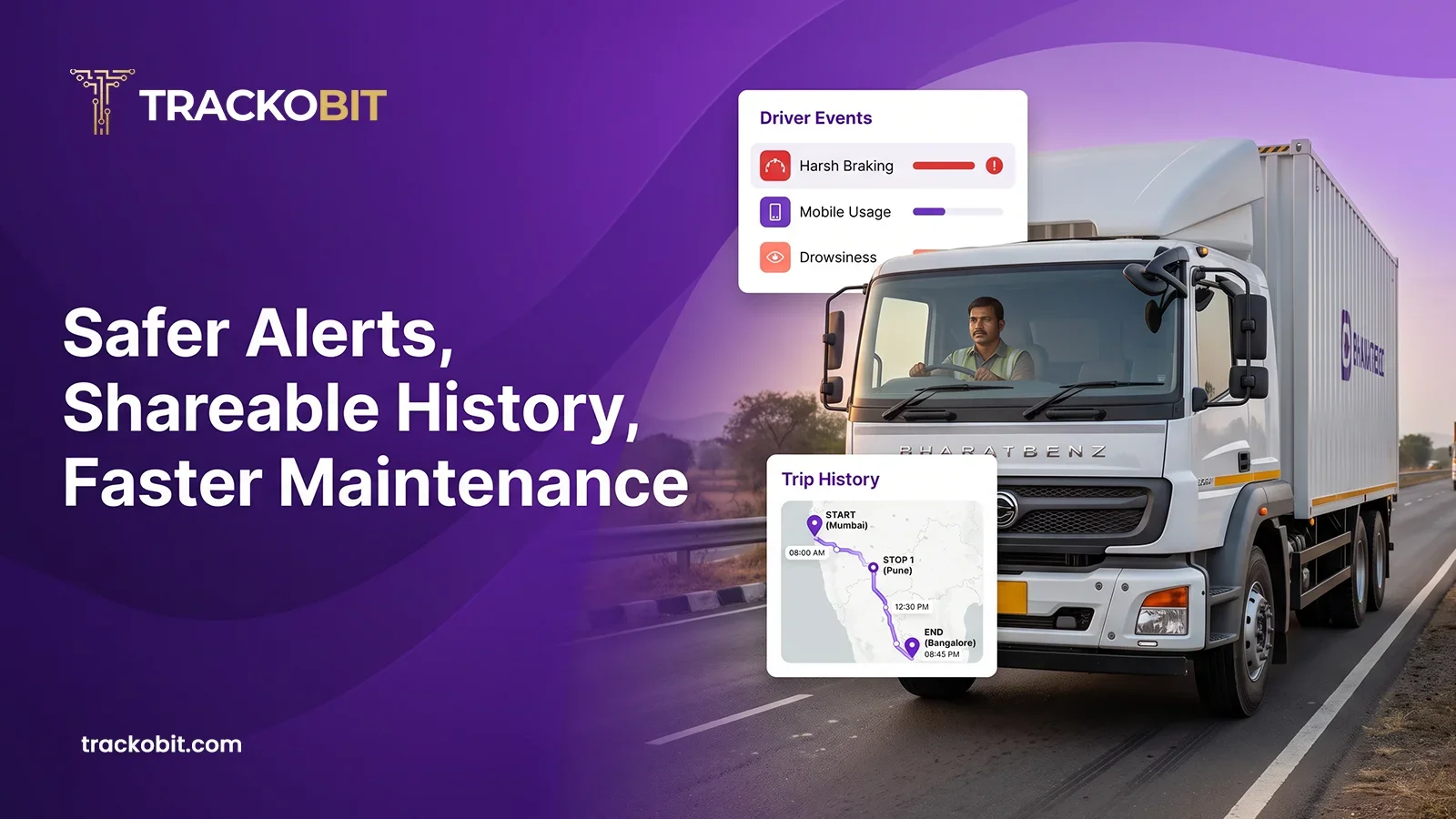
Safer Alerts, Shareable History, Faster Maintenance in TrackoBit
TrackoBit now adds an Evidence Model and authority-based access for ADAS and DMS alerts in video telematics, Vehicle History Sharing…
Fleet Management Requirements: The Complete Guide for 2026
Every wondered what exactly fleet management requirements are? Or, why do they matter? This guide helps you understand in detail.
7 Fleet Management Best Practices Every Fleet Manager Needs
Learn 7 fleet management best practices to improve safety, vehicle utilization, efficiency, and fleet performance in 2026.


Your inbox awaits a welcome email. Stay tuned for the latest blog updates & expert insights.
"While you're here, dive into some more reads or grab quick bites from our social platforms!"Stay Updated on tech, telematics and mobility. Don't miss out on the latest in the industry.