
Quick Summary

- Enterprise fleet management is essential for large fleets, providing centralized dashboards for vehicle and driver tracking, route planning, and compliance.
- As fleet operations expand, businesses face challenges like inefficiencies and rising costs, which can be mitigated through real-time monitoring and analytics.
- Key components of effective fleet management include telematics, preventive maintenance, fuel monitoring, and driver behavior tracking to enhance operational efficiency.
- Choosing the right enterprise fleet management software involves considering pricing, ease of use, integration capabilities, and customer support to ensure scalability and operational control.
Enterprise fleet management is a must. This is because large fleets require optimized planning and centralized dashboards.
Fleet operations in 2026 expand across cities and states. This is due to the rapid proliferation of the global supply chain and the last-mile sector. At this point, managing fleet coordination manually is a tough nut to crack! Such a high-pressure environment requires a centralized platform for vehicle and driver tracking. It must also plan routes, offer precise telematics, and ensure regulatory compliance. This makes enterprise fleet management a non-negotiable part of a logistics business.
The best one helps control fuel costs, improve driver accountability, and reduce downtime. Managers gain complete operational visibility across hundreds or thousands of vehicles. No wonder Domino’s, Amazon, and Cisco have adopted EFM software. For enterprises, even a small delay or fuel loss can impact operations at scale. That is why businesses now rely on enterprise fleet management software. It allows them to manage vehicles, drivers, and from a single platform.
What is Enterprise Fleet Management?
Enterprise fleet management is the process of managing large commercial fleets. Technology like automation and real time tracking systems is used. It helps vehicles, drivers, fuel usage and operational performance from a centralized dashboard.
This management focuses more on scalability, automation, compliance, and operational efficiency. It is designed for businesses operating large fleets across expansive geographic areas.
Why Enterprise Fleet Management is Important for Large Fleet Businesses?
The complexity of fleet operations increases as fleets scale.
Most enterprise fleet challenges are not caused by one major operational failure. They happen because of small inefficiencies repeated daily across hundreds of vehicles.
For example:
- Drivers taking unauthorized detours
- Vehicles idling excessively during shifts
- Fuel theft remaining undetected
- Delayed maintenance causing breakdowns
- Dispatch teams lacking route visibility
- Underutilized assets increasing fixed costs
These operational leakages are difficult to detect manually.
Without centralized visibility, enterprises often discover problems too late. Then the cost increases or delivery performance drops. TrackoBit’s enterprise fleet management software helps businesses identify these inefficiencies in real time.
Key Components of Enterprise Fleet Management
Telematics, maintenance, and fuel monitoring are the main components of enterprise fleet management. Each component plays a critical role in improving vehicle productivity. And also in reducing operational leakage.
1. Telematics and Real Time GPS Tracking
Telematics forms the foundation of enterprise fleet management. It combines GPS tracking, vehicle diagnostics and sensor data into a monitoring system. However, enterprise telematics goes beyond simply tracking vehicle locations.
Large fleet operations require visibility into:
- Route adherence
- Idle time
- Stop duration
- Vehicle utilization
- Trip productivity
- Unauthorized movement
This operational data helps businesses understand how vehicles are being used. And inefficiencies are occurring. For example, managers get instant alerts and enhanced visibility. They know if the vehicle detours, remains idle, or operates in restricted zones.
2. Preventive Maintenance and Vehicle Health Monitoring
Unexpected vehicle breakdowns create serious operational disruptions in enterprise fleets. A single breakdown can affect route schedules, increase repair costs, and delay deliveries.
This is why enterprises are shifting from reactive maintenance to preventive maintenance. Telematics help with preventive maintenance through service schedules, maintenance history, and odometer readings. They help to identify vehicle health issues before they become operational failures.
Modern maintenance systems can also generate alerts for:
- Upcoming servicing requirements
- Engine faults like low oil pressure
- Battery issues like thermal events
- Tire pressure issues like under-inflation
This helps businesses reduce downtime, improve vehicle availability, and extend vehicle lifespan. Fleet maintenance becomes even more important for enterprises operating time-sensitive supply chains.
3. Fuel Management and Fuel Intelligence
Fuel is often the largest recurring expense in enterprise fleet operations. Fuel consumes 25% to 40% of every standard fleet operation expense. Yet many businesses still have no visibility on how much fuel is being consumed by each vehicle.
Most fuel losses in enterprise fleets do not happen through one major incident. They usually occur gradually through operational inefficiencies. Through excessive idling, unauthorized trips, route deviations and aggressive driving behavior.
The best fuel management software helps businesses monitor:
- Fuel consumption trends
- Mileage efficiency
- Fuel refill activity
- Fuel drain incidents
For planned trips, businesses can also use a fuel cost calculator to estimate the expected fuel expense. Enterprise fleet also supports fuel level sensors, CAN bus data, and fuel card systems. This improves fuel accountability further. Fuel intelligence is not just about tracking consumption. It is about identifying operational behaviors that increase long-term costs.
4. Driver Behavior and Safety Monitoring
Drivers play a direct role in efficiency, vehicle health, fuel usage, and road safety. Poor driving habits increase accident risks and accelerate wear and tear across assets.
Enterprise fleet management software use telematics data for driver behavior monitoring. It flags events such as overspeeding, harsh braking, and rapid acceleration.
This operational visibility helps businesses improve accountability. Also helps in identifying risky driving patterns before they create larger operational issues.
Many enterprises also use driver performance benchmarking to compare:
- Driving discipline
- Fuel efficiency
- Idle behavior
- Safety performance
This is done across operational zones and business units.
Driver analytics not only improve safety standards. It also helps businesses reduce fuel wastage and maintenance costs over time.
5. Asset Lifecycle and Fleet Utilization Tracking
Drivers play a direct role in vehicle efficiency, vehicle health, fuel usage, and road safety. Poor driving habits increase accident risks. Also, accelerate wear and tear across fleet assets.
Enterprise fleet management software uses telematics data for driver behavior monitoring. It flags events such as overspeeding, harsh braking, and excessive idling.
Many enterprises also use driver performance benchmarking to compare:
- Driving discipline
- Fuel efficiency
- Idle behavior
- Safety performance
This is done across operational zones and business units.
6. Asset Lifecycle and Fleet Utilization Tracking
One of the biggest operational challenges in vehicle management is poor asset utilization.
Many busiensses add vehicles before maximizing the use of existing ones.
Enterprise fleet management software helps businesses analyze:
- Vehicle productivity
- Utilization rates
- Downtime patterns
- Maintenance frequency
- Ownership costs
This visibility helps enterprises identify underutilized assets. Recognize low productivity vehicles, and high maintenance units. The ones that increase operational costs without delivering adequate output.
Vehicle utilization analytics also support better planning around:
- Vehicle replacement
- Asset retirement
- Asset expansion
- Lease optimization
7. Compliance and Regulatory Management
Fleet compliance challenges grow with operational scale. Fleet management software helps businesses automate compliance-related activities such as:
- Permit renewals
- Insurance tracking
- Vehicle fitness management
- Driver documentation
- Audit reporting
Modern enterprise systems maintain digital records and automated reminders. These help avoid compliance gaps and operational penalties.
This is important for industries like logistics, construction and mining fleet tracking. Also, in oil & gas operations, regulatory compliance directly affects business continuity.
A centralized view of compliance lowers administrative effort and ensures consistency.
8. Enterprise Integrations and Operational Connectivity
Enterprise fleet tracking software works within a larger operational ecosystem.
Large enterprises often integrate operations with:
- ERP systems
- Accounting platforms
- Dispatch software
- HRMS tools
- Warehouse management systems
These integrations help businesses improve cross-functional visibility and eliminate operational silos.
For example, vehicle availability can align with dispatch planning. Fuel expenses can sync with financial systems. And delivery updates can support customer operations in real time.
As enterprise operations grow, centralized operational connectivity becomes essential. This is important for maintaining coordination across departments, supply chains, and mobility networks.
5 Core Features of Enterprise Fleet Management
Real time fuel, location and behavior tracking are enterprise fleet management’s core features. They help businesses manage large scale operations with better visibility and control.
1. Real Time Fleet Visibility
Real time fleet tracking helps with monitoring movement and trip progress. This allows managers to track ongoing operations. Identifying delays becomes quick, and dispatch coordination gets improved across multiple locations. For large fleets, centralized visibility becomes essential for maintaining operational control.
2. Fuel Monitoring and Analytics
As mentioned earlier, fuel is a significant chunk of operational expenses! Minor inefficiencies can result in major costs when scaled.
Fuel monitoring software helps businesses track fuel consumption, refill activity, and mileage trends. This identifies inefficient driving patterns that increase fuel costs over time.
3. Driver Behavior Monitoring
Driver performance directly affects fuel efficiency, vehicle health, and road safety.
TrackoBit offers a robust driver behavior monitoring software. It tracks behaviors such as overspeeding, harsh braking, rapid acceleration, and excessive idling. These insights help businesses improve driver accountability. Also, reduce accident risks and maintain better operational discipline across fleets.
4. Preventive Maintenance Scheduling
Unexpected vehicle breakdowns can disrupt deliveries and increase repair costs. Preventive maintenance solution helps businesses schedule servicing based on –
- Vehicle usage
- Diagnostics data
- Maintenance history
Automated service reminders reduce downtime and help improve vehicle lifespan and vehicle availability.
5. Route Planning and Trip Monitoring
Poor route planning leads to delivery delays, fuel wastage, and lower productivity. But not with TrackoBit’s route planning software.
It helps businesses assign routes, monitor trip movement, and identify route deviations. This improves trip efficiency, delivery timelines, and overall operational performance.
Enterprise Fleet Management Challenges & How to Overcome Them
As fleet size grows, businesses often struggle with visibility gaps. Inconsistent operations, rising fuel costs, and delayed decision-making are also some challenges.
Here are some of the biggest fleet management challenges enterprises face. Along with how businesses can solve them.
1. Operational Blind Spots Across Large Fleets
The biggest challenges in fleet management are the lack of centralized operational visibility.
Many enterprises operate fleets across multiple cities and departments. Without real time monitoring, managers often struggle to understand:
- Which vehicles are delayed
- Which routes are inefficient
- Which assets are underutilized
- Which drivers are affecting operational costs
This creates delayed decision making and reactive operations.
The solution is centralized visibility through real time fleet monitoring software. Unified visibility helps businesses manage daily operations more effectively.
2. Scaling Fleet Operations Without Losing Control
As fleets expand, manual coordination becomes difficult.
Businesses often face challenges such as:
- Inconsistent reporting
- Communication gaps
- Dispatch inefficiencies
- Delayed operational updates
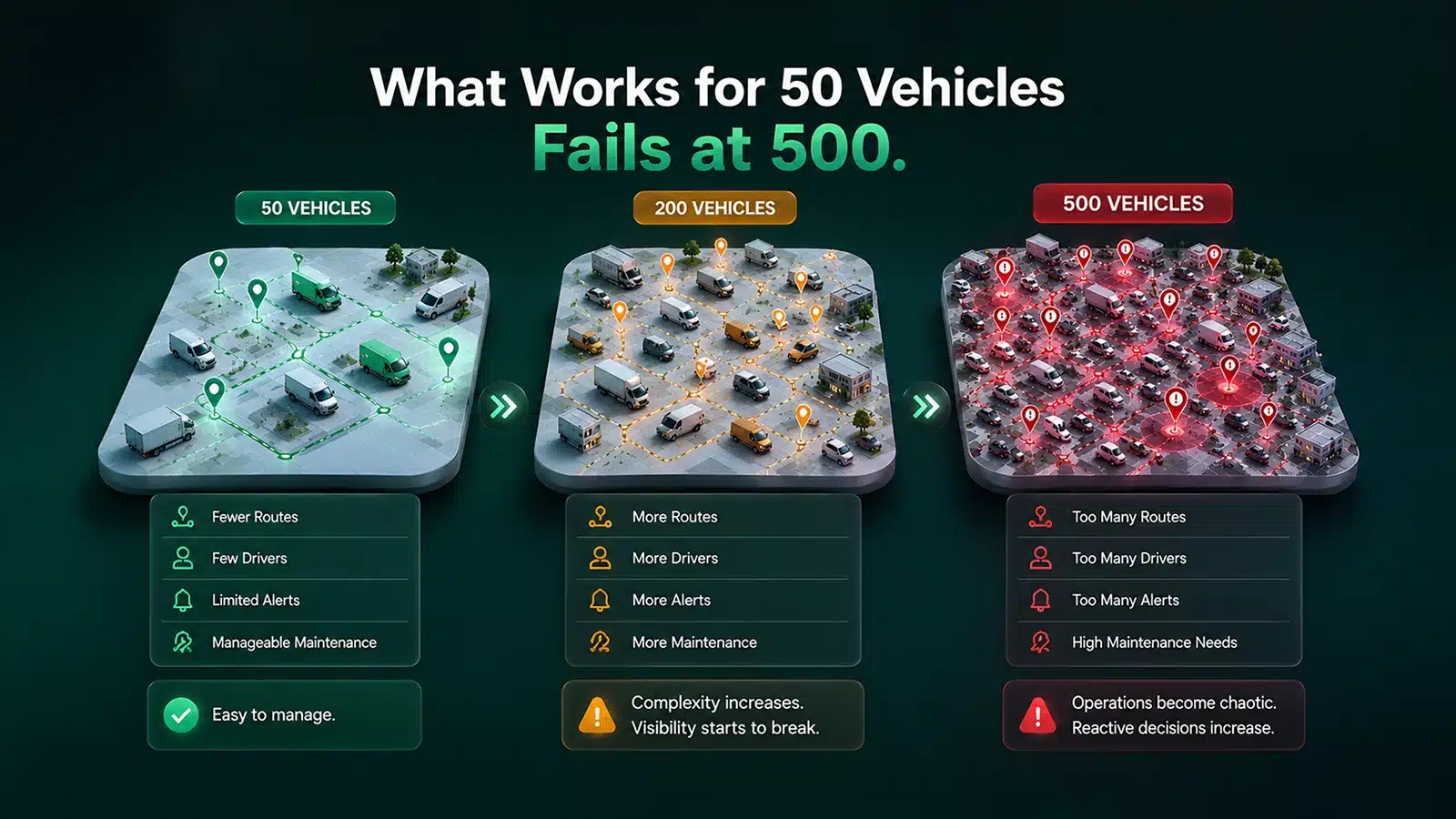
What works for a 50-vehicle fleet usually fails for a 500-vehicle operation.
To overcome this, enterprises need standardized operational workflows. That is supported by centralized fleet management software. Automated fleet management alerts and unified reporting help businesses maintain operational consistency.
3. Difficulty in Controlling Operational Costs
Many enterprise fleets struggle to identify where operational costs are actually increasing.
The problem is that costs usually rise gradually through:
- Excessive idling
- Route inefficiencies
- Fuel wastage
- Unplanned downtime
- Poor vehicle utilization
These inefficiencies often remain hidden inside large operations.
Businesses can solve this challenge by focusing on operational analytics. Monitoring utilization trends, fuel efficiency, and maintenance patterns helps identify areas of leakage.
4. Low Fleet Utilization and Idle Assets
A common issue in enterprise fleets is underutilized assets.
Businesses frequently add vehicles without optimizing existing fleet usage. This increases ownership costs without improving operational output.
Fleet utilization tracking helps businesses understand:
- Which vehicles remain inactive
- Which routes have low productivity
- Which assets generate higher downtime
This allows enterprises to optimize fleet allocation instead of increasing size unnecessarily. For large businesses, better utilization often improves profitability more than fleet expansion.
Challenges of Enterprise Fleet are Different from Smaller Fleet
5. Maintaining Driver Discipline at Scale
Managing driver performance becomes increasingly difficult in large fleet environments.
Enterprises often struggle with:
- Overspeeding
- Unauthorized stoppages
- Excessive idling
- Unsafe driving practices
Without measurable visibility, driver accountability becomes inconsistent across operations.
Driver monitoring software helps businesses track driving behavior and create standardized performance benchmarks. Many enterprises also use driver scorecards to improve safety culture.
6. Managing Vehicle Downtime During High Demand Operations
Unexpected vehicle downtime can severely disrupt enterprise operations, especially during high demand periods.
Breakdowns affect:
- Delivery schedules
- Customer commitments
- Dispatch planning
- Vehicle productivity
Reactive maintenance models usually increase operational disruption. That is because issues are addressed only after failures occur.
Preventive maintenance scheduling helps businesses reduce downtime. It does so by identifying servicing requirements before operational failures happen. This improves vehicle availability and operational continuity.
How to Choose the Right Enterprise Fleet Management Software
Pricing, features and support offered are some of the factors to look for when making a choice.
- Pricing and Scalability
The software’s pricing should fit your operational budget. But it should also support future fleet expansion without major system limitations.
- Ease of Use
A complex platform slows down adoption. Choose software with simple dashboards, easy navigation, and quick access to operational data.
- Integration Capabilities
The platform should integrate smoothly with ERP systems, dispatch software, and HRMS platforms. And also with fuel sensors and GPS trackers in the market.
- Customer Support and Onboarding
Reliable onboarding, training, and customer support are critical for large operations. This is because downtime or system issues can impact operations quickly.
- Business Requirements and Features
Choose software based on your operational needs. For example, fuel monitoring, driver behavior tracking, route visibility, and reporting capabilities.
Why TrackoBit is the Best Enterprise Fleet Management Solution
Enterprise fleet operations require much more than basic GPS tracking. Businesses today need centralized visibility, operational control and fuel intelligence. They also need driver accountability and scalable fleet management capabilities. This will help them manage large fleets efficiently.
TrackoBit’s fleet management software helps enterprises manage complex operations rather easily. It does so through real time monitoring, operational analytics, and intelligent fleet visibility.
What makes TrackoBit stand out is its strong focus on operational efficiency. Instead of only showing vehicle movement, it shows what is impacting fleet productivity. What is affecting fuel efficiency, asset utilization, and overall operational performance.
With TrackoBit, enterprises can:
- Monitor vehicles, trips, and driver activity in real time
- Track fuel consumption, drain events, refill activity, and mileage trends
- Improve route visibility and minimize operational inefficiencies
- Monitor driver behavior and strengthen discipline
- Reduce downtime through preventive maintenance scheduling
- Access centralized dashboards and customizable operational reports
- Manage multi location fleet operations from one unified platform
TrackoBit reveals hidden cost leakages that often go unnoticed. For example, excessive idling, route deviations, and inefficient driving patterns.
For enterprises operating large and distributed fleets, TrackoBit provides the much needed visibility. They also get operational intelligence, and scalability needed to improve productivity. Also able to reduce operational costs, and run fleet operations with greater control.
Frequently Asked Questions
-
What does enterprise fleet management do?
Enterprise fleet management is a way to centralize fleet operations. It helps businesses monitor vehicles, drivers, and route performance in real time. Thus, improving visibility, operational control, and decision making across large fleet networks.
-
How does enterprise fleet management reduce costs?
Enterprise fleet management reduces costs by identifying operational inefficiencies. Like excessive idling, fuel wastage, route deviations, poor asset utilization, and unplanned downtime. At TrackoBit, we help businesses turn fleet data into actionable insights. They will be able to improve efficiency and profitability.
-
What industries use enterprise fleet management?
Enterprise fleet management is widely used in logistics, transportation, FMCG and construction. Any business managing a large fleet can use it to improve productivity. They will be able to reduce costs and streamline daily operations.
-
What is the cost of enterprise fleet management software?
The cost of the software depends on fleet size, features, and hardware. TrackoBit’s pricing is such that it grows as the operation scales. We recommend choosing a solution based on long term operational value.

Tithi Agarwal is an established content marketing specialist with years of experience in Telematics and the SaaS domain. With a strong background in literature and industrial expertise in technical wr... Read More


Related Blog
Fleet Management Requirements: The Complete Guide for 2026
Every wondered what exactly fleet management requirements are? Or, why do they matter? This guide helps you understand in detail.
7 Fleet Management Best Practices Every Fleet Manager Needs
Learn 7 fleet management best practices to improve safety, vehicle utilization, efficiency, and fleet performance in 2026.
What Are the Roles and Responsibilities of a Fleet Owner?
Behind every well-run fleet is a fleet owner juggling tasks like vehicle maintenance and driver management without letting anything fall…
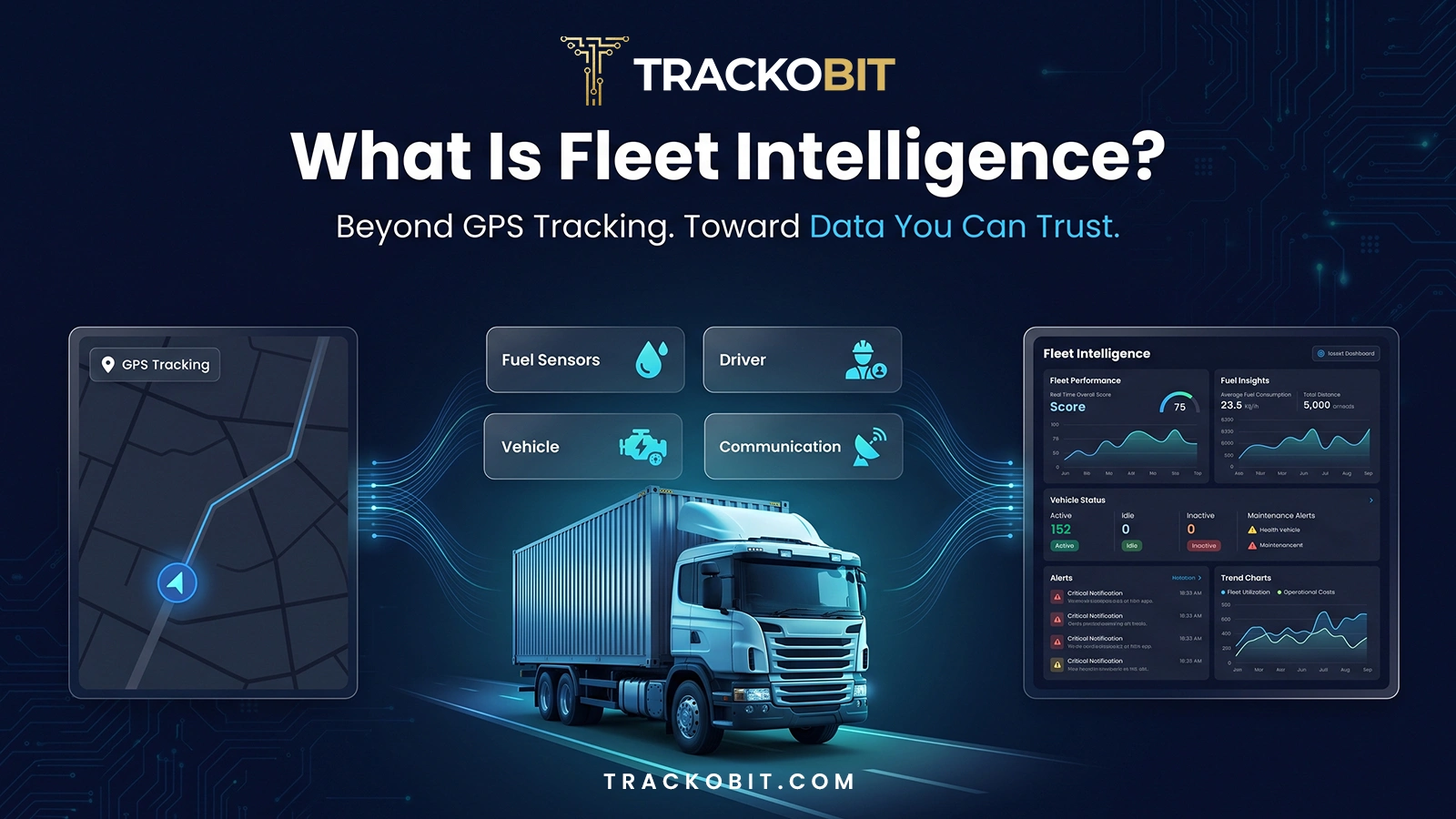
What Is Fleet Intelligence? TrackoBit Goes Beyond GPS Tracking
Fleet intelligence is the layer of trustworthy data, driver-level accountability, and consistent identity that sits above GPS tracking. It turns…


Your inbox awaits a welcome email. Stay tuned for the latest blog updates & expert insights.
"While you're here, dive into some more reads or grab quick bites from our social platforms!"Stay Updated on tech, telematics and mobility. Don't miss out on the latest in the industry.