
Related Blogs
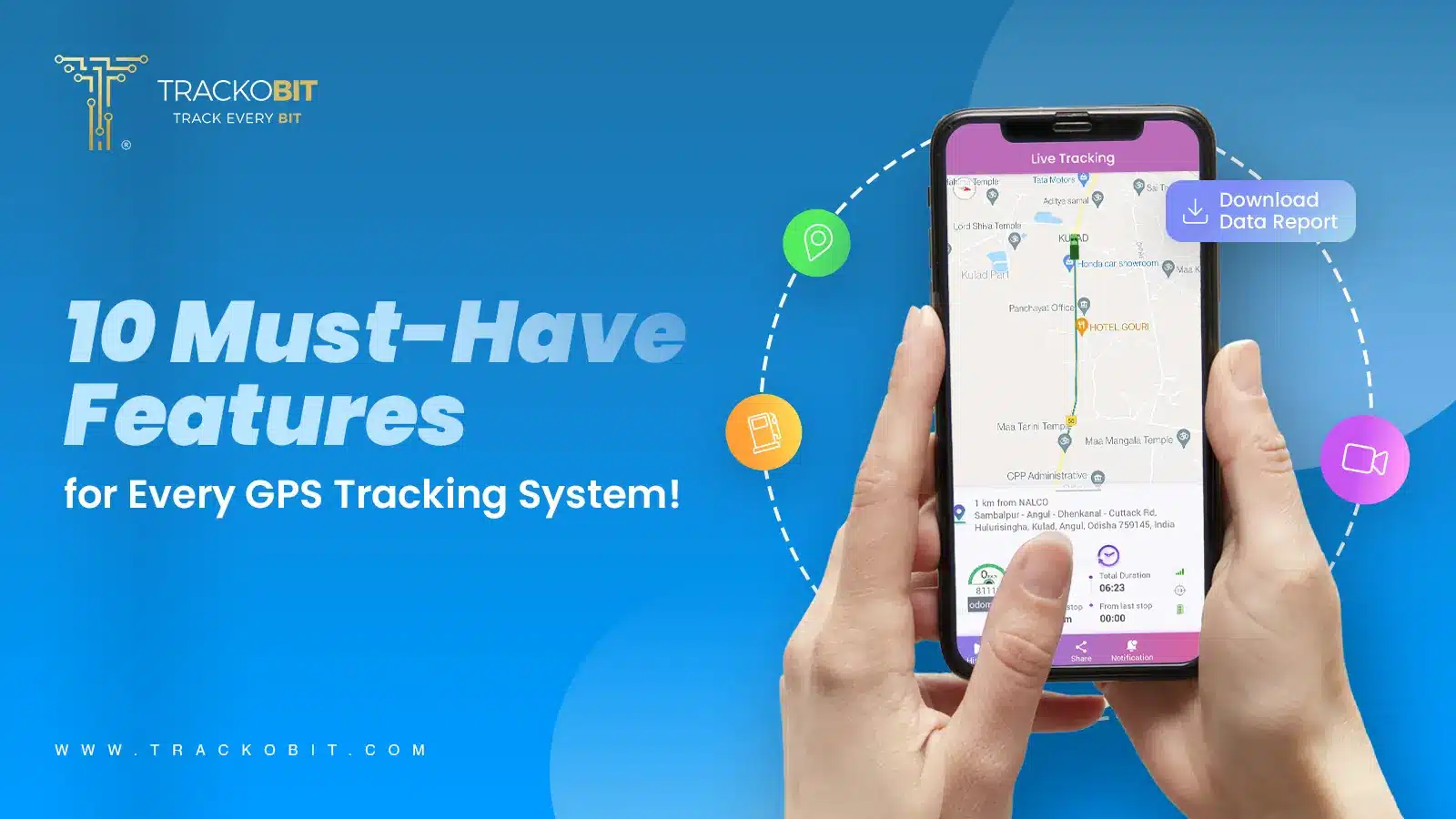
What is Real-Time Tracking?
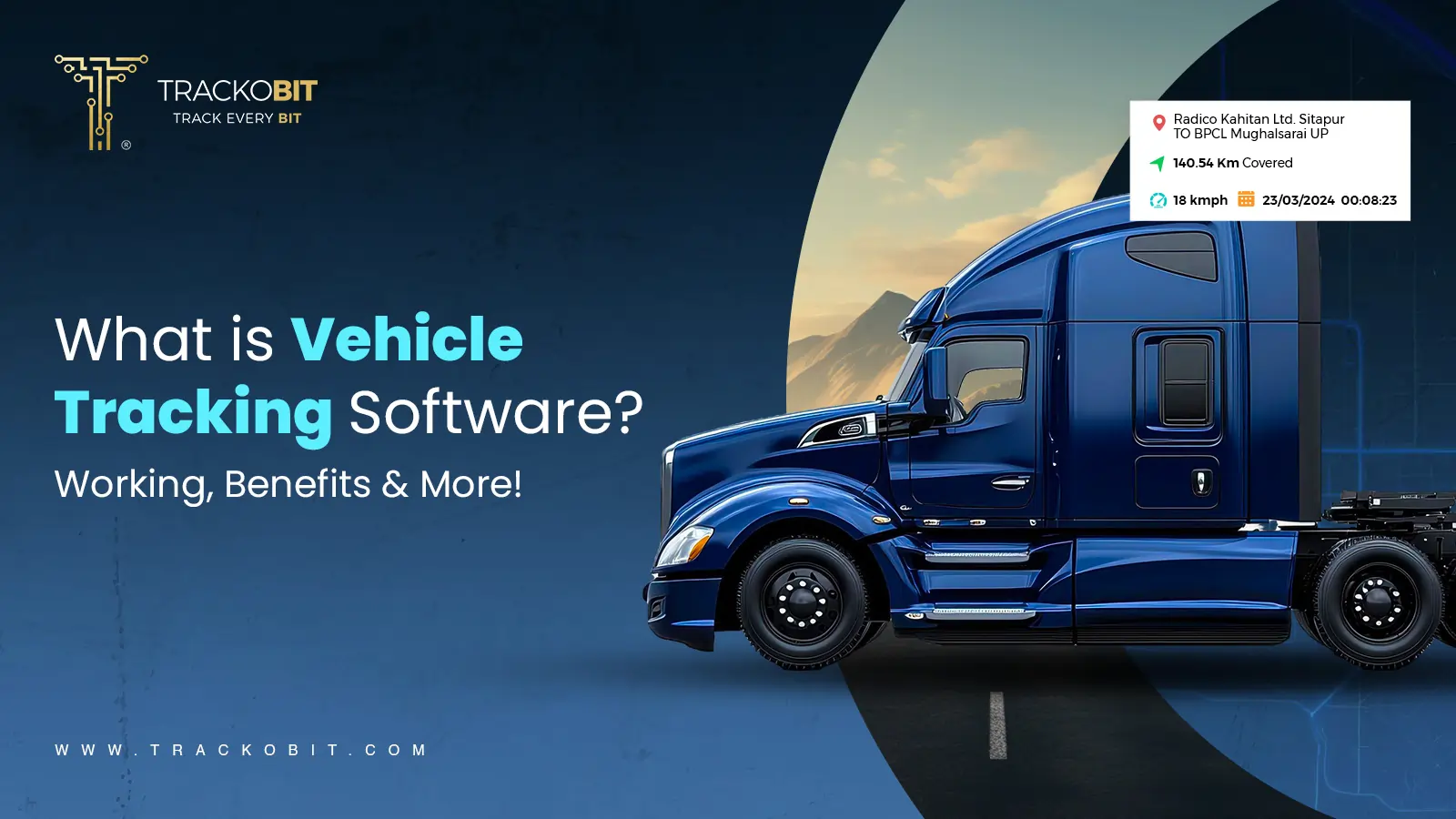
Real-time tracking shows the exact location of your vehicles and field staff. GPS uses satellite signals to determine a vehicle’s location. It then shares this data with the tracking system for real-time location tracking. This visibility helps managers monitor fleet, field, and delivery operations more effectively. Live location tracking provides a clear view of ongoing vehicle movements. It helps teams stay updated on their current activities. Telematics provides additional information about your vehicles beyond their location data. It covers vehicle performance, fuel usage, and driver behavior. Managers can use this information to make quick decisions on the ground.
How Does Real-Time Tracking Work?
GPS devices are installed in vehicles to capture their current position. This data enables businesses to monitor vehicle movement with real-time GPS tracking. The device transmits the information to the central server through a mobile network. A live map appears on your dashboard after processing the data. This live map provides real-time GPS tracking of every vehicle and field agent. Managers get live updates on movement, routes, and location changes. It helps managers monitor daily operations from a centralized platform.
Common Uses of Real-Time Tracking
Vehicle locations tracking, field staff attendance, and asset safety are the common uses of real time tracking. Here are a few more ways businesses use it:
- Field staff tracking: View field staff locations and improve attendance tracking. This strengthens workforce accountability across teams.
- Vehicle location tracking: Track vehicles and their movement in real time. This keeps every route visible and on schedule.
- Asset safety: Track valuable assets and spot unusual movement early. This reduces operational risk and asset loss.
- ETA accuracy : Use live location data for accurate arrival times. This improves customer communication and service reliability.
- Theft prevention : Spot unusual vehicle or asset movement and respond fast. This protects business assets and reduces losses.
Benefits of Live Tracking in Fleet Management
Monitor vehicle locations and track routes are the benefits of Live tracking in fleet management. Explore its other benefits in detail to learn more:
- Vehicle location: Track the vehicle’s real-time location and movement on the map.
- Route tracking: Track the vehicle movement and ensure that it is on the pre-planned route
- Geofence alerts: Get alerts when a vehicle enters or exits a geofenced location
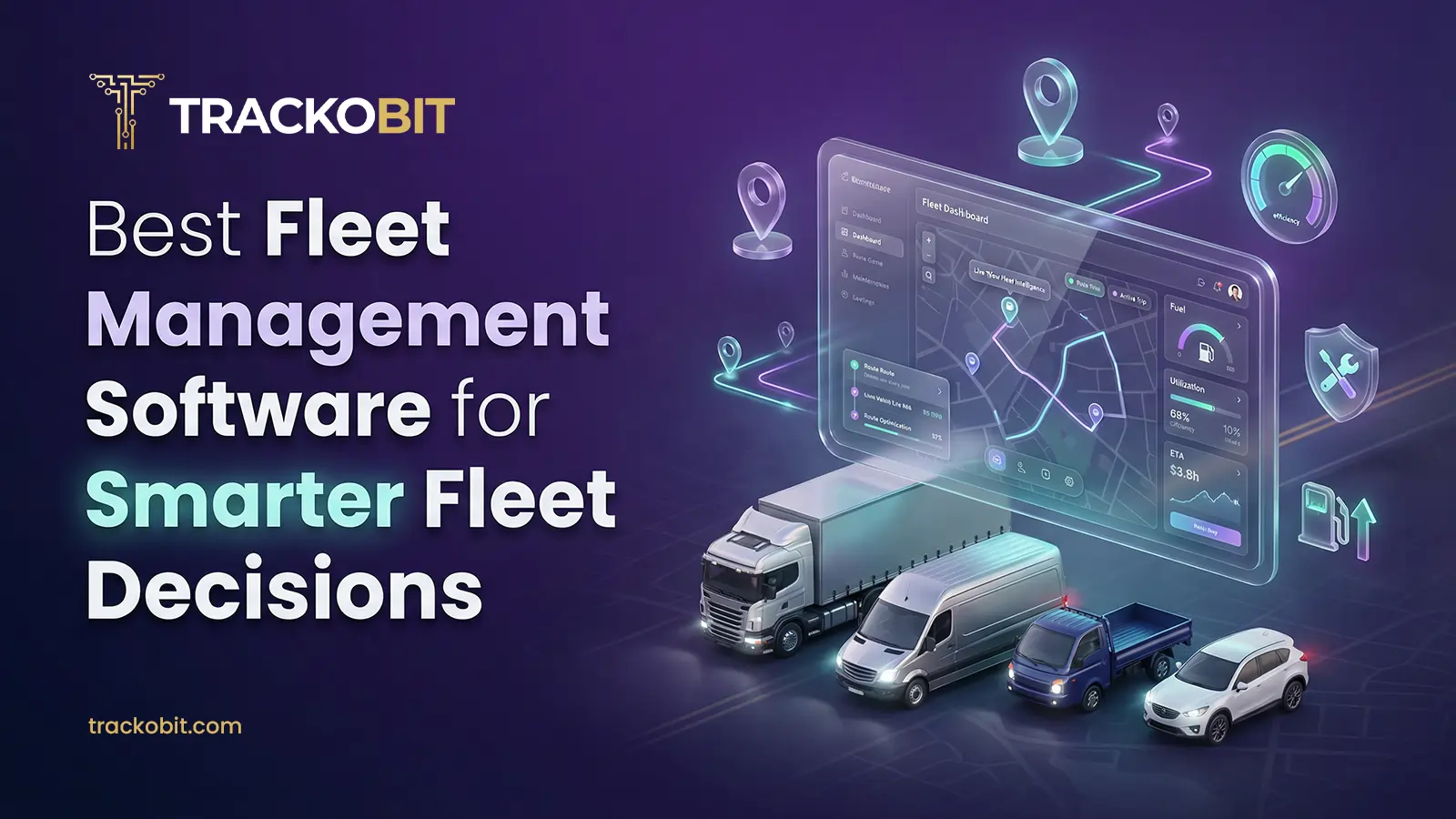
- Fleet location: Track the real-time location of all vehicles. This helps the managers to keep track of the movements of their fleets
- Immediate response: Telematics data can help to identify delays and other vehicle issues.
Benefits of Live Tracking in Field Force Management
Live tracking helps you track field staff and check attendance. It also helps you assign tasks, respond faster, and manage field work. Let’s understand these benefits in detail.
- Track field staff: View field staff locations during working hours.
- Attendance tracking: Check that field agents are at their assigned task locations.
- Coordinate field tasks: Use location data to manage tasks and field activities.
- Improve response time: Find field staff locations and assign tasks based on availability.
Real-Time Tracking App for Fleet and Field Teams
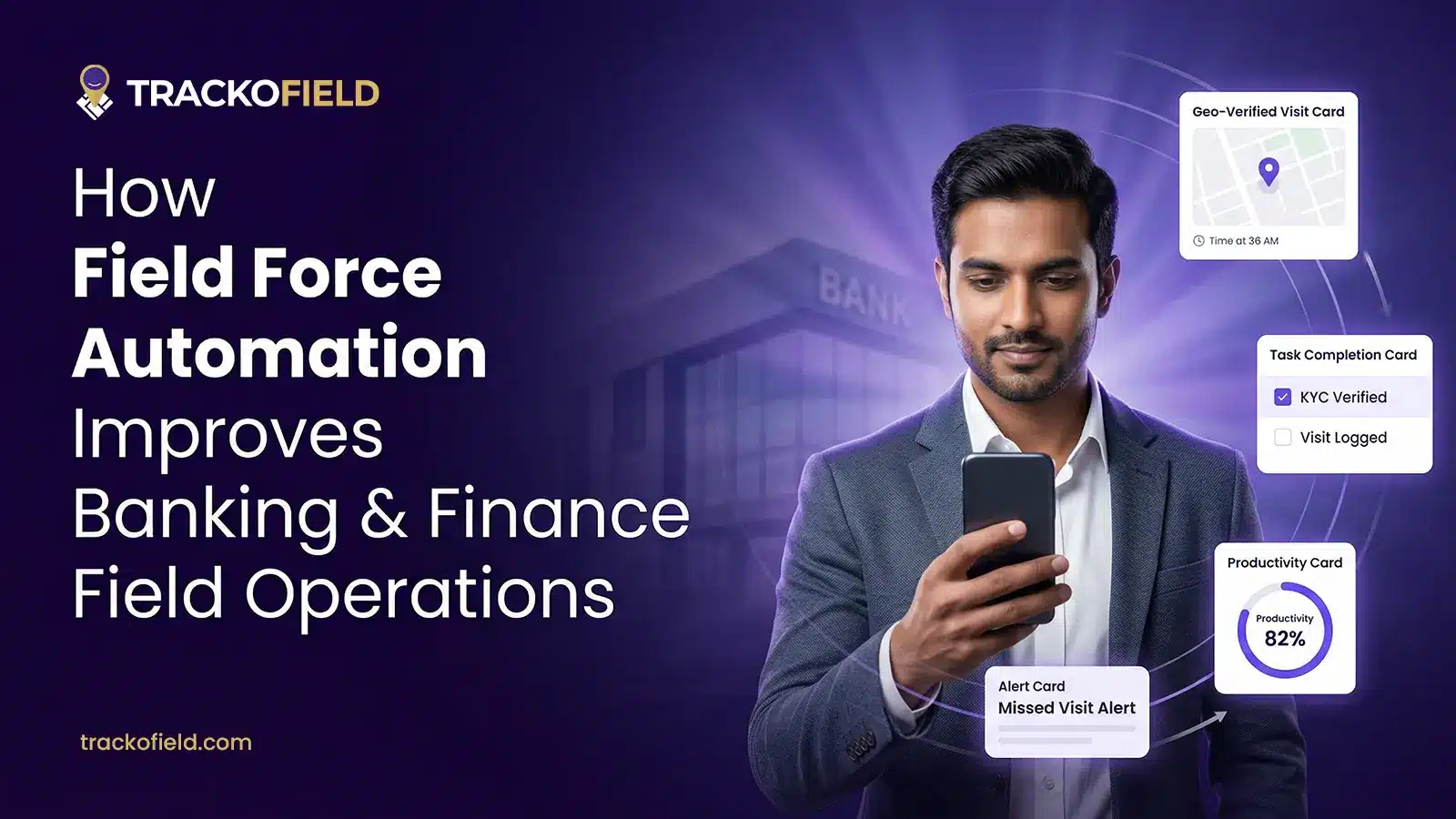
A real-time tracking app helps businesses monitor field staff and vehicles from a centralized platform. It provides live location visibility and helps managers stay updated on field activities. TrackoBit gives businesses real time visibility into their fleet and vehicle movements. TrackoField supports location tracking and field employee management. These solutions help businesses monitor vehicles and field teams while improving operational visibility. These tracking apps streamline routine tasks and support more efficient day-to-day management. They also help managers respond quickly to location-based requirements.