
Quick Summary

- Loan Origination System (LOS) focuses on loan approval and disbursement, while Loan Management System (LMS) manages loans post-disbursement, including repayments and collections.
- LOS streamlines the application process by verifying borrower data and automating approvals, whereas LMS tracks repayment schedules and outstanding balances.
- Both systems are essential for financial institutions, as they enhance efficiency and reduce operational errors when integrated together.
- Using a combination of LOS, LMS, and field force management software like TrackoField minimizes NPAs and ensures compliance in the lending process.
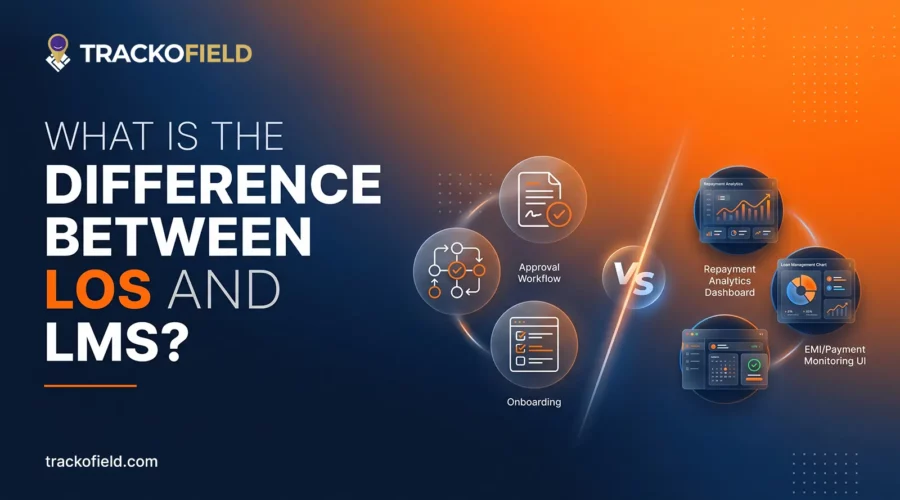
Compare loan origination system vs loan management system and how they differ in managing loan approvals, disbursement, collections, and tracking repayments.
Loan origination and loan management are core operations in the lending process. For these purposes, most financial institutions like banks, NBFCs and MFIs use dedicated LOS (Loan Origination System) and LMS (Loan Management System). LOS focuses on getting the loan approved. LMS focuses on managing the loan after it is disbursed. Both systems serve distinct roles in a loan lifecycle and are critical for a smooth lending operation if implemented correctly.
But how exactly are they different? Why do all financial institutions need them? To know the answer to these questions, check this detailed guide and comparison on loan origination system vs loan management system.
What Is a Loan Origination System (LOS)?
A Loan Origination System (LOS) is used at the beginning of the loan process. It helps lenders manage everything from the moment a customer applies for a loan until the loan is approved and disbursed.
When a borrower applies for a loan, the LOS collects all the required details. This includes personal information, income details, documents, and credit history. It also helps verify this data using credit bureaus or KYC tools.
The system then supports the approval process. It can apply predefined rules to decide whether a loan should be approved or rejected. This speeds up decision-making and reduces manual work.
An LOS also keeps all records organised. Every application, document, and approval step is stored in one place. This makes audits and compliance much easier.
What are the Key functions of an LOS?
An LOS helps lenders:
- Capture loan applications in a structured way
- Verify customer data through integrated systems
- Run credit checks and risk assessments
- Approve or reject loans using predefined rules
- Disburse funds quickly after approval
Without an LOS, the loan approval process becomes slow, error-prone, and difficult to manage at scale.
What Is a Loan Management System (LMS)?
A Loan Management System (LMS) comes into play after the loan has been disbursed. It handles the entire lifecycle of the loan until it is fully repaid. LOS is about issuing the loan, LMS is about managing it.
Once a loan is active, there are several things to track. These include repayment schedules, interest calculations, penalties, and outstanding balances. The LMS manages all of this in a structured way.
It also plays a key role in collections. If a borrower misses a payment, the LMS helps track overdue amounts and supports collection actions. It can generate reminders, alerts, and reports for the collections team.
Another important function is compliance. The LMS ensures that all transactions are recorded properly and reports are generated as per regulatory needs.
What are the Key functions of an LMS?
An LMS helps lenders in:
- Tracking loan accounts and borrower details
- Managing repayment schedules and due dates
- Calculating interest, penalties, and outstanding balances
- Assigning tasks and follow-ups for loan collections
- Generating reports and ensure regulatory compliance
Without an LMS, lenders struggle to track repayments and can be at a higher risk of NPAs.
Key Features to Look for In LOS & LMS Software In 2026
Both LOS and LMS offer automation, customer communication, and document management. These features can greatly reduce NPAs in NBFCs, MFIs and other financial institutions.
Below are the most important features to consider in an LOS. These help improve onboarding speed, reduce manual work, and ensure accurate loan approvals.
1. Digital Onboarding
A loan origination system should allow customers to apply for a loan online with minimal effort. This reduces paperwork, speeds up processing, and improves customer experience.
2. Automated Verification
Integration with KYC, credit bureaus, and bank data is essential. It ensures faster and more accurate verification of borrower details and ensures that loans aren’t disbursed to high-risk borrowers.
3. Rule-Based Approvals
The LOS should support automated decision-making using predefined rules. This improves consistency and reduces dependency on manual approvals.
4. Document Management
All documents should be safely stored on a cloud-based server. They should be easily accessible and verifiable. This simplifies audits and collecting accurate digital field data improves the loan approval process.
5. Workflow Automation
Tasks should move automatically between teams like sales, credit, and operations. This ensures faster processing and fewer delays.
Essential Features in LMS –
Here are the essential features to consider in LMS. They help lenders manage loans efficiently after disbursal and maintain control over repayments.
1. Repayment Tracking
The system must track loan instalments, due dates, and outstanding amounts clearly. This ensures complete visibility into borrower activity.
2. Interest & Penalty Calculation
Accurate calculations are critical. The LMS should support multiple loan types and flexible interest models.
3. Collections Support
It should help teams manage overdue accounts, assign visits, and monitor collection progress in real time.
4. Customer Communication
Automated reminders through SMS, email, or calls help reduce missed payments and improve collections.
5. Regulatory Reporting
The system must generate compliance reports automatically. This reduces manual effort and ensures regulatory accuracy.
In addition to these specific features, LMS and LOS should also offer the following common Features.
- Cloud-based access for real-time updates across teams
- Strong data security and compliance controls
- Easy integration with third-party systems
- Scalable architecture to support business growth
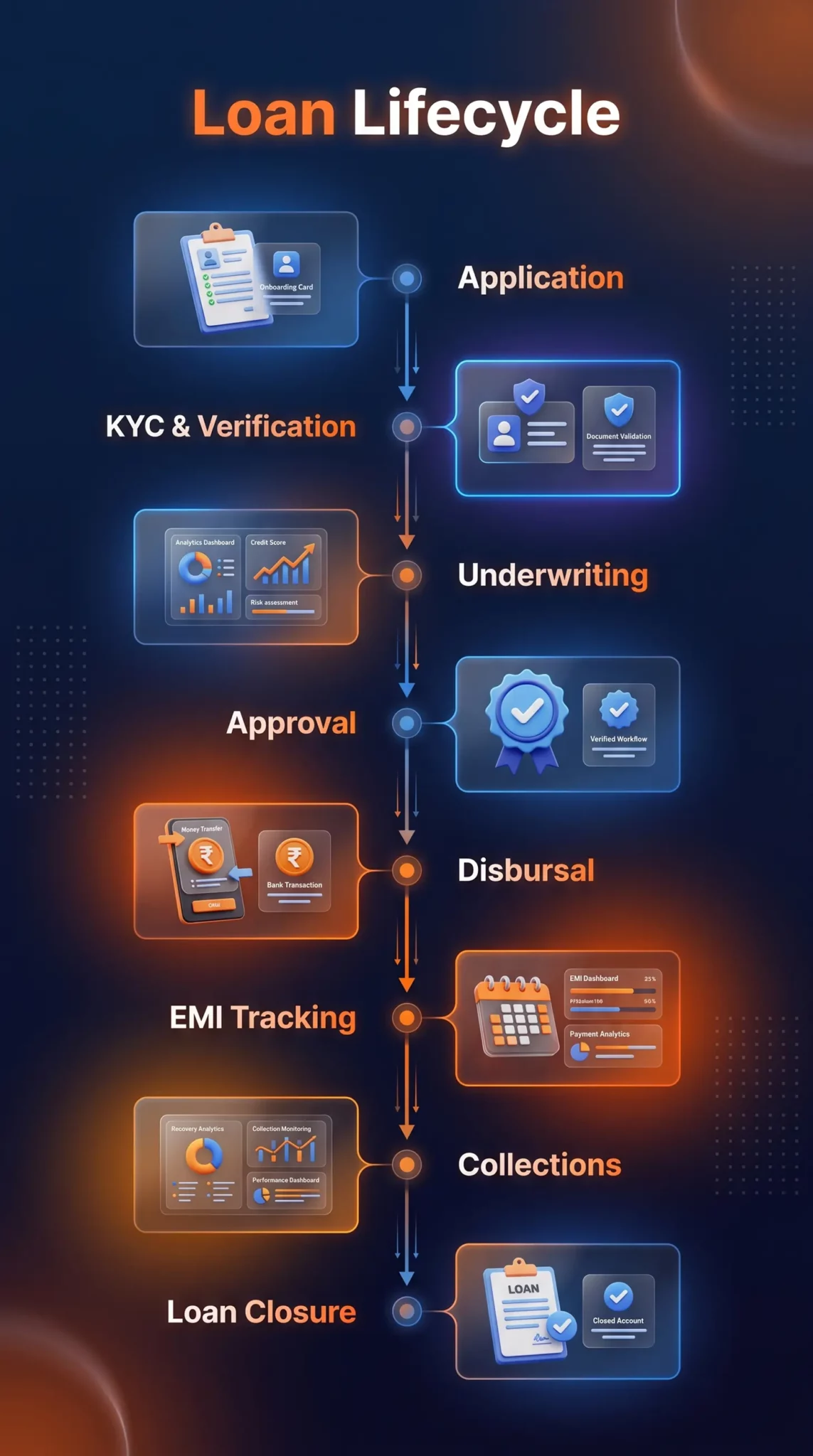
Loan Lifecycle
Loan Origination System Vs Loan Management System: Which One Should You Choose?
This is a common question, but the answer is simple. LOS and LMS are not alternatives. They are not competing systems and cannot be replaced with one another. They serve different stages of the same process.
If your business is focused on acquiring new customers and approving loans faster, then LOS is your starting point. If your business already has active loans and you need better control over repayments and collections, then using LMS becomes necessary.
However, most growing NBFCs and lenders need both systems working together. When LOS and LMS are integrated, lenders experience the following benefits:
- Faster loan processing from application to disbursal
- Better customer experience with smooth workflows
- Stronger control over repayments and collections
- Reduced operational errors and manual work
Using one system creates gaps. A complete setup ensures end-to-end efficiency of the loan cycle. Here is a simple comparison of LOS vs LMS.
|
Parameter |
Loan Origination System (LOS) | Loan Management System (LMS) |
| Purpose | Approve and disburse
loans optimally |
Ensure loans are repaid
and managed properly |
| Stage in Loan
Lifecycle |
Pre-disbursal | Post-disbursal |
| Key Users | Sales teams, credit analysts,
underwriting teams |
Operations teams, finance teams,
collections teams |
| Core Functions | Loan pitching, KYC,
verification, credit checks |
EMI tracking, interest calculation,
payment collections |
| Impact on Business | Speeds up loan approvals and
improves borrower selection |
Improves collection rates and
reduces default risk |
| Integration Needs | Integrates with KYC tools,
credit bureaus, banking APIs |
Integrates with payment gateways,
accounting systems, FFA software |
| Dependency | Works independently for
loan origination |
Depends on data from
LOS for loan setup |
How TrackoField Powers End-to-End Lending Operations on a Single Platform
While LOS and LMS handle the core lending processes, there is another digital tool that serves as a bridge between the two. We’re talking about field force management software for loan origination and loan management! It helps improve the working of LOS and LMS and reduce the risk of NPAs.
Software like TrackoField help assign and track visits for document collection, loan sales, payment collection, verifications, asset monitoring, risk assessment, etc.
Without a system to manage field activities, lenders faces issues like:
- Poor visibility of field staff
- Visit overlaps or delays
- Unequal work distributions
- Missed borrower visits
- Inaccurate data collection
- Lack of data analysis
- No proof of work
This is where TrackoField comes in. It supports seamless third-party integration and significantly improves on-ground lending operations, providing lenders complete visibility across the loan lifecycle. Here are some key benefits of using TrackoField in tandem with LOS and LMS.
1. Real-Time Tracking
With GPS tracking, managers check the exact whereabout of their field agents, what they are doing, and how many customers they visited.
2. Smart Task Management
With TrackoField, you can easily assign tasks to your field team. Be it verification visits or collections, TrackoField ensures all tasks are assigned, tracked, and executed efficiently.
3. Digital Forms & Proof of Work
TrackoField allows field agents to collect customer data and documents directly through mobile devices. This reduces paperwork and errors while maintaining a trail of geoverified proof of work.
4. Faster Collections
Field teams can update payment or visit status, which is further synced with the integrated LOS and LMS instantly. Managers don’t have to fetch data through reports and add it into the system manually.
5. Data Analytics
TrackoField offers AI-powered manager bot. It lets managers ask questions in natural language and get instant answers. This reduces reliance on manual report downloading and filtering. Lenders can identify bottlenecks early, capitalise on trends and check staff performance.
Conclusion
A loan origination system and a loan management system are two vastly different tools that are critical for a smooth lending process. LOS is used before disbursing the loan while LMS comes into play to manage the loan.
Be it bank, MFI or an NBFC, if any lending institution wishes to grow, it has to implement both LOS and LMS efficiently. Relying on one system or sticking with manual onboarding or loan collection is not idea in the current tech-driven environment.
Plus, field activities also need to be managed with field force automation software like TrackoField. The combination of LOS, LMS and FFA ensures your business faces minimal risk of NPAs, stays compliant with lending policies and grows sustainably.
To check TrackoField live in action and learn how it optimises lending, book a free demo today.

Frequently Asked Questions
-
Do lenders need both a Loan Origination System (LOS) and a Loan Management System (LMS)?
Yes, lenders usually need both LOS and LMS to ensure smooth lending operations. LOS helps manage the loan process from application to approval. LMS handles everything after disbursal, such as payment collections and EMI tracking. Using both systems ensures you have full control and visibility of the entire loan lifecycle.
-
Which system comes first: LOS or LMS?
The LOS comes first in the lending process. It is used when a borrower applies for a loan and continues until the loan is approved and disbursed. LOS involves borrower profiling, underwriting, document collection and risk assessment. The LMS manages repayments, penalties, and account tracking throughout the loan period.
-
How does field force management software support lending operations?
Field force management software supports lending by ensuring seamless flow of data between LOS and LMS. It also improves the execution and planning of field tasks. These include customer visits, document collection, verification, etc.
-
Do NBFCs in India need both LOS and LMS?
Yes, most NBFCs in India benefit from using both LOS and LMS. The LOS improves onboarding, verification, and approvals. The LMS manages repayments, penalties, and customer accounts. Together, they help NBFCs stay compliant, reduce errors, and improve customer experience.
-
Can LOS and LMS be integrated?
Yes, LOS and LMS can be integrated and are designed to work together. Integration allows data to move automatically between loan approval to FFA to loan management tools. This reduces manual work, avoids data errors, and improves workflow efficiency. Plus, managers get complete visibility across all stages of the loan process.
-
What is the main difference between LOS and LMS?
The main difference between LOS and LMS is their role in the loan lifecycle. LOS helps lenders select the right borrowers and conduct risk assessment before disbursing a loan. LMS helps manage the loans by setting up auto-debit, tracking EMIs or PTP (promise to pay) commitments, and creating overdue buckets.

Mudit is a seasoned content specialist working for TrackoField. He is an expert in crafting technical, high-impact content for Field force manage... Read More


Related Blog

Face Recognition: What It Is, How It Works & Benefits for Field Teams
Facial recognition is a way of identifying or confirming an individual’s identity using their facial features. Read this guide to…
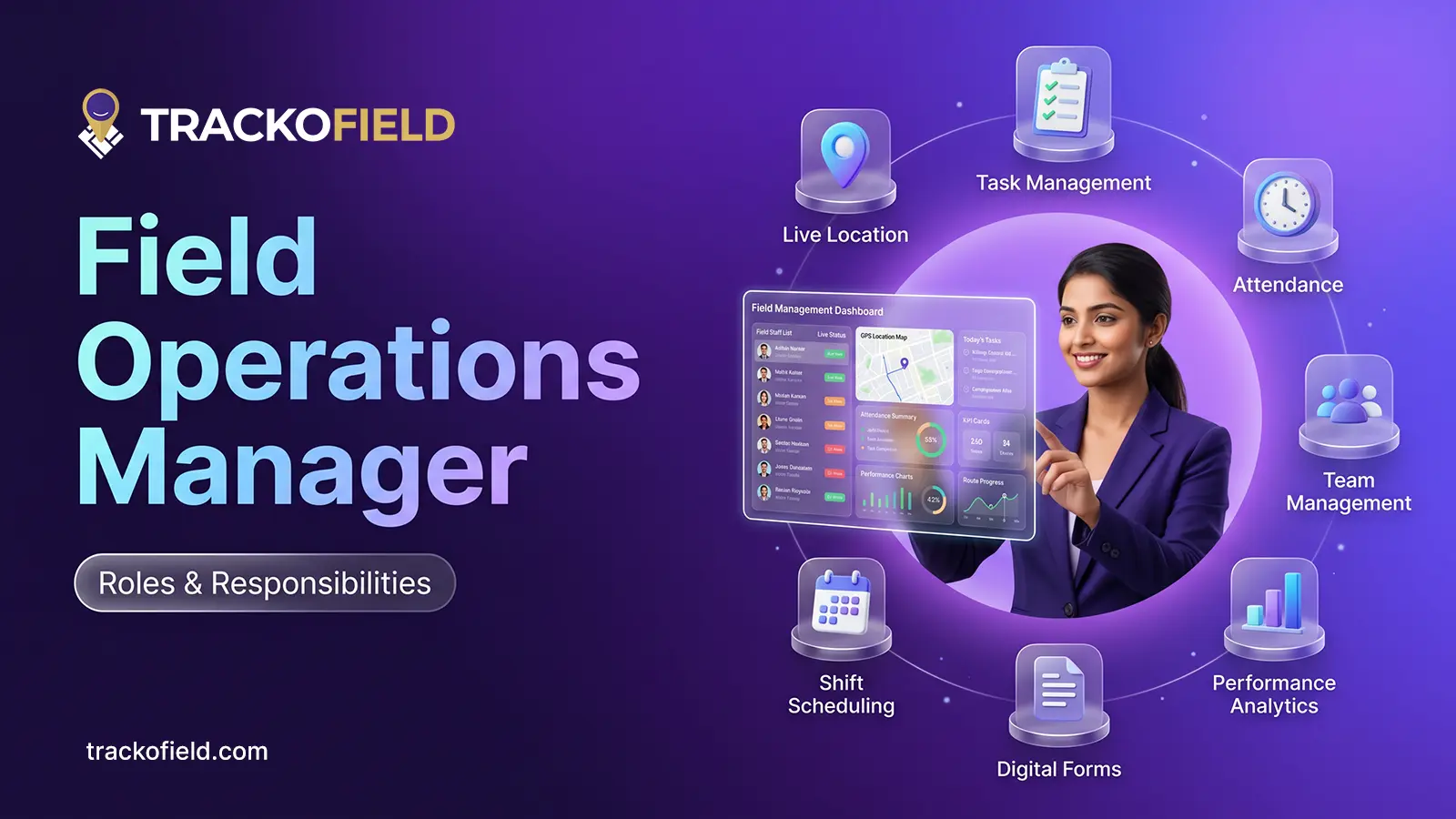
Field Operations Manager: Roles, Challenges & How to Optimize Performance
Field operations managers handle on-ground activities with challenges like visibility, control, and coordination. This blog covers their roles, key challenges,…
What is Face Recognition Attendance Software & How Does It Work?
This blog explains the concept of face recognition attendance software. We will also explore how it enhances attendance monitoring for…
How TrackoField Stops GPS Spoofing and Buddy Punching in Field Teams
Your field team’s attendance data looks clean. The question worth asking is whether it’s real. Here’s how GPS spoofing actually…


Your inbox awaits a welcome email. Stay tuned for the latest blog updates & expert insights.
"While you're here, dive into some more reads or grab quick bites from our social platforms!"Stay Updated on tech, telematics and mobility. Don't miss out on the latest in the industry.