
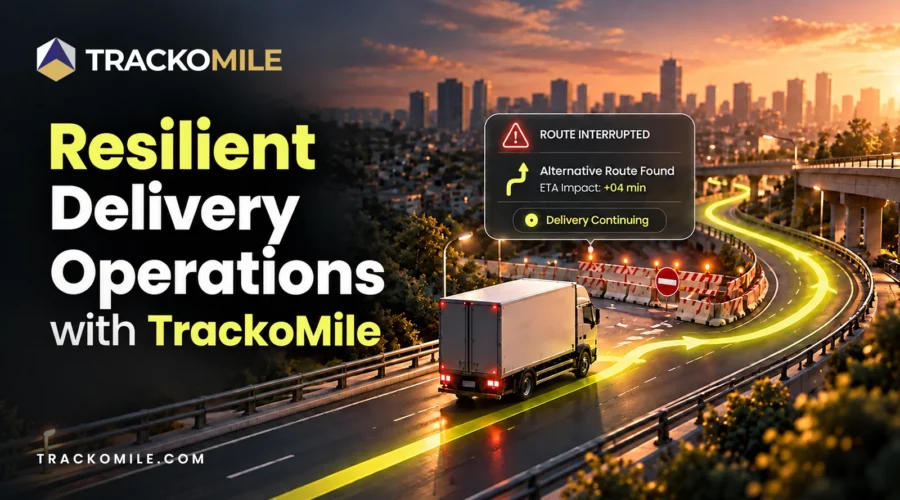
Logistics businesses build resilient delivery networks with TrackoMile. But how exactly? With real-time route optimization, automated scheduling, and end-to-end fleet visibility.
Logistics is changing fast. Here, building resilient deliveries is a competitive advantage and a baseline for survival. In 2026, the sector is being shaped by booming e-commerce, tariffs, and labor shortages. These pressures specifically demand resilience. The growing emphasis is reflected at a broader economic level too. The 2026 BRICS theme ‘Building For Resilience, Innovation, Cooperation, and Sustainability’ points to the same need. That is, systems that can continue amid uncertainties. By weaving these into daily logistics, businesses are better placed to handle volatility.
Last-mile delivery software like TrackoMile provides automation to build fleet operational resistance. It offers route optimization and dynamic dispatch. Others are rider management and flawless final deliveries with ePOD. By giving your team the right digital tool, we help your business stay strong.
How Does TrackoMile Build a Delivery Network That Adapts to Change?
TrackoMile builds a flexible network with dynamic dispatch, rider allocation, and ad-hoc deliveries. See how each one adds value to last mile logistics for an informed choice.
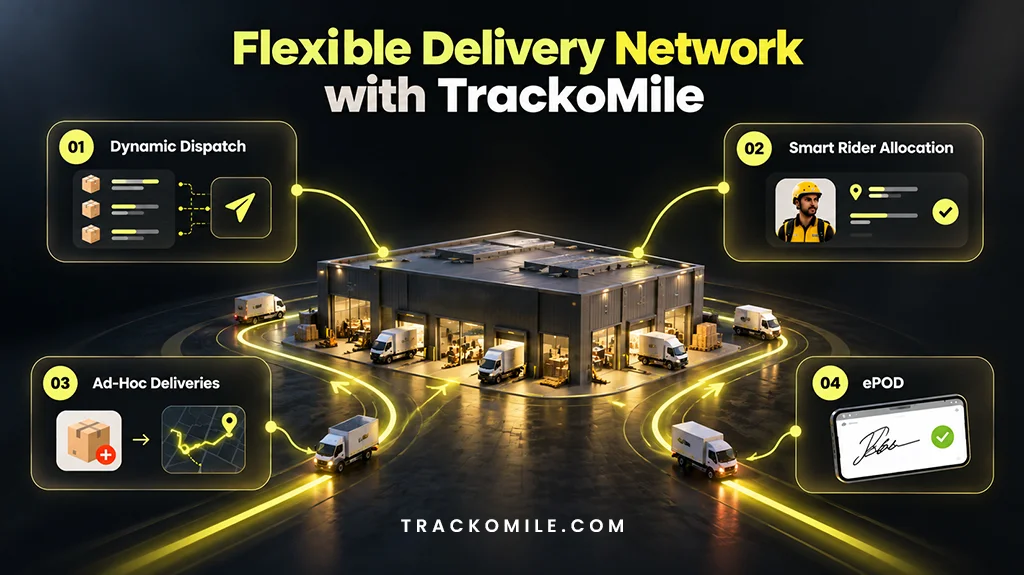
TrackoMile’s Promise of a Flexible Delivery Network
Implements Dynamic Dispatch
Fixed delivery schedule crumbles under traffic or when customers cancel. TrackoMile replaces this rigid planning with dynamic dispatch. It allows teams to dispatch and adjust orders continuously. This is typically based on real-time operational data.
- Automate Scheduling Decisions: Turns hours of manual route planning into seconds to generate optimal trips.
- Cut Fuel and Labor Expenses: Shrinks total mileage and idle time. It does this by continuously updating routes based on real-time traffic and distance.
- Keep Your Customers Happy: Share hyper-accurate, live delivery ETAs with customers. This helps reduce WISMO calls.
Ensure Smart Rider Allocation
Are you still manually figuring out which rider should deliver which package? This slows down operations and makes them error-prone. TrackoMile’s rider management system automatically matches the right order with the right driver.
- Instant Order Matching: Connect shipments to the best suited driver. This is based on proximity, vehicle capacity, and current workload.
- Match Specific Delivery Needs: Pair specialized orders automatically with eligible drivers. The best ones have the right vehicle type, permits, and experience.
- Prevent Rider Burnouts: Spread deliveries fairly across your whole fleet. Riders who are not overloaded enjoy work satisfaction. This lowers attrition rates.
Capitalizes on Ad-Hoc Deliveries
This is a high-yield sector. However, it is incredibly difficult to manage due to unpredictability. TrackoMile solves this with automation. Businesses can accept ad-hoc orders seamlessly without disrupting current operations.
- Capture Extra Revenue: The market size of same-day delivery stands at $13.9 billion in 2026. With TrackoMile, accept on-demand and same day delivery requests confidently. This can seamlessly add to your revenue.
- Insert Order Seamlessly: Automatically arrange new pickup requests into existing schedules. Drivers in close proximity are typically assigned the delivery.
- Adapt to Road Surprises: Reroute riders on the spot through the rider app. This helps handle cancellations, sudden changes, and emergency pickups.
Offers Electronic Proof of Delivery (ePOD)
Paper-based deliveries leave fleets vulnerable to false customer claims. Receipts might get lost which delays the billing cycle. TrackoMile solves this by digitizing the proof of delivery for superior verification.
- Captures Confirmations: Collect digital signatures, OTPs, and photos of delivered goods. This can be done directly through our rider app.
- Accelerate Billing Cycle: Send instant delivery information as soon as drop-off is done. This eliminates payment delays caused by lost paperwork.
- Reduce Customer Disputes: Provide real-time POD location and time. This protects your business from fraudulent claims.
With these, we specifically made a mark in the healthcare and pharma industry. For example, we helped MAX Healthcare streamline medical deliveries in 2025. We improved visibility and control across its delivery operations.
Why Turn Last Mile Delivery Data into Operational Resilience?
You can use it to transform daily delivery chaos into something you can plan around. By looking at telematics data and delivery windows, teams stop reacting to disruptions. They start spotting them before they happen. Over time, such data-driven approach builds a flexible supply chain.
- Dynamic Route Optimization: Algorithms adjust driver routes right away. This is based on live traffic congestion. Local road closures are also considered. It helps maintain reliable ETA windows.
- Rider Behavior Coaching: Telematics isolate aggressive driving habits. This includes hard brakes and excessive idling. Working on them helps lower fuel burns and reduces the risk of costly on-road accidents.
- Automated Customer Communications: Real-time location tracking triggers automated status updates to customers. This reduces failed delivery attempts and customer service call volumes.
- Contingency Capacity Planning: Past volume data helps dispatchers accurately forecast peak demands. They can also seamlessly allocate third-party courier backup capacity. It is helpful when internal fleets are overwhelmed.
Businesses that treat last-mile data as an asset create an unbreakable delivery landscape. Harnessing these insights ensures a continuous improvement cycle that protects profit margins. It also helps empower riders and secures customer loyalty. All of this is possible even under the most volatile operating conditions.
What Does It Take to Keep Promises When Plans Fall Apart?
Let’s understand with an example. In 2018, the KFC supply chain in the UK collapsed. This was due to a shift of 900+ restaurants to DHL’s centralized distribution center. Because fresh chicken is perishable, tons of food were spoiled. Ultimately, KFC closed 750+ outlets. The recovery plan? Rerouted shipments and diversified multi-hub networks.
The same principle applies to modern operations in 2026. When plans change, businesses must have the ability to respond promptly. Last mile resilience has actively transitioned from rule-based networks to AI-native decision-making systems.
TrackoMile helps manage such changes with visibility and automation. It ensures consistency even when the original plan does not work. The result is a delivery network that copes with uncertainty.
Conclusion: The Next Horizon of Last Mile Excellence
As we navigate 2026 and look towards the future, the last mile is the ultimate test of business survival. Rigid schedules are no longer enough. Logistics companies must strive to be agile to absorb unexpected disruptions.
The future will belong to those who view resilience as a competitive weapon. At TrackoMile, we have a track record of reducing delivery delays by 28%. We also offer 100% visibility. In short, we turn unpredictable logistics into a controlled system. Book a free demo to get started.


Shemanti is a Content Marketing professional with 7+ years of experience in shaping credible narratives across B2B products. As the Content Team Lead for TrackoBit, TrackoField, and TrackoMile, she br... Read More


Related Blog
How to Scale Quick Commerce Beyond 10 Minutes with TrackoMile
TrackoMile transforms chaotic last-mile logistics into a predictable, automated, and high-margin retail powerhouse. See how it works in quick commerce.
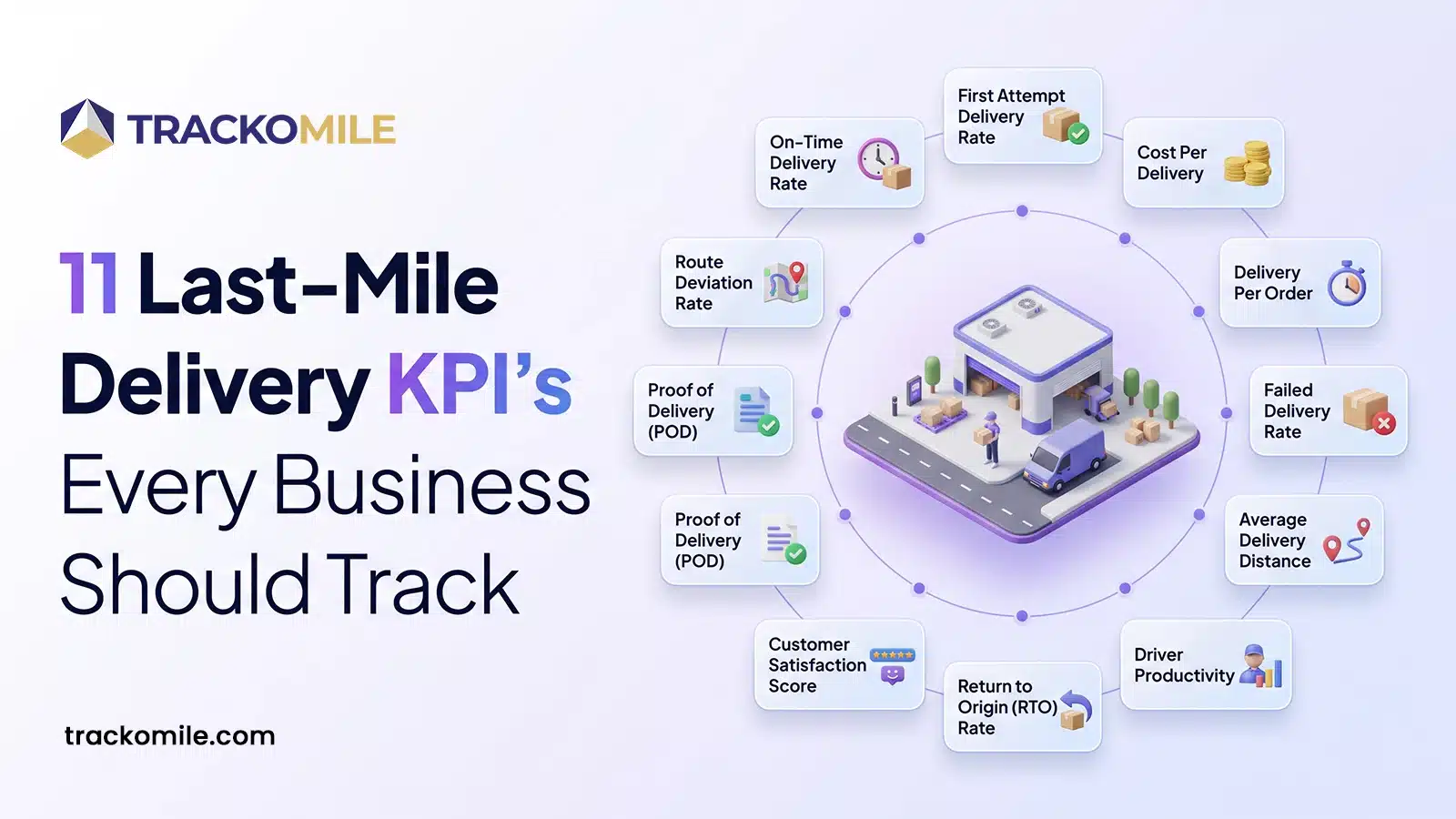
Last Mile Delivery KPIs & Metrics: 11 Essential Metrics to Track
To improve last mile operations, it’s important to track 11 essential last mile delivery KPIs like on-time delivery rate, cost…
Last-Mile Technology: 6 Technologies Transforming Delivery Operations
Learn how last-mile technology combines routing, dispatch, tracking, ePOD, and analytics. Improve your businesses’ delivery speed, visibility, efficiency, and customer…
What is On-Demand Delivery Management Software: Types, Features, & Benefits
This blog explores on-demand delivery management software, its key benefits, and must-have features. Also, we will explore how to choose…


Your inbox awaits a welcome email. Stay tuned for the latest blog updates & expert insights.
"While you're here, dive into some more reads or grab quick bites from our social platforms!"Stay Updated on tech, telematics and mobility. Don't miss out on the latest in the industry.