
Quick Summary

- Field workers operate outside traditional offices, performing tasks like sales, installations, and customer interactions across various industries.
- They face unique challenges such as long travel hours, connectivity issues, and the need for real-time support, impacting productivity.
- Effective management of field workers requires clear task assignments, digital tools for tracking, and a focus on soft skills for better customer engagement.
- Technology like TrackoField enhances field workforce management through real-time tracking, AI analytics, and automated reporting, boosting efficiency and customer satisfaction.
Field workers power your business, but without the right tools, productivity and visibility take a hit. Learn how to prevent this.
Not all employees work in an office set up. Some are field workers who carry out on-ground tasks like sales, loan collections, installations, and demos.
These field workers cannot be managed the same as office-based employees. They work in diverse industries and don’t have a defined mode of operations. A solar panel installation crew will work differently than a loan collection team.
Plus, field workers directly interact with customers and represent your brand on the field. Any delay or lack in productivity impact customer service and thus, revenue. This is where field force management software like TrackoField comes in. It helps automate travel plans, assign shift, and track field activity in real time, thus making field worker management smoother and more accurate.
Keep reading to know more about field workers, their types across industries, key roles and effective ways to manage them.
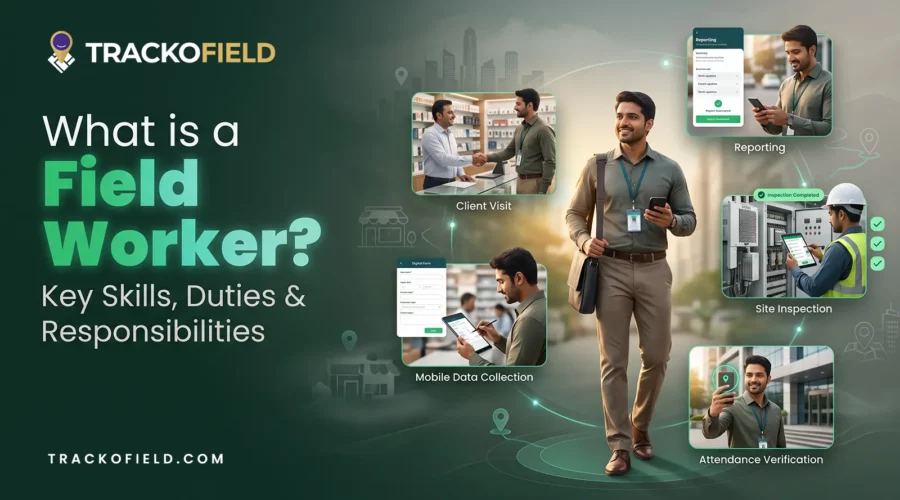
What is a Field Worker?
A field worker is an employee who performs his job outside a traditional office setting. Instead of working from a fixed location, they operate on the ground. A typical field worker performs the following activities:
- Customer interaction
- On-site service or installations
- Sales and lead generation
- Inspections or surveys
- Performing demos
- Deliveries and collections
Types Of Field Workers Across Industries
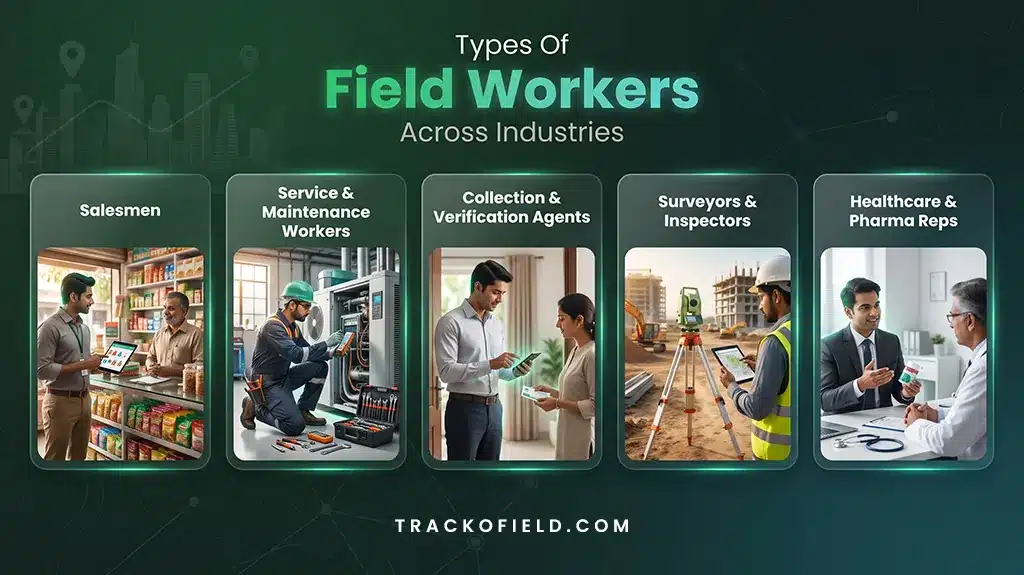
There are various types of field workers such as salesmen, service and maintenance crew, collection agents, and inspectors to name a few. These field workers exist in all sorts of industries like agri-input, EV financing, NBFC, MFI and pharma sales.
1. Salesmen
These include sales representatives and business development executives who meet clients, pitch products, conduct demos and close deals. They are common in FMCG, agri-input and pharma industries.
2. Healthcare & Pharma Staff
Medical reps and healthcare outreach workers visit doctors, hospitals, and patients to promote services and sell new equipment or medicines.
3. Collection & Verification Agents
These employees visit customers for loan collections, KYC verification, and document checks and operate mainly in the BFSI sector.
4. Surveyors & Inspectors
These workers conduct site visits, audits, and inspections. They work mainly in real estate, construction, insurance, and facility maintenance sectors.
5. Service & Maintenance Workers
This category includes field technicians who handle installations, repairs, and maintenance. Common examples are telecom engineers and solar panel installers.
Types Of Field Workers Across Industries
Key Roles and Responsibilities of Field Employees
Field employees play a crucial role in on-ground operations, representing the brand, solving problems, and generating revenue for the business. Here are all the roles and responsibilities of field workers.
1. Customer Interaction
Field workers are often the first point of contact with customers. Their behaviour and interaction directly impacts brand perception and customer satisfaction.
2. Task Execution
They are responsible for completing assigned tasks on time. These tasks include sales visits, surveys, installations, or loan collections.
3. Problem Solving
Field workers often visit remote areas and operate in variable conditions. They can face unexpected challenges and should be capable enough to resolve them on the spot without requiring assistance.
4. Data Collection & Reporting
Field employees collect important data such as customer feedback, expense receipts, and site conditions. This data helps in customer verification, loan underwriting and maintaining a record of proof of work.
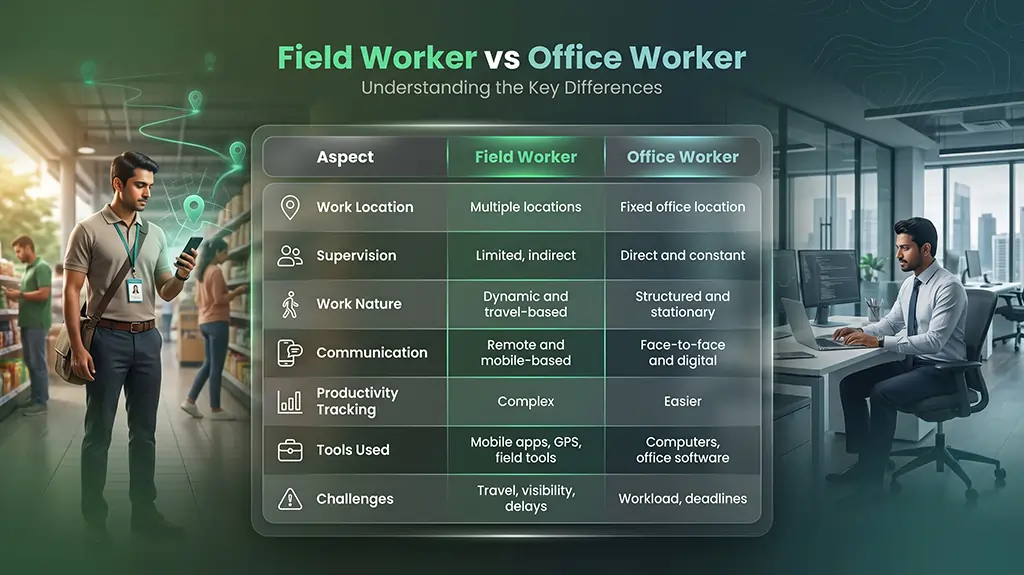
Field Worker vs Office Worker Comparison
Challenges Faced by Field Workers
Field work comes with its own set of challenges that can affect performance and productivity.
- Long travel hours leading to fatigue
- Unpredictable customer availability
- Network and connectivity issues
- Lack of real-time support from managers
- Pressure to meet daily targets
- Safety concerns in remote areas
- Manual reporting and paperwork
Why Managing Field Staff is Difficult for Businesses
Managing field staff is complex due to reasons like lack of visibility, delayed updates and reporting, reliance on manual tracking, and more.
1. Lack of Visibility
Managers often do not know where employees are or what tasks they are performing during the day. They also don’t get to know the impact of field teams’ work and how customers responded to them.
2. Difficulty in Verifying Work
Without proof, it is hard to confirm whether visits or tasks truly happened. This gets especially difficult when the team size increases. Further, verifications become even tougher during rural operations for NBFCs and MFIs.
3. Delayed Updates
Most updates come at the end of the day. This leaves no room for managers to solve problems on the spot and make instant decisions instead of reacting to issues after they’ve already impacted the work.
4. Inconsistent Performance Tracking
Not all employees’ productivity can be calculated with just hours worked. Different teams and industries follow unique standards. Field workers’ performance has to be measured accordingly. But often times, businesses lack proper criteria and KPIs to track performance of their teams.
5. Dependency on Manual Processes
Manual reporting is prone to data-entry errors, is time consuming and prone to fraudulent reporting. This can affect business revenue and audits.
6 Ways To Manage Field Workers Efficiently
No matter the industry, all field workers must be tracked and supervised remotely. Here are 6 ways to manage field workers efficiently using digital tools and automated workflows.
1. Assign Tasks with Clear Instructions
Ensure every field employee understands what needs to be done, how to do it, and by when. Clear instructions reduce confusion and errors. Attach relevant docs or voice notes in the employees’ language to their tasks so they don’t have any confusion.
2. Use Digital Tools That Work Offline
Adopt field force management software to track attendance, tasks, expenses, and locations in real time. Also, ensure that the tool works offline as well. Field workers shouldn’t resort to manual reporting due to connectivity issues. Solutions like TrackoField allow employees to mark attendance and execute tasks offline as well.
3. Plan Routes Efficiently & Train Employees
Managers should plan routes to club maximum visits or tasks in as little time as possible. Plus, teach employees how to navigate efficiently. They should know to adhere to their planned routes, take quick decisions to avoid traffic or other obstructions and minimise fuel expenses.
4. Focus On Soft Skills
Communication is key when dealing with customers. Since, most field workers have to visit customers daily, it’s important they are proficient in soft skills. Train field workers in communication, problem-solving, and customer handling. These skills improve customer experience.
5. Ensure Real-Time Tracking & Support
Managers should know where their field teams are, what they’re doing and how they are performing. It can be achieved with real-time GPS tracking and analytical dashboards. This way, managers can easily guide employees during the day. Quick support helps resolve issues faster and before they get big.
6. Monitor & Give Feedback
Managers should regularly evaluate employees’ performance. With AI-powered solutions like TrackoField, managers can get quick insights with the manager bot. Just ask queries and get instant answers with detailed and downloadable reports. This data can be used to give feedback to field workers, identify areas of improvement and keep them motivated.
Role of Technology in Field Workforce Management
Modern businesses are increasingly relying on technology to manage field operations. Field force automation software like TrackoField provide:
- Real-time location tracking
- AI-powered analytics & manager bot
- Task assignment and live monitoring
- AI face recognition attendance tracking
- Detailed performance reports
- Proof of work with timestamps and geo-tags
Conclusion
Field workers are the backbone of several industries. They drive sales, act as business representatives, and directly impact revenue generation. However, managing them can be a huge challenge. This is especially true for businesses that rely on traditional field management methods like calls, texts and Excel reports.
What businesses need to do is migrate to a field employee tracking app like TrackoField. It provides AI-powered solutions to manage field employees. The result is higher field staff productivity, reduced costs, and better customer satisfaction. If you wish to learn more about the benefits of data-driven and automated ways to managing field workers, explore TrackoField today.

Frequently Asked Questions
-
What are some common examples of field-based staff?
Field-based staff examples include like salesmen, delivery agents, service staff, collection crew and installation technicians. These employees work away from the office. They meet customers in the field, visit locations, provide demos and install equipment.
-
What is field-based work?
Field-based work is all about working outside the office. Employees head out to different sites, connect with customers, fix problems, provide demos, pitch products, and more. All these tasks take place away from the office.
-
How do you track and manage field employees accurately?
If you want to keep tabs on field employees, an employee monitoring software like TrackoField is the way to go. It lets you view where your employees are, what tasks they have, and how they are performing. Managers can easily assign work, monitor progress, and view reports. It keeps all field operations running smoothly.
-
What software is used for field worker management?
AI-powered field force management software like TrackoField can be a big help in managing field workers. It tracks location, tasks, and attendance accurately. So, managers can oversee teams easily, check their progress, improve task assignment, and make smarter decisions with real data.

Mudit is a seasoned content specialist working for TrackoField. He is an expert in crafting technical, high-impact content for Field force manage... Read More



Related Blog

Face Recognition: What It Is, How It Works & Benefits for Field Teams
Facial recognition is a way of identifying or confirming an individual’s identity using their facial features. Read this guide to…
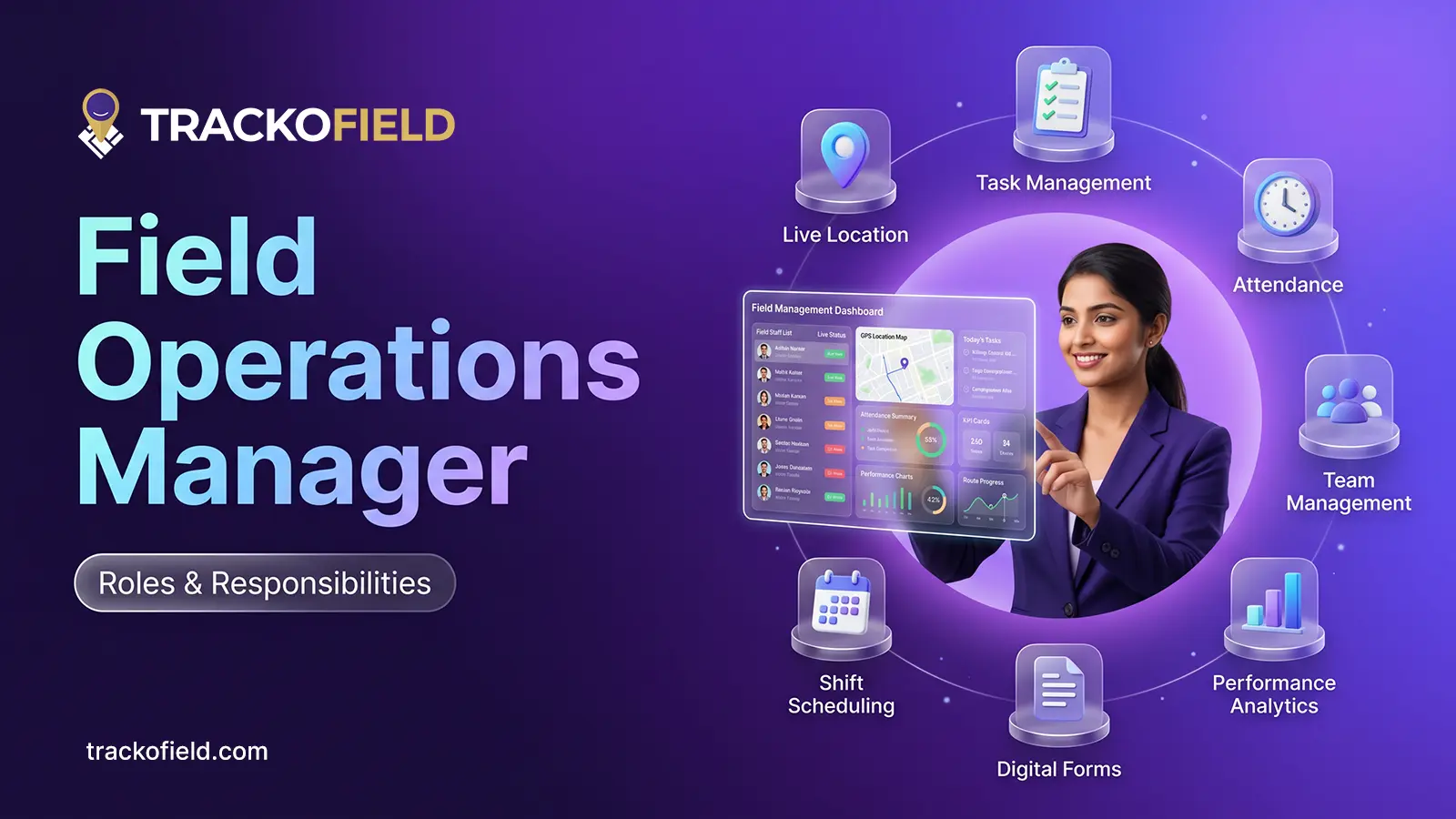
Field Operations Manager: Roles, Challenges & How to Optimize Performance
Field operations managers handle on-ground activities with challenges like visibility, control, and coordination. This blog covers their roles, key challenges,…

What is Face Recognition Attendance Software & How Does It Work?
This blog explains the concept of face recognition attendance software. We will also explore how it enhances attendance monitoring for…
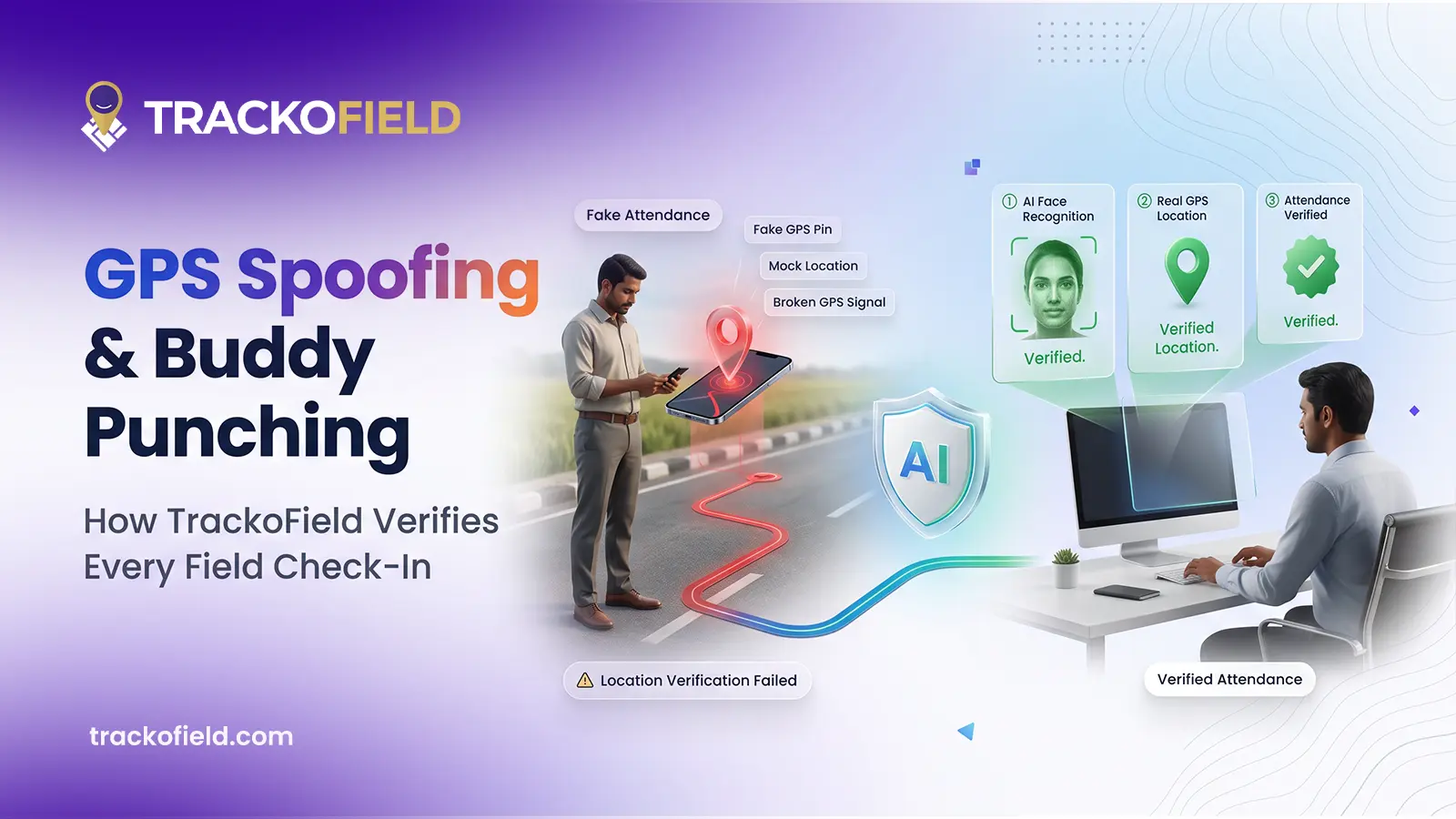
How TrackoField Stops GPS Spoofing and Buddy Punching in Field Teams
Your field team’s attendance data looks clean. The question worth asking is whether it’s real. Here’s how GPS spoofing actually…


Your inbox awaits a welcome email. Stay tuned for the latest blog updates & expert insights.
"While you're here, dive into some more reads or grab quick bites from our social platforms!"Stay Updated on tech, telematics and mobility. Don't miss out on the latest in the industry.