

Quick Summary

- Indian companies are cautious buyers of software due to past negative experiences, not price objections.
- Trust issues stem from vendors who fail to provide ongoing support after the sale, leading to skepticism.
- Enterprise sales cycles in India involve complex internal processes that can delay decisions, requiring vendors to understand these dynamics.
- Building trust requires references, clear pilot results, and consistent support, differentiating cautious buyers from cheap ones.
Indian companies are not slow to buy software because of price. They are slow because they have been burned before, and nobody on the selling side has bothered to understand that difference.
The pushback you see in Indian ops-tech sales is real. But the reason behind it is almost never price.
Everyone says Indian companies don’t want to pay for software.
I’ve spoken to 500+ ops teams across fleet, field force, and last-mile delivery. That’s not what I found.
The slow deals are real. The long evaluation cycles are real. The delayed sign-offs are real. But underneath all of it is something most vendors never stop to understand.
These are not price objections. They are trust problems built over years of being let down.
Why the Scepticism Exists
The ops head sitting across from you has a history you don’t know about yet.
He bought a GPS tracking system four years ago. Compared vendors. Sat through demos. Paid Rs. 8,000 per vehicle upfront because the vendor said hardware was a one-time cost.
It worked for three months.
Then vehicles started disappearing from the dashboard. Support tickets went unanswered. The account manager stopped picking up calls. By month five, half his fleet was off the radar and he was sitting in front of his CEO explaining why the investment had produced nothing.
No refund. No apology. He moved on and filed it under lessons learned.
That was four years ago. He still remembers the vendor’s name.
So when a new vendor walks in with a demo and a proposal, they are not just walking into a meeting. They are walking into that memory.
The scepticism in the room is not about the product. It is about the last person who sat in that chair.
He is not cheap. He is once-bitten.
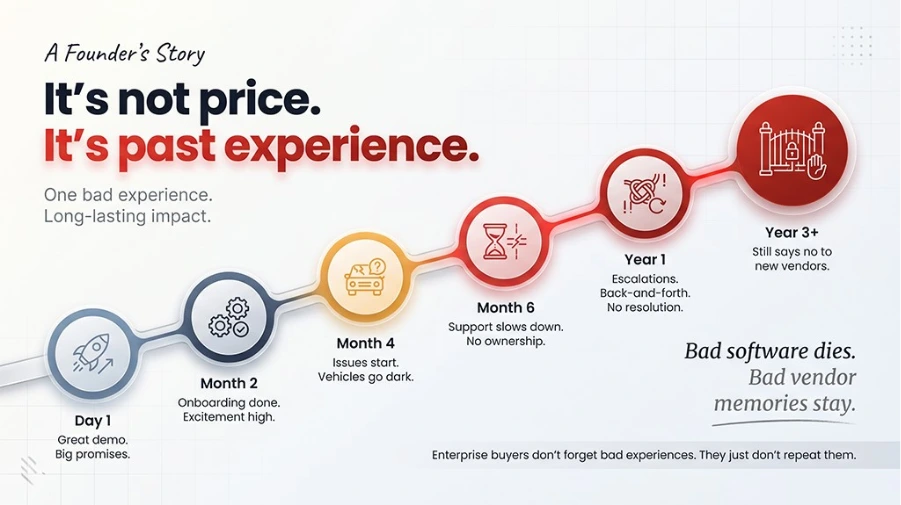
One bad vendor. Years of caution.
Where Enterprise Sales Cycles Actually Break Down
The NBFC head who has pushed your demo by six weeks is not confused or unsure.
He wants to move forward. But enterprise buying in India has layers that only show up in the middle of the process.
IT security reviews. Data storage requirements. Compliance approvals that no one flags at the start because no one owns that conversation until it becomes a roadblock.
This is not a broken system. This is how large Indian organisations protect themselves after years of being sold software that did not deliver. The vendor who gets this does not wait for these layers to surface. They map them out before the sales process even begins.
The pharma DGM, who has been looking at your proposal for two months is in a different situation.
He wants to buy. The pilot went well. But getting a final yes needs his VP, a regional finance head, and someone from corporate IT, all sitting across two cities, none of whom have a clear way to make this decision together.
In many mid-size Indian companies, buying ops-tech falls between three departments: operations, IT, and finance. No one owns it cleanly. So even people who genuinely want to buy end up moving slowly because no one has mapped out how to get to yes internally.
What the Friction Is Really Made Of
None of these are price objections.
They are trust gaps, process problems, and internal friction built up over years of vendors who focused on closing the deal and disappeared after it.
The ops head who got burned is not judging the product. He is judging whether this vendor is the kind of company that actually shows up once the contract is signed.
The NBFC head held up by an IT review is not wasting time. He is working through a process that was never built for software decisions.
The pharma DGM waiting on three approvals is not dragging his feet. He is waiting for someone to create the internal push that nobody has started yet.
Seeing each situation for what it actually is changes the entire conversation.
What Builds Trust in This Market
References work better than case studies.
The ops buyer does not want a PDF. He wants ten minutes with someone in his industry who will tell him honestly that the product works and the vendor is reliable. That one phone call does more than any presentation.
A pilot that gives his boss one clear number in 30 days. Not a test with too many moving parts. One number. Money saved, trips completed, attendance gaps fixed. Something he can take upward and defend.
Support that does not stop at go-live.
This is where most vendors quietly fail. The deal is done, the account manager moves to the next target, and the client is left figuring things out alone. Six weeks later, no one knows who to call when something breaks. That is the moment trust is lost, and the moment the next buyer’s doubt is created.
And the one thing that cannot be put into a process: pick up the phone when something goes wrong. Not during office hours. When the fleet is stuck at 9 PM and the ops head has his MD calling him. That one moment of being available does more for the relationship than any product update.
The Difference Between Cheap and Cautious
This market is not cheap. It is cautious.
Those are two very different things.
A cheap market pushes back on price and buys when the number works. A cautious market takes its time, asks tougher questions, and once it commits, it stays.
Indian ops buyers who trust a vendor grow their accounts without being chased for renewals. They send referrals without being asked. The resistance at the start of the relationship is usually a sign of how deep the relationship can go once trust is built.
Most vendors try to push past the caution. The ones who do well learn to work with it instead.
Closing
The Indian ops-tech market is not looking for a better product pitch.
It is looking for proof that the vendor across the table has thought seriously about what happens after the deal is signed.
That one shift, from trying to sell to actually earning trust, changes everything. How you build. How you support. How you grow.
Agree or disagree? I want to hear from people on both sides of this table.

Pulkit Jain is the Director and Co-Founder of InsightGeeks Solutions, where he leads the vision and product strategy behind SaaS platforms for fleet management, field force optimization, and last-mile... Read More



Related Blog

ADAS System in Cars: How It Works and Why It Matters
ADAS road safety system is a technology that uses sensors and software to detect danger and alerts the driver to…
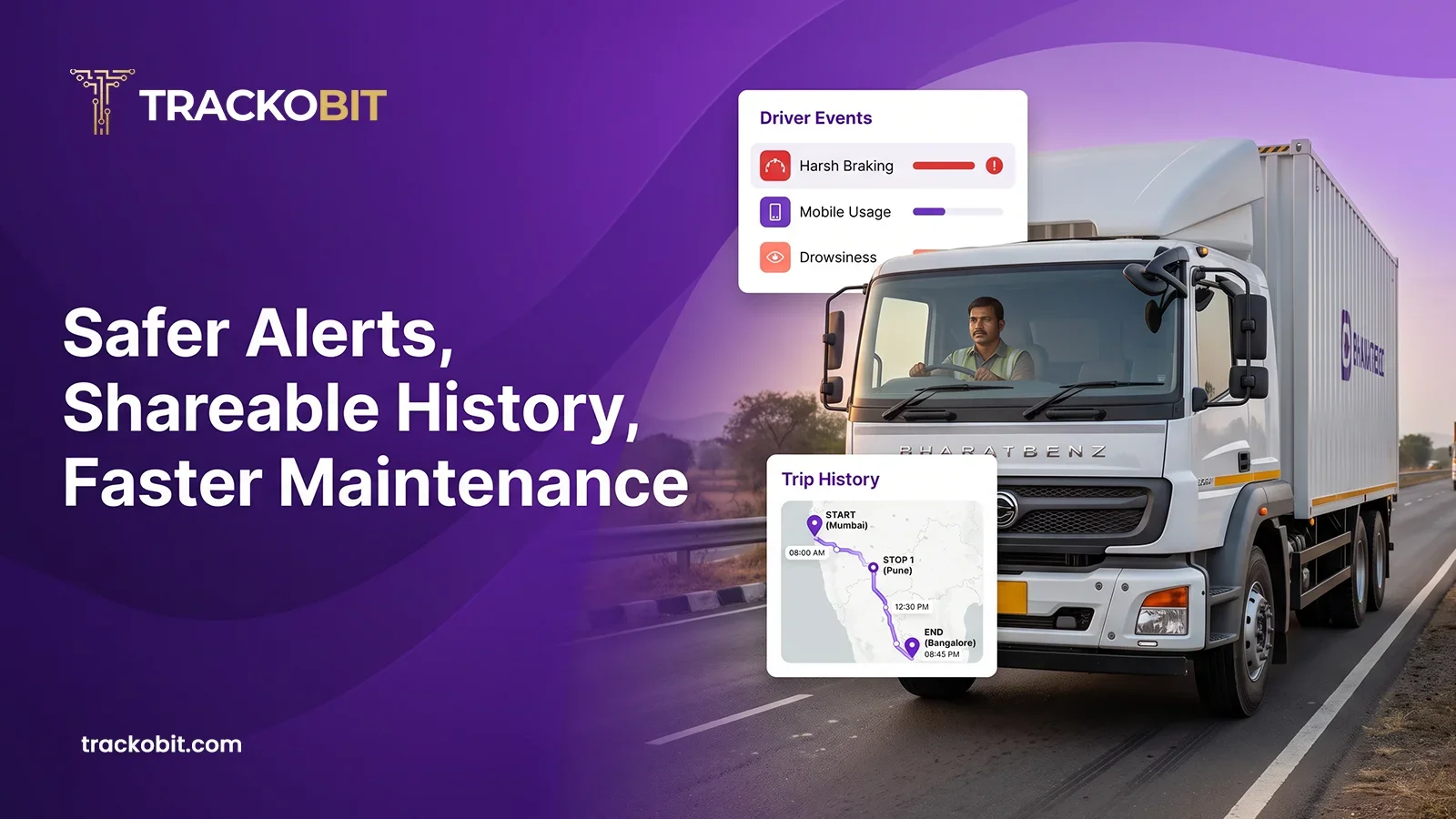
Safer Alerts, Shareable History, Faster Maintenance in TrackoBit
TrackoBit now adds an Evidence Model and authority-based access for ADAS and DMS alerts in video telematics, Vehicle History Sharing…
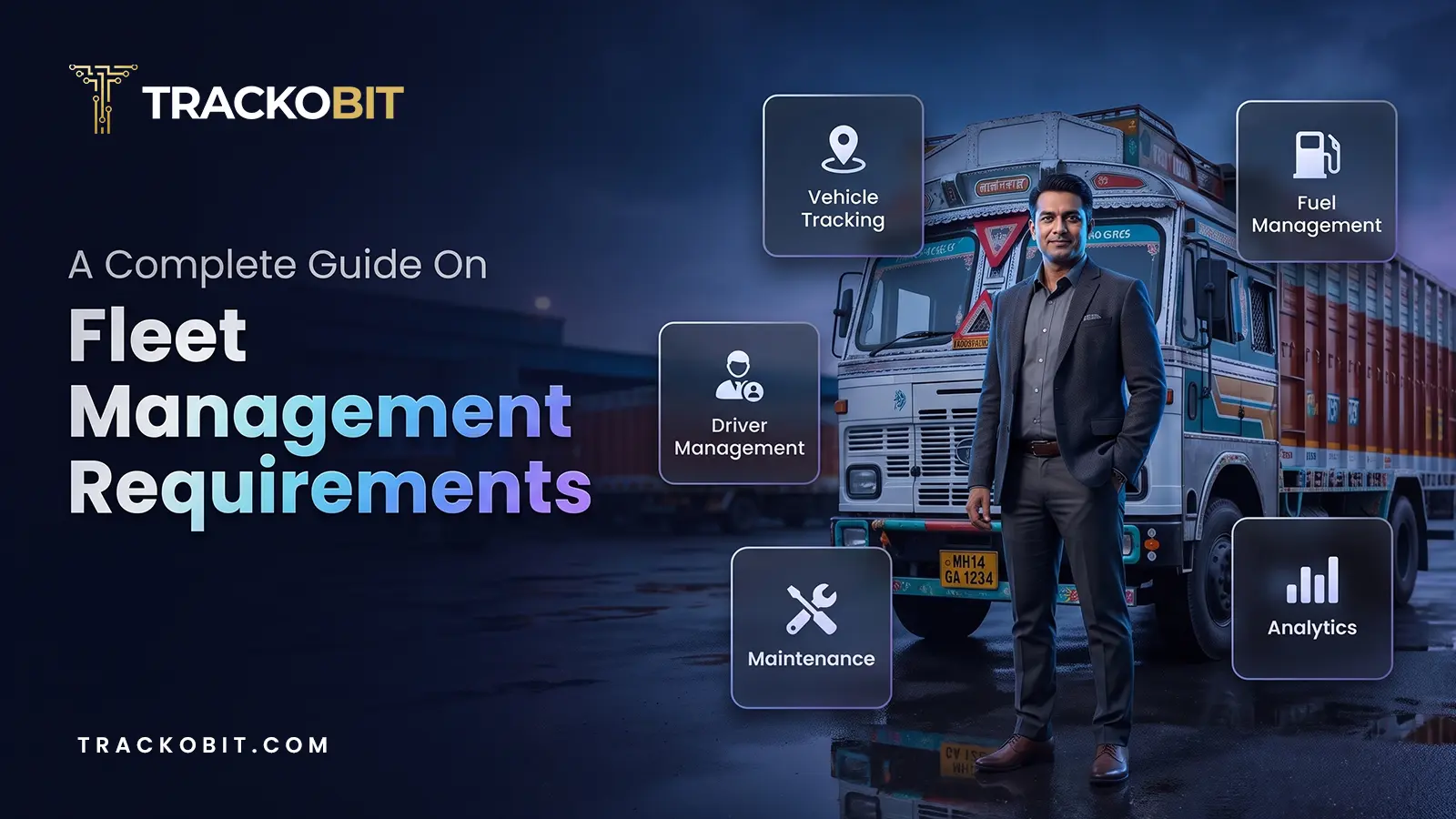
Fleet Management Requirements: The Complete Guide for 2026
Every wondered what exactly fleet management requirements are? Or, why do they matter? This guide helps you understand in detail.

7 Fleet Management Best Practices Every Fleet Manager Needs
Learn 7 fleet management best practices to improve safety, vehicle utilization, efficiency, and fleet performance in 2026.


Your inbox awaits a welcome email. Stay tuned for the latest blog updates & expert insights.
"While you're here, dive into some more reads or grab quick bites from our social platforms!"Stay Updated on tech, telematics and mobility. Don't miss out on the latest in the industry.